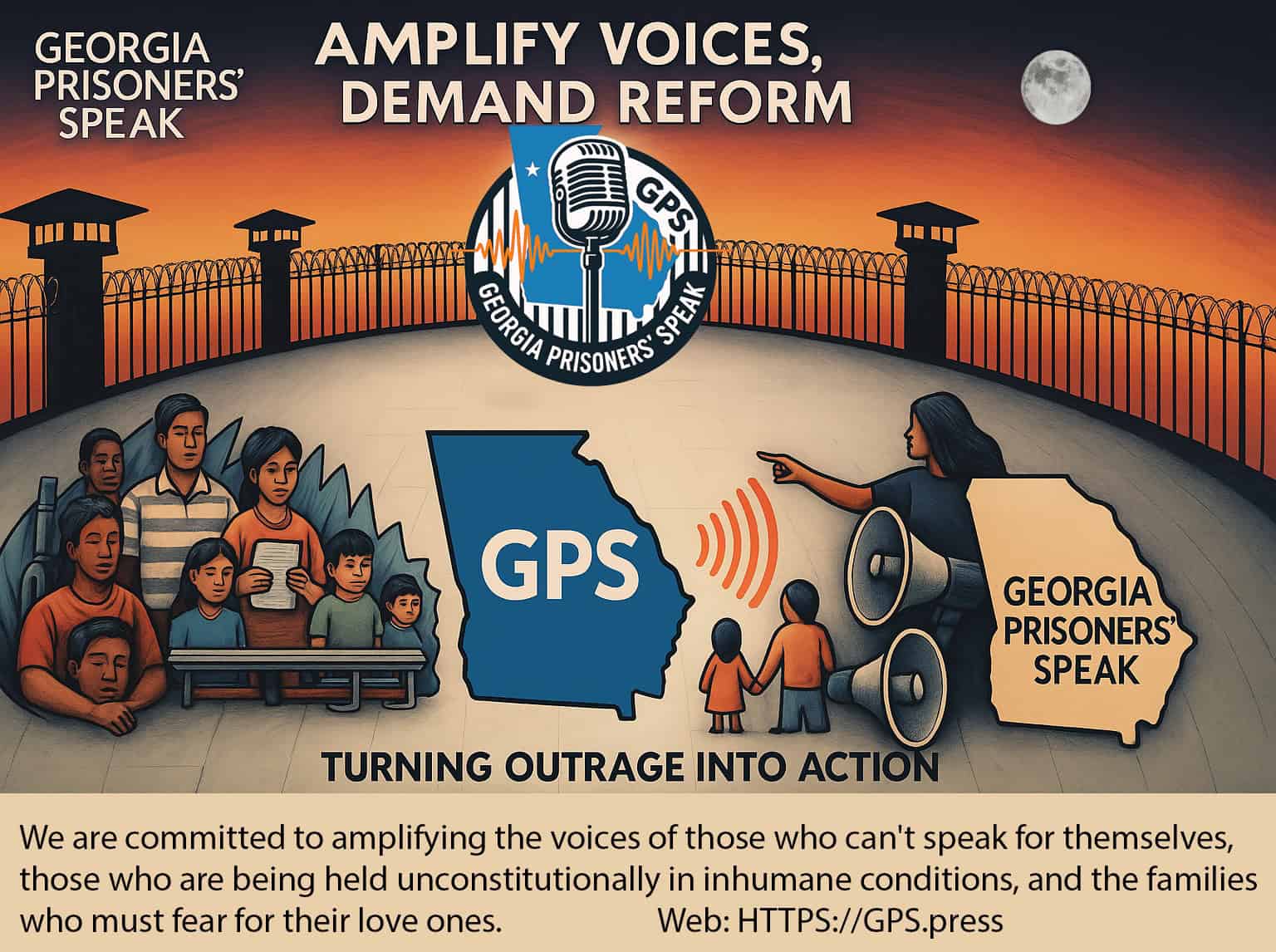
Georgia’s prisons have killed 1,682 people since 2020. The Department of Justice found systematic Eighth Amendment violations. The state added $700 million to corrections spending while conditions worsened. Nothing will change unless Georgians demand it. Here’s what advocacy actually accomplishes—and how to do it effectively. 1
Understand What You’re Fighting
Before advocating, know the facts:
- 50,250 people in Georgia prisons
- 1,965 people in county jail backlog awaiting prison beds
- 100+ homicides in Georgia prisons in 2024—32x the free population rate
- 70% higher death rate than national state prison average
- 36.5% of parolees released within 12 months of max-out date 2
Use these numbers. Officials respond to data, not abstract arguments about justice.
Start with Impact Justice AI
Impact Justice AI is the easiest way to begin advocating. The free tool crafts personalized emails to Georgia lawmakers, parole board members, journalists, and oversight agencies. Select a topic, answer a few questions, and send—no experience required. Your voice joins thousands demanding accountability.
1. Contact Your State Legislators Directly
Georgia’s General Assembly meets January through April. This is when advocacy matters most.
Find your legislators: legis.ga.gov
What to say:
- Identify yourself as a constituent with specific district
- Reference specific legislation by bill number
- Share personal connection if you have one—family member incarcerated, personal experience
- Ask for their position and follow up
Phone calls matter more than emails. In-person meetings matter most. Legislators track constituent contacts.
2. Attend Georgia Parole Board Hearings
The Georgia State Board of Pardons and Paroles operates with minimal public scrutiny. GPS has documented how over one-third of parolees are released within 12 months of their maximum release date—parole functioning as paperwork, not early release.
How to engage:
- Request notification of specific hearings
- Submit written statements
- Attend public meetings and document proceedings
- Share observations with media and GPS
Public attention changes behavior. Board members making decisions in obscurity act differently than those being watched.
3. Document and Report Conditions
GPS’s reporting depends on information from inside. If you receive letters or calls describing conditions:
- Save everything — physical letters, call logs, screenshots
- Note patterns — recurring issues, specific facilities, named staff
- Share with GPS — we aggregate reports across the system
- Contact media — journalists need sources; you can be one
The DOJ investigation relied on reports from incarcerated people and families. Documentation creates evidence.
4. Support Organizations That Work
Georgia has organizations with track records:
- Southern Center for Human Rights (schr.org) — systemic litigation that changed solitary confinement practices
- Georgia Justice Project (gjp.org) — 23 legislative changes since 2012, direct legal services
- Georgia Prisoners’ Speak (gps.press) — documentation, public reporting, family resources
- ACLU of Georgia (acluga.org) — civil rights litigation and advocacy
Financial support enables their work. Volunteer support expands their capacity. Amplifying their findings reaches new audiences.
5. Show Up at Public Meetings
The Georgia Board of Corrections holds public meetings. County commissions discuss jail contracts. City councils approve detention center budgets. Your presence is recorded.
What to do:
- Request time for public comment
- Come with specific questions and data
- Bring others—numbers demonstrate organized concern
- Record when permitted; take notes when not
Officials who face no public questioning act accordingly.
6. Use Media Strategically
Journalists need stories, sources, and data. You can provide all three.
- Share GPS reporting — our investigations are free to cite and reference
- Connect journalists with families — with permission, facilitate interviews
- Pitch local angles — reporters cover their beats; localize state problems
- Write letters to editors — newspapers publish constituent voices
Media attention creates political pressure. Political pressure creates change.
7. Track Legislation
Bills move fast during session. GPS tracks criminal justice legislation, but you should too:
- Georgia General Assembly: legis.ga.gov — search bills by keyword, track committee assignments
- Follow committees: Judiciary (House and Senate), Appropriations, Health and Human Services
- Testify when possible: Committee hearings accept public testimony; sign up early
Recent relevant bills include sentencing reform, probation changes, and oversight mechanisms. Know what’s being proposed before advocating for or against it.
8. Vote and Help Others Vote
Georgia’s Governor appoints the Parole Board. The legislature writes sentencing laws. Sheriffs run county jails. District attorneys decide charges. Judges impose sentences.
Every election affects incarceration:
- Research candidates’ positions on criminal justice before voting
- Attend candidate forums and ask about prison conditions
- Support voter registration in communities affected by incarceration
- Help formerly incarcerated Georgians restore voting rights
Georgia allows voter registration for most formerly incarcerated people after completion of sentence. Many don’t know they’ve regained this right.
Why This Matters
The Georgia prison system didn’t become unconstitutional by accident. Decades of decisions—by legislators, governors, parole boards, and voters—created today’s crisis. Reversing it requires the same sustained pressure that created it.
1,682 people have died since 2020. That number grows monthly. Every death is someone’s family member. Many were preventable. The state won’t change without public demand.
About Georgia Prisoners’ Speak (GPS)
Georgia Prisoners’ Speak (GPS) is a nonprofit investigative newsroom built in partnership with incarcerated reporters, families, advocates, and data analysts. Operating independently from the Georgia Department of Corrections, GPS documents the truth the state refuses to acknowledge: extreme violence, fatal medical neglect, gang-controlled dorms, collapsed staffing, fraudulent reporting practices, and unconstitutional conditions across Georgia’s prisons.
Through confidential reporting channels, secure communication, evidence verification, public-records requests, legislative research, and professional investigative standards, GPS provides the transparency the system lacks. Our mission is to expose abuses, protect incarcerated people, support families, and push Georgia toward meaningful reform based on human rights, evidence, and public accountability.
Every article is part of a larger fight — to end the silence, reveal the truth, and demand justice.