Author: GeorgiaLifer
I’ve been in State Government Confinement for over 40 years, serving a single 7 year tariff life sentence, imposed for a single count of Murder.
When I was sentenced to life imprisonment there were only two possible sentences for murder — Death by electric chair and life with the eligibility for parole in 7 years. That’s what the law said. Seven years, then you’d go before the board. Back then, 83 people a year, on average, made their first parole for malice murder in 7 years. The average was a smidgen over 11 years. That wasn’t just hope. That was the actual pattern.
I was still kind of hopeful because back then you could also get a death letter. I thought I would do the average of about 11 years.
That seven-year mark came and went. I didn’t go before a board. I was given a “secret” file review. A counselor at the prison told me I was denied and given a “Set-off” for 3 years. I was denied for Nature and Circumstances of my offense. The very thing I was already sentenced for.
I did that second three years, went back up — and instead of getting closer to release, they gave me eight years. Then another eight years after that. That was 1997 and 2005. I was told that the Morales v California case was the reasoning; however, I later found out that the new guidelines in the victims service office were being applied to my case retroactively because the victim’s family, quite influential, were protesting my release. The step father was a prominent attorney. A friend of mine’s boyfriend was a lawyer who found out. That’s information the board never told me directly. I had to piece it together from the outside.
Once I knew that — that there was this active opposition from an influential family — I began to utilize legal counsel at every parole hearing. I’ve been through 3 or 4 since then. Not really made any difference. The set offs have gotten smaller but I’ve been set-off like 15-16 times since my initial eligibility and have gotten 1 year set offs for the last 8 or so years.
Same as always. If I see a parole case officer they ask the same Exact questions every time, takes about 15 minutes, and then I am told I’ll be informed of the board’s decision. Do I have a parole plan, what caused me to commit the offense, what have I done since I’ve been in prison — generic and general inquiries. Don’t know what they want to hear.
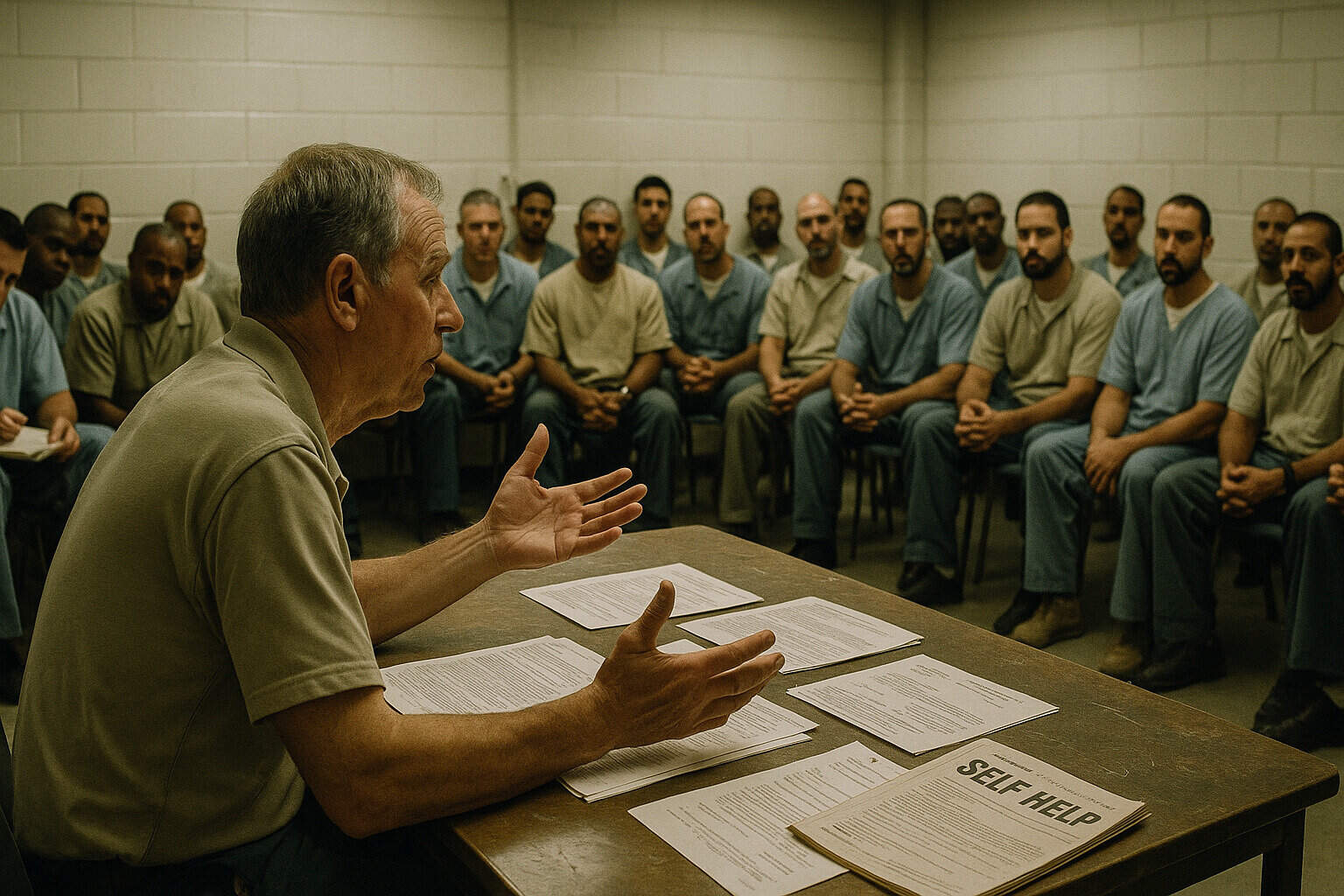
I have one of the most exemplary records of achievement in the Georgia Department of Corrections. Trade School, College, University, Detail History, Self help programs. I’ve done it all. It would be a toss up between my education and vocational achievements, or my work in the counseling and in the Faith and Character based program as a peer counselor to others.
I work with inmates traumatized by their conditions of confinement. I lead a group of 20+ men and teach positive mental attitude, co facilitator of a PICS/PTSD class, and I lead a lifers group. I also am a member of the program leadership. I am the head Catholic here and I let them see a positive attitude and give them examples of what’s possible. I teach them about their rights and how to properly defend them. The various pathways to seek help with their specific problems whether those are problems involving family, justice, self, conditions, whatever is required.
Conditions are very bad across the system; however, where I am the conditions are a bit better than elsewhere because of the progressive attitudes and goodness of some of the executive staff here. Daily life is a constant struggle inside for the elderly people like me. I am not without bouts of depression, anxiety, hyper-vigilance. Many Georgia prisoners target people they perceive as weak. This includes the elderly. I have a lot of experience protecting myself, but I am still constantly alert. There are no safe spaces. Not even after forty years of exemplary behavior, of helping others, of doing everything right. My condition is not considered serious enough for mental health support. It’s hit or miss. The biggest problem is diminished staffing and funding. In some cases if it wasn’t for inmates helping very little would get done.
I’ve been in other Georgia prisons over these forty years. They were really bad. Alto, Wilcox, Autry — These were especially challenging. There is no comparison. Gangs and lack of professionalism by staff. Cooperating with Security Threat Groups to manage and control the facilities. Everything from discipline to access to resources is compromised. Food shortages, rampant drug use, retaliation.
Several times I’ve experienced it. I was preparing a legal challenge to the conditions of confinement at one institution and was told to stop. When I refused I was targeted. I don’t want to be too specific because I can still be identified, but I was labeled a rat, beaten, and my property stolen. I was hurt too bad and it took me months to recover. My legal research and materials were the product of 4 years of research and efforts. I was forced to stop by the simple fact I can’t replace what was stolen. Staff pretty much said, yeah we lost your property — So what, and portrayed me as a drug user and a rat.
I am far from stupid. I kept my mouth shut and quit doing anything for several years. I’ve resumed researching just last year. Too many deaths, too much violence, and the system is critically failing. Every single day it is getting more chaotic and turbulent. I am working on a different set of challenges. This time I’m focusing on the Parole Board.
New rulings about unfettered discretion, secrecy, and ex post facto. As well as failure to provide meaningful hearings, fair notice, and impartial consideration just to name a few. Mostly I’ve focused on challenges that will appeal to conservative judges. Secret grid systems based on secret factors and criteria, the pattern and practice of board policy being retrospectively applied and so forth.
I have many friends in Florida Anonymous and in various advocacy groups. Plus using my education at Mercer and in logic and math to statistically analyze historical trends related to changes in law and policy. There is a pattern and practice of aggravating both the punishments and offenses involving those serving life imprisonment by the parole board; furthermore, applying these retroactively to those persons who were already imprisoned. Not everyone mind you, but those that are disfavored by the board.
For example, changing the tariffs of statutes through use of a scaled window based on aggravating factors not heard by a jury or raised in court by the prosecutor or judge. Also allowing non disclosed ex parte information to become part of a person’s file. I would argue that NO ONE can be meaningfully heard if they are not meaningfully informed about what the fuck they are supposed to be meaningfully heard about. Impossible.
So everyone is given a case plan with board and GDC recommend classes and programs to take. You are told when you successfully complete your case plan and it’s closed out that the board looks more favorable on your parole than those who refuse. I have finished my case plan 3 times. But to delay an upcoming parole consideration, state officials will wait until you are a couple months out from your hearing then override your “completed” case plan to add some mandatory class of 4, 6, 9 months (past your parole date) thus moving the goal post. If you refuse to take it, the board uses it against you. If you take it the board denies you because you have not finished your case plan. Catch 22.
This happens to lots of people the board disfavours, and on information and belief when the board has already met its life sentence parole quota for the year. It’s not exact, but yeah statistics tell us it’s rare that the board will ever grant more than a certain number of paroles for certain classes of offenders. Well for instance it was 83 a year for the 7 years prior to lwop and 441 for the hardest parole – first one on a malice murder. In the 7 years after lwop and 441 it dropped to maybe 1 a year.
They started changing the definition of life, saying “The only difference between lwop and life with the possibility of parole is that the board can never consider the lwop class in the first instance” and “the life with the possibility of parole class has a right to be considered but no liberty interest in relief.” These definitions are specious because they change the focus from “what is the nature of my punishment” to “the board’s power to consider or not consider a sentence.” Furthermore, it is in direct conflict with the board’s paramount duty to “Release all offenders, according to established rules and procedures, in a time commensurate with their offense.” And when the state constitution says the board can “Remit any part of a sentence for any offense after conviction.”
Yeah, it is statistically unlikely that a pro se challenge will succeed in Georgia. I was put in prison for doing wrong. I’ll be damned if I stay silent after all my accomplishments. I’d rather fail with honor than succeed with fakery.
It’s bigger than me. I’ll probably die here. But, maybe I’ll inspire the next generation to think outside the box to succeed, and possibly leave them with an honorable example. I do tell them. For example, I recently showed them little things the board does to delay parole like manipulating a person’s case plan, putting someone in problem housing status.
The board is supposed to be fair and impartial — they no longer are and have been hijacked for political law and order agendas. Secondly, the board is a dog and pony show who has a long pattern and practice of developing schemes of evasion to violate the constitution of the state and US. All could be fixed with legislative guidance and transparency and it could be fixed by application of the statutes.
Trust God, practice stoicism, be dedicated to life long learning, and remember to be grateful for the little things and awesome people you meet along the way.
You Have Options
Free tools to take action — the law is on your side.
Demand records from the prison system. Reach the officials who set policy. File a grievance or a complaint the right way. And for families who’ve lost someone in custody, get the records that tell the truth. Plain-language, step-by-step, and free.
Explore the GPS Toolkits →