News Lead
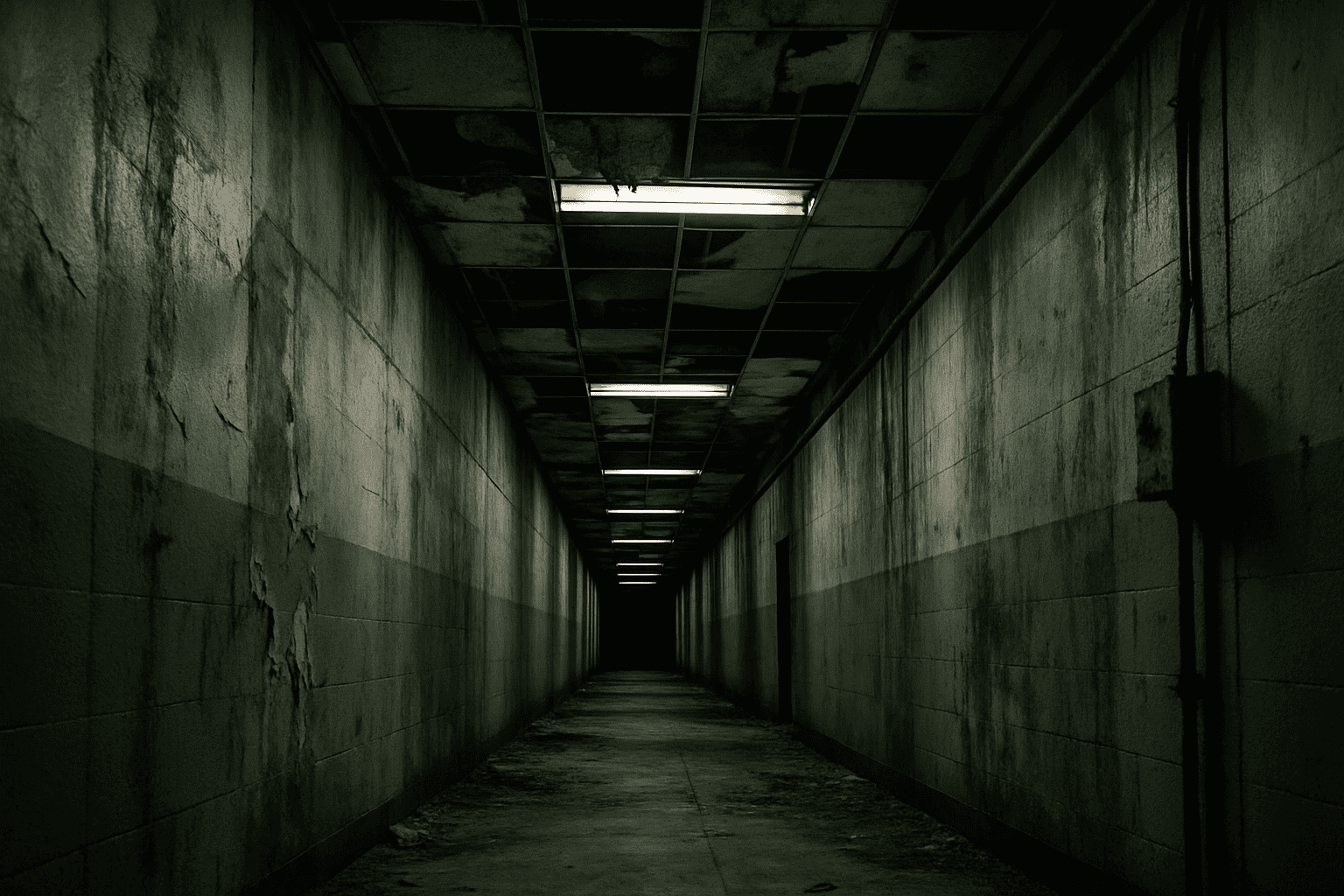
Georgia’s prison system is subjecting tens of thousands of people to conditions that federal investigators, state legislators, and the Governor’s own assessors all describe as dangerous and requiring immediate intervention. Broken cell locks throughout the system allow people to be moved upon freely — enabling violence, drug transactions, and sexual assault — while facilities built over 50 years ago with minimal maintenance are crumbling around the people confined inside them. Prisons designed to hold approximately 750 people are now packed with 1,700 or more.
The crisis is compounded by a catastrophic staffing collapse: eight Georgia prison facilities have correctional officer vacancy rates of 70% or higher. At Valdosta State Prison — described as one of the most dangerous facilities in the state, housing the highest percentages of both people with mental health needs and gang members — the officer vacancy rate has reached 80%. At Smith State Prison, where approximately 1,500 men are confined, shifts that should have 30 officers most days have only half that number, forcing remaining staff to work 16-hour days, 5 days a week.
Governor Kemp has responded with a $600+ million emergency infrastructure request over 18 months, but GDC Commissioner Oliver has acknowledged the work will take years beyond that funding period — an admission that decades of state neglect cannot be quickly undone. A state Senate Study Committee documented buildings in severe disrepair, non-functional fire suppression systems, kitchens failing health standards, and HVAC failures creating health hazards, recommending that the most obsolete facilities be closed entirely and replaced.
Key Takeaway: Multiple government bodies — the DOJ, the Governor’s office, and a state Senate committee — have all independently confirmed Georgia’s prisons are in a state of systemic failure that endangers the people confined inside them.
Quotable Statistics
Staffing Crisis
– 80% — Correctional officer vacancy rate at Valdosta State Prison as of April 2024, making it one of the most dangerous facilities in the state
– 8 facilities have correctional officer vacancy rates of 70% or higher
– 18 prisons have vacancy rates exceeding 60%
– At Smith State Prison, officers are working 16-hour days, 5 days a week because most days only half the required 30 officers per shift show up to supervise approximately 1,500 people
Overcrowding
– Facilities designed for ~750 people now hold 1,700+ people — more than double their designed capacity
– Smith State Prison was designed for far fewer people but now houses ~1,500 men
– The state plans to add only 446 prison beds to existing contracts
Infrastructure Failure
– Many Georgia prisons were built 50+ years ago with minimal maintenance
– Broken cell locks, non-functional security cameras, black mold, raw sewage in living areas, and broken windows exposing people to the elements
– Deferred maintenance costs 3-5 times more than preventive maintenance would have
Fiscal Impact
– $600+ million — Governor Kemp’s emergency infrastructure request over 18 months
– $458 million — FY 2025 allocation
– $144 million — FY 2026 allocation
– $40 million — Prison planning and design
– $1.62 billion — Total proposed GDC budget for FY2026
– $86.61 — Cost per person per day
– $31,612 — Annual cost per person incarcerated
– 4% — Proposed salary increase for correctional officers
– 330 — Additional workers to be hired under the plan
Key Takeaway: The data reveals a system in cascading failure: extreme understaffing, dangerous overcrowding, and crumbling infrastructure are combining to create conditions that multiple government bodies have deemed unacceptable.
Context and Background
What happened: The U.S. Department of Justice issued findings in October 2024 concluding that Georgia Department of Corrections (GDC) prisons are unsafe due to aging and inadequately maintained facilities and failure to ensure adequate lock, tool, and key controls. In December 2024, a Georgia Senate Study Committee independently documented similar findings. In January 2025, Governor Kemp proposed a $600+ million emergency infrastructure plan based on an independent assessment by the Guidehouse consulting group (comprising The Moss Group and Carter Goble Lee).
Why it matters: Broken cell locks — described as one of the most critical safety issues — mean the state cannot protect people from violence, sexual assault, or coercion in their own cells. Officers cannot secure housing units during emergencies. Non-functional security cameras mean there is no surveillance in critical areas. People are living with black mold, raw sewage, rodent infestations, broken windows, and failed heating and cooling systems.
The staffing dimension: The infrastructure crisis cannot be separated from the staffing crisis. With 8 facilities at 70% or higher vacancy rates and 18 prisons exceeding 60% vacancy, there are not enough officers to maintain basic safety even if infrastructure were functional. At Valdosta State Prison, the 80% vacancy rate means the facility that houses the highest concentrations of people with mental health needs and gang-affiliated individuals has virtually no staff.
The state’s response: Governor Kemp’s $600+ million plan prioritizes emergency cell lock repairs, security electronics updates, maintenance staff expansion, and emergency facility repairs. However, GDC Commissioner Oliver has acknowledged the work will take years beyond the 18-month funding window. The Senate Study Committee recommended closing the most obsolete facilities entirely and building modern replacements, suggesting that repairs alone may be insufficient.
Key terms for reporters:
– Designed capacity refers to the number of people a facility was originally built to safely house. Georgia prisons are operating at more than double this figure.
– Deferred maintenance is the practice of postponing necessary repairs. The state’s own data shows this approach costs 3-5 times more than preventive maintenance.
– Guidehouse Assessment refers to the independent evaluation that formed the basis for the Governor’s $600M request and described conditions as requiring “immediate intervention.”
Key Takeaway: Three independent sources — the DOJ, a state Senate committee, and a Governor-commissioned assessment — have converged on the same conclusion: Georgia’s prison infrastructure is in crisis, and the people confined inside are paying the price.
Story Angles
1. “Locked In With No Locks”: How Broken Cell Locks Created a Violence Crisis
The DOJ identified broken cell locks as one of the most critical safety issues in Georgia prisons. People can move freely between cells, and officers cannot secure housing units during emergencies. This single infrastructure failure enables violence, drug transactions, and sexual assault. The story: How did the state allow a basic security mechanism to fail across an entire prison system, and what has it cost the people trapped inside? Governor Kemp’s plan includes a statewide lock repair team, but the DOJ findings raise questions about years of neglect.
2. The $600 Million Question: Is Emergency Funding Enough to Fix Decades of Neglect?
Governor Kemp’s $600+ million plan is the largest emergency investment in Georgia’s prison infrastructure in modern history. But GDC Commissioner Oliver acknowledges repairs will take years beyond the 18-month funding period. The Senate Study Committee recommended closing the most obsolete facilities rather than repairing them. The plan adds only 446 prison beds to a system operating at more than double capacity. Meanwhile, the proposed 4% salary increase for correctional officers may not be enough to address 70-80% vacancy rates. Is this plan a genuine fix or a Band-Aid on a system that needs fundamental restructuring?
3. Ghost Prisons: What Happens When 80% of Officers Don’t Show Up
Valdosta State Prison operates with an 80% correctional officer vacancy rate while housing the highest percentages of both gang members and people with mental health needs. Smith State Prison has half the officers it needs to supervise 1,500 people, forcing those who do show up to work 16-hour days, 5 days a week. Across the system, 18 prisons have vacancy rates exceeding 60%. This story examines the human toll on both the people locked inside understaffed facilities and the exhausted officers trying to manage them — and asks whether any infrastructure investment can succeed without solving the staffing crisis first.
Read the Source Document
Download the full research compilation (PDF) — Georgia Prisoners’ Speak research compilation on Georgia prison conditions and infrastructure crisis.
Other Versions
- Public Version — A plain-language explainer for community members and advocates
- Legislator Version — Policy brief with legislative context and recommendations for Georgia lawmakers