TL;DR
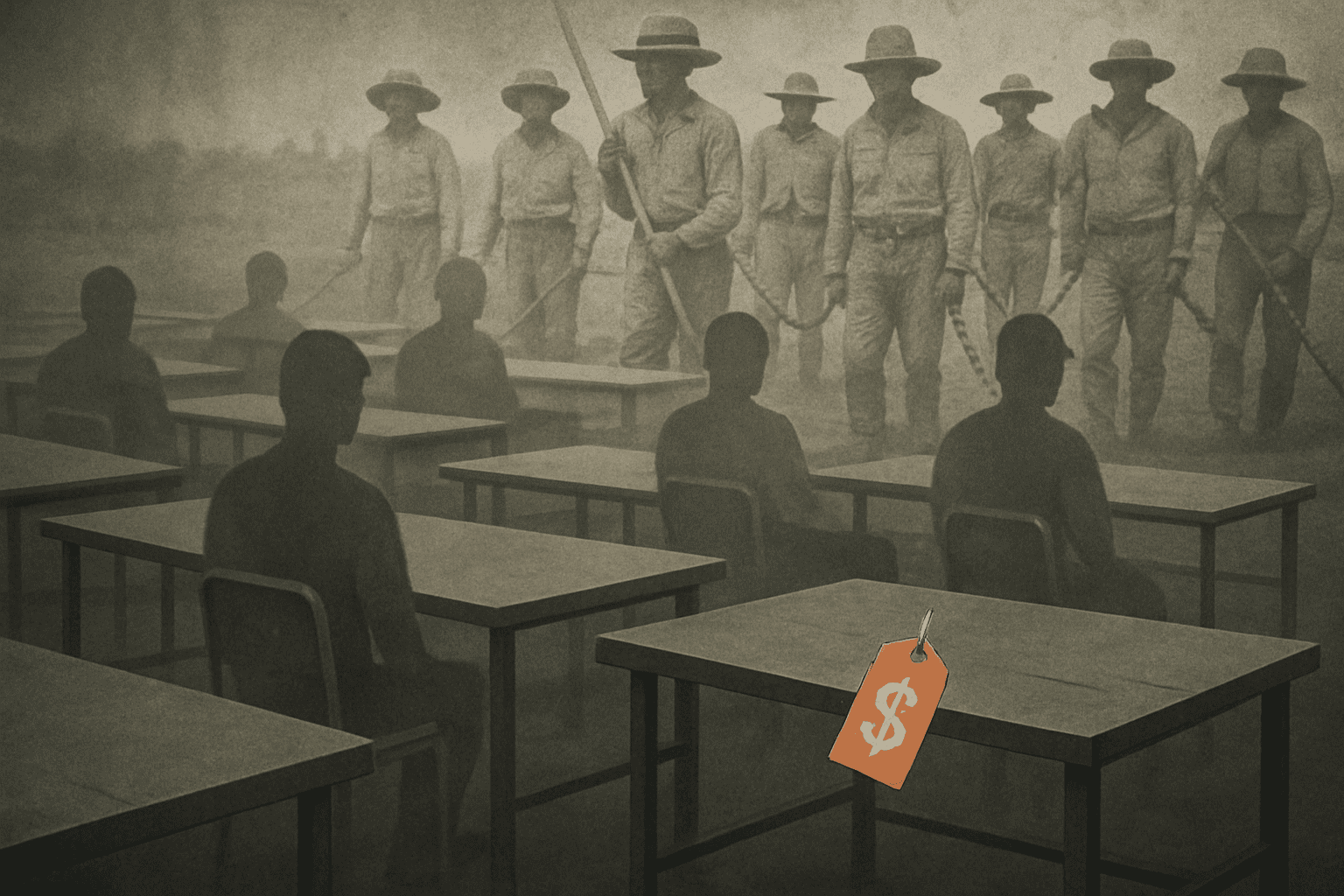
Georgia pays people in prison zero dollars for their work. About 1,000 workers make meals, farm goods, and products every day — all for free. The state then fails to meet basic needs like food and soap. So families must buy these items from the prison store at huge markups — 67% to 1,150% above store prices. In 2024, the state made $18.76 million in profit from these sales alone. Eight states have taken steps to end this. Georgia has done nothing.
Why This Matters
If your loved one is in a Georgia prison, they work for free. They cook meals. They clean floors. They farm land. They make road signs and license plates. They get nothing for it.
Because they earn nothing, they can’t buy soap, snacks, or stamps. So you pay for it. And the prison store charges you far more than a regular store would.
This hits Black families the hardest. Black people make up about 60% of those in Georgia prisons. But they are only 31% of the state’s people. The money flows one way: out of your pocket and into the state’s.
This is not just unfair. It is a system that was built this way on purpose. And it has roots going back to slavery.
Key Takeaway: Your loved one works for free, and you pay inflated prices to meet the needs the state refuses to provide.
Georgia Pays Nothing — Zero Dollars
Georgia is one of about seven states that pay people in prison nothing for regular jobs. The others are Alabama, Arkansas, Florida, Mississippi, South Carolina, and Texas.
Every regular job in a Georgia prison is unpaid. This includes:
- Kitchen work
- Laundry
- Cleaning
- Yard work
- Building upkeep
- Construction
There is no state law that says the state must pay. There is no pay scale. The policy is zero pay. This is not an oversight. It is the rule.
Key Takeaway: Georgia has no law requiring pay for prison labor. People who cook, clean, and build get nothing.
What People in Prison Produce for Free
Georgia Correctional Industries (GCI) is a state-owned company. It runs inside the prison system. About 1,000 people work for GCI every day. They get zero pay.
Here is what they produce:
- Over 39 million meals a year for the prison system
- 3.25 million pounds of beef and chicken each year
- Over 40% of all food used in prison menus
- Furniture, road signs, license plates, shoes, and clothes
- Crops and livestock across 12,700 acres of farmland
The food alone is worth about $1.8 million a month — over $21 million a year.
By law, GCI keeps 25% of its profits for staff bonuses. The rest goes to the state. The workers who make all of this? They get nothing.
Key Takeaway: About 1,000 people produce millions of meals, farm goods, and products daily — all without a single dollar in pay.
Cities Profit Too — The Muscogee County Example
This goes beyond state prisons. The city of Columbus, Georgia saves about $17 to $20 million a year using prison labor from Muscogee County Prison.
People there work on:
- Trash pickup
- Golf course care
- Recycling
- Landfills
Some are paid $3 a day. Others get nothing at all.
The city’s Public Works leader said prison labor saves that one department about $140,000 a week. That’s over $7.2 million a year from just one city office.
Key Takeaway: One Georgia city saves up to $20 million a year using prison labor paid $3 a day or nothing.
Georgia Spends Far Less Per Person — Because Labor Is Free
Georgia’s cost per person in prison is only about 39% of the national average. Reform groups say this gap exists because the state relies on free labor.
Here are the numbers:
- Georgia’s prison budget for 2025: $1.48 billion
- That covers about 47,000 to 53,500 people
- Georgia spends roughly $27,664 to $31,489 per person
- The national average is about $33,274 per person
If Georgia paid the federal minimum wage for this work, it would cost an extra $180 to $400+ million a year. The state saves that money by paying nothing.
Key Takeaway: Georgia’s prison costs are far below average because the state gets hundreds of millions in free labor.
If You Refuse to Work, You Get Punished
This labor is not a choice. Across the country, 76% of people in prison say they must work or face punishment.
In Georgia, refusing to work can mean:
- Being put in solitary (locked alone in a cell)
- Losing visits with your family
- Losing access to the prison store
- Losing good time credits — which means a longer sentence
- Being denied parole — the parole board looks at work history
- Being moved to a harsher prison
So the “choice” is this: work for free, or lose contact with your family and stay locked up longer. That is not a real choice. That is force.
Key Takeaway: People who refuse to work for free can be put in solitary, lose family visits, and have their sentences made longer.
The Trap: Free Labor In, Overpriced Goods Out
Here is how the system works as a trap:
- The state gets free labor. People cook, clean, farm, and build — for nothing.
- The state doesn’t meet basic needs. Food is often not enough. Soap and supplies run short.
- Families must fill the gap. They buy items from the prison store (called the commissary).
- The state charges huge markups. Prices are 67% to 1,150% above what you’d pay at a regular store.
- The state profits again. In 2024, Georgia made $18.76 million in profit from these sales.
Then in November 2025, Georgia raised prices by an average of 30%. GPS projects yearly profit could now top $60 million.
GPS also found 153 items where the supplier’s price went down. But the prison kept prices the same or raised them. That added about $420,000 in extra profit from price tricks alone.
Key Takeaway: The state gets free labor, fails to provide basics, then profits when families pay inflated prices to fill the gap.
What This Costs Families
When your loved one earns nothing, you pay for everything. Research shows:
- Families spend a median of $172 a month on a person in prison
- That’s about 6% of household income
- Average yearly spending is $4,200 per family
- Across the country, families spend $5.6 billion a year on prison store items, phone calls, and basic needs
- Total costs to families nationally reach nearly $350 billion a year when you count lost income, travel, and fees
This burden falls hardest on Black families. Black family members spend an average of $2,256 a year just on travel to prison visits. The overall average is $1,703.
Key Takeaway: Families spend thousands of dollars a year because their loved ones are paid nothing for their work.
This System Hits Black Communities the Hardest
The numbers are stark:
- 60% of people in Georgia prisons are Black
- 31% of all Georgians are Black
That means the unpaid labor force is mostly Black. This is not an accident. It is a direct line from Georgia’s past.
From 1866 to 1908, Georgia ran the “convict lease” system. The state rented out prisoners — mostly Black — to work on railroads and in coal mines. Conditions were like slavery. Many people died.
From 1908 to 1943, chain gangs replaced leasing. Black prisoners built Georgia’s roads while chained together under armed guards.
Today, the chains are gone. But the setup is the same: Black people do forced work for the state and get nothing in return. The Georgia Budget and Policy Institute has said this plainly. Georgia’s prison system “maintains much of the same captive labor” as the old systems.
Key Takeaway: Black Georgians are 31% of the state but 60% of the prison population — making the unpaid labor force mostly Black.
The 2010 Georgia Prison Strike
On December 9, 2010, people in at least seven Georgia prisons refused to work. It was the largest prison work stoppage in U.S. history at that time. It lasted six days.
They organized using cell phones bought from guards. The strike crossed racial, gang, and religious lines. It was nonviolent. People simply stayed in their cells.
They made nine demands, including:
- A living wage for work
- Better health care
- Enough food
- Access to family
- Fair parole decisions
The state’s response was force. Prisons went on lockdown. Hot water and heat were shut off. Guards used pepper spray and tear gas. At some prisons, guards beat people with hammers. Later, seven guards were arrested for attacking people in prison.
Not one of the nine demands has been met. As of 2026, people in Georgia prisons still earn nothing.
Key Takeaway: In 2010, thousands refused to work in the largest U.S. prison strike — the state responded with force, and none of the nine demands have been met.
Eight States Have Acted — Georgia Has Not
Since 2018, eight states have voted to remove slavery language from their state laws:
- Colorado (2018)
- Utah and Nebraska (2020)
- Alabama, Oregon, Tennessee, and Vermont (2022)
- Nevada (2024)
Georgia has done nothing. No bill has moved forward. No vote has been held. Georgia’s constitution still says forced labor is allowed as punishment for a crime.
Georgia Congresswoman Nikema Williams backs a federal fix. She co-sponsors a change to the U.S. Constitution that would end the slavery exception everywhere. But it would need 38 states to agree — a very high bar.
People in prison have no labor rights in Georgia:
- No minimum wage
- No safety rules on the job
- No right to form a union
- No help if they get hurt at work
Courts have said the prison-worker bond is about “punishment, not work.” So labor laws don’t apply.
Key Takeaway: Eight states have removed slavery exceptions from their laws. Georgia has taken no action at all.
What Needs to Happen
There are several paths to change:
- Change the state constitution. Georgia could put it to voters, like eight other states have done. This would need a two-thirds vote in both parts of the state legislature.
- Pass a pay law. The state could pass a law requiring some pay for prison work — even without changing the constitution.
- Add safety rules. Georgia could extend workplace safety rules to cover people in prison.
- Support the federal fix. Back the federal Abolition Amendment co-sponsored by Rep. Nikema Williams.
Georgia’s 2026 governor’s race is a key moment. Governor Kemp cannot run again. Prison conditions are now a statewide issue. This is the time to push every candidate to take a clear stand.
Key Takeaway: Georgia’s 2026 governor’s race is a chance to push for prison labor reform.
Glossary
- 13th Amendment Exception: The part of the U.S. Constitution that banned slavery — except as punishment for a crime. This loophole allows forced, unpaid prison labor.
- Georgia Correctional Industries (GCI): A state-owned company that uses about 1,000 unpaid prison workers daily to make food, goods, and farm products.
- Convict Leasing: A system (1866–1908) where Georgia rented prisoners — mostly Black — to private companies. Conditions were brutal and many died.
- Chain Gangs: A system (1908–1943) where prisoners — mostly Black — built roads while chained together under armed guards.
- Commissary: The prison store where people can buy food, soap, and other items. Georgia’s markups range from 67% to 1,150% above regular store prices.
- Good Time Credits: Time taken off a sentence for good behavior or work. Refusing to work can mean losing these credits and staying in prison longer.
- Solitary Confinement: Being locked alone in a small cell, often for 22–24 hours a day. Used as punishment for refusing to work.
- Parole: Early release from prison under certain rules. Georgia’s parole board looks at work history — so refusing free labor can keep you locked up.
- FLSA (Fair Labor Standards Act): The federal law that sets minimum wage rules. Courts have said it does not cover people in prison.
- Cost-Shifting: When the state doesn’t provide basic needs, and families are forced to pay for them through the prison store.
- Abolition Amendment: A proposed change to the U.S. Constitution that would fully end the slavery exception. Co-sponsored by Georgia’s Rep. Nikema Williams.
Read the Source Document
This explainer is based on GPS’s investigative research brief, Prison Labor & Wage Exploitation in Georgia (February 2026).
Other Versions
- Legislator Brief → — Policy-focused version for lawmakers and staff
- Media Summary → — Version for reporters and editors