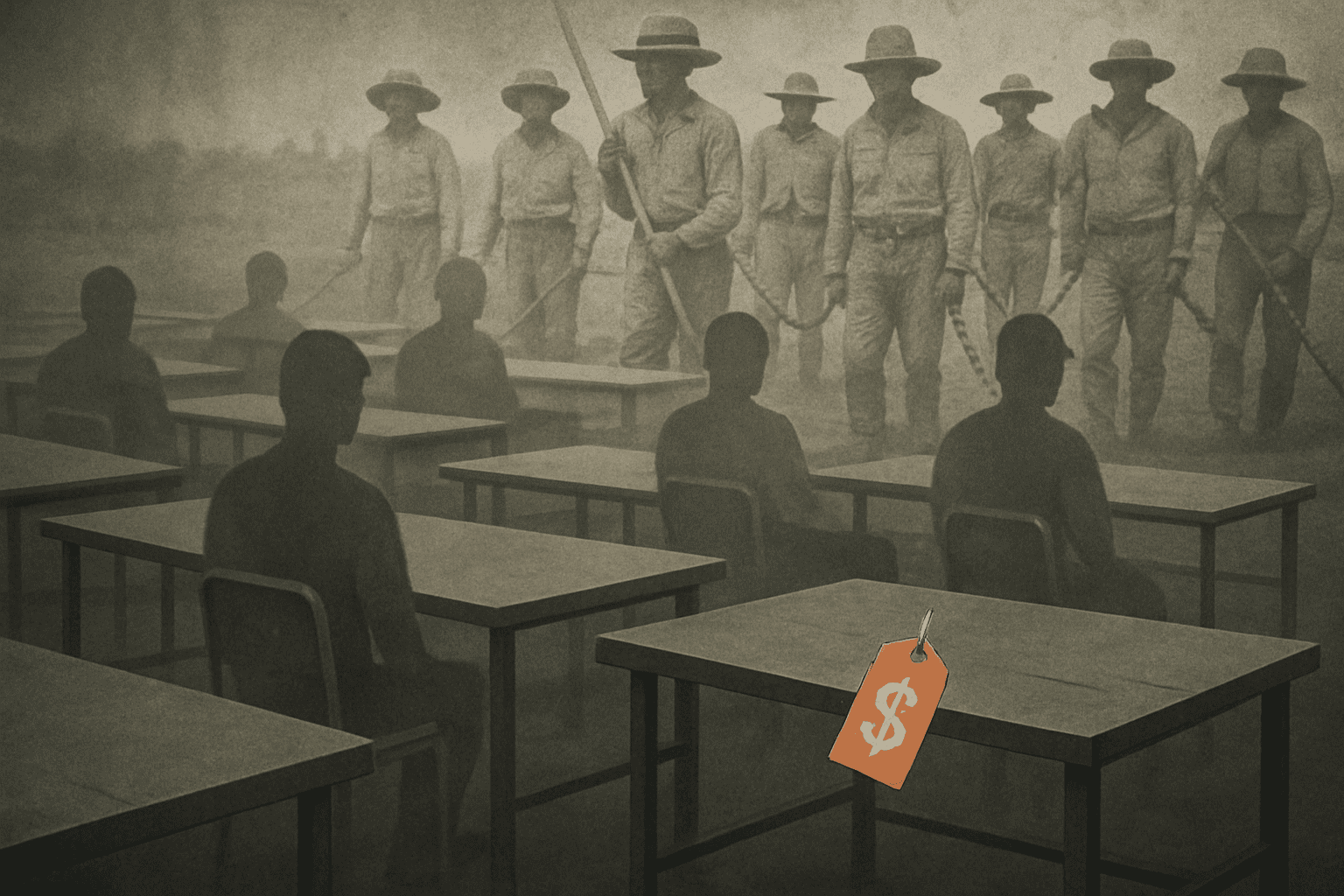
This explainer is based on Prison Labor & Wage Exploitation in Georgia. All statistics and findings are drawn directly from this source.
Why This Research Matters for Advocacy
Georgia operates one of the most exploitative prison labor systems in the country. The state pays incarcerated workers absolutely nothing — not a penny — while compelling their labor under threat of solitary confinement, loss of family visitation, and extended sentences. This research brief is the most comprehensive mapping of Georgia’s prison labor extraction system available, and it gives advocates a powerful, evidence-based foundation to demand change.
This document matters right now for three reasons:
1. The national movement is accelerating. Eight states have removed slavery exception language from their constitutions since 2018. Georgia has done nothing. Every state that acts makes Georgia’s inaction harder to defend. Advocates can use this research to show Georgia is increasingly isolated — one of only seven states that pay nothing for prison labor.
2. The 2026 gubernatorial race is a pressure point. Governor Kemp is term-limited. Every candidate running to replace him must be asked: Will you end unpaid prison labor? Will you support removing Georgia’s constitutional slavery exception? This research provides the data to force those conversations.
3. GPS has documented both sides of the extraction loop. This research connects prison labor exploitation directly to GPS’s commissary investigation findings — showing that the state forces people to work for free, fails to meet their basic needs, then profits again when families pay markups of 67% to 1,150% on commissary items. No other organization has mapped this complete extraction cycle with this level of specificity.
The findings are damning: approximately 1,000 workers in Georgia Correctional Industries produce over 39 million meals annually, process 3.25 million pounds of meat, and farm 12,700 acres — all for zero pay. Muscogee County Prison alone saves Columbus, Georgia $17 to $20 million per year through prison labor. Georgia’s cost per prisoner is approximately 39% of the national average — a gap directly attributable to unpaid labor. And the state extracted $18.76 million in commissary profit in 2024, projected to exceed $60 million after November 2025 price increases — money taken from families of people who work for free.
This is not abstract policy analysis. This is a roadmap for accountability.
Key Takeaway: Georgia’s prison labor system creates a closed-loop extraction cycle — free labor in, overpriced commissary out — and the 2026 gubernatorial race and national abolition movement create urgent windows for advocacy.
Talking Points
Use these pre-written talking points in legislative testimony, coalition meetings, media interviews, and written communications. Each is backed by data from this research.
Georgia is one of only seven states that pay incarcerated workers nothing for their labor. Eight states have already removed slavery exception language from their constitutions. Georgia has taken no action — not a single bill, not a single ballot measure.
Georgia Correctional Industries employs approximately 1,000 people daily who produce over 39 million meals a year, process 3.25 million pounds of meat, and farm 12,700 acres — all without a single dollar in compensation. The state profits from this labor, then deposits it into the General Fund.
Georgia’s cost per prisoner is approximately 39% of the national average — and that gap is directly attributable to unpaid labor. If the state paid even minimum wage for currently unpaid work, the corrections budget would need to increase by an estimated $180 to $400+ million annually. The “savings” come from exploitation.
The state forces people to work for free, then charges their families 67% to 1,150% markups on basic necessities through the commissary system. GPS documented $18.76 million in commissary profit in 2024 alone, projected to exceed $60 million after November 2025 price increases. This is a closed-loop extraction system.
Refusing to work in Georgia’s prisons is punished with solitary confinement, loss of family visitation, denial of good time credits, and denial of parole. The Georgia Parole Board considers work history in parole decisions — meaning refusing to work for free can directly extend a person’s sentence.
Black Georgians make up approximately 60% of the state’s incarcerated population but only 31% of the overall state population. The unpaid labor force is disproportionately Black, performing work that directly descends from the convict lease system, which was designed as a continuation of chattel slavery.
In December 2010, people incarcerated in at least seven Georgia state prisons launched the largest prison work stoppage in U.S. history at that time. They issued nine demands, including a living wage, decent healthcare, and nutritional meals. Every one of those demands remains unmet as of 2026.
Nationally, 76% of incarcerated workers report being required to work or face punishment, and 70% cannot afford basic necessities on prison wages. In Georgia, where the wage is zero, the situation is even worse — families spend a median of $172 per month to fill the gap the state refuses to close.
Key Takeaway: Eight ready-to-use talking points covering the zero-wage policy, the extraction cycle, racial disparity, and the failed 2010 strike demands — all backed by documented evidence.
Important Quotes
These quotes are drawn directly from the GPS research brief. Use them in testimony, letters, op-eds, and media materials. Always attribute to the source document.
“Georgia is one of approximately seven states that pay incarcerated workers nothing for regular prison jobs. The others include Alabama, Arkansas, Florida, Mississippi, South Carolina, and Texas.”
— Section II“This means a person incarcerated in Georgia faces a choice: work for free, or face punishment that includes isolation, family separation, and a longer sentence. This is not employment. It is compulsion backed by the threat of further suffering.”
— Section III“Black Georgians make up approximately 60% of the state’s incarcerated population but only 31% of the state’s overall population. This means the unpaid labor force in Georgia prisons is disproportionately Black, performing work that directly descends from the convict lease system, which itself was designed as a continuation of chattel slavery.”
— Section VI“Georgia Correctional Industries (GCI), established in 1960, is a public corporation owned by the State of Georgia and operates within the Georgia Department of Corrections. GCI employs approximately 1,000 incarcerated workers daily across three divisions.”
— Section II“According to the NAACP and prison reform advocates, Georgia’s cost per prisoner is approximately 39% of the national average. Advocates have long speculated this gap is directly attributable to the state’s reliance on unpaid labor.”
— Section II“Commissary prices carry markups of 67% to 1,150% above retail. In November 2025, Georgia raised commissary prices an average of 30%, pushing estimated annual extraction above $60 million.”
— Section IV“On December 9, 2010, incarcerated people in at least seven Georgia state prisons launched what was then called the largest prison work stoppage in U.S. history… Every one of these demands remains unmet as of 2026.”
— Section V“The Muscogee County Prison in Columbus, Georgia — the state’s largest county prison work camp — saves the city approximately $17 to $20 million annually through prison labor, according to officials.”
— Section II“By statute, GCI retains 25% of its profits for employee bonuses and self-investment, and puts the rest into the State’s General Fund.”
— Section II“GPS documented 153 items where vendor prices dropped but GDC either maintained or raised inmate prices, pocketing an estimated $420,000 in additional profit from price manipulation alone.”
— Section IV
Key Takeaway: Ten powerful, quotable passages from the source document that advocates can cite directly in testimony, media, and written communications.
How to Use This in Your Advocacy
Legislative Testimony
When testifying before Georgia General Assembly committees — particularly Judiciary, Appropriations, or Special Committees on Criminal Justice Reform — frame your testimony around three pillars:
The moral argument: Georgia’s constitution still explicitly permits involuntary servitude as punishment for crime. Eight states have removed this language. Georgia is among the last holdouts. Begin testimony by reading Georgia’s slavery exception language aloud — Article I, Section 1, Paragraph XXII — and ask legislators whether they can defend it in 2026.
The fiscal argument: Georgia’s cost per prisoner is approximately 39% of the national average because the state relies on unpaid labor. If Georgia paid minimum wage, the corrections budget would need to increase by $180 to $400+ million annually. Frame this as a hidden subsidy — taxpayers think they’re saving money, but the cost is being transferred to the families of incarcerated people, who spend a median of $172/month and an average of $4,200/year supporting their loved ones.
The constitutional argument: Reference the eight states that have passed constitutional amendments and the federal Abolition Amendment co-sponsored by Georgia Congresswoman Nikema Williams. Ask legislators to introduce a ballot measure to remove Georgia’s slavery exception.
Public Comment
During public comment periods on corrections budgets, GDC policies, or related regulations:
- Cite the $18.76 million in commissary profit in 2024 and the projected $60+ million after November 2025 price increases. Ask where this money goes and demand full transparency on Inmate Welfare Fund expenditures.
- Note that 76% of incarcerated workers nationally report being required to work or face punishment, and that in Georgia, punishments include solitary confinement, loss of visitation, and denial of parole.
- Demand that any corrections budget discussion include the value of unpaid labor — estimated at $200 to $400+ million annually — as a line item.
Media Pitches
This research supports several compelling story angles:
“The Zero-Dollar Workforce”: Georgia Correctional Industries employs approximately 1,000 people daily who produce 39 million meals, process 3.25 million pounds of meat, and farm 12,700 acres — all for zero pay. The state deposits profits into the General Fund. This is a business story, a labor story, and a civil rights story rolled into one.
“The Double Extraction”: Free labor + commissary markups of 67% to 1,150% = a closed-loop system where the state profits at every stage. Families — predominantly Black, predominantly low-income, predominantly women — pay the cost.
“Georgia’s Slavery Exception”: Eight states have removed constitutional slavery exceptions. Georgia has not acted. With the 2026 governor’s race approaching, every candidate should be asked: Will you support removing Georgia’s slavery exception?
“15 Years After the Strike”: The 2010 Georgia prison strike was the largest in U.S. history at the time. Seven facilities. Six days. Nine demands. None met. Seven guards arrested for assaulting people who participated. What has changed? Almost nothing.
Coalition Building
This research creates natural alliance opportunities with:
- Labor unions and workers’ rights organizations: Frame prison labor as an issue that undermines all workers. Unpaid prison labor depresses wages in industries like furniture manufacturing, agriculture, and food processing. The Georgia Budget and Policy Institute has explicitly connected carceral labor abuse to harm for all Georgia workers.
- Racial justice organizations: Black Georgians are 31% of the state but 60% of the incarcerated population. The unpaid labor force is disproportionately Black, and Black family members average $2,256/year on prison visit travel alone.
- Faith communities: The moral case — that Georgia’s constitution still permits slavery as punishment — is a powerful mobilizing frame for faith-based advocacy.
- Family advocacy groups: Families spend $4,200/year supporting incarcerated loved ones while those loved ones work for free. The commissary system extracts $60+ million annually from families.
- Budget and fiscal policy organizations: Georgia’s reliance on unpaid labor creates a hidden subsidy that distorts the true cost of corrections. This is a transparency and good-government issue.
Written Communications
When writing letters to legislators, op-eds, or advocacy materials, lead with the most striking data points:
- Georgia pays incarcerated workers $0.00 — one of only seven states with a zero-wage policy.
- Georgia Correctional Industries produces 39 million meals, processes 3.25 million pounds of meat, and farms 12,700 acres — all with unpaid labor.
- The state’s cost per prisoner is 39% of the national average because of this free labor.
- Commissary markups of 67% to 1,150% extract an estimated $60+ million annually from families.
- Eight states have removed slavery exceptions from their constitutions. Georgia has not.
- In 2010, people in seven Georgia prisons launched the largest prison work stoppage in U.S. history. None of their nine demands have been met.
Key Takeaway: Specific, actionable guidance for using this research in legislative testimony, public comment, media pitches, coalition building, and written communications — with framing strategies tailored to each context.
Use Impact Justice AI
Need to turn this research into a letter to your legislator? Draft testimony for a committee hearing? Write a public comment or an op-ed?
Impact Justice AI can help you generate letters, emails, testimony drafts, and advocacy materials using this research and other GPS data. The tool is designed specifically for reform advocates and can help you:
- Draft personalized letters to Georgia legislators demanding action on prison labor reform
- Generate testimony scripts tailored to specific committee hearings
- Create public comment submissions citing GPS data
- Write op-eds and media pitches using the statistics and findings in this brief
- Build talking points for coalition meetings and community presentations
Visit https://impactjustice.ai to get started.
Key Takeaway: Impact Justice AI at https://impactjustice.ai can help advocates generate customized letters, testimony, and advocacy materials using this research.
Key Statistics
Use these data points in testimony, letters, and media materials. Each statistic is sourced from the GPS research brief.
Georgia-Specific Data
| Statistic | Context | Source Reference |
|---|---|---|
| $0.00/hour — Georgia’s wage for regular prison work | Georgia is one of 7 states that pay nothing for prison labor | Section II |
| ~1,000 workers/day employed by Georgia Correctional Industries | Producing goods across manufacturing, food service, and agribusiness divisions | Section II |
| 39 million meals/year produced by GCI food service | Prepared entirely by unpaid incarcerated workers | Section II |
| 3.25 million pounds of beef and chicken processed annually | At GCI’s Milledgeville meat processing facility | Section II |
| 12,700 acres of farmland operated by GCI | Including cattle, swine, dairy, and crop operations | Section II |
| $1.8 million/month average food distribution value from GCI | Over $21.6 million annually in food distribution | Section II |
| 40% of food items in prisoner menus produced by GCI | Demonstrating scale of unpaid food production labor | Section II |
| 25% of GCI profits retained for staff bonuses; rest goes to General Fund | Incarcerated workers who produce the goods receive nothing | Section II |
| $17 to $20 million/year saved by Columbus, GA through Muscogee County Prison labor | Workers paid $3/day or nothing | Section II |
| $140,000/week saved by Columbus Public Works Department alone | Over $7.2 million annually from one department | Section II |
| 39% — Georgia’s cost per prisoner as percentage of national average | Gap attributed to reliance on unpaid prison labor | Section II |
| $1.48 billion — GDC budget for FY 2025 | Covering approximately 47,000–53,500 incarcerated people | Section II |
| $27,664–$31,489 per person in Georgia vs. ~$33,274 national average | Hundreds of millions in labor value provided without compensation | Section II |
| $18.76 million in commissary profit extracted in 2024 | From families of people who work for zero pay | Section IV |
| $60+ million projected annual commissary profit after Nov. 2025 increases | Following an average 30% price increase | Section IV |
| 67% to 1,150% commissary markups above retail | On basic necessities families must purchase | Section IV |
| 153 items where vendor prices dropped but GDC maintained or raised prices | Pocketing an estimated $420,000 in additional profit | Section IV |
| $200–$400+ million estimated annual value of unpaid labor at minimum wage | Conservative estimate based on available workforce data | Section IV |
| 60% of Georgia’s incarcerated population is Black | Compared to 31% of the state’s overall population | Section VI |
| $2,256/year average spent by Black family members on prison visit travel | Compared to $1,703 overall — demonstrating racial disparity | Section VI |
| 7 prisons involved in 2010 Georgia prison strike | Largest coordinated prison work stoppage in U.S. history at that time | Section V |
| 9 demands issued by 2010 strikers | None met as of 2026 | Section V |
| 7 guards arrested for assaulting incarcerated people during/after strike | February 2011, in the aftermath of the state’s violent response | Section V |
| 8 states have removed slavery exceptions from their constitutions | Georgia has taken no action | Section I |
National Context Data
| Statistic | Context | Source Reference |
|---|---|---|
| 800,000 incarcerated people working in U.S. prisons | National prison labor force | Section III |
| $2 billion/year in goods produced by incarcerated workers | Plus $9 billion in services | Section III |
| $9 billion/year in prison maintenance services | Combined with goods, over $11 billion annually | Section III |
| 76% of incarcerated workers required to work or face punishment | Demonstrating coerced nature of prison labor | Section III |
| 70% cannot afford basic necessities on prison wages | Even in states that pay something | Section III |
| $0.13 to $0.52/hour average wage range nationally | In states that pay anything; Georgia pays $0.00 | Section III |
| 80% of gross wages can be taken through deductions | Taxes, court costs, “room and board,” fees | Section III |
| 1% of state correctional budgets goes to prisoner wages | Despite prisoners producing billions in value | Section III |
| $0.86/day average minimum daily wage nationally | Down from $0.93 in 2001 — wages are declining | Section III |
| $3.45/day average maximum daily wage nationally | Down 27% from $4.73 in 2001 | Section III |
| $172/month median family spending on incarcerated loved ones | Roughly 6% of household income | Section IV |
| $4,200/year average direct out-of-pocket family spending | On commissary, phone, and other direct costs | Section IV |
| $5.6 billion/year spent by families nationally | On commissary, phone calls, and basic necessities | Section IV |
| $350 billion/year total costs to families from mass incarceration | Including lost income, travel, fees, and support | Section IV |
Key Takeaway: Over 30 documented statistics organized by Georgia-specific and national data, ready to copy into testimony, letters, and advocacy materials.
Read the Source Document
Read the full GPS research brief:
Prison Labor & Wage Exploitation in Georgia — GPS Investigative Research Brief, February 2026 (PDF)
This document contains the complete analysis including historical context, legal landscape, reform opportunities, and full source citations.
Other Versions
This research is available in versions tailored to different audiences:
- Public Version — For community members, families, and the general public
- Legislator Version — For elected officials and policy staff
- Media Version — For journalists and editorial boards