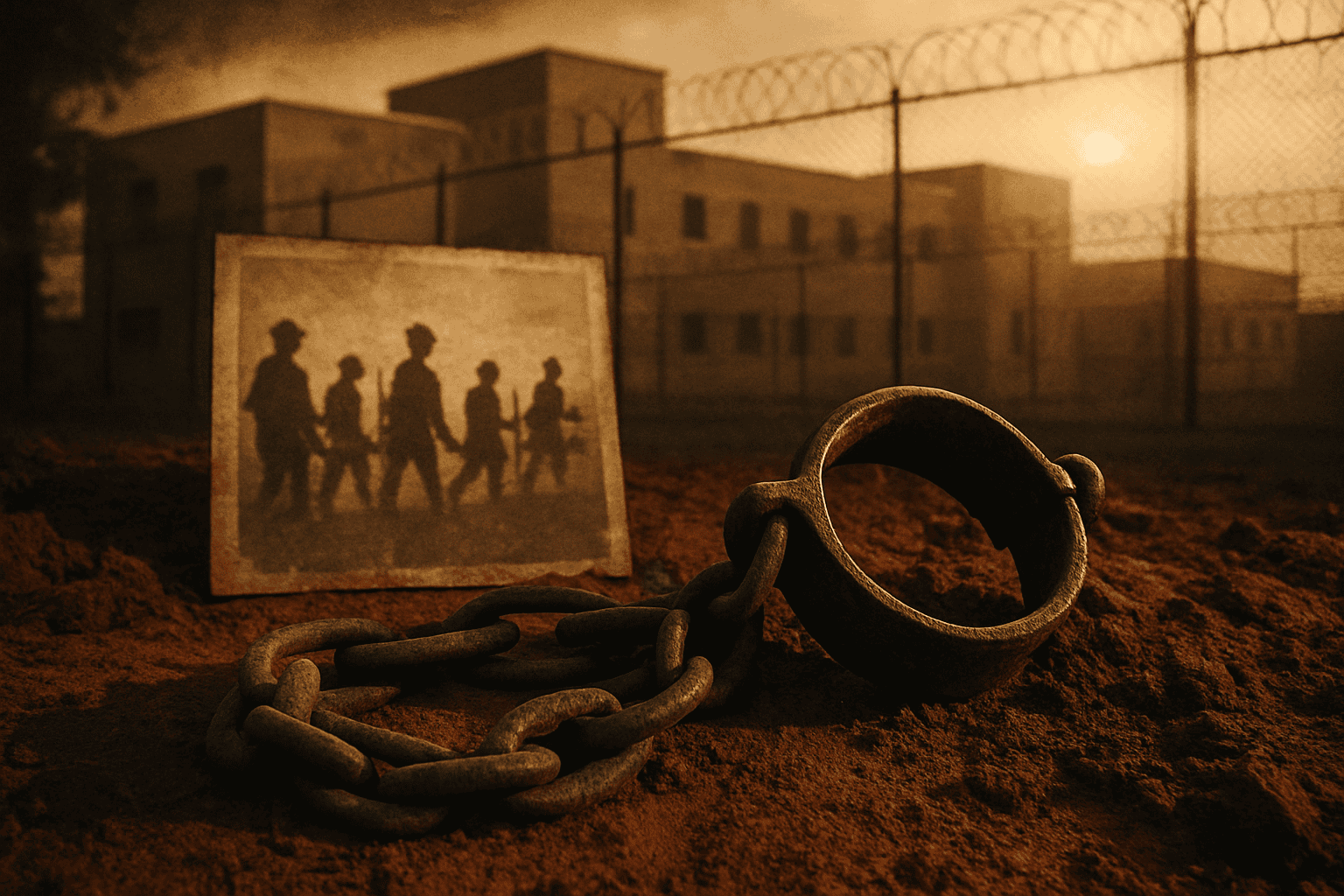
This explainer is based on Georgia’s Convict Leasing Program: Historical Origins and Modern Prison Labor (1866–Present). All statistics and findings are drawn directly from this source.
TL;DR
Georgia has forced people in prison to work for free for over 150 years. After slavery ended, the state locked up Black people on fake charges and leased them to coal mines, brick yards, and farms. Up to 1 in 4 people died each year in those camps. Today, about 47,000 people sit in Georgia prisons. About 80% of them work for no pay or just pennies. The state makes $64 million a year from their labor. The same law that ended slavery has a loophole that allows all of this.
Why This Matters
If your loved one is in a Georgia prison, they likely work every day for free. Georgia pays $0 for most prison labor. The food they cook, the floors they mop, the goods they make — all of it earns money for the state, not for them.
This means your family member can’t save money for when they come home. They can’t send money to help with bills. And the state has a reason to keep locking people up — free labor is worth over $100 million a year to Georgia counties alone.
This research shows that today’s system has deep roots. The same racial gaps exist now as they did 150 years ago. Black people make up 33% of Georgia but 60% of people in prison. The system was built to exploit Black labor. The evidence shows it still does.
Key Takeaway: Georgia pays most people in prison $0 for their work — and the state makes millions from that labor every year.
How It Started: Convict Leasing After Slavery
In 1865, the 13th Amendment ended slavery. But it left a loophole. It said slavery was banned — except as punishment for a crime. Southern states used that loophole right away.
In 1866, Georgia began renting people in prison to private companies. The state passed “Black Codes.” These were laws that made it a crime to be jobless. They made it a crime to quit a bad job. They even made it a crime to look for better work.
These laws were aimed at Black people. They were designed to fill prisons with free labor.
- About 90% of people in Georgia’s prison system were Black
- Black people were only about 45% of the state at that time
- People were sent to coal mines, brick yards, and railroad camps
- They were worked from dawn to dark with no pay
Key Takeaway: Right after slavery ended, Georgia passed laws designed to lock up Black people and force them to work for free — using a loophole in the same law that ended slavery.
People Died by the Thousands
The death rates in Georgia’s camps were shocking. In the 1870s and 1880s, between 10% and over 25% of people died each year. An 1881 state study found that about 1 in 4 people died each year.
To put that in context: Northern prisons at the time had death rates of just 1-2%. Georgia’s camps were 10 to 20 times more deadly.
At Joseph E. Brown’s coal mines in Dade County, death rates hit 10-15% some years. People worked 12 to 16 hours a day underground. They slept in their own waste. They were chained at night and beaten often.
Between 1870 and 1910, thousands of people died in Georgia’s camps. The exact number is unknown. The state kept poor records on purpose.
- Whipping was the main form of punishment
- Sick people were forced to keep working
- Food was barely enough to survive on
- Many deaths were listed as “exhaustion”
Key Takeaway: Up to 1 in 4 people in Georgia’s prison camps died each year — and the state kept bad records on purpose to hide the true death toll.
Who Got Rich
Powerful men ran the system and blocked change. Three men — Joseph E. Brown, Alfred H. Colquitt, and John B. Gordon — ran Georgia politics from the 1870s to the 1890s. All three made money from convict leasing.
Brown owned the Dade Coal Company. He became one of the richest men in the South. He also served as a U.S. Senator. His power kept the deadly mines open for decades.
James W. English ran the Chattahoochee Brick Company in Atlanta. His workers — forced labor — made the bricks that built the city.
Convict leasing brought in more money per person than any other state program in the 1880s and 1890s. The people in power had every reason to keep locking people up.
Key Takeaway: Georgia’s most powerful leaders got rich from convict leasing and used their power to block reforms for decades.
The Chain Gang: A New Name for the Same System
Georgia ended convict leasing in 1908. But it didn’t end forced labor. It replaced it with chain gangs.
Now, instead of renting people to private companies, counties used them to build roads and bridges. The work was just as brutal.
- People were chained together
- They worked under armed guards
- They lived in cages on wheels
- Whipping and torture continued
Chain gangs lasted into the 1940s. Two books from 1932 — by Robert Elliott Burns and John L. Spivak — shocked the nation with their accounts of Georgia’s cruelty.
Key Takeaway: When Georgia ended convict leasing, it replaced it with chain gangs — same forced labor, same brutality, just a different name.
Today’s Prison Labor System
Georgia now holds about 47,000 people in state prisons. It has the 4th highest lockup rate in the country.
About 80% of people who can work in Georgia prisons do work. Most get paid nothing.
Here’s how the work breaks down:
Daily prison jobs — cooking, cleaning, laundry, yard work. Pay: $0.
Prison factories (GCI) — 21 plants make furniture, signs, license plates, clothes, and more. GCI also runs over 13,000 acres of farmland. Pay: $0 or just pennies per hour. GCI made about $64 million in 2023.
Work for counties — People in prison clean roads, maintain public buildings, and do disaster cleanup. Pay: $0. Counties save over $100 million a year from this free labor.
Private company jobs (PIECP) — Some people work for private companies at “real” wages. But up to 80% of that pay is taken back for taxes, room and board, and other fees.
Key Takeaway: Georgia makes at least $64 million a year from prison labor — while paying most workers nothing at all.
The Racial Gap Has Barely Changed
The racial makeup of Georgia’s prisons looks a lot like it did 150 years ago.
Then: Black people were about 45% of the state. They were about 90% of people in prison. That’s a 2-to-1 gap.
Now: Black people are about 33% of the state. They are about 60% of people in prison. That’s a 1.8-to-1 gap.
The gap has barely shrunk in over a century. This isn’t a coincidence. It is the result of a system built to target Black people — from the Black Codes of the 1860s to today’s policing and sentencing patterns.
Key Takeaway: The racial gap in Georgia’s prisons today is almost the same as it was during convict leasing — Black people are locked up at nearly twice the rate of the general population.
Private Probation: A Modern Debt Trap
Georgia leads the nation in private probation. About 40 private companies watch over hundreds of thousands of people on probation. At any given time, about 250,000 or more people are on probation in Georgia.
These companies charge $35 to $50 a month in fees. If you can’t pay, you can end up back in jail. This hits poor people and Black people the hardest.
In 2015, Human Rights Watch found that Georgia’s system locked people up just for being too poor to pay. In 2018, one company — Judicial Correction Services — paid $2.4 million to settle a lawsuit. The lawsuit said the company ran a “judicially sanctioned extortion racket” (meaning: the courts helped them shake people down for money).
Key Takeaway: Georgia’s private probation system charges people monthly fees they often can’t afford — and jails them when they can’t pay.
People in Prison Have Fought Back
People in Georgia prisons have never accepted forced labor quietly.
In December 2010, thousands of people across several Georgia prisons stopped working. It was one of the largest prison strikes in U.S. history. They used hidden cell phones to plan it.
They asked for basic things:
- Fair pay for their work
- A chance to learn and get an education
- Better health care
- Real food with nutrition
- An end to cruel punishment
The state shut it down with lockdowns and transfers. But the strike made national news.
In 2016, people in Georgia prisons joined a nationwide strike. They called out the 13th Amendment’s loophole. They called it what it is: prison slavery.
Key Takeaway: People in Georgia prisons have organized some of the largest labor strikes in U.S. history, demanding fair pay and basic human rights.
The Push to Close the Loophole
A growing movement wants to close the slavery loophole in the 13th Amendment. Seven states have already removed the exception from their state laws:
- Colorado (2018)
- Nebraska (2020)
- Utah (2020)
- Alabama (2022)
- Tennessee (2022)
- Oregon (2022)
- Vermont (2022)
- Nevada (2024)
In Georgia, a bill called HR 1530 — the “Ending Slavery in Georgia” amendment — has been proposed. If passed, it would go to voters.
But the prison system and the companies that profit from prison labor are fighting it. They say prison work is “job training.” They say ending forced labor would cost too much.
The same arguments were made 130 years ago to keep convict leasing alive.
Key Takeaway: Eight states have removed the slavery exception from their constitutions — Georgia has a bill pending but faces strong pushback from the prison system.
The Line from Slavery to Now
Scholars (people who study this deeply) say the line from slavery to today’s prisons is direct and clear. Here’s what connects them:
- The same law — The 13th Amendment loophole has allowed forced labor since 1865.
- The same targets — Black people have always been locked up at far higher rates.
- The same profit motive — Someone has always made money from this labor.
- The same land — Some Georgia prisons sit on land that has been used for forced labor for over 150 years.
- The same politics — People who profit from prison labor still shape the laws.
- The same resistance — People forced to work have always fought back.
As one researcher put it: over 100,000 Black people were forced into labor through the courts between 1865 and 1945 across the South. Georgia was one of the main states where this happened.
Key Takeaway: The same legal loophole, racial targeting, and profit motive that drove convict leasing in the 1860s still drive Georgia’s prison labor system today.
Glossary
Convict leasing — A system where the state rented people in prison to private companies for labor. The companies paid the state. The workers got nothing. It ran from 1866 to 1908 in Georgia.
13th Amendment exception — The part of the law that ended slavery but said forced labor is still allowed as punishment for a crime. This is the legal basis for prison labor today.
Black Codes — Laws passed right after the Civil War that made normal activities like being jobless a crime — but only for Black people. These laws were designed to fill prisons with forced workers.
Chain gang — The system that replaced convict leasing. People in prison were chained together and forced to build roads. It lasted until the 1940s.
GCI (Georgia Correctional Industries) — The part of Georgia’s prison system that runs factories and farms using prison labor. It made about $64 million in 2023.
PIECP — A federal program that lets private companies hire people in prison at “real” wages. But up to 80% of the pay is taken back in fees.
Private probation — When a for-profit company watches over people on probation and charges them monthly fees. Georgia leads the country in this practice.
GDC — Georgia Department of Corrections. The state agency that runs Georgia’s prisons.
Peonage (PEE-uh-nij) — Being forced to work to pay off a debt. A form of slavery. Critics say Georgia’s private probation system is modern peonage.
Bourbon Triumvirate (try-UM-ver-it) — Three powerful Georgia leaders (Brown, Colquitt, Gordon) who ran the state and got rich from convict leasing in the late 1800s.
Read the Source Document
This post is based on a research document titled Georgia’s Convict Leasing Program: Historical Origins and Modern Prison Labor (1866–Present).
📄 Read the full source document (PDF) (link forthcoming)
Other Versions of This Post
We wrote this post for different audiences:
- 📋 Version for Lawmakers — Policy-focused with budget details
- 📰 Version for Media — Background and key facts for reporters
- 📢 Version for Advocates — Action steps and talking points
Links will be added as versions are published.
Sources & References
- No Mercy Here: Gender, Punishment, and the Making of Jim Crow Modernity — Sarah Haley. University of North Carolina Press (2016-01-01) Academic
- Chained in Silence: Black Women and Convict Labor in the New South — Talitha L. LeFlouria. University of North Carolina Press (2015-01-01) Academic
- Profiting from Probation: America’s ‘Offender-Funded’ Probation Industry — Human Rights Watch. Human Rights Watch (2015-01-01) Official Report
- Northward Migration and the Rise of Racial Disparity in American Incarceration, 1880-1950 — Christopher Muller. American Journal of Sociology (2012-01-01) Academic
- Burial for a King: Martin Luther King Jr.’s Funeral and the Week that Transformed Atlanta and Rearranged a Race — Rebecca M. Burns (2011-01-01) Academic
- Slavery by Another Name: The Re-Enslavement of Black Americans from the Civil War to World War II — Douglas A. Blackmon. Anchor Books/Random House (2008-01-01) Academic
- One Dies, Get Another: Convict Leasing in the American South, 1866–1928 — Matthew J. Mancini. University of South Carolina Press (1996-01-01) Academic
- Twice the Work of Free Labor: The Political Economy of Convict Labor in the New South — Alex Lichtenstein. Verso (1996-01-01) Academic
- Worse Than Slavery: Parchman Farm and the Ordeal of Jim Crow Justice — David M. Oshinsky. Free Press (1996-01-01) Academic
- Georgia Nigger — John L. Spivak. Brewer, Warren & Putnam (1932-01-01) Journalism
- I Am a Fugitive from a Georgia Chain Gang! — Robert Elliott Burns. Vanguard Press (1932-01-01) Academic
- The Effects of Convict Leasing in Georgia — Hightower. Master’s thesis Academic
Source Document
You just read about people suffering in state custody. The least you can do is make sure other people read it too. Share this story.
1 thought on “From Convict Leasing to Prison Labor: How Georgia Profits from Forced Work”