Why This Research Matters for Advocacy
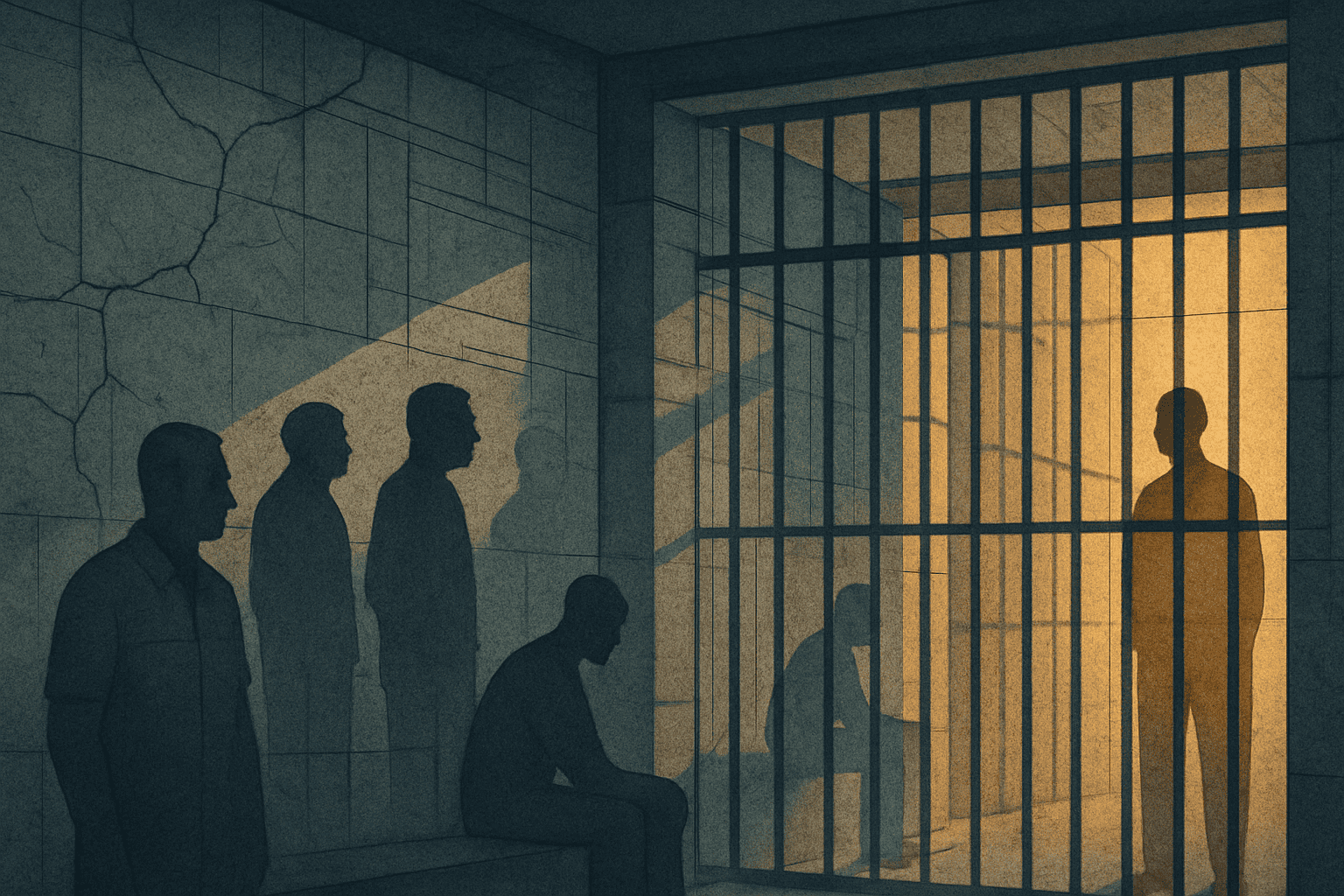
In December 2024, the State of Georgia released a system-wide assessment of the Georgia Department of Corrections conducted by Guidehouse, Inc., The Moss Group, and CGL Companies. This is not a report from an outside watchdog or advocacy organization — it is a state-commissioned assessment that confirms what incarcerated people, their families, and advocates have been saying for years: Georgia’s prison system is in crisis.
The assessment documents emergency-level staffing shortages across 20 state prisons, widespread lock failures that leave people unable to be secured in their cells, a teacher vacancy rate of 57%, only 410 medical beds for approximately 49,000 people, and a PREA substantiation rate of just 7%. It confirms that 29 of 34 state prisons need critical infrastructure upgrades. It confirms that 82.7% of correctional officers leave within their first year.
This report is a powerful advocacy tool because the state itself is the source. When you cite these findings in legislative testimony, media pitches, or coalition meetings, you are citing Georgia’s own commissioned experts. The state cannot dismiss its own assessment.
This research directly supports ongoing advocacy campaigns around:
– Prison conditions and safety: The report documents infrastructure failures, broken locks, and inadequate medical capacity that endanger the approximately 49,000 people in GDC custody.
– Staffing and workforce: Emergency-level vacancy rates mean people in prison go unsupervised, programs go unstaffed, and violence goes unaddressed.
– Education and programming: A 50% decrease in GED completions and a 57% teacher vacancy rate mean the state is warehousing people, not rehabilitating them.
– Sexual safety: A 7% PREA substantiation rate signals a system where sexual violence goes unaddressed and unreported.
– Parole and release: A 38% decrease in parole releases from 2019 to 2023 compounds every other problem by keeping more people locked in deteriorating facilities longer.
Advocates should treat this document as a baseline. The state has acknowledged the crisis. Now we hold them accountable for fixing it.
Key Takeaway: Georgia’s own state-commissioned assessment confirms emergency-level failures across staffing, infrastructure, medical care, education, and sexual safety in the state prison system.
Talking Points
Georgia’s own assessment confirms that all 20 state prisons have reached emergency-level correctional officer vacancy rates, far exceeding the American Correctional Association’s standard of 10% or lower. The state’s own experts say these facilities “are currently unable to maintain safe and secure operations.” (Page 41)
82.7% of correctional officers leave within their first year of employment, creating a dangerous revolving door that leaves incarcerated people in understaffed, unsafe facilities with inexperienced officers. (Page 34)
The state slashed teacher salaries by approximately $30,000 in 2019, and the predictable result followed: teacher vacancies rose from 32% to 57%, and GED completions dropped by 50% — from 2,935 in FY2019 to 1,493 in FY2023. The state chose budget cuts over education and people in prison paid the price. (Page 33)
Georgia provides just 410 medical beds for approximately 49,000 people in its custody. This forced 21,161 accumulated days of overnight hospital stays in 2023 alone, each requiring two correctional officers — further depleting already dangerously short-staffed facilities. (Page 43)
Only 7% of PREA sexual assault allegations were substantiated in FY2023. The assessment identifies multiple barriers to reporting, including staff attitudes that discourage people from coming forward and fear of retaliation. This is not a system that protects people from sexual violence. (Pages 55-56)
29 of 34 Georgia state prisons require critical infrastructure upgrades. Widespread lock failures mean people cannot be secured in their cells, enabling violence and contraband. The state’s own evaluators scored lock control systems and cell doors as “poor.” (Pages 71-73)
Parole releases decreased by 38% from 2019 to 2023 — from 9,455 to 5,863 — while 50.2% of the prison population is ineligible for Performance Incentive Credit points. The state is keeping more people locked up longer with fewer incentives for programming participation. (Pages 60, 67)
The state lost 2,772 staff members between 2019 and 2023 while maintaining a stable prison population, forcing remaining staff into “emergency-mode” operations that the assessment says have become a normalized organizational culture. (Page 9)
Key Takeaway: Eight data-backed talking points drawn directly from the state’s own assessment, ready for use in testimony, media, and advocacy communications.
Important Quotes
The following quotes are extracted directly from the state-commissioned assessment and can be cited in advocacy materials:
“The vacancy rates for correctional officers at 20 GDC state prisons have reached emergency levels. These facilities are currently unable to maintain safe and secure operations, and they cannot comply with established policies.”
— Page 41“From January 2021 through November 2024, 82.7% of COs left employment during their first year.”
— Page 34“One of the main concerns of the assessment team was the widespread failure of locking systems on cell doors. The inability to secure offenders contributes to STG activity, contraband trafficking, and general safety concerns, especially in context of significant staffing shortages.”
— Pages 46, 71, 73“Due to a budget decrease in 2019, teacher salaries in GDC were reduced by approximately $30,000. This contributed to the vacancy rate for teachers rising from 32% in 2018 to 57% in 2024. Additionally, there has been a 50% decrease in GED completions when comparing FY19 to FY23.”
— Page 33“GDC currently has 410 medical beds (e.g., infirmary, acute care, crisis stabilization unit, medical assisted living, respiratory unit) available inside state facilities for approximately 49,000 offenders. This requires GDC to rely heavily on outside medical services for overnight hospital stays in addition to routine medical and hospital day trips.”
— Page 43“GDC’s staffing numbers decreased by 2,772 individuals between 2019 and 2023.”
— Page 9“GDC’s Facility Condition Score identifies 29 facilities that need Critical Upgrade.”
— Page 72“From 2019 to 2023, there was a 38% decrease in offenders being released by parole.”
— Page 60“Certain offenders cannot earn PIC points or receive certifications for work detail participation due to the nature of their convictions; as of November 2024, 24,966 offenders were ineligible for PIC points, which is 50.2% of the population.”
— Page 67
Key Takeaway: Direct quotes from Georgia’s own assessment that advocates can cite verbatim in testimony, letters, and media materials.
How to Use This in Your Advocacy
Legislative Testimony
This assessment is a powerful tool for committee hearings on corrections budgets, criminal justice reform, and oversight. Frame your testimony around this core message: The state’s own experts have declared an emergency. Now the legislature must act.
- Lead with the finding that 20 state prisons have reached “emergency levels” of vacancy and “are currently unable to maintain safe and secure operations” (Page 41). This is not your characterization — it is the state’s.
- When arguing for education funding, cite the direct causal chain the assessment documents: the state cut teacher salaries by approximately $30,000, vacancies rose from 32% to 57%, and GED completions dropped 50% (Page 33). This is a self-inflicted wound with a clear remedy.
- For healthcare funding, present the ratio: 410 medical beds for approximately 49,000 people (Page 43). Then note the downstream cost: 21,161 accumulated days of overnight hospital stays in 2023, each requiring two officers as escorts.
- When advocating for parole reform, note the 38% decrease in parole releases (Page 60) and the fact that 50.2% of the population cannot earn Performance Incentive Credits (Page 67). Ask legislators: What incentive does someone have to participate in programming if it cannot reduce their sentence?
Public Comment
During public comment periods on corrections policy, budget hearings, or proposed regulations:
– Focus on the human impact of infrastructure failures: broken locks mean people cannot be secured in their cells, creating conditions for violence (Pages 46, 71, 73).
– Emphasize that 29 of 34 state prisons need critical upgrades (Page 72), and that years of underfunding — as low as $2.5 million in FY2019 for capital improvements — created this crisis.
– Cite the 7% PREA substantiation rate (Pages 55-56) and the assessment’s own identification of barriers including “staff attitudes” and “fear of retaliation” to argue for independent oversight.
Media Pitches
- Angle 1 — “Georgia’s Own Report Card”: The state hired outside consultants to assess its prison system. The verdict: emergency-level staffing, broken locks, 29 of 34 prisons needing critical upgrades, and a healthcare system with 410 beds for 49,000 people.
- Angle 2 — “The Teacher Salary Cut That Gutted Prison Education”: One budget decision in 2019 — cutting teacher salaries by approximately $30,000 — led to a 57% vacancy rate and a 50% drop in GED completions. A clear story of cause and effect.
- Angle 3 — “82.7% Quit in Year One”: Nearly 83% of new correctional officers leave within their first year, creating a staffing crisis the state calls “emergency level.” Why can’t Georgia keep its prison staff?
- Angle 4 — “Behind Broken Locks”: The state’s own assessors found widespread lock failures across Georgia prisons. People cannot be secured in their cells. What does that mean for safety?
Coalition Building
- Share this assessment with labor and workers’ rights organizations — the data on officer pay ($44,044 entry salary vs. $63,684 for state troopers, Page 32), turnover (82.7%, Page 34), and working conditions makes a compelling case for workplace safety and fair compensation.
- Connect with healthcare advocacy groups using the medical bed shortage data (410 beds for approximately 49,000 people, Page 43) and the burden of 21,161 accumulated hospital stay days (Page 43).
- Engage education advocates with the teacher salary and GED completion data (Page 33).
- Partner with sexual assault prevention organizations using the 7% PREA substantiation rate and the assessment’s own documentation of reporting barriers (Pages 55-56).
- Use the 38% parole decrease (Page 60) and 50.2% PIC ineligibility (Page 67) data to align with sentencing reform coalitions.
Written Communications
In letters to the Governor, legislators, the GDC Commissioner, and the Board of Corrections:
– Always cite the assessment by its full name: “System-Wide Assessment of the Georgia Department of Corrections, December 13, 2024, conducted by Guidehouse, Inc., The Moss Group, and CGL Companies at the direction of the State of Georgia Executive Branch.”
– Include specific page references for every data point.
– Frame your ask around the assessment’s own findings: “Your own commissioned assessment found [specific finding]. What is the timeline for addressing this?”
Key Takeaway: Practical guidance for using this assessment in testimony, public comment, media outreach, coalition building, and written advocacy — all grounded in the state’s own findings.
Use Impact Justice AI
Need help turning these findings into action? Visit Impact Justice AI to generate customized advocacy materials using this research and other GPS data.
Impact Justice AI can help you:
– Draft legislative testimony using specific findings and quotes from this assessment
– Write letters to officials that cite the state’s own data
– Create email campaigns for your coalition or organization
– Generate public comment submissions tailored to specific policy proposals
– Prepare media pitches with the most newsworthy data points
The state has produced the evidence. Impact Justice AI helps you put it to work.
Key Takeaway: Impact Justice AI at https://impactjustice.ai can help advocates generate letters, testimony, emails, and other materials using this research.
Key Statistics
The following statistics are drawn directly from the state-commissioned assessment. Each is ready to copy into testimony, letters, or media materials.
Staffing Crisis
– 20 state prisons have vacancy rates at “emergency levels,” exceeding the ACA standard of 10% or lower (Page 41)
– 82.7% of correctional officers left employment during their first year, January 2021 through November 2024 (Page 34)
– 2,772 — the number of staff members GDC lost between 2019 and 2023 (Page 9)
– $44,044 — entry salary for a GDC Correctional Officer, compared to $63,684 for a Georgia State Patrol trooper (Page 32)
– 6,400 — total GDC employees managing approximately 49,000 people in custody (Page 5)
– 36% — vacancy rate for maintenance staff (Page 74)
Education and Programming
– 57% — teacher vacancy rate in 2024, up from 32% in 2018 (Page 33)
– $30,000 — approximate salary reduction for GDC teachers following a 2019 budget decrease (Page 33)
– 50% — decrease in GED completions from FY2019 (2,935) to FY2023 (1,493) (Page 33)
– 50.2% of the prison population (24,966 people) is ineligible for Performance Incentive Credit points (Page 67)
Healthcare
– 410 medical beds for approximately 49,000 people (Page 43)
– 21,161 accumulated days of overnight hospital stays in CY2023 (Page 43)
– 6,907 hospital day trips in CY2023 (Page 43)
– 9,739 routine medical trips in CY2023 (Page 43)
Infrastructure
– 29 of 34 state prisons need critical infrastructure upgrades (Page 72)
– 25 of 26 infrastructure categories scored between “fair” and “poor” in GDC’s own evaluation (Pages 71-72)
– Lock control systems scored 3.8 (poor) and hollow metal doors scored 3.9 (poor) on a scale where 5 is “extremely poor” (Pages 71, 73)
Sexual Safety
– 7% — PREA substantiation rate in FY2023 (57 out of 819 allegations) (Pages 55-56)
– 45% of allegations found “not to have occurred”; 40% had “insufficient evidence” (Pages 55-56)
Population and Release
– 435 — Georgia’s incarceration rate per 100,000 residents in 2022, up from 427 in 2021 (Page 11)
– 38% decrease in parole releases from 2019 to 2023 (from 9,455 to 5,863) (Page 60)
– 33.4% of the state prison population identified as Security Threat Group members as of November 2024 (Page 15)
– 27% — GDC’s current recidivism rate (Page 158)
Key Takeaway: Comprehensive, copy-ready statistics organized by topic area, each with page references from the state’s own commissioned assessment.
Read the Source Document
Read the full System-Wide Assessment of the Georgia Department of Corrections (December 13, 2024):
Download the Full Report (PDF)
We encourage all advocates to review the original document. The data speaks for itself.
Other Versions
This analysis is also available in versions tailored for different audiences:
- Public Version — For community members and families
- Legislator Version — For elected officials and policy staff
- Media Version — For journalists and editorial boards
You just read about people suffering in state custody. The least you can do is make sure other people read it too. Share this story.