This explainer is based on Georgia’s $600 Million Prison Spending Infusion: An Accountability Analysis. All statistics and findings are drawn directly from this source.
News Lead
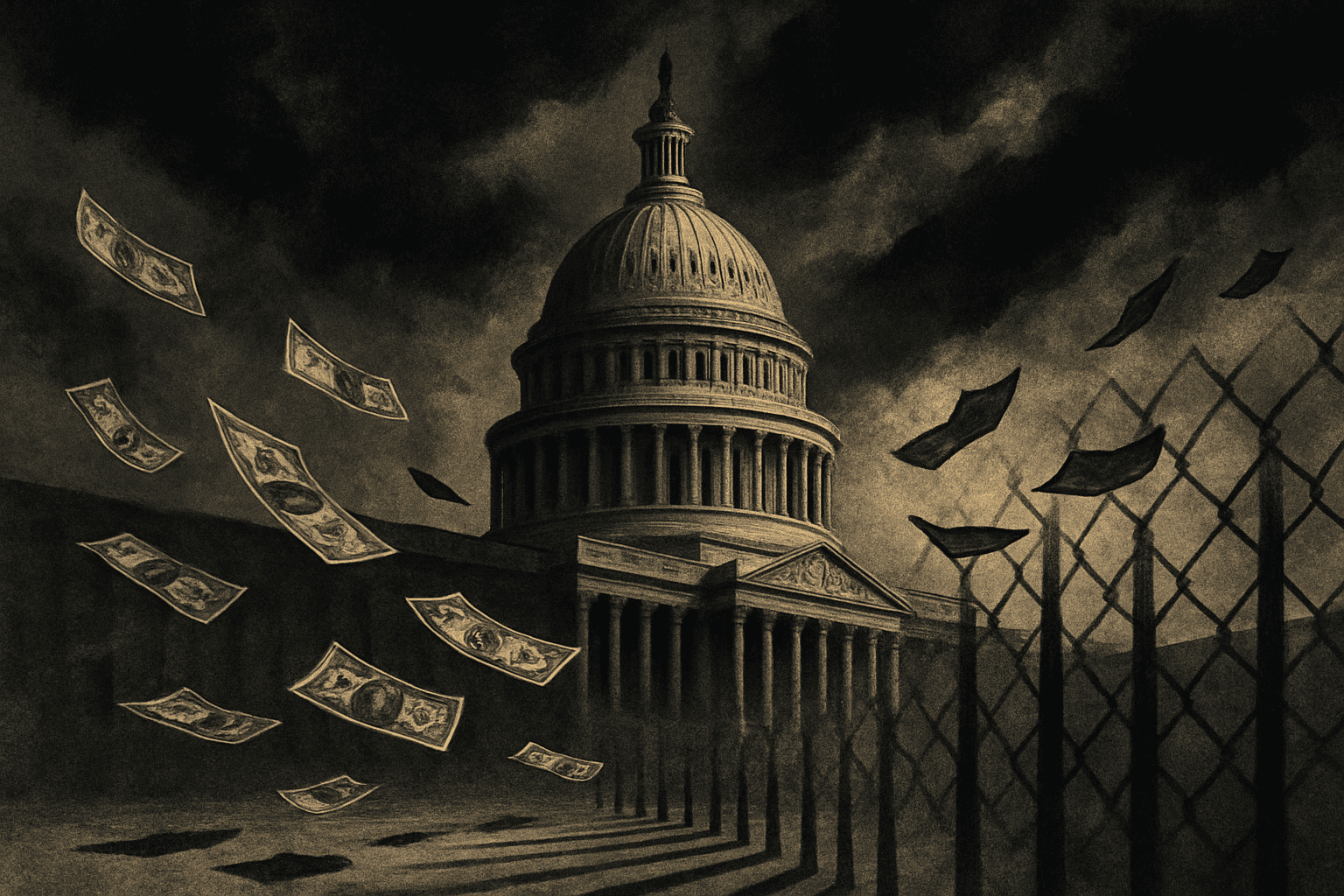
Georgia poured approximately $700 million in additional funding into its prison system between FY2022 and FY2026 — the fastest corrections spending growth in state history — yet every measurable outcome has worsened. In the first six months of 2025 alone, 42 people died in deaths investigated as possible homicides, nearly two-thirds of 2024’s record full-year total of 66. At the current pace, the state is on track for approximately 84 prison homicides in 2025, a 27% increase over last year’s record.
The findings come from a new accountability analysis by Georgia Prisoners’ Speak and The GDC Accountability Project, which tracks what was promised, what was spent, and what has changed since the Georgia General Assembly approved approximately $634 million in emergency corrections funding between January and May 2025. The analysis concludes that Georgia directed the historic appropriation overwhelmingly toward operational fixes — infrastructure repairs, contraband technology, modest salary increases — while funding zero structural reforms that federal investigators and independent experts identified as prerequisites for constitutional conditions: no population reduction, no parole expansion, no classification overhaul, and no independent oversight.
The spending-violence paradox is stark: annual corrections spending rose 44% in four years, from $1.12 billion in FY2022 to a proposed $1.62 billion in FY2026. During that same period, prison homicides increased from 8 annually (2018) to a projected 84 in 2025, staffing reached emergency levels at 20 of 34 state prisons, and the U.S. Department of Justice concluded the state’s prison conditions violate the Eighth Amendment.
Key Takeaway: Georgia’s historic $700 million corrections spending increase has coincided with accelerating violence — projected 2025 homicides are up 27% over 2024’s record — because the money funded operational fixes, not the structural reforms experts said were necessary.
Quotable Statistics
The Human Toll
– 42 people died in deaths investigated as possible homicides in the first six months of 2025 — nearly two-thirds of 2024’s full-year total
– 9 people were killed in June 2025 alone
– Approximately 84 prison homicides projected for full-year 2025 — a 27% increase over 2024’s record of 66
– 330–333 total deaths in Georgia prisons in 2024
– Prison homicides rose from 8 in 2018 to 13 in 2019 to at least 38 in 2023 to 66 in 2024
– Georgia’s prison homicide rate is nearly triple the national average, per the DOJ
The Money
– $634 million in new corrections spending approved January–May 2025 ($434 million for AFY 2025; $200 million for FY2026)
– Approximately $700 million in total additional spending above FY2022 baseline
– 44% increase in annual corrections spending in four years (from $1.12 billion to $1.62 billion)
– $330 million allocated to infrastructure — but lock replacement alone will take 5–6 years
– $0 allocated for population reduction, parole reform, classification overhaul, or independent oversight
The Staffing Crisis
– 20 of 34 state prisons have correctional officer vacancy rates above 50% (emergency level)
– 8 prisons have vacancy rates of 70% or more
– 80% of correctional officer positions were vacant at Valdosta State Prison as of April 2024
– 82.7% of new correctional officers leave within their first year
– Only 118 officers hired from 800 applicants in a recent six-month period — a 14.75% effective hiring rate
– Net retention from 800 applicants after first-year attrition: approximately 20 officers
– Filling ~3,500 vacancies at current rates would require processing approximately 140,000 applicants
– The 4% salary increase funded by the appropriation leaves Georgia below most Southern state competitors
– As of December 2025, prison guards are at a 15-year low while the incarcerated population is at a 15-year high
The Structural Gap
– 29 of 34 state prisons need critical upgrades
– Approximately 15,000 verified gang members — one-third of the prison population — with membership nearly doubled since 2014
– Parole releases decreased 38% between 2019 and 2023
– National standards require vacancy rates no higher than 10%; Georgia has 20 facilities above 50%
– A 20% population reduction (10,000 people) would bring staffing ratios into manageable territory at current workforce levels
– Salary increases of 30–50% (not 4%) are needed to make Georgia competitive
Key Takeaway: Every data point tells the same story: record spending has not slowed record violence because the state funded operations, not the structural changes its own consultants and federal investigators demanded.
Context and Background
What triggered the spending: Three converging crises forced Georgia’s hand. In September 2021, the DOJ launched a CRIPA investigation into Georgia’s prisons. In June 2024, Governor Kemp hired Guidehouse Inc. for nearly $2.7 million to assess the system. On October 1, 2024, the DOJ released a 93-page report concluding Georgia’s prison conditions violate the Eighth Amendment, documenting more than 1,400 violent incidents at close- and medium-security prisons between January 2022 and April 2023, and giving the state 49 days to respond or face a federal lawsuit. In January 2025, Kemp unveiled the Guidehouse-informed budget request.
Why the money isn’t working: The analysis identifies a core arithmetic problem. Georgia has approximately 50,000 people in 34 state prisons and 4 private prisons, staffed by approximately 9,000 total employees with roughly half of correctional officer positions vacant. The 82.7% first-year attrition rate for new officers means the state retains only about 20 officers for every 800 applicants processed. Commissioner Oliver admitted that “trying to hire 2,600 people in a fiscal year is just not possible.” The analysis argues the only mathematically viable solutions are dramatically increasing compensation (30–50%, not 4%), reducing the prison population by 20% (10,000 people), or both.
What was left out: The $600 million funded no population reduction strategies, no parole expansion, no classification and housing overhaul, no sexual safety infrastructure, no evidence-based gang management programs, and no independent oversight mechanisms. Georgia has no prison ombudsman, no independent inspector general for corrections, and no public reporting requirement on spending or outcomes. GDC has a documented history of misclassifying homicides and providing false or misleading information.
The federal backstop may be gone: The DOJ’s 49-day deadline passed without action. Under the Trump administration, there is no public indication the CRIPA case is being pursued. Project 2025 calls for eliminating DOJ consent decrees, and the Trump DOJ has scaled back prison oversight nationally.
Historical context: Georgia’s Deal-era criminal justice reforms (Georgia Council on Criminal Justice Reform, created 2013) were a national model that produced single-digit homicide years, but the council’s influence waned after Deal left office in 2019. Correctional officers dropped 35% between 2010 and 2020, while the prison population dropped only 5%. A 7% COVID-era budget cut was never fully restored.
Key Takeaway: Georgia is spending record sums to maintain a system that federal investigators have declared unconstitutional, while excluding every structural reform its own consultants and the DOJ identified as necessary — and the federal enforcement mechanism may no longer exist.
Story Angles
1. “The Retention Math” — Why Georgia Can’t Hire Its Way Out of the Prison Crisis
Georgia loses 82.7% of new correctional officers within their first year. At current rates, filling 3,500 vacancies would require processing 140,000 applicants. The 4% salary increase leaves Georgia below most Southern competitors. This is a data-driven story about the mathematical impossibility of the state’s stated strategy, featuring the Commissioner’s own admission that mass hiring “is just not possible.” Key sources: GDC staffing data (via open records), Guidehouse assessment, correctional officer union representatives, workforce economists.
2. “$700 Million and Nothing to Show” — Tracking Where Georgia’s Prison Money Went
An accountability investigation following the dollars. Approximately $330 million went to infrastructure, but lock replacement alone takes 5–6 years. Roughly $40 million went to staffing, but retention makes it futile. About $97 million went to healthcare contracts, but co-pays and commissary price inflation were not addressed. Meanwhile, $40 million was allocated for new prison planning — expanding capacity rather than reducing population. The story: who benefits from this spending, and who doesn’t? Key sources: budget documents, GBPI analysis, facility-level spending breakdowns (via open records), private prison contract details.
3. “The 2026 Gubernatorial Test” — What Every Candidate Must Answer About Georgia’s Prisons
With Georgia’s prison crisis deepening despite historic spending, the 2026 governor’s race becomes a test of whether any candidate will break from the current approach. The analysis identifies specific policy questions: Will you pursue population reduction? Parole reform? Independent oversight? The Deal-era reforms prove evidence-based alternatives work within Georgia’s own recent history. Key sources: candidate platforms, criminal justice policy experts, advocacy organizations, incarcerated people and their families.
Read the Source Document
The full analysis — Georgia’s $600 Million Prison Spending Infusion: An Accountability Analysis — is available at [GPS document link placeholder]. The report includes detailed spending breakdowns, facility-level data, a complete timeline of events, and pending open records requests for additional data.
For questions, interview requests, or additional data, contact Georgia Prisoners’ Speak at [contact placeholder].
Other Versions
This analysis is available in versions tailored for different audiences:
- [Public Version] — A plain-language explainer for the general public
- [Legislator Version] — A policy brief for Georgia lawmakers and their staff
- [Advocate Version] — A detailed resource for attorneys, organizers, and advocacy groups
Sources & References
- Georgia’s $600 Million Prison Spending Infusion: An Accountability Analysis. Georgia Prisoners’ Speak / The GDC Accountability Project, Inc. (2026-03-01) GPS Original
- Workers and inmates report human rights crisis at Coastal State Prison. WTOC (2026-02-12) Journalism
- Georgia Decarceration: Addressing the Prison Crisis. Georgia Prisoners’ Speak (2026-01-01) GPS Original
- Georgia Public Broadcasting prison staffing report. Georgia Public Broadcasting (2025-12-15) Journalism
- The Hidden Violence in Georgia’s Prisons: Beyond the Death Toll. Georgia Prisoners’ Speak (2025-09-24) GPS Original
- Georgia prison homicides on the rise, already approaching last year’s total. Atlanta Journal-Constitution (2025-09-01) Journalism
- Georgia prisons get $600M for overhaul. Lawmakers say it’s a start. Atlanta Journal-Constitution (2025-05-01) Journalism
- Georgia Prisons Cover Up Murders. The Appeal (2025-02-01) Journalism
- Overview: 2026 Fiscal Year Budget for the Georgia Department of Corrections, GBPI. Georgia Budget and Policy Institute (2025-02-01) Official Report
- Gov. Kemp Unveils Recommendations from System-wide Corrections System Assessment, Office of Governor Brian Kemp. Office of Governor Brian Kemp (2025-01-07) Press Release
- Georgia prisons are in crisis, say consultants hired by Gov. Kemp. Atlanta Journal-Constitution (2025-01-01) Journalism
- Project 2025’s Plan for Criminal Justice Under Trump. Brennan Center for Justice (2025-01-01) Official Report
- CRIPA Investigation of Georgia Prisons. U.S. Department of Justice Civil Rights Division (2024-10-01) Official Report
- Gov. Kemp Announces GDC Assessment as Next Phase of Public Safety Improvements — Office of the Governor. Office of the Governor of Georgia (2024-06-17) Press Release
- Georgia Prison Crisis Worsens. The Appeal (2024-02-01) Journalism
- DOJ Report Exposes Brutality (SCHR). Southern Center for Human Rights (2024-01-01) Official Report
- Justice Department Announces Investigation of Conditions in Georgia Prisons. U.S. Department of Justice (2021-09-01) Press Release
- Overview: 2022 Fiscal Year Budget for the Georgia Department of Corrections. Georgia Budget and Policy Institute (2021-02-01) Official Report
Source Document
You just read about people suffering in state custody. The least you can do is make sure other people read it too. Share this story.