Author: Forever19
I was 19 years old when I got seventeen years for armed robbery. The take was $140, split between me and my co-defendant. Seventy bucks cost me my twenties and my thirties.
I went to four different prisons in Georgia between 1992 and 2009, but I spent most of my time—seven years—at Smith State Prison and Hayes State Prison. Smith State was a place that bred violence. Still is, I imagine. It was understaffed back in the early ’90s, so I can only guess how bad it is now.
My first week at Telfair State Prison, where I started, I saw a guy get hit in the head with a combination lock over a gambling debt. I asked the guy next to me on the top tier what the guy had done. He told me if it doesn’t concern me, don’t worry about it. That was my lesson early on—mind your business, keep your head down.
I was young and wild and impressionable at Telfair. I spent about three years there dealing with constant assaults, intimidation, and sexual exploitation. Then they moved me to Smith State, and that’s where the really bad things happened.
An older convict took advantage of my naive nature. He got me to have sex with him. I felt like if I didn’t do it, I would’ve gotten hurt. I’ve never told anyone this before. It’s been bothering me for a long time.
In prison, you deal with stuff on your own. You don’t ever want to be labeled a snitch, even if something happens to you personally. So I just carried it. It went on for almost a year, and honestly, by that time in my head it was “normal.”
He said something one day—I can’t remember what it was, but maybe he thought of me as a prison wife. Whatever he said, we ended up in the middle of the dorm fighting. Both of us went to the hole.
I think fighting back changed how others saw me. But I continued perpetuating the cycle because, like I said, it had become normal. I never exploited anyone the way it was done to me—no force, no expectations—but if someone was already outwardly exhibiting feminine behavior, we explored. It was survival more than anything. I had a life-plus-ten sentence. As far as I was concerned at the time, I was gonna die in there. I never got emotionally attached.
Prison is a violent place regardless, because of its nature. It’s basically the animal kingdom in human form. The strong get preyed on by the weak. There’s a lot of gang activity that, honestly, if you weren’t into before being incarcerated, is kind of stupid to latch onto once locked up.
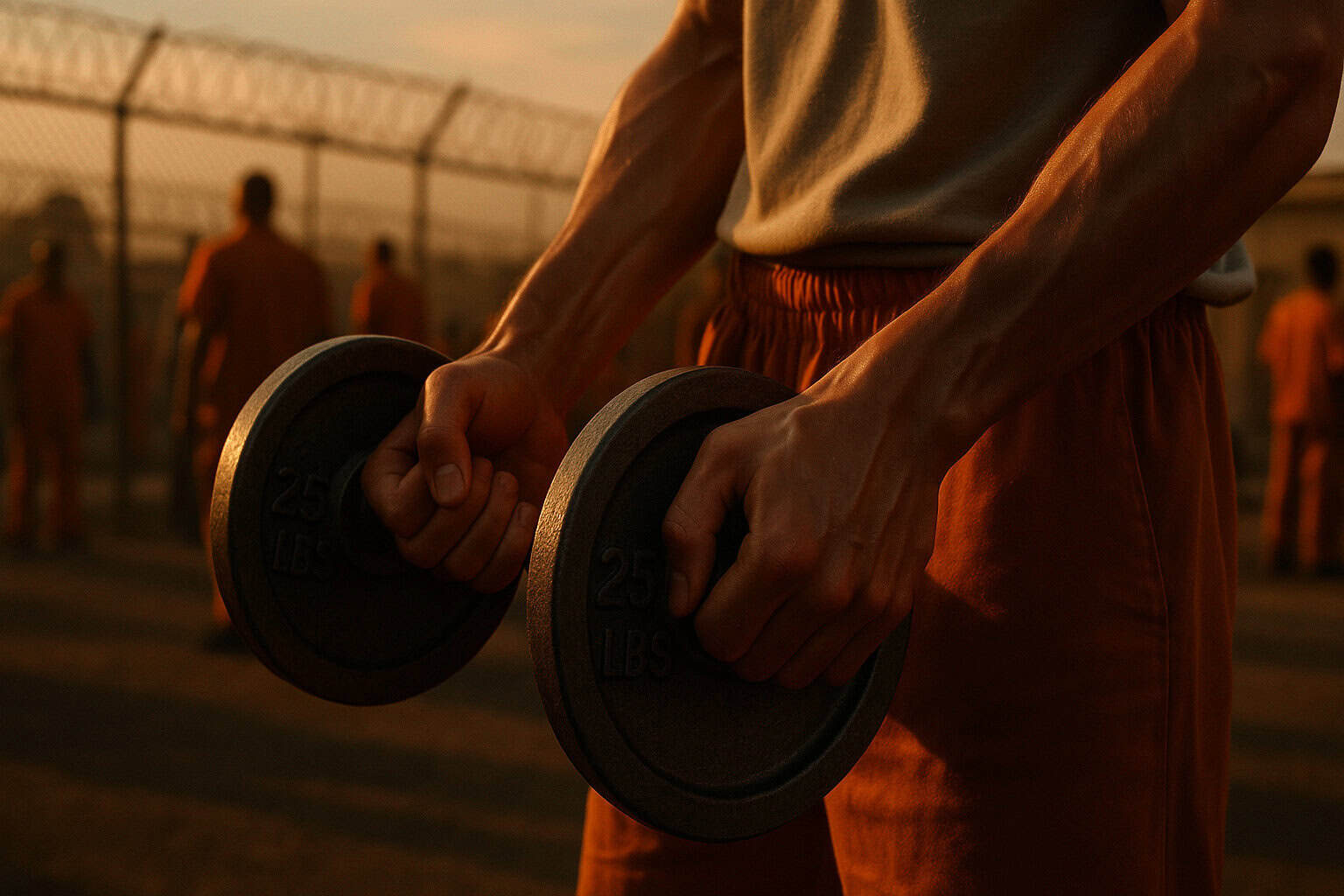
I’d been out of the house since I was 16, so I’d experienced some of the grimy sides of society before I went in. But I wasn’t raised like that. I found ways to stay focused. I became a fitness fanatic—they still allowed steel weights at the time—and I was an avid jogger. I read anything I could get my hands on.
I also taught basic English to Spanish-speaking convicts and guys who couldn’t read. There were three classes: ESL, Basic English, and GED Prep. I didn’t get paid—they don’t pay you in Georgia. It was a labor of love. I found I had a knack for being a teacher.
Later, I worked in the law library for a couple of years, helping guys out with their cases. I also found out more than I wanted to know about others—sex offenders I thought were solid guys. You can’t compartmentalize that. You’re twisted if you’re into that, and I kept my distance.
My jobs kept me sane in prison. That education is what got me out.
I lost all my appeals, all the way up to the Supreme Court. So I sued the parole board for a violation against cruel and unusual punishment toward life-sentence-serving prisoners. There was a glitch in the escape clause of their basic guidelines that basically said you had to put your life in danger to obtain an earlier parole hearing.
I filed all my paperwork myself and represented myself in appellate court. The appeals didn’t turn out too well. But a few months after they denied my lawsuit against the parole board, I was granted parole. That was around 2007. I won’t say I was completely surprised—I’d read the parole basics a hundred times.
I went to a transitional center in the same city as my family. At the center, I got to go out and find jobs, interview, learn bus routes. It was weird at first—you feel like everyone is looking at you, like you have a scarlet letter on your forehead that says “ex-convict.” Social anxiety disorder is what it’s called.
I was at the transitional center for six months. The purpose was to help you find employment, but I had to find work on my own. I’d do an interview, they’d request a background check, and then they’d tell me they’d found someone more suitable.
I eventually found something working on the back of a garbage truck for a temp service. It was a means to an end. Eventually, I found a job at a hotel through the temp service and got hired on permanently—or so I thought.
I worked there for a year and a half. Then something happened at one of the other hotels in the chain, so the company did a second background check on all employees. Guess who came up on the short end? The GM just told me they were letting me go because of my background. My mentality was that if they didn’t want me, someone would appreciate my work ethic.
It happened quite a few times. I’ve done three interviews at Walmart, three at Dollar General, just to be told I’m not eligible. Eventually, I found warehouse work, which paid well. I worked in warehouses the majority of the time I’ve been released.
There were no cell phones in 1992. When I went in, the world was one way. When I came out in 2009, everything had changed.
I’m 52 now, and warehouse work beats your body down. I’m currently out of work dealing with gout. I discovered I had it about six months ago. I had some insurance through my last job, but being out of work, it’s lapsed. I put in for disability in December, but that’s a long process. I might have to go back to work and hope it doesn’t flare up again.
I’m living in Florida, trying to live a better life. Georgia, in a lot of ways, will never let a person forget their past. I went back to Georgia right before Christmas because of issues with my lady—my first love from when I was 17. We reconnected 35 years later. But she’s not going to change. I can sense the resentment in how she talks and the vibe between us. Moving forward, honestly, I’m probably going back home to my family eventually.
Mentally, I’m drained. I recently lost a very dear friend of mine to pancreatic cancer on November 10. She was my therapist and my friend. Because of our relationship, I had to pull back out of respect for her partner, so we hadn’t talked in a few months before she died.
I never got to say goodbye. Even now, when I’m alone and think of the time we shared and the conversations, I break down. I just miss everything about her. She was ambitious and successful, but she didn’t make you feel less than. I always said she was who my wife was supposed to be.
She knew about the toxic relationship I was in and even cried to me about why I couldn’t seem to let it go. I do wish I would’ve walked away sooner. A part of me knows I would have been devastated being around her every day watching her condition deteriorate. But I still wish things had been different.
Right now, I don’t have any money of my own. I donate plasma twice a week if I can, which brings in enough for small things. Social Security is taking forever. Dealing with the gout is frustrating.
Sometimes you can make a decision in a few minutes that can alter your entire life. All I can tell people is the reality of fast street life and consequences. Seventy bucks. That’s what seventeen years cost me.
For people who are locked up right now, especially the young ones: find something constructive you’re interested in and focus on it. Educate yourself, because that’s the only thing that can’t be taken away.
Your entire life can pass you by if you don’t get serious about it. I went in at 19 and came out at 36. My twenties and thirties, gone. The world moved on without me. And even now, fifteen years later, I’m still fighting.
But there is light at the end of the tunnel. Never give up hope. I thought I’d die in there, and I didn’t. Keep your mind right, stay focused, and don’t let that place take everything from you.
You just read about people suffering in state custody. The least you can do is make sure other people read it too. Share this story.