A Constitutional Betrayal: Georgia’s Deadline on Freedom
Georgia habeas corpus deadline limits the Great Writ to four years, potentially denying innocent prisoners constitutional rights and legal recourse.
Help spread the word — here's how:
- Scroll down to Copy a Caption and hit Copy on the one you want
- Scroll back up and click the Share on Facebook button for your favorite quote image
- On Facebook, paste the caption into your post — or write your own

Copy a Caption
Twitter/X
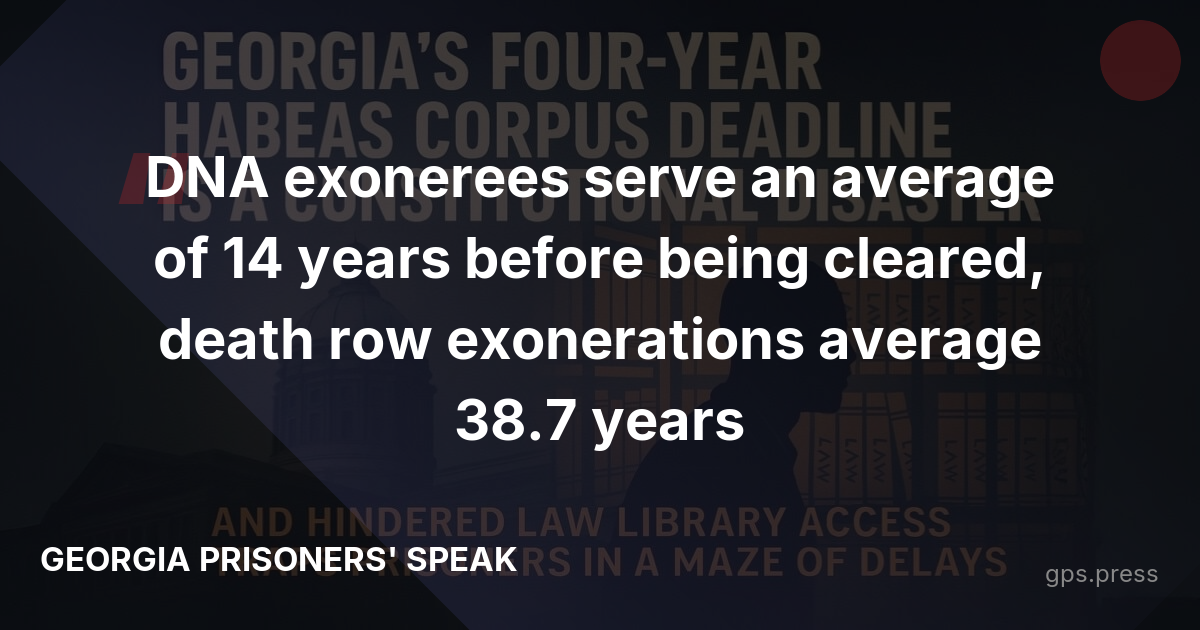
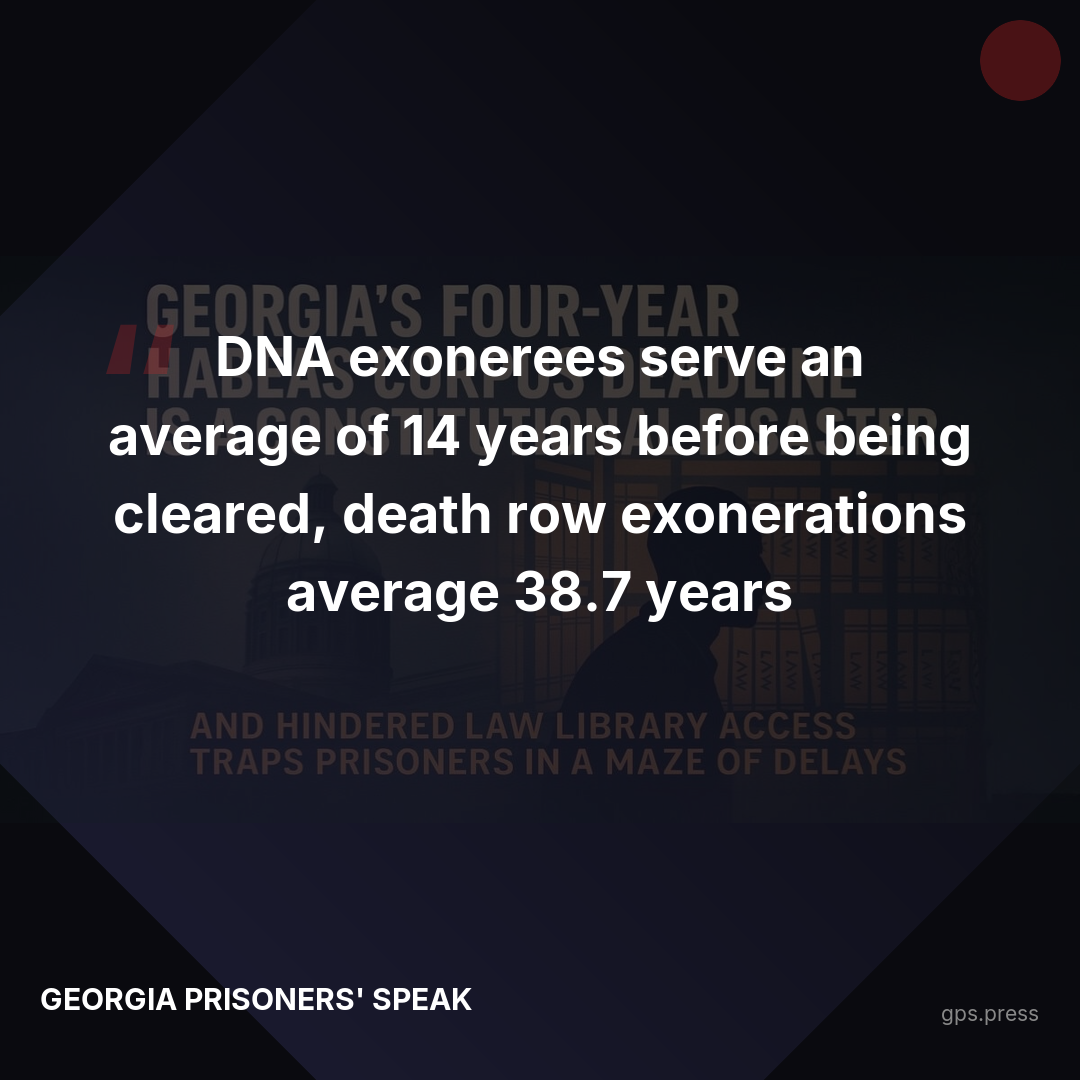
DNA exonerees serve an average of 14 years before being cleared, death row exonerations average 38.7 years. Georgia's four-year habeas deadline makes these rescues impossible. https://gps.press/a-constitutional-betrayal-georgias-deadline-on-freedom/
Facebook
For over 800 years, habeas corpus has protected people from unlawful imprisonment without time limits. But Georgia broke from centuries of legal tradition in 2004, imposing a four-year deadline that turns a constitutional guarantee into a procedural trap.
The numbers tell the story: DNA exonerees serve an average of 14 years before being cleared, death row exonerations average 38.7 years. Terry Talley served nearly 40 years before his 2023 exoneration, Joey Watkins over 20 years. None of these cases would be possible under Georgia's current law. How many innocent people remain trapped by this unconstitutional deadline? https://gps.press/a-constitutional-betrayal-georgias-deadline-on-freedom/
Instagram
Georgia's four-year habeas corpus deadline violates 800 years of legal tradition and the U.S. Constitution. DNA exonerees serve an average of 14 years before being cleared, death row exonerations average 38.7 years. Terry Talley served nearly 40 years before his 2023 exoneration, Joey Watkins over 20 years. Georgia's arbitrary deadline would have left them imprisoned forever, turning constitutional protection into a procedural trap that denies justice to the innocent.
#GeorgiaPrisons #PrisonReform #CriminalJustice #GPS #MassIncarceration #Georgia https://gps.press/a-constitutional-betrayal-georgias-deadline-on-freedom/
LinkedIn
Georgia's 2004 habeas corpus law represents a dangerous constitutional departure. For the first time in state history, lawmakers imposed a four-year deadline on challenging wrongful convictions—breaking with over 800 years of legal tradition that treated habeas corpus as a perpetual safeguard against unlawful detention.
The policy consequences are severe: DNA exonerees nationally serve an average of 14 years before being cleared, death row exonerations average 38.7 years. Recent Georgia cases like Terry Talley (nearly 40 years) and Joey Watkins (over 20 years) demonstrate that meaningful investigations of innocence claims require far longer than arbitrary legislative deadlines allow. This constitutional violation demands immediate legislative correction. https://gps.press/a-constitutional-betrayal-georgias-deadline-on-freedom/