Federal Nutrition Guidelines vs. Georgia Prison Food Reality
New federal guidelines target ultra-processed foods. Georgia prisons still serve inadequate meals while profiting from junk food commissaries.
Help spread the word — here's how:
- Scroll down to Copy a Caption and hit Copy on the one you want
- Scroll back up and click the Share on Facebook button for your favorite quote image
- On Facebook, paste the caption into your post — or write your own
Copy a Caption
Twitter/X
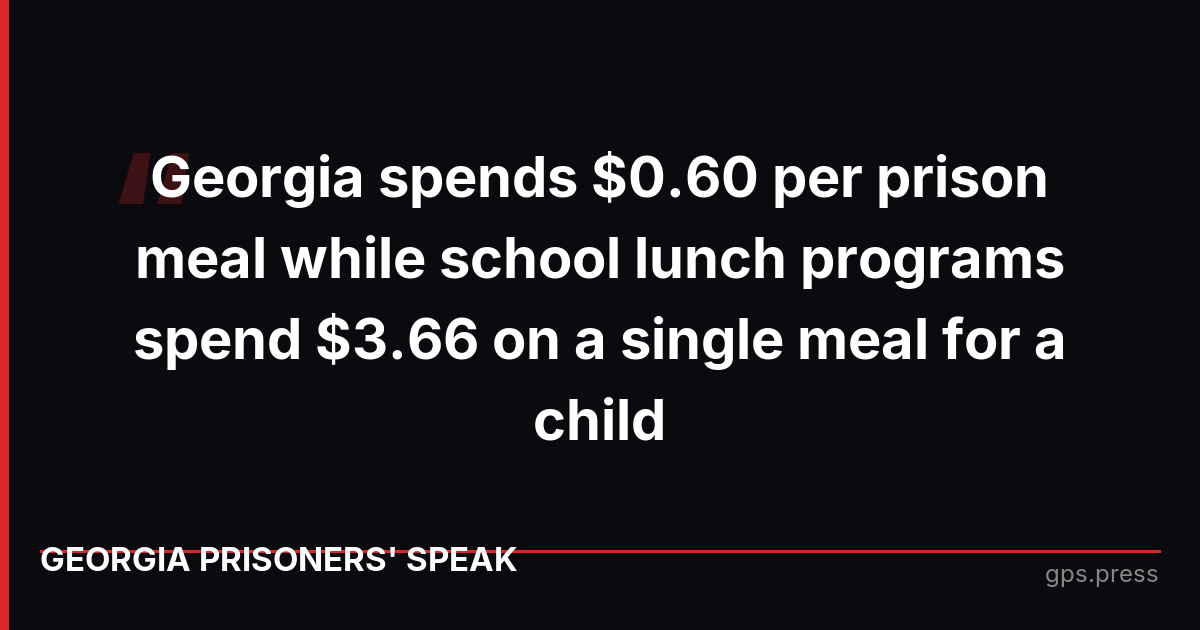
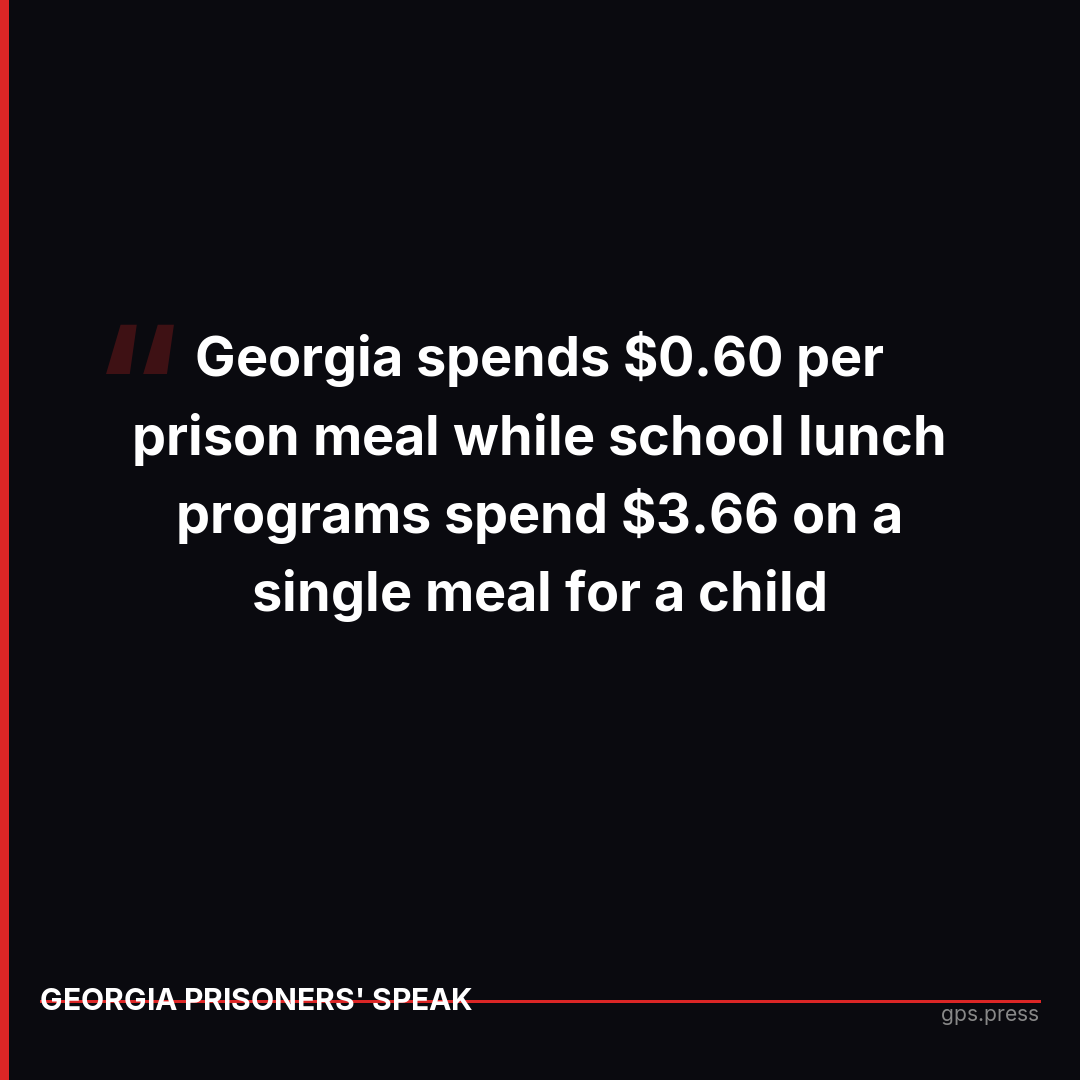
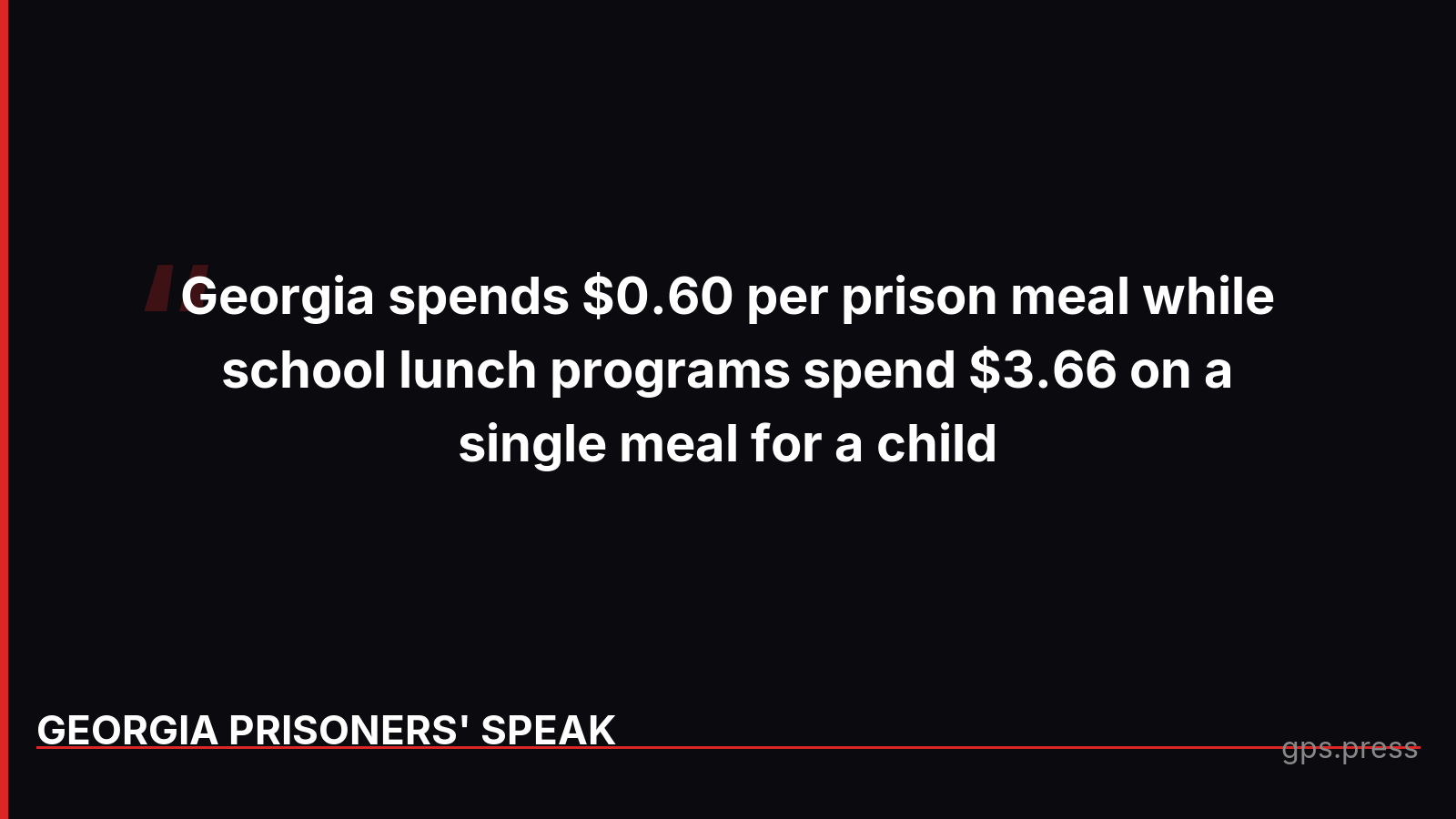
Georgia spends $0.60 per prison meal while school lunch programs spend $3.66 feeding a child. The state starves 50,000 people, then profits when families buy overpriced junk food to keep them alive. https://gps.press/federal-nutrition-guidelines-vs-georgia-prison-foo...
Facebook
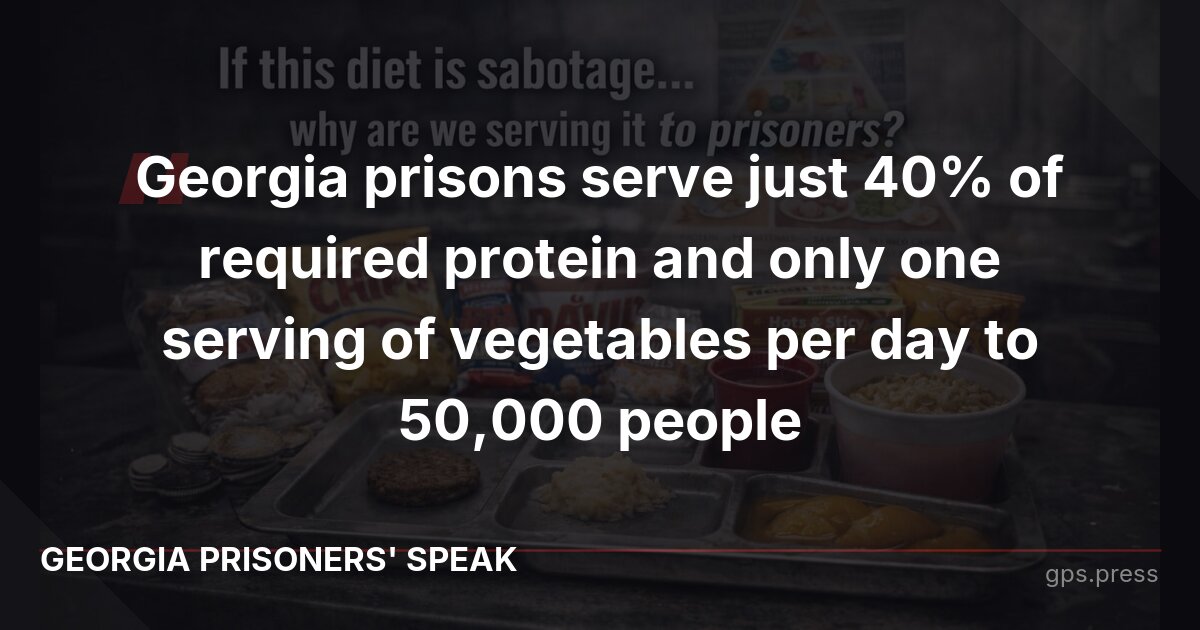
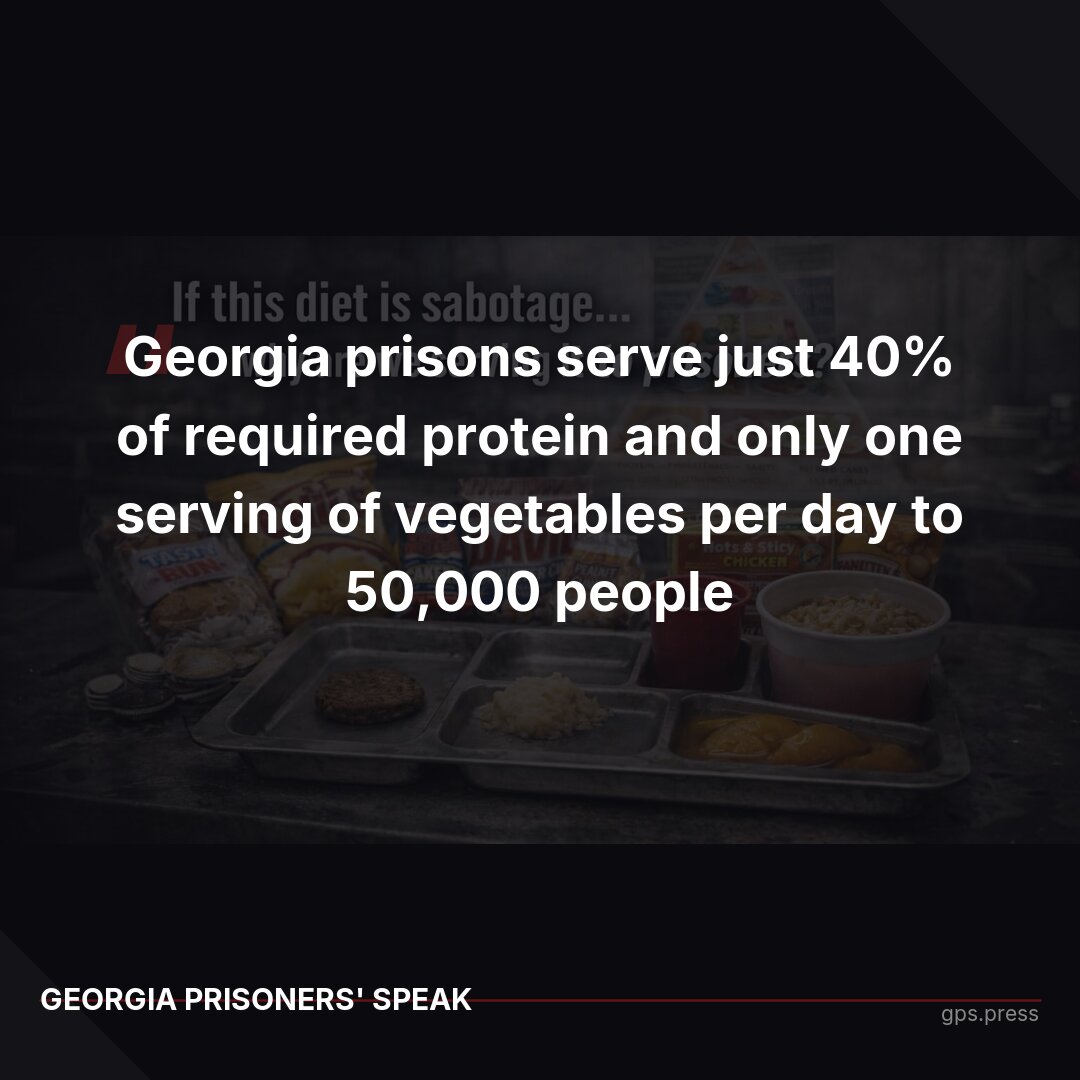
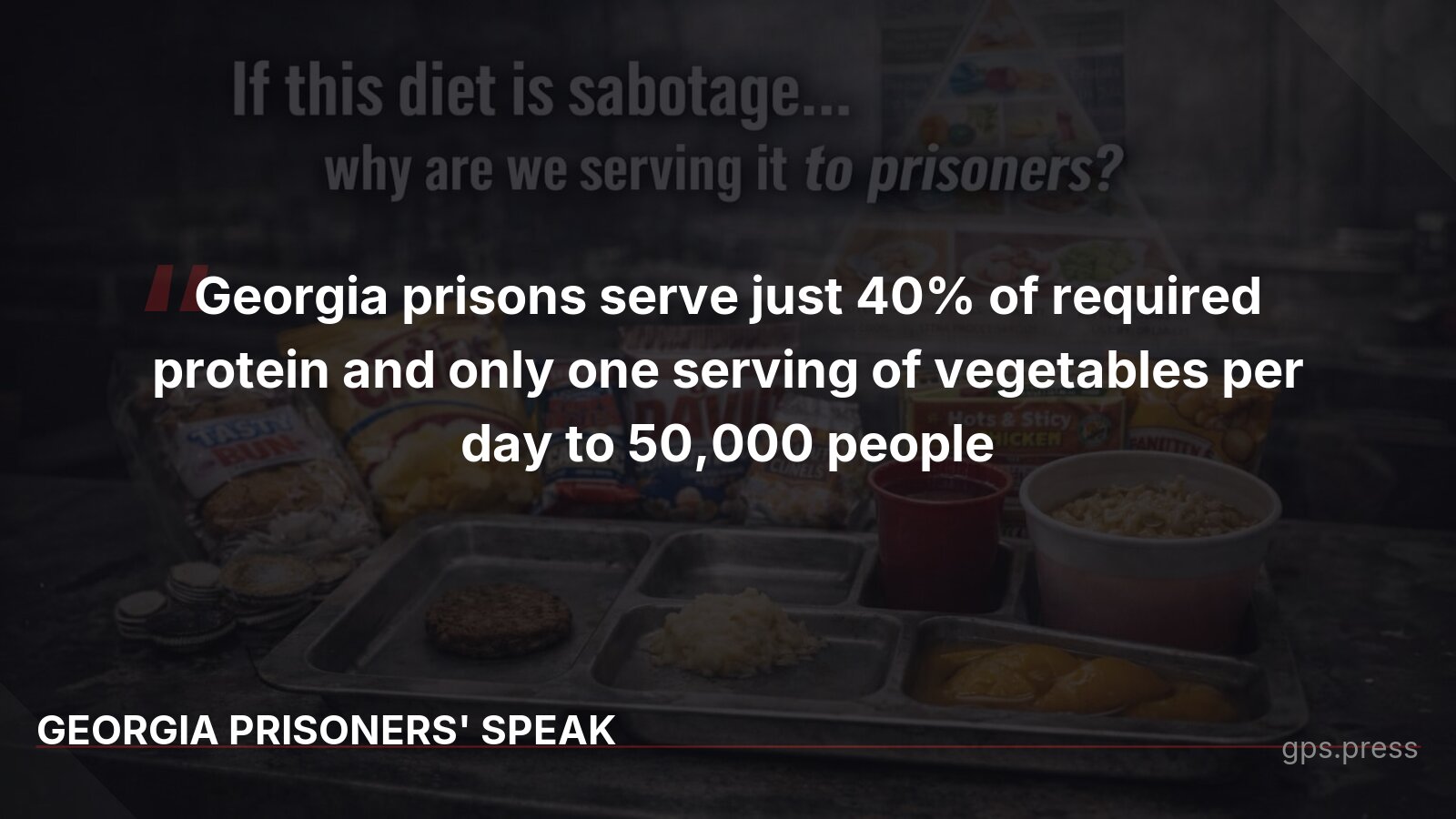
The Trump administration just declared ultra-processed foods a threat to American health and updated federal nutrition guidelines for schools, military, and government programs. But Georgia still feeds 50,000 incarcerated people meals containing just 40% of required protein and one serving of vegetables per day—then forces families to buy overpriced junk food from prison commissaries to keep their loved ones from starving.
When will Georgia's prisons follow the same nutrition standards we now demand for schoolchildren? https://gps.press/federal-nutrition-guidelines-vs-georgia-prison-food-reality/
Instagram
Georgia spends 60 cents per prison meal—six times less than what schools spend feeding children. The state provides just 40% of required protein to 50,000 incarcerated people, then profits when desperate families buy overpriced junk food to prevent starvation. Federal guidelines now recognize that proper nutrition reduces healthcare costs and violence, but Georgia's prisons remain trapped in a system that makes people sicker and more dangerous.
#GeorgiaPrisons #PrisonReform #CriminalJustice #GPS #MassIncarceration #Georgia
LinkedIn
The Trump administration's new federal nutrition guidelines recognize what research has long demonstrated: proper nutrition reduces healthcare costs, improves outcomes, and saves taxpayers money. The guidelines will reshape school meals, military food, and government assistance programs nationwide. Georgia's Department of Corrections should follow suit.
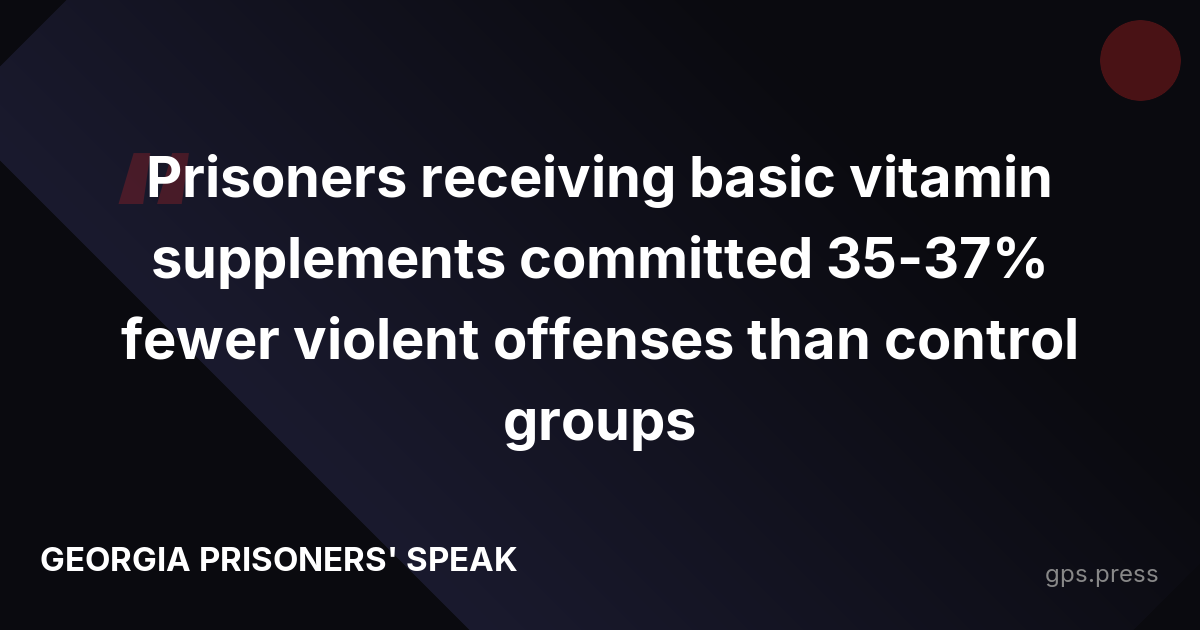
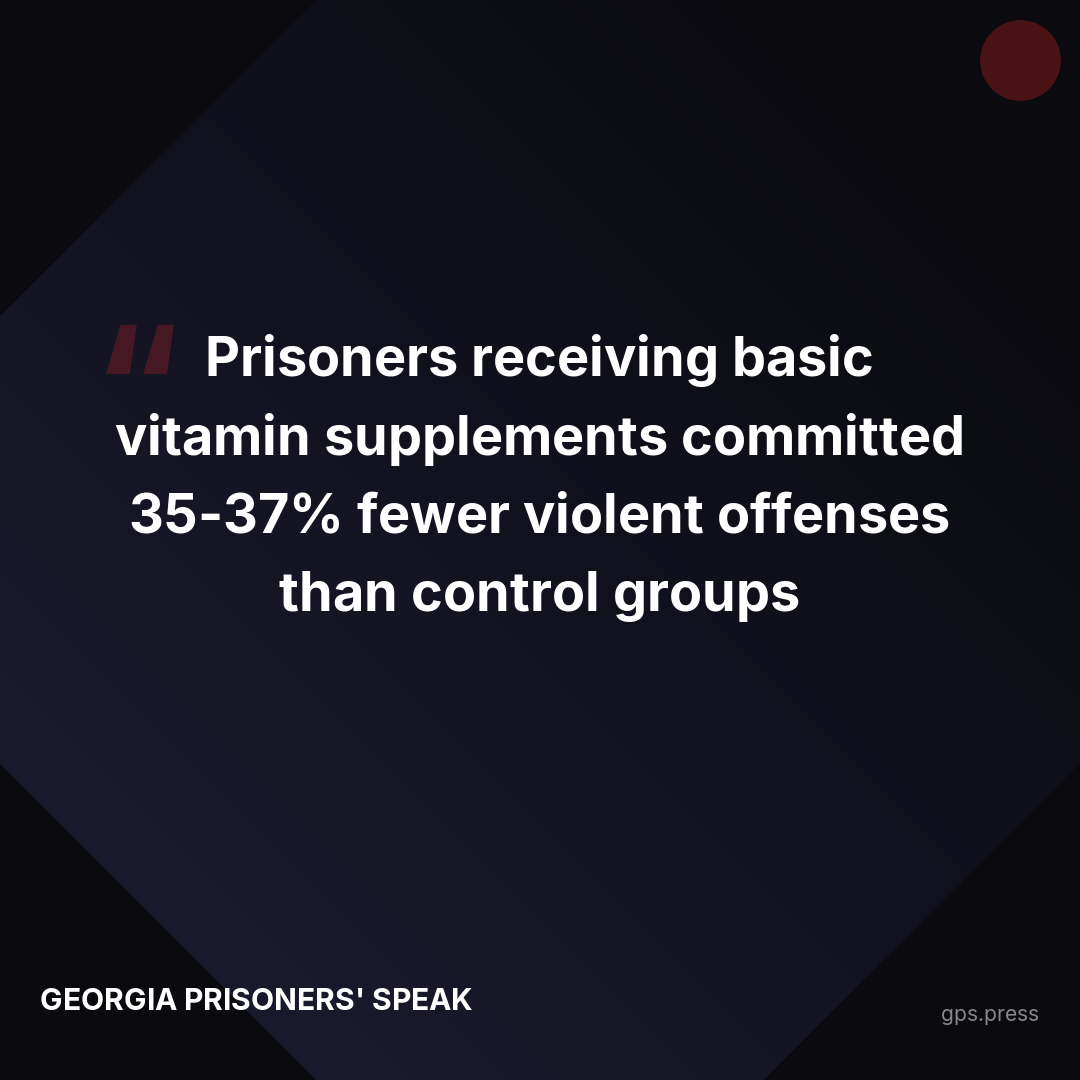
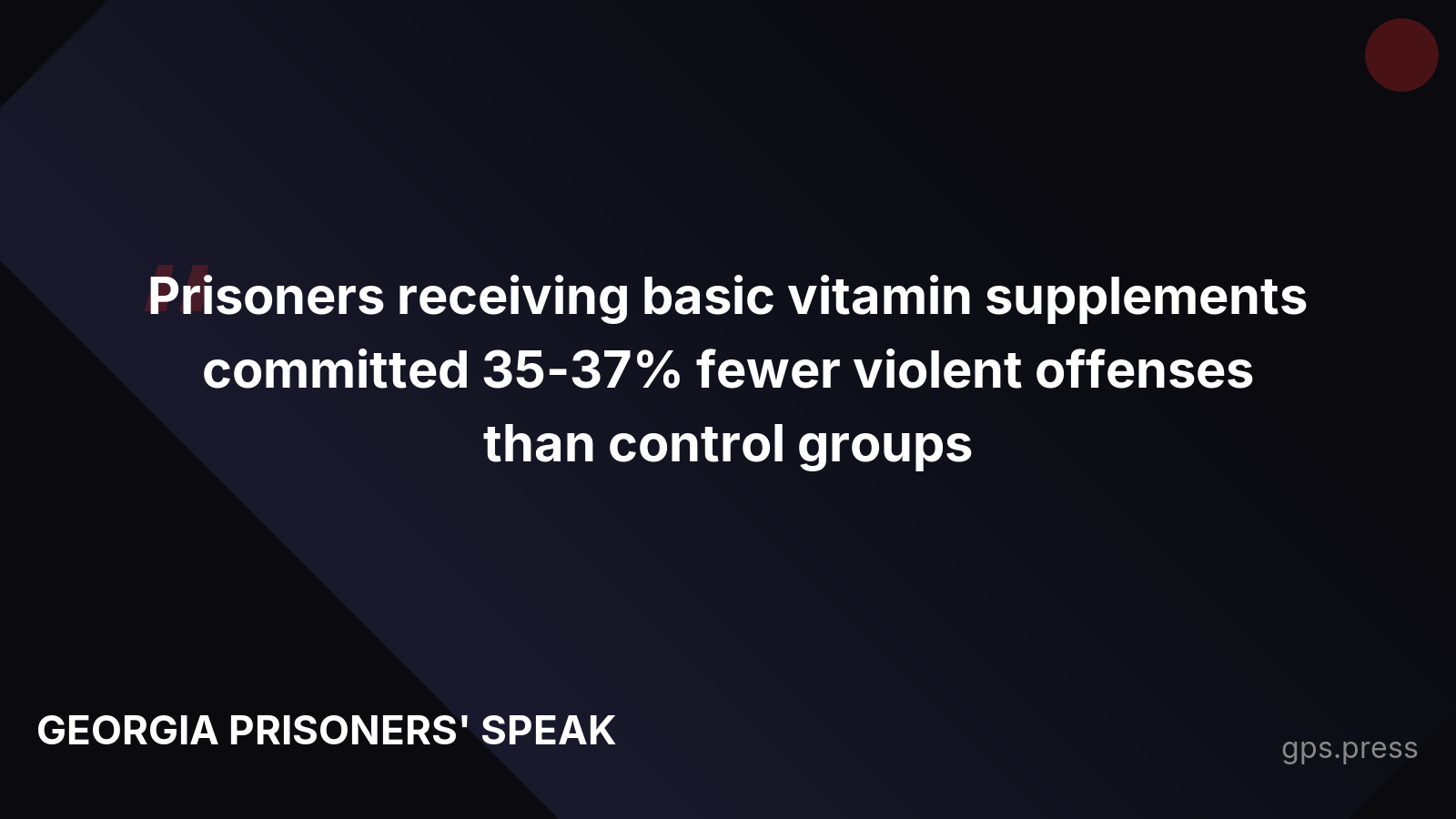
Currently, Georgia provides incarcerated people with just 40% of required protein, less than one serving of vegetables per day, and meals costing 60 cents each. Research shows prisoners receiving basic vitamin supplements commit 35-37% fewer violent offenses. Every dollar 'saved' on inadequate food triggers an estimated $6-10 in healthcare, security, and violence-related costs. This isn't fiscal responsibility—it's false economy that makes communities less safe. https://gps.press/federal-nutrition-guidelines-vs-georgia-prison-food-reality/