Georgia Spends $600 Million on Prisons But Refuses to Adopt Gang Separation Strategy That Cut Violence 50% in Other States
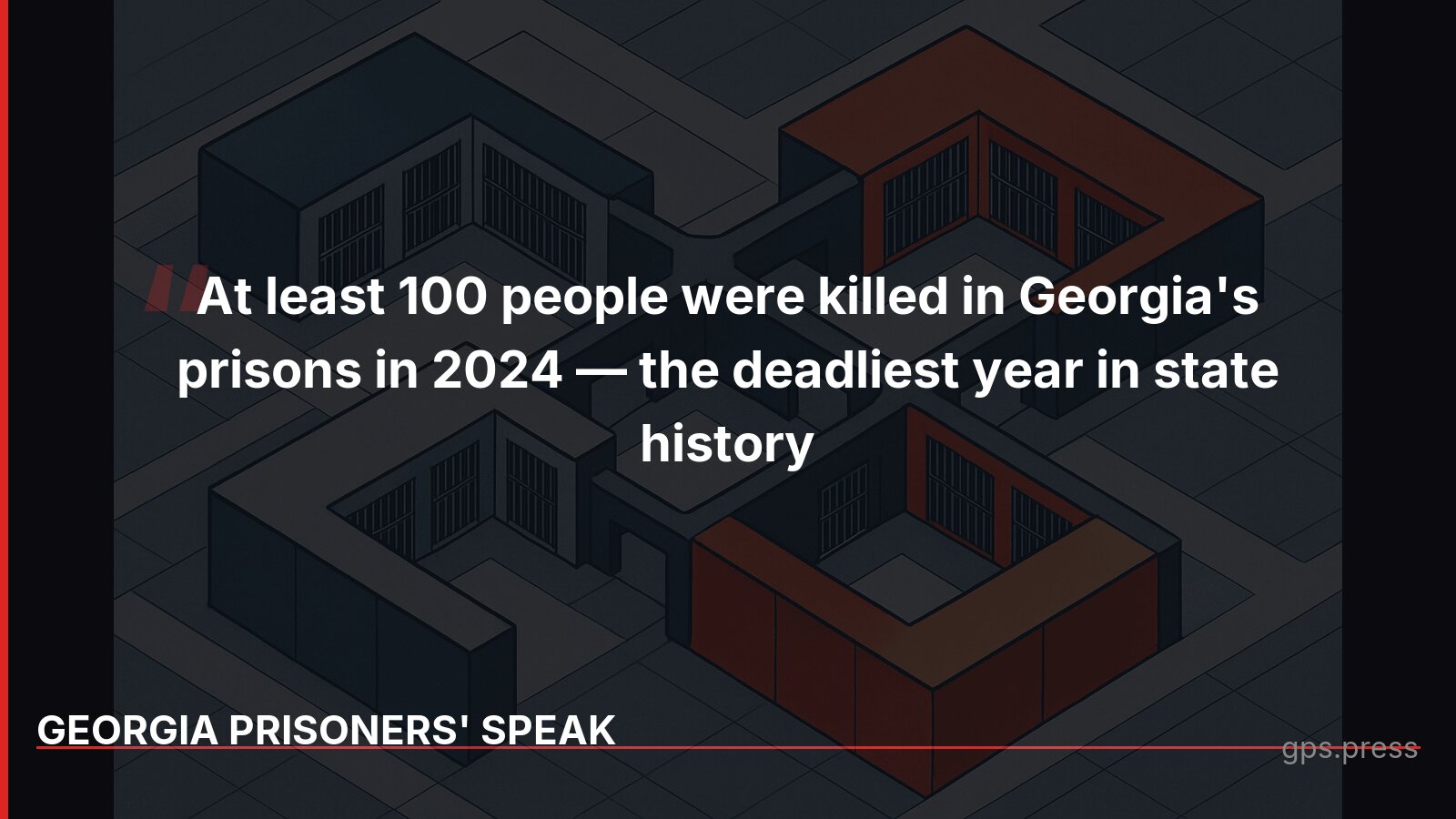
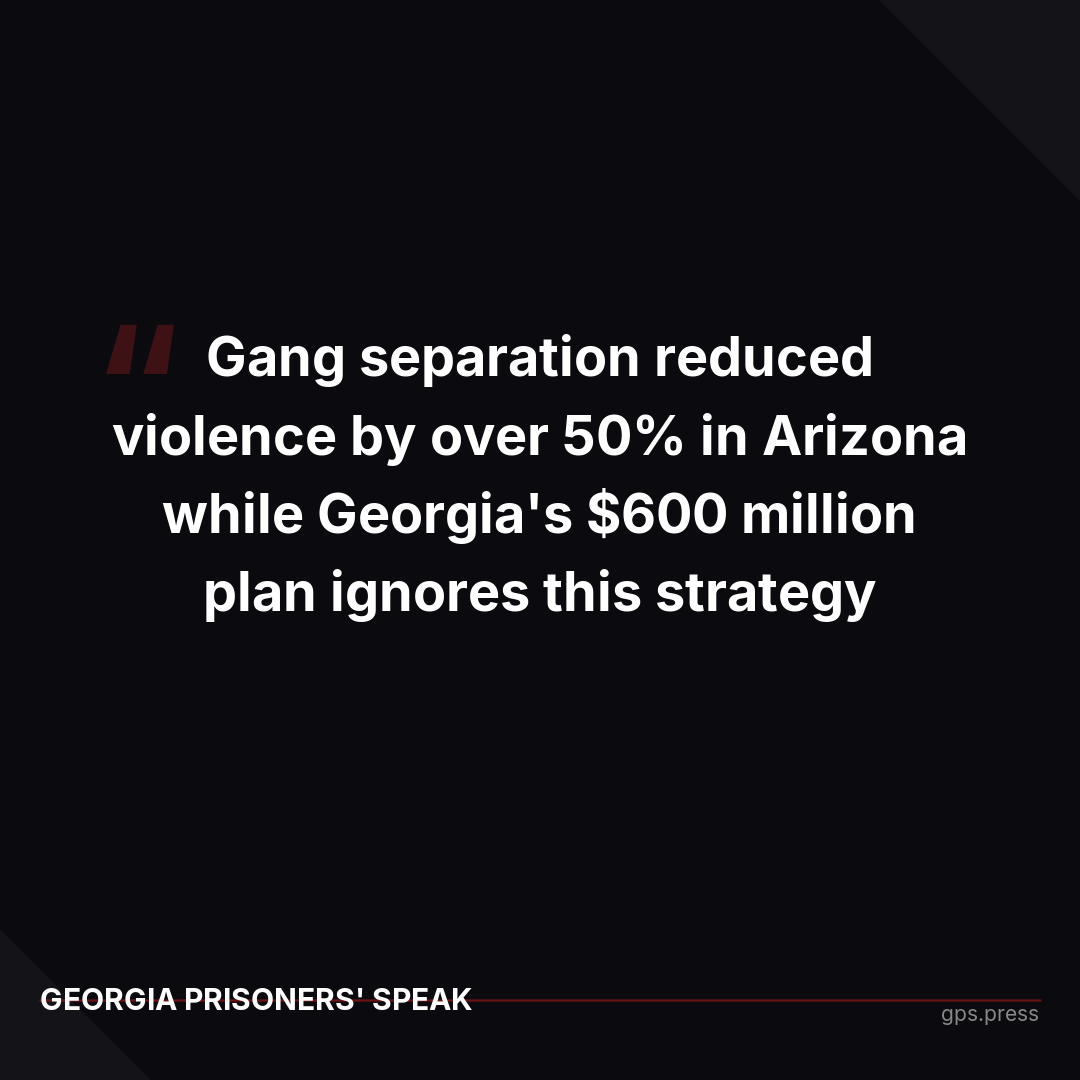
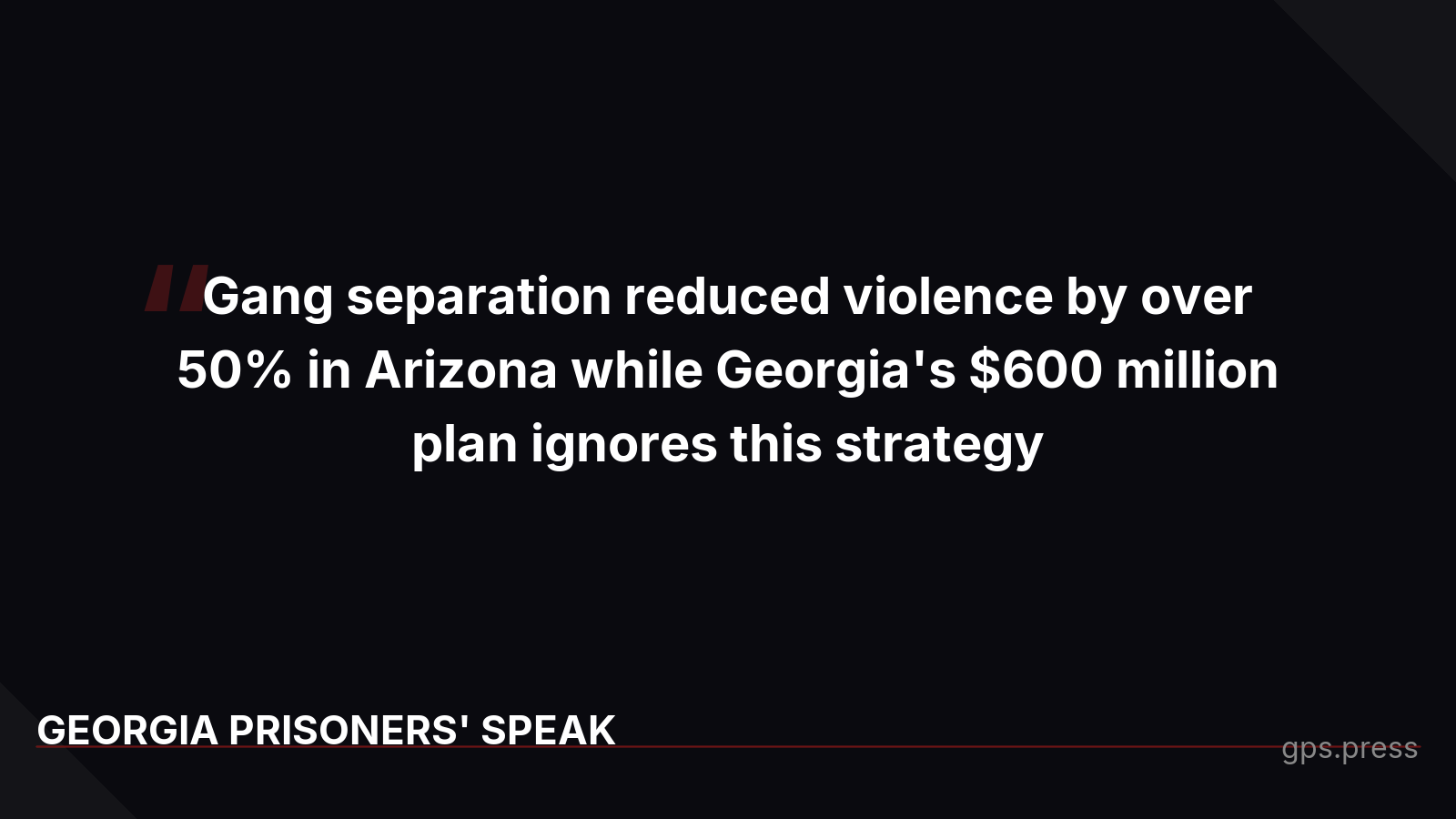
At least 100 people killed in Georgia prisons in 2024. GPS brief reveals the state refuses gang separation strategies that cut violence over 50% in other states.
Help spread the word — here's how:
- Scroll down to Copy a Caption and hit Copy on the one you want
- Scroll back up and click the Share on Facebook button for your favorite quote image
- On Facebook, paste the caption into your post — or write your own
Copy a Caption
Twitter/X
Georgia spent $600M on prisons but refuses gang separation strategies that cut violence 50% in other states. Meanwhile, 31% of Georgia's prisoners are gang members — double the national average. https://gps.press/media/georgia-prison-gang-separation-crisis-press-br...
Facebook
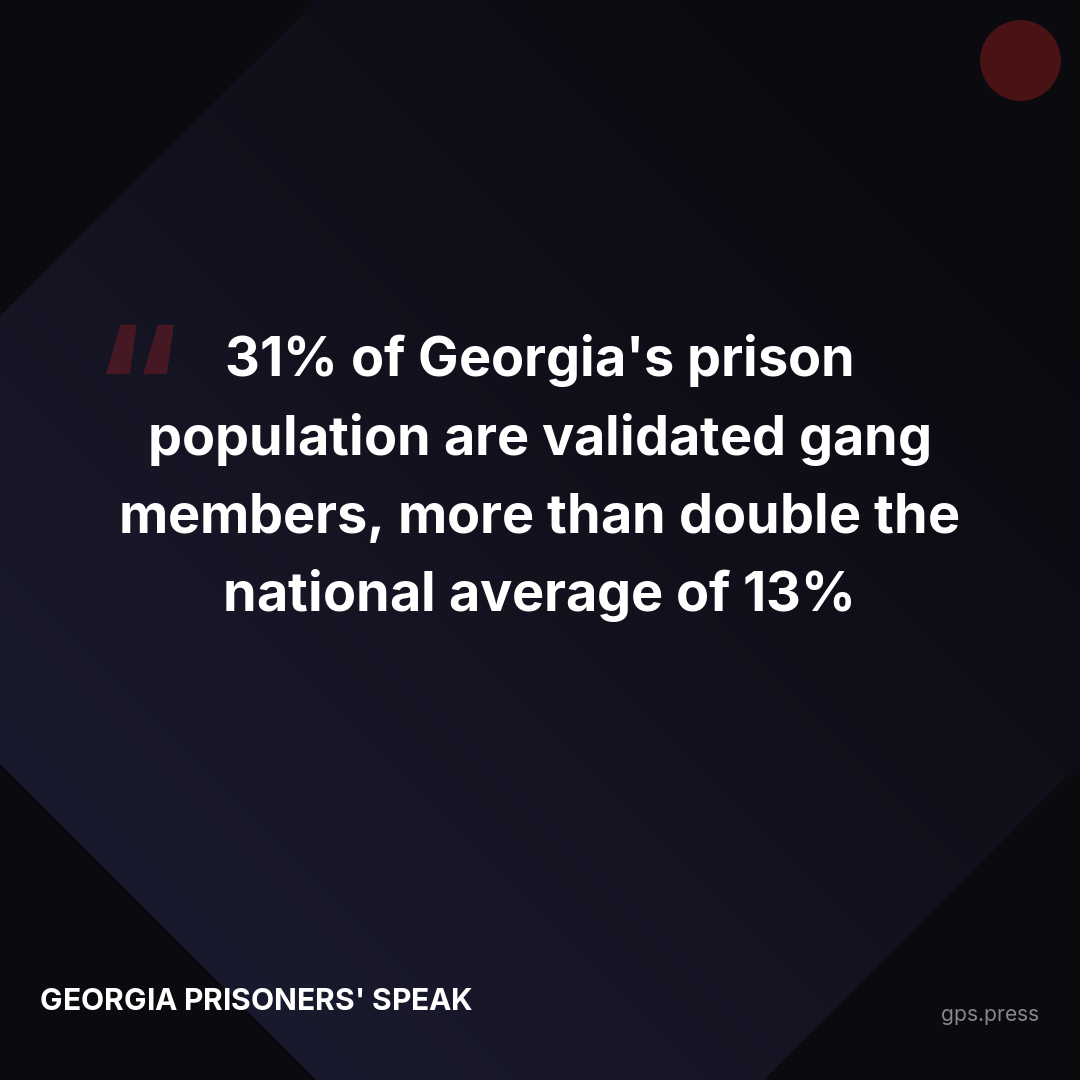
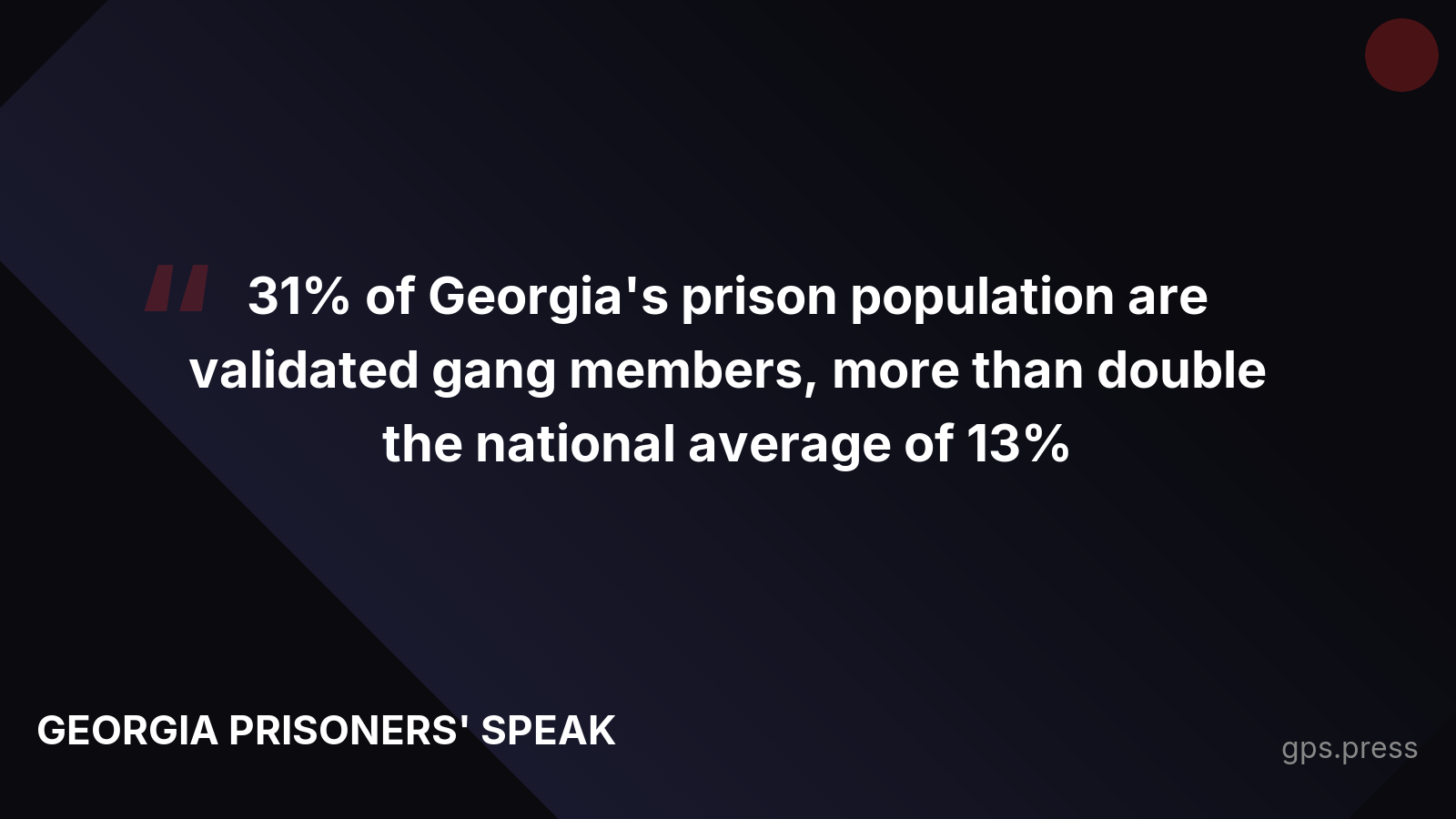
Georgia recorded its deadliest year in prison history in 2024 with at least 100 people killed behind bars. The state has 31% gang membership — double the national average — yet refuses to adopt gang separation housing strategies that reduced violence by over 50% in Arizona and Texas.
Governor Kemp's $600 million emergency prison spending proposal addresses staffing and infrastructure but explicitly omits gang management reform. Why is Georgia ignoring proven solutions while people continue to die? https://gps.press/media/georgia-prison-gang-separation-crisis-press-brief/
Instagram
Georgia's prisons recorded at least 100 deaths in 2024 — the deadliest year in state history. The state validates 31% of prisoners as gang members across 315 gangs, more than double the national average. Yet Georgia's $600 million emergency prison investment ignores gang separation strategies that reduced violence by over 50% in Arizona and cut homicides in Texas. The DOJ found gangs now control bed assignments, phones, and food access while correctional officer positions remain 70% vacant at eight facilities.
#GeorgiaPrisons #PrisonReform #CriminalJustice #GPS #MassIncarceration #Georgia
LinkedIn
Georgia's prison system faces a preventable crisis. Despite experiencing its deadliest year on record with at least 100 deaths, the state refuses to implement gang separation housing strategies that dramatically reduced violence in Arizona, Texas, and California. With 31% gang membership — double the national average — and the DOJ finding that gangs control basic prison operations, Georgia's $600 million emergency response omits proven gang management reforms.
This policy gap represents a failure of evidence-based governance. Other states confronted similar crises and implemented systematic solutions. Georgia possesses the intelligence infrastructure but lacks the operational strategy to act on it. https://gps.press/media/georgia-prison-gang-separation-crisis-press-brief/