Mass Incarceration Was Not an Accident
How the War on Drugs, Iran–Contra, and deliberate policy choices built mass incarceration. Georgia inherited this system—and made it worse.
Help spread the word — here's how:
- Scroll down to Copy a Caption and hit Copy on the one you want
- Scroll back up and click the Share on Facebook button for your favorite quote image
- On Facebook, paste the caption into your post — or write your own
Copy a Caption
Twitter/X
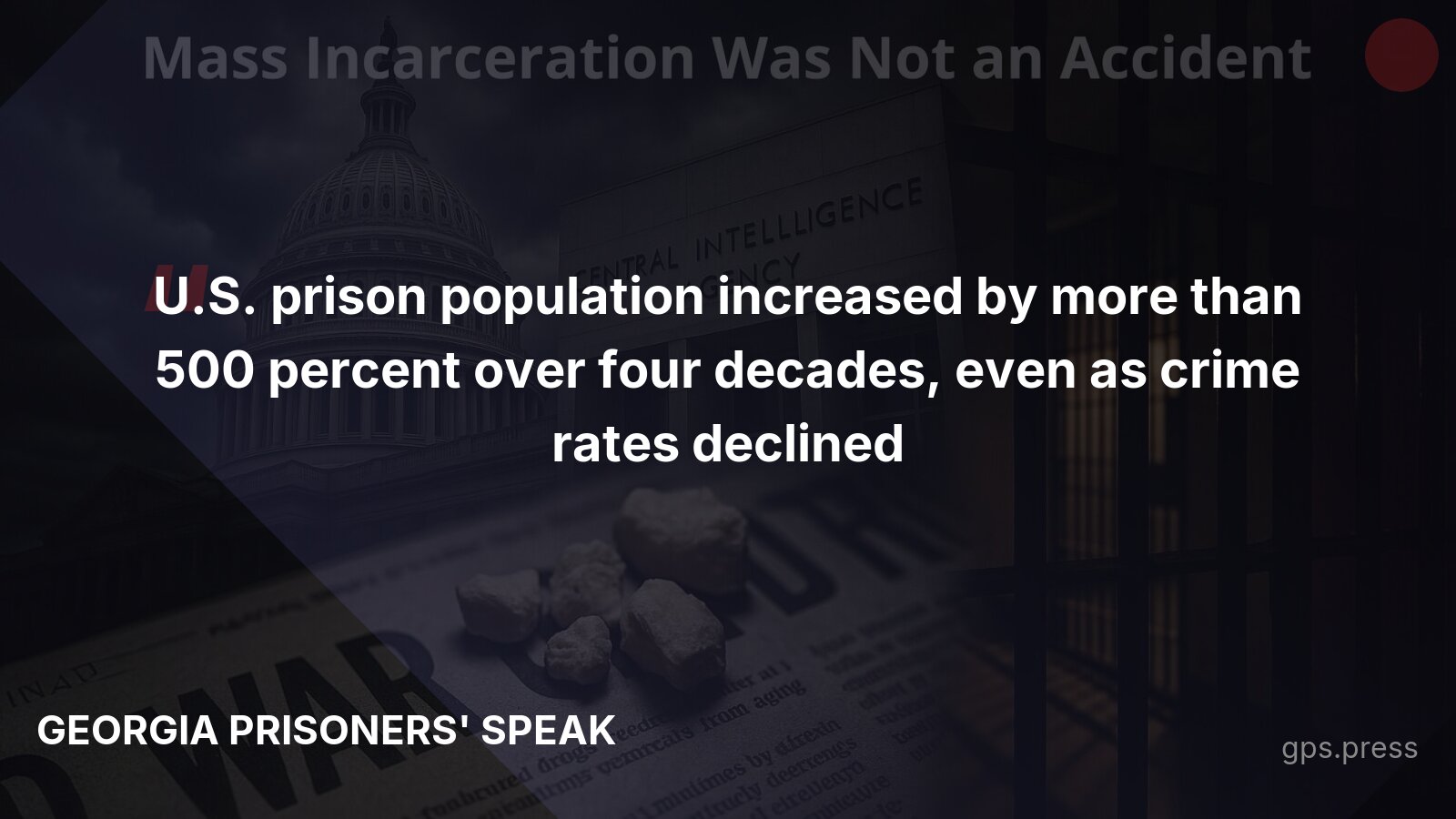
The U.S. prison population increased by more than 500% over four decades, even as crime rates declined. Mass incarceration was never about public safety—it was a political project. https://gps.press/mass-incarceration-was-not-an-accident/
Facebook
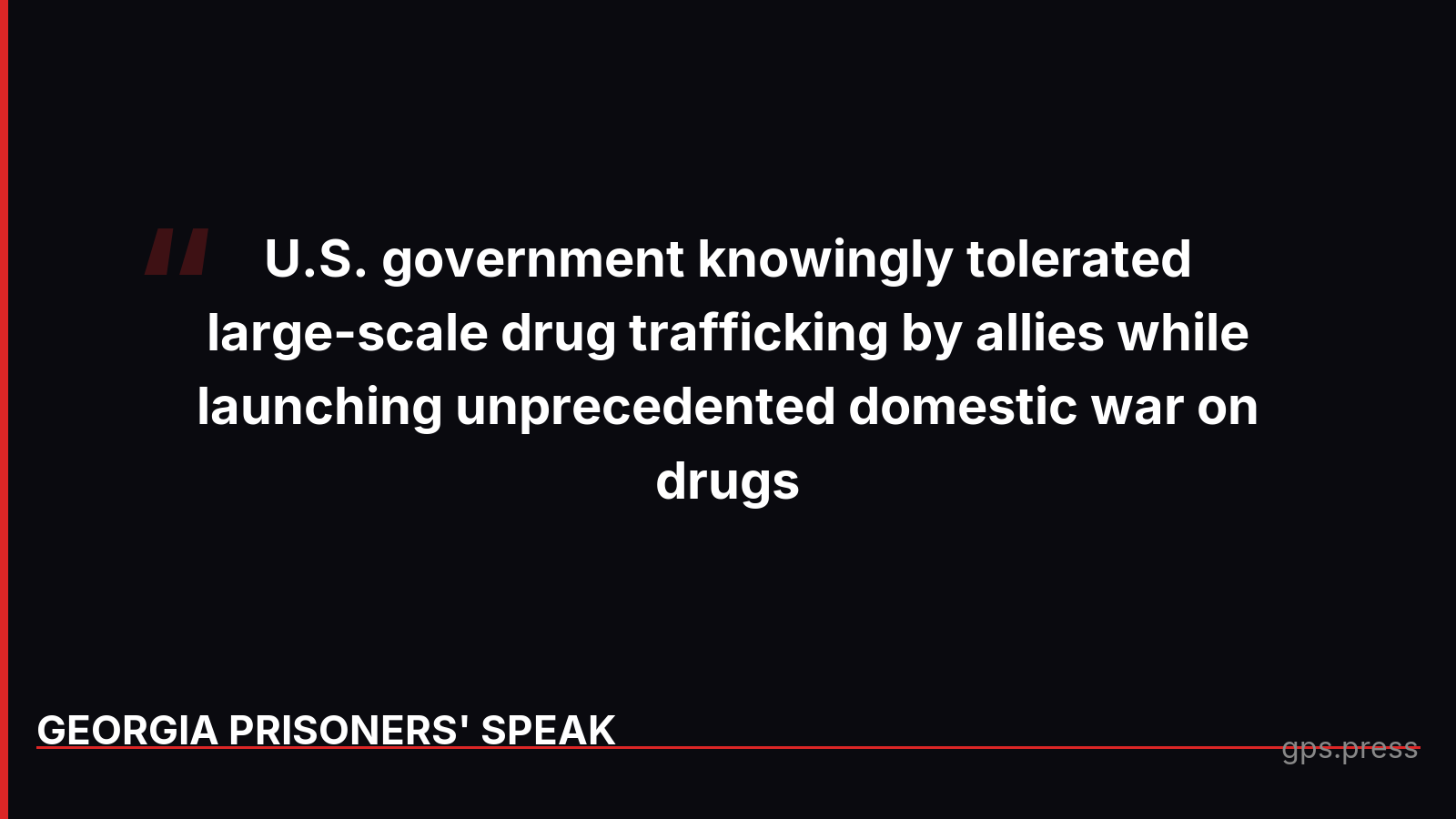
Mass incarceration didn't happen by accident. While the U.S. government tolerated large-scale drug trafficking by foreign policy allies, it launched an unprecedented domestic war on drugs that targeted poor communities and communities of color. The 100-to-1 sentencing disparity between crack and powder cocaine meant exponentially harsher penalties for Black neighborhoods, despite the substances being chemically similar.
Georgia inherited and intensified this national framework, adopting Truth in Sentencing laws long after evidence showed they increased prison populations without reducing crime. What questions do you have about how these policies continue to shape Georgia's prison crisis today? https://gps.press/mass-incarceration-was-not-an-accident/
Instagram
The numbers tell the real story: U.S. prison populations exploded by more than 500% over four decades while crime rates declined. This wasn't a response to danger—it was a political project. The War on Drugs criminalized addiction, created the 100-to-1 crack-powder cocaine sentencing disparity, and concentrated enforcement in communities of color. Meanwhile, the same government tolerated drug trafficking by foreign allies. Georgia adopted these failed policies and doubled down, even after evidence proved they don't work. https://gps.press/mass-incarceration-was-not-an-accident/
#GeorgiaPrisons #PrisonReform #CriminalJustice #GPS #MassIncarceration #Georgia
LinkedIn
New analysis reveals how mass incarceration emerged from deliberate policy decisions, not rising crime rates. While U.S. prison populations increased by more than 500% over four decades, crime rates actually declined. The War on Drugs created a 100-to-1 sentencing disparity between crack and powder cocaine, targeting communities of color with exponentially harsher penalties.
Georgia's current prison crisis—marked by collapsed parole rates, extreme sentencing, and record deaths—reflects this national framework. Understanding this history is essential for policymakers and stakeholders working toward evidence-based criminal justice reform that prioritizes public safety over punishment. https://gps.press/mass-incarceration-was-not-an-accident/