Punishment for Profit: How Georgia’s Justice System Makes Millions
In Georgia, being poor, mentally ill, or struggling with addiction isn’t just hard—it’s a crime. Instead of offering help, the justice system funnels thousands into prison for minor offenses, all while private companies and politicians profit. It’s not about safety—it’s about money.
Help spread the word — here's how:
- Scroll down to Copy a Caption and hit Copy on the one you want
- Scroll back up and click the Share on Facebook button for your favorite quote image
- On Facebook, paste the caption into your post — or write your own
Copy a Caption
Twitter/X
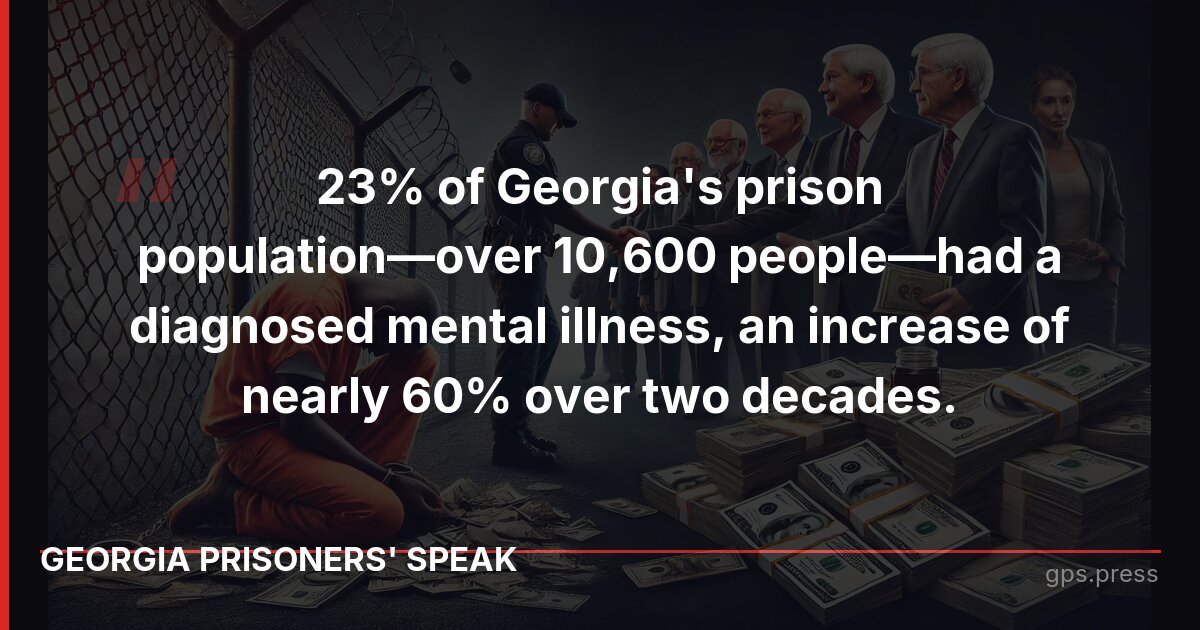
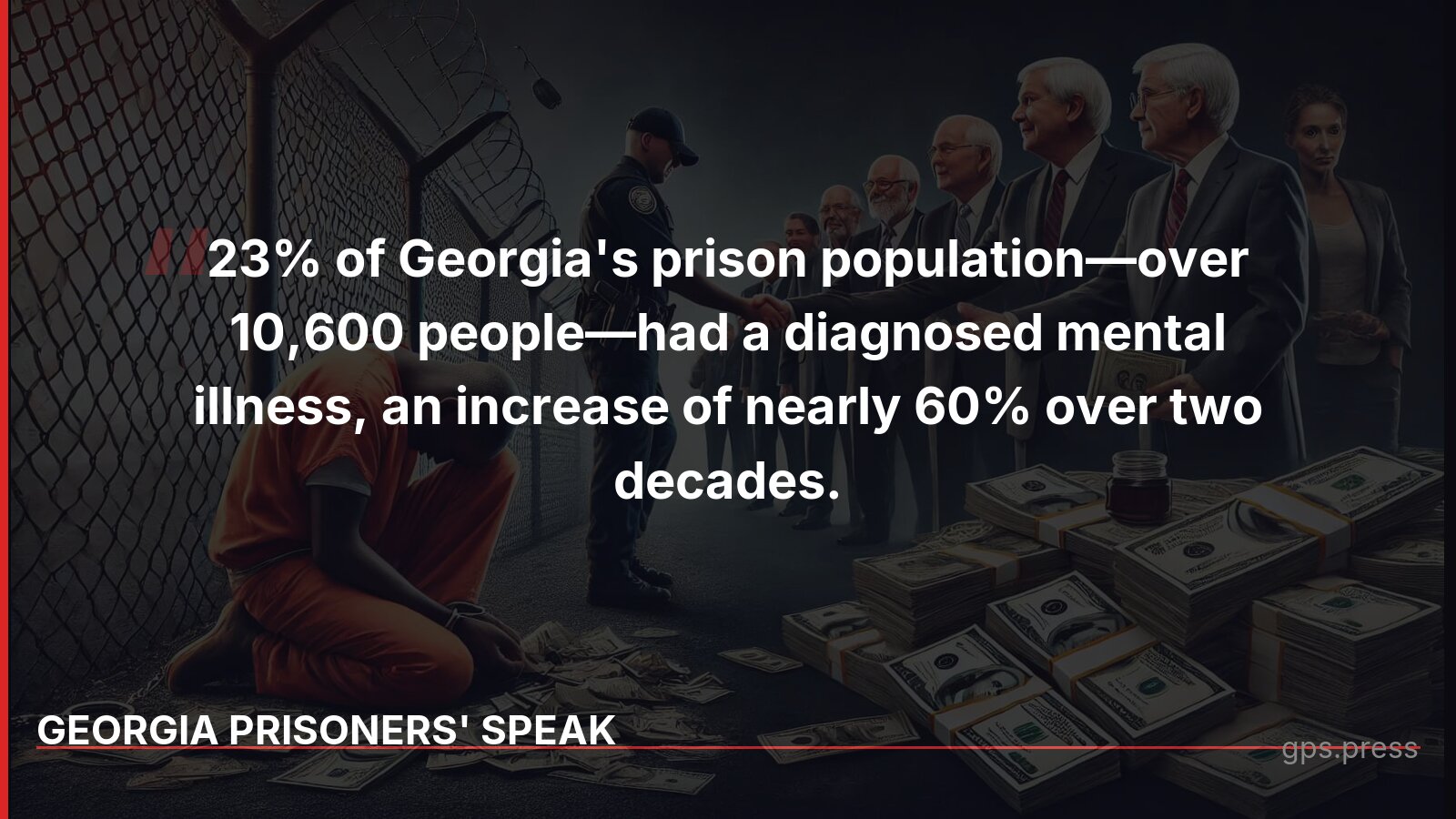
23% of Georgia's prison population has a diagnosed mental illness—over 10,600 people. Meanwhile, Kemp's budget allocates $1.62 billion for corrections while mental health care remains underfunded. https://gps.press/punishment-for-profit-how-georgias-justice-system-...
Facebook
Georgia's justice system has become a profit machine that criminalizes poverty, mental illness, and addiction. With 23% of the prison population suffering from mental illness and Governor Kemp requesting $1.62 billion for corrections—a $125 million increase—it's clear where the state's priorities lie. Private companies profit while those who need help the most are locked away instead of treated. What will it take for Georgia to stop treating human suffering as a revenue stream?
Instagram
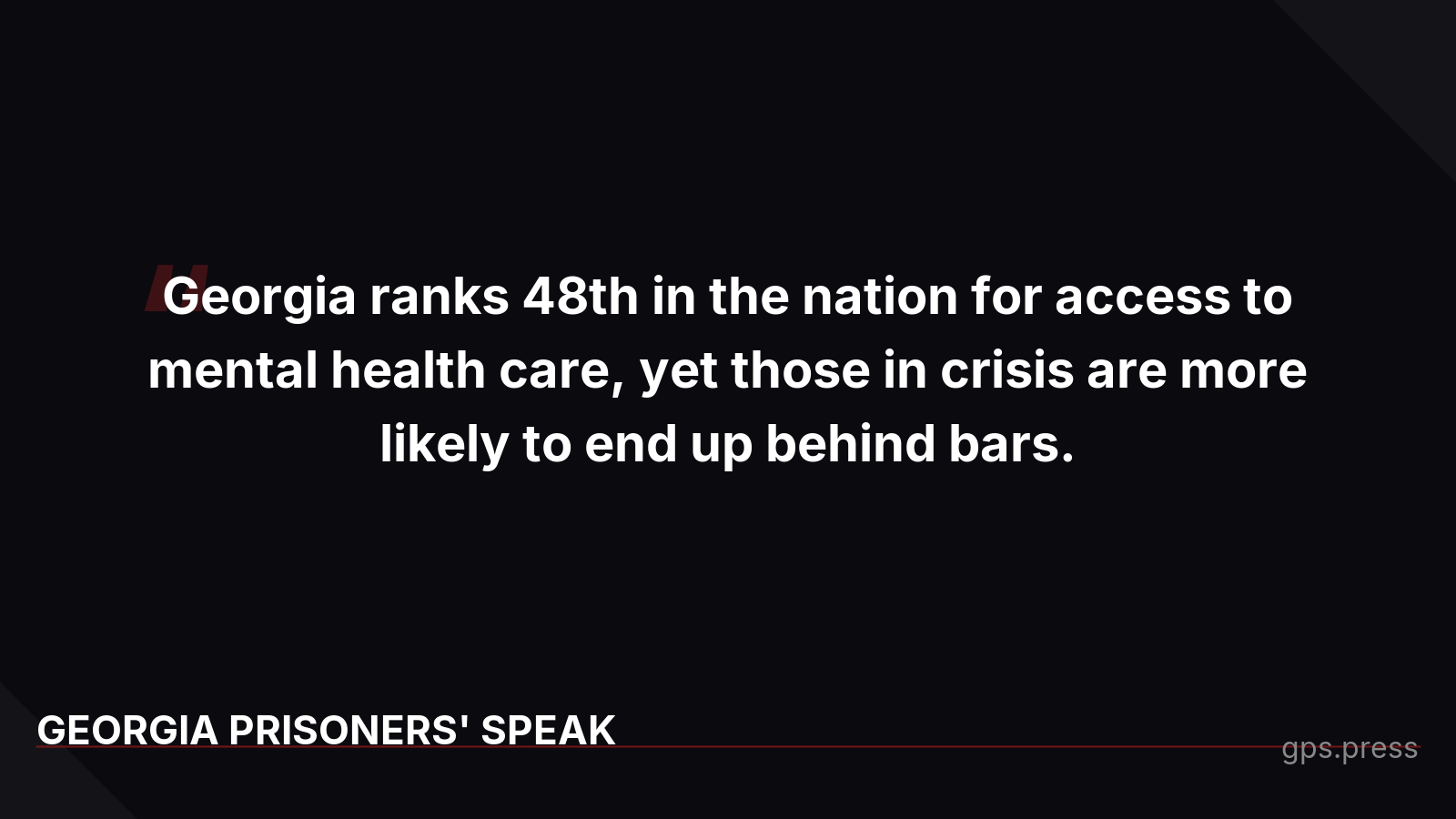
Georgia ranks 48th in mental health care access, yet those in crisis are more likely to end up in prison than receiving treatment. With over 10,600 mentally ill people behind bars and $1.62 billion allocated for corrections, the state has chosen profit over people. Private companies cash in while families suffer.
#GeorgiaPrisons #PrisonReform #CriminalJustice #GPS #MassIncarceration #Georgia
LinkedIn
Georgia's justice system exemplifies how criminal justice policy can prioritize revenue generation over public safety outcomes. The state's $1.62 billion corrections budget—a $125 million increase—contrasts sharply with its 48th-place ranking in mental health care access. With 23% of the prison population diagnosed with mental illness, Georgia continues to incarcerate rather than treat vulnerable populations. This approach not only fails those in need but creates unsustainable fiscal burdens on taxpayers while enriching private contractors.