The Price of Love: How Georgia’s Prisons Bleed Families Dry
Explore the impact of Georgia prison commissary prices on families facing financial strain from incarceration costs.
Help spread the word — here's how:
- Scroll down to Copy a Caption and hit Copy on the one you want
- Scroll back up and click the Share on Facebook button for your favorite quote image
- On Facebook, paste the caption into your post — or write your own
Copy a Caption
Twitter/X
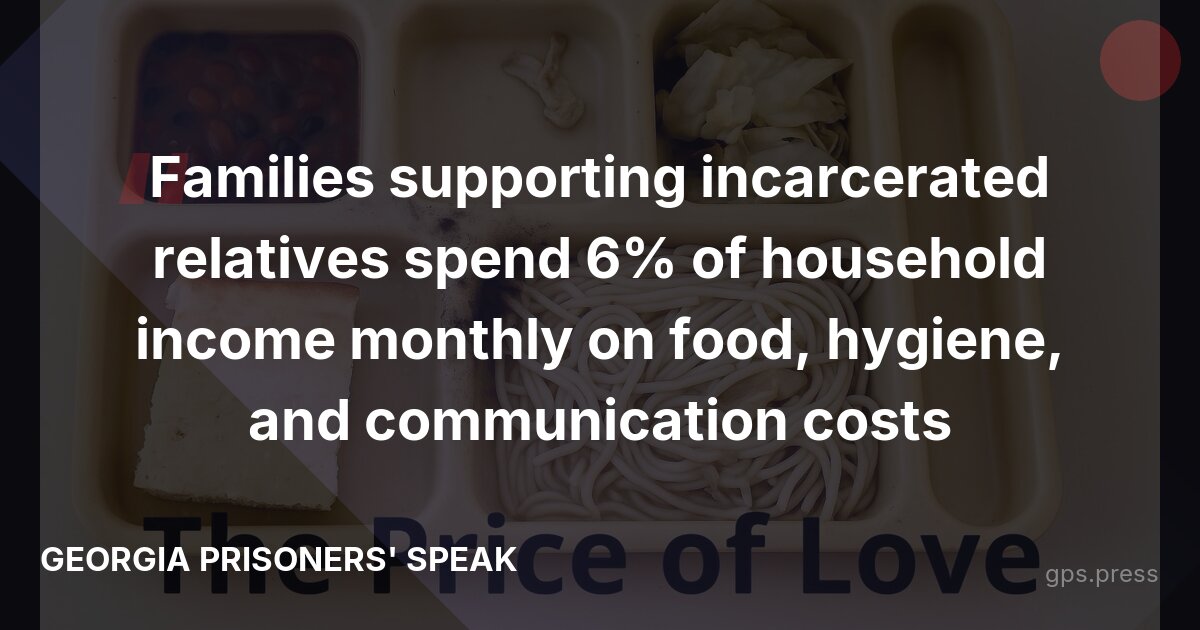
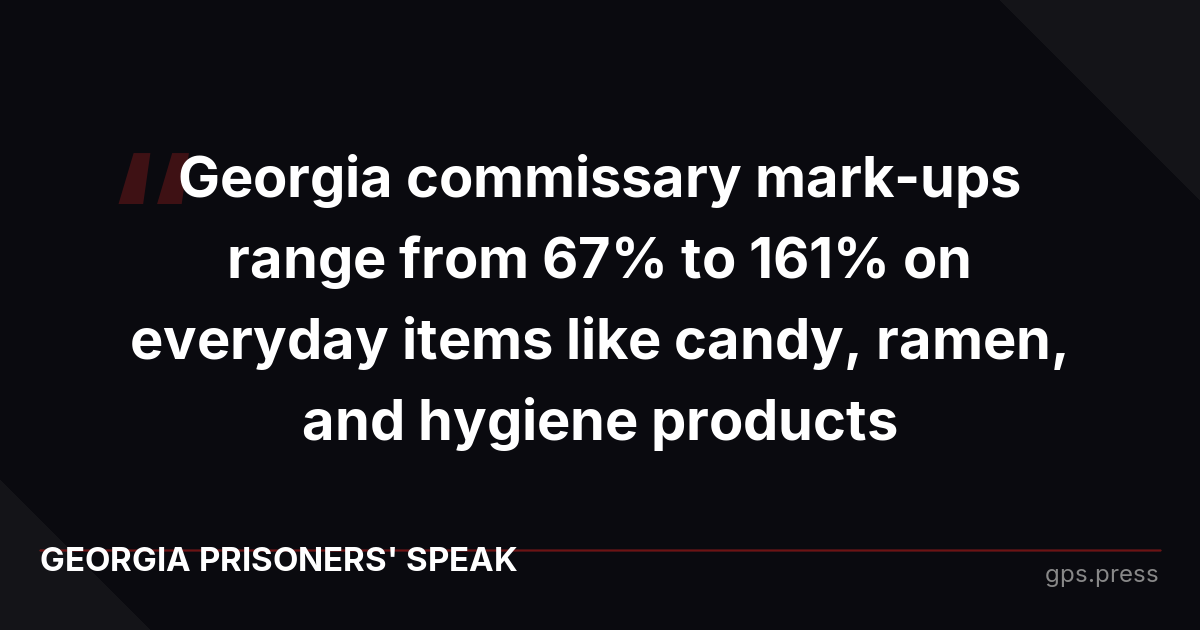
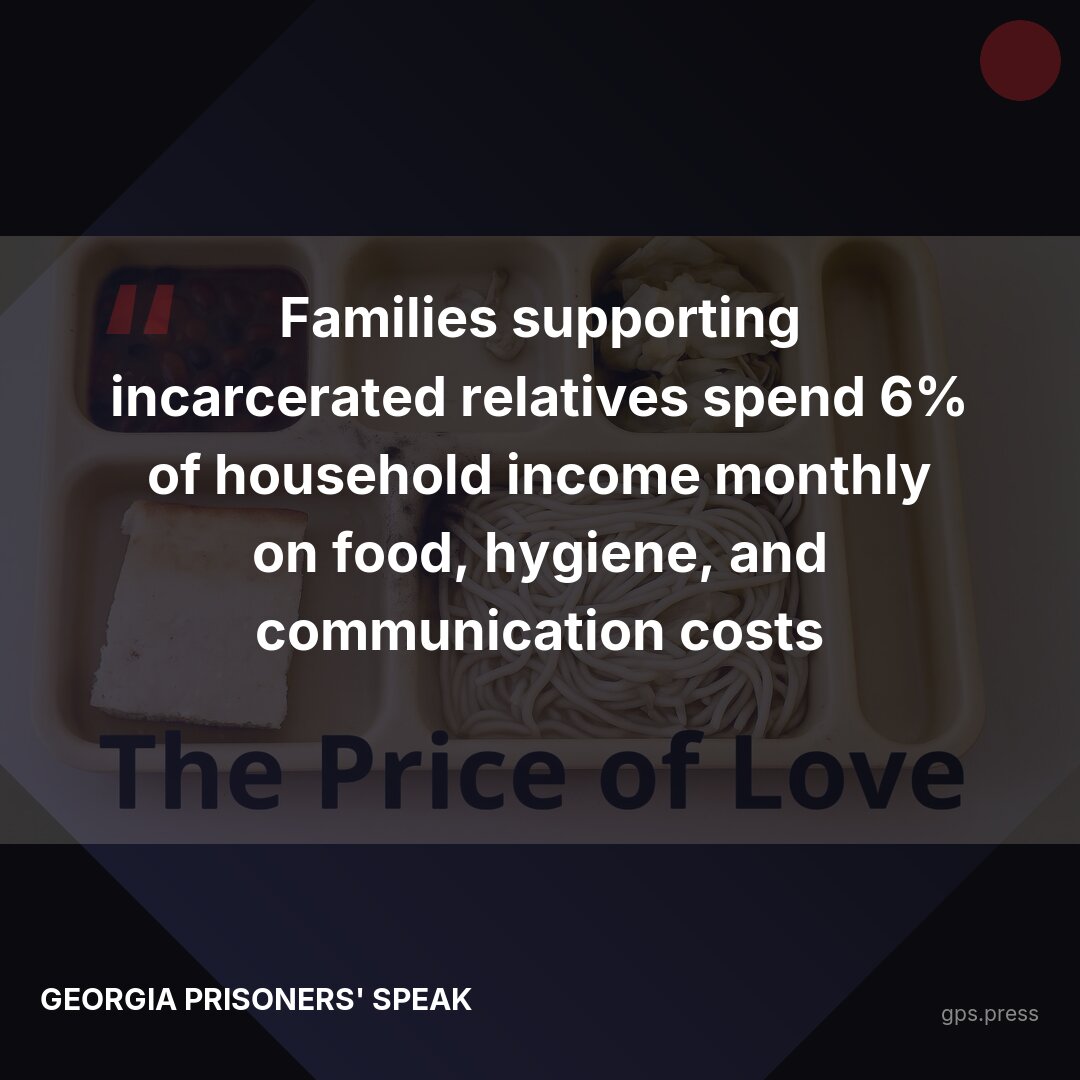
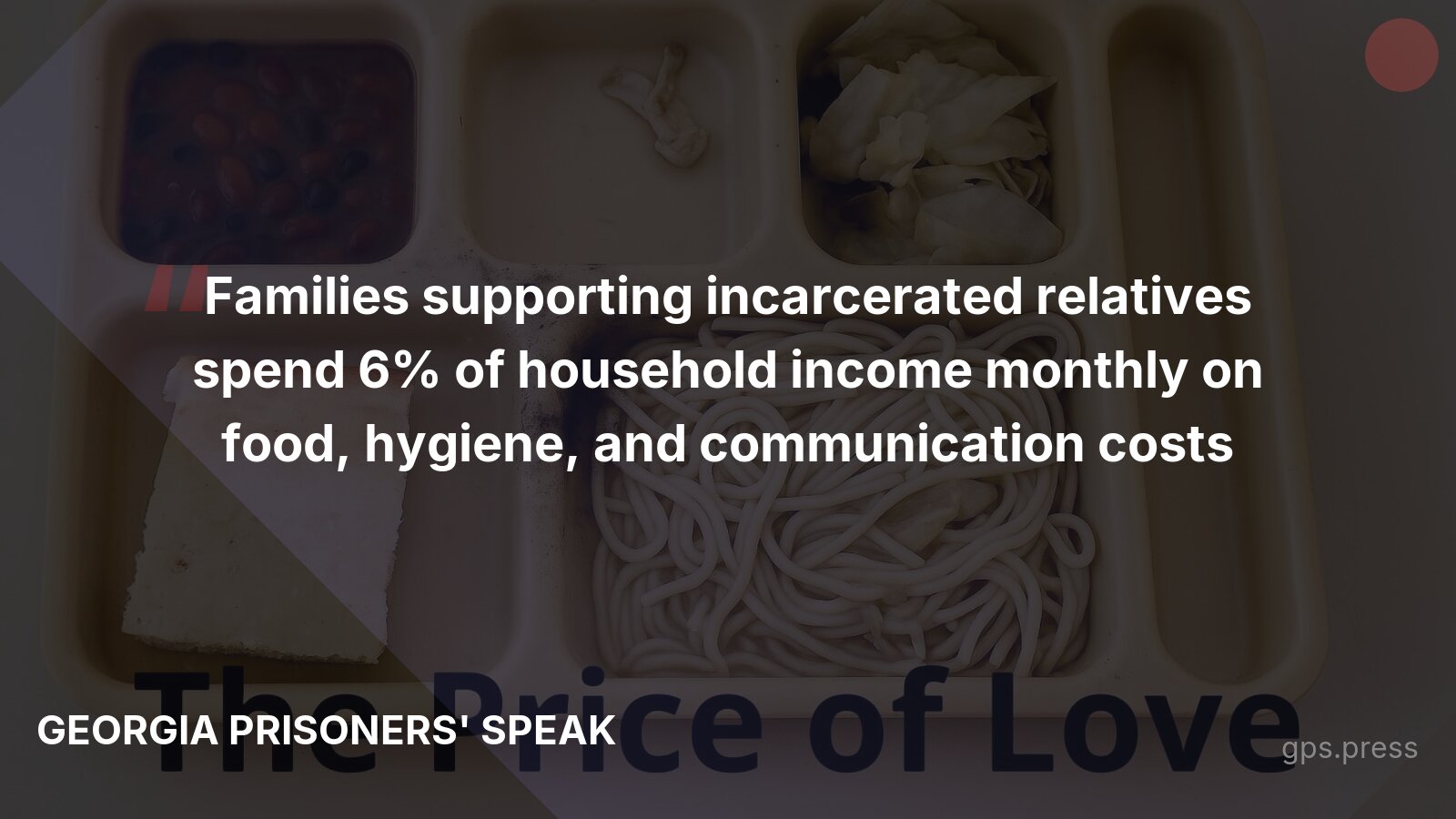
Georgia families spend 6% of household income monthly just to keep incarcerated loved ones fed and connected. Meanwhile, the state profits from 67-161% mark-ups on basic necessities. https://gps.press/the-price-of-love-how-georgias-prisons-bleed-families-dry/
Facebook
When Georgia fails to feed those it incarcerates, families pay the price. A national study found families spend 6% of household income monthly on commissary, phone calls, and basic necessities for incarcerated relatives. In Georgia, that burden is magnified by mark-ups reaching 161% on everyday items.
Should families be forced to subsidize the state's failure to provide basic human needs?
Instagram
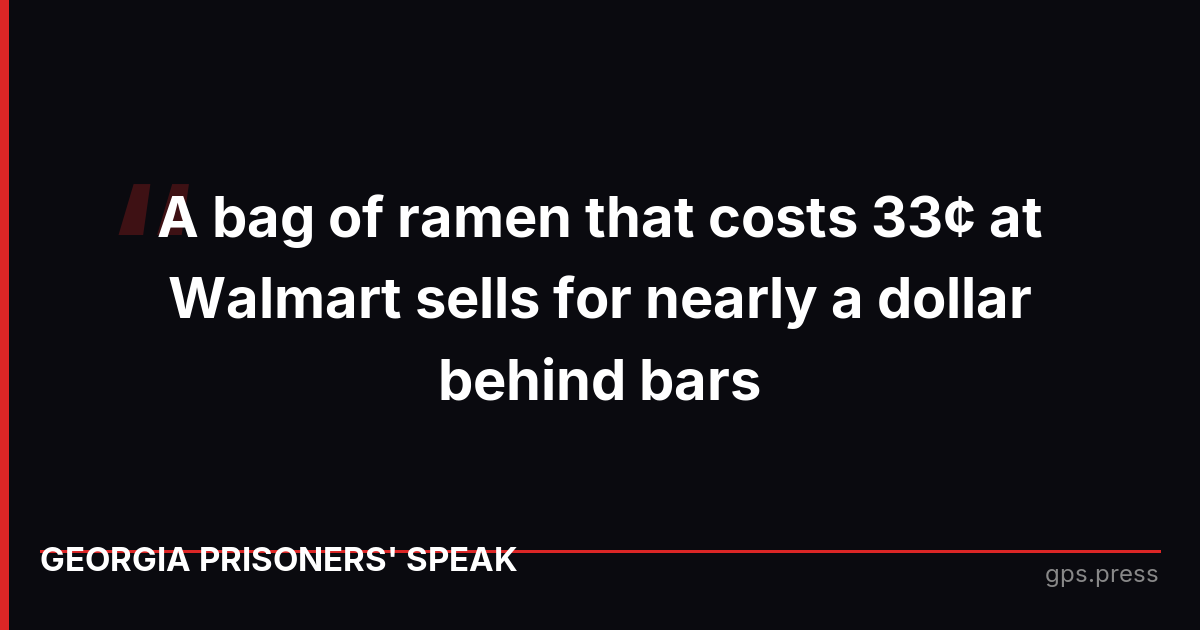
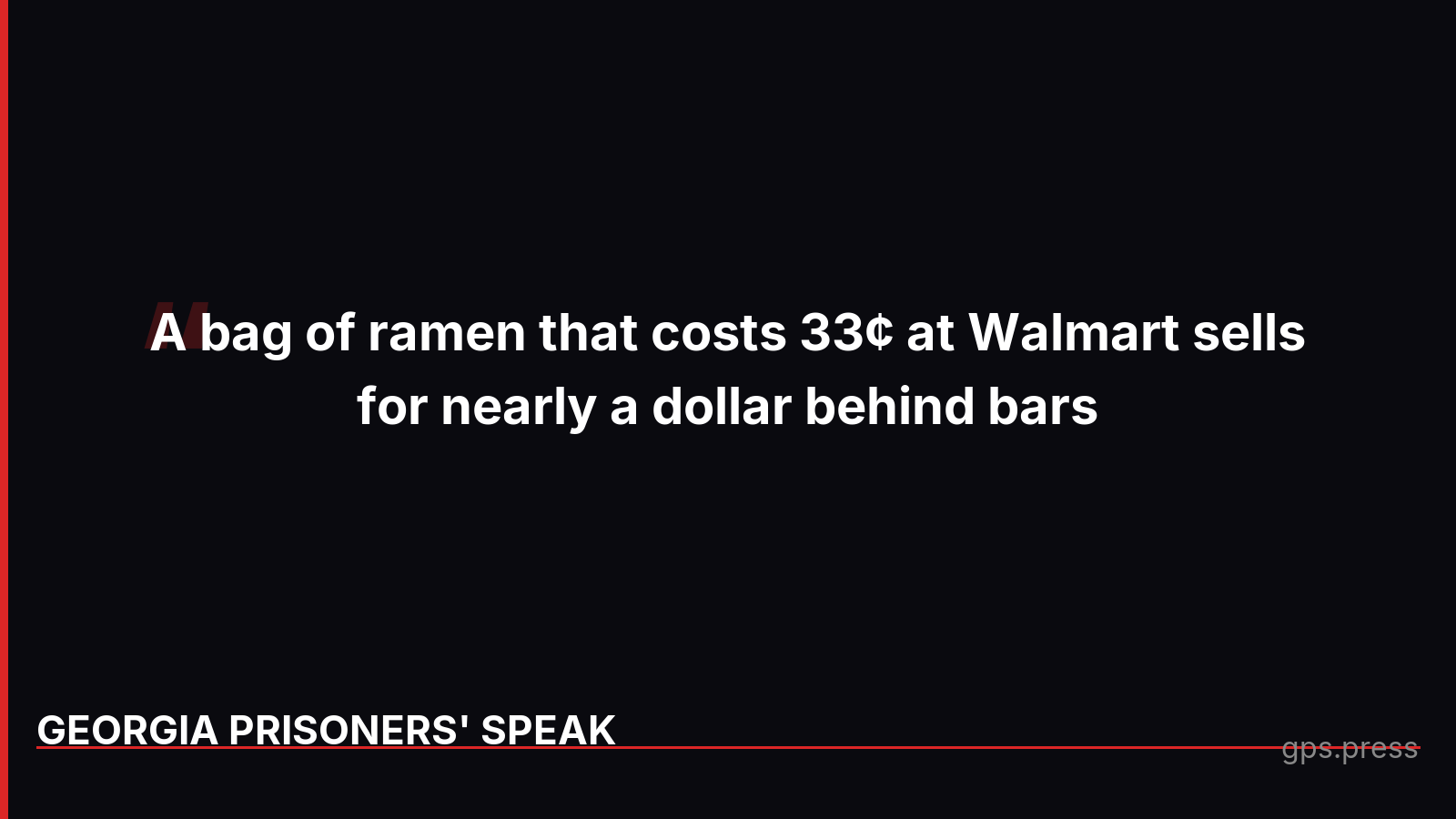
Georgia's prison system quietly transfers the cost of basic necessities onto families. While the state profits from 67-161% mark-ups on commissary items, struggling households spend 6% of their income monthly just to keep loved ones fed and connected. Every overpriced ramen packet represents a policy choice that bleeds the state's poorest families.
#GeorgiaPrisons #PrisonReform #CriminalJustice #GPS #MassIncarceration #Georgia
LinkedIn
New research reveals families supporting incarcerated relatives spend 6% of household income monthly on basic necessities the state should provide. In Georgia, this burden is amplified by commissary mark-ups ranging from 67% to 161%, effectively making families subsidize systemic failures in prison food and healthcare.
This represents a hidden public policy of economic punishment that extends far beyond prison walls, disproportionately impacting Black and low-income households who can least afford it.