Last updated: January 25, 2026
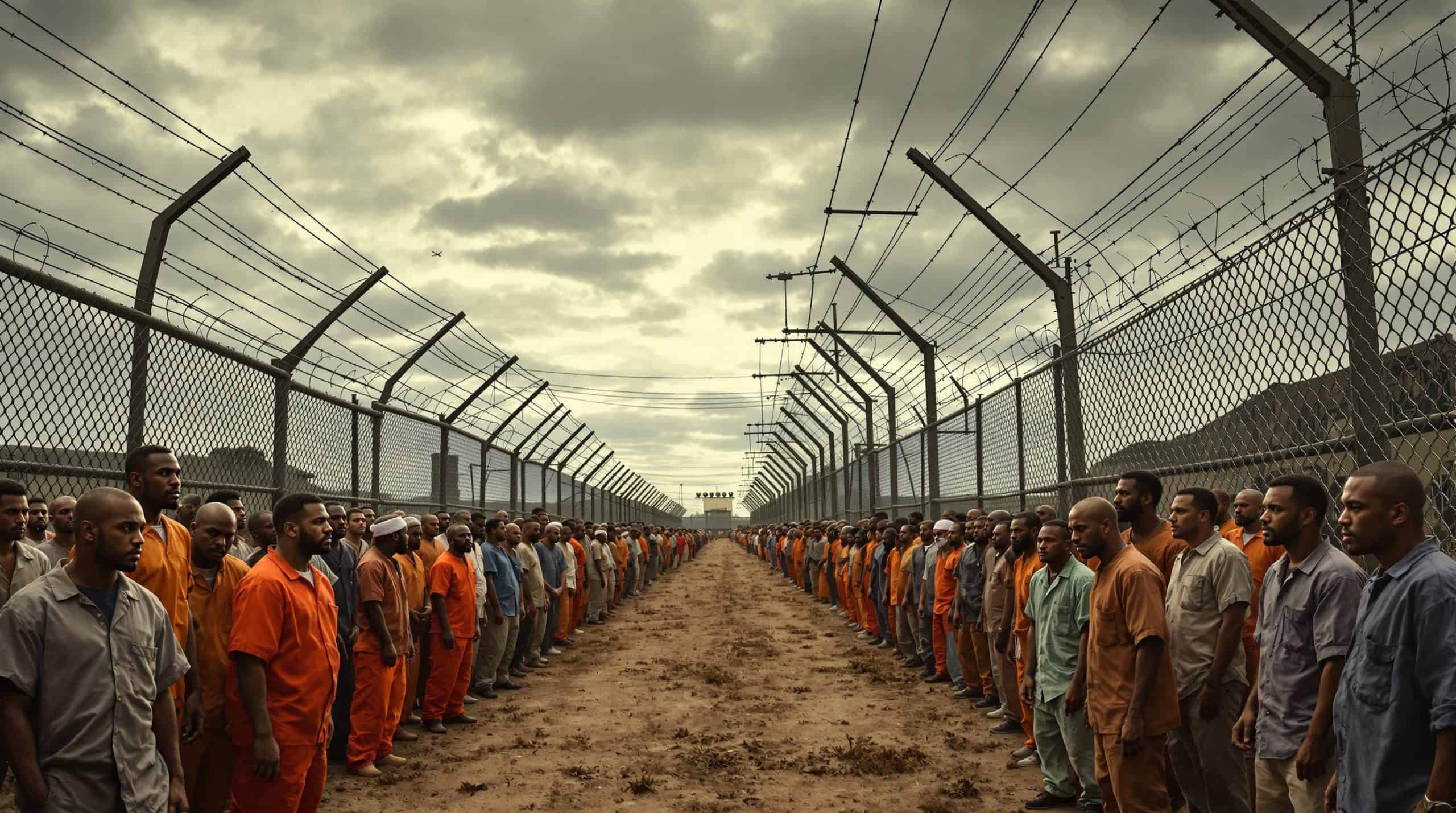
Georgia’s prison system is in crisis. In 2024, more than 100 people were murdered inside state facilities—nearly triple the previous year. The Department of Justice found constitutional violations stemming from gang control so pervasive that Assistant Attorney General Kristen Clarke stated gangs “control multiple aspects of day-to-day life in the prisons we investigated, including access to phones, showers, food and bed assignment.” 1
The solution exists. Other states have implemented it. Georgia refuses to act.
The Crisis by the Numbers
Deaths and Homicides
| Year | Total Deaths | Estimated Homicides |
|---|---|---|
| 2020 | 293 | ~25 |
| 2021 | 257 | ~30 |
| 2022 | 254 | ~35 |
| 2023 | 262 | ~45 |
| 2024 | 333 | 100+ |
| 2025 | 277 (through Nov) | Ongoing |
Source: GPS Mortality Database. GDC stopped reporting cause of death in March 2024. 2
January 2026: The Breaking Point
On January 11, 2026, gang violence at Washington State Prison killed four people, including Jimmy Trammell—murdered 72 hours before completing a ten-year sentence. The facility was operating with just five officers covering 69 security posts. 3
Two weeks later, every state prison in Georgia remains on lockdown. Violence continues:
- Hays State Prison: Blood gang member stabbed a Muslim delivering food trays
- Augusta State Medical Prison: Crip killed Jerry Merritt, a Gangster Disciple, over $15 commissary debt—the day lockdown lifted
- Dooly State Prison: Ongoing gang violence; 11 hospitalized in September 2024 riot
- Burruss CTC: Juvenile riot six days after new warden arrived
- Rogers State Prison: Additional violence
- Jenkins: Standoff
How Gangs Control Georgia’s Prisons
The DOJ’s October 2024 investigation documented systematic gang control:
“Georgia allows gangs to exert improper influence on prison life, including controlling entire housing units and operating unlawful and dangerous schemes in and from the prisons.”
What Gangs Control
- Bed assignments — Gangs decide who sleeps where
- Food access — Pay extortion or go hungry
- Shower schedules — Gang members control access
- Phone access — Pay to use phones
- Protection — Families extorted for loved ones’ safety
- Contraband — Drugs, weapons, phones flow through gang networks
Major Gangs in Georgia Prisons
- Bloods — Largest presence
- Gangster Disciples (GDs) — Major rival to Bloods
- Crips — Significant presence
- MS-13 and Hispanic gangs — Often unite as bloc for protection
- Smaller sets — Various regional and local gangs
The Staffing Collapse
Gang control thrives because GDC can’t maintain order:
- 50%+ systemwide correctional officer vacancy (DOJ finding)
- 18 facilities with 60%+ vacancy rates
- 10 facilities with 70%+ vacancy rates
- Washington State Prison: 72% vacancy at time of January 2026 massacre
When one officer supervises 400 beds, gangs fill the power vacuum. 4
The Proven Solution: Gang Separation
Arizona: 50%+ Violence Reduction
A National Institute of Justice study evaluated Arizona’s gang segregation program implemented in 2000. Results were unambiguous:
- 50%+ reduction in assaults, drug violations, threats, fighting, and rioting
- 30% reduction in system-wide rule violations
- 22,000 violations prevented, including 5,700 among gang members
- Prison administrators “overwhelmingly support the program”
Texas: Major Reductions in Homicide
Texas implemented wholesale gang segregation and achieved “major reductions in homicide and assault.” The state’s GRAD (Gang Renunciation and Disassociation) program has graduated over 2,600 gang members since 2000, creating pathways out of gang affiliation.
California: Near-Zero Violence at Pilot Facilities
California designated specific prisons by security level for gang members. At Valley State Prison, a pilot rehabilitation facility, officials reported:
- Zero homicides in most recent reporting year
- One serious violent incident
Compare to Georgia: 333 deaths and 100+ homicides in 2024. 6
Why Gang Separation Works
The Mathematics of Conflict
When rival gang members are housed together, violence is inevitable:
- Honor codes require retaliation — If a Blood kills a GD, GDs must respond
- Minor disputes escalate — A $15 commissary debt becomes murder when gang identity is involved
- Territory must be defended — Gangs fight for control of dorms, yards, resources
- Civilians become collateral — Non-gang inmates caught in crossfire
What Separation Accomplishes
Ends gang wars — When Bloods aren’t housed with GDs, they can’t kill each other
Protects civilians — Non-gang inmates (“civilians”) can serve time without becoming casualties
Reduces contraband pressure — Gang-driven smuggling networks disrupted
Enables staff control — Officers can manage populations without navigating gang politics
Honest Caveat
Gang separation won’t end all violence. Bloods still fight other Bloods over personal disputes. Intra-gang violence continues. But separation ends the wars—the organized, retaliatory violence between rival factions that drives Georgia’s death toll.
A Two-Phase Implementation Plan
Phase One: Immediate Dorm Separation
Within existing facilities, separate gang members into different housing units:
- Bloods in designated dorms
- GDs in designated dorms
- Crips in designated dorms
- Civilians in protected dorms
This requires no new construction—only the decision to act. GDC already tracks gang affiliations through its Security Threat Group (STG) intelligence program.
Phase Two: Gang-Designated Facilities
Over time, designate specific prisons for specific populations:
- Bloods facility
- GDs facility
- Crips facility
- Hispanic gangs facility
- Civilian (non-gang) facility
Staffing Reallocation
Gang-affiliated facilities require robust staffing. Civilian facilities can operate with minimal supervision. The net effect: same total staff, deployed more intelligently.
The DOJ Told Georgia to Act
The October 2024 DOJ report included 82 recommendations. Among them:
“Reevaluate the housing and inmate classification process”
Screen incarcerated people “to understand who are likely to be victimized and who are likely to commit violence—and then taking pains to house them away from each other”
The federal government explicitly told Georgia to separate populations. Georgia has refused. 7
Georgia’s Own Law Recognizes the Danger
Georgia’s Street Gang Terrorism and Prevention Act (OCGA § 16-15-3) declares that criminal street gangs present a “clear and present danger to public order and safety” and that “gang related murders is increasing.”
The General Assembly wrote those words into law. GDC ignores them every day it houses rival gang members together.
The Classification Fraud
GPS investigations revealed that four medium security prisons secretly operate as “quasi-close” facilities: 8
| Facility | Close Security Population |
|---|---|
| Wilcox State Prison | 29.7% |
| Calhoun State Prison | 29.4% |
| Dooly State Prison | 28.6% |
| Washington State Prison | 27.7% |
Other medium security facilities maintain 0-3% close security populations.
These four facilities have homicide rates 4-5 times higher than properly classified medium security prisons. Washington State Prison—site of the January 2026 massacre—was never designed to handle the population GDC placed there.
Corruption Enables the Status Quo
Gang control requires corrupt officers. The DOJ documented “unabated trafficking of drugs and weapons” facilitated by staff.
In February 2023, Smith State Prison Warden Brian Adams was arrested on RICO, bribery, and false statements charges for allegedly accepting payments from the “Yves Saint Laurent Squad”—a gang whose leader renamed the facility “YSL Prison.” Investigators excavated the pond at Adams’s GDC-provided residence and recovered buried contraband. The gang was linked to three murders. Adams’s criminal case remains pending. 9
When wardens can be bought by the gangs they’re supposed to control, the system cannot reform itself.
Why Lockdowns Don’t Work
GDC’s only response to gang violence is lockdown. It fails for three reasons:
1. Locks don’t function. Georgia’s aging infrastructure means inmates can exit cells regardless of lockdown status.
2. Lockdown postpones violence; it doesn’t prevent it. The obligation to retaliate doesn’t disappear—it ferments. The ASMP killing occurred the day lockdown lifted.
3. Extended lockdowns breed more violence. Men confined 24 hours a day without yard time, education, or visitation don’t emerge calmer. They emerge angrier. Mental health deteriorates. The pressure cooker builds until lockdown lifts—then explodes.
What You Can Do
Contact Your Representatives
The Georgia Legislature is in session (January–March). Legislators control GDC’s budget and oversight.
- Find your Georgia legislators: https://open.pluralpolicy.com/ga/
- Governor Brian Kemp: (404) 656-1776
- GDC Commissioner: (478) 992-5246
Use Impact Justice AI
Our free tool at https://impactjustice.ai helps you draft and send personalized emails to lawmakers, journalists, and agencies demanding gang separation policies.
File Public Records Requests
Georgia’s Open Records Act gives every citizen the right to access government documents:
https://georgiadcor.govqa.us/WEBAPP/_rs/SupportHome.aspx
Contact the Department of Justice
For civil rights violations, file a complaint with the DOJ Civil Rights Division:
https://civilrights.justice.gov
Share This Information
Public pressure works. Share GPS articles. Tag @GovKemp, @GDC_Georgia, and your local representatives. Use hashtags: #GAPrisons, #PrisonReform, #SeparateTheGangs
GPS Resources
- Separate the Gangs or Keep Burying the Dead — Full investigative report on gang separation
- GPS Statistics Portal — Interactive dashboards on GDC data
- GPS Mortality Database — Tracking deaths in Georgia prisons
- The Classification Crisis — How misclassification fuels violence
- They Knew — Washington State Prison massacre investigation
About Georgia Prisoners’ Speak (GPS)
Georgia Prisoners’ Speak (GPS) is a nonprofit investigative newsroom built in partnership with incarcerated reporters, families, advocates, and data analysts. Operating independently from the Georgia Department of Corrections, GPS documents the truth the state refuses to acknowledge: extreme violence, fatal medical neglect, gang-controlled dorms, collapsed staffing, fraudulent reporting practices, and unconstitutional conditions across Georgia’s prisons.
Through confidential reporting channels, secure communication, evidence verification, public-records requests, legislative research, and professional investigative standards, GPS provides the transparency the system lacks. Our mission is to expose abuses, protect incarcerated people, support families, and push Georgia toward meaningful reform based on human rights, evidence, and public accountability.
Every article is part of a larger fight — to end the silence, reveal the truth, and demand justice.
- DOJ Press Release October 2024 https://www.justice.gov/usao-ndga/pr/justice-department-finds-conditions-georgia-prisons-violate-constitution [↩]
- GPS Mortality Statistics https://gps.press/gdc-mortality-statistics/ [↩]
- GPS: They Knew https://gps.press/they-knew-empty-posts-broken-locks-and-georgias-deadliest-prison-week/ [↩]
- DOJ Georgia Prisons Investigation https://www.justice.gov/d9/2024-09/findingsreport–investigationofgeorgiaprisons.pdf [↩]
- NIJ Gang Management Study https://www.ojp.gov/pdffiles1/nij/grants/197948.pdf [↩]
- GPS: Prisneyland https://gps.press/prisneyland-what-prison-should-be/ [↩]
- GPB DOJ Coverage https://www.gpb.org/news/2024/10/01/the-federal-department-of-justice-deliberate-indifference-violence-in-georgia [↩]
- GPS Classification Crisis https://gps.press/the-classification-crisis-how-four-medium-security-prisons-are-killing-people/ [↩]
- GBI Press Release https://gbi.georgia.gov/press-releases/2023-02-08/gbi-arrests-georgia-department-corrections-warden-rico-charges [↩]