Georgia spends 14× more treating prison illness than feeding the people who got sick.
~$0.60 per meal. ~$8,074 per year per inmate on the resulting medical bills. The food line has barely moved in four years — and as the prisoner population grows, the trays keep shrinking.
Two crises, one cause.
Georgia's prison food system is broken in two directions at once. The state spends almost nothing on the trays it serves — and then takes back tens of millions a year from incarcerated people and their families through a captive commissary market that sells junk food at convenience-store prices.
Crisis #1 — The trays don't feed adults.
Georgia's food budget is approximately $31M per year for 53,000 incarcerated adults. The math — budget ÷ population ÷ meals ÷ days — comes out to about $0.53 per meal. GPS Research Library's independent per-meal analysis lands at about $0.60. Both figures are below the USDA "Thrifty Plan" minimum of $10/day for an adult man and a fraction of the $3.66 the National School Lunch Program spends per meal for a child.
Meanwhile prison medical spending has grown 33%, or $107 million, in four years: from $325M actual in FY2024 to $432M proposed in FY2027. Per inmate, that is $8,074 per year on medical care versus roughly $583 on food — about a 14× ratio. And because the food line is fixed in dollars while the prisoner population grows, the per-meal figure has been declining in real terms every year.
Sources: Governor's Budget Report, Amended FY 2026 and FY 2027; GPS Research Library, Food Safety Inspections in Georgia State Prisons.
Crisis #2 — The commissary fills the gap by exploiting it.
When the meal isn't enough, families pay. Georgia's prison commissary is a $47 million annual market that GPS analysis found sells “convenience store rejects at premium prices” — ramen, sodium-laden snacks, and processed foods marked up well above retail.
The commissary doesn't fix the nutrition crisis. It monetizes it. People with diabetes and hypertension caused by inadequate prison meals end up buying chips and noodles because the alternative is hunger. Their families pay. The contractor profits. The state collects.
Source: GPS analysis of GDC commissary master list and pricing data.
What's on the tray.
These are real meals served on real days at Georgia state prisons. We're not selecting outliers. These are typical trays photographed inside multiple GDC facilities. Empty compartments where food should be. Sealed condiment packets standing in for vegetables. Bologna circles served as the protein for a grown man.
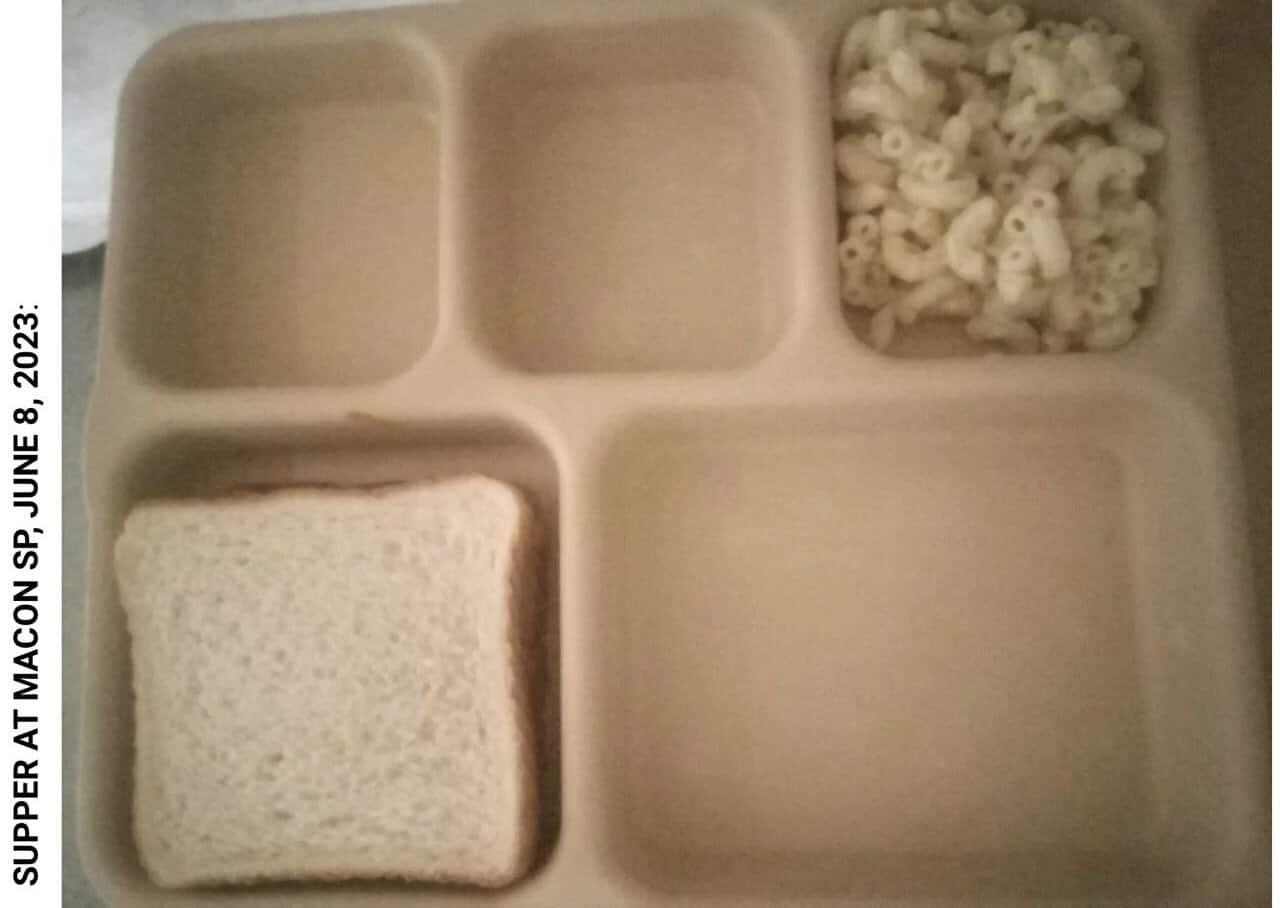
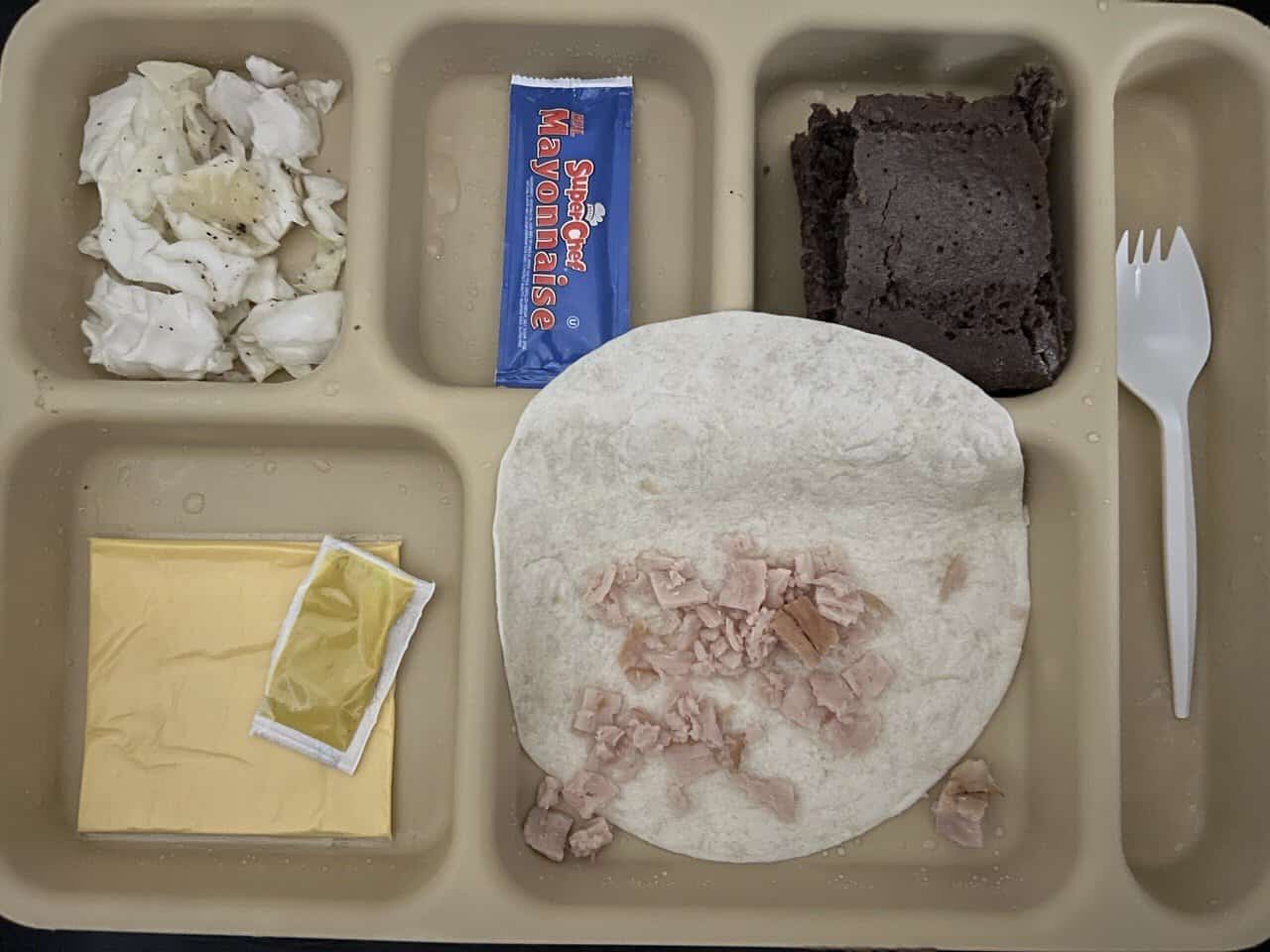
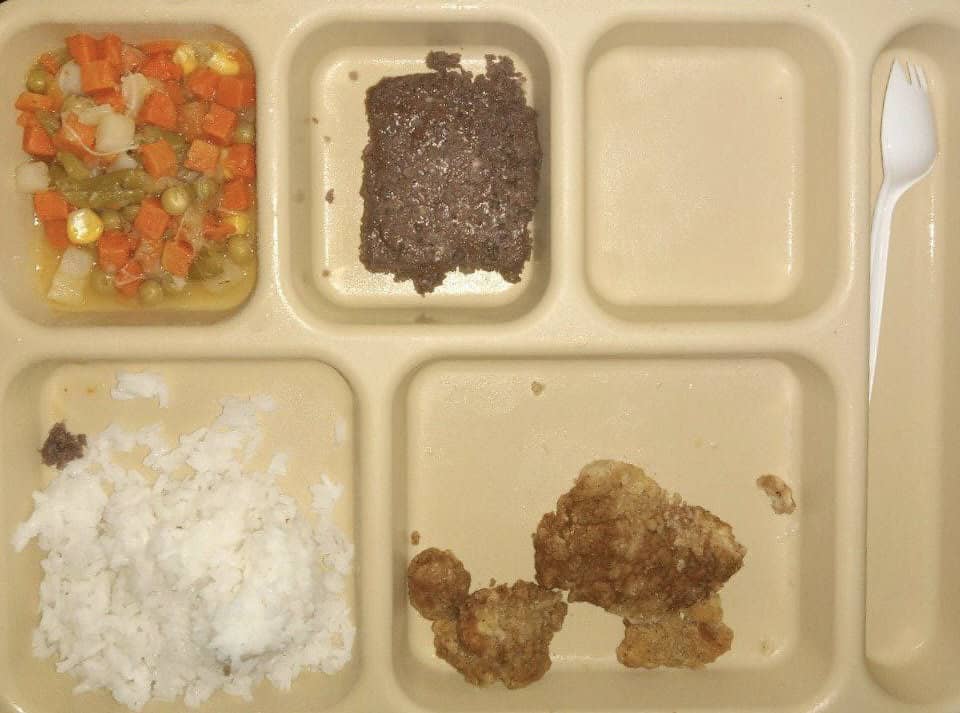
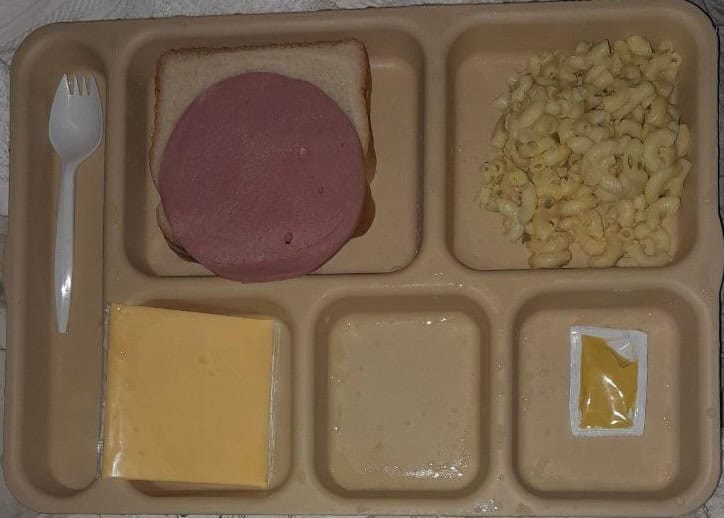
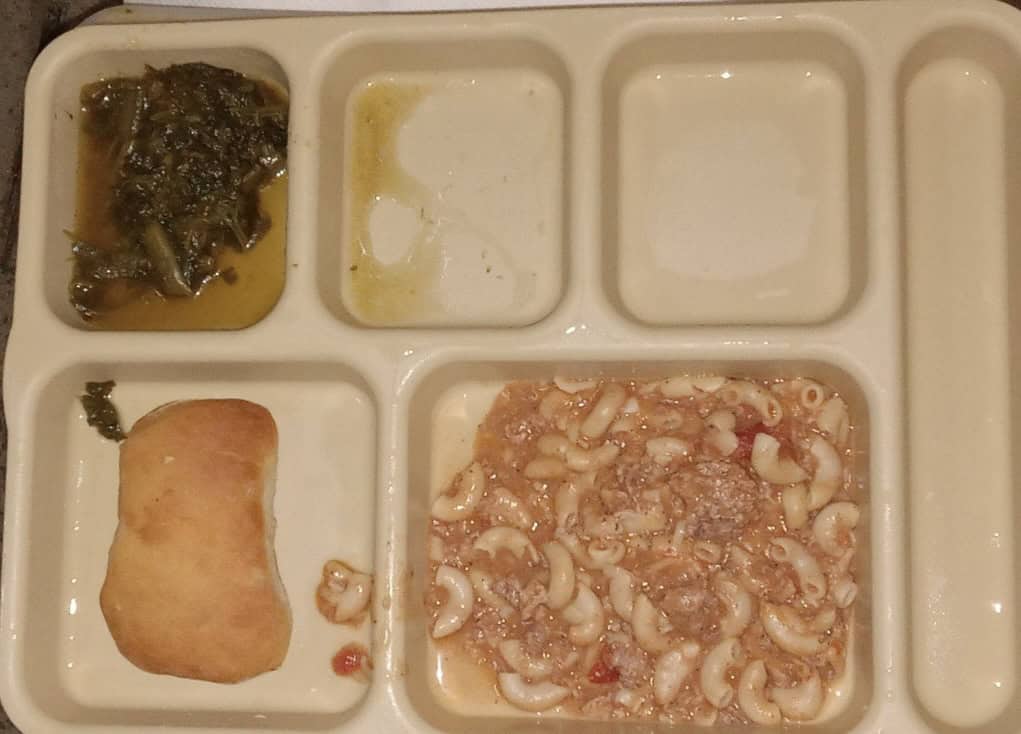
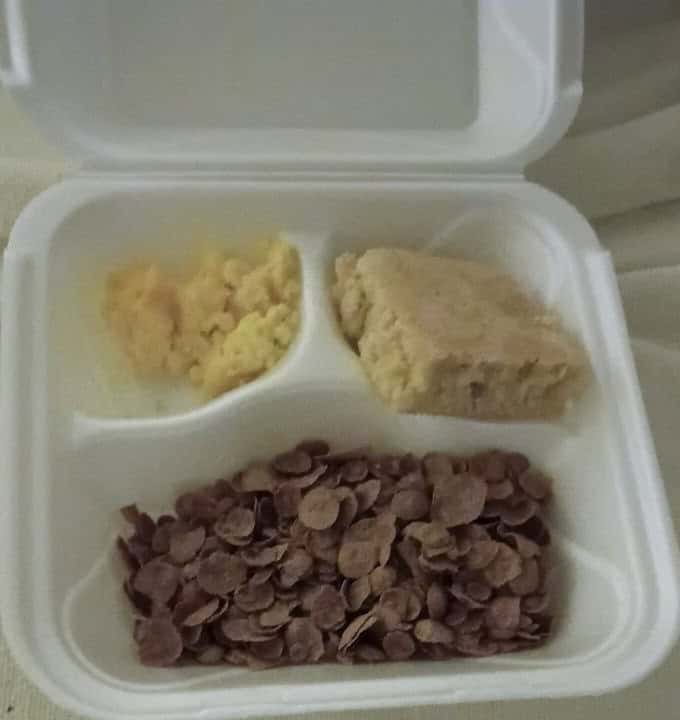
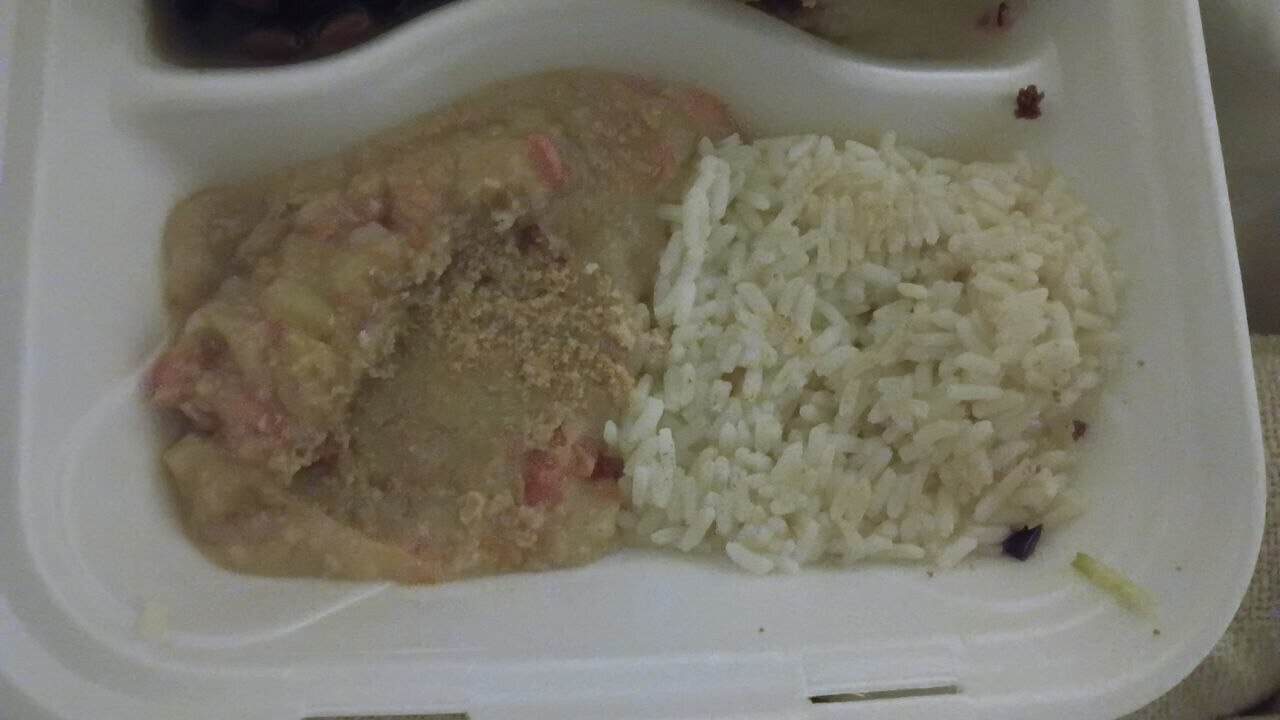
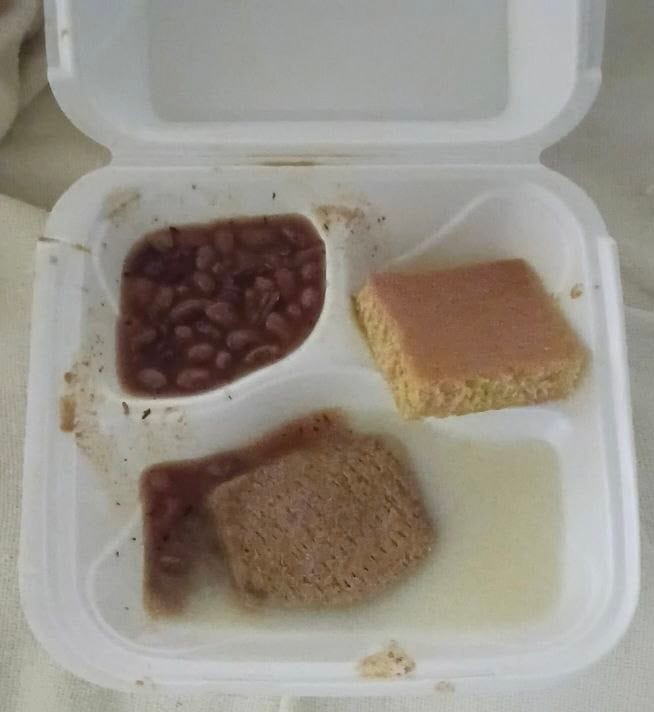
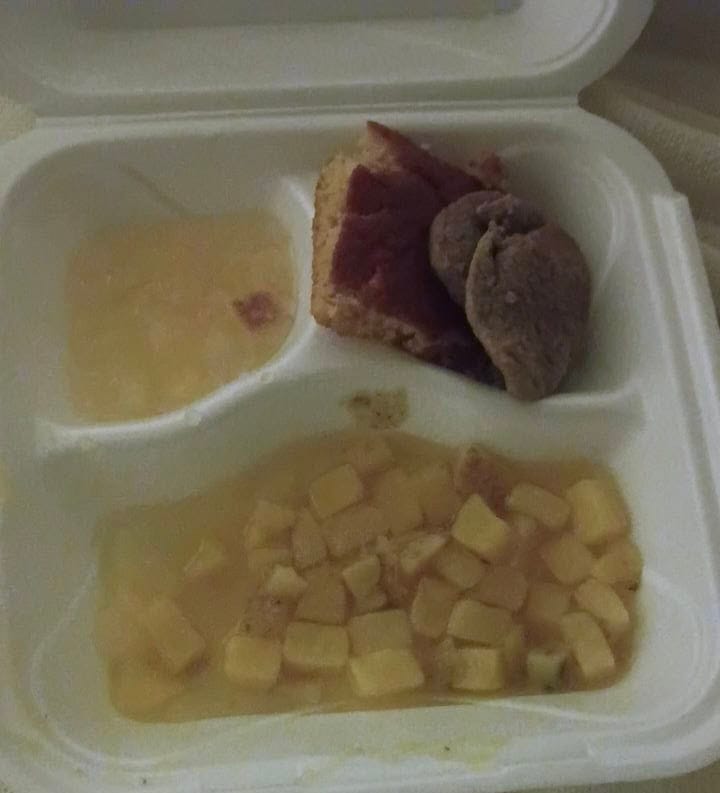
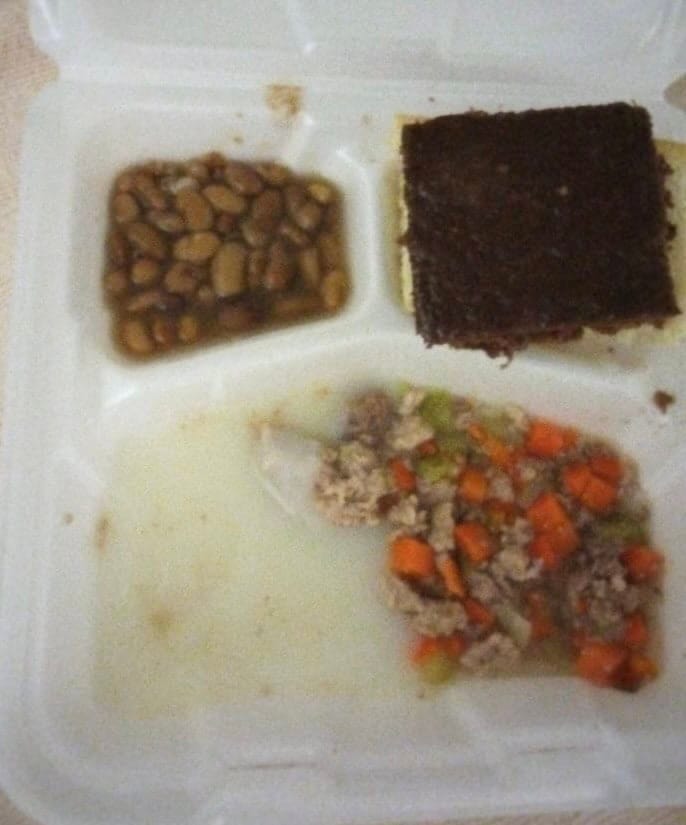
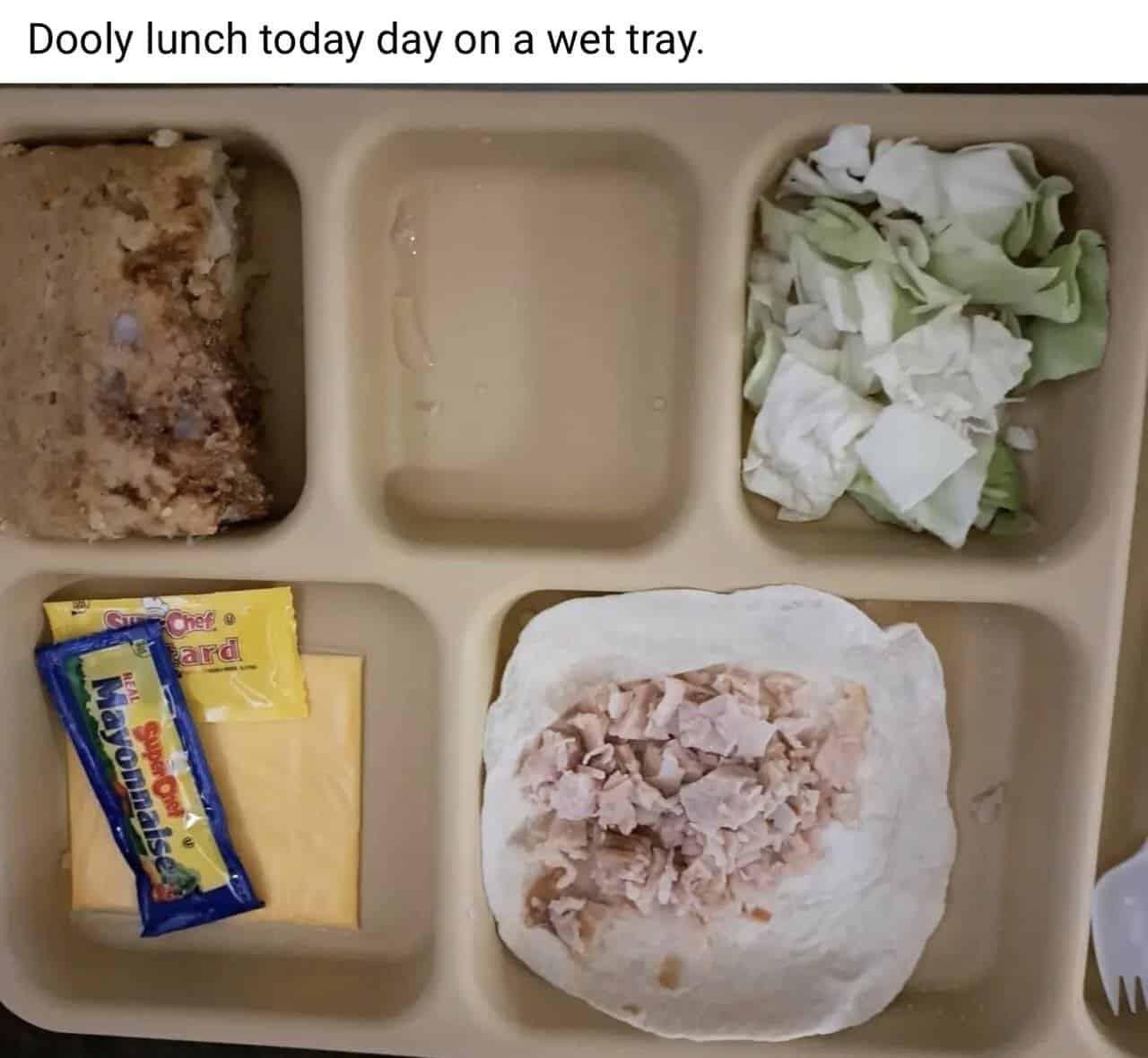
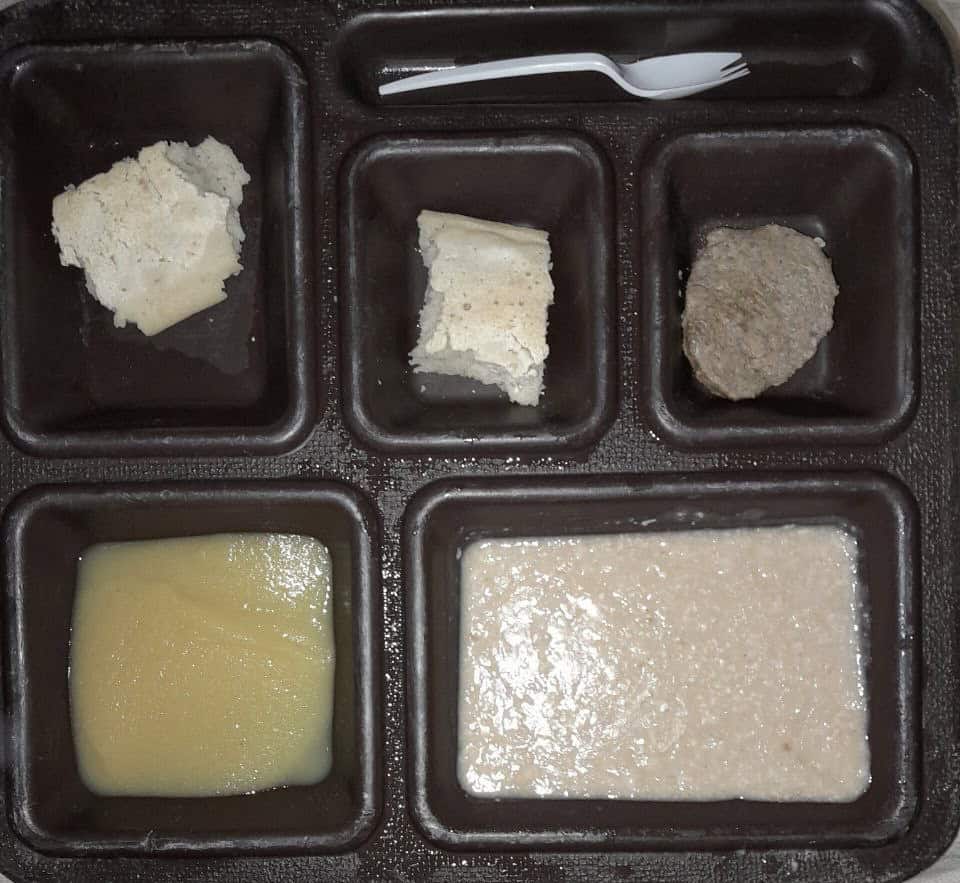
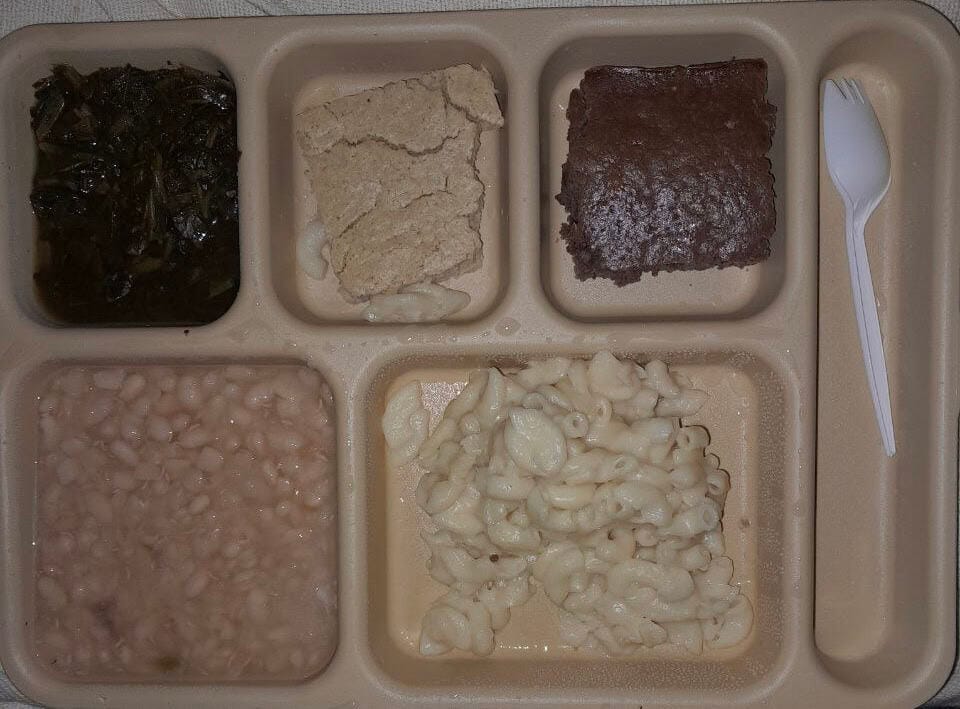
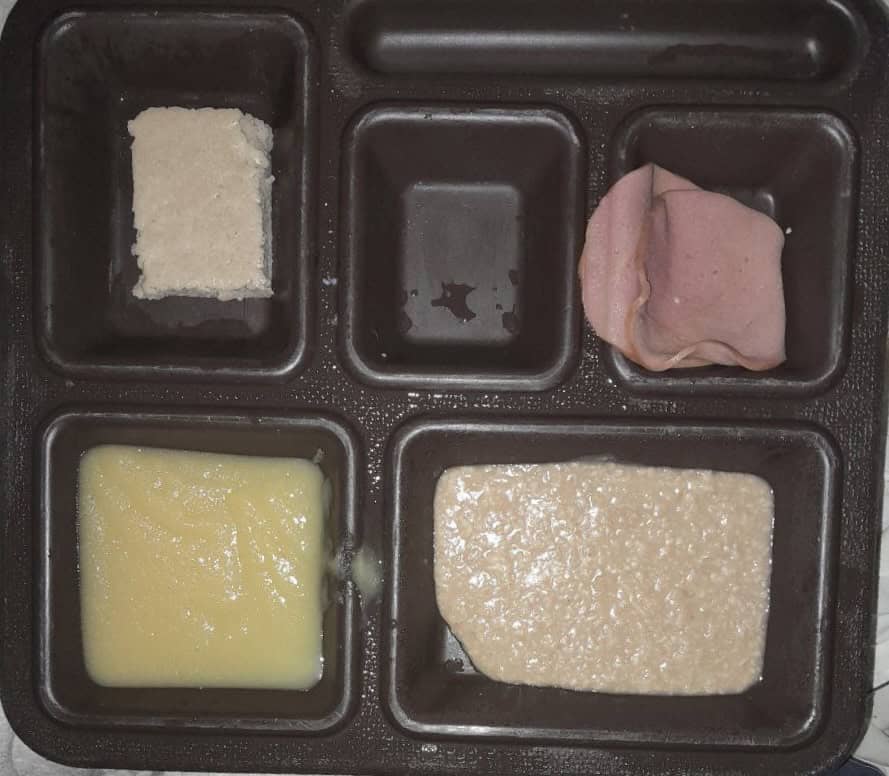
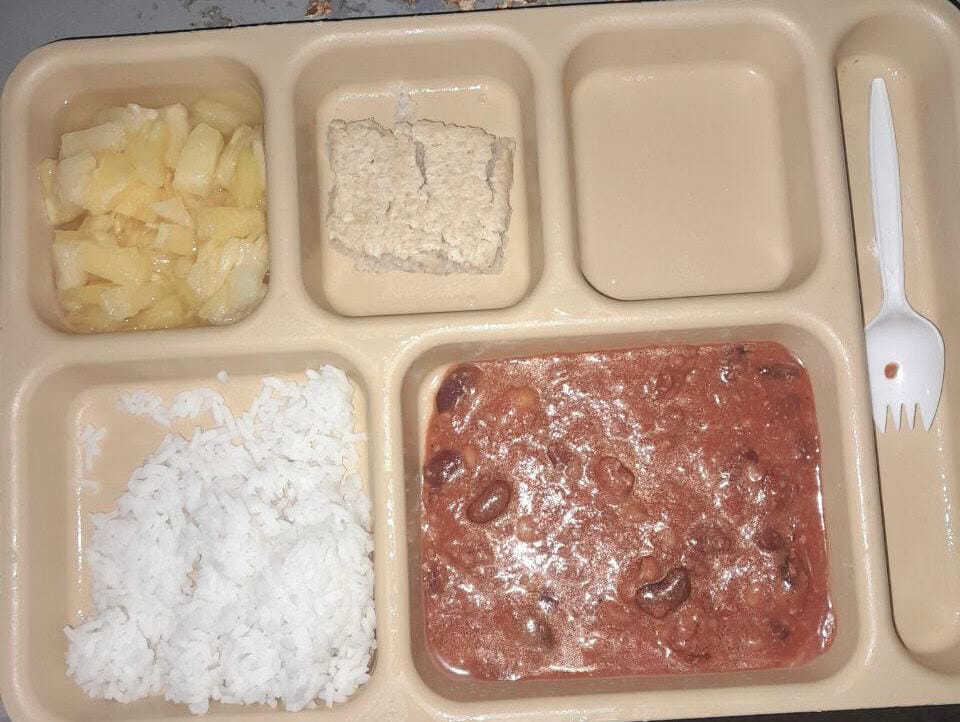
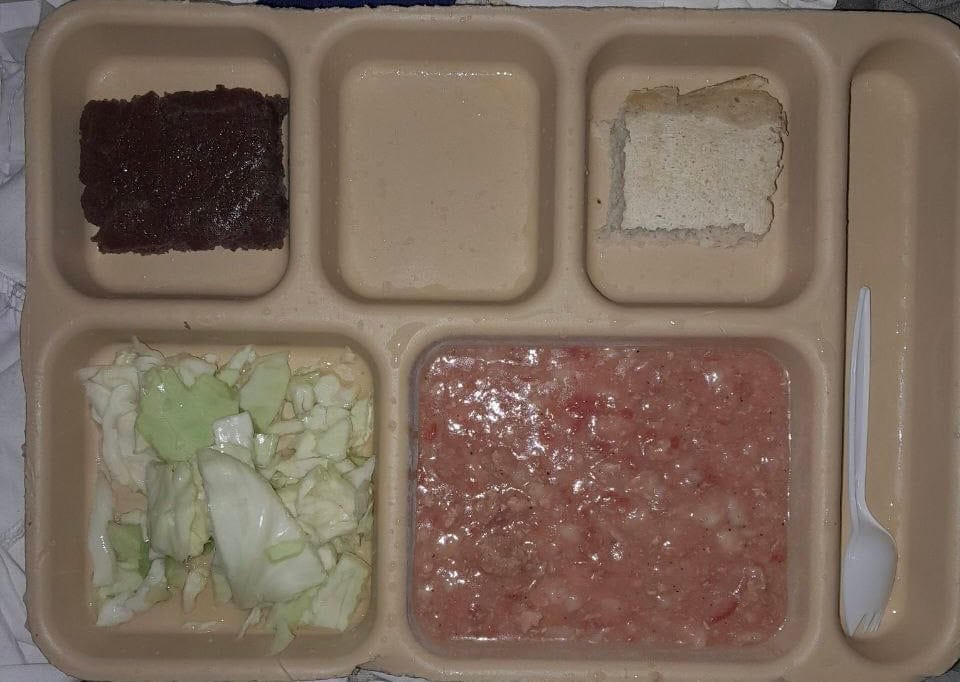
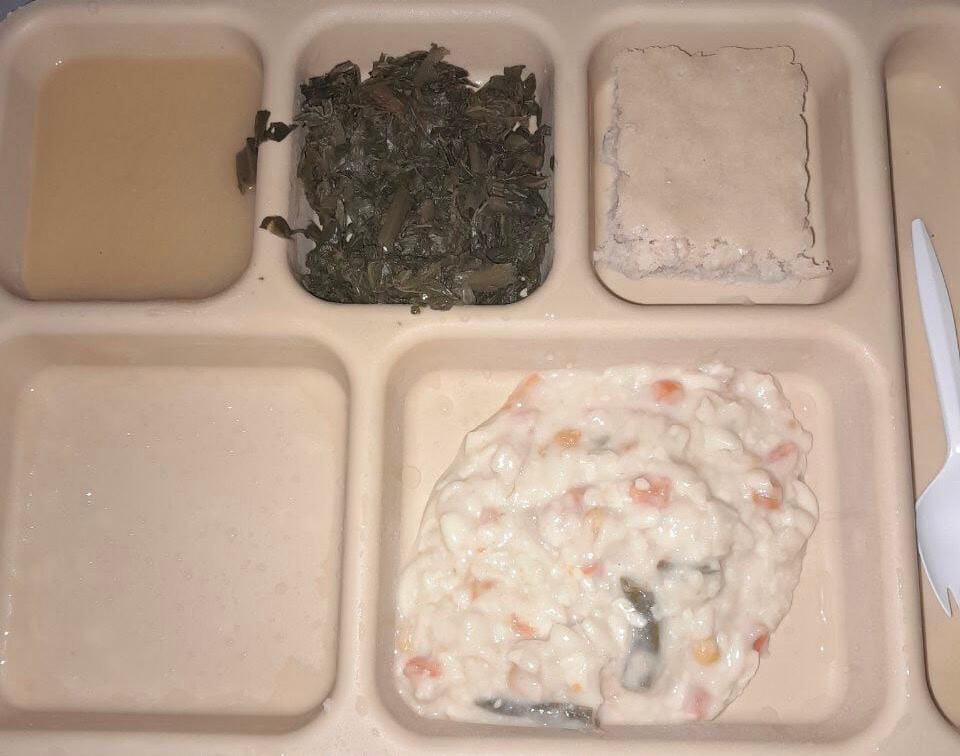
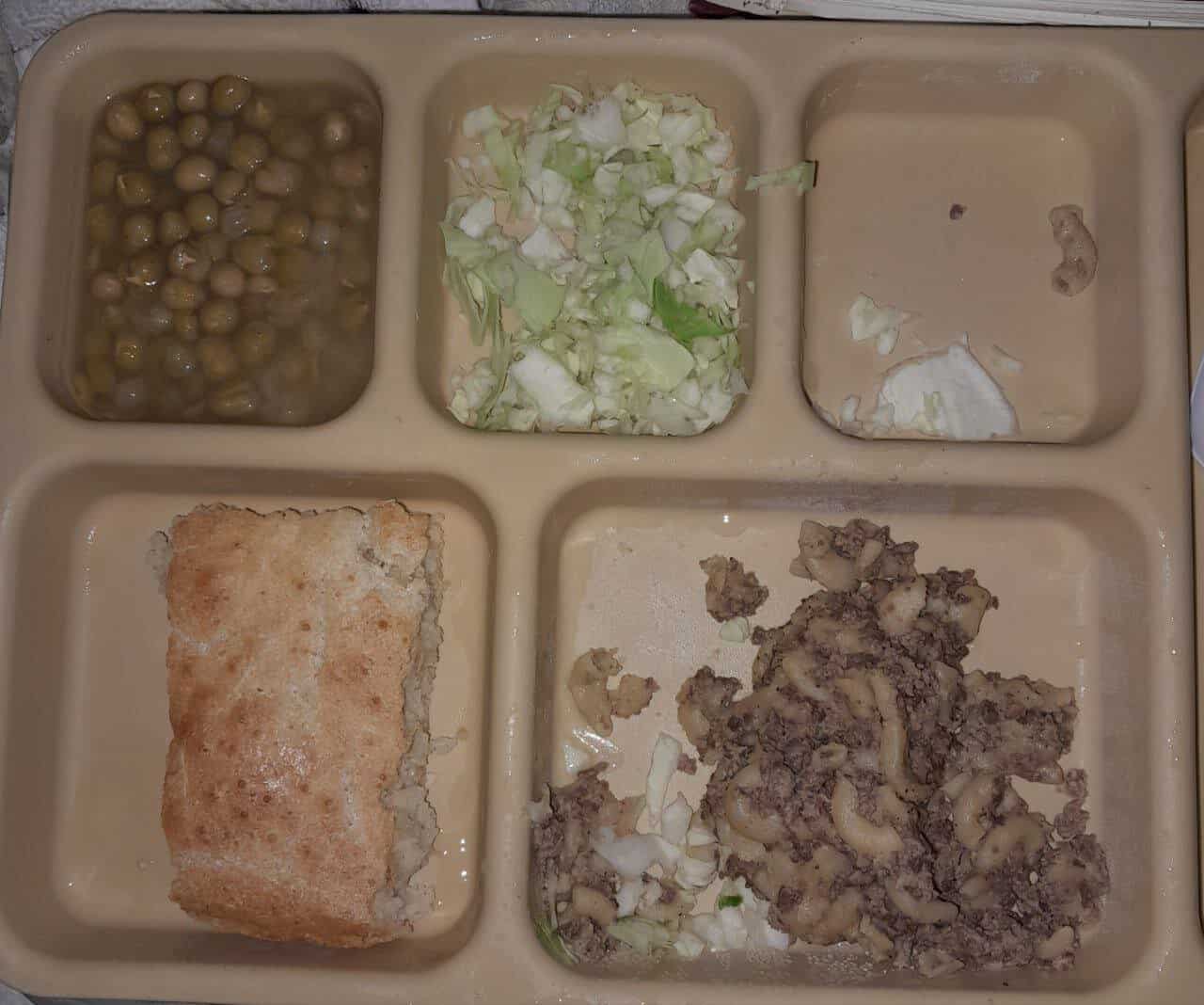
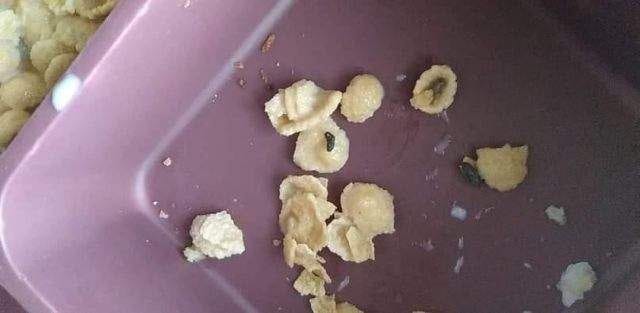
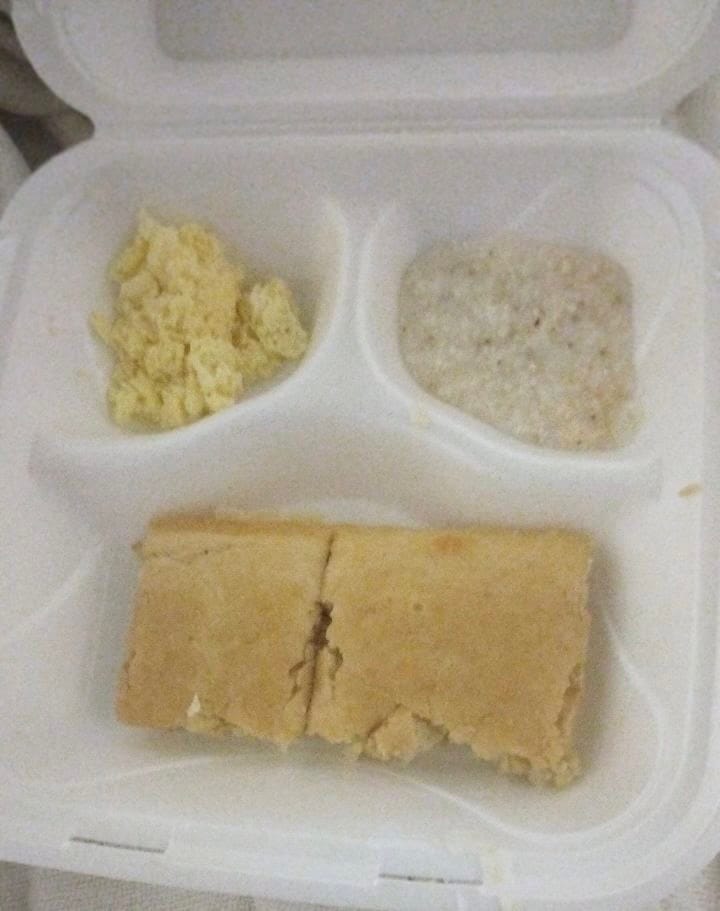
Click any image to view full size. Photos contributed by people inside Georgia prisons and verified through multiple sources. The calorie & protein estimates are conservative GPS estimates from image analysis plus GCI’s own product spec sheets — they account for the thin, water-stretched, and chopped-down portions actually served, food that often covers only the bottom of a compartment, millimeters deep. Note what never appears on any tray: fresh fruit, and — apart from a wedge of undressed raw cabbage — fresh vegetables. Everything else is canned, processed, or starch.
The numbers, from Georgia's own budget.
Two budget lines, four fiscal years. The food line has barely moved. The medical line — what the State pays to treat the disease that underfeeding produces — has grown by $107 million.
| Fiscal Year | Type | Food budget | Health (Medical) | Ratio |
|---|---|---|---|---|
| FY 2024 | Actual | $30,914,139 | $325,613,120 | 10.5× |
| FY 2025 | Actual | $31,748,617 | $389,939,841 | 12.3× |
| FY 2026 | Original | $30,918,178 | $377,478,018 | 12.2× |
| FY 2027 | Proposed | $31,208,029 | $432,247,728 | 13.9× |
Source: Georgia Governor's Budget Report, Amended FY 2026 and FY 2027.
Food spending grew +0.95% in four years. Medical spending grew +33%. By FY2027 Georgia is projected to spend about 14× more on prison medical care than on the food line that feeds those same prisoners. Per inmate, that is ~$8,074 per year on medical care versus ~$583 on food — or roughly $0.53–$0.60 per meal, depending on whether you compute from the budget line or from GPS Research Library's independent per-meal estimate. The two numbers triangulate.
The trays are getting smaller every year.
The food budget is a fixed legislative appropriation. The prisoner population it has to feed is not. As that population grows and food prices rise, the same dollar buys less food per tray. The math is unavoidable.
| Fiscal Year | Food line | GDC population (est.) | Per inmate per day | Per meal |
|---|---|---|---|---|
| FY 2024 | $30,914,139 | ~50,000 | $1.69 | $0.565 |
| FY 2027 (proposed) | $31,208,029 | 53,514 (Apr 2026 actual) | $1.60 | $0.532 |
| Change | +1.0% | +~7% | −5.7% | −5.8% |
In nominal dollars, per-meal spending has dropped about 6% in four years. After accounting for USDA-reported food-price inflation of roughly 15–18% over the same period, the real value of each meal has fallen by roughly 20%. Same money. More people. More expensive food. Smaller portions on the trays you saw above.
Sources: Governor's Budget Report (food line); wp_gps_monthly_snapshots (Apr 2026 GDC population); FY2024 population estimated from public GDC monthly reports.
How we know what's on the tray.
Three independent sources triangulate to the same range — well below any federal nutrition standard.
| Source | Per prisoner per day | Per meal | Notes |
|---|---|---|---|
| Budget-derived ($31.2M ÷ 53,514 ÷ 3 ÷ 365) | $1.60 | ~$0.53 | FY2027 proposed budget |
| GPS Research Library estimate | $1.80 | $0.60 | Independent per-meal analysis |
| National School Lunch Program (USDA) | ~$11.00 | $3.66 | Federal reimbursement, free lunch tier |
| USDA "Thrifty Plan" adult-male minimum | ~$10.00 | ~$3.33 | Federal definition of minimum adequate diet |
GPS Research Library, Food Safety Inspections in Georgia State Prisons (Collection 95, datapoints 5014, 5844, 5845). For reference, Aramark vendor contracts cover only 2 GDC prisons (not the system) at a disclosed rate of $2.973 per prisoner per day — well above the system-wide budget-derived figure, since most GDC food is grown by GCI farms and procured in-house.
Georgia spends roughly one-sixth of what the federal government considers the minimum adequate diet for an adult, and about one-seventh of what the National School Lunch Program spends per meal for a child.
What the State will tell you, and what's actually true.
A few facts from GPS Research Library that don't appear in the State's own communications:
Two meals on weekends.
Board of Corrections rule expressly permits only two meals per day on Saturdays and Sundays. Friday lunch was eliminated entirely in 2009 as a "cost-cutting measure" and has never been restored. In 2024 the legislature appropriated $1.2M specifically for "additional meals on weekends" — an explicit acknowledgment that current allocations don't cover three meals a day.
40% of food is grown by unpaid prison labor.
Georgia Correctional Industries (GCI) farms 13,000+ acres and produces over 40% of the food served inside GDC. The labor is entirely uncompensated. The remaining ~60% is purchased and prepared in-house at most facilities. Aramark vendor contracts cover only 2 prisons within GDC, not the system as a whole.
The trays drive the violence.
Ware State Prison erupted in a 2020 riot during which a prisoner-shot video showed a single cheese sandwich as the cause — weeks of cheese-and-peanut-butter only meals. Gumm v. Ford documented a Georgia Diagnostic SMU prisoner who lost 40 pounds on inadequate food. DOJ found "repeated instances of food deprivation by cellmates" across 17 GDC prisons.
Crisis #2: The $47 million commissary extortion.
When meals don't sustain a body, you turn to the commissary. In Georgia, that means paying premium prices for the worst food on the market — sold by a contractor with a captive customer base of 53,000 people who can't shop anywhere else.
Annual commissary revenue
Captive market. No competition. No price negotiation by the people paying.
Markup over retail
Items GPS analysis found sold at multiples of equivalent grocery-store prices. The people paying have no Walmart option.
Ultra-processed
Ramen, instant noodles, chips, candy, sodas. Foods that worsen the diabetes, hypertension, and chronic disease the meals already cause.
Nutrition standard
No state requirement that commissary items meet any nutritional adequacy threshold. The contract is built around margin, not health.
Read the GPS investigations.
GPS reporting that documents this crisis from multiple angles — starting with what GDC tells legislators, through the meals, the medical consequences, the commissary economy, and the families who pay — plus the outside research and primary sources behind it.
The 2,900-Calorie Menu That 53 Cents Can’t Buy
The CrisisStarved and Silenced: The Hidden Crisis Inside Georgia Prisons
The ViolenceNutrition Neglect: How Georgia's Prison Food Is Fueling Violence
The StandardFederal Nutrition Guidelines vs. Georgia Prison Food Reality
The TraysDunked, Stacked, and Served: Why Georgia Prison Trays Are Making People Sick
A DecadeSurviving on Scraps: Ten Years of Prison Food in Georgia
The CommissaryGeorgia's Prison Commissary Extortion: Convenience Store Rejects Sold at Premium Prices for $47 Million
The FamiliesThe Price of Love: How Georgia's Prisons Bleed Families Dry
The FamiliesThe Price of Staying Close: Families Pay the Cost of a Broken System
External research & primary sources
- GPS — The 2,900-Calorie Menu That 53 Cents Can’t Buy — the GDC food claim relayed to a Georgia legislator, measured against the State’s own budget.
- Cook, Lee, White & Gropper (2015), The Diet of Inmates: An Analysis of a 28-Day Cycle Menu Used in a Large County Jail in the State of Georgia — peer-reviewed (Journal of Correctional Health Care); a Georgia correctional 28-day menu found high in saturated fat and sodium and low in vegetables, fruit, dairy, and key vitamins.
- Nutritional Characteristics of Menus in State Prisons — Journal of Correctional Health Care (2024).
- Georgia Correctional Industries — product catalog & spec sheets — GCI’s own ingredient lists and nutrition facts for the meat products it serves (archived by GPS).
Help end Georgia's prison food crisis.
Share this page. Contact your state legislator. If you've worked inside a GDC kitchen or have photographs and documents, we want to hear from you.