Author: Chaingangninja
I never had the opportunity or freedom to decide if I wanted to be a scammer imprisoned by the state of Georgia, stripped of my rights and neglected by the department of corrections, enslaved by gang members and forced into a pseudo telephone terrorist training camp. That isn’t me. But for three years, that’s exactly what I was.
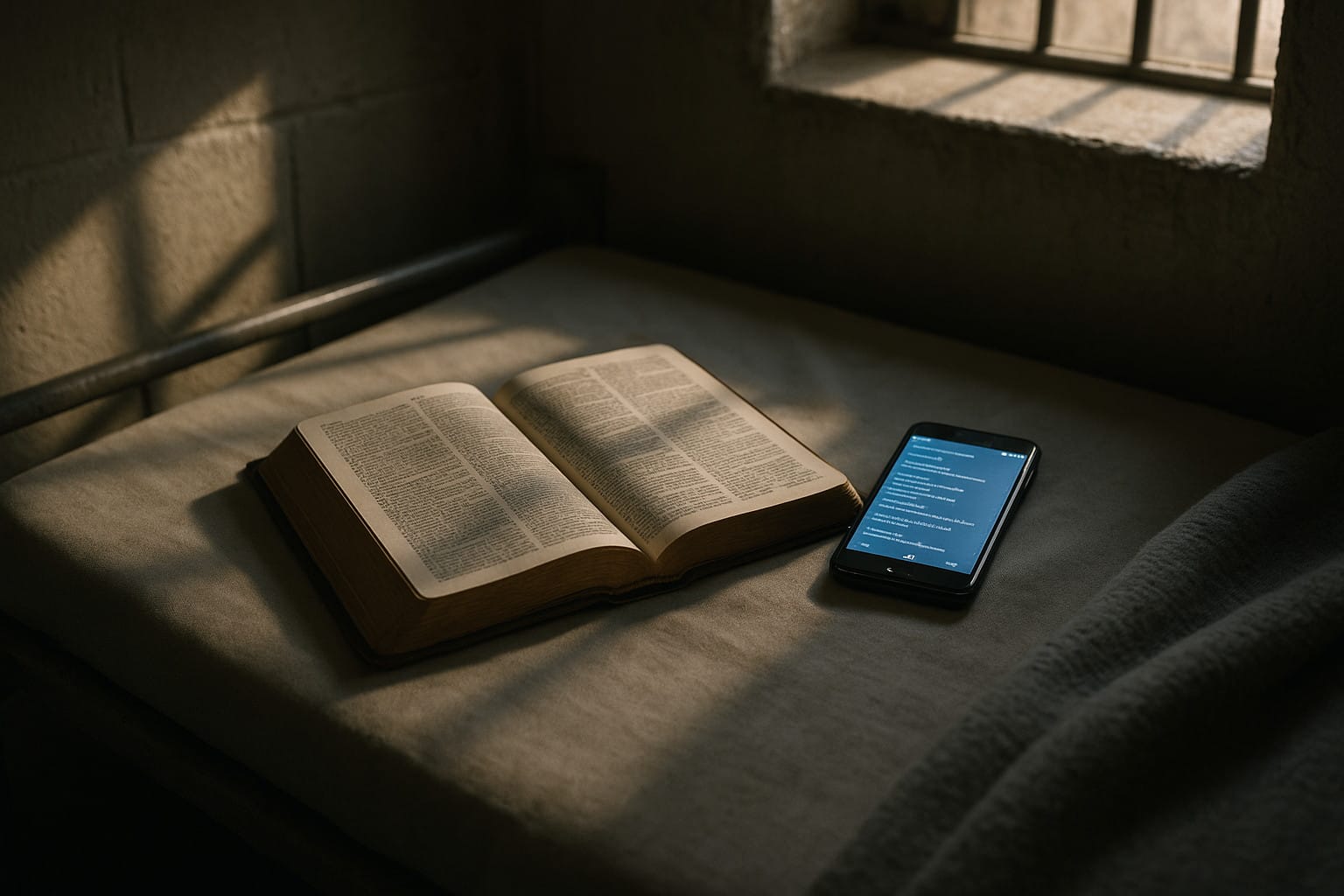
I’m typing this on a contraband cellphone from a Georgia prison cell.
—
Before Georgia, I was a functioning addict. Eight years deep into heroin and opiates, and somehow I possessed this unique ability to live in a 7-bedroom house with a Mercedes and my fiancé’s new BMW in the garage. Successful at work by day. As soon as I got off work, I drove that Mercedes 100+ mph straight to the Pigtown neighborhood of Baltimore to cop enough dope to avoid the withdrawal symptoms the next day. My family, friends, and coworkers would never have suspected each night ended the same way: injecting heroin into my veins and drifting off out of pure exhaustion from the effects of living that double life for almost a decade.
My parents relocated to Georgia, and the addiction was the thing that pushed me to follow them. Supplementing my dope budget with the money I saved not paying rent just made sense to my intoxicated and chemically addicted mind. As soon as I arrived, I googled “where to buy heroin in Atlanta.” After eight years of copping in DC, Baltimore, and Philadelphia, I knew how to read the instructions I got back.
What followed was 11 months of insanity.
It was a perfect storm — the Bluff, Atlanta’s open-air drug marketplace, a passionate intelligent eight-year addict, and two brothers from Atlanta, barely over 18, who supervised the trap house dime spot where I was scoring multiple times a day. While most customers spent $10–20, I’d come in with $100–$500. I’d bring bags of cheeseburgers and McChicken sandwiches for the kids stuck working the trap window in 12-hour shifts. We got close. Three fiercely loyal, intelligent, flawed products of extreme hardship from two different walks of life, sharing a glorification of guns, drugs, and the fast life.
It started with shoplifting and burglarizing unoccupied stash houses. Each time, emboldened by our success, the crimes grew in severity and payoff. Eleven months later, I no longer held a job and fully supported my addiction with the proceeds of an increasingly dangerous criminal enterprise. Slowly the filter — for lack of a better term — simply faded.
It ended in a Kroger parking lot, just after my 31st birthday. I was inside a truck struggling with a man two or three times my size as we accelerated uncontrollably across the lot. My shoulder fell out of socket. That uncontrollable seizing up your body does when a limb is hanging by soft tissue only — it applies to your hand and fist too. The last thing you want your finger on at that moment is the trigger of a loaded handgun. I didn’t intend to pull the trigger. I couldn’t control the reaction from the pain.
The truck crashed. I climbed out the passenger window and ran.
Seven days later, I was arrested. Aggravated assault and armed robbery. After two years of minimal attention from my public pretender, I took an open-ended plea. The judge sentenced me to 40, do 15.
—
COVID hit while I was at my first camp. I’ve been told it ranked at the top for COVID deaths. We wouldn’t know as inmates, because they simply shut off the lights, postponed inspection for two months, and quarantined by leaving us all to be infected with the healthier population just surviving until it ran its course. There was no need to test or figure out a solution. They contained it and brought trays to the dorm until we recovered or died off.
That was the spark that lit the Georgia prison system on fire. And the state was content letting it burn to the ground.
Unofficially, administration and staff traded control of the prisons to the gangs — for decreased inmate-on-staff violence, for profit, for the ability to draw a reliable paycheck while doing very little actual work. Cell phones, tobacco, drugs, contraband of every kind flooded in. Then came the PPP loan scams and PUA fraud during the pandemic. The proceeds of that criminal enterprise were gas on the fire.
When I was shipped to the next camp, the orderly who answered to the gang investigator met me on arrival. He told me I’d be coming to his dorm. That he had a cell and a bed I could sleep in instead of the floor in the day room.
He told me I was now a scammer.
—
I was trained by another prisoner — a man who’d already been convicted of running this same operation. The job was to impersonate government officials all over the country, 12+ hours a day, 7 days a week. Calling psychiatrists and health professionals with a warrant scam. Bonds anywhere from $1,000 to $100,000.
The alternative was the day room. Constant torment, humiliation, harassment, forced labor. And that was the least of it. Underperforming scammers were beaten with wet GDC belts, stabbed and beaten with wood broom handles.
So I did it the only way I knew how. I got high to numb the pain. You become trained by the normalcy of extreme circumstances when the people in charge of your safety are accepting bribes to actively avoid doing their job. I watched people physically injured, jumped and stabbed, knowing it could be hours before anyone was even aware someone needed help. Even then they might just push the corpse to the side and lie to the boss. As long as shit didn’t roll downhill — no harm, no foul.
I lived in a majority Blood dorm. Their headquarters, so to speak. The most known members with the most stain for the whole camp were held there. A 30-pound payload drone was dropping designer clothing, meth, tobacco, cell phones, electronics. But the real problem was the strips of paper soaked in K2 that people were smoking. I’ve seen a man rise up off the toilet with his pants around his ankles, running for the front door, screaming and begging his mother — who he believed was chasing him with a knife.
My boss — the man who held worldwide rank in his affiliation and posed the threat of physical harm — used the cell as his own. Every morning I had to leave so he could use the restroom. Then I’d start calling innocent potential victims, repeating the skit I’d been told to mimic, not allowed to leave the cell. If I was unsuccessful, I owed “research” that night for the following day.
Eventually I got effective. My background in high-ticket sales and my ability to communicate in a way that just made sense — it made me the most effective and highest-producing scammer ever forced to take the job. That’s a complicated thing to sit with. Becoming good at something you were forced into. One dorm in one camp would regularly gross well over $100,000 deposited into the Bitcoin wallets of gang members from contraband cell phones.
There are hundreds of victims. Some late in their lives without the ability to recover from some coward conning them out of their life savings. I have a resounding, repeating fear that some of those innocent people may have ended their lives — may have chosen suicide rather than explain to an abusive spouse how and why they were tricked into giving away everything in less than two hours.
It’s slavery under threat of violence. It’s torture. The psychological effects remind me of something like Stockholm syndrome — your success determines your safety, your survivability, sometimes your comfort. You don’t even notice how far from normal you’ve drifted.
Report it? There was no point. The corruption inside GDC is just a fact of life. And as a white civilian in there, you draw the harshest treatment. People don’t understand. We get lumped in with the gang members forcing all of this. Prosecuted alongside them. But the truth is the state and its negligence — their institutional indifference to the law — they are the ones responsible for the millions of dollars scammed from innocent civilians across this country.
—
More than a year in, I started to suspect outside interference with the calls. I had become so skilled at reading reactions that I’d studied the psychology of the subconscious mind — how every single word landed. And I began to notice responses that didn’t jive with natural human reactions. Almost as if I was speaking to AI, or an actor, something out of a simulation.
I researched. I learned what a Stingray was. A few times the “victim” slipped up in ways that exposed they weren’t real. I became convinced law enforcement had figured out how to route calls. And the ignorant fools controlling us were too greedy to notice the switch. They’d pass an actor around the whole dorm and let everyone hang themselves, never even realizing it because they were focused on the size of the next check.
So I made a decision. The men who considered me the final authority in the scam game — I used that podium. I told the leaders what I suspected. I tried to lead by example. Tried to quit.
GDC shipped my owner. The gang member I belonged to. And then a new inmate arrived — more dangerous and violent than the fat, comfortable ones of old. He took me over. Now instead of one owner to fear, I had all his underlings — five or six of them jumping or whipping us every time we didn’t produce. The beatings were ten times what they had been. If I was hopeless before, my hope for the future became non-existent.
Around that same time, a trainee of mine — I still don’t know if he was a snitch or undercover — wigged me out, explaining the authorities were not only aware, they were extremely equipped to do everything I suspected and more. Sane or otherwise, I made a choice. I would stop disguising what was happening. I would put it on display — to assist the only saviors I could see, the very ones whose coworkers had put me there to begin with.
And then I was scammed. Set up somehow I still can’t prove. The girl I love — the mother of my child, who I’d reconnected with, who’d kept me sane for three years on the phone every night planning the life we wanted — she was somehow linked to a scam victim despite my never using her accounts. She was charged. Arrested in the most personal and disrespectful manner possible.
The CERT team faked a random pat-down. They took my phone. A week later I was shipped to another prison and dropped into the tier two dorm — the hole.
The warden robbed me of my jewelry on arrival. June, no fan, no AC, no air — because they’d welded steel plates over the windows. They padlocked you into a cell, but men still broke out at night and popped other locks off, sometimes to get into a cell where they wanted to kill someone.
My girl and my daughter felt like I’d scammed them from the start. Like I’d only reappeared to use her and leave her with the consequences of something she had no part in. That’s when I went through what I call the flame. I lost them there. I turned back to my Bible, trying to understand how this could all happen. Whether I’d survive. Whether they’d ever speak to me again. Whether I’d just lost the only purpose I had left for wanting a future.
—
In April I was transferred again — to a safer place, with familiar faces from the ten years I’ve been locked up. For the first time in a long time, I’m safe.
I’m not through yet. But I’m writing a book about the religious aspect of the flame. I want to create a legitimate way to reach my daughter and her mother by giving them any royalties from it. With that almost complete, I want them to know there isn’t anything I wouldn’t do to get back to them. To somehow save the life she and I planned every night on the phone — the conversations that kept me sane for three years through all of this.
Ten years of life is unfolding in my mind. I could dissect it for years. But if someone is trapped right now in something they didn’t choose, feeling like there’s no way out, I’d tell them one word.
Character.
You have to stand on it at some point if you want to change your future. The same effectiveness that can do harm is almost twice as powerful when applied to positive energy. Timing is imperative. But if you do the right thing when it matters — instead of letting fear keep you lukewarm — maybe you can change the world.