This explainer is based on GDC Mission vs. Reality: The Rehabilitation That Doesn’t Exist. All statistics and findings are drawn directly from this source.
Why This Research Matters for Advocacy
This analysis is one of the most comprehensive breakdowns of Georgia’s rehabilitation failure ever assembled. It connects budget data, DOJ findings, neuroscience research, state-by-state comparisons, and the voices of incarcerated people into a single, devastating argument: Georgia spends $1.8 billion annually on corrections and invests virtually nothing in rehabilitation.
The timing is critical. The Department of Justice found reasonable cause that Georgia violates the Eighth Amendment (October 2024). The legislature approved $634 million in new corrections spending — the largest increase in state history — yet directed only $2.6 million toward rehabilitation and education. Meanwhile, 100+ people were killed in Georgia prisons in 2024 alone, and approximately 12,000 people are released annually with a $25 prepaid Visa card and no transitional support.
This research matters for advocacy because it:
- Exposes a 46:1 funding ratio favoring surveillance over rehabilitation, providing concrete budget evidence for legislative testimony
- Places Georgia dead last among Southern states in per-person prison education spending — behind Alabama (under federal oversight), behind Mississippi (the poorest state), behind every peer state
- Documents the neuroscience proving that chronic violence in Georgia’s prisons makes learning biologically impossible — undermining GDC’s claim that it “provides opportunities for rehabilitation”
- Identifies an administrative regulation, not a law, as the barrier to financial aid for incarcerated students — meaning it can be reversed without legislation
- Quantifies the public safety cost of the status quo: approximately 3,000–3,200 people per release cohort will be reconvicted, and a 10 percentage point reduction in recidivism would prevent approximately 1,200 crimes and save $40 million annually
- Amplifies the voices of incarcerated people who describe the daily reality of a system that claims rehabilitation as its mission but delivers none
This document is a weapon against complacency. Use it in every meeting, hearing, and public comment period where Georgia’s corrections budget is discussed.
Key Takeaway: Georgia’s $1.8 billion corrections budget directs 46 times more funding to surveillance than rehabilitation, placing the state dead last among Southern peers in prison education spending while the DOJ has found constitutional violations.
Talking Points
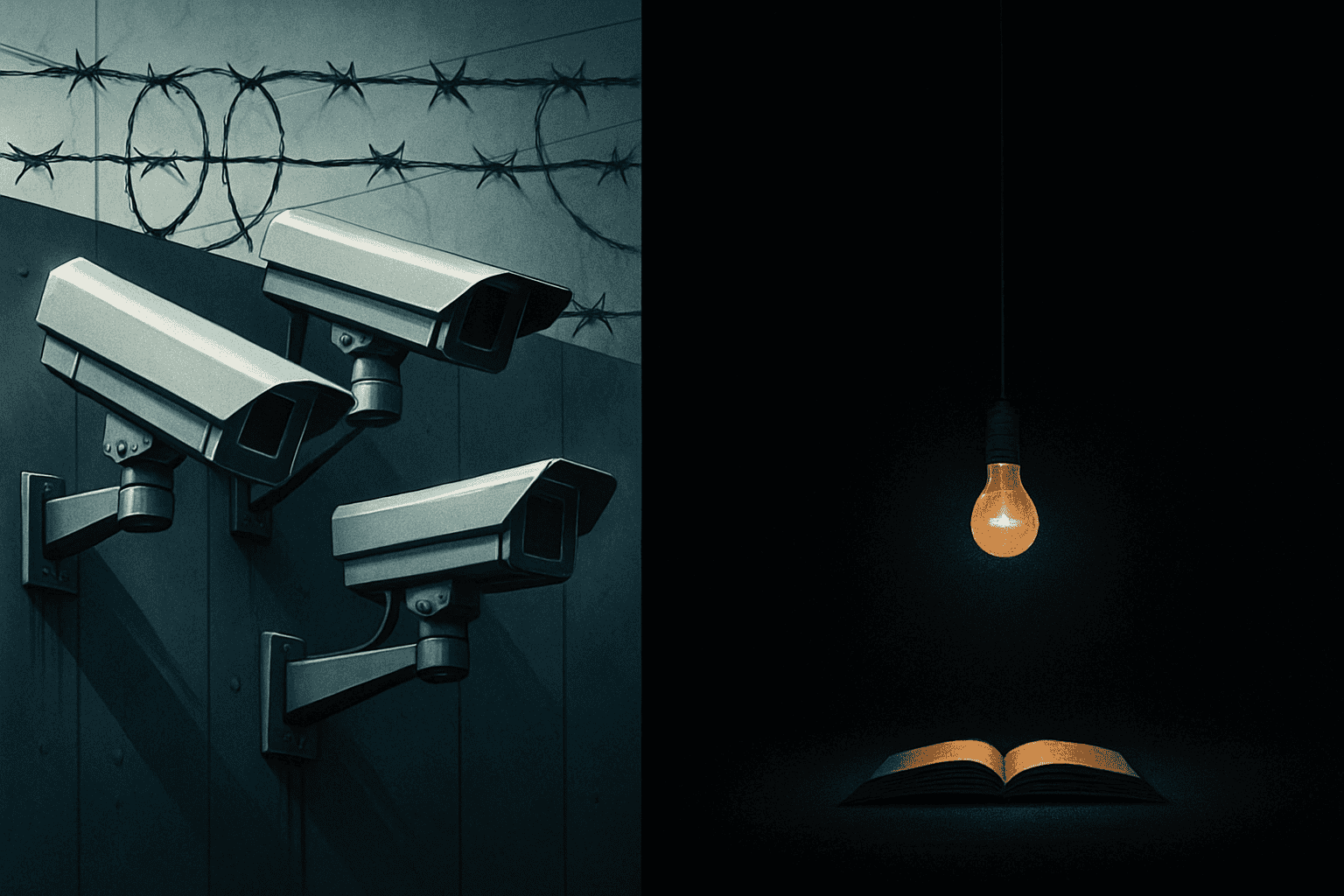
Georgia invests 46 times more in watching incarcerated people than helping them. Over two budget years, the state allocated $2.6 million for rehabilitation and education programming — and over $120 million for surveillance technology, including thermal cameras, CCTVs, body cameras, tasers, and cell phone blocking systems.
Georgia spends $52 per incarcerated person per year on rehabilitation — less than the cost of 45 ramen packets from commissary. That’s $0.11 per day, or 0.11% of the $1.8 billion corrections budget. Meanwhile, the state spends $34,000 per year to incarcerate each person.
Georgia ranks dead last among Southern states in per-person prison education spending at $39 per year. Alabama, even under federal oversight for unconstitutional conditions, outspends Georgia 19 to 1. Mississippi — the poorest state in the nation — has 80% of its incarcerated population enrolled in programming. Texas invests $508–585 per person and achieves a 15% recidivism rate.
The DOJ confirmed 142 homicides in Georgia prisons from 2018–2023, and over 100 people were killed in 2024 alone. Neuroscience research proves that learning is biologically impossible under chronic threat — the prefrontal cortex shuts down, the hippocampus shrinks, and cognitive control declines significantly within just 4 months of incarceration.
Education works. Georgia’s own data prove it. RAND Corporation research shows educational programs reduce recidivism by 43%, with every $1 invested saving $4–5. Georgia’s own vocational completers recidivate at 13.64% versus 26% for the general population. The Bard Prison Initiative achieves under 4% recidivism.
Approximately 12,000 people leave Georgia’s prisons every year — 33 per day — with virtually no preparation. They receive a $25 prepaid Visa card, clothing, and a bus ticket. No housing referral. No job placement. No transitional support. Research shows dramatically elevated mortality in the first two weeks after release.
Georgia’s ban on financial aid for incarcerated students is an administrative regulation, not a law. It was created in 1995 during Governor Zell Miller’s reelection campaign. Federal Pell Grants were restored for incarcerated students in July 2023 and programs are expanding in 44 states — but Georgia shut down its Georgia State University prison education program in March 2024.
Reducing recidivism by just 10 percentage points would prevent approximately 1,200 crimes per year, protect 1,200 potential victims, and save $40 million in incarceration costs. Georgia chooses not to make this investment.
Key Takeaway: Eight data-backed talking points connecting Georgia’s near-zero rehabilitation investment to public safety failures, constitutional violations, and fiscal waste.
Important Quotes
From the Source Document
“Georgia invested ~$2.6 million in rehabilitation and education programming across two budget years — and over $120 million in surveillance and technology in the same period. That’s a ratio of roughly 46:1 in favor of watching people over helping them.”
— Part 1: The Budget“5,991 budgeted corrections officer positions. 2,985 vacant — nearly 50% vacancy rate. At one close-security prison, one officer responsible for nearly 400 beds.”
— Part 2: Staffing Crisis“Understaffing affects programs… prisons do not have enough staff to prevent or even respond to the most blatant gang activities, let alone provide programs.”
— DOJ Findings, cited in Part 6: Lockdowns Destroy Programming“Even quite mild acute uncontrollable stress can cause a rapid and dramatic loss of prefrontal cognitive abilities.”
— Yale research (Arnsten, 2009), cited in Part 2: Neuroscience“Virtually impossible to learn new things, focus on small tasks, or engage with other people.”
— Part 2: Neuroscience, on effects of hypervigilance“Georgia’s ban is NOT a law — it’s a 1995 administrative regulation from Governor Zell Miller’s reelection anxiety.”
— Part 5B: Financial Aid Ban“$40/year = $0.11/day — less than the cost of 45 ramen packets from commissary ($0.90 each).”
— Part 6: Georgia Education Spending Comparison
Voices of Incarcerated People (Tell My Story, gps.press)
“I finished my entire case plan within two years. I’ve worked many jobs including law library, education, vocation. I have graduated two different faith and character programs. Nothing helps to reduce my time. I’ve become a better person, but no one in the GDC cares.”
— Wynter, “No Matter How Good I Am”“I’m a lifer so they don’t like to give us education. They’ll put short timers ahead of us on the list. They don’t try to rehabilitate you. It seems easier to control a dumb person.”
— Mikemike, “Magazines Wrapped Around My Chest”“I’ve been down 17 years now. Seventeen years of living in what I can only describe as a war zone. Literally war. Gang violence and extreme officer shortage. No yard call. No groups or classes. Nothing to help ease your mind.”
— KingdomMan32, “Better Chances”“We were sent here to learn a lesson from our mistakes and come out a better person. In most cases, that is the opposite of what happens.”
— NeverGiveUp, “Let Me Go or Just Execute Me”“I have been threatened, had weapons pulled on me, had someone five feet away from me stabbed, been fed rancid and moldy food, had roaches and rats everywhere, drank water I’ve been told is toxic, seen people sleeping on bare concrete because they couldn’t afford to pay ‘rent’ on their cell… We live in conditions that would be illegal for animals at a shelter.”
— Bandit, “We Are People, Not Statistics”
Constitutional Authority
“The absence of an affirmative program of training and rehabilitation may have constitutional significance where conditions and practices exist which actually militate against reform and rehabilitation.”
— Holt v. Sarver (1970), cited in Part 6: Constitutional RequirementA life sentence without parole “forswears altogether the rehabilitative ideal.”
— Graham v. Florida, 560 U.S. 48 (2010)
Key Takeaway: These quotes — from budget analysis, DOJ findings, neuroscience, incarcerated people, and constitutional law — form the evidentiary backbone for testimony and media communications.
How to Use This in Your Advocacy
Legislative Testimony
Frame your testimony around the broken promise: GDC’s own mission statement commits to “providing opportunities for offender rehabilitation,” yet the budget reveals that commitment is fiction. Lead with the 46:1 ratio — legislators understand numbers. Follow with the Southern states comparison showing Georgia ranks dead last in per-person prison education spending. Close with the fiscal argument: every $1 invested in education saves $4–5, and a 10 percentage point recidivism reduction saves $40 million annually.
Key framing for committees:
– For Appropriations: Georgia spends $34,000 per year to incarcerate each person and $52 on rehabilitation. The state is paying premium prices for a system that produces 100+ homicides annually and a likely 50% return-to-incarceration rate.
– For Public Safety / Judiciary: 12,000 people are released annually with a $25 card and no support. 95% of all state prisoners will eventually be released. Rehabilitation is public safety.
– For Education: Georgia allocates $325 million for the DREAMS Scholarship and $1 billion for HOPE — both banned for incarcerated students by an administrative regulation, not a law. The vocational education budget for the entire prison system is $172,000 — $3.44 per person.
Public Comment
During DOJ compliance monitoring, budget hearings, or Board of Corrections meetings, center these points:
– Only 3 of 82 DOJ remedial measures address programming — none mandate education, vocational training, GED, or college programs
– GDC’s claim of 45,000 certificates bundles micro-credentials (CPR, food handler, “Business Etiquette”) with real vocational certifications
– Reentry centers have only 2,344 beds for 50,000 people — 4.7% capacity
– Evening programming was eliminated after COVID in 2020 and has never been restored — six years later
– Facilities spend approximately 60 days per year on lockdown, destroying programming access
Media Pitches
Angle 1: “The 46-to-1 Ratio” — Georgia spent $120+ million on surveillance cameras and cell phone blockers in two budget years and $2.6 million on rehabilitation. Lead with the visual: $52 per person for rehabilitation — less than 45 ramen packets.
Angle 2: “Dead Last” — Georgia ranks behind every Southern peer state in prison education spending. Alabama, under federal oversight for unconstitutional conditions, outspends Georgia 19 to 1. Mississippi, the poorest state, enrolls 80% of its incarcerated population in programming.
Angle 3: “The Regulation, Not the Law” — Georgia’s ban on financial aid for incarcerated students isn’t a law. It’s a 1995 administrative regulation. While 44 states expand Pell-funded college programs, Georgia shut down its GSU prison education program in March 2024.
Angle 4: “The Brain Science” — Neuroscience proves learning is impossible in Georgia’s prisons. Research shows cognitive control declines significantly in just 4 months of incarceration. Georgia’s prisons had 142 homicides over five years and 27,425 weapons recovered in less than two years.
Angle 5: “33 People a Day” — Every day, 33 people walk out of Georgia’s prisons with a $25 prepaid Visa card. No housing. No job placement. No ID. Dramatically elevated death risk in the first two weeks.
Coalition Building
This research creates bridges to multiple advocacy communities:
– Public safety advocates: Frame rehabilitation as crime prevention. 1,200 fewer crimes per year with a 10-point recidivism reduction.
– Education advocates: Georgia invests $16,526 per K-12 student and $39 per incarcerated person — a 400:1+ disparity. The $180,000 GSU program serving 60 students was shut down while $325 million went to DREAMS.
– Fiscal conservatives: The $4–5 return on every $1 in education spending. The 205% ROI on vocational training. The $40 million annual savings from reducing recidivism.
– Faith communities: The voices from inside — people who completed every program available and still have no path forward. The origin of “penitentiary” in the concept of penitence and reform.
– Mental health advocates: 50–66% of incarcerated people have substance use disorders with severely limited treatment capacity. 40% lack a high school credential. 74% of incarcerated youth had Individual Education Plans.
– Disability and neuroscience communities: Chronic stress causes structural brain damage — prefrontal cortex dendrites change after one week. The prison environment actively causes the cognitive deficits it then punishes.
Written Communications
For letters to Governor Kemp, legislators, the Board of Corrections, or DOJ monitors, use these data anchors:
– $1.8 billion total budget, $2.6 million for rehabilitation (0.14%)
– 46:1 surveillance-to-rehabilitation spending ratio
– $52 per person annually for rehabilitation vs. $34,000 for incarceration
– Dead last among Southern states at $39 per person for education
– 142 DOJ-confirmed homicides (2018–2023); 100+ in 2024 alone
– 2,985 vacant officer positions out of 5,991 budgeted (nearly 50%)
– 12,000 released annually, $25 at the gate
– Only 3 of 82 DOJ remedial measures address programming
– Financial aid ban is administrative regulation, not law
Key Takeaway: This research provides ready-made arguments for every advocacy context — from legislative committee rooms to media interviews to coalition partner meetings.
Use Impact Justice AI
Need to turn these findings into a letter to your legislator? Draft testimony for a committee hearing? Write a public comment for a DOJ compliance review? Create a fact sheet for coalition partners?
Impact Justice AI can help you generate letters, emails, testimony drafts, public comments, and advocacy materials using this research and other GPS data. The tool is designed to help advocates move from research to action — quickly and effectively.
Whether you’re preparing for a Board of Corrections meeting, pitching a story to a reporter, or writing to the Governor’s office, Impact Justice AI can help you craft targeted, evidence-backed communications that cite the specific data in this analysis.
Key Takeaway: Impact Justice AI at impactjustice.ai helps advocates generate letters, testimony, and advocacy materials using this research.
Key Statistics
Budget and Spending
- $1,913,888,054 — GDC total budget for FY2025 (Part 1: Budget Overview)
- $634 million — New corrections spending approved by legislature in 2025, the largest increase in Georgia history (Part 1: Budget Overview)
- $2.6 million — Total new rehabilitation and education investment across AFY2026 and FY2027 (Part 1: Rehabilitation/Education/Programming)
- $120+ million — Surveillance and technology spending in the same two-year period (Part 1: Technology/Surveillance)
- 46:1 — Ratio of surveillance spending to rehabilitation spending (Part 1: Where the Money Goes)
- $417–432 million — Healthcare spending in FY2026-27, roughly 24% of total budget (Part 1: Healthcare)
Per-Person Investment
- $34,000 — Annual cost to incarcerate one person in Georgia (Part 2B)
- $52 — Amount Georgia spends per incarcerated person annually on rehabilitation (Part 2B)
- $0.11 — Daily per-person education spending in Georgia prisons (Part 6: Education Comparison)
- $39 — Georgia’s per-person annual prison education spending, dead last among Southern states (Part 6: Southern States Comparison)
- $3.44 — Per-person vocational education budget statewide (Part 6: Program Completion Data)
- $0 — Pay for prison labor in Georgia (Part 3)
- $25 — Value of prepaid Visa card provided upon release (Part 6: What You Get at the Gate)
Violence and Safety
- 142 — Homicides in Georgia prisons, 2018–2023, DOJ confirmed (Part 2: Violence Statistics)
- 66 — Homicides in 2024 per GDC’s own count; 100+ confirmed by the AJC (Part 2: Violence Statistics)
- 1,400+ — Reported violence incidents, Jan 2022–Apr 2023 (Part 2: Violence Statistics)
- 27,425 — Weapons recovered from prisons, Nov 2021–Aug 2023 (Part 2: Violence Statistics)
- 19.7% of violence incidents involved a weapon (Part 2: Violence Statistics)
- 45.1% resulted in serious injury (Part 2: Violence Statistics)
- 30.5% required offsite medical treatment (Part 2: Violence Statistics)
Staffing
- 5,991 — Budgeted corrections officer positions (Part 2: Staffing Crisis)
- 2,985 — Vacant corrections officer positions, nearly 50% vacancy rate (Part 2: Staffing Crisis)
- 400 — Beds one officer was responsible for at a close-security prison (Part 2: Staffing Crisis)
Rehabilitation Effectiveness
- 43% — Reduction in recidivism for people who participate in educational programs (RAND Corporation, Part 2B)
- $4–5 — Return on every $1 invested in prison education (RAND Corporation, Part 2B)
- 13.64% — Recidivism rate for Georgia’s vocational program completers vs. 26% general population (Part 6: Program Completion Data)
- Under 4% — Recidivism rate for Bard Prison Initiative participants (Part 2B/Part 5)
- 205% — ROI for vocational education programs (Part 5B: Financial Aid Ban)
- $16,908 — Economic impact per student of college programs in prison (Part 5B)
Reentry and Recidivism
- ~12,000 — People released from Georgia prisons annually; 33 per day (Part 2B)
- 11,681 released in 2022; 11,798 in 2023; 5,443 parole releases in FY24 (Part 2B)
- 95% — Percentage of all state prisoners who will eventually be released (BJS, Part 2B)
- 25–27% — Georgia’s official 3-year reconviction rate (Part 2B/Part 6)
- ~50% — Estimated actual return-to-incarceration rate (Part 6: Recidivism Data Integrity)
- 68% — National 3-year rearrest rate (BJS, 30 states including Georgia) (Part 6)
Programming Capacity
- 2,344 — Reentry center beds for ~50,000 people = 4.7% capacity (Part 6: Program Completion Data)
- $172,000 — Statewide vocational education budget, FY2025 (Part 6: Program Completion Data)
- 50–66% — Incarcerated individuals with substance use disorders; RSAT capacity “severely limited” (Part 6)
- 40% — Incarcerated individuals lacking a high school credential (Part 6)
- ~60 days/year — Estimated facility time spent on lockdown (Part 6: Lockdowns)
- 3 of 82 — DOJ remedial measures that address programming (Part 6: DOJ Remedial Measures)
Southern States Comparison (Per-Person Education Spending)
- Georgia: $39/yr — ~$2M, 51,000 people (Part 6)
- Florida: $1,028/yr — ~$91M, 88,500 people, 21% recidivism (Part 6)
- Alabama: $742/yr — ~$19.3M, 26,000 people, outspends GA 19x even under federal oversight (Part 6)
- Texas: $508–585/yr — ~$66–76M, 130,000 people, 15% recidivism (Part 6)
- North Carolina: $463/yr — ~$13.9M, 30,000 people (Part 6)
- South Carolina: 17.1% recidivism — lowest in the nation, 8,294 credentials/yr (Part 6)
- Mississippi: 80% enrolled in programming — poorest state in the nation (Part 6)
Education Spending Disparities
- $16,526 — Per-pupil K-12 spending in Georgia (Part 6: Education Comparison)
- $2,788 — Per-student spending for TCSG technical education (Part 6)
- 69:1 — Ratio of TCSG per-student spending to GDC per-person spending (Part 6)
- $325 million — DREAMS Scholarship funding vs. $2M for prison education = 162:1 ratio (Part 6)
- $1 billion/yr — HOPE Scholarship; incarcerated students banned since 1995 by administrative regulation (Part 6)
- 0.11% — Education spending as percentage of $1.8B corrections budget (Part 6)
Neuroscience
- Cohen’s d=0.41, p<0.001 — Cognitive control decline over 4 months of incarceration (Rikers study, N=197) (Part 2: Neuroscience)
- Cohen’s d=0.32, p=0.005 — Emotion regulation decline over 4 months (Part 2: Neuroscience)
- 74% — Incarcerated youth with Individual Education Plans (Part 2: Neuroscience)
Key Takeaway: Every statistic in this section is sourced from the analysis document and formatted for direct use in testimony, letters, and public communications.
Read the Source Document
Read the full analysis: GDC Mission vs. Reality: The Rehabilitation That Doesn’t Exist (PDF)
This advocacy toolkit is based on GPS’s comprehensive analysis of Georgia Department of Corrections budget data, DOJ findings, neuroscience research, state comparisons, and the testimony of incarcerated people. The source document contains full citations to the Governor’s Budget Report, BJS data, DOJ findings, RAND Corporation research, and other primary sources.
Other Versions
This research is available in multiple formats for different audiences:
- Public Version — Accessible overview for community members, families, and the general public
- Legislator Version — Policy-focused brief with fiscal analysis for elected officials and staff
- Media Version — Press-ready summary with key findings, data highlights, and story angles for journalists
Sources & References
- GBPI Budget Overviews. Georgia Budget and Policy Institute (2025-01-01) Official Report
- Governor’s Budget Report AFY2026/FY2027. Office of the Governor of Georgia (2025-01-01) Official Report
- GPS Analysis of Georgia Parole System (2025) — Georgia Prisoners’ Speak. Georgia Prisoners’ Speak (2025-01-01) GPS Original
- 2024 Senate Study Committee Report. Georgia Senate (2024-12-13) Official Report
- DOJ Findings Report (September 2024). U.S. Department of Justice (2024-10-01) Official Report
- AJC Investigations. Atlanta Journal-Constitution (2024-01-01) Journalism
- BJS Prisoners in 2023. Bureau of Justice Statistics (2024-01-01) Official Report
- Rikers Study (PMC5961486). PubMed Central (2018-01-01) Academic
- Montgomery v. Louisiana 577 U.S. 190. U.S. Supreme Court (2016-01-01) Legal Document
- PMC4561403. PubMed Central (2015-01-01) Academic
- PMC4120991. PubMed Central (2014-01-01) Academic
- RAND Corporation (2013). RAND Corporation (2013-01-01) Academic
- Miller v. Alabama 567 U.S. 460. U.S. Supreme Court (2012-01-01) Legal Document
- Graham v. Florida 560 U.S. 48. U.S. Supreme Court (2010-01-01) Legal Document
- Yale (Arnsten 2009) — Arnsten, Amy F.T.. Yale University (2009-01-01) Academic
- NEJM (Binswanger 2007) — Binswanger, Ingrid A.. New England Journal of Medicine (2007-01-01) Academic
- Holt v. Sarver 300 F. Supp. 825. U.S. District Court for the Eastern District of Arkansas (1970-01-01) Legal Document
- Education Commission of the States. Education Commission of the States Official Report
- GDC Official Website. Georgia Department of Corrections Official Report
- GPS Research Library. Georgia Prisoners’ Speak GPS Original
- Vera Institute. Vera Institute of Justice Official Report
Source Document
You just read about people suffering in state custody. The least you can do is make sure other people read it too. Share this story.