The Deterrence Myth: Georgia’s Harsh Sentencing Backfired
Georgia’s harsh sentencing experiment failed to deter crime and fueled a deadly prison crisis. Here’s why the deterrence myth collapsed — and what actually works.
Georgia families are spending hundreds each month on commissary, phone calls, and visitation just to keep their loved ones alive. These firsthand testimonies reveal the hidden human cost of Georgia’s predatory prison economy.
Parole was built to manage risk and restore lives. In Georgia, “85% truth in sentencing” turned that safety valve into a death sentence.
Georgia’s prisons aren’t “broken” — they’re illegal.
The Constitution says the punishment is the loss of liberty, not starvation, violence, neglect, or death.
Yet every day, Georgia piles on punishments no judge ever ordered.
Every other developed nation treats prison as a place for rehabilitation.
Georgia treats it as a dumping ground for suffering.
Normalization is how we realign Georgia with the law, with humanity, and with public safety.
Georgia now faces a choice:
continue running prisons that violate the Constitution, or adopt the normalization model that every safe, sane society already follows.
One path breeds violence.
The other creates redemption.
Only one is legal.
Georgia’s parole system is broken because people have no enforceable right to release — even when they do everything asked of them. Creating a liberty interest in parole would finally bring fairness, transparency, and real hope to thousands of families across our state.
Georgia’s 2026 legislative session could finally bring transparency and fairness to parole. With SB 25 and the new *Second Chance Parole Reform Act of 2026*, advocates are demanding written explanations, video hearings, and real opportunities for release. Learn how families can act now and use Impact Justice AI to push lawmakers for change.
Across Georgia, families are going broke just to keep their loved ones alive and connected behind bars. From elderly grandparents skipping meals to mothers living on disability, the human cost of Georgia’s prison economy runs far deeper than commissary prices or phone bills. These are the voices of those paying The Price of Staying Close.
For many families in Georgia, having a loved one behind bars doesn’t mean only missing birthdays and phone calls—it means chronic financial strain. A new national study finds that families who provide direct support to incarcerated relatives spend on average 6 % of their household income each month just to cover direct costs like commissary items, hygiene products and phone calls. 
When that national figure meets the realities inside Georgia’s prison system—sky-high commissary mark‐ups, inadequate meals that force reliance on overpriced snacks—the results are devastating.
Georgia’s prison system is collapsing under its own weight.
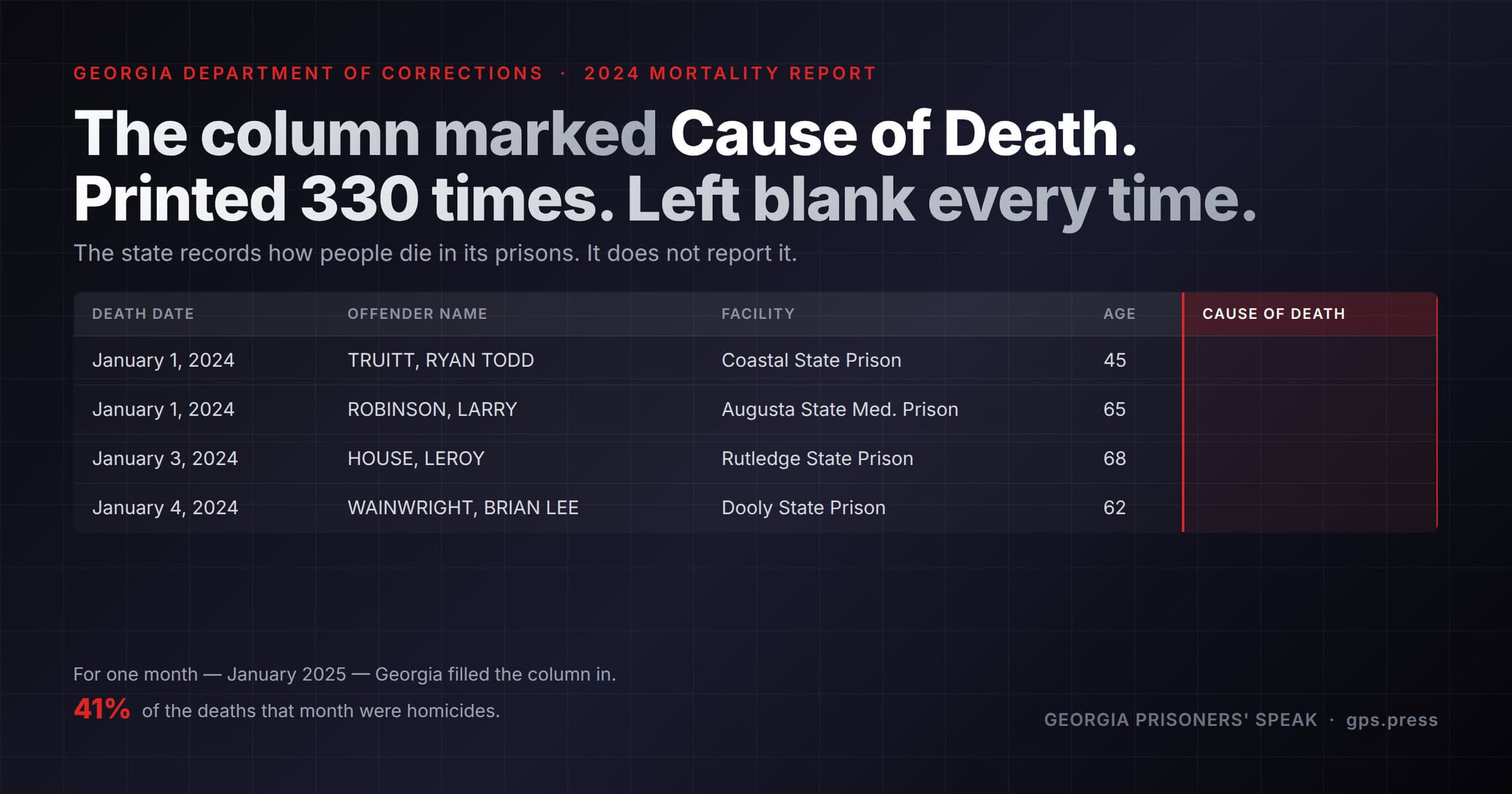
More than 53,000 people are held in conditions the U.S. Department of Justice calls unconstitutional — where gangs rule, officers vanish, and human life has lost its value.
Parole isn’t mercy—it’s a promise. A promise that if you do the work, you can come home. Families across Georgia have waited years for the system to keep that promise. It’s time for the state to restore trust and fairness.