Estimated reading time: 8 minutes
For many Georgia families, having a loved one behind bars doesn’t just mean emotional loss — it means financial strain.
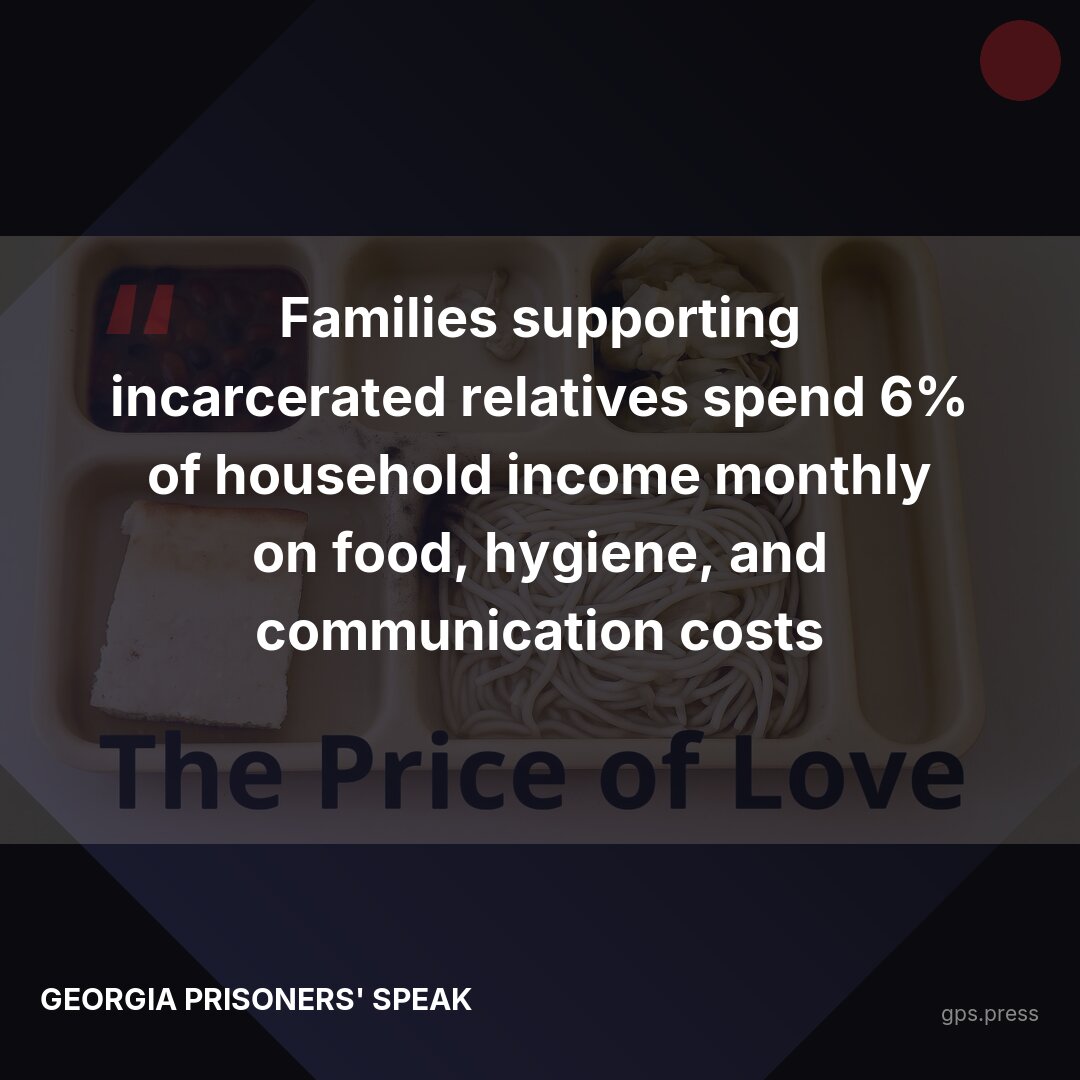
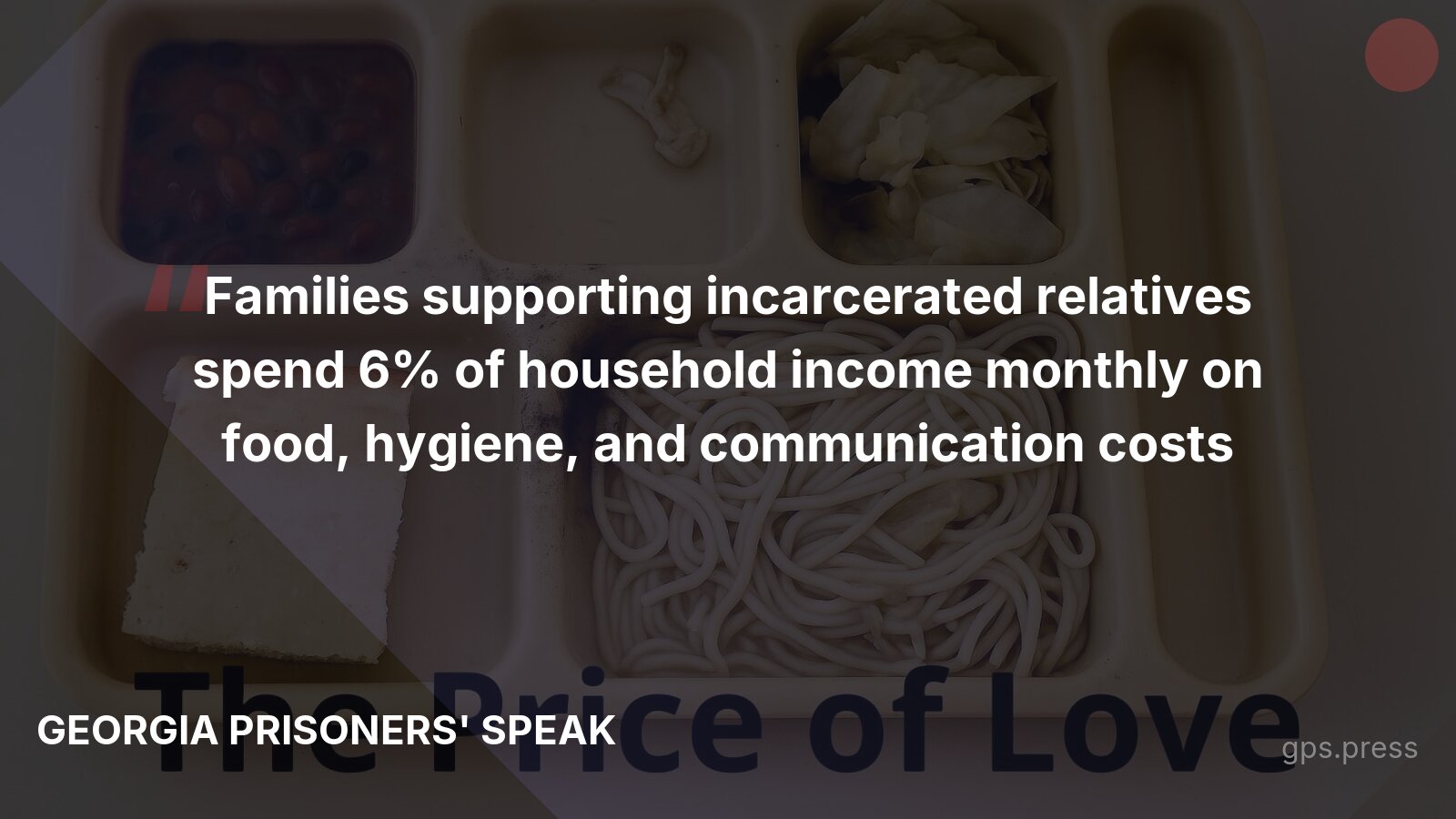
A national study published in Science Advances found that families who provide direct support to incarcerated relatives spend an average of 6 percent of their household income every month on food, hygiene, and communication costs 1.
In Georgia, that burden is magnified by a prison economy built on mark-ups, shortages, and silence — one where families effectively subsidize the state’s failure to provide even the most basic necessities.
A National Benchmark for the Hidden Costs of Incarceration
Researchers found that the median monthly cost for families supporting an incarcerated loved one is about $172, representing roughly 6 percent of household income. The study highlighted that this financial load falls disproportionately on Black and low-income households, who often contribute more despite having less to spare 1.
These “hidden” costs — commissary, phone calls, hygiene items, and supplemental food — are not luxuries. They’re survival expenses.
Georgia’s Commissary: A Captive Market
Georgia Prisoners’ Speak revealed how commissary prices have soared far beyond any reasonable retail comparison. The Master Commissary List shows mark-ups between 67 % and 161 % on everyday items like candy, ramen, and hygiene products 2.
In Georgia’s Prison Commissary Extortion, GPS documented how Stewart’s Distribution — the state’s vendor — profits off selling near-expired convenience-store rejects at premium prices. A bag of ramen that costs 33 ¢ at Walmart sells for nearly a dollar behind bars 3.
These inflated costs don’t just burden incarcerated people — they drain struggling households across Georgia. Families on fixed incomes routinely send $100 to $300 a month just so their loved ones can eat and stay clean.
Starved and Silenced
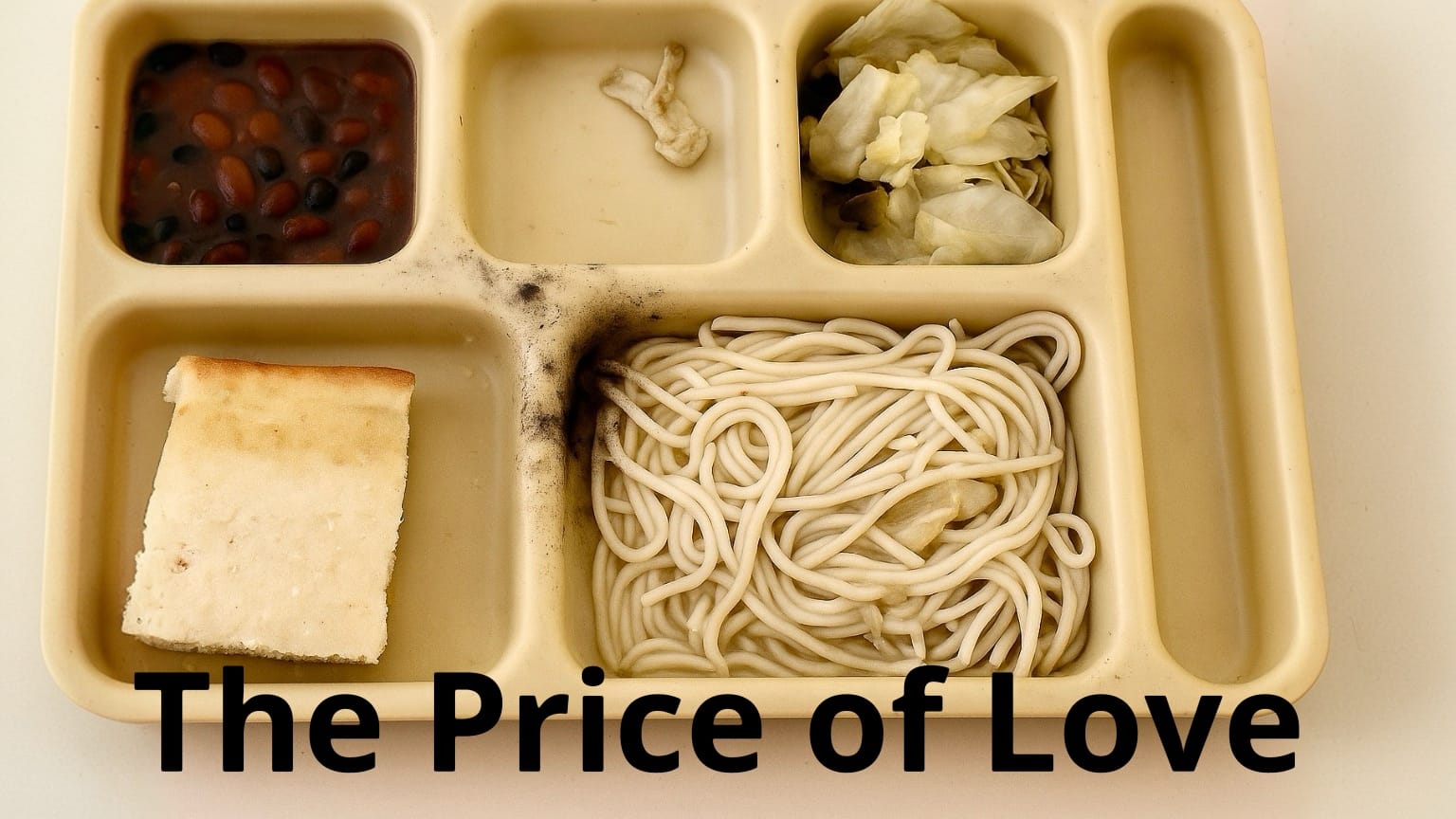
The GDC’s own food service failures make things worse. Starved and Silenced exposed how Georgia prisons serve meals that are not only nutritionally inadequate but sometimes unsafe — spoiled meats, undercooked food, and portions so small that many incarcerated people survive on ramen and chips from the commissary 4.
In Nutrition Neglect, GPS linked this malnutrition to rising violence, irritability, and chronic health issues inside Georgia’s prisons 5.
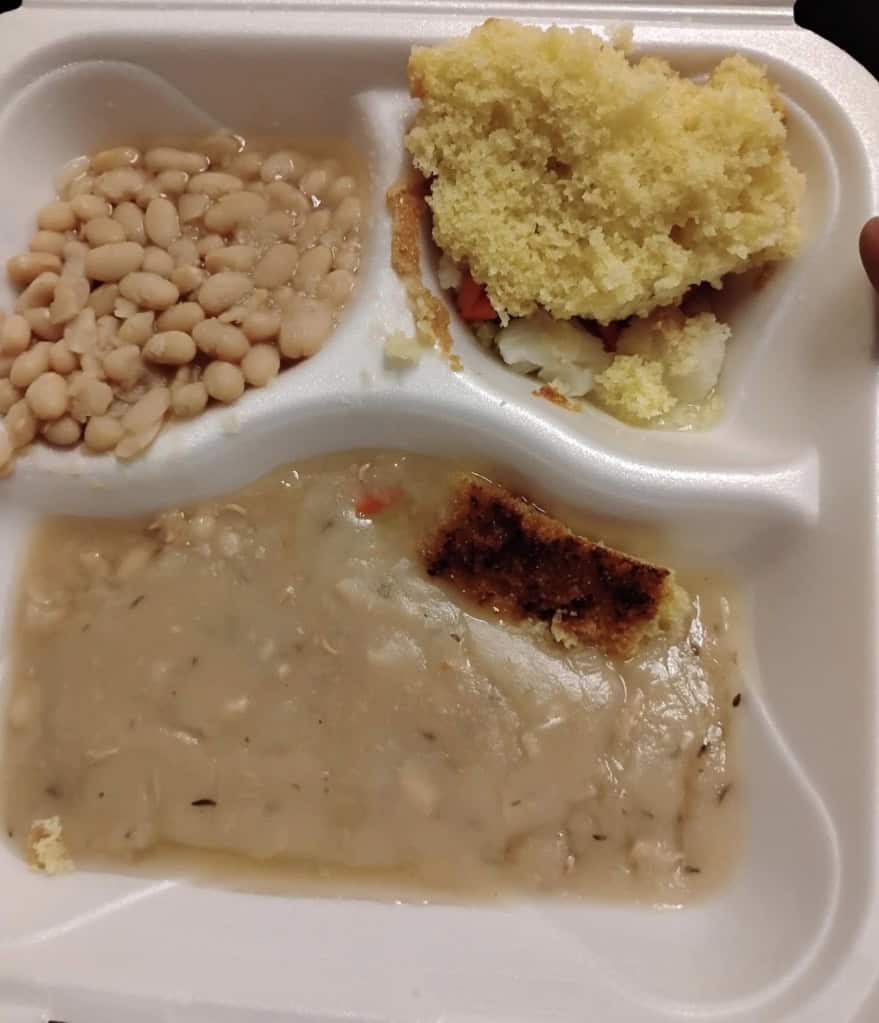
When the food fails, families are left to fill the gap — literally feeding their loved ones through overpriced commissary channels.
Real-World Scenarios: Families in the Fight
Tasha’s Story (Washington State Prison)
“I get up at five every morning to get the kids ready for school before heading to my shift at the nursing home. By the time I get home, I’m too tired to eat, but I still sit at the table with the kids and my phone, figuring out how to stretch what’s left of my paycheck. My husband’s been at Washington State Prison for two years now, and keeping him fed costs almost as much as keeping our three kids in clothes and shoes.
The prison food isn’t fit for anyone — he says it smells sour half the time and the trays are covered in black mold. So I send what I can to his commissary account. Some months it’s fifty dollars, other months, when I pick up extra shifts, it’s a hundred. But every dollar I send him, I see what it takes from my kids — new sneakers become thrift-store shoes, birthdays turn into a cake and a hug instead of presents. People say prison time is just for the one who broke the law—he’s innocent to boot. That’s a lie. We’re all doing time with him — broke, tired, and praying the next call doesn’t cost more than we can pay.”
Teresa’s Story (Dooly State Prison)
“My son Marcus is at Dooly. He’s only twenty-three, still a boy to me, but the way they treat him… it breaks something in a mother’s heart. I work at a daycare — $24 an hour. Every Friday I decide which bills can wait, because I know Marcus needs food. The trays they serve don’t fill him up; too often it’s a scoop of beans, greens and a piece of bread. Not even a piece of fruit. So I send $75 for commissary, and $40 for phone calls.
When I can’t afford it, I feel like I’ve failed him all over again. I don’t even buy myself lunch anymore — I pack peanut butter sandwiches to make sure there’s enough left for his ramen noodles. He tells me, ‘Mama, don’t worry about me,’ but how can I not? When your child’s hungry, your soul don’t rest.”
Carlos’s Story (Wilcox State Prison)
“My brother’s been locked up thirteen years now. He says that every year they cut meals so that now there is hardly anything to eat, so commissary’s the only way survives, and that’s not eating right. I work in a warehouse — heavy lifting, ten-hour days, It’s a struggle helping him out, but if I didn’t help he would die in prison.
My wife and I argue about it, but she knows — family’s family. Still, it hurts. The electric bill runs late, and I tell the kids we’ll do something special next month. Next month never comes. I’ve started calling it what it is — paying for survival. The state punishes him, but they punish us too.”
Sharon’s Story (Augusta)
“When David went to prison, I thought the hardest part would be the loneliness. I was wrong. The hardest part is deciding between his needs and mine. I’m i on Social Security, and by the time I send him $80 a month for commissary, there’s barely enough left for my medicine.
He tells me the food there makes him sick — half-cooked beans, mystery meat. So I send more when I can. I don’t mind going without, but it’s the feeling that we’ve both been forgotten that eats at me. The state calls it justice. I call it cruelty with a price tag.”
Why This Matters
When Georgia fails to feed, clothe, or care for those it incarcerates, it quietly transfers those costs onto families — predominantly women and low-income households. What starts as “support” becomes a survival tax.
The Science Advances study’s 6 percent figure is a national baseline. In Georgia, where prices are higher and meals are worse, the real number is likely far higher.
It’s time to recognize this for what it is: a hidden public policy of economic punishment that extends far beyond prison walls.
The Way Forward
Real reform requires:
- Caps on commissary mark-ups and mandatory price transparency.
- Improved nutrition standards to reduce reliance on commissary food.
- Free or low-cost communication access so families aren’t punished for staying connected.
- Oversight and audits of commissary and food contracts to expose profiteering.
Every bag of ramen, every phone call, every bar of soap tells a story — one of state failure and family sacrifice.
Until Georgia acknowledges that it’s funding its prisons by emptying poor families’ wallets, justice will remain out of reach for everyone on both sides of the bars.
Take Action: Stop Georgia’s Prison Profiteering
Every overpriced ramen packet and every $10 phone call is a policy choice — one that bleeds Georgia’s poorest families to keep a broken system running.
📢 Here’s how you can help:
- Write to your state legislators. Tell them to cap commissary mark-ups, improve nutrition standards, and make communication free for families.
- Share this story with the hashtag #EndPrisonProfiteering to expose how Georgia’s prisons profit from poverty.
- Join our campaign at ImpactJustice.AI to send letters directly to lawmakers and media outlets demanding reform.

Georgia’s prison system doesn’t just punish those inside — it punishes everyone who loves them. Together, we can end this exploitation and bring humanity back to justice.
Photos credit: Facebook Group Georgia Prisons Exposed
Read More from Georgia Prisoners’ Speak
For deeper context on Georgia’s prison economy and systemic neglect, explore these related GPS investigations.
How liquidation stock and double mark-ups turned pain, periods, and protein into profit — at the expense of Georgia’s poorest families.
2. GDC Commissary Report: Source Data and Price Analysis
Explore the full dataset exposing commissary overpricing, hidden vendor profits, and state-enabled exploitation.
3. Starved and Silenced: The Hidden Crisis Inside Georgia Prisons
Hunger has become a method of control. Inmates across Georgia describe meals unfit for human consumption — and a system that punishes complaints.
4. Nutrition Neglect: How Georgia’s Prison Food Is Fueling Violence
Investigating the link between poor diet, rising aggression, and the breakdown of basic humanity behind bars.
5. Lethal Negligence: The Hidden Death Toll in Georgia’s Prisons
A sweeping investigation into cover-ups, delayed autopsies, and families still searching for the truth about their loved ones’ deaths.
6. Buried Truth: The Story of Roy Mason Morris
How a family uncovered the shocking truth about their brother’s death at Dooly State Prison — and the unmarked grave where he was buried.
7. Left for Dead: The Tragic Story of Jamie Shahan
One man’s preventable death exposes the deadly cycle of medical neglect inside Georgia’s prisons.
8. Violence and Corruption Unleashed: The Truth About Washington State Prison
Gang control, corrupt staff, and systemic failures converge at one of Georgia’s most dangerous prisons.
9. A Simple Message for the GDC
A plan for real reform — built on transparency, accountability, and respect for human life.
10. The Truth About Cellphones in Georgia’s Prisons
Why access to communication is a human right — and why the GDC’s crackdown does more harm than good.
Footnotes
- Science Advances: https://www.science.org/doi/10.1126/sciadv.adx2101[↩][↩]
- GPS: https://gps.press/gdc-commissary-report-source-data/[↩]
- GPS: https://gps.press/georgias-prison-commissary-extortion/[↩]
- GPS: https://gps.press/starved-and-silenced-the-hidden-crisis-inside-georgia-prisons/[↩]
- GPS: https://gps.press/nutrition-neglect-how-georgias-prison-food-is-fueling-violence/[↩]
Georgia families are spending 6% of their income to feed loved ones because the state won't. Every ramen packet marked up 200% is money taken from children's clothes and mothers' medicine. Share this investigation to expose how Georgia funds its prisons by emptying poor families' wallets.
Another great expose’ of this madness. The board of corrections sets policy that the Commissioner must follow. They do not get involved in day to day operations, but cost liners, cold weather shoes, store prices, blankets… Those subjects can be addressed via policy specifics.
Keep it up.