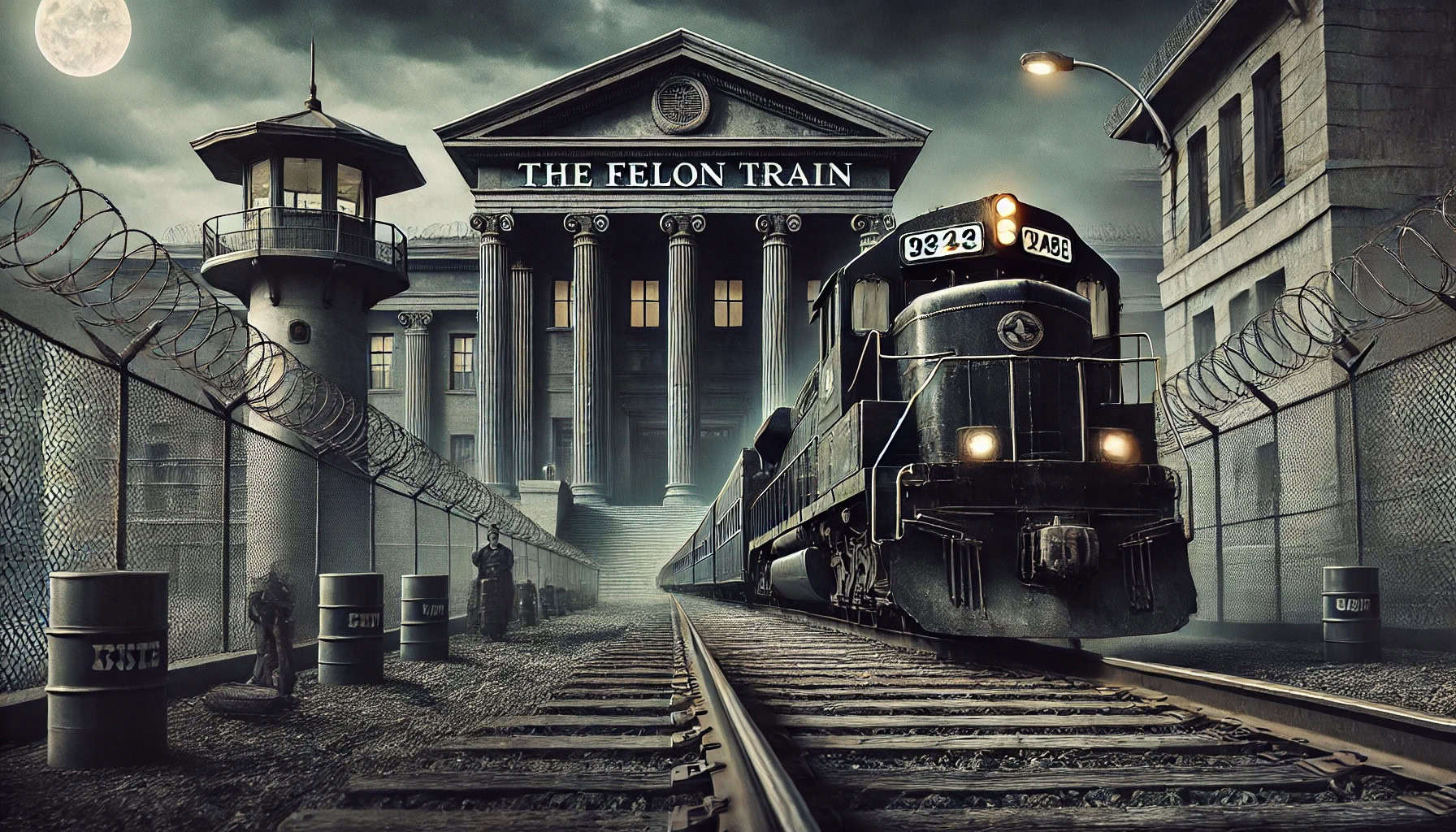
The Felon Train: How Georgia Turns Citizens into Convicts
…system has long been criticized for its secrecy and unexplained denials. Even people who have done everything right are denied parole without a stated reason. The Profit Motive – Georgia…
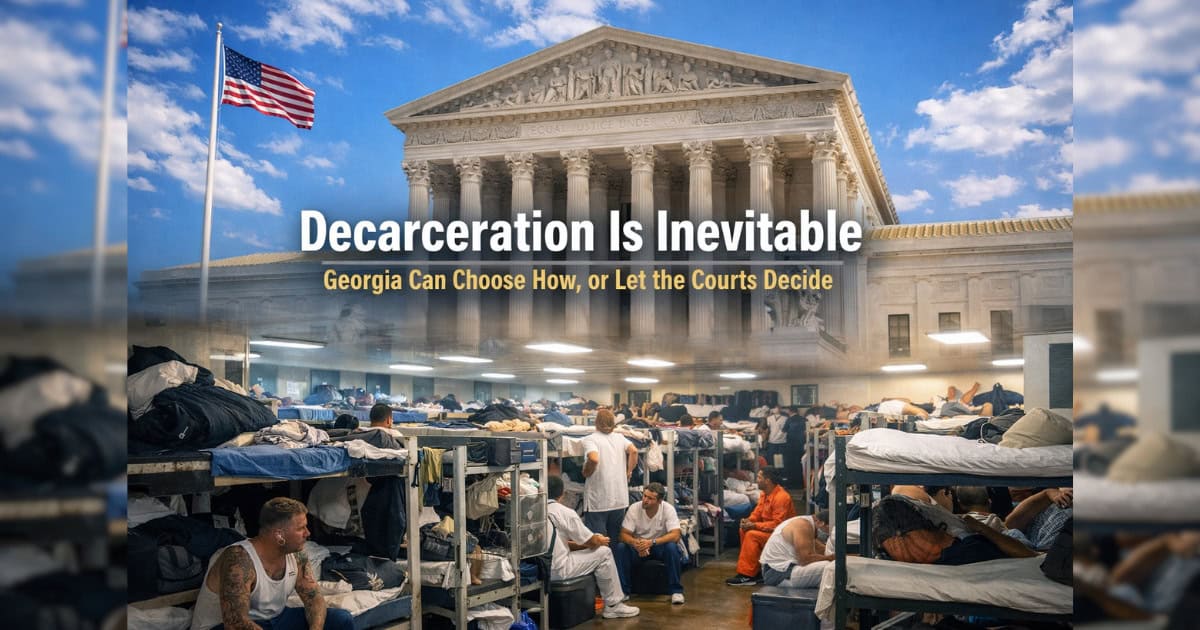
Georgia’s prison system is collapsing. With 100+ homicides in 2024, record deaths, DOJ findings of unconstitutional conditions, and $700 million in new spending that failed to improve safety, decarceration is no longer optional. Evidence from New York, California, and Europe proves it works.
Georgia’s 2026 legislative session could finally bring transparency and fairness to parole. With SB 25 and the new *Second Chance Parole Reform Act of 2026*, advocates are demanding written explanations, video hearings, and real opportunities for release. Learn how families can act now and use Impact Justice AI to push lawmakers for change.
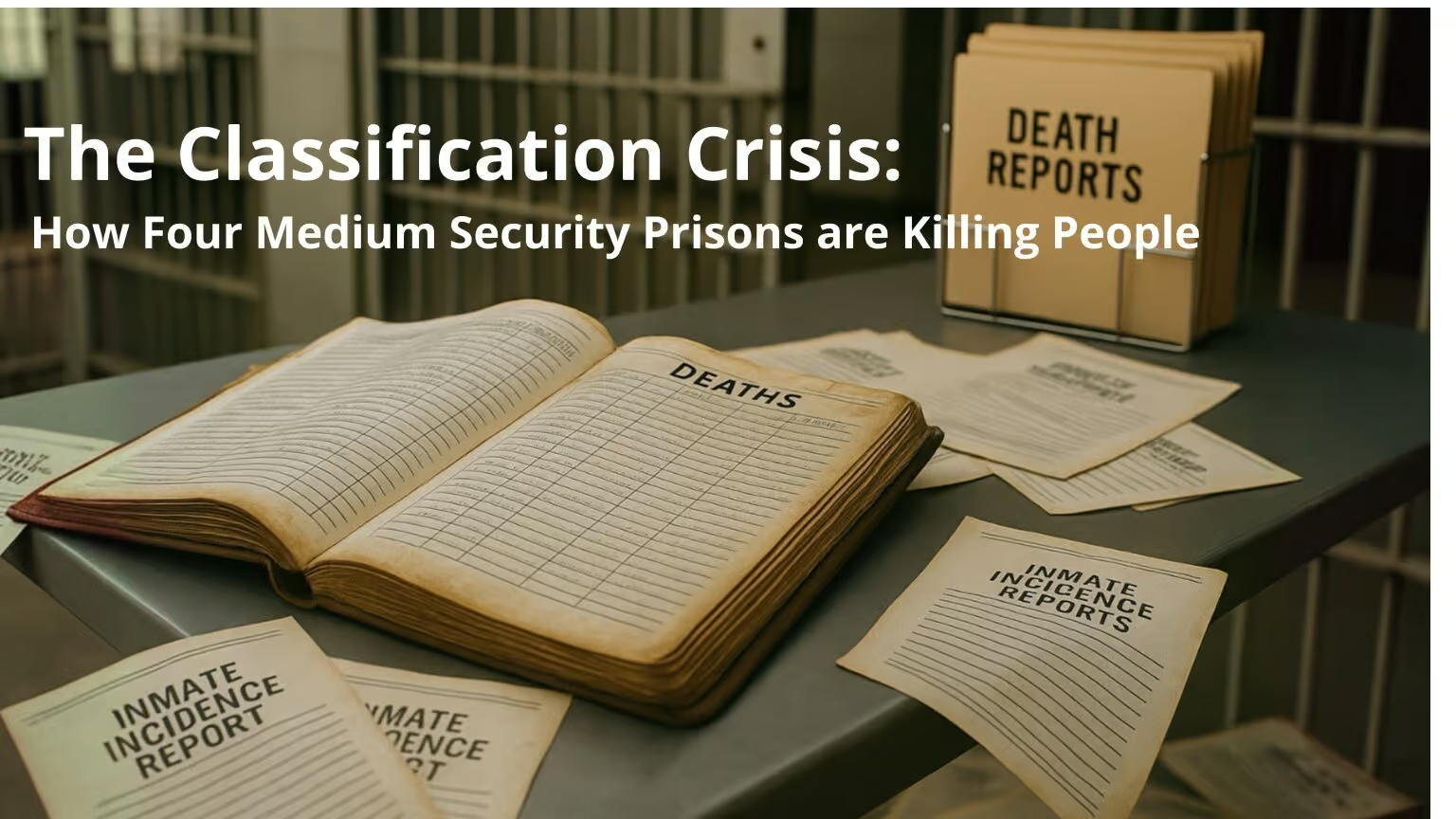
Georgia has secretly packed four medium security prisons with close security inmates at rates up to 10 times higher than other facilities—creating a deadly mismatch that’s killing people. GPS obtained data showing Dooly, Wilcox, Calhoun, and Washington State Prisons now house 28-30% close security populations. The result? Homicide rates 4-5 times higher than properly classified prisons, with 33 deaths in 2024 alone—over half under age 50. The DOJ found all four facilities in violation of the Eighth Amendment. GDC’s response? Stop reporting causes of death. On November 7, 58-year-old Darrow Brown was stabbed to death at Dooly after accidentally bumping into a gang member. He was under officer escort during restricted movement. It didn’t matter. When you operate medium security prisons as close security facilities without proper safeguards, violence becomes inevitable. And GDC knows it.
For many families in Georgia, having a loved one behind bars doesn’t mean only missing birthdays and phone calls—it means chronic financial strain. A new national study finds that families who provide direct support to incarcerated relatives spend on average 6 % of their household income each month just to cover direct costs like commissary items, hygiene products and phone calls. 
When that national figure meets the realities inside Georgia’s prison system—sky-high commissary mark‐ups, inadequate meals that force reliance on overpriced snacks—the results are devastating.
GEORGIA’S PRISON DEATHS AREN’T ACCIDENTS—THEY’RE POLICY CHOICES
By September 2025, Georgia’s prisons had already outpaced last year’s homicide total. The DOJ called it “deliberate indifference.” We call it what it is: preventable.
Georgia pours $1.6 billion into new walls while people inside starve. California spent $239 million on rehabilitation last year with a single death. Georgia spent seven times more on concrete and recorded 333 deaths—over 100 homicides.
The fix is simple and cheap:
✓ Single-cell segregation (no more murders in “the hole”)
✓ Separate gangs from civilians (like California does)
✓ Feed people adequate nutrition
✓ Expand education & work programs
✓ Restore parole for low-risk prisoners
The solutions exist. The evidence is overwhelming. What’s missing is the courage to choose lives over walls.
Stewart Distribution supplies convenience stores across Georgia with chips, honey buns, and ramen. When products approach expiration, stores pull them from shelves. Where do those products go?
Back to Stewart’s warehouse in Blackshear—then straight to Georgia’s prisons at premium prices.
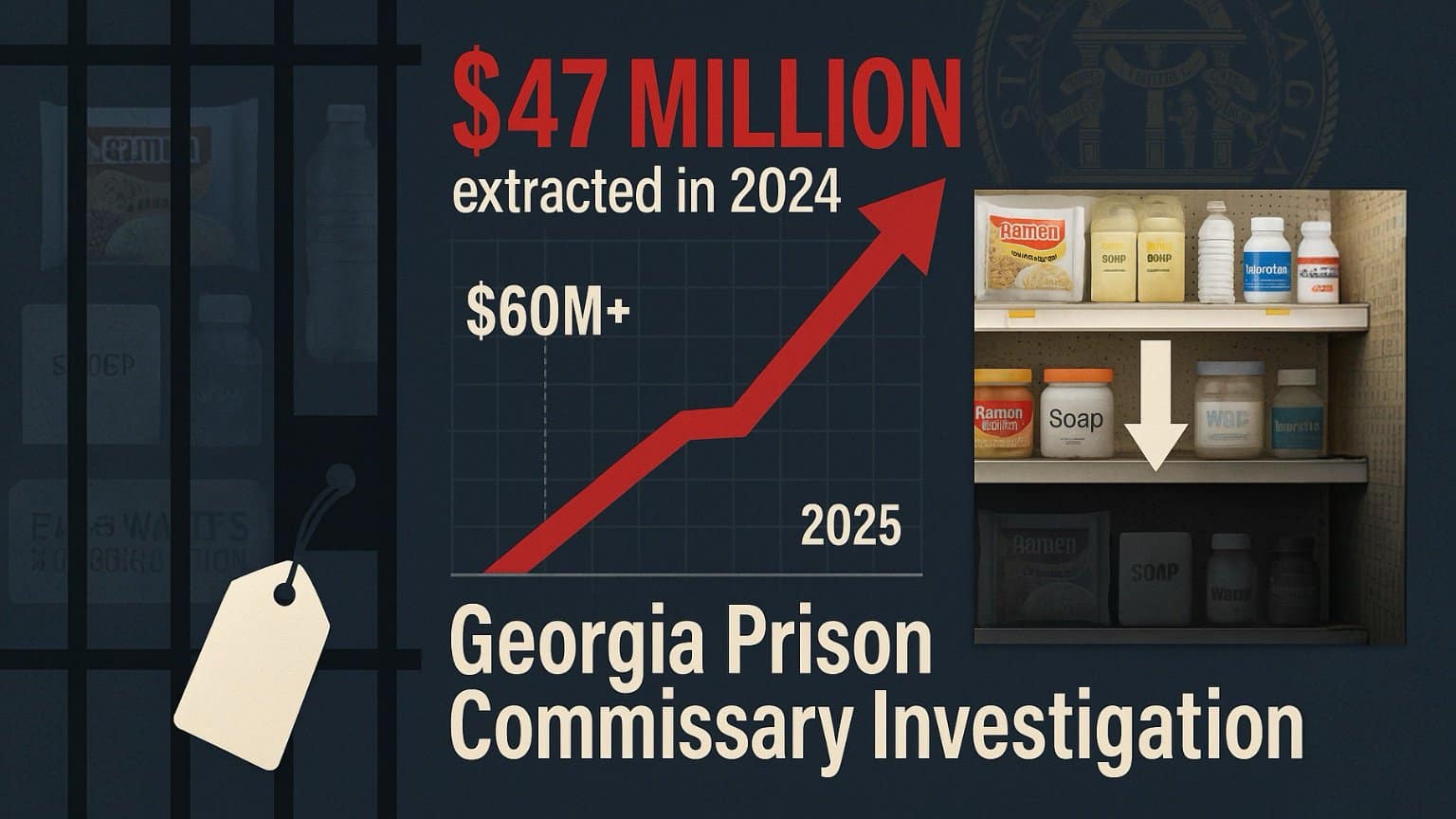
The result: Inmates pay $0.90 for ramen worth $0.20 wholesale, $4 for ibuprofen that costs $0.40 at Walmart, $5.60 for peanut butter worth $2.18. Prison families—already missing a wage earner—paid $47 million in 2024 for products worth $28 million, with the state pocketing $18.7 million in pure profit.
Then on November 1, 2025, Georgia raised prices another 30%.
Georgia doesn’t pay inmates a single cent for their labor, then charges them 300-1,000% markups on necessities. Commissioner Tyrone Oliver could reduce these prices today through administrative action. He chooses not to.
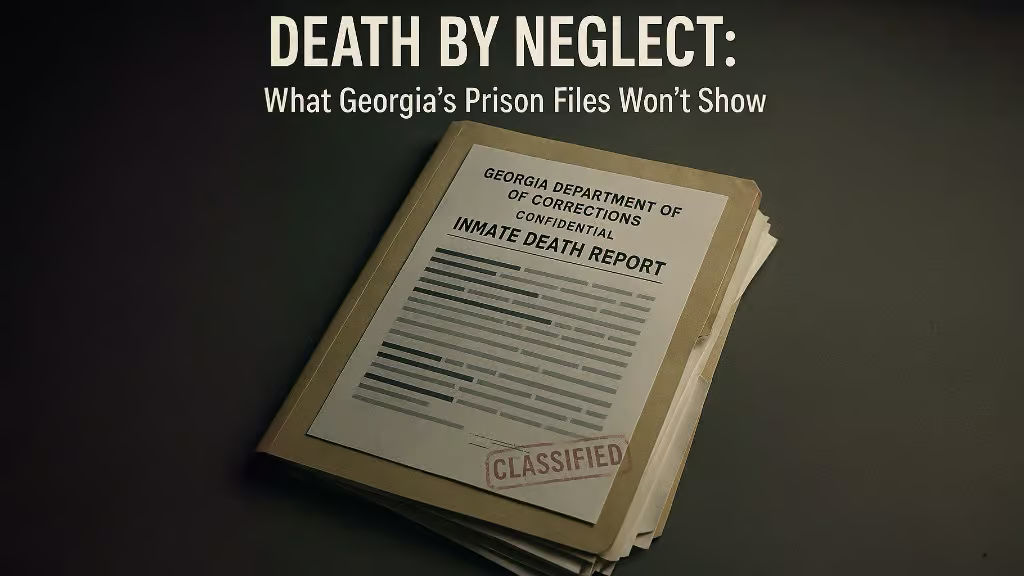
At Georgia’s main prison, men are dying from neglect—not executions. The sick go untreated, suicides are ignored, and bodies vanish from the record. These aren’t isolated cases—they’re the rule. Read how Georgia’s prison system erases the dead and silences the living.
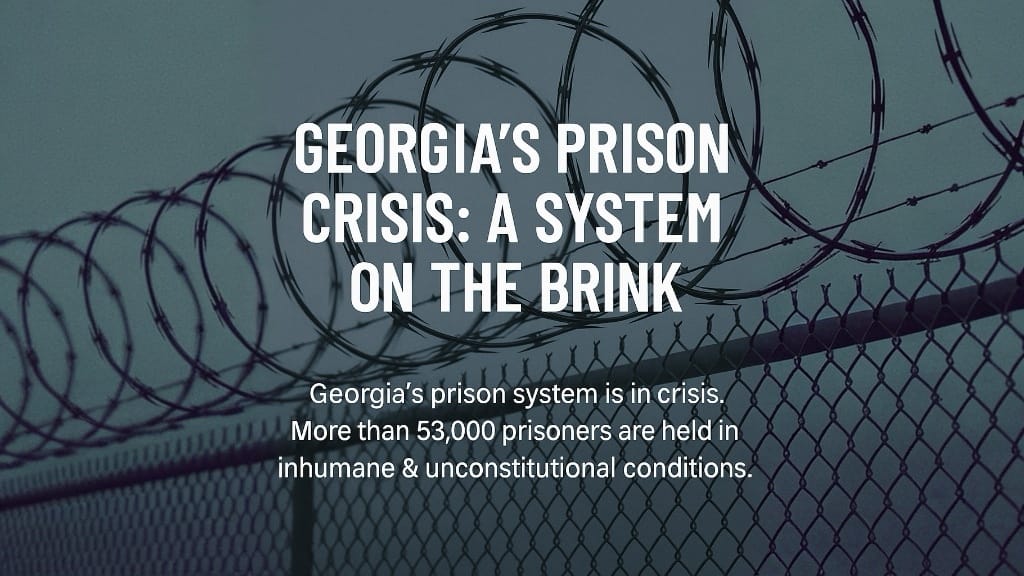
Georgia’s prison system is collapsing under its own weight.
More than 53,000 people are held in conditions the U.S. Department of Justice calls unconstitutional — where gangs rule, officers vanish, and human life has lost its value.
Georgia is spending hundreds of millions on new “hardened” prisons while people inside are starving, dying, and losing hope.
The state calls it reform, but it’s really just repackaged repression — concrete solutions to moral failures. The Department of Justice has already declared Georgia’s prisons unconstitutional, yet instead of addressing the root causes — chronic understaffing, violence, medical neglect, and starvation — the state keeps doubling down on construction contracts and calling it progress.
Prisoners are wasting away on trays of cold grits and two slices of bologna while $600 million is poured into walls, gates, and locks. If Georgia redirected even a fraction of that money to food, healthcare, and staffing, violence would drop, lives would be saved, and rehabilitation might finally mean something again.
Until Georgia chooses reform over repression, its new walls will stand as monuments to failure, not justice.