This explainer is based on Policy & Advocacy: Monitor-Not-Block, Scamming, Legal Path & Cost Model. All statistics and findings are drawn directly from this source.
TL;DR
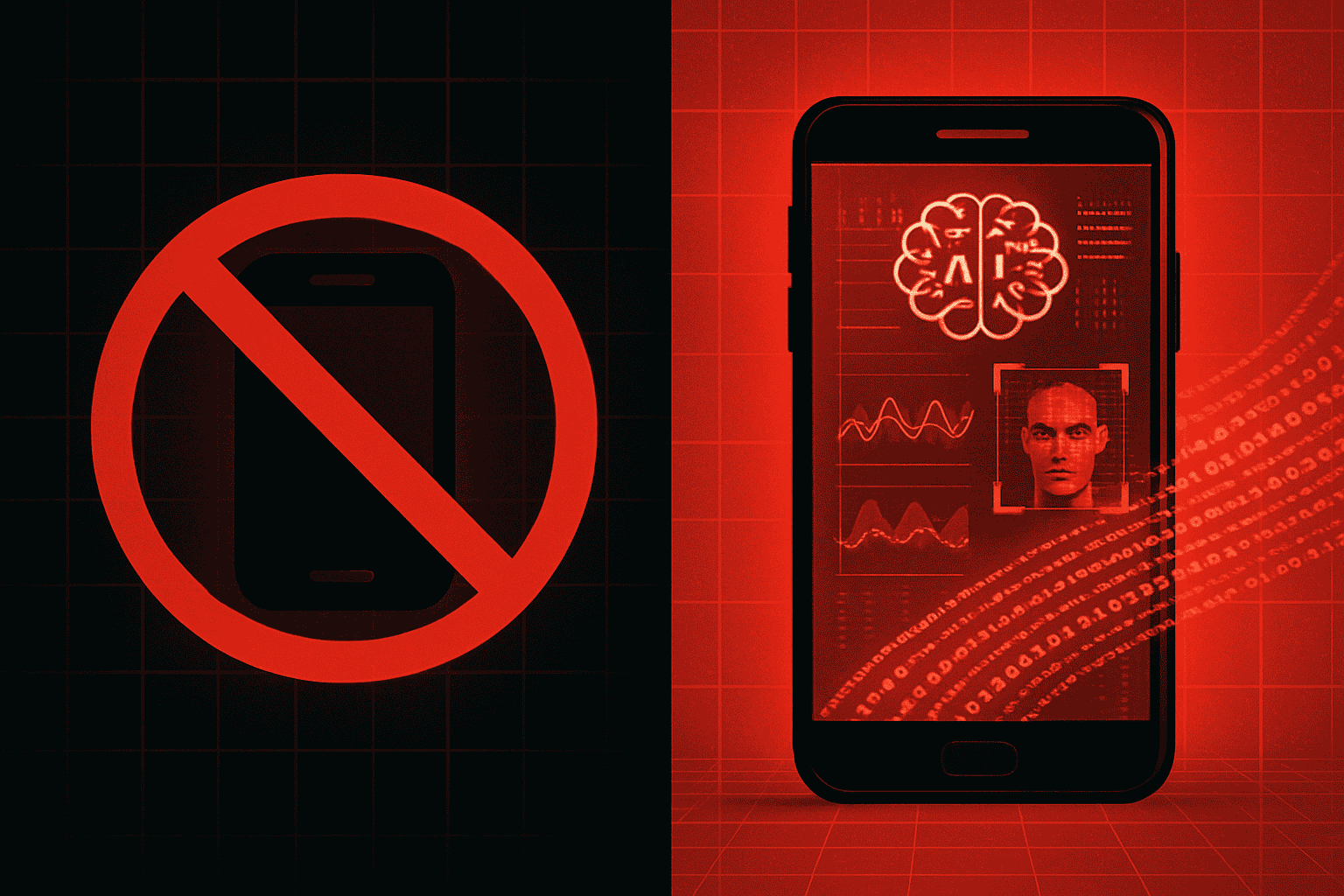
Georgia spends millions to block cell phones in prisons. But the blocking doesn’t work. People in prison still use hidden phones to run scams worth over $5 million. Meanwhile, families can’t stay in touch with their loved ones. Georgia already lets people in 13 lower-security prisons use phones. The same approach could work everywhere — with monitoring that actually catches crime and keeps families connected.
Why This Matters
If your loved one is in a Georgia prison, you know how hard it is to stay in touch. Calls are costly. Time is limited. Visits are far away.
Right now, Georgia blocks phone signals in 35 prisons. The state says this keeps people safe. But the data tells a different story. Scams worth millions still happen. Hidden phones still get in by drone and through corrupt staff. The blocking system fails to stop crime — but it does stop families from talking to each other.
Research shows that family contact helps people succeed after prison. It cuts the chance they return to prison by 13-25%. A better system would let families talk AND catch criminals at the same time.
Key Takeaway: Phone blocking fails to stop crime but succeeds in cutting off families from their loved ones.
The Scam Problem: Blocking Doesn’t Stop Fraud
Georgia prisons are a known hub for phone scams. Here are just some of the cases:
- Autry State Prison: More than 50 people were charged in a jury duty scam. That included 15 prison guards.
- Telfair State Prison: One person stole $3.5 million.
- Calhoun State Prison: Two men used hidden phones to cheat 119 people out of $464,920 across 6 or more states.
- Calhoun State Prison (again): Romance scams stole $500,000+ from people in Iowa.
- Sextortion ring: Over 440 members of the military were tricked out of $560,000+.
Every single one of these scams happened despite the phone blocking system. None were stopped by blocking. All were found out after the damage was done.
Calhoun State Prison has a blocking system called Trace-Tek. It also has the highest rate of hidden items in the state. It appears 62 times in prison system press releases about hidden items. Blocking clearly does not work there.
Key Takeaway: Phone blocking systems at Georgia prisons failed to stop any of the major scam cases — all were found after the fact.
Why Blocking Fails
There are clear reasons why blocking doesn’t work:
- Phones get replaced fast. Drones and corrupt staff bring in new phones all the time.
- Internet calls bypass blocking. VOIP (internet phone calls) don’t use normal phone signals. Blocking systems can’t stop them.
- Blocking can’t see what’s said. The system only blocks signals. It never hears the scam calls or threats.
- By the time a phone is blocked, the harm is done. Victims have already lost money.
Drones are a big part of the problem. In 2024, Georgia had 283 drone drops at prisons. That’s a 600% increase since 2019. Drone runners get paid $4,000-5,000 per drop. A single load of hidden goods is worth $67,000-93,000.
The profit is massive. A can of tobacco that costs $50 outside sells for $800-2,000 inside. A phone sells for $800-1,200. These prices make smuggling very hard to stop.
Key Takeaway: Phones get replaced faster than they can be blocked, and internet calls bypass the system entirely.
Georgia Already Allows Phones in Some Prisons
Here’s something most people don’t know. Georgia already allows personal phones in state prisons.
Since July 1, 2016, all 13 of Georgia’s lower-security prisons (called Transitional Centers) let people have their own phones. About 2,344 people use this system right now.
Here’s how it works:
- People buy their own phones.
- Staff can search the phone at any time.
- Phone numbers, SIM cards, and carriers are all on record.
- People sign a form saying staff can check their phone.
The state’s own prison chief, Homer Bryson, said: “we believe it is important that they begin learning the responsible use of technology.”
And it works. State research shows people in these centers are up to 1/3 more likely to succeed in a crime-free life.
Key Takeaway: Georgia has allowed monitored phone use in 13 state prisons since 2016 — and it works.
No New Law Is Needed
Some people think a new law would be needed. It wouldn’t.
Georgia law (O.C.G.A. 42-5-18) says people can’t have items in prison “without the authorization of the warden.” The key word is “without authorization.” The law does NOT ban phones outright. It bans phones that aren’t approved.
This means a warden can approve phones right now. This is exactly how the 13 Transitional Centers have worked since 2016.
Here’s what it would take:
- The prison chief issues a new policy.
- Wardens approve listed phones.
- Each phone is logged by its unique ID number and carrier.
- The blocking system routes approved phones through a watching layer.
- Phones that aren’t approved stay blocked.
No vote in the legislature. No new bill. The power already exists.
Key Takeaway: Georgia law already lets wardens approve phones — this is how Transitional Centers have worked for a decade.
Monitor, Don’t Block: How It Would Work
The tools to monitor are already in place. Georgia has blocking hardware at 35 prisons. That same hardware can tell the difference between approved and hidden phones.
Instead of blocking all phones, the system would:
- Allow approved phones to connect through a watching layer.
- Record all calls and texts on approved phones.
- Use AI to scan for danger signs like scam language or threats.
- Keep blocking all hidden phones that aren’t on the approved list.
Georgia already has a contract with LEO Technologies. This company uses AI to turn speech into text and spot patterns. It has helped solve old murders, prevent suicides, and break up crime rings.
The difference is simple. Blocking gives you a phone number. Monitoring gives you a criminal case.
Key Takeaway: The same hardware that blocks phones today can be set up to monitor approved phones — no new system needed.
What Other Places Have Done
Other states and countries have tried this. The results are strong.
- United Kingdom: Over 50 prisons have in-cell phones. All calls are recorded. Reoffending dropped by 39%.
- Finland: People in prison use personal devices. Internet, email, and video are all watched. The program is expanding to all 15 closed prisons.
- Norway: People get 30 minutes of phone time per week. Only 20% return to prison. In the U.S., 43% return.
- Connecticut: Made calls free. Call volume jumped 128%. Families save $12 million per year. The cost is just $30 per person per month.
Family contact is one of the best tools to keep people from coming back to prison. Research shows it cuts return rates by 13-25%.
Key Takeaway: Countries that allow monitored phone access see major drops in people returning to prison.
The Cost: $90 More Per Person Per Year
The price difference is tiny.
- Current blocking costs about $443-556 per person per year.
- Monitored access would cost about $583-646 per person per year.
- That’s a difference of about $90-100 per person per year.
For that small extra cost, Georgia would get:
- Real-time crime detection
- Scam alerts before victims lose money
- Gang network mapping
- Drone drop warnings
- Suicide prevention
- Family contact that helps people succeed after release
Even a small 5% drop in people returning to prison would save $73.5 million per year. The extra cost for monitoring would only be $5-7 million. The savings dwarf the cost.
Key Takeaway: For about $90 more per person per year, Georgia could switch from a system that fails to one that catches crime and saves $73.5 million.
What Officials Say — And Why They’re Wrong
Some leaders oppose this idea. Let’s look at what they say.
Claim: “Prisoners with contraband cell phones are ordering murders.” — AG Chris Carr
The truth: Yes, and blocking means law enforcement never hears the order. With monitoring, they could catch the threat before someone dies.
Claim: “A contraband cell phone can be used as a deadly weapon.” — Commissioner Oliver
The truth: A phone watched by AI is a tool law enforcement controls. It’s not a weapon. And the state already hands out phones at 13 prisons right now.
The state can’t have it both ways. It can’t say phones are too dangerous while also giving them out at Transitional Centers. The question isn’t whether people will have phones. They already do. The question is whether the state will listen in or look away.
Key Takeaway: Blocking means the state never hears threats or scam calls — monitoring would let them act before harm is done.
Glossary
- MAS (Mobile Access Solutions): Tech that blocks phone signals in prisons. Installed at 35 Georgia prisons.
- VOIP (Voice Over Internet Protocol): A way to make calls over the internet instead of a phone network. Scammers use it to fake their phone number.
- Transitional Center (TC): A lower-security state prison where people prepare for release. Georgia has 13. They allow personal phones.
- Trace-Tek: A brand of phone-blocking system used at Calhoun State Prison.
- IMEI: A unique ID number for every phone. Used to track and approve devices.
- SIM card: A small card in a phone that holds the user’s account info and phone number.
- Whitelisting: A system where only pre-approved phones are allowed. All others are blocked.
- AI monitoring: Using computer programs to listen to calls and read texts for signs of crime or danger.
- Recidivism (re-SID-uh-viz-um): When a person returns to prison after being released. Lower is better.
- Spoofing: Making a phone call look like it’s from a different number. Scammers use this to pretend they’re police.
- Sextortion: Blackmail using sexual images or threats.
- GDC: Georgia Department of Corrections. The agency that runs Georgia’s prisons.
- O.C.G.A.: Official Code of Georgia. The state’s law book.
- LEO Technologies: A company that uses AI to watch prison phone calls. Georgia already has a contract with them.
Read the Source Document
This document was published by Georgia Prisoners’ Speak on April 3, 2026.
Other Versions of This Report
We write for different audiences. Pick the version that fits your needs:
- For Legislators and Policymakers — Includes legal analysis and budget details.
- For Media and Journalists — Includes quotes and story angles.
- For Advocates and Organizers — Includes action steps and talking points.
Sources & References
- Georgia Prison Scamming and The Case for Monitor-Not-Block. Georgia Prisoners’ Speak (2026-04-03) GPS Original
- GDC Press Releases. Georgia Department of Corrections Press Release
- O.C.G.A. 42-5-18. Official Code of Georgia Annotated Legislation
Source Document
You just read about people suffering in state custody. The least you can do is make sure other people read it too. Share this story.