Reopen the Doors — Normalization

Every harm this series documented flows from one choice: Georgia warehouses people instead of preparing them to return. There is a proven alternative — normalization — that is humane, far cheaper, and may be legally required. The finale of End the Warehouse, and the blueprint out.

The Last Thread

Georgia treats family contact — the strongest predictor of going straight — as a privilege to ration and revoke: phone lists capped at twenty, visitation lists changeable only in May and November. An investigation into the connection the state severs by design, and the cheap fix it refuses.

Social Death

Georgia stripped its prisons of work, hope, and a future — and some people answer that emptiness not with drugs or the gang, but by going silent and disappearing while still alive. An investigation into the despair the state manufactures by policy, refuses to treat, and declines to count.

$150 Million to Watch Them Die: Georgia’s OWL Surveillance Goes Live

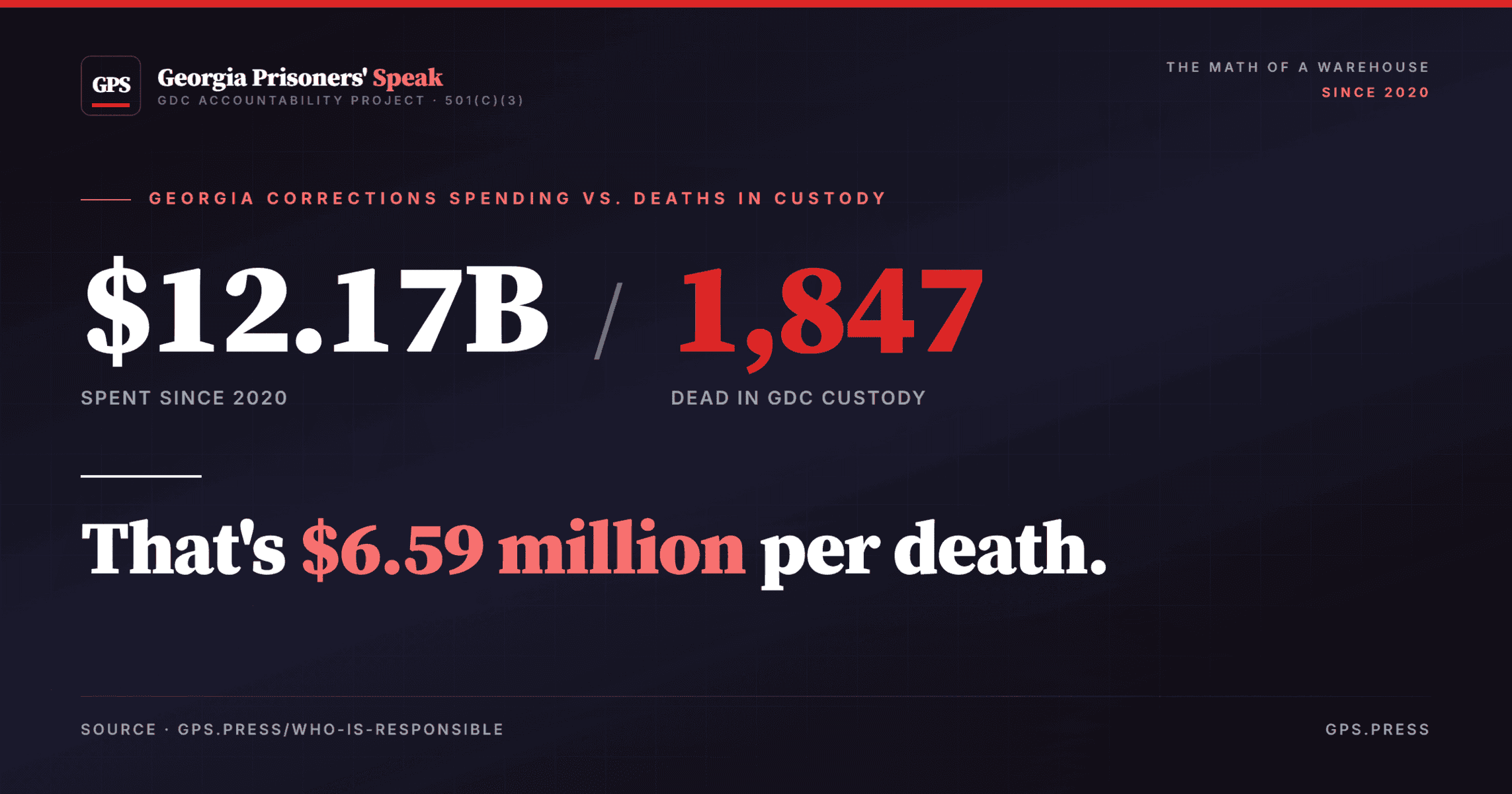
On or about June 1, Georgia switches on OWL — the first centralized real-time prison-surveillance hub in American corrections. GPS asks the question the state won’t answer: how does watching reduce a single stabbing, overdose, or suicide, when $150 million bought the eye and $805,000 was left for the classrooms?

The Only Family Left

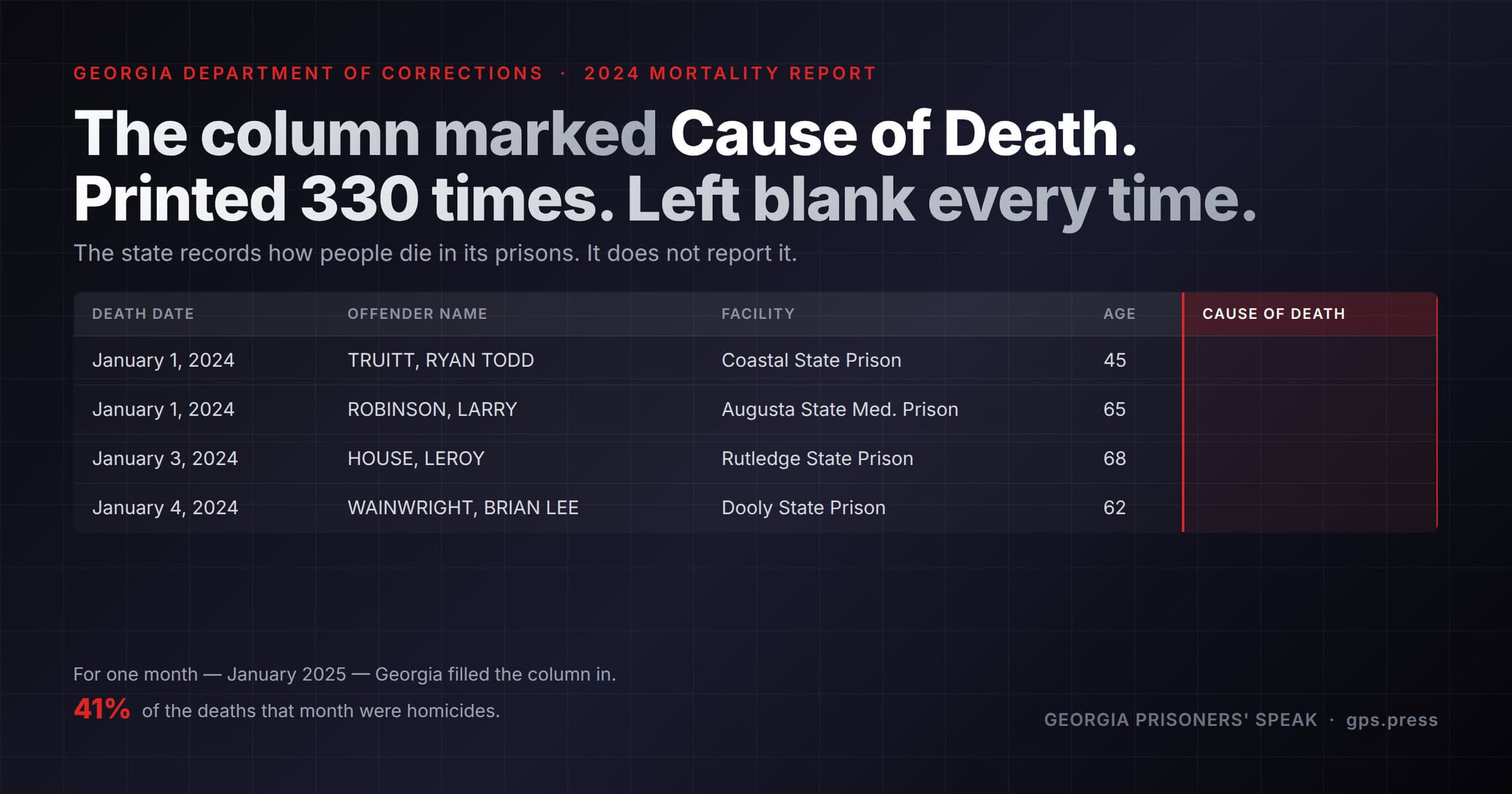
Georgia stripped its prisons of work, family, and purpose — and left the gangs as the only institution supplying all three. An investigation into how the state manufactured the vacuum its gangs now fill, from Commissioner Wayne Garner’s 1996 purge to today’s TAC-squad raids, and the body count it refuses to publish.

Who Are the Victims: Before They Were Prisoners

On January 5, 2026, Nicole Boynton walked free after twenty-three years inside. Georgia’s Survivor Justice Act recognized her as a victim — twenty-three years too late. The science says she is not alone. A new GPS series asks who else qualifies as a victim under Georgia law, and why the state has chosen to look away.

The Quiet Purge: Calhoun Edition

In less than three months, Warden Kendric Jackson transferred 87 lifers out of Calhoun State Prison — 79% to close-security facilities. GPS data reveals a systematic population swap: stable, long-term inmates shipped to Level 5 prisons while younger short-timers arrive from those same facilities. No other medium-security prison in Georgia is doing anything close to this.

$307.6M Verdict Against Prison Healthcare Giant Corizon

A federal jury awarded $307.6 million to a former Michigan prisoner whose healthcare contractor denied him a colostomy reversal surgery to save money. The verdict in Jackson v. Corizon Health puts the entire for-profit prison healthcare industry on notice — including companies operating in Georgia.

Report a Problem