Fixing Georgia’s Parole System: The Ultimate Plan for Justice
Georgia parole reform tackles bias and arbitrary decisions. Learn how the Second Chance Parole Reform Act creates a fairer system.
Help spread the word — here's how:
- Scroll down to Copy a Caption and hit Copy on the one you want
- Scroll back up and click the Share on Facebook button for your favorite quote image
- On Facebook, paste the caption into your post — or write your own
Copy a Caption
Twitter/X
Georgia's parole board is composed entirely of former prosecutors, DAs, and law enforcement—zero rehabilitation experts. The Second Chance Parole Reform Act could change that. https://gps.press/fixing-georgias-parole-system-the-ultimate-plan-for-justice/
Facebook
Georgia's parole system operates like a rigged game. Inmates receive form letters denying parole because they 'haven't served enough time'—with no explanation of what they need to do differently. Meanwhile, the board deciding their fate consists entirely of former prosecutors and law enforcement, with zero voices from rehabilitation or social work backgrounds.
The Second Chance Parole Reform Act offers a path forward with mandatory hearings, written explanations, and clear expectations. But will Georgia lawmakers listen this time? https://gps.press/fixing-georgias-parole-system-the-ultimate-plan-for-justice/
Instagram
Georgia's parole board has a problem: it's made up entirely of former prosecutors, district attorneys, and law enforcement officers. Zero rehabilitation experts. Zero social workers. Zero mental health professionals. When the only tool you have is a hammer, everything looks like a nail. The Second Chance Parole Reform Act would bring transparency and fairness to a system that currently sends inmates form letters denying parole with no actionable feedback.
#GeorgiaPrisons #PrisonReform #CriminalJustice #GPS #MassIncarceration #Georgia
LinkedIn
Georgia's parole system faces a fundamental structural problem: decision-makers with exclusively punitive backgrounds. The state board consists entirely of former prosecutors, district attorneys, and law enforcement officers, with no representation from rehabilitation, mental health, or social work fields.
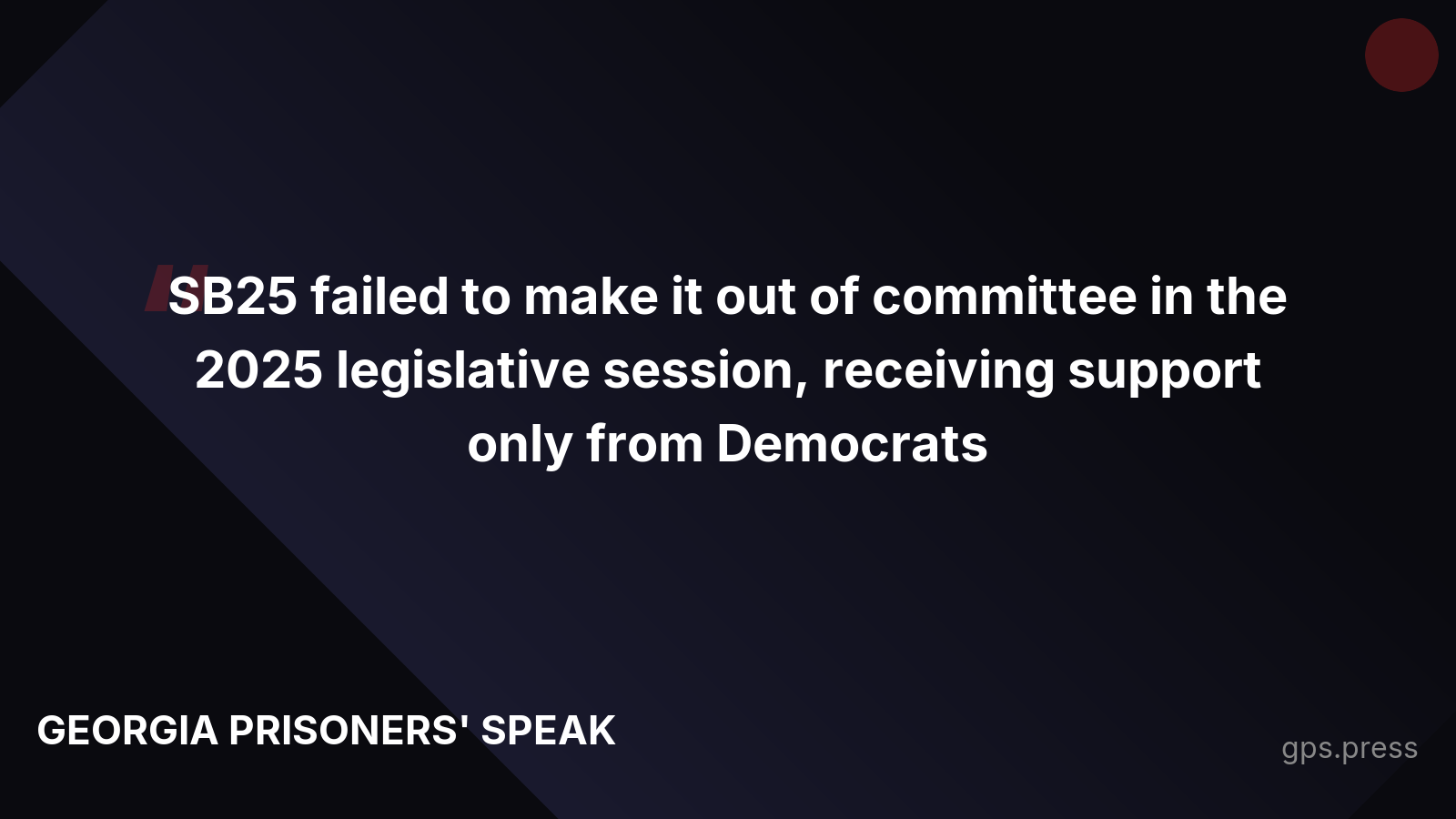
This composition bias manifests in arbitrary denials communicated through form letters that provide no actionable feedback to inmates. The Second Chance Parole Reform Act proposes systemic changes including mandatory hearings, written explanations for denials, and independent oversight—addressing the transparency gaps that previous legislation like SB25 failed to resolve. https://gps.press/fixing-georgias-parole-system-the-ultimate-plan-for-justice/