$150 Million to Watch Them Die: Georgia's OWL Surveillance Goes Live
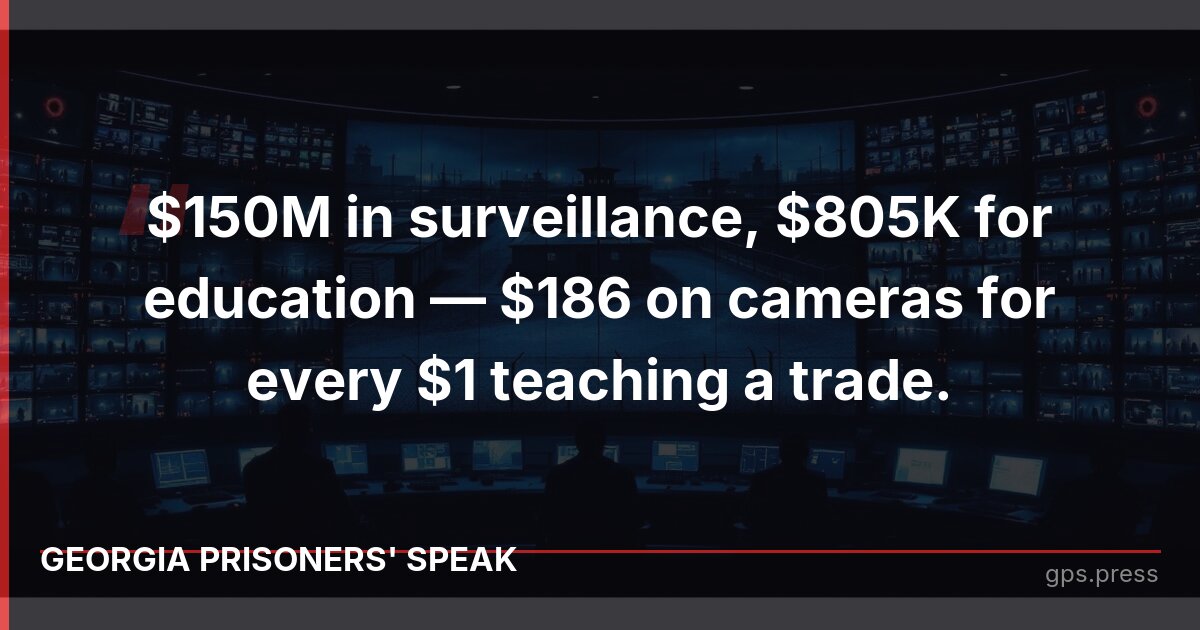
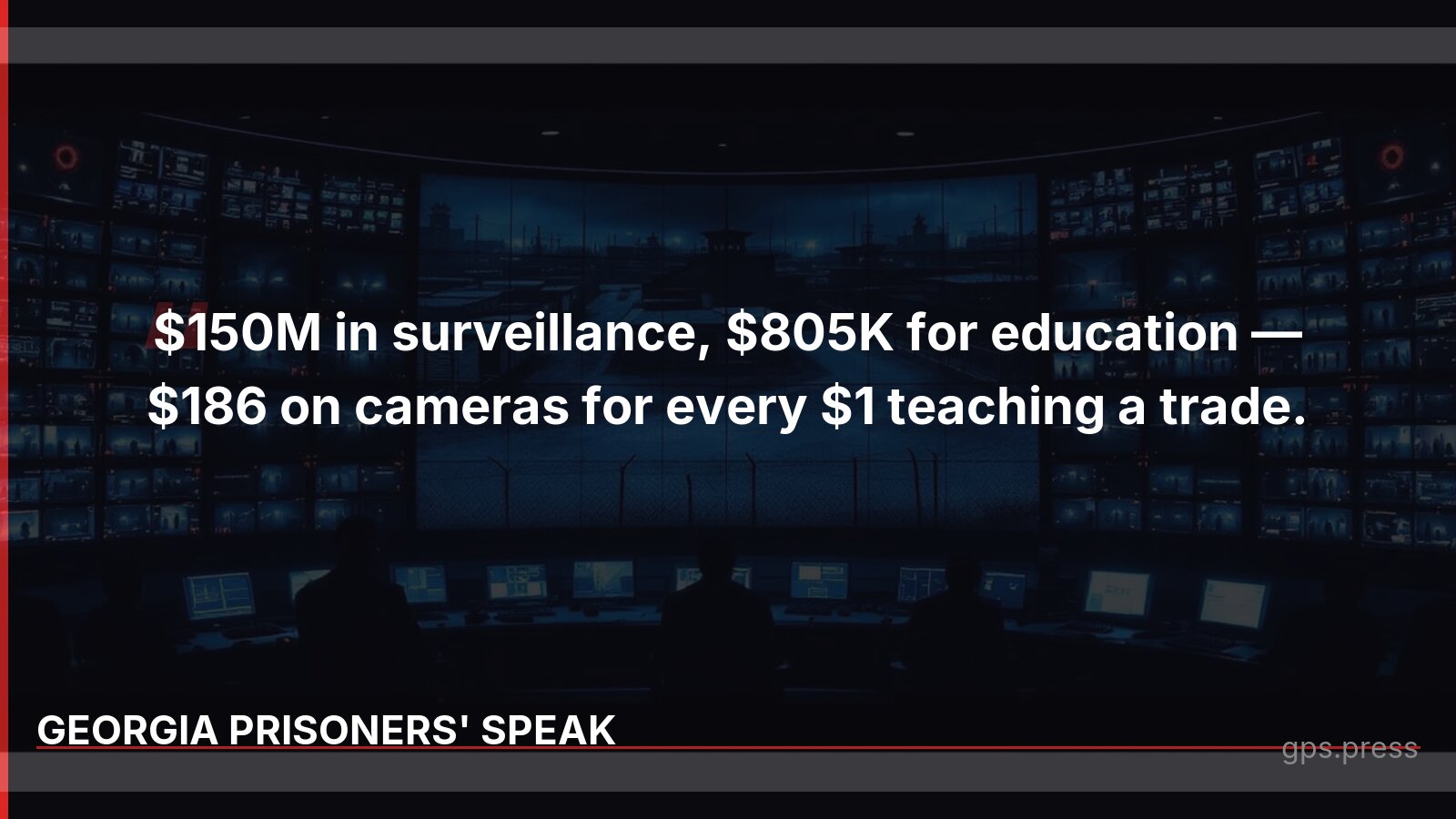
Georgia switches on OWL, a $150M centralized prison-surveillance hub, around June 1. Just $805K was left to teach. How does watching stop a single killing?
Help spread the word — here's how:
- Scroll down to Copy a Caption and hit Copy on the one you want
- Scroll back up and click the Share on Facebook button for your favorite quote image
- On Facebook, paste the caption into your post — or write your own
Copy a Caption
Twitter/X
Georgia spent $150M on prison surveillance and $805K on vocational education — $186 to $1. Cameras record violence; they don't prevent it. https://gps.press/georgia-owl-surveillance-goes-live/
Facebook
On June 1, Georgia activates OWL — a $150 million centralized surveillance hub monitoring every state prison through thermal cameras, body cams, drone radar, and tablet data. The state left $805,000 for vocational education. That's $186 on surveillance for every dollar spent teaching a trade.
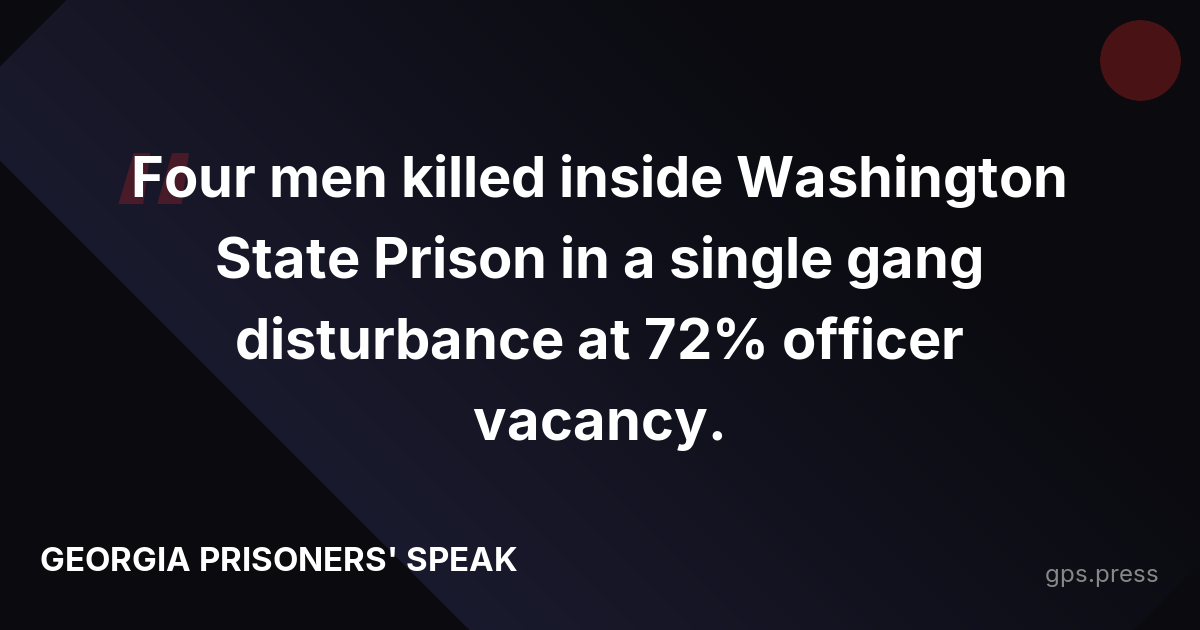
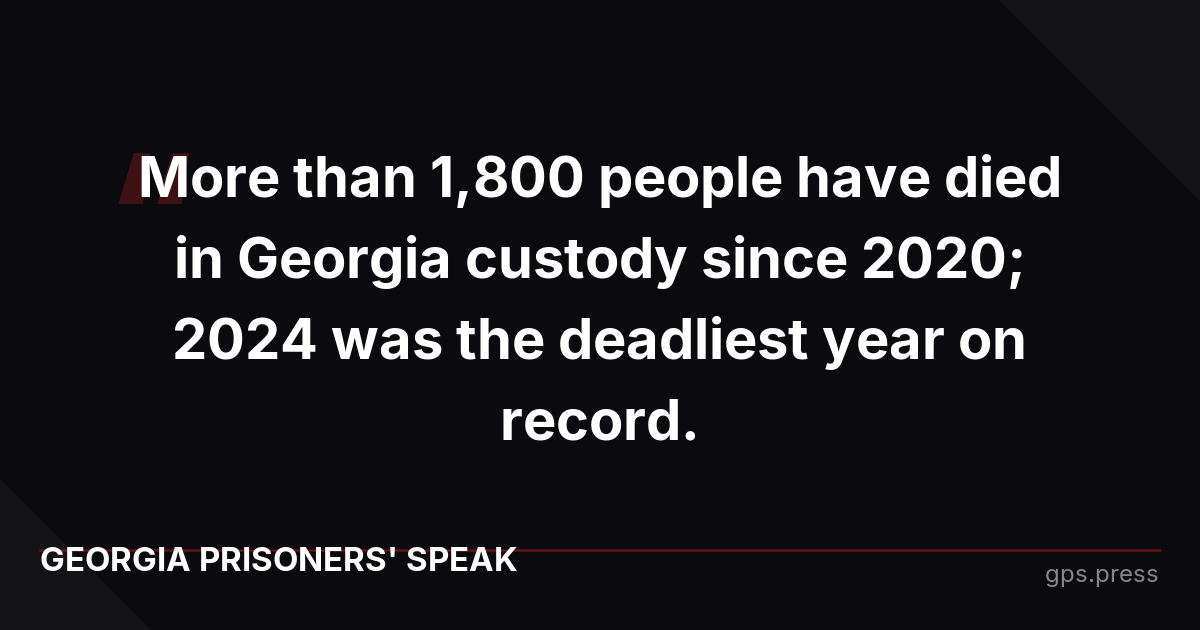
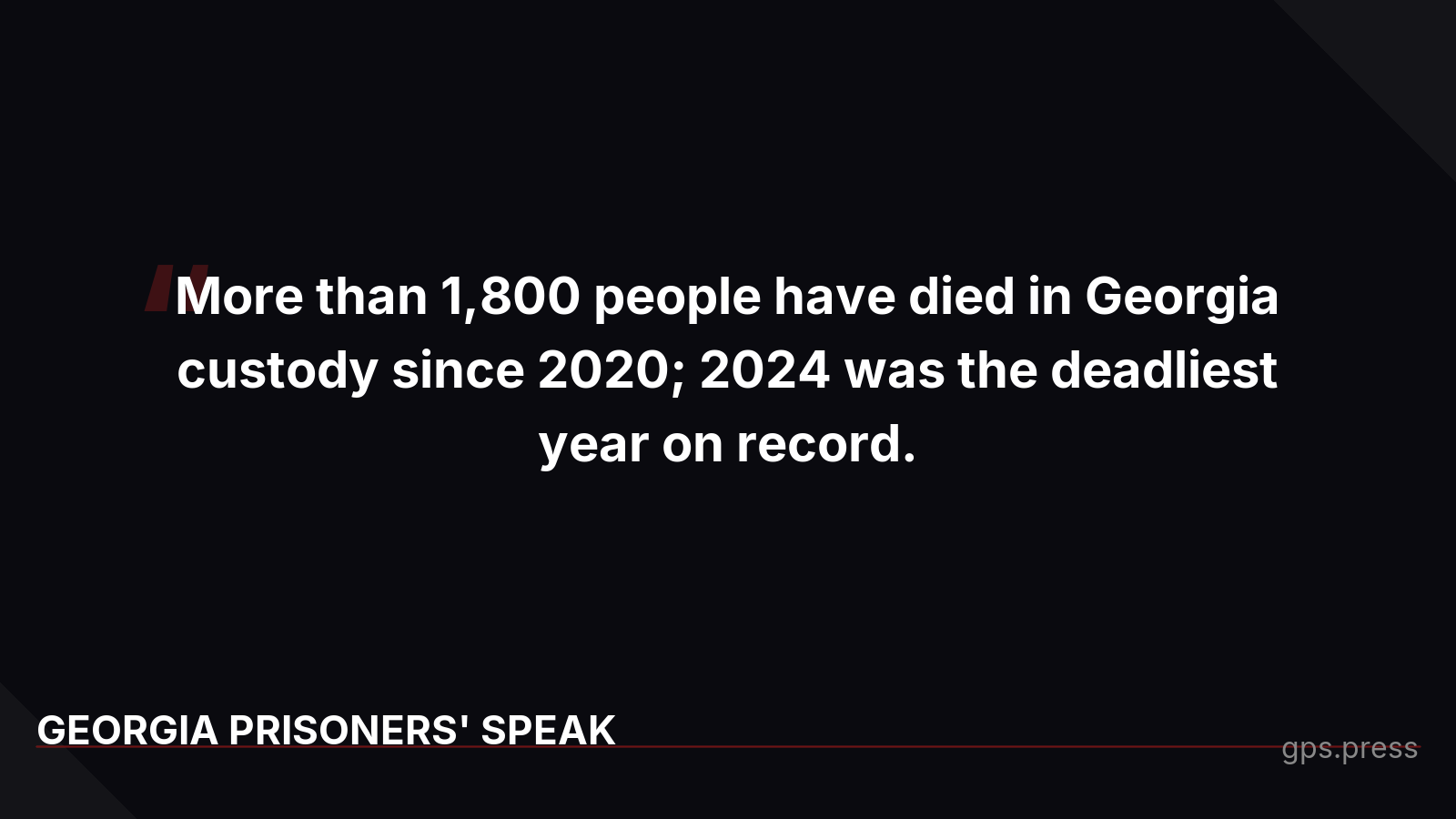
Detection is not prevention. The Justice Department found roughly half of all correctional officer posts vacant. Four men were killed in one dorm at Washington State Prison in January, at a facility running near 72 percent vacancy. A camera produces a recording, not a rescue. More than 1,800 people have died in Georgia custody since 2020.
What does a camera do when no one is there to respond? https://gps.press/georgia-owl-surveillance-goes-live/
Instagram
Georgia's new $150 million prison surveillance hub goes live June 1. The same budget left $805,000 for vocational education — $186 on cameras for every $1 teaching a trade. Four men killed in one dorm this January. Over 1,800 dead since 2020. A camera records violence. It doesn't stop it.
#GAPrisons #PrisonReform #GeorgiaPrisonerSpeak #MassIncarceration #CriminalJusticeReform #Accountability #HumanRights
LinkedIn
Georgia activates OWL on June 1 — the first centralized, real-time prison surveillance command center in American corrections. The $150 million system integrates thermal cameras, body cameras, drone radar, taser telemetry, and tablet data onto a single video wall. The same budget allocated $805,000 for vocational education — a ratio of $186 to $1.
The policy question is not whether surveillance has a role. It is whether surveillance funded instead of programming can reduce violence when the Justice Department has documented roughly half of correctional officer posts vacant. Four men were killed in a single January incident at Washington State Prison, operating at 72 percent vacancy. Detection is not prevention, and a camera does not constitute a response.
Georgia's own data shows what works: correctional education cuts recidivism by 43 percent and returns $4–$5 per dollar spent. The state defunded those interventions and is now spending a fortune to record the consequences. https://gps.press/georgia-owl-surveillance-goes-live/