Nothing to Do
Georgia stripped work, school, and programs from its prisons. Research and the men inside say enforced idleness is how rehabilitation fails.
Help spread the word — here's how:
- Scroll down to Copy a Caption and hit Copy on the one you want
- Scroll back up and click the Share on Facebook button for your favorite quote image
- On Facebook, paste the caption into your post — or write your own
Copy a Caption
Twitter/X
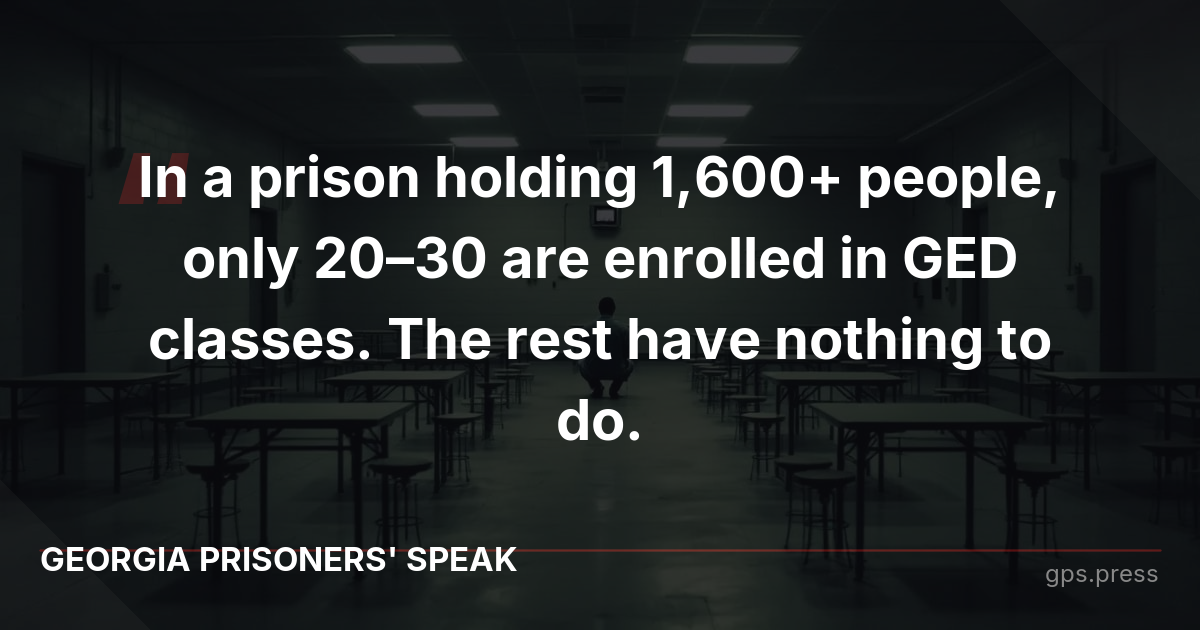
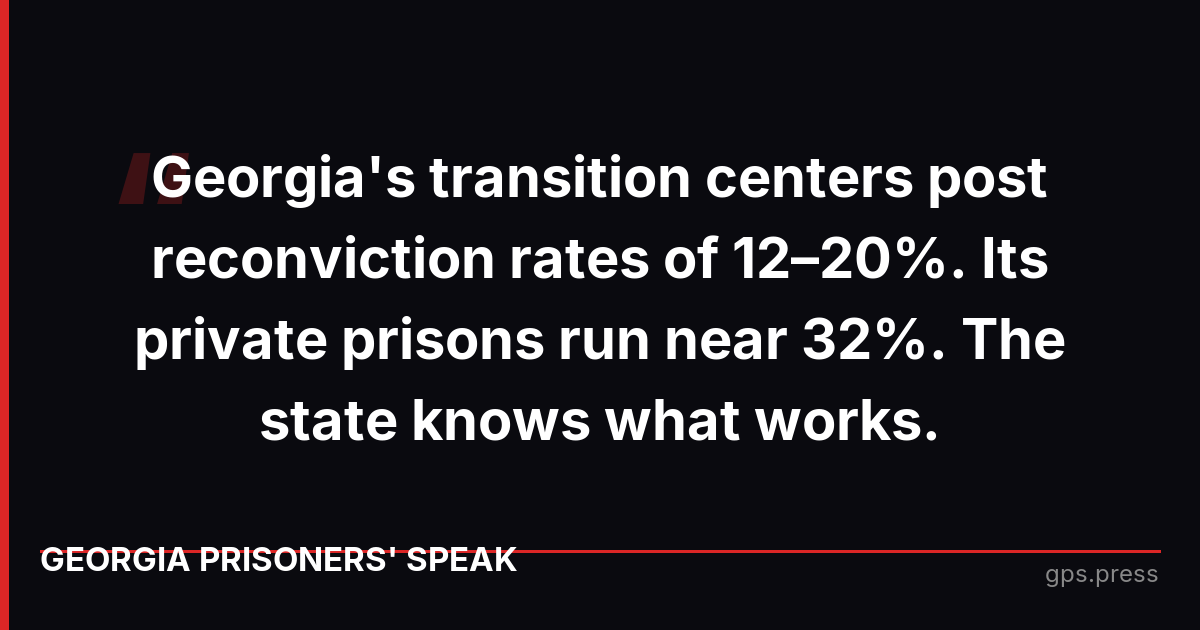
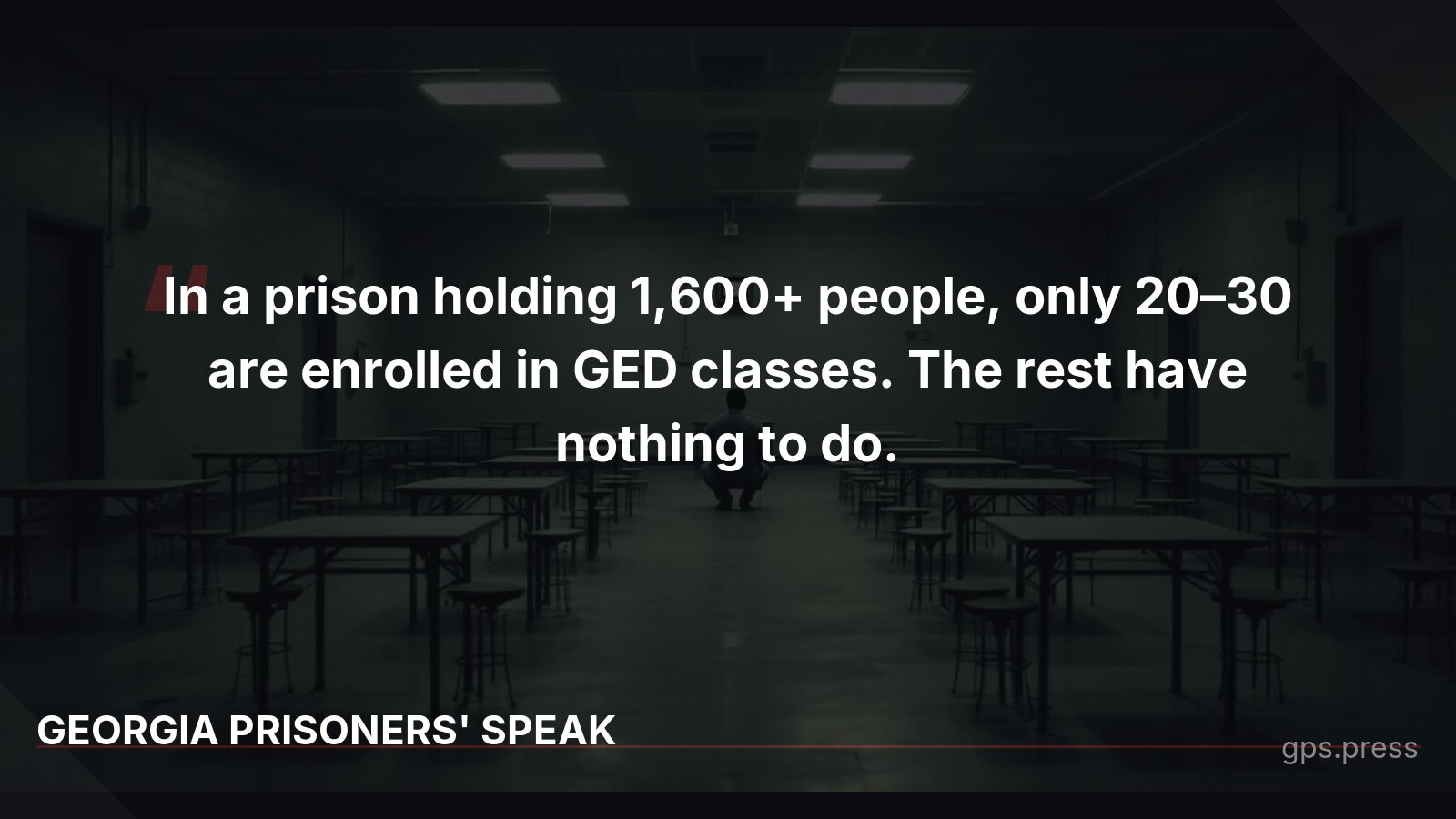
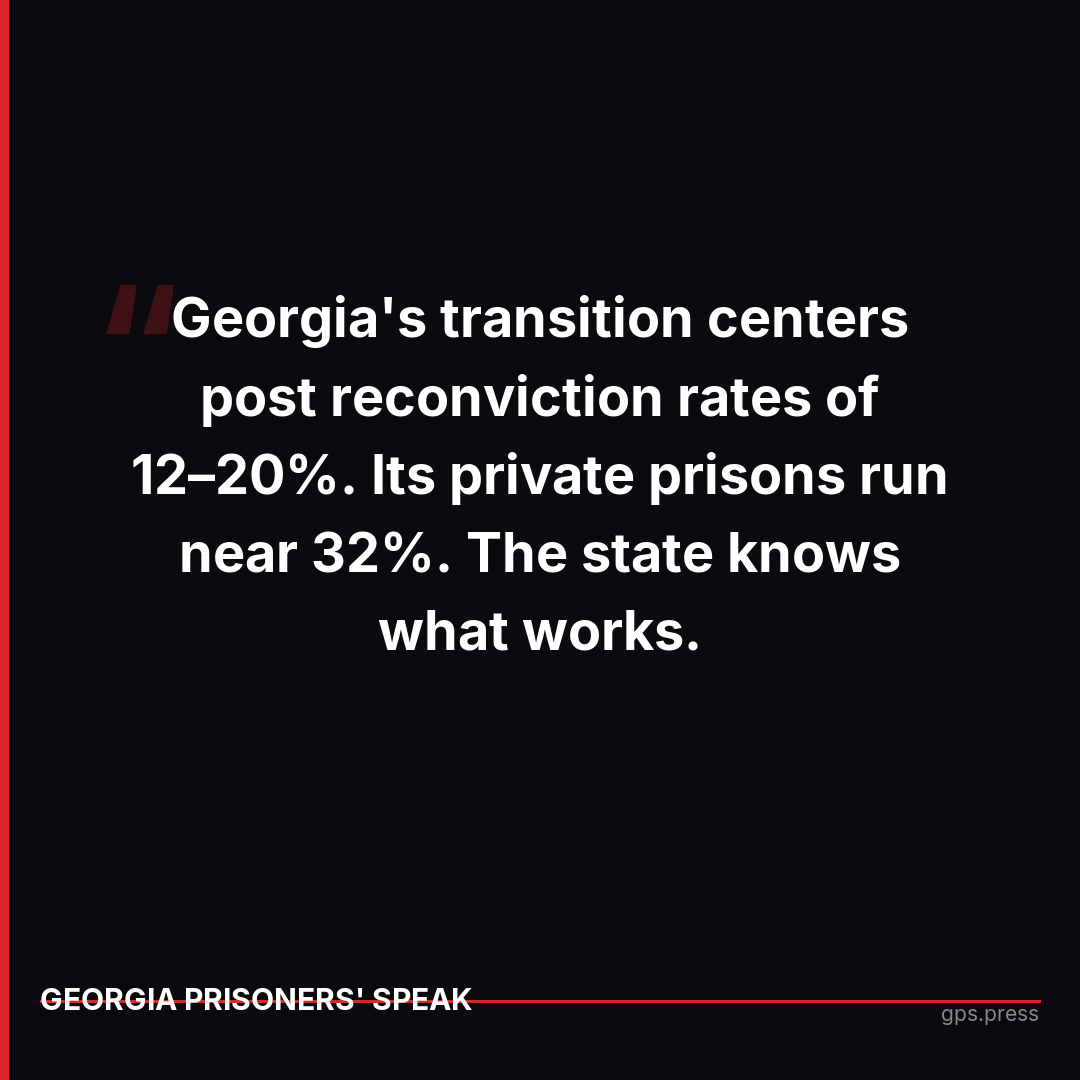
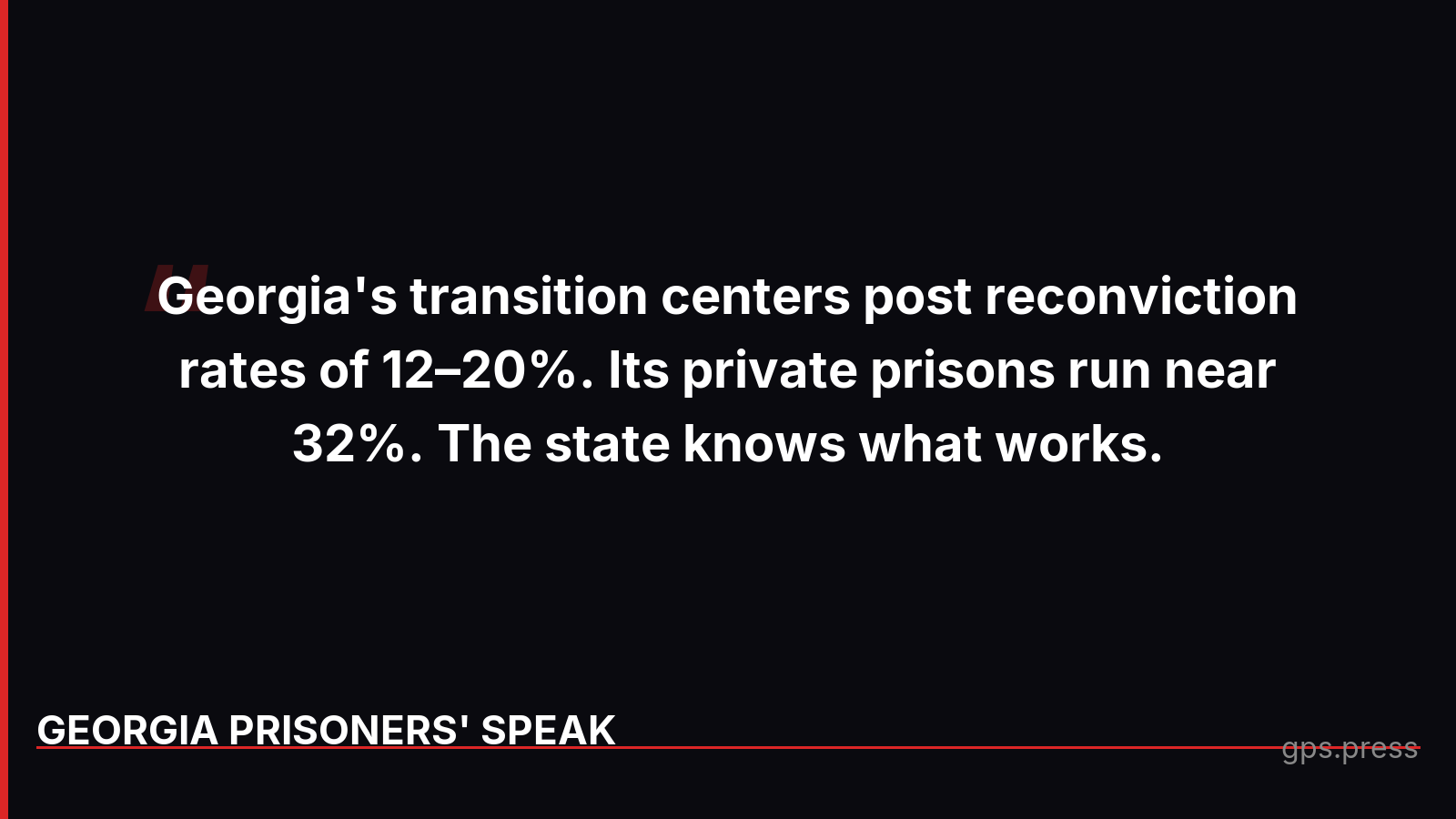
In a Georgia prison holding 1,600 people, roughly 20–30 are in GED classes. Private prisons run a 32% reconviction rate. Transition centers: 12–20%. The state knows what works. It chose otherwise. gps.press/nothing-to-do/
Facebook
In a Georgia prison holding 1,600 to 1,700 people, as few as 20 or 30 are enrolled in GED classes. Three or four out of every hundred have a work assignment. On any given day, the overwhelming majority of more than 52,000 people held across Georgia's prison system have nothing productive to do. This is not an oversight — it is the result of two decades of deliberate choices: cutting chaplain hours, eliminating vocational programs, downgrading recreation directors to officers.
The research is consistent. Education reduces the odds of returning to prison by roughly 43 percent. Cognitive-behavioral programs cut recidivism by around 25 percent. Georgia's own data confirms it — transition centers built around structured work post reconviction rates of 12 to 20 percent, while private prisons run near 32 percent. The state already knows what works. So why has it chosen to do less of it? Read the full investigation: gps.press/nothing-to-do/
Instagram
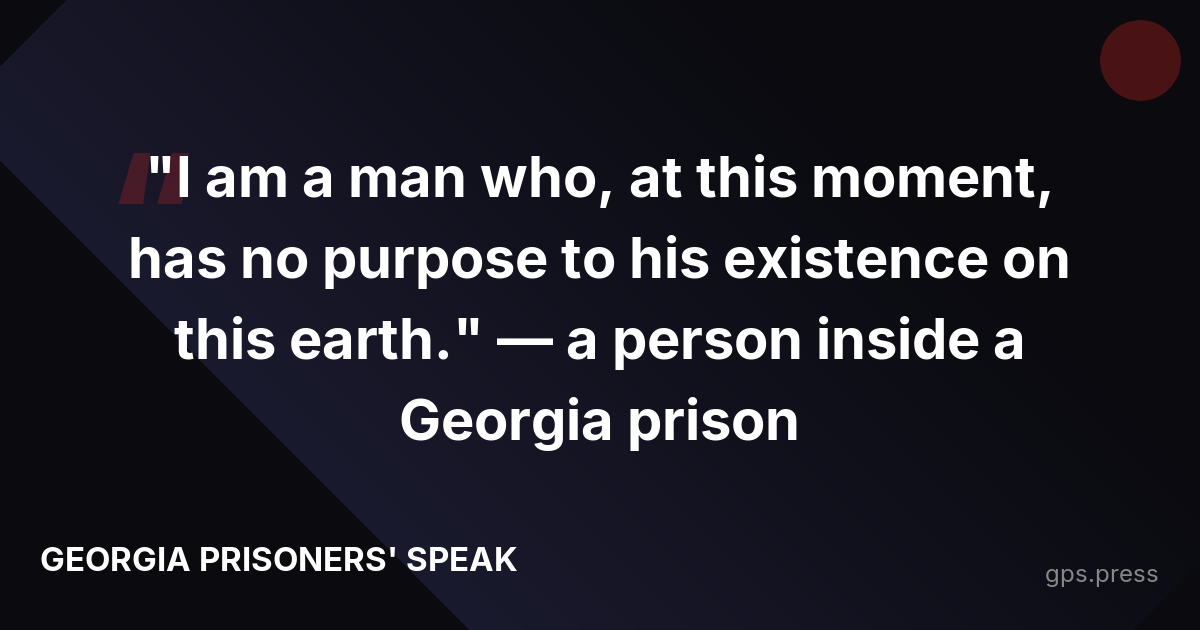
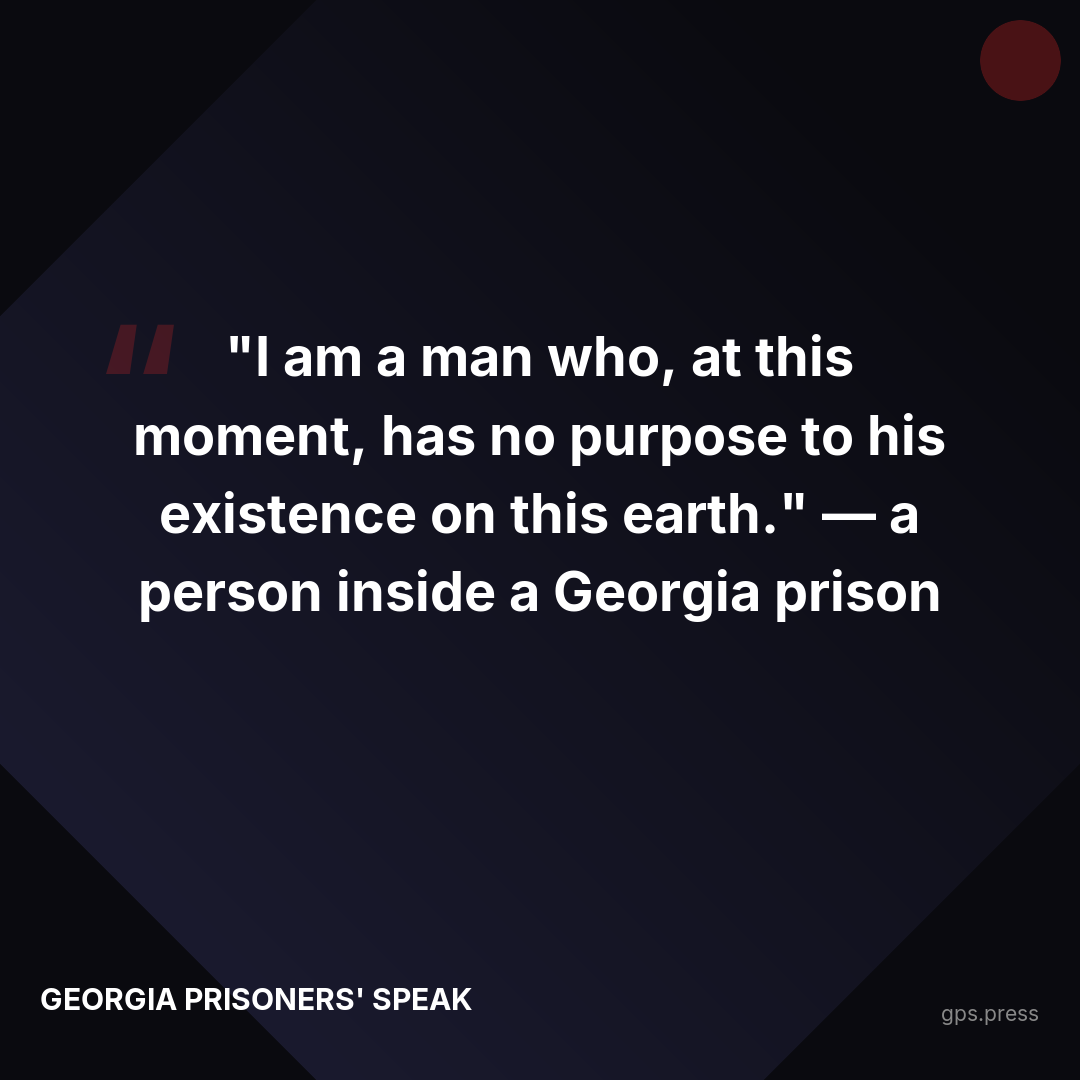
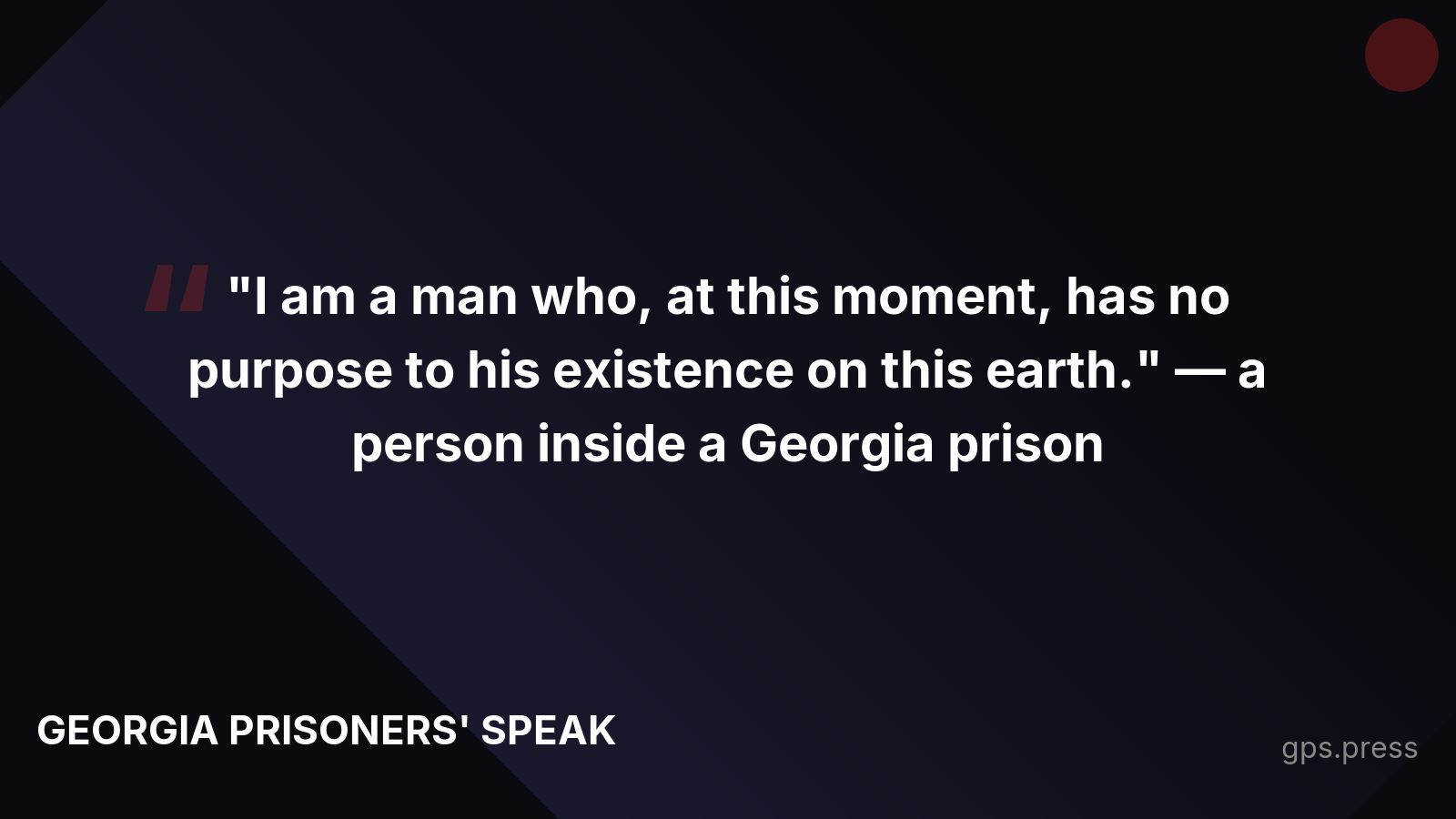
"I am a man who, at this moment, has no purpose to his existence on this earth." That is how one person inside a Georgia prison describes his days. In a facility holding 1,600 people, roughly 20 to 30 are enrolled in GED classes. Three or four out of every hundred have a work assignment. More than 52,000 people are held across Georgia's system — and on any given day, the vast majority have nothing to do. RAND research shows prison education reduces reincarceration odds by 43 percent and saves four to five dollars for every dollar spent. Georgia's own reconviction data confirms the gap between what works and what the state has chosen to fund. This is not a resource problem. It is a policy choice. Full investigation at gps.press/nothing-to-do/
#GAPrisons #PrisonReform #GeorgiaPrisonerSpeak #CriminalJusticeReform #PrisonEducation #AccountabilityJournalism #GeorgiaPrisons #Recidivism #EndTheWarehouse #InvestigativeJournalism
LinkedIn
Georgia holds more than 52,000 people across its prison system. In a facility of 1,600 to 1,700 people, roughly 20 to 30 are enrolled in GED classes and three to four out of every hundred have a work assignment. Vocational programs have largely been eliminated. Chaplain hours were cut. The position of recreational director was downgraded to a recreational officer. The result is a system that, by its own design, gives the people inside it almost nothing productive to do.
The policy cost is measurable. RAND's analysis of 57 studies found correctional education reduces reincarceration odds by approximately 43 percent and returns four to five dollars for every dollar spent. Georgia's own reconviction data shows transition centers — built around structured work and reentry programming — post three-year felony reconviction rates of 12 to 20 percent, compared to roughly 32 percent at private prisons. The evidence for what works is not ambiguous. The question this investigation asks is why, across two decades of rising corrections spending, Georgia has continued to choose otherwise. Full investigation: gps.press/nothing-to-do/