Social Death
How Georgia's prisons manufacture despair through idleness, isolation, and a foreclosed future — then refuse to treat or even count it.
Help spread the word — here's how:
- Scroll down to Copy a Caption and hit Copy on the one you want
- Scroll back up and click the Share on Facebook button for your favorite quote image
- On Facebook, paste the caption into your post — or write your own
Copy a Caption
Twitter/X
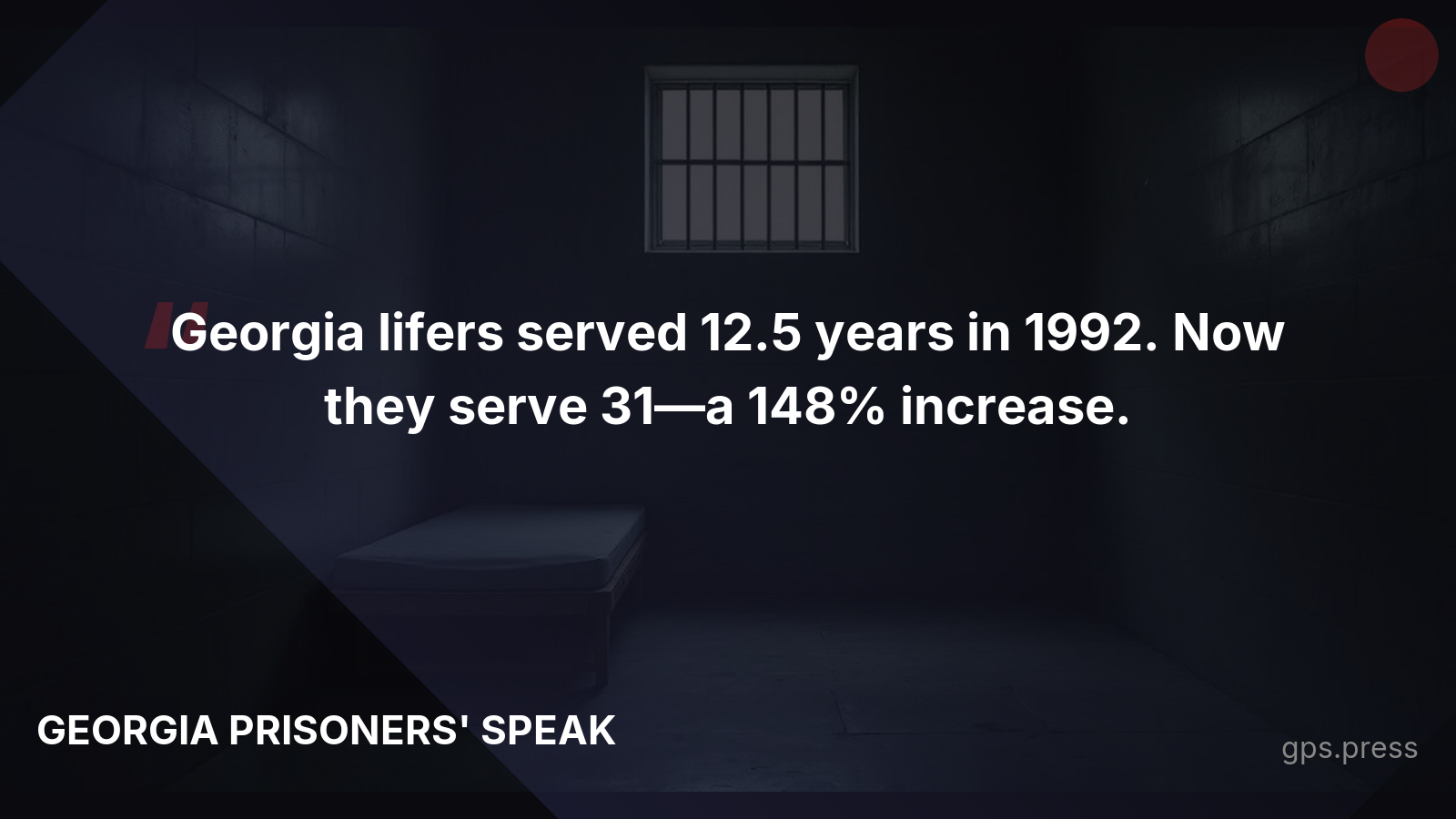
Georgia lifers served 12.5 years before parole in 1992. Now they serve 31—a 148% increase. The future wasn't lost. It was removed by policy. https://gps.press/social-death/
Facebook
A man in a Georgia prison wrote that he has "no purpose to his existence on this earth." He titled his account "Let Me Go or Just Execute Me." This is what the foreclosed future sounds like from the inside.
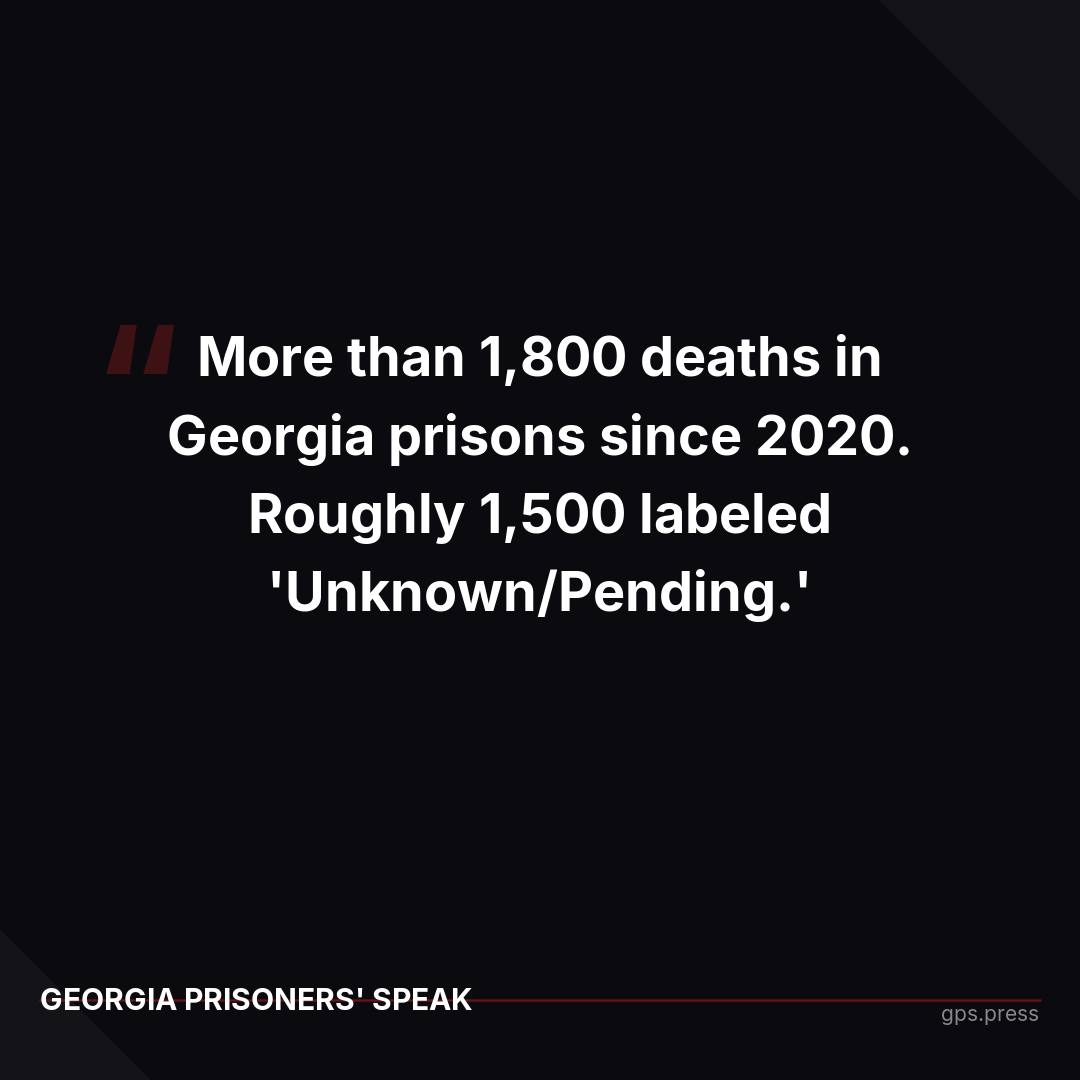
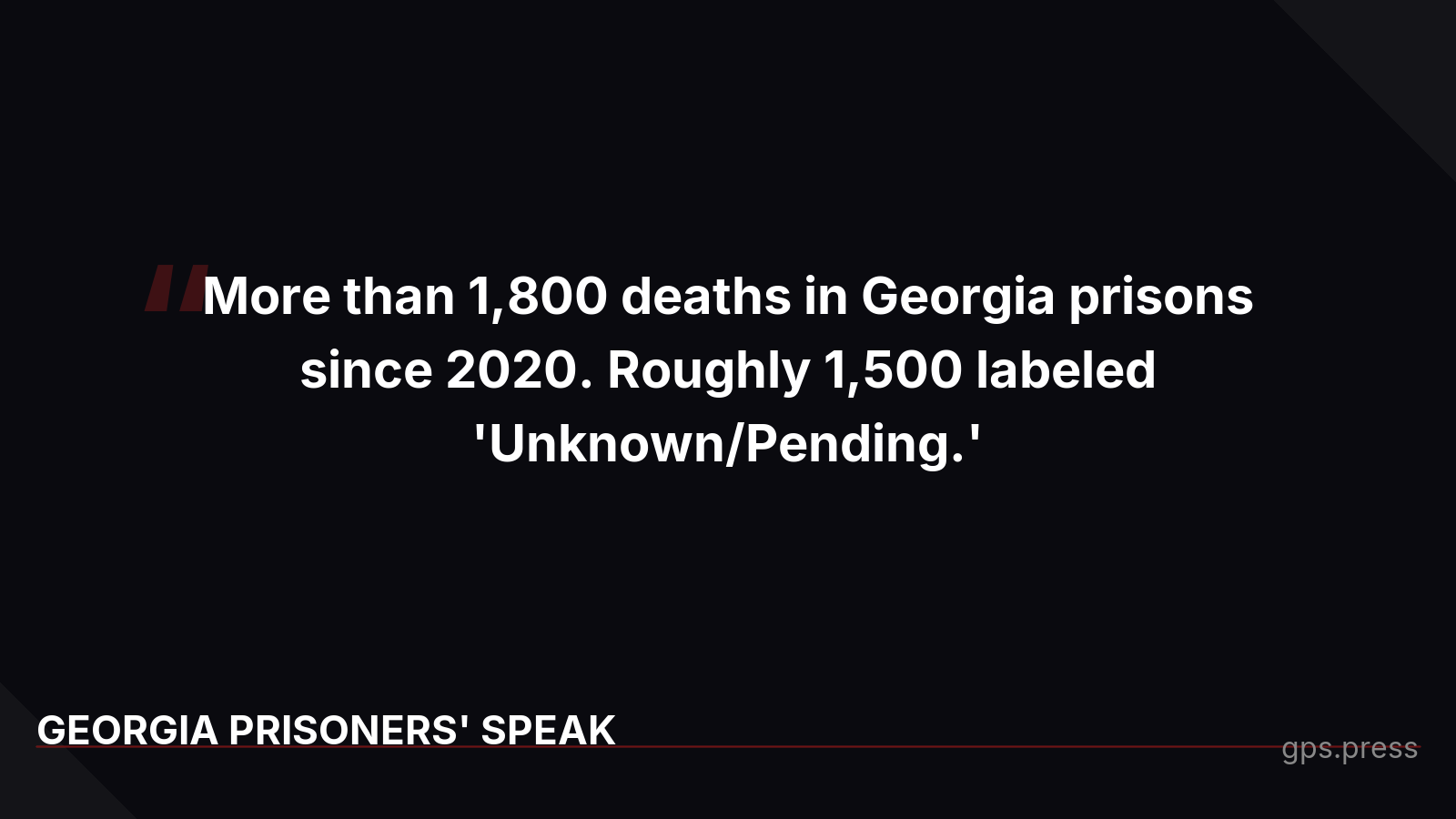
Georgia has spent decades methodically removing the why—work, family, hope, a release date—from people serving time. A life sentence once meant 12.5 years to parole. Today it means 31. More than 1,800 people have died in Georgia prisons since 2020, and the state won't even classify how most of them died. Social death is not a metaphor. It is a policy choice, and it is killing people.
What does it say about a system when the people inside it would rather die than keep living under its conditions?
Instagram
A man in a Georgia prison wrote that he has "no purpose to his existence on this earth." He titled his account "Let Me Go or Just Execute Me." In 1992, a life sentence meant 12.5 years to parole. Today it means 31. More than 1,800 people have died in Georgia prisons since 2020—roughly 1,500 labeled "Unknown/Pending" because the state won't say how they died. This is social death: alive in a body, erased from the accounting. It is manufactured by idleness, isolation, and a parole system hollowed into theater. And it is a choice Georgia keeps making.
#GAPrisons #PrisonReform #GeorgiaPrisonerSpeak #SocialDeath #EndTheWarehouse #CriminalJusticeReform
LinkedIn
Georgia has engineered a condition that psychiatrist Viktor Frankl identified in Nazi concentration camps: the existential vacuum—a life so drained of meaning that apathy becomes a survival mechanism. GPS's latest investigation documents how state policy has methodically produced this condition at scale.
In 1992, a Georgia life sentence meant 12.5 years to parole. Today it means 31—a 148% increase. More than a third of paroles granted now arrive within a year of a person's scheduled release date. Parole has become theater. Meanwhile, more than 1,800 people have died in Georgia prisons since 2020, and the Department of Corrections classifies roughly 1,500 of those deaths as "Unknown/Pending"—refusing to publicly report cause of death. The despair is manufactured, the deaths are uncounted, and the policy choices that produced both remain in place.
This is not inevitable. GPS's Vision 2027 agenda outlines the path forward: genuine mental health care, a parole system that means what it says, and sentence review for people who have genuinely changed. The question is whether Georgia's leadership will choose to restore hope as a matter of policy—or continue reading the resulting collapse as proof that the people inside were never worth investing in.