The Cure Exists: A 41-Year-Old Died of Hepatitis C in a Georgia Prison
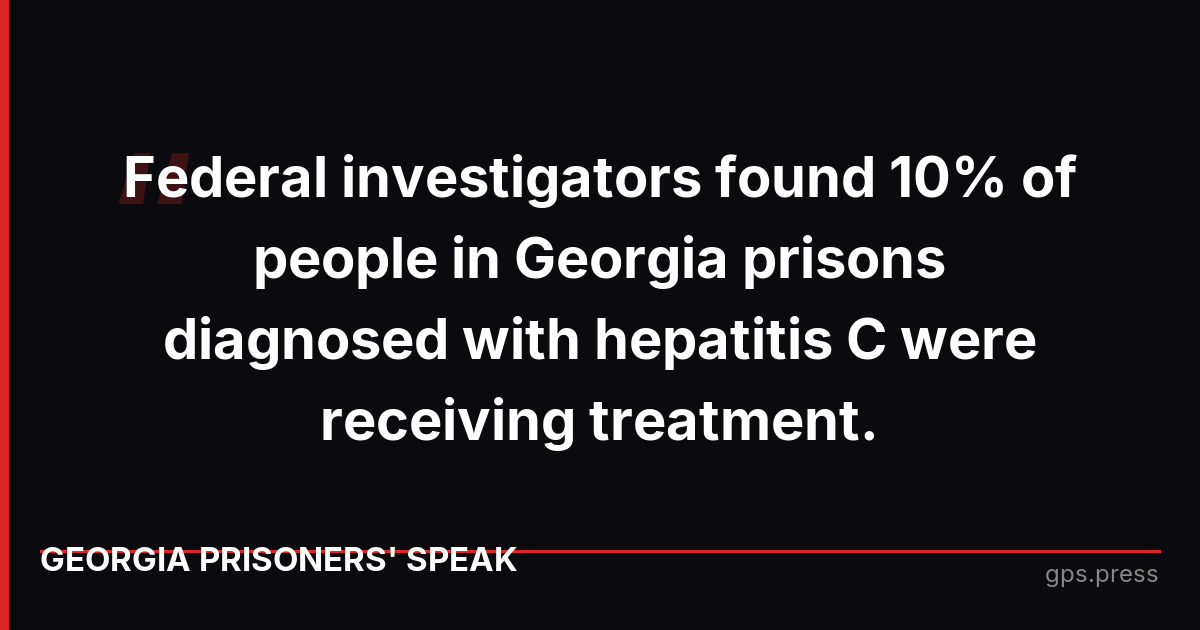
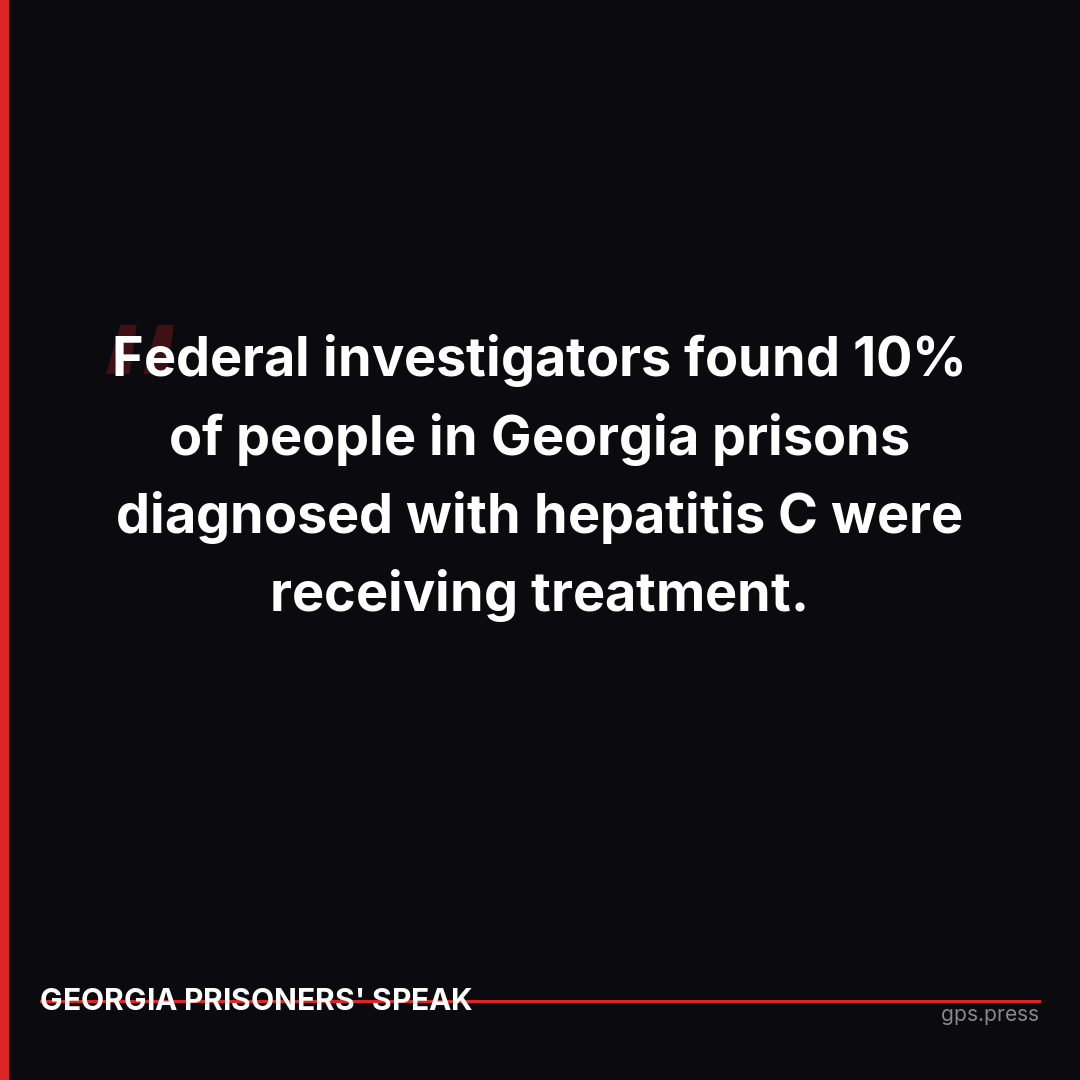
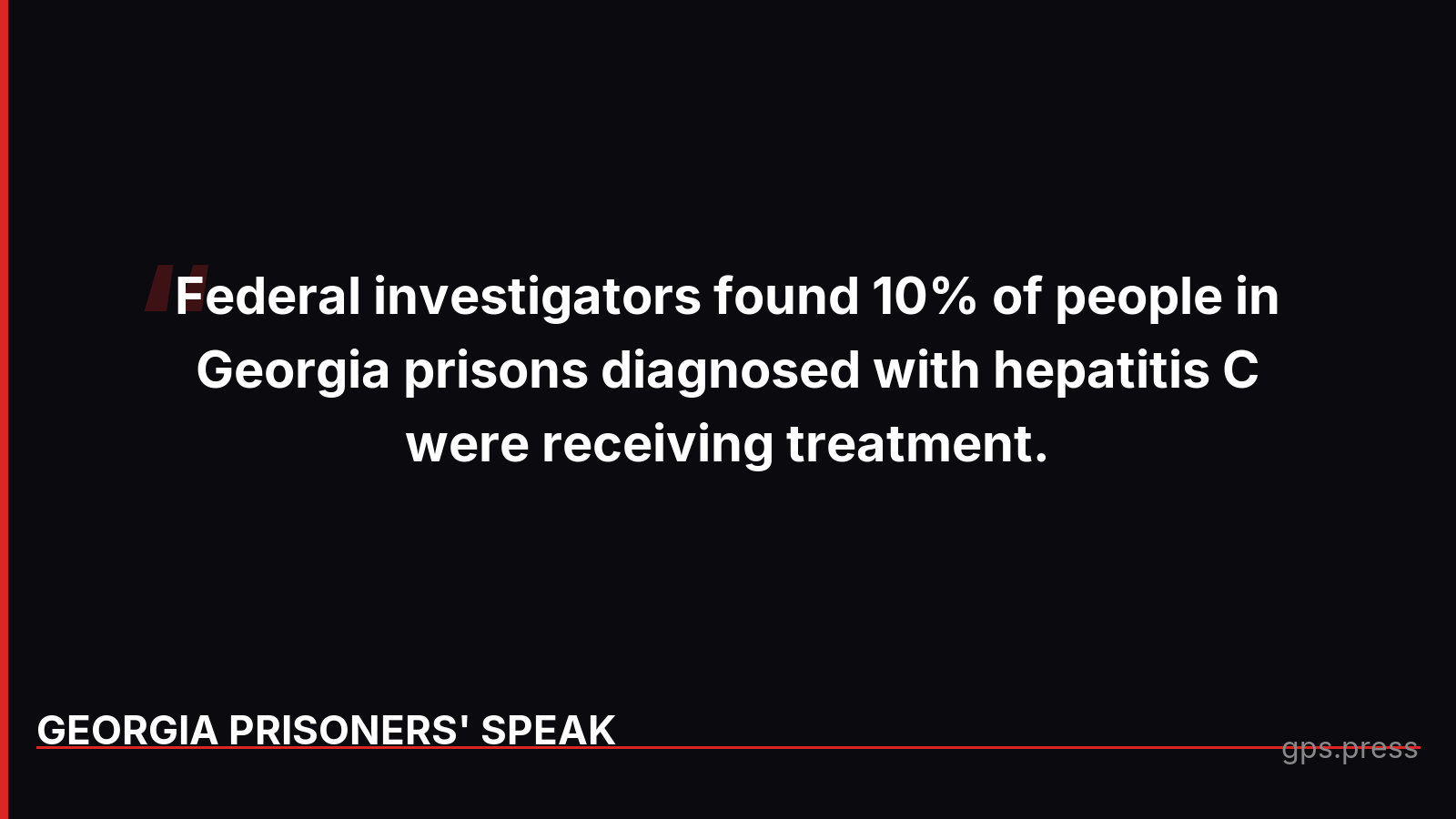
Torrey Wayne Forrester died at 41 in a Georgia prison of cirrhosis caused by chronic hepatitis C — a disease curable since 2014. The Justice Department found Georgia treating roughly ten percent of the people it knew were infected. Georgia's own profile shows it has not tested more than half the people in its custody.
Help spread the word — here's how:
- Scroll down to Copy a Caption and hit Copy on the one you want
- Scroll back up and click the Share on Facebook button for your favorite quote image
- On Facebook, paste the caption into your post — or write your own

Copy a Caption
Twitter/X
A 41-year-old man died of hepatitis C in a Georgia prison in 2024. The disease has been curable for a decade. The DOJ found Georgia treats only 10% of those diagnosed. https://gps.press/the-cure-exists-a-41-year-old-died-of-hepatitis-c-in-a-georgia-prison/
Facebook
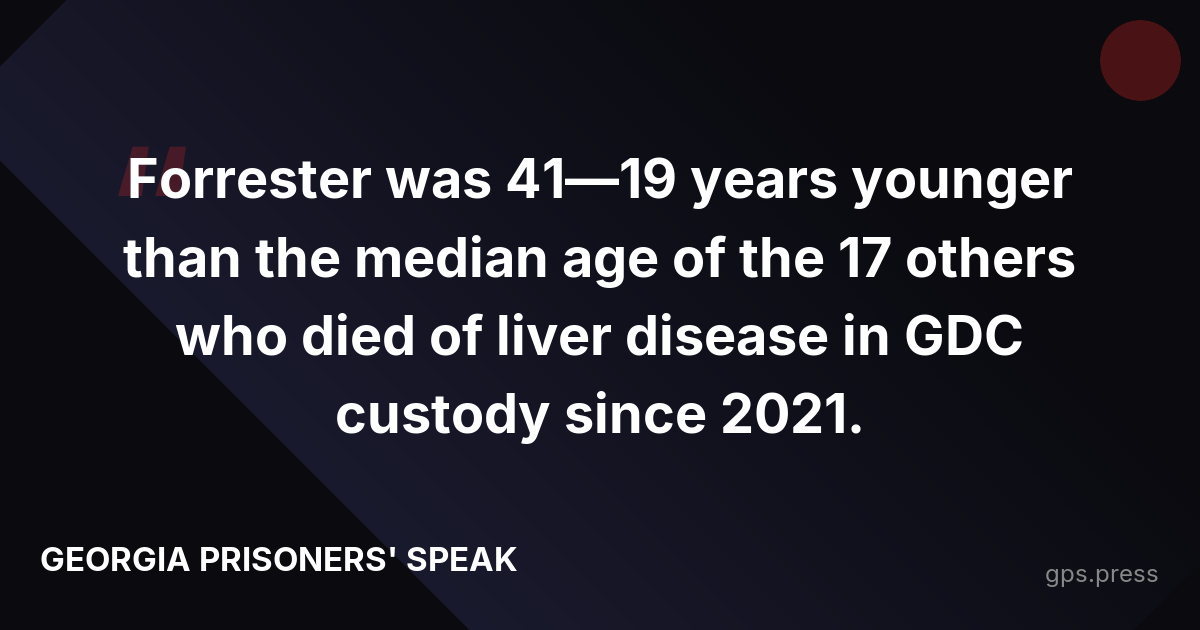
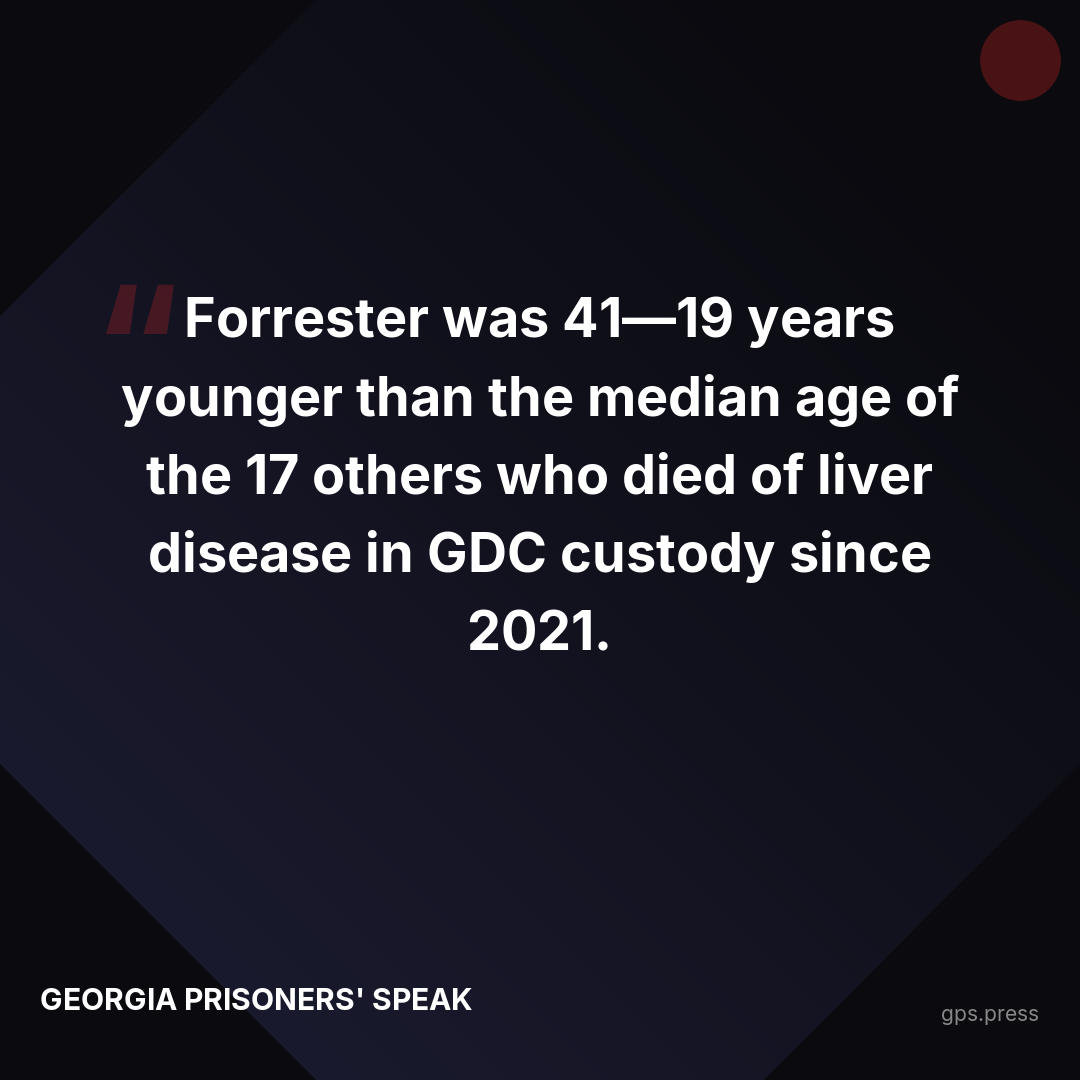
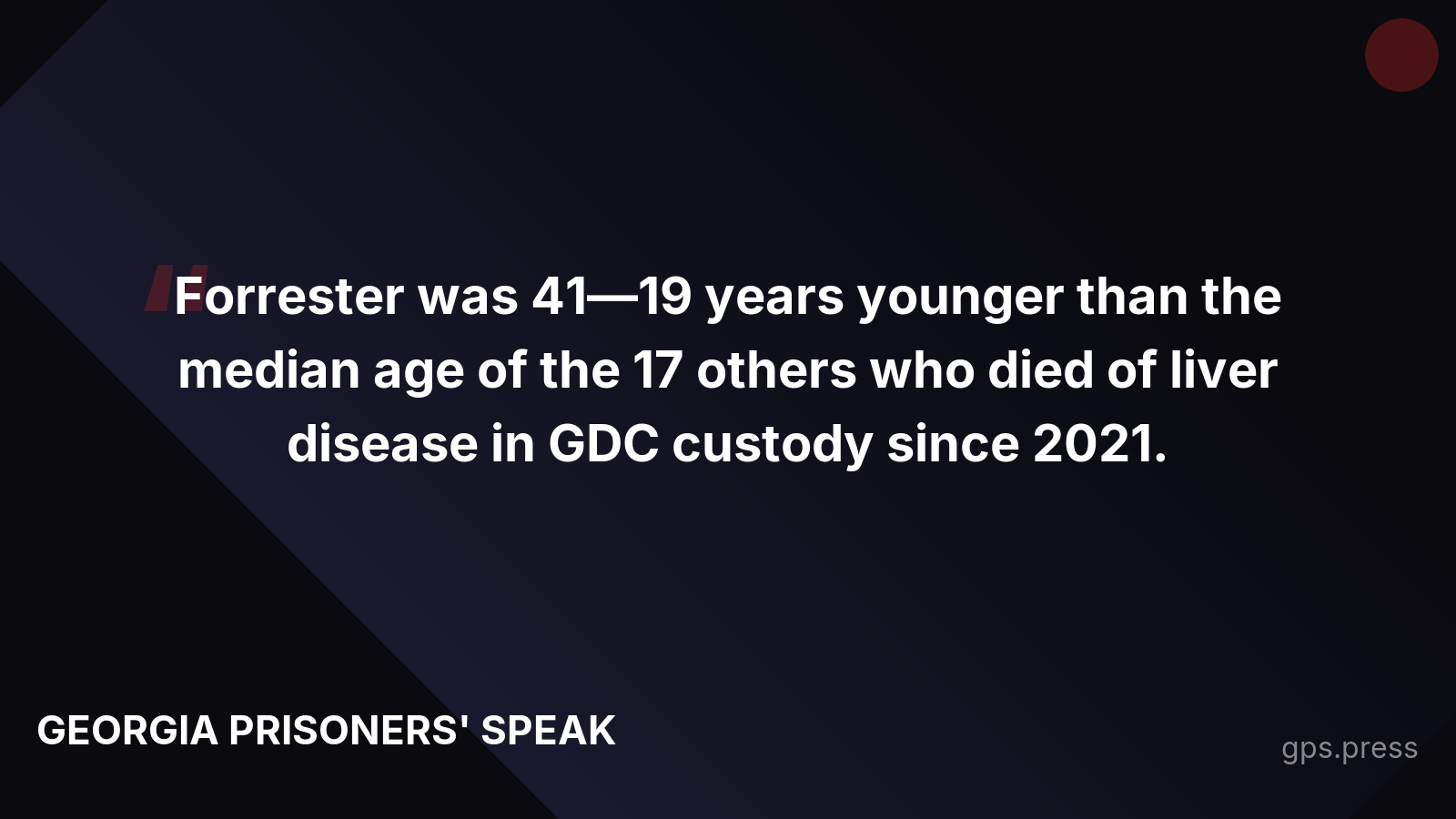
Torrey Wayne Forrester was 41 when he died of hepatitis C complications at Washington State Prison in July 2024. Hepatitis C has been curable since 2014 with a simple course of pills. Federal investigators found Georgia treats roughly 10% of incarcerated people diagnosed with the virus. Forrester was 19 years younger than the median age of the 17 other people who died of liver disease in GDC custody since 2021.
How many more people have to die of a curable disease before Georgia treats everyone in its custody?
Instagram
Torrey Wayne Forrester died of hepatitis C in a Georgia prison at age 41. The cure has existed since 2014. The DOJ found Georgia treats only 10% of those diagnosed. Since 2021, 17 people have died of liver disease in GDC custody. Forrester was the youngest by 5 years. Waiting until a liver fails is not a treatment protocol—it is a budget strategy with a body count.
#GAPrisons #PrisonReform #GeorgiaPrisonerSpeak #HepatitisC #Accountability
LinkedIn
Hepatitis C has been curable since 2014. In 2024, a 41-year-old man died of it in a Georgia prison. The Department of Justice found that Georgia treats approximately 10% of incarcerated people diagnosed with the virus—a standard, curative, commercially available course of pills. Georgia's own data shows no hepatitis C test result on file for more than half of the 53,590 people in its custody.
Georgia is not the first state to face this question, but it is one of the last to face it without consequence. Courts have repeatedly held that withholding curative therapy from someone known to be infected may violate the Eighth Amendment. The policy question is straightforward: should a state agency be permitted to ration a cure until the disease becomes fatal? The fiscal argument does not hold. A one-time course of antivirals ends the disease. Decades of managing advancing liver failure do not.