The Last Thread
Georgia rations family contact — phone and visitation lists capped and changeable only twice a year — while spending millions to surveil. The fix costs nothing.
Help spread the word — here's how:
- Scroll down to Copy a Caption and hit Copy on the one you want
- Scroll back up and click the Share on Facebook button for your favorite quote image
- On Facebook, paste the caption into your post — or write your own
Copy a Caption
Twitter/X
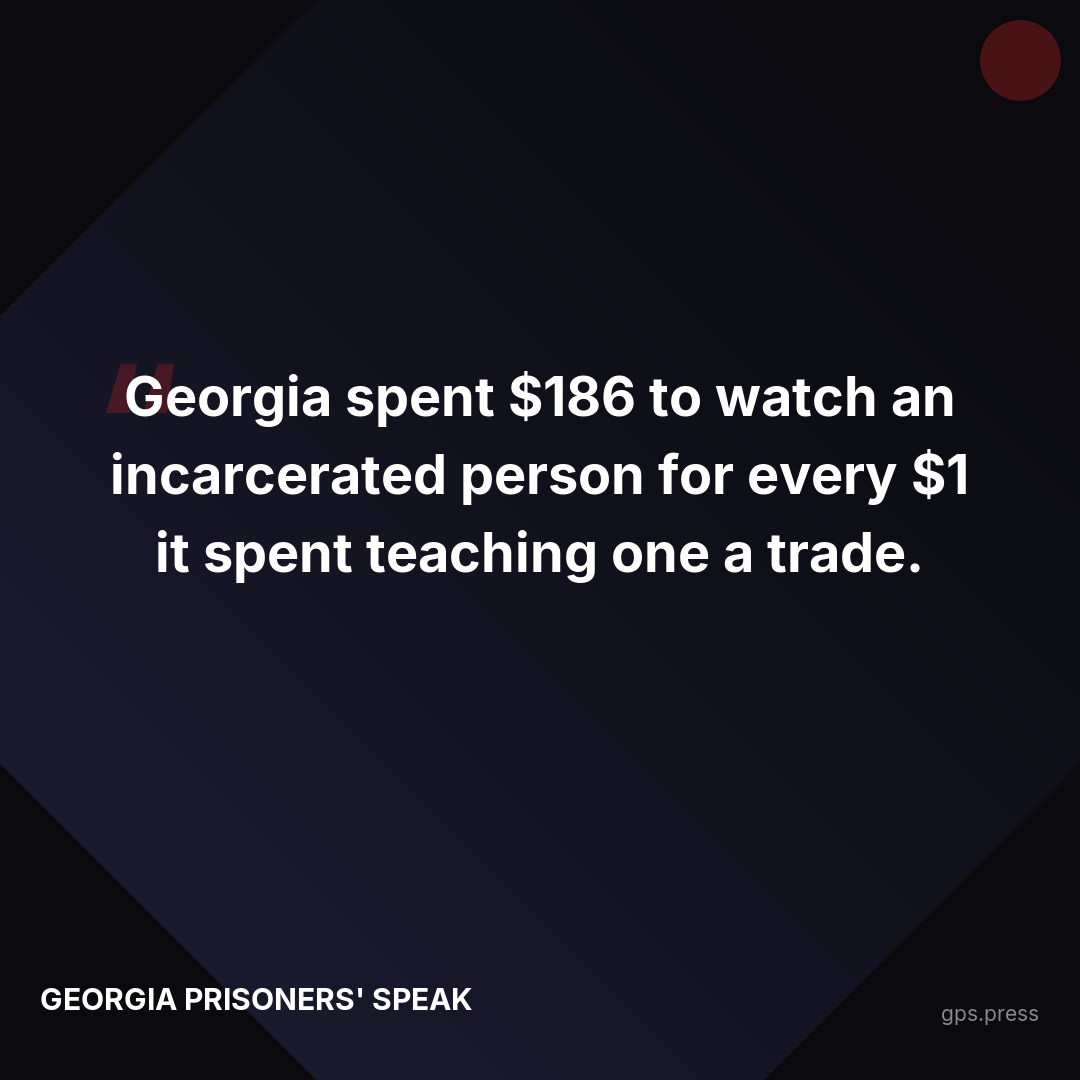
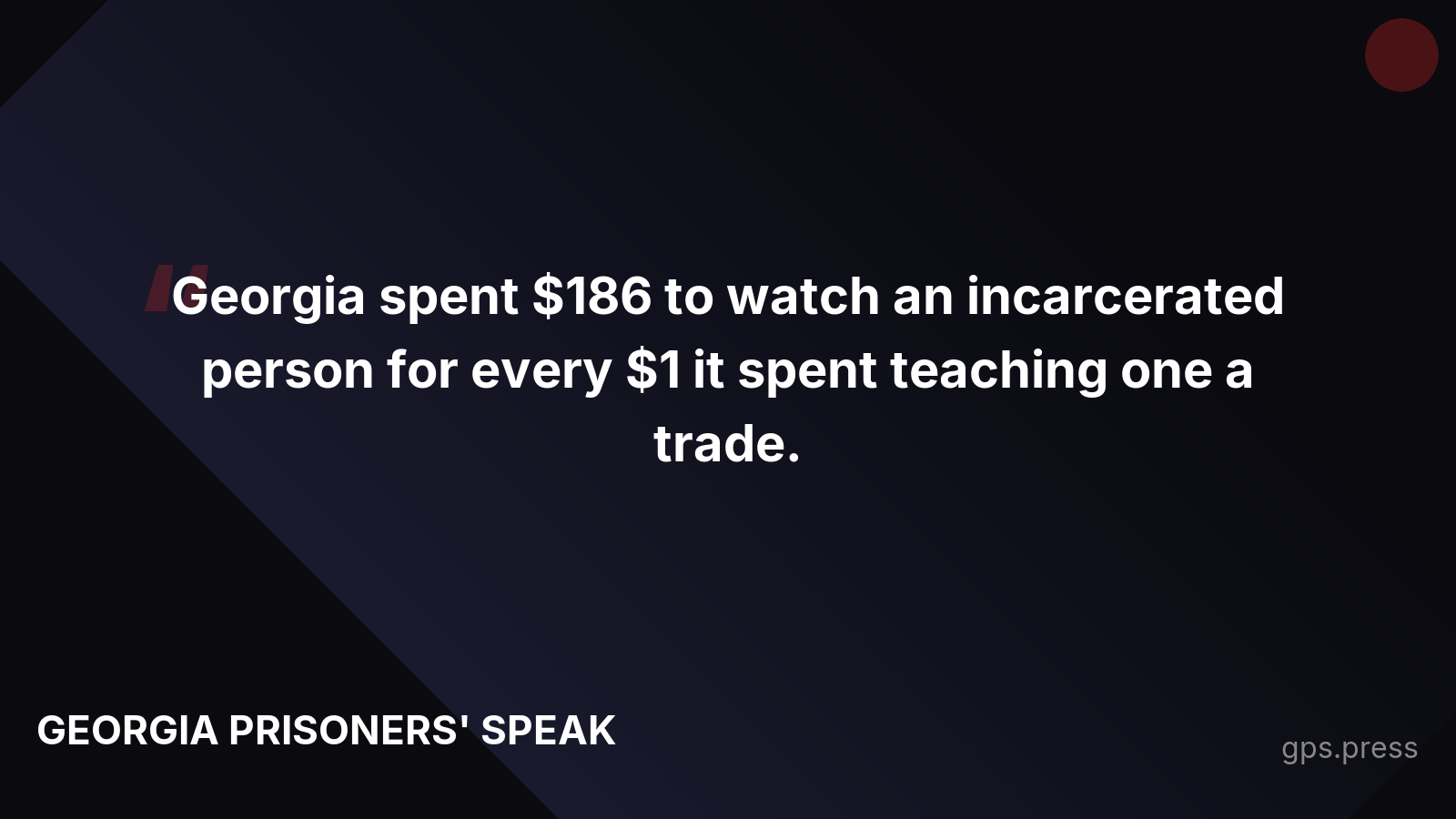
Georgia spent $186 to watch an incarcerated person for every $1 it spent teaching one a trade. The state will pay a fortune to monitor a human being and almost nothing to connect him. That is the choice: the camera over the call. https://gps.press/the-last-thread/
Facebook
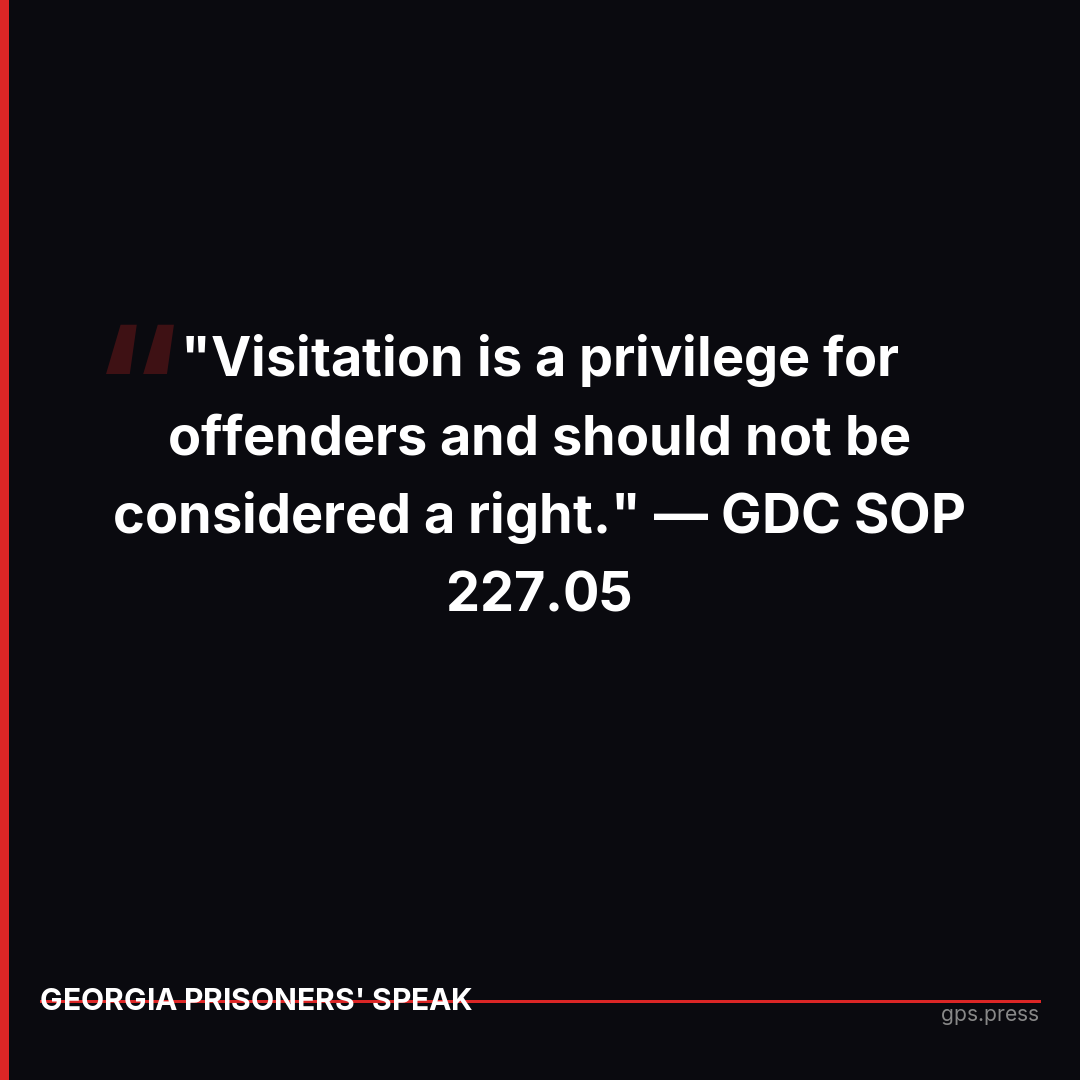
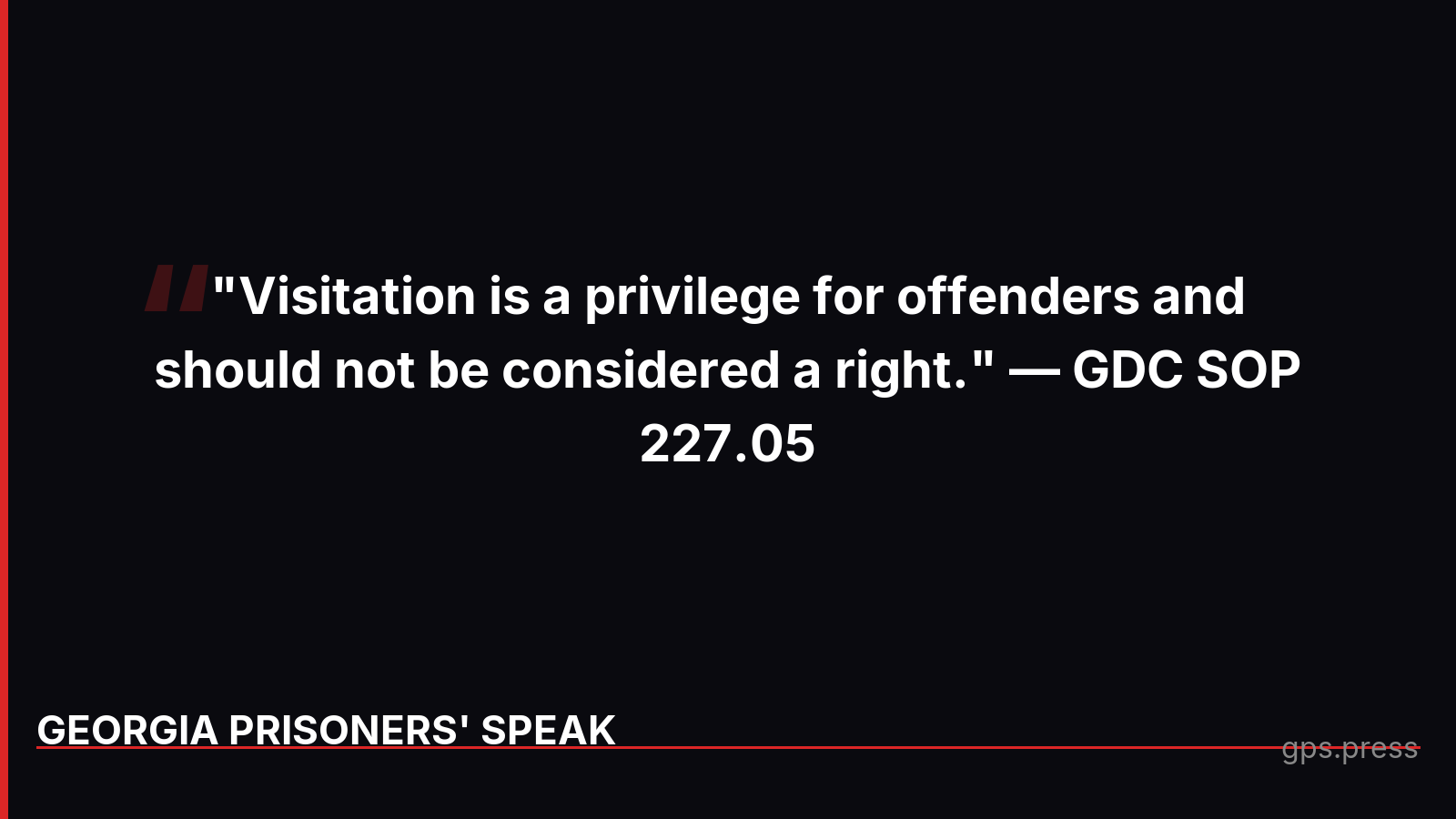
Georgia's prison system calls family contact a privilege, not a right. That single sentence, written into its own policy, governs everything that follows: phone lists capped at twenty names, revised only twice a year on a schedule assigned by prison ID number. Visitation lists capped at twelve, with mandatory background checks and six-month minimums between changes. A mother's visit treated as a lever for discipline.
The research is not ambiguous. The Minnesota Department of Corrections tracked 16,420 people released from prison and found that those who received even a single visit were 13 percent less likely to be reconvicted of a felony. A meta-analysis of sixteen studies put the overall effect at a 26 percent reduction in reoffending. Georgia knows this. The state built its rules to cut against it anyway.
What does it cost a family to stay connected to someone inside Georgia's prisons — and who decided that connection was something the state could ration?
Instagram
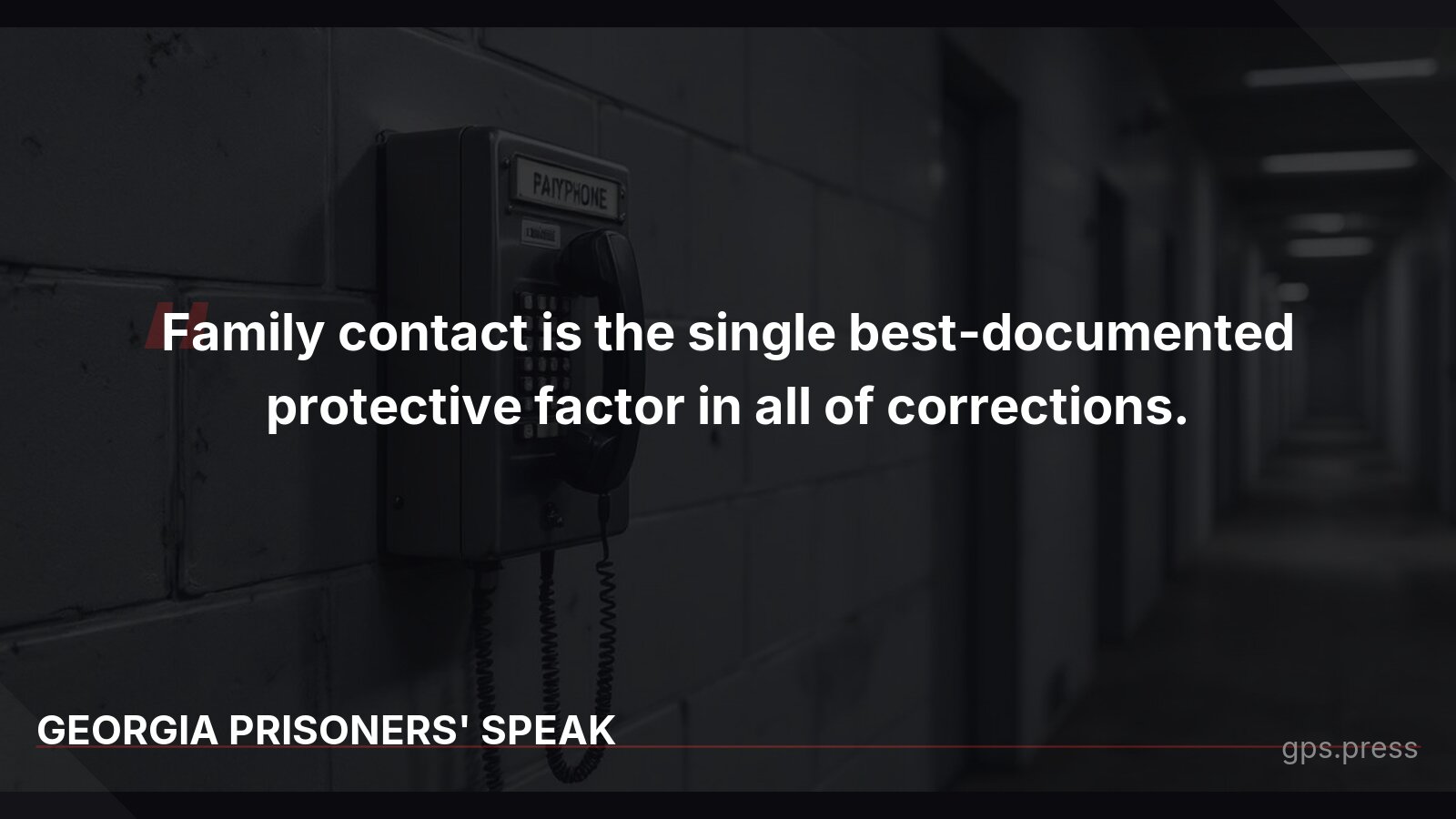
A man in a Georgia prison can only call twenty people. He can revise that list twice a year, in months assigned by the last digit of his prison ID. If his mother's number changes in between, he waits. Visitation is harsher still: she must apply, consent to a background check, and wait until the next May or November for permission to sit across a table from her son. The state calls this a privilege, not a right. The research calls it the single best-documented protective factor in all of corrections — a 26 percent reduction in reoffending. Georgia knows. It cut the thread anyway.
#GAPrisons #PrisonReform #GeorgiaPrisonerSpeak #FamilyConnection #CriminalJusticeReform #EndTheWarehouse #Accountability
LinkedIn
Georgia's Department of Corrections has codified family separation as policy. SOP 227.01 limits incarcerated people to twenty approved phone contacts, revisable only twice yearly on a schedule dictated by prison ID number. SOP 227.05 opens with the statement that visitation is a privilege, not a right, then caps approved visitors at twelve, imposes mandatory background checks, and permits the Department to suspend visitation as a disciplinary sanction.
This framework contradicts the strongest evidence in corrections research. The Minnesota Department of Corrections study of 16,420 released individuals found that a single visit reduced felony reconviction by 13 percent, with each additional visitor lowering risk further. A meta-analysis of sixteen studies placed the overall recidivism reduction at 26 percent. Georgia spent more than $150 million on its OWL surveillance system — roughly $186 per incarcerated person for monitoring versus $1 for vocational training — while maintaining restrictions that the research says actively undermine public safety. The infrastructure to monitor rather than ration already exists. The question for policymakers is whether Georgia will continue to invest in severing the very ties proven to reduce reoffending.