Two Ways to Starve: Why Georgia's Prison Deaths Don't Say "Hunger"
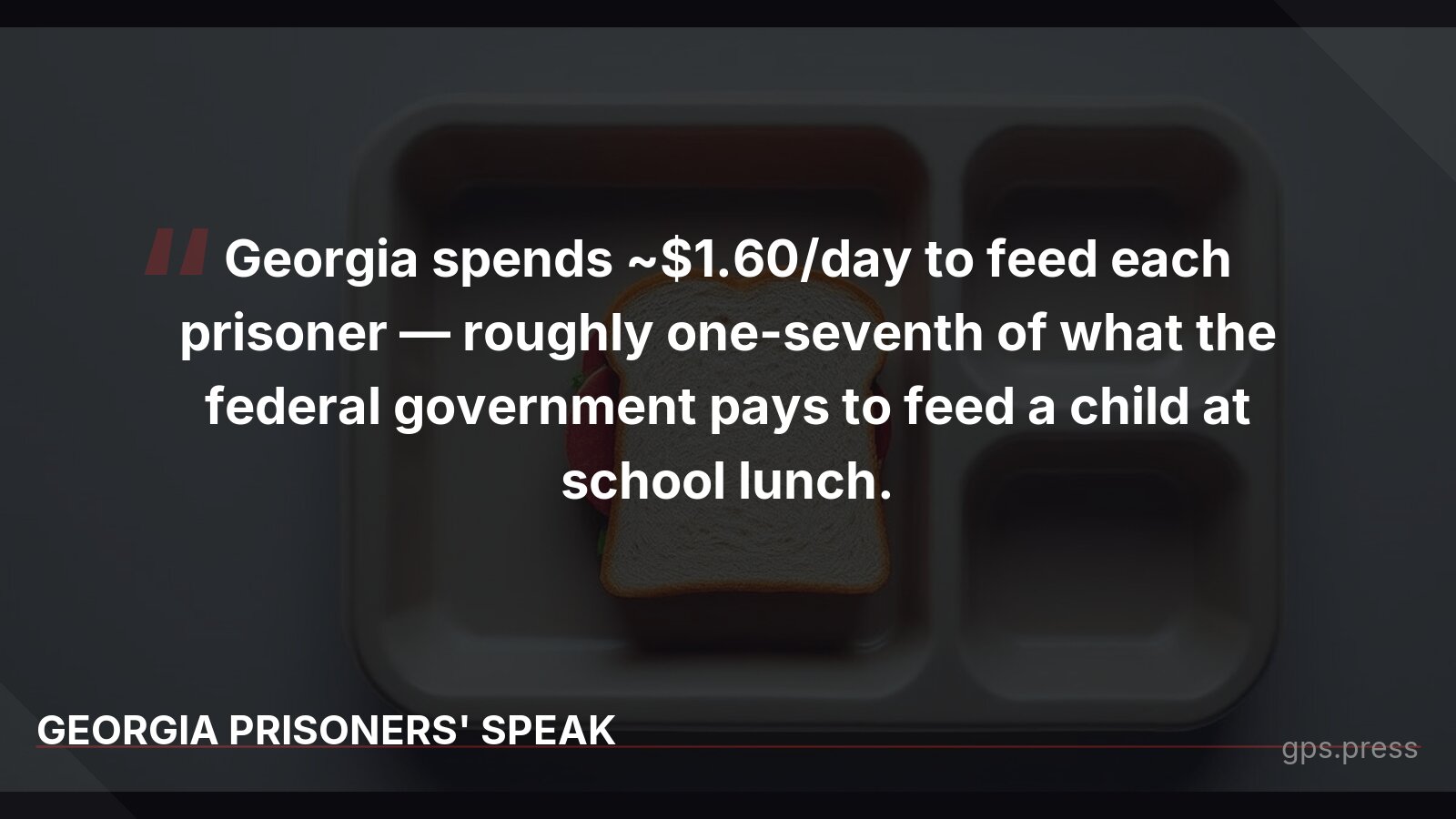
Georgia spends $1.60/day to feed 53,000 inmates, 13,000 over 50. Bodies arrive marked cardiac arrest. Medical literature says it is hunger.
Help spread the word — here's how:
- Scroll down to Copy a Caption and hit Copy on the one you want
- Scroll back up and click the Share on Facebook button for your favorite quote image
- On Facebook, paste the caption into your post — or write your own
Copy a Caption
Twitter/X
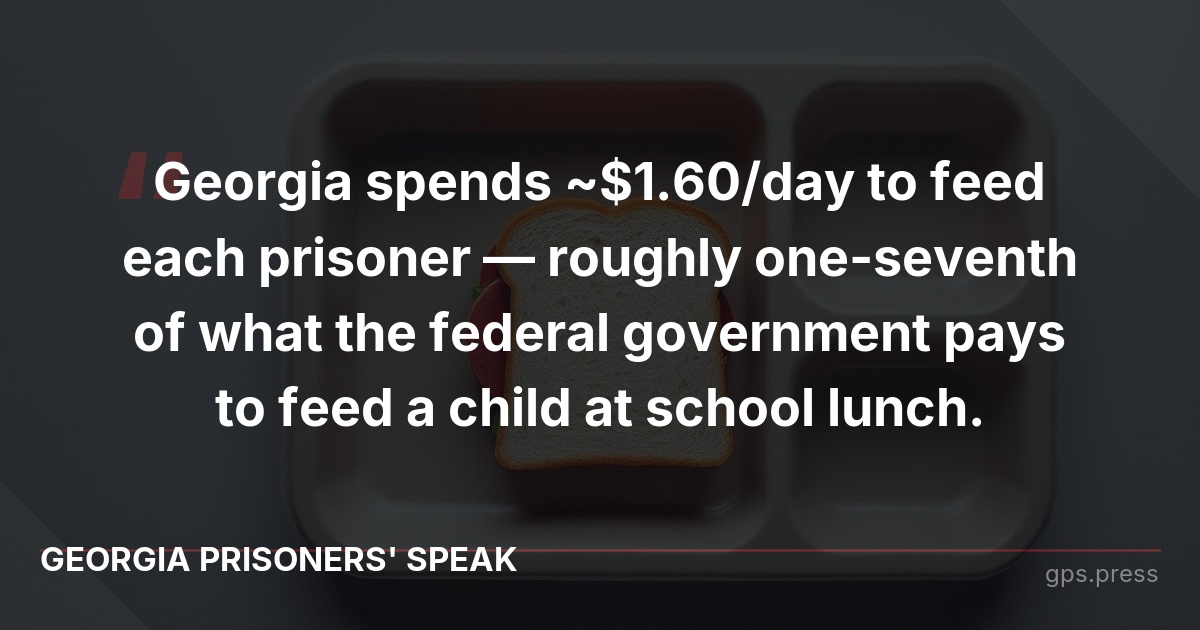
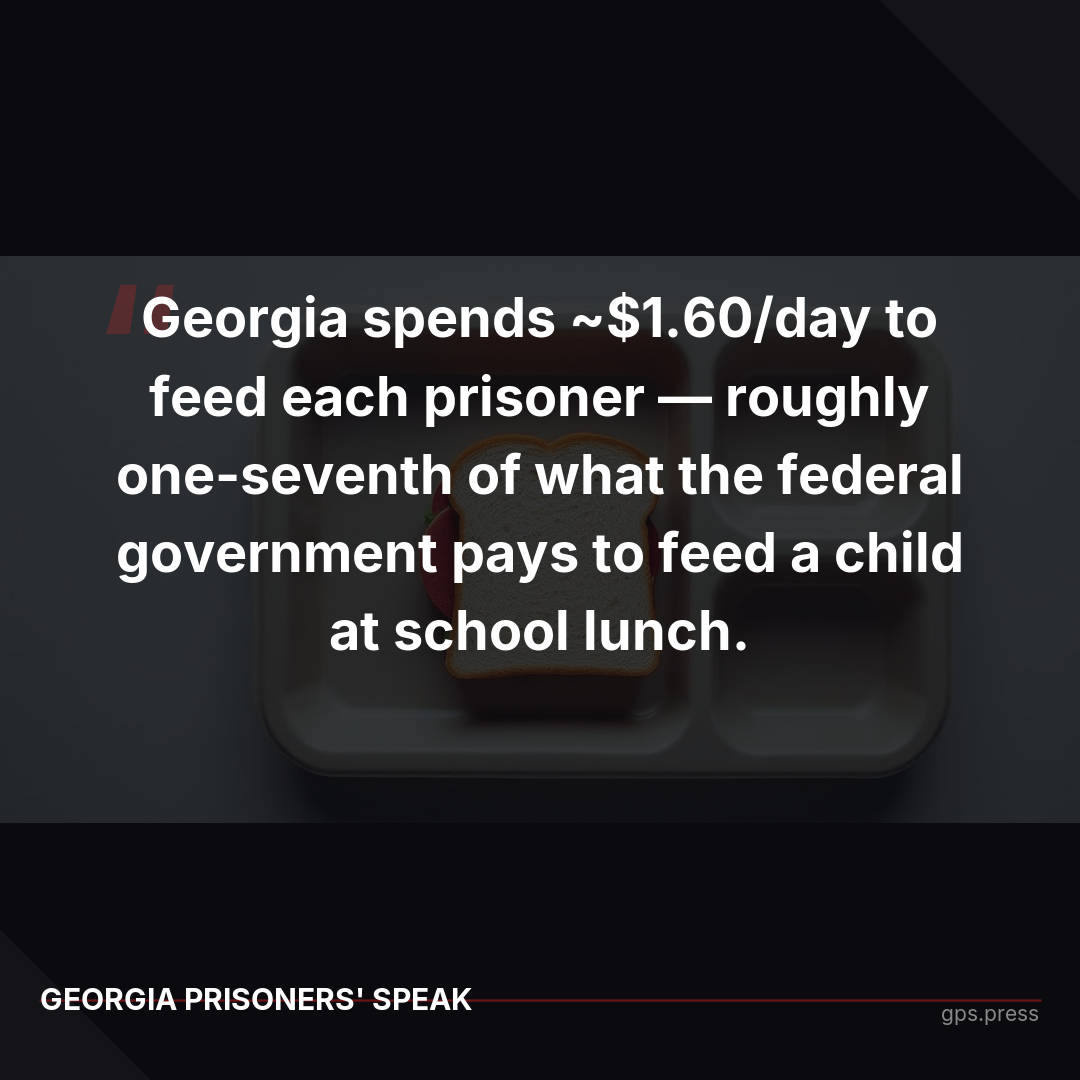
Georgia spends $1.60/day to feed each prisoner — one-seventh the federal child lunch rate. The deaths get coded as cardiac arrest. The cause is never written down. https://gps.press/two-ways-to-starve-why-georgias-prison-deaths-dont-say-hunger/
Facebook
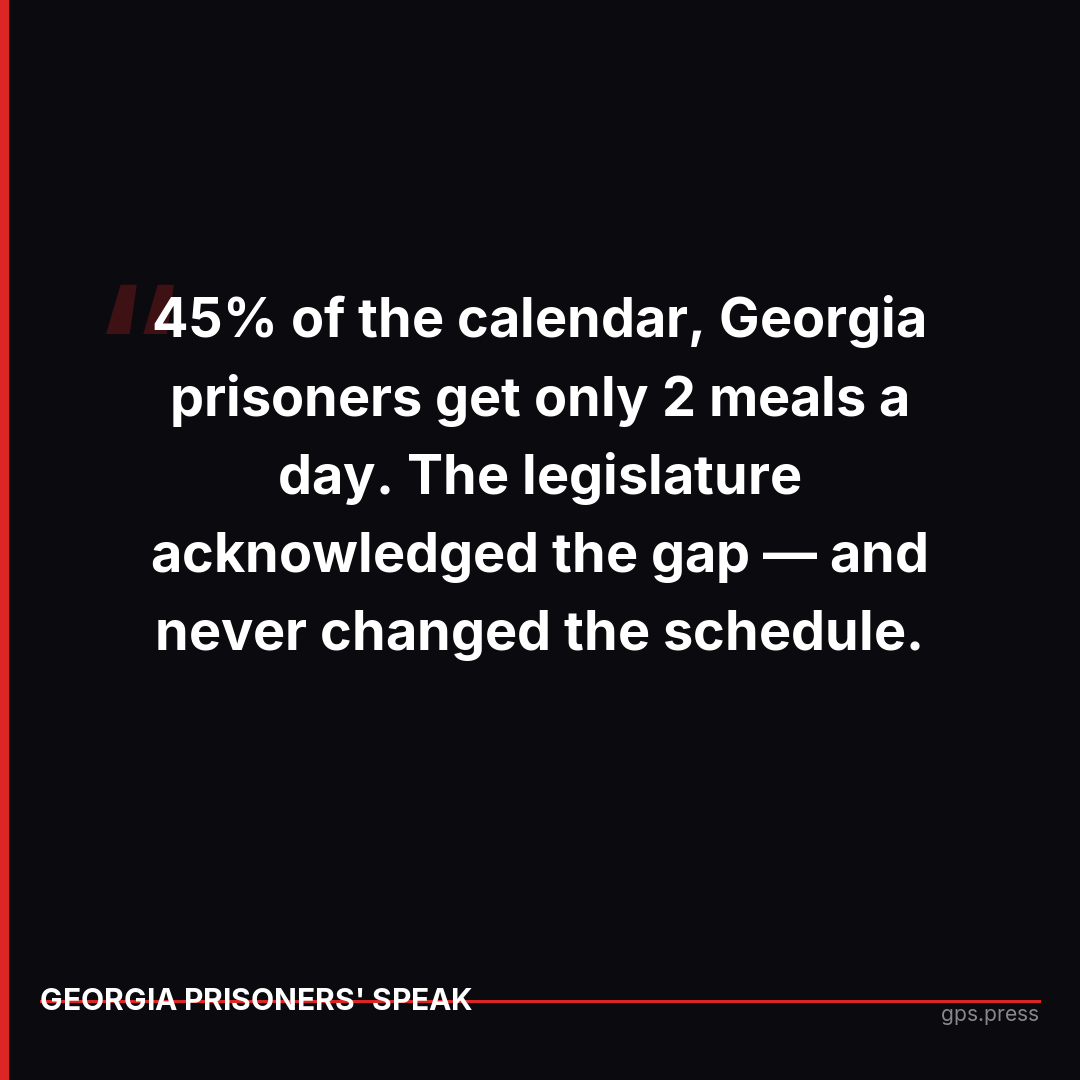
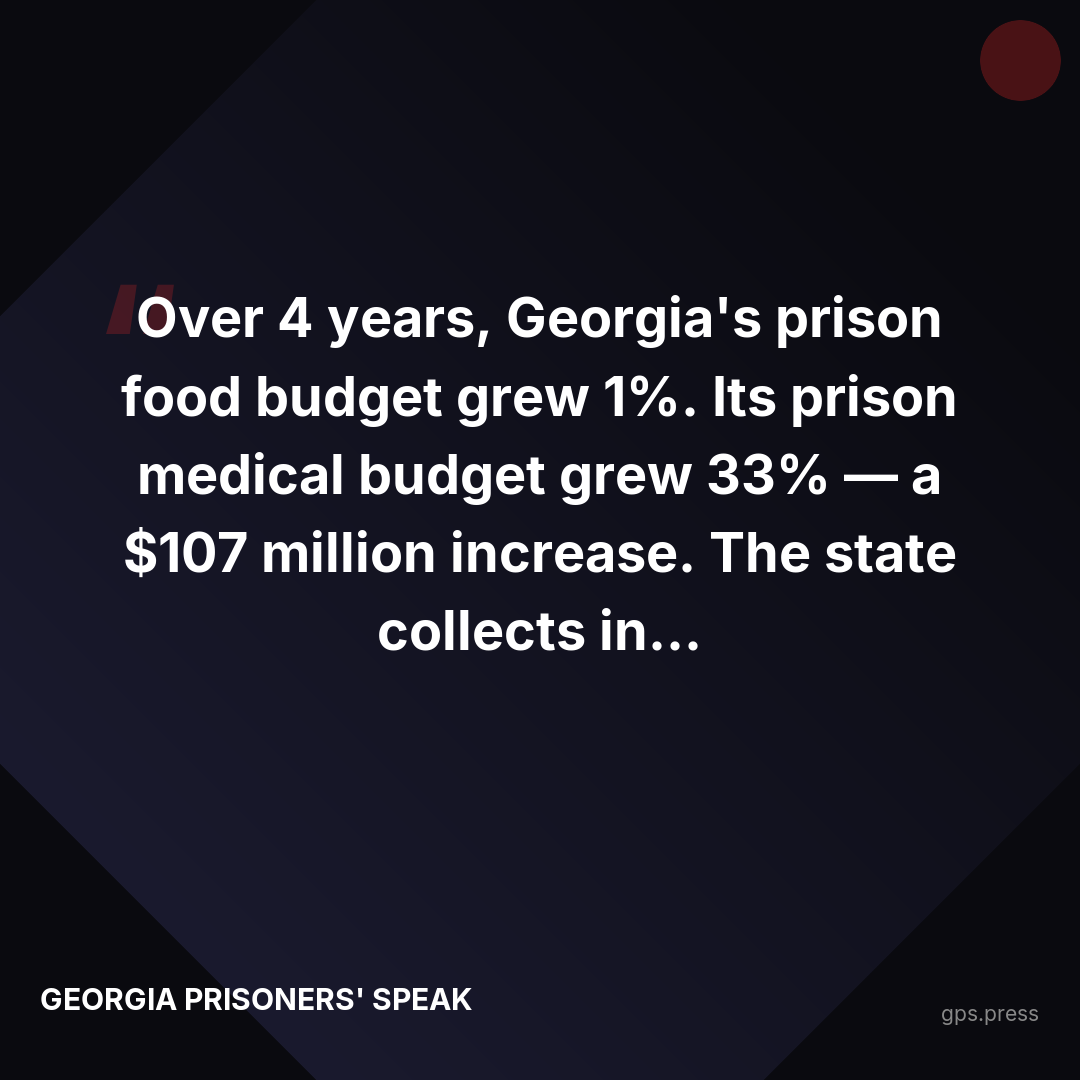
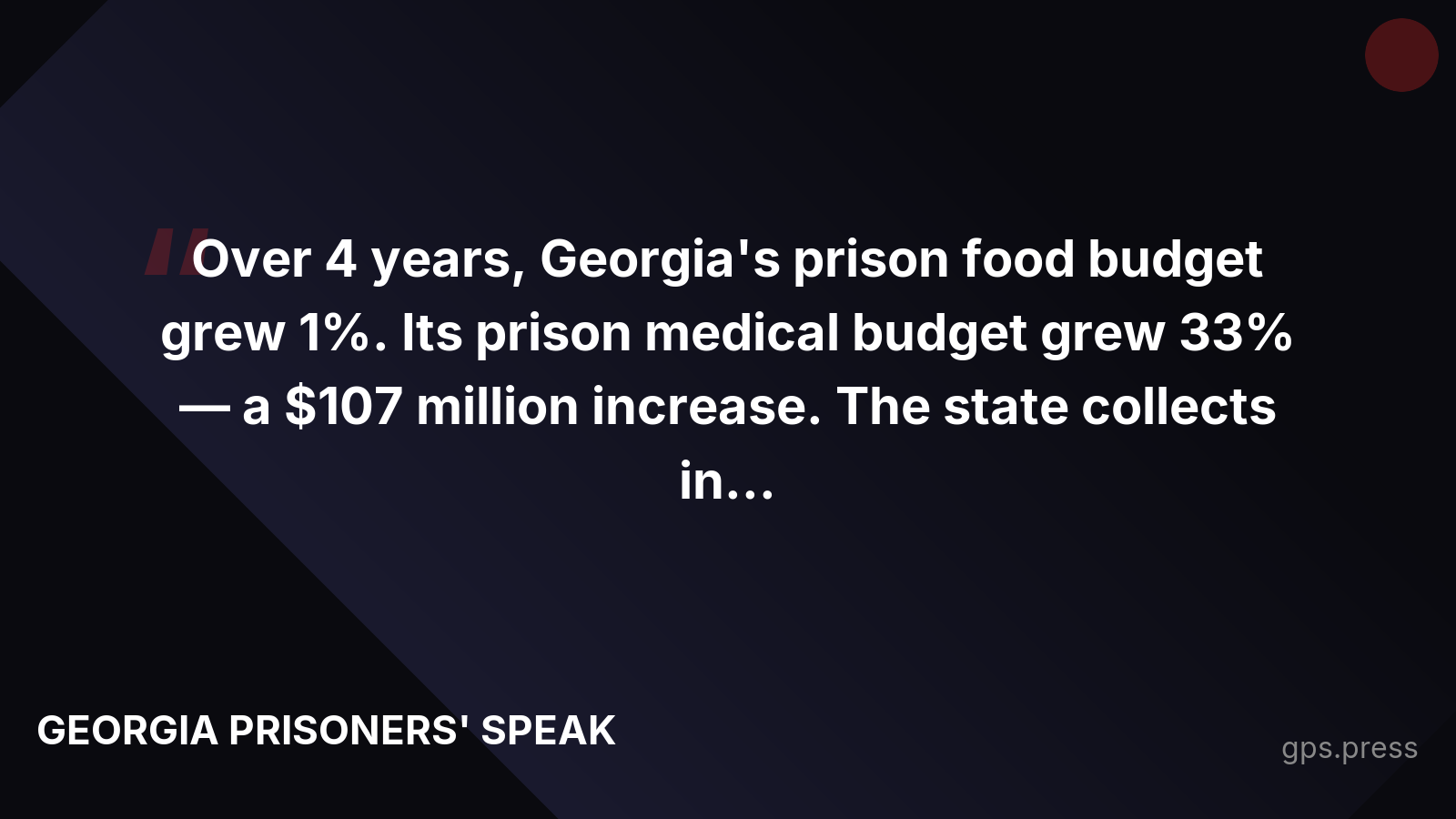
Georgia feeds roughly 53,500 incarcerated people on $1.60 per person per day — about 53 cents per meal. For 45% of the calendar, prisoners receive only two meals. In 2024, the legislature appropriated $1.2 million specifically for weekend meals, acknowledged the gap on the record, and never changed the two-meal schedule. Over the same four years the food budget grew 1%, the prison medical budget grew by more than $107 million.
When those prisoners die — of cardiac arrest, organ failure, sepsis — the death certificate does not say hunger. It says natural causes. The medical evidence connecting chronic undernutrition to those deaths exists. No one in Georgia's system is required to look for it. How long should a cause of death be allowed to go unnamed before it becomes a policy choice to keep it that way?
Instagram
Georgia spends $1.60 a day to feed each person in its prisons — one-seventh of what the federal government reimburses schools to feed a child one meal. For roughly 45% of the calendar, prisoners receive two meals. The food budget grew 1% over four years. The medical budget grew 33%. When prisoners die of cardiac arrest, organ failure, or sepsis after years of chronic undernutrition, the death certificate says natural causes. The mechanism is documented in peer-reviewed literature. The screening tools exist. No one in Georgia's system is required to use them.
#GeorgiaPrisons #PrisonReform #IncarcerationInAmerica #CriminalJusticeReform #PrisonHealth #AccountabilityJournalism #GeorgiaPrisonerSpeak #InvestigativeJournalism #HumanRights #PrisonFood
LinkedIn
A new investigative report from Georgia Prisoners' Speak documents the nutritional and public health consequences of Georgia's prison food policy in clinical detail. Georgia's Department of Corrections spends approximately $1.60 per person per day on food — roughly one-seventh of the federal reimbursement rate for a single school lunch for a child. For approximately 164 days per year, incarcerated people receive two meals. The food budget increased 1% over four fiscal years; the medical appropriation increased 33%, growing by more than $107 million.
The report draws on peer-reviewed literature — including a July 2024 New England Journal of Medicine review on malnutrition, a 2025 forensic pathology systematic review, and validated GLIM screening criteria — to establish the causal pathway between chronic protein-energy undernutrition and the cardiac, renal, and hepatic deaths being recorded as natural causes in Georgia's prisons. Validated clinical screening tools exist. Forensic autopsy markers for chronic undernutrition are documented. Neither is being applied systematically. For policymakers, public health professionals, and legal advocates, the full report is here: https://gps.press/two-ways-to-starve-why-georgias-prison-deaths-dont-say-hunger/