Who Are the Victims: Before They Were Prisoners
Nicole Boynton served 23 years before Georgia recognized her as a victim. The Survivor Justice Act proved a principle the science says applies to many more.
Help spread the word — here's how:
- Scroll down to Copy a Caption and hit Copy on the one you want
- Scroll back up and click the Share on Facebook button for your favorite quote image
- On Facebook, paste the caption into your post — or write your own


Copy a Caption
Twitter/X
Nicole Boynton spent 23 years in prison for surviving abuse. Georgia law gave the judge no discretion. The science says she wasn't alone. https://gps.press/who-are-the-victims-before-they-were-prisoners/
Facebook
Nicole Boynton was 18 when she killed the man who had physically and sexually abused her for two years. Under Georgia law in 2002, the judge had no choice: mandatory life sentence. She served 23 years before the Georgia Survivor Justice Act brought her home in January 2026.
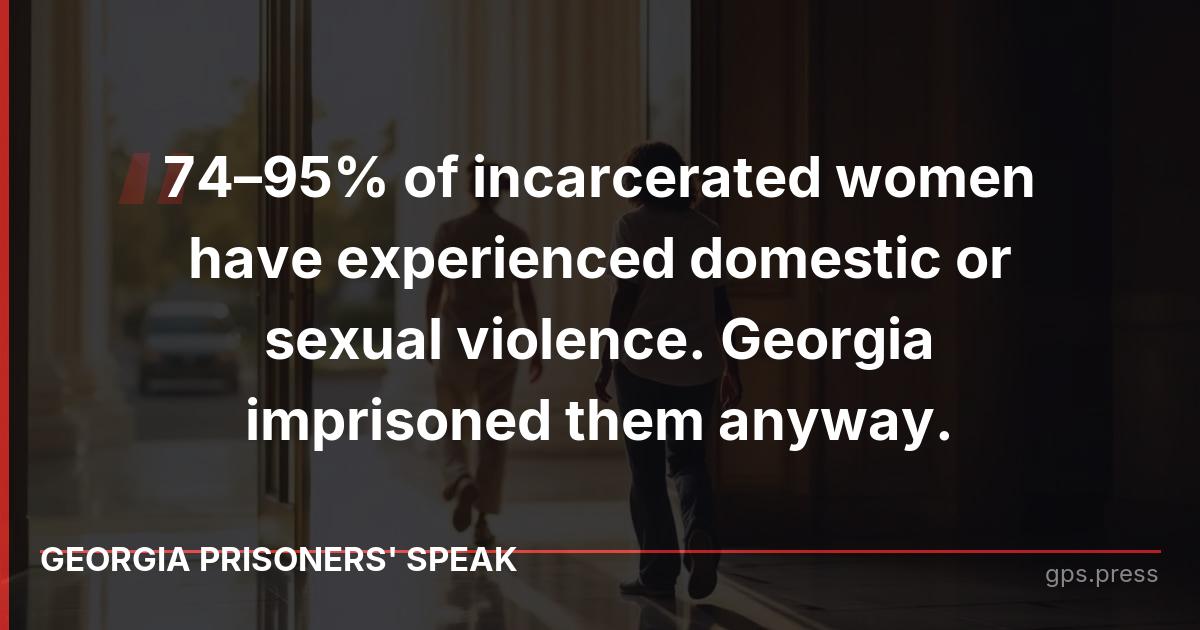
But Boynton's case is not an outlier. Research shows 74 to 95 percent of incarcerated women have experienced domestic or sexual violence. A 2013 study found male offenders reported nearly four times as many adverse childhood experiences as the general male population. The line Georgia draws between 'victim' and 'offender' is not supported by the science — and the state's own legislature acknowledged that when HB 582 passed with only three dissenting votes.
Who does Georgia choose to recognize as a victim — and who does it choose to look away from? https://gps.press/who-are-the-victims-before-they-were-prisoners/
Instagram
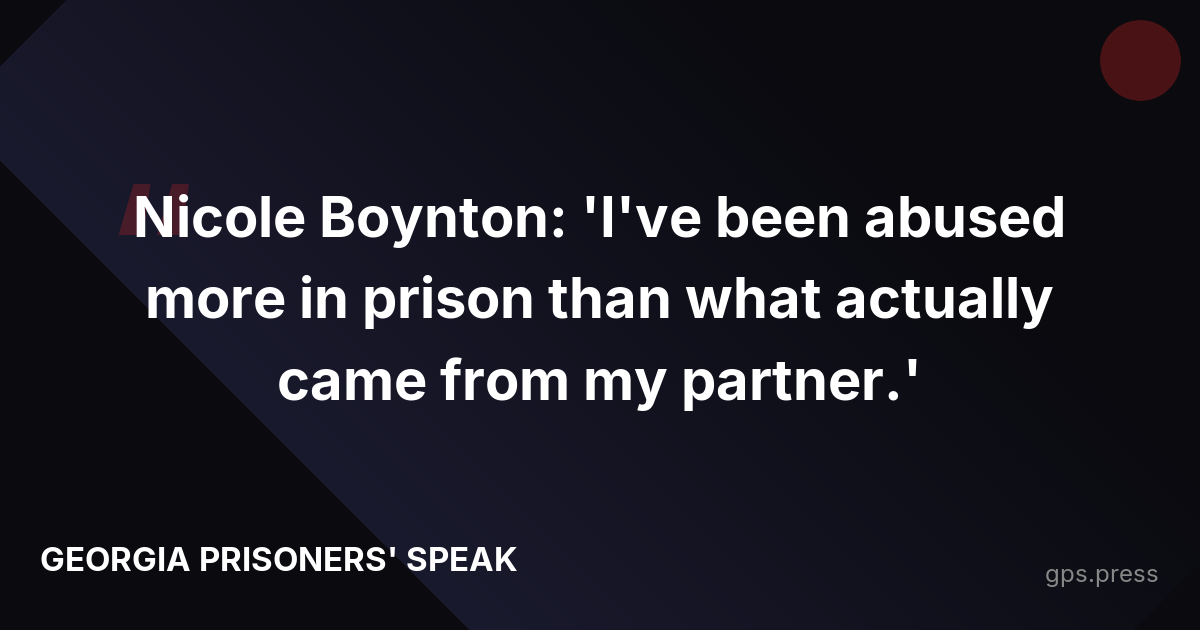
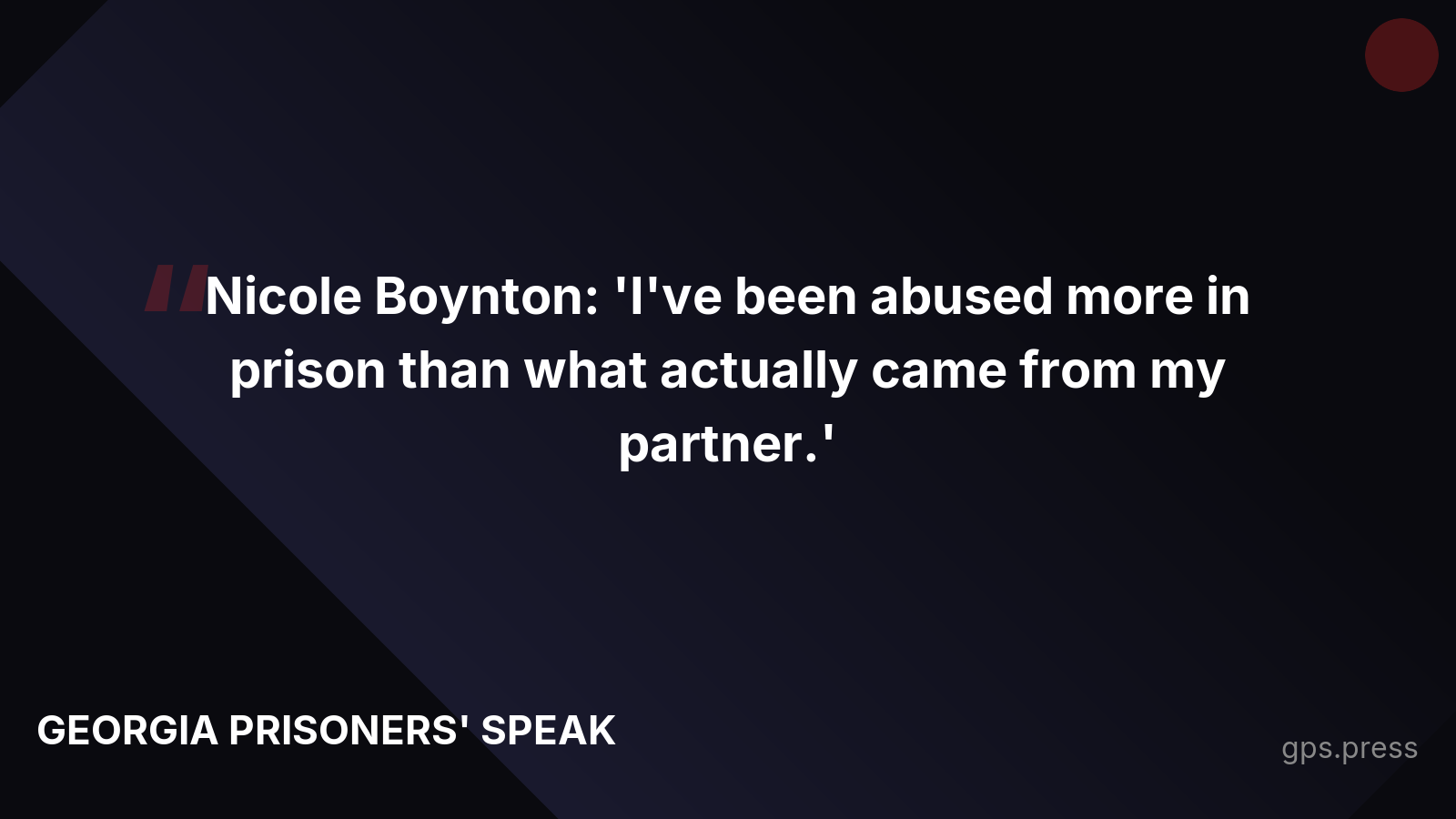
Nicole Boynton survived years of childhood sexual abuse and two years of physical and sexual abuse from her partner. At 18, she killed him during an altercation. Georgia sentenced her to life with no consideration of what she had survived. She served 23 years. After her release, she told reporters: 'I've been abused more in prison than what actually came from my partner.' The Georgia Survivor Justice Act passed in 2025 with only three dissenting votes — an implicit admission that the state had been punishing survivors twice. The science says this population is far larger than one law covers. This is Part 1 of our three-part investigation into who Georgia counts as a victim, and who it doesn't. Read the full story at the link in our bio: https://gps.press/who-are-the-victims-before-they-were-prisoners/
#GeorgiaPrisons #SurvivorJustice #ACEs #CriminalJusticeReform #DomesticViolence #GeorgiaPrisonerSpeak #InvestigativeJournalism #PrisonReform #TraumaInformedJustice #VictimRights
LinkedIn
In May 2025, Georgia Governor Brian Kemp signed the Survivor Justice Act into law. It passed both chambers of the General Assembly with only three dissenting votes — a level of bipartisan consensus that reflects a formal legislative acknowledgment: for decades, Georgia's courts punished domestic violence survivors twice, first by their abusers and then by a legal system that refused to hear their histories.
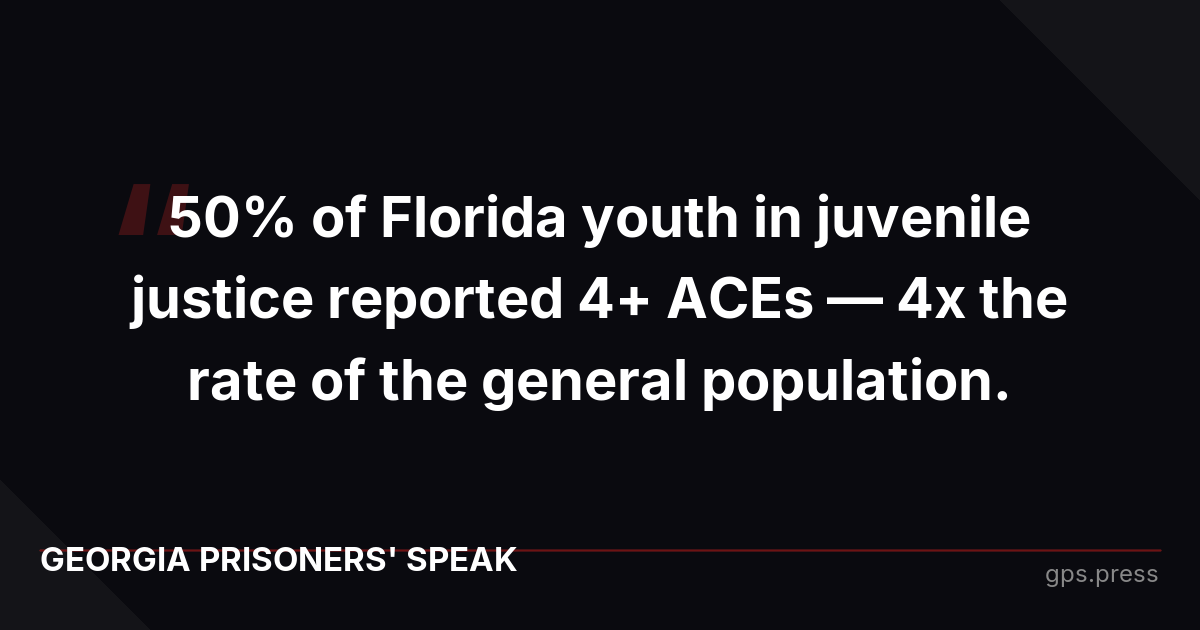
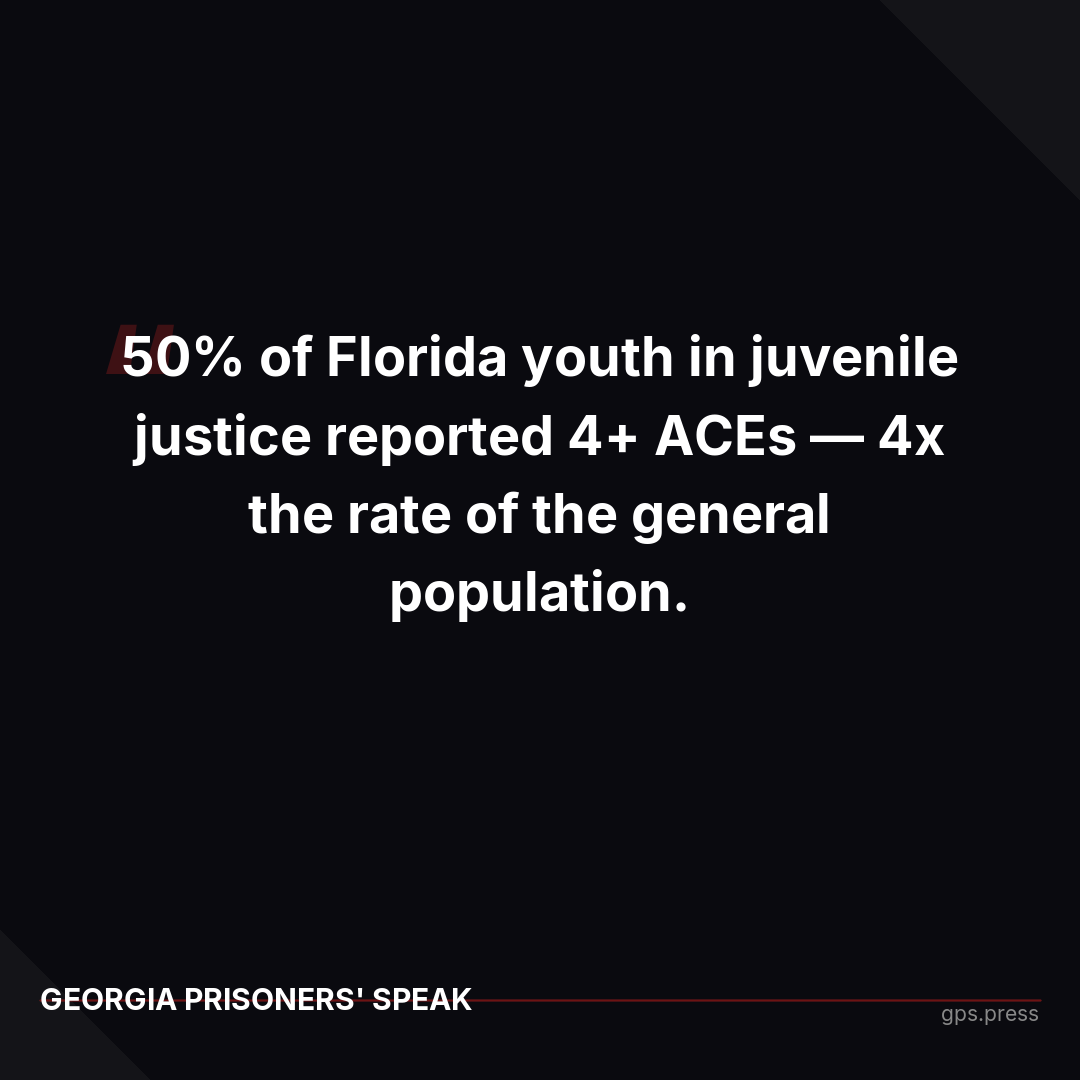
Nicole Boynton's release after 23 years is the most visible outcome of that law. But the underlying research — peer-reviewed, federally documented, and replicated across decades — describes a prison population in which histories of childhood trauma and prior victimization are not the exception. They are the norm. Between 74 and 95 percent of incarcerated women report lifetime experiences of domestic or sexual violence. Male offenders in clinical studies report nearly four times the adverse childhood experiences of the general male population. A 2014 study of over 64,000 Florida youth in the juvenile justice system found half reported four or more ACEs, compared with 13 percent in the general population.
Georgia Prisoners' Speak is documenting what these numbers mean for policy — and what the state's current framework chooses to ignore. This is Part 1 of a three-part series. https://gps.press/who-are-the-victims-before-they-were-prisoners/