Who Are the Victims: The Statute That Erases Them
A single Georgia statute bars anyone injured in a prison from victim compensation. Part 3 of the GPS series documents the law that erases in-custody victims.
Help spread the word — here's how:
- Scroll down to Copy a Caption and hit Copy on the one you want
- Scroll back up and click the Share on Facebook button for your favorite quote image
- On Facebook, paste the caption into your post — or write your own
Copy a Caption
Twitter/X
A 30-word Georgia law, unchanged since 1989, bars anyone injured in prison from victim compensation — no matter what was done to them. Christian Krauch lost a hand, a leg, and his memory. The statute had already decided he didn't count. https://gps.press/who-are-th...
Facebook
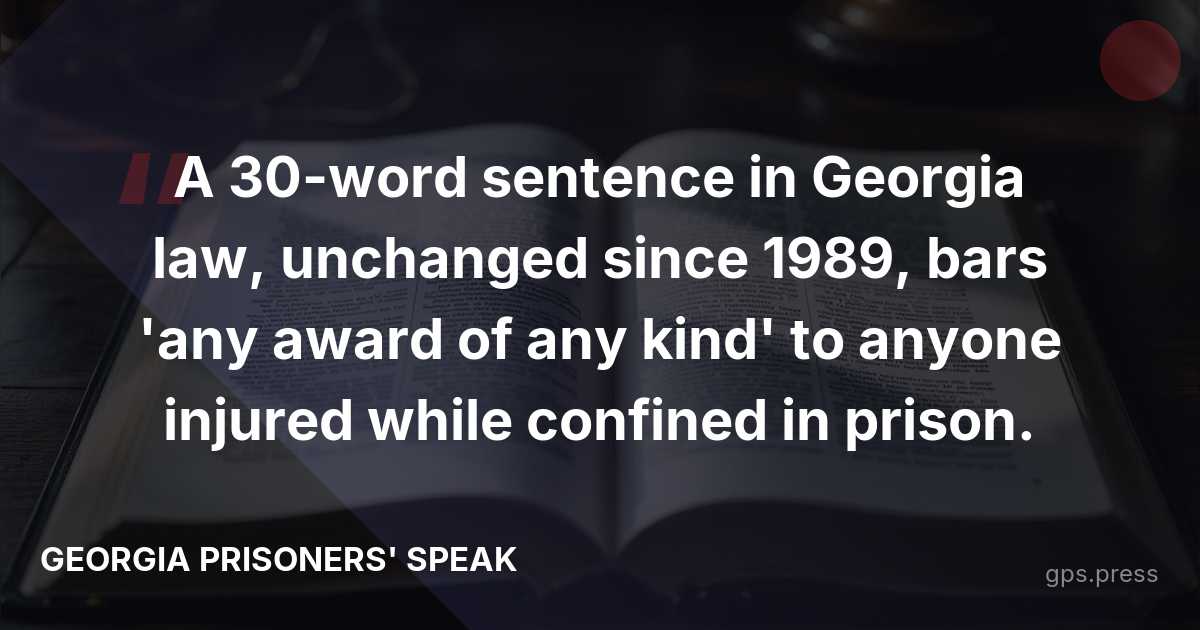
There is a single sentence in Georgia law — thirty words, on the books since 1989 — that decides, in advance, that no one injured inside a Georgia prison can ever be compensated as a victim of a crime. It does not ask how they were injured. It does not ask whether the state was at fault. Confinement is the only fact that matters, and confinement ends the inquiry.
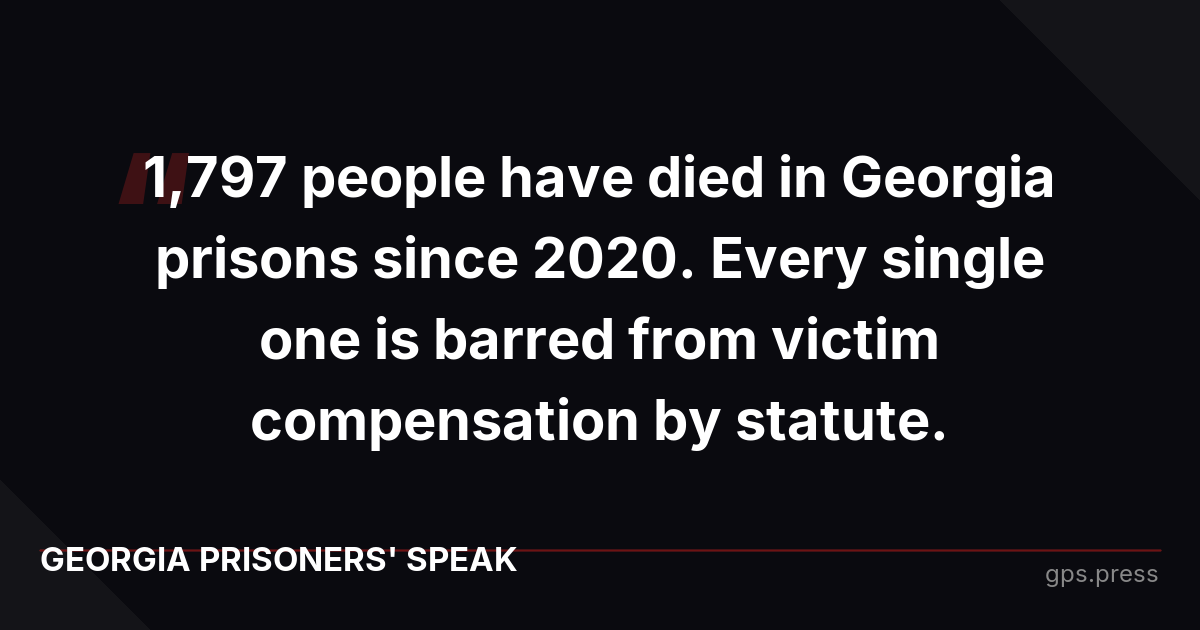
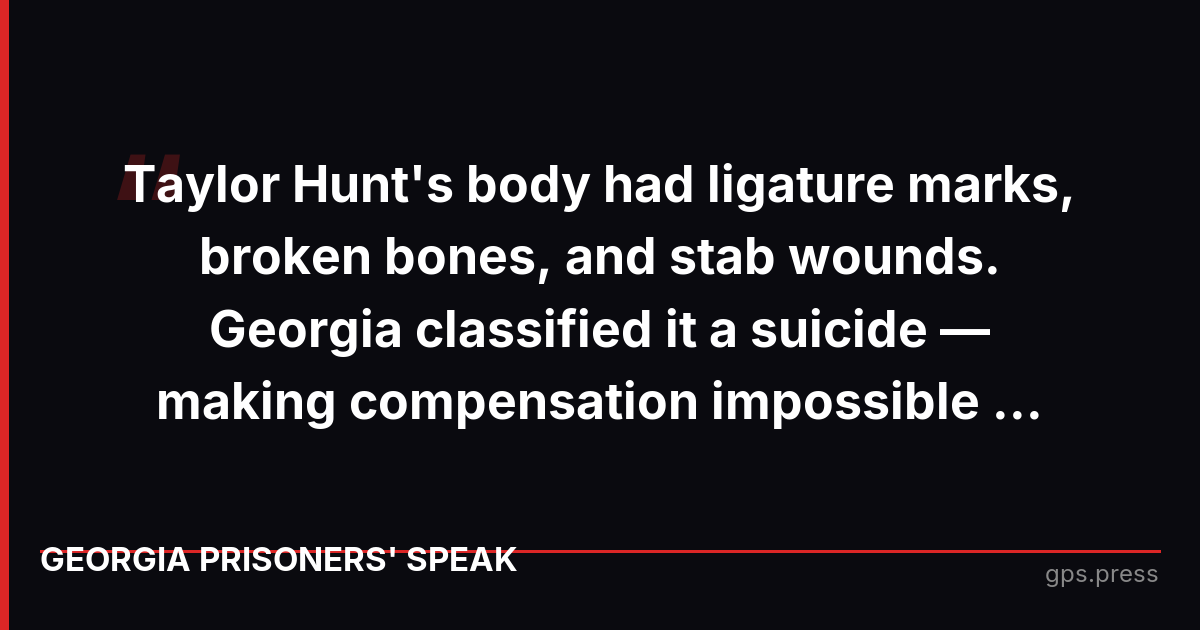
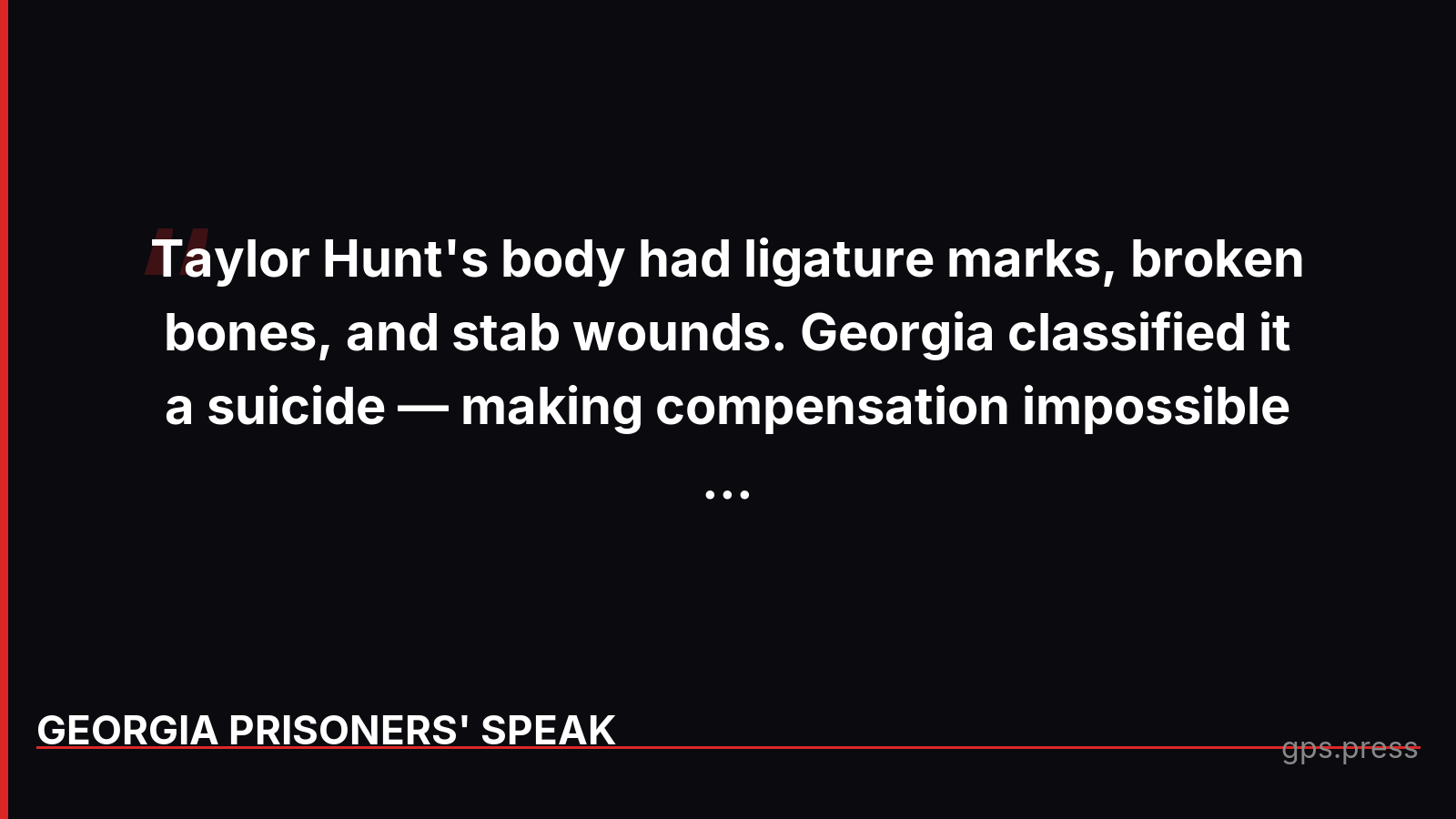
Christian Krauch was tortured for three weeks at Macon State Prison, lost his hand, his leg, and parts of his memory. Taylor Hunt's body showed ligature marks, broken bones, and stab wounds — and Georgia called it a suicide, making compensation impossible from two directions at once. The 1,797 people who have died in Georgia prisons since 2020 are all covered by the same bar. This is not negligence. It is written law.
Who do you think bears responsibility for changing it — the legislature that wrote the statute, the governor who signs the budget, or both?
Instagram
A 30-word sentence in the Georgia Code, unchanged since 1989, bars anyone injured inside a prison from ever receiving victim compensation — no matter what was done to them, no matter who did it. Christian Krauch was tortured for three weeks, lost a hand and a leg, and suffered brain damage. The statute had already decided his case before he was ever attacked. Taylor Hunt died at Rogers State Prison with broken bones and stab wounds; Georgia called it a suicide, and his mother has been denied even his death certificate. 1,797 people have died in Georgia's prisons since 2020. Every one of them is excluded by the same law. Georgia proved it can recognize victimhood among the incarcerated — it did exactly that when it freed Nicole Boynton under the Survivor Justice Act. It has simply chosen not to extend that recognition to what it did to her, and everyone else, while they were inside. The full investigation is at the link in our bio: https://gps.press/who-are-the-victims-the-statute-that-erases-them/
#GeorgiaPrisons #PrisonReform #CriminalJustice #VictimRights #AccountabilityJournalism #GeorgiaPrisonerSpeak #InvestigativeJournalism #PrisonDeaths #DeliberateIndifference #GeorgiaLaw #SurvivorJustice #HumanRights #MassIncarceration #PrisonViolence #JusticeReform
LinkedIn
A single sentence in the Official Code of Georgia — thirty words long, in effect since 1989 — categorically bars anyone injured inside a prison from receiving compensation through the state's Crime Victims Compensation Program. It does not ask how the injury occurred, whether the state was at fault, or whether a crime was committed. Confinement is the only operative fact. Two additional provisions reinforce the bar: one excluding anyone currently serving a felony sentence, another writing incarcerated family members out of victim status entirely when a loved one is killed in custody.
The U.S. Department of Justice found in October 2024 that Georgia's prison system is 'deliberately indifferent' to constitutional violations. GPS has tracked 1,797 deaths in Georgia prisons since 2020. The Georgia Survivor Justice Act, passed in 2025, demonstrated that the legislature is capable of recognizing victimhood among incarcerated people when it chooses to act. The compensation statute — O.C.G.A. § 17-15-7(c), § 17-15-7(j), and § 17-17-3 — was not touched. Amending three provisions of one title of the Georgia Code would end the categorical exclusion without eliminating a single existing safeguard against fraudulent claims. The policy question is not complicated. The political will to ask it has not yet appeared. Full investigation: https://gps.press/who-are-the-victims-the-statute-that-erases-them/