Who Builds the File Five Members Vote On? Georgia's Parole Guidelines and the One Unit That Checks Them
Staff build the file five Georgia Parole Board members vote on. One internal unit audits it and publishes no results. Here is the design.
Help spread the word — here's how:
- Scroll down to Copy a Caption and hit Copy on the one you want
- Scroll back up and click the Share on Facebook button for your favorite quote image
- On Facebook, paste the caption into your post — or write your own

Copy a Caption
Twitter/X
Five Board members voted on 20,364 cases in FY2025. 13,743 were guidelines cases built by Hearing Examiners. The audit unit that checks that work sits in the same division that produces it. https://gps.press/who-builds-the-file-five-members-vote-on-georgias-parole-gu...
Facebook
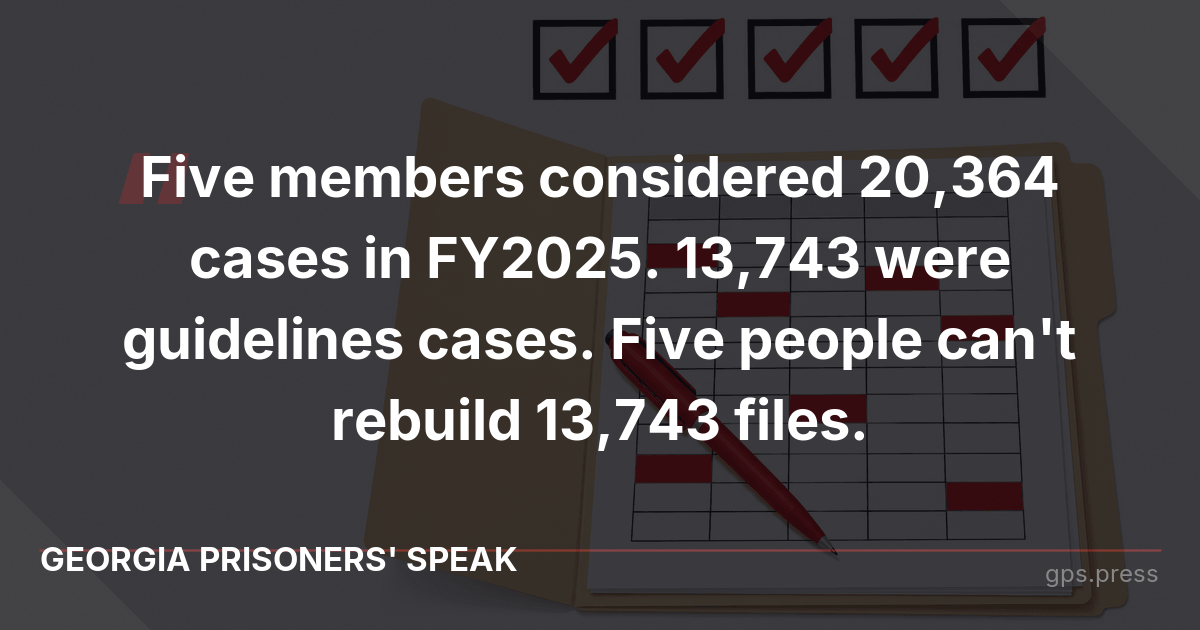
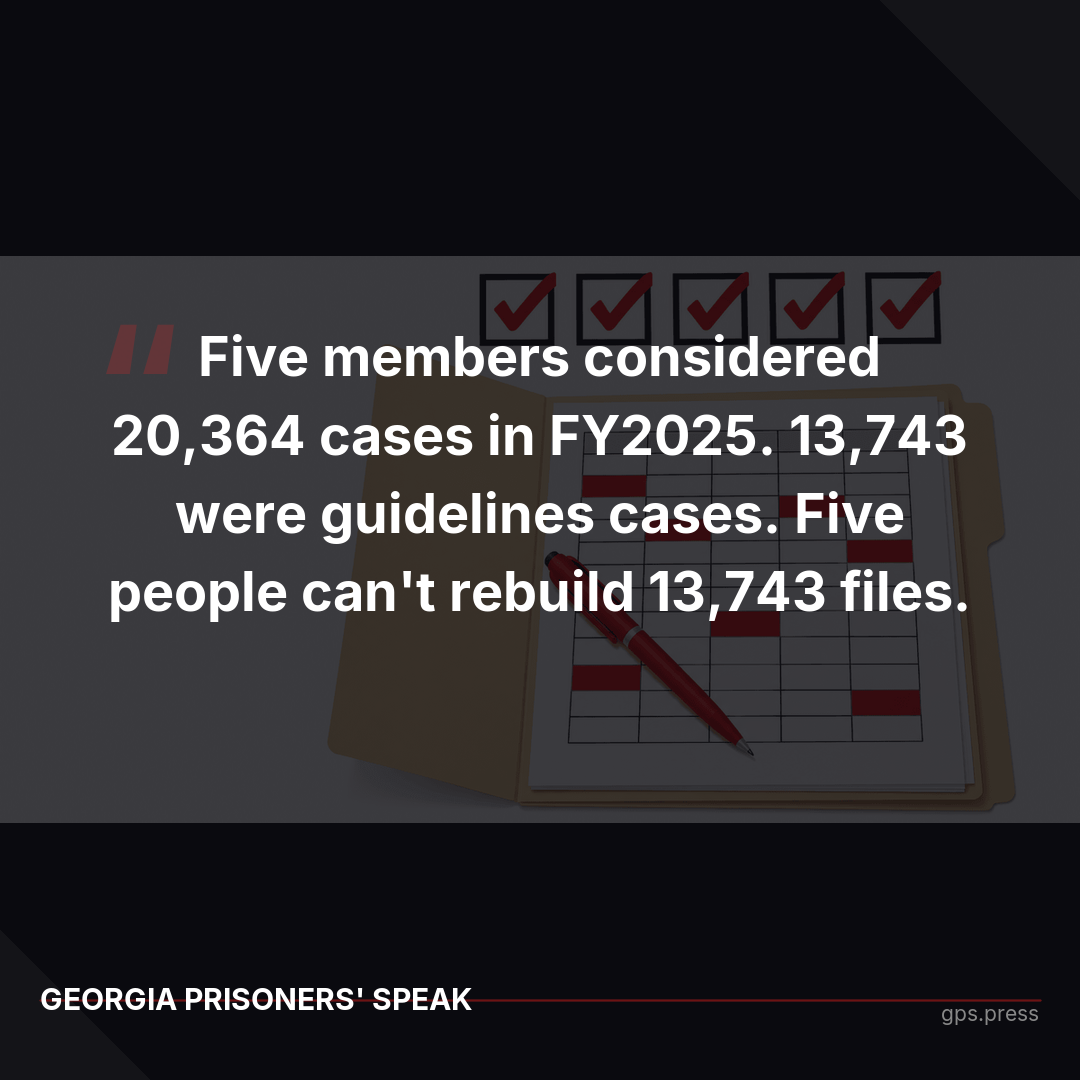
Georgia's Board of Pardons and Paroles has five members. In FY2025 they considered 20,364 cases for release or a tentative parole month. Of those, 13,743 were guidelines cases, the ones where a formula produces a recommended number of months to serve. Five people can't rebuild 13,743 files, so Hearing Examiners build them: identifying crime severity levels, extracting factors like education and prior record to establish risk scores, and writing the executive summaries members vote on.
The Board names one internal check on that work, the Critical Analysis Unit, which completed 10,360 final reviews in FY2025 and ran random audits. The FY2025 report does not say how many cases were audited, how many had errors, what kinds of errors turned up, or what happened to them. The same unit also prepares specialized cases, including security threat group and gang cases, for the Board. Everything members receive is classified as confidential state secrets under O.C.G.A. § 42-9-53(b)(1).
If the audit unit works inside the division that builds the files, who outside the Board has ever reviewed a sample of those files?
Instagram
Georgia's Board of Pardons and Paroles has five members. In FY2025 they considered 20,364 cases for release or a tentative parole month. 13,743 of those were guidelines cases, where a formula produces a recommended number of months to serve. Five people can't rebuild 13,743 files, so Hearing Examiners build them: crime severity level, risk score, executive summary. The Board names one internal check, the Critical Analysis Unit, which completed 10,360 final reviews in FY2025 and ran random audits. The report doesn't say how many cases were audited, how many had errors, or what happened to them. The same unit also prepares specialized cases for the Board. Everything members receive is a confidential state secret under Georgia law.
#GeorgiaPrisons #Parole #GeorgiaParoleBoard #CriminalJusticeReform #Transparency #Accountability #GeorgiaPrisonersSpeak #GPS
LinkedIn
Georgia's Board of Pardons and Paroles has five members. In FY2025 the Board considered 20,364 cases for release or a future tentative parole month, including 13,743 guidelines cases in which a formula produces a recommended number of months to serve. Hearing Examiners build those files: identifying crime severity levels, extracting factors such as education, work history, substance abuse, and prior criminal history to establish a risk score, and preparing the executive summary members vote on. Under O.C.G.A. § 42-9-40, the guidelines must weigh offense severity, prior criminal history, conduct, and social factors found to predict further criminal behavior.
The Board names one internal check on that computation. The Critical Analysis Unit completed 10,360 final reviews in FY2025 and ran random audits to verify case evaluations, risk levels, and crime severity levels. The report does not state how many cases were audited, how many contained errors, what kinds of errors, or their disposition. The same unit also prepares specialized parole-eligible cases, including security threat group and gang cases, for the Board. Everything the members receive is classified as confidential state secrets under O.C.G.A. § 42-9-53(b)(1), and GPS found no Georgia Department of Audits and Accounts report with the Board as its subject. The design leaves open whether any body outside the Board has reviewed a sample of case files.