Zombie Dorms
Georgia's prisons are awash in K2, meth and fentanyl while the state offers little treatment and won't count the dead — what idleness manufactures.
Help spread the word — here's how:
- Scroll down to Copy a Caption and hit Copy on the one you want
- Scroll back up and click the Share on Facebook button for your favorite quote image
- On Facebook, paste the caption into your post — or write your own
Copy a Caption
Twitter/X
Georgia logged 2 prison overdose deaths in 2018. By 2022, at least 49 more were dead. Now the state has stopped releasing cause-of-death data entirely. https://gps.press/zombie-dorms/
Facebook
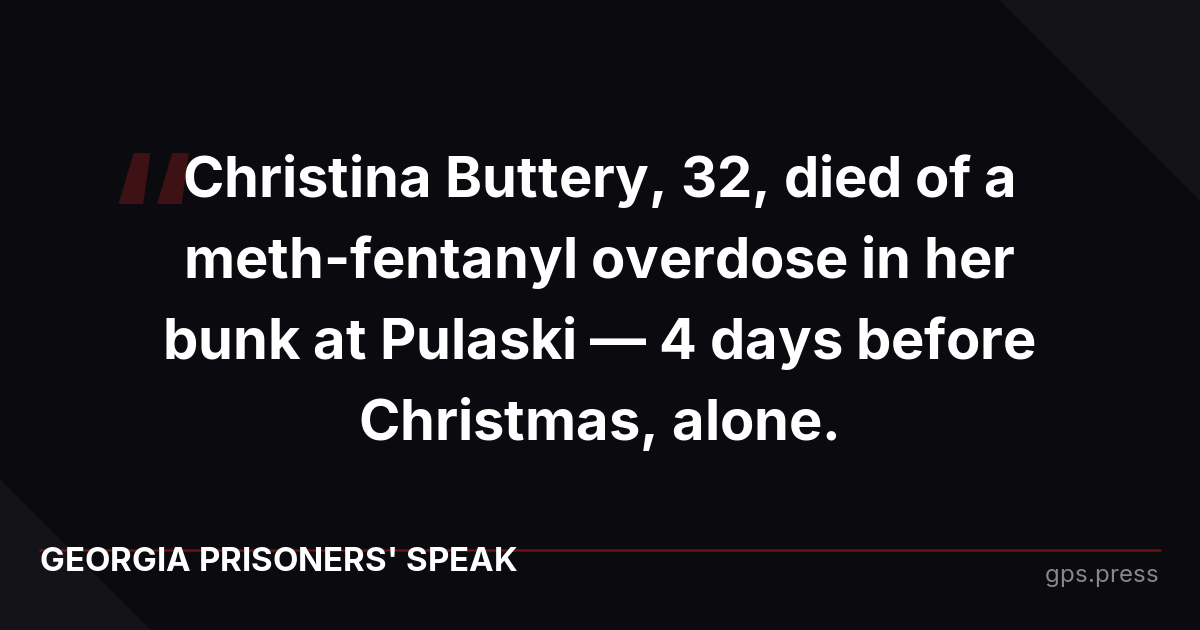
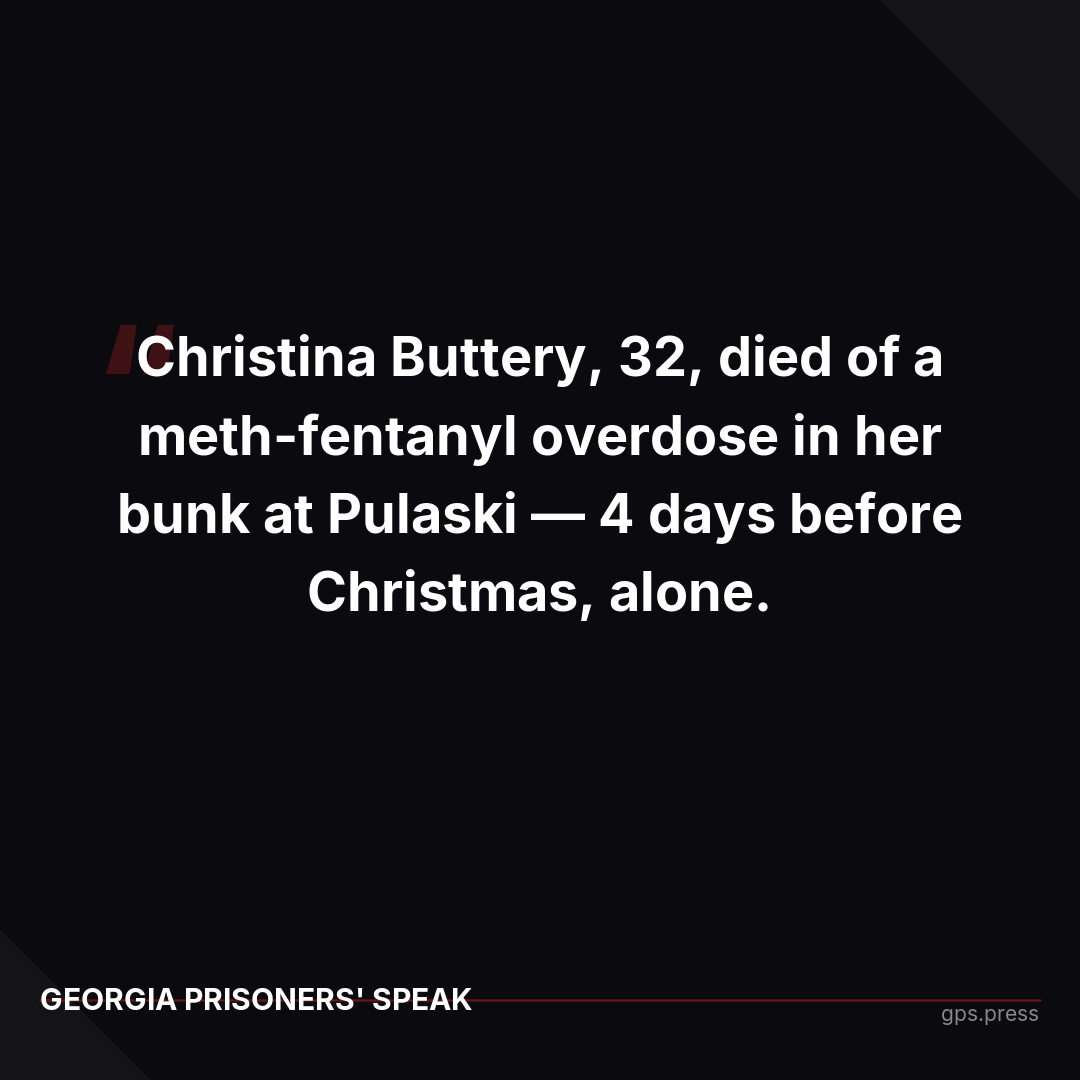
Christina Buttery was 32. Her father told himself prison would at least keep her away from drugs. Instead, Georgia sent her to Pulaski State Prison, placed her in a gang-controlled dorm, ignored her parents' pleas to move her, and found her dead in her bunk four days before Christmas — hours after she had already died, while the entire prison was at a Christmas program across the grounds.
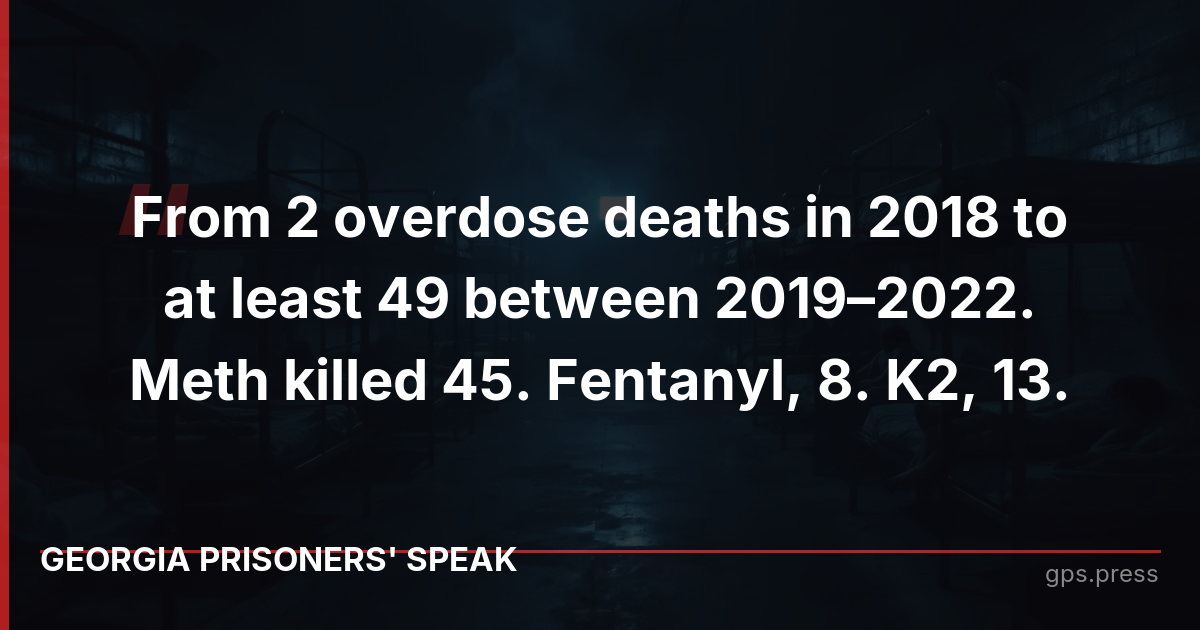
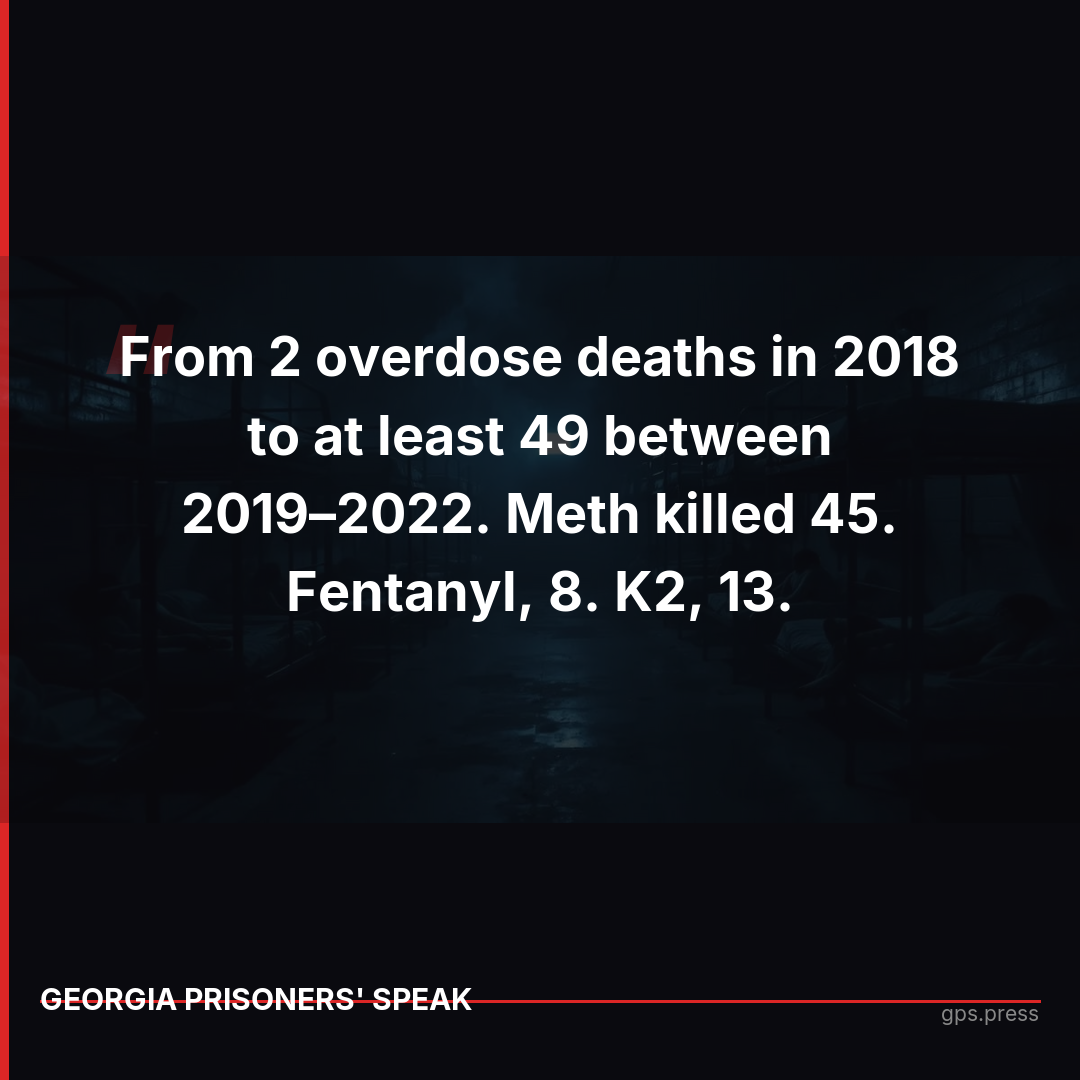
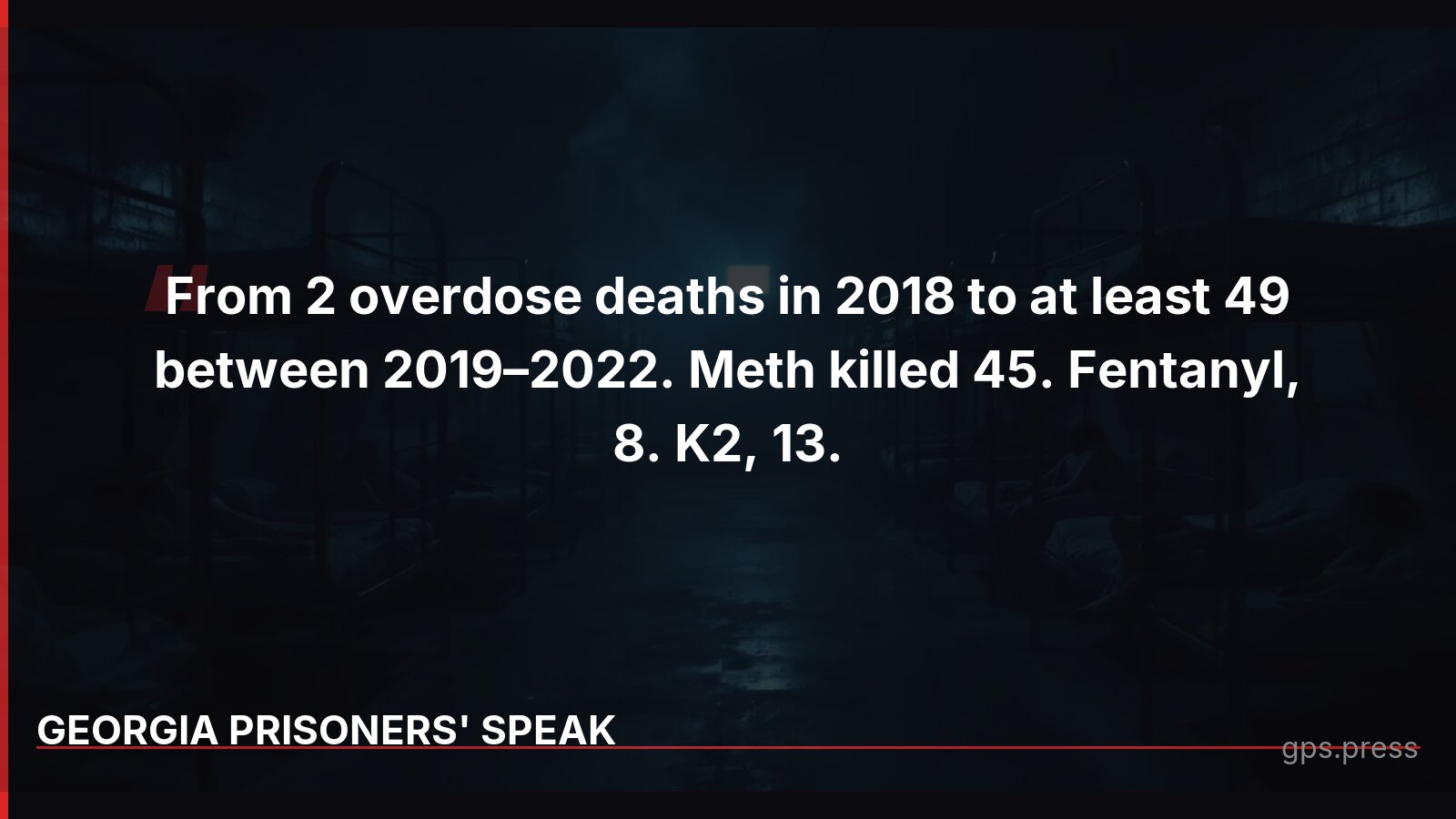
This is not an isolated failure. Between 2019 and 2022, at least 49 people died of drug overdoses in Georgia's prisons. Meth was cited in at least 45 deaths. The state has since stopped releasing cause-of-death data — data the AJC already found was being falsified. California cut its prison overdose death rate by 54 percent with a real treatment program. Georgia's answer is a single-prison pilot. Read the full investigation: https://gps.press/zombie-dorms/
Who is responsible for making sure Georgia's legislature knows these numbers — and what do you think it would take for them to act?
Instagram
Georgia recorded 2 prison overdose deaths in 2018. Between 2019 and 2022, at least 49 more people died — from meth, fentanyl, K2, and a synthetic opioid roughly a thousand times stronger than morphine. The state has since stopped releasing cause-of-death data for people who die in its custody. The data it was releasing was already being falsified. One woman arrived at Pulaski State Prison as a minimum-security inmate who, by her own account, saw drugs for the first time in her life only after she walked through the gate. That is the system as a cause, not a container. California cut its prison overdose death rate by 54 percent with comprehensive treatment. Georgia runs a single-prison pilot and calls it a response. Read the full investigation at the link in bio: https://gps.press/zombie-dorms/
#GAPrisons #PrisonReform #GeorgiaPrisonerSpeak #DrugPolicy #CriminalJustice #PrisonOverdose #AccountabilityJournalism #GeorgiaPrisons #InvestigativeJournalism #EndTheWarehouse
LinkedIn
Between 2019 and 2022, at least 49 people died of drug overdoses inside Georgia's prisons. Meth was cited in at least 45 deaths since 2018. Fentanyl, first recorded in a Georgia prisoner's death in June 2021, has been linked to at least eight more. The state has since ceased releasing cause-of-death information for people who die in its custody — information the Atlanta Journal-Constitution already found was being systematically misclassified before it disappeared entirely.
The policy contrast is stark. California implemented a comprehensive substance-use program and reduced its prison overdose death rate by 54 percent. Rhode Island extended addiction medication through the point of release and recorded, in the words of its former corrections medical director, no fatal overdose in years. Fewer than 1 percent of American jails and prisons offer those medications at all. Georgia's current response is a single-prison Vivitrol pilot and a residential program gated behind a court order. The U.S. Department of Justice has formally found the state deliberately indifferent to the violence and contraband consuming its facilities. This is a policy failure with a documented, replicable solution — and a government that has chosen not to use it. Full investigation: https://gps.press/zombie-dorms/