Tecore Networks Managed Access System
Tecore Networks Managed Access White Paper Technical documentation on the managed access system technology being deployed in Georgia prisons. View PDF Document
What if you could train your mind to stay calm, focused, and in control—no matter what’s going on around you? Based on the Silva Mind Control Method, this article introduces a powerful, step-by-step mental training program adapted for prison life. It’s designed to help incarcerated individuals build real self-discipline, reduce stress, and reprogram negative thinking. Whether you’re behind bars or supporting someone who is, this method offers a shared path to personal transformation and mental freedom.

Discover how reading can transform your loved one’s prison sentence into a time of growth, curiosity, and hope. This guide offers compelling reasons and practical advice for prisoners and their families to read together, expanding their minds, stepping outside their comfort zones, and building unbreakable bonds through shared experiences.
Georgia’s prisons are in crisis—and the root cause is deeper than you think.
Decades of insular promotions, inadequate training, and resistance to outside expertise have created a leadership vacuum with devastating consequences: rampant violence, widespread corruption, and staggering human and financial costs. How did Georgia’s prison system become trapped in this cycle of dysfunction, and what can be done to fix it? This article uncovers the troubling reality behind the walls, explores why current leadership practices are failing, and offers concrete, actionable solutions—including the urgent need for decarceration—to build a safer, more humane correctional system.
The stakes are high, and the time for change is now.
Georgia’s prisons have spiraled into crisis: overcrowding, violence, and deteriorating conditions have overwhelmed correctional officers. It’s time to acknowledge that the current system is unsustainable. Decarceration isn’t just compassionate—it’s necessary for safety, management, and restoring basic human dignity.
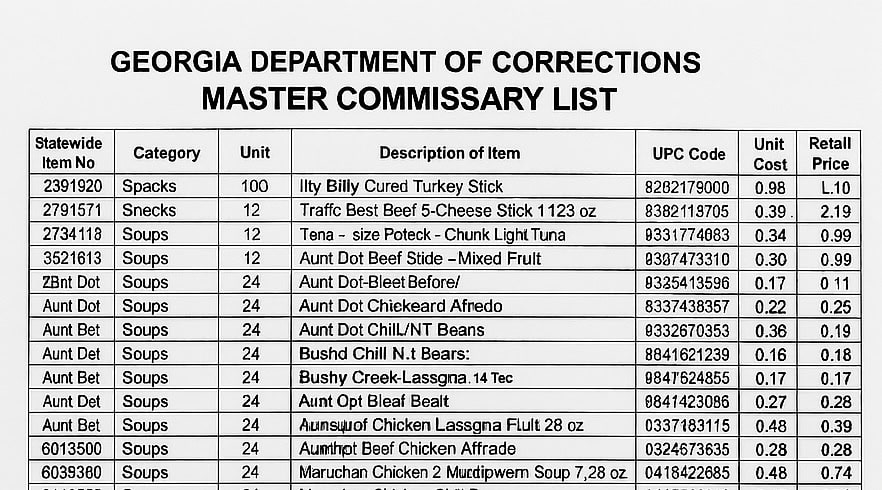
This is the Georgia Department of Corrections (GDC) Master Commissary List, detailing all items approved for sale in prison commissaries statewide. Individual prisons select only certain items from this comprehensive list to offer to inmates. This resource is valuable for understanding prison economics, pricing practices, markup strategies, and the challenges inmates face regarding the affordability and availability of basic goods within Georgia’s prison system.
Do you have a loved one in prison in Georgia?
Post-conviction relief options like habeas corpus petitions, sentence reductions, or claims of innocence can offer real hope—but finding the right attorney is crucial. Our new guide walks you step-by-step through understanding the legal options and finding specialized lawyers and organizations who can help your family. You’re not alone—read more here and start advocating for your loved one today!
The Georgia Department of Corrections isn’t just locking people up—it’s shaking them down for every penny. Through a no-bid contract with Stewart’s Distribution, commissary prices have been artificially inflated, forcing inmates and their families to pay double, sometimes triple, the real cost of basic necessities like ramen noodles and coffee. Meanwhile, millions of dollars in inmate funds vanish into a black hole, with no public audits, no oversight, and wardens openly admitting that these funds pay for prison staff perks. Who’s the real criminal here?
Read the full story to uncover how Georgia’s prison system is stealing from the very people it claims to rehabilitate.
Georgia’s prisons are overcrowded, violent, and costly—but the solution could be simpler than you think.
Thousands of elderly and long-term inmates remain behind bars, despite overwhelming evidence they pose little risk. Could releasing these prisoners save taxpayer money, improve safety, and humanize a broken system? Explore how decarceration has successfully transformed other states and countries—and why Georgia should follow their lead.
Education Behind Bars shares powerful success stories of formerly incarcerated individuals who transformed their lives through prison education, highlighting real-world examples from GED achievements to advanced college degrees earned behind bars. The article explores educational opportunities currently available in Georgia prisons—including Ashland University’s degree program, Georgia State University courses, vocational training, and correspondence programs—and offers practical guidance on how incarcerated learners can enroll. Discover how education creates lasting change, reduces recidivism, and provides prisoners and their families with hope for a brighter, more stable future.