JENKINS FACILITY
Facility Information
- Original Design Capacity
- 1,150 (at 100% capacity)
- Bed Capacity
- 1,186 beds
- Current Population
- 1,155
- Active Lifers
- 122 (10.6% of population) · Oct 2026 GDC report
What the courts held in Brown v. Plata, and how Georgia compares →
- Address
- 3404 Kent Farm Drive, Millen, GA 30442
- Phone
- (478) 982-6300
- Fax
- (478) 982-6299
- County
- Jenkins County
- Opened
- 2012
- Operator
- CoreCivic
Security Classification
Last updated: September 23, 2026
7 of the 1,150 people held here are classified Close security (0.6%), as of September 23, 2026.
| Security level | People | Share |
|---|---|---|
| Close | 7 | 0.6% |
| Medium | 1,111 | 96.6% |
| Minimum | 32 | 2.8% |
| Total | 1,150 |
Earlier count (undated table, produced October 22, 2025): 3 of 1,160 Close (0.3%).
Source: Georgia Department of Corrections records produced to GPS under the Open Records Act (R031471-090226, R024615-101925). A person's security level is GDC's classification of that person, which can differ from the prison's own designation.
Follow Jenkins Facility
Leadership & Accountability (as of 2024 records)
Officials currently holding positional authority at this facility, with deaths attributed to GPS-tracked records during their leadership tenure. Inclusion reflects role-based accountability, not legal findings of personal culpability. Death counts shown as facility / career.
| Role | Name | Since | Deaths this facility / career |
|---|---|---|---|
| Warden (Jenkins Facility) (facility lead) | Dickerson, Terrance | 2024-01-01 | 6 / 6 |
About
Last updated October 18, 2026.(DS)
Jenkins Facility: A Private Prison Inside a System-Wide Crisis
Jenkins Facility is a medium-security men's prison in Millen, in Jenkins County, opened in 2012 and operated by CoreCivic under contract with the Georgia Department of Corrections. Its original design capacity was 1,150; its current rated capacity is 1,186, and GPS's records place the current population at 1,155 — about 97.4 percent of rated capacity. Terrance Dickerson has held the warden's post since January 1, 2024, per GPS's personnel records. The facility's public record is thin in the way private-prison records often are: the most complete documentary trail GPS holds is a run of Georgia Department of Public Health food-safety inspections, and the most consequential data is a mortality registry that now lists 20 deaths at the facility since January 2020. What follows reads those records against the systemic findings GPS has documented across the GDC system — staffing collapse, gang-driven violence, classification drift, and food-service sanitation failure — and against the reports GPS has received from inside Jenkins itself.
Twenty Deaths in a Private Facility, 2020 to 2026
GPS's mortality registry records 20 deaths at Jenkins Facility since January 1, 2020. Fifteen are coded Natural/Medical, two Suicide, one Overdose, one Homicide, and one Unknown/Pending. That count is a floor: GDC reports deaths roughly two months late, so the registry lags the actual toll.
The named dead, in the order GPS's registry records them: Alexander Pryor died January 30, 2020, at Jenkins Facility; GPS's registry lists the cause as Natural/Medical. Benjamin Warrick Cooney died August 25, 2020, Natural/Medical. Constancio Paulino Vasquez died September 27, 2020, Natural/Medical. Stephen Harold Saylor died October 1, 2020, Natural/Medical. Randy Carlton Wilder died October 21, 2020, at age 48; the registry lists the cause as Overdose. Charles Perry died October 24, 2020, at 73, Natural/Medical. Bradley Jay Watkins died January 17, 2021, at 38, Natural/Medical. Gregory Sr Montgomery died August 27, 2021, at 61, Natural/Medical. Alphonso Drett Curry died September 18, 2021, at 60, Natural/Medical. Lorenza Bernard Journey died September 29, 2021, at 25; the registry lists the cause as Suicide. John David Runyon died October 30, 2021, at 63, Natural/Medical. Eric Lane Dixon died April 4, 2022, at 50, Natural/Medical. Birihanyuma Obedi died April 15, 2022, at 33, Natural/Medical. Thomas Jefferson Parrish died September 6, 2022, at 61, Natural/Medical. Earl Franklin Waggy died March 3, 2024, at 65, Natural/Medical. James Lee Powell died September 17, 2024, at 72; GPS does not yet know the cause, which the registry carries as Unknown/Pending. Alonzo Wright died January 9, 2025; the registry lists the cause as Homicide. Jason Brent Melton died April 10, 2025, at 41, Suicide. Charles Edward Richey died April 17, 2026, at 58, Natural/Medical. Dustin Scott Scarbro died April 21, 2026, at 27, Natural/Medical.
The two suicides — Journey at 25 and Melton at 41 — and the single homicide, Wright, are the registry's only violent or self-inflicted categories; the overwhelming majority of Jenkins deaths are coded medical. Across the system, GPS has independently tracked 1,918 deaths in GDC custody since 2020.
The Violence Record Behind the Homicide Line
Alonzo Wright's January 2025 death is the registry's only homicide at Jenkins since 2020, but it is not the only violence GPS has heard about at the facility. GPS has received recurring reports of stabbings at Jenkins Facility, including accounts describing two older incarcerated men stabbed in a housing unit in 2026. GPS has also received accounts of a lockdown at the facility during 2026, and of an incarcerated person found unresponsive during a count, prompting a medical response and a facility-wide shakedown, with the cause undetermined. These are receipt acknowledgments, not findings: GPS records what reaches it and waits for corroboration.
GPS's intelligence records show four family-safety-concern signals at this facility over the past twelve months, spanning April through July 2026, at high and moderate severity. That pattern — families reporting fear for someone inside — is the kind of signal that in GPS's experience tends to accompany violence and lockdown churn rather than precede it.
The wider context matters here. GPS has documented a systemic pattern in which officer vacancies across Georgia's prisons have run between 49.3 percent and 60 percent for multiple years, against a national standard of no more than 10 percent, and in which the October 2024 DOJ findings letter concluded that "the leadership of the Georgia Department of Corrections has lost control of its facilities," faulting GDC for placing "too much blame on gangs and insufficient emphasis on understaffing." The same findings, and the Guidehouse 2024 consultant assessment, independently concluded that gangs effectively run multiple facilities, controlling access to phones, showers, food, and bed assignments. GPS treats staffing collapse and gang assumption of facility control as the integrated structural finding that explains per-facility violence narratives — and Jenkins, a medium-security facility holding 1,155 people, sits inside that structure.
Food-Safety Scores and the Sanitation They Don't Capture
The fullest documentary record GPS holds on Jenkins is its DPH inspection history, and it reads well on its face. On August 14, 2023, Jenkins scored 100 (Grade A) on a routine inspection. On December 12, 2024, it scored 87 (Grade B), with two violations cited — food-contact surfaces not cleaned and sanitized, and improper cooling time and temperature. On May 1, 2025, it returned to 100 (Grade A). On November 6, 2025, it scored 91 (Grade A) with one violation, for proper hot holding temperatures. On May 14, 2026, it scored 96 (Grade A) with one violation, for food-contact surfaces cleaned and sanitized. All five inspections were routine; the four most recent were conducted by inspector Ashley Clark, the 2023 inspection by Jonathan Fiedler.
GPS has documented why those scores should not be read as a clean bill of health. Across GDC kitchens, GPS has documented a systemic pattern of food-service sanitation failure that DPH scores systematically fail to capture: tray-sanitizing dishwashers broken for sustained periods, sustained roach and rodent infestation in kitchen and serving areas, and meals served on visibly contaminated trays. The pattern is hidden from inspection scores because inspections are scheduled walkthroughs that do not assess equipment under load. The Marshall Project corroborated the broader pattern in a May 16, 2026 investigation by Schwartzapfel, "Rats, Insects and Mold," independently reporting rats in kitchens, insects in food, moldy trays, and visible malnutrition across Georgia facilities, and quoting GPS connecting chronic underfeeding to the violence pattern the DOJ documented in October 2024. GPS's own figures put GDC food spending at roughly $1.69 per person per day in 2024, with $1.60 proposed for FY27 — under 60 cents per meal — against an FDA Thrifty Food Plan estimate of about $10 per day for an adult man's nutritionally adequate diet.
The Jenkins scores are real and they are Grade A. The analytical point is that a 96 on a scheduled walkthrough and a working tray sanitizer are different claims, and only the first is documented here.
Contraband, Staffing, and the Private-Operator Question
GDC's own published contraband reports record a single incident at Jenkins: on February 3, 2018, a visitor, Edris Hurt-Ross, was observed by security staff placing a jacket in a locker and an item into a plant; one cell phone, one cell phone battery, and 15 grams of marijuana were located in the jacket and plant, and Hurt-Ross was arrested by the Jenkins County Sheriff's Office. GDC publishes arrests as reported, not convictions, and the record carries no disposition.
That is a thin contraband record for an eight-year span, and it should be read as exactly what it is — what GDC chose to publish — rather than as evidence of a clean facility. What the record does show structurally is a private prison operated by CoreCivic, with a warden whose personnel record lists his agency as CONTRACTOR, sitting inside a state system whose staffing and oversight GPS has documented as collapsed. Edwina L. Johnson has served as Regional Operations Coordinator, a GDC position, since July 16, 2025.
Classification Drift and the Medium-Security Label
GPS has documented classification drift across Georgia's prisons: medium-security facilities housing close-security inmates without adequate staffing and infrastructure, operating in practice as higher-security institutions than their designations suggest. GPS published a report titled "The Classification Crisis: How Four Medium Security Prisons Are Killing People" documenting the phenomenon; the report's title identifies four facilities, and nothing in GPS's records establishes that Jenkins is among them. Jenkins's own profile lists no special designations, and its rated capacity of 1,186 against a population of 1,155 does not by itself indicate the kind of population swap GPS has documented elsewhere.
What can be said is structural. A medium-security private facility at 97.4 percent of rated capacity, inside a system where the DOJ found leadership had lost control of its facilities and where gangs control access to basic goods, is a facility whose security label describes its contract rather than its conditions. GPS treats infrastructure collapse as a force multiplier for the violence, classification, gang-control, and mortality crises documented at the facility level — broken locks, inoperative surveillance, mold and water failures — and the reports GPS has received from Jenkins about the absence of a red light-green light locking system fit that pattern, though GPS has not independently confirmed the condition.
Sources
This analysis draws on Georgia Department of Public Health food-safety inspection records for Jenkins Facility (2023–2026); GDC's published contraband arrest reports; GPS's mortality registry, personnel records, and facility metadata; GPS's own systemic findings on staffing collapse, gang control, food-service sanitation, and classification drift, including the October 2024 DOJ findings letter and the Guidehouse 2024 assessment as cited within them; The Marshall Project's May 16, 2026 investigation by Schwartzapfel, "Rats, Insects and Mold"; and inmate, family, and anonymous accounts collected by GPS staff.
Mortality Statistics
20 deaths documented at this facility from 2020 to present.
Deaths by Year
- 2026: 2
- 2025: 2
- 2024: 2
- 2023: 0
- 2022: 3
- 2021: 5
- 2020: 6
Food Safety Inspections
Georgia Department of Public Health
What the score doesn't measure. DPH grades kitchen compliance on inspection day — food storage, temperatures, pest control. It does not grade whether today's trays are clean. GPS reporting has found broken dishwashers at most Georgia state prisons we've documented; trays go out wet, stacked, and visibly moldy — including at facilities with recent scores near 100.
Who inspects. Most Georgia state prisons sit in rural counties — often with fewer than 20,000 people, several with fewer than 10,000. The environmental health inspector lives in that community and often knows the kitchen staff personally. Rural inspection regimes don't have the structural independence you'd expect in a city-sized health department. Read the scores accordingly.
Read the investigation: “Dunked, Stacked and Served: Why Georgia Prison Trays Are Making People Sick”
Recent inspections
| Date | Score | Purpose | |
|---|---|---|---|
| May 14, 2026 | 96 | Routine | |
| Nov 6, 2025 | 91 | Routine | |
| May 1, 2025 | 100 | Routine | |
| Dec 12, 2024 | 87 | Routine | |
| Aug 14, 2023 | 100 | Routine |
May 14, 2026 — Score 96
Routine · Inspector: ASHLEY CLARK
| Code | Violation | Pts | Inspector notes |
|---|---|---|---|
| 2B |
food-contact surfaces: cleaned & sanitized 511-6-1.05(6)(n) - manual and mechanical warewashing equipment, chemical sanitization-temperature, ph, concentration, hardness (p,pf) | 4 | observed the hot water dishwasher not reaching sanitizing temperature of 180degrees F after using 2 different temperature pucks and a probe, reached 149 degrees F. ca-repair |
November 6, 2025 — Score 91
Routine · Inspector: ASHLEY CLARK
| Code | Violation | Pts | Inspector notes |
|---|---|---|---|
| 1B |
proper hot holding temperatures 511-6-1.04(6)(f) - time/temperature control for safety; hot holding (p) Corrected | 9 | observed meatloaf and mashed potatoes at hot holding steam table <135 degrees F. COS-removed and reheated at time of inspection. (steam table was not on) |
May 1, 2025 — Score 100
Routine · Inspector: ASHLEY CLARK
No violations recorded for this inspection.
December 12, 2024 — Score 87
Routine · Inspector: ASHLEY CLARK
| Code | Violation | Pts | Inspector notes |
|---|---|---|---|
| 2B |
food-contact surfaces: cleaned & sanitized 511-6-1.05(6)(n) - manual and mechanical warewashing equipment, chemical sanitization-temperature, ph, concentration, hardness (p,pf) Corrected | 4 | observed sani buckets with no sanitizer or too low of concentration, COS-cleaned sanitation distributor and refilled buckets |
| 1C |
proper cooling time and temperature 511-6-1.04(6)(d) - cooling (p) Corrected | 9 | observed coleslaw in walk in cooler in big tubs, not cooled below 41 degrees within 6 hours, CA-place in shallow pans to cool down effectively before placing in big tubs. |
August 14, 2023 — Score 100
Routine · Inspector: Jonathan Fiedler
No violations recorded for this inspection.
Recent reports (2)
Source-attributed observations and allegations from news coverage and reports submitted to GPS. Each entry credits its source.
- ALLEGATION Submitted via GPS public submission form Incident: Apr 21, 2026INCIDENT — JENKINS FACILITY: An older Hispanic inmate was found unconscious on the floor of his cell during…Read source →
- READER REPORT Submitted via GPS public submission form Incident: Apr 21, 2026INCIDENT — JENKINS FACILITY: During lockdown procedures, officers found an inmate in an altered state (suspected drug intoxication)…Read source →
Timeline (7)
Source Articles (14)
Location
Aerial View
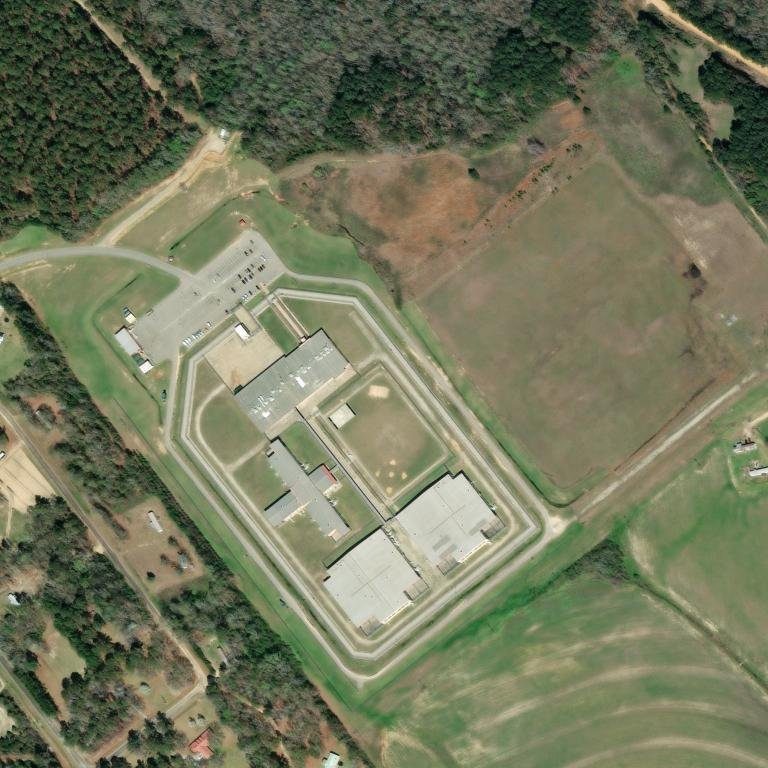
Satellite image: Esri World Imagery. Architecture documents what the building was designed to hold. See the system-wide receipts at gps.press/warehouse.
Then and now

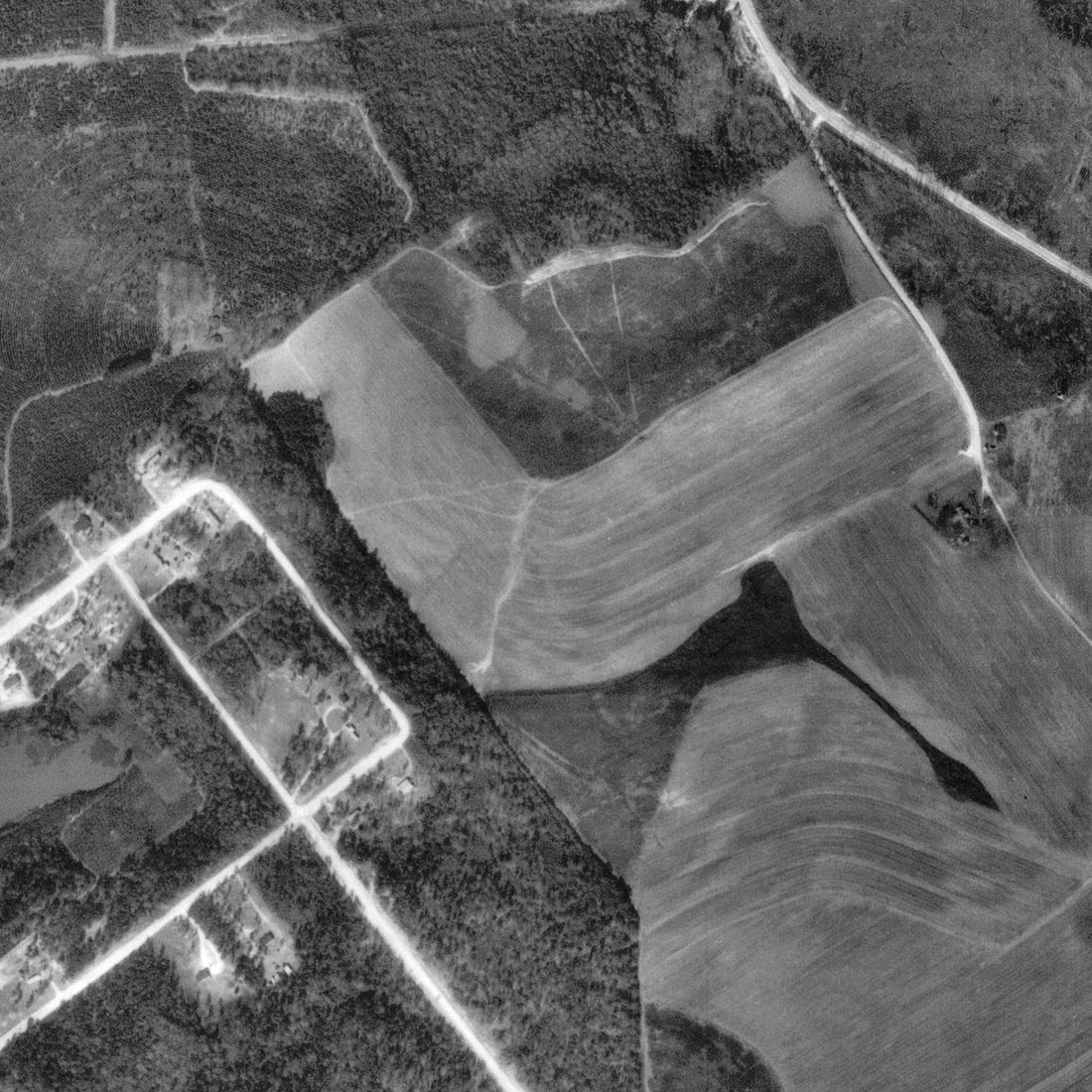
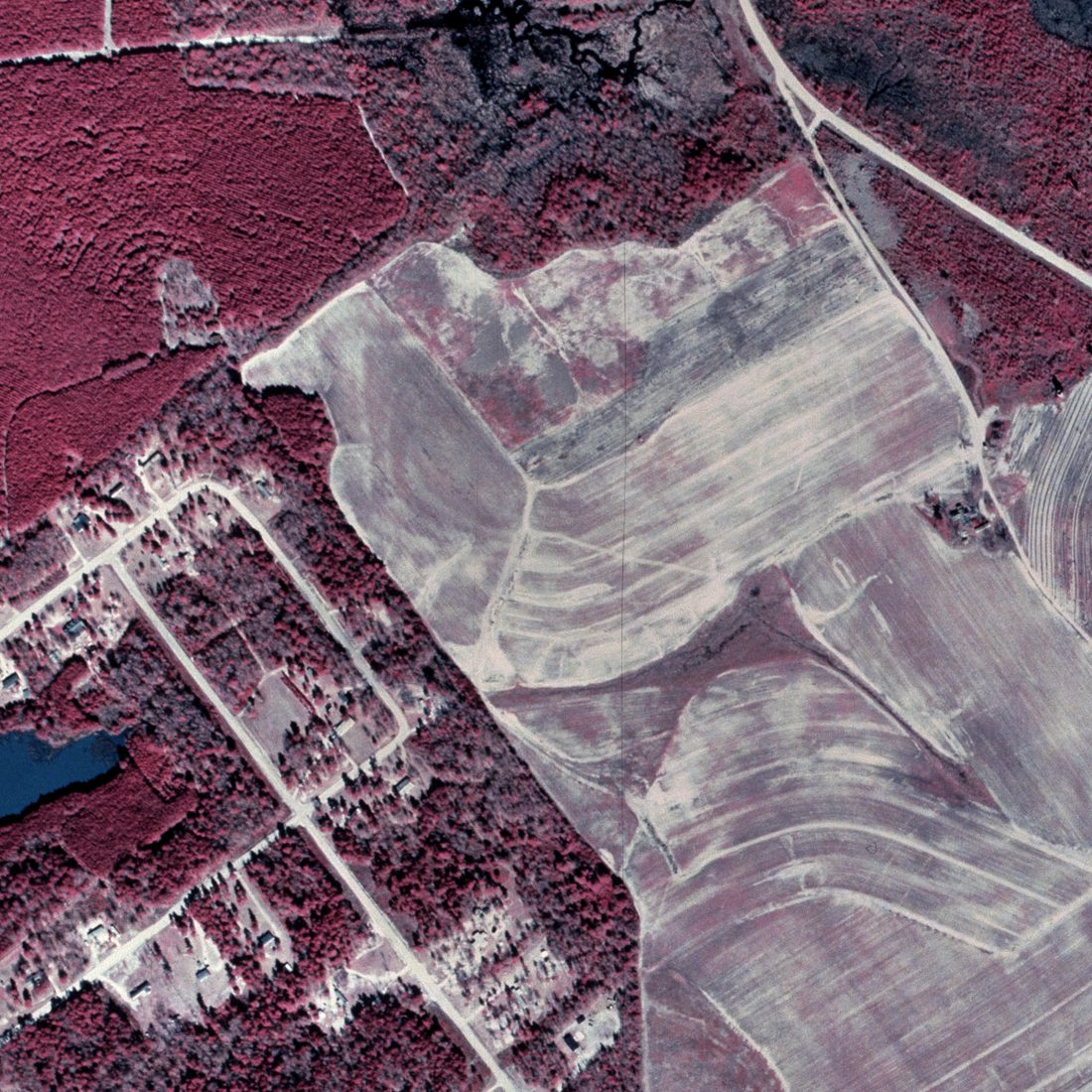
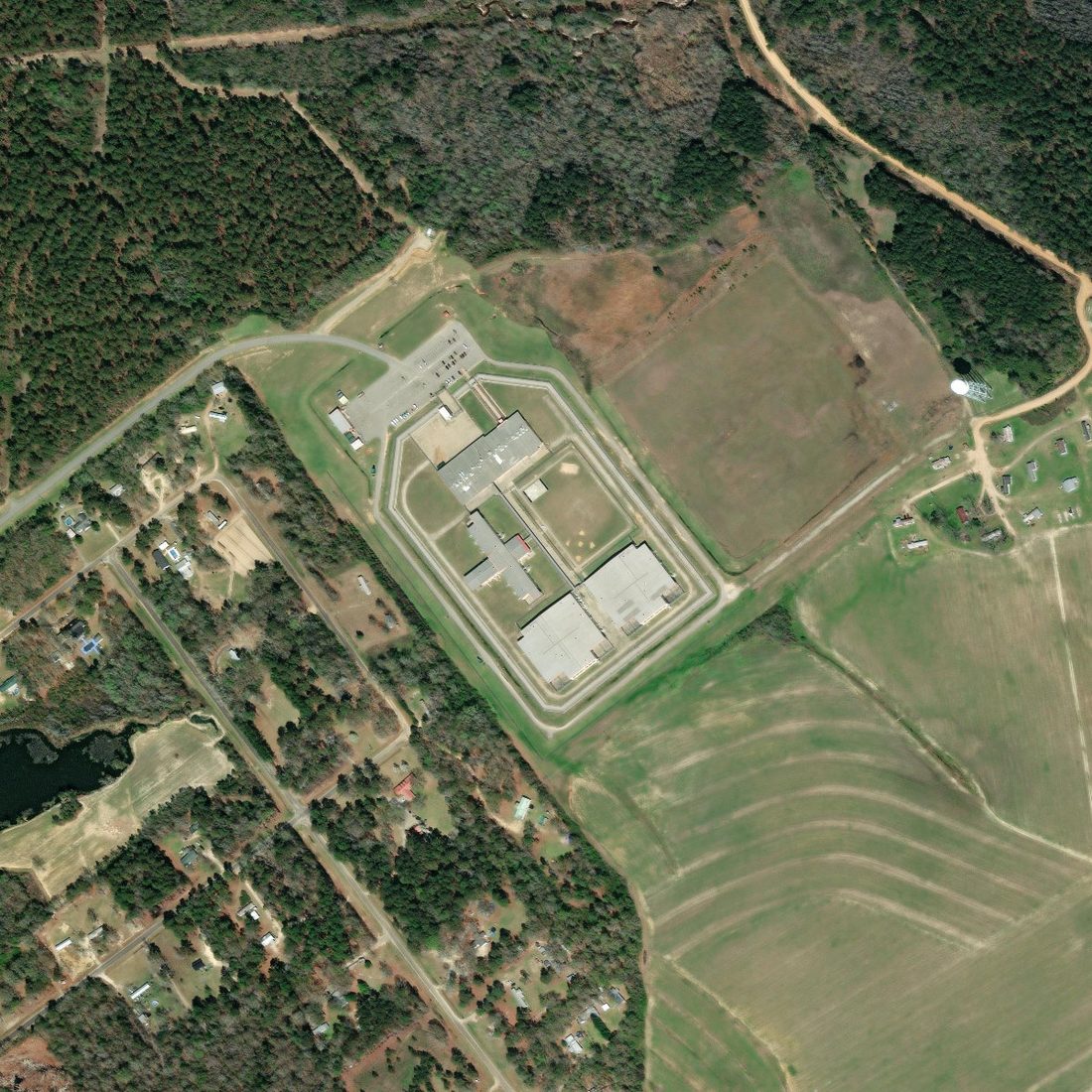
Each photo shows the same 1.2 km square, north up, so buildings line up from one year to the next. The older photos are U.S. Geological Survey aerial photographs. The photos from 1988 and earlier were taken on film and lined up with the later ones by their roads, so their positions are approximate. The early-1980s photos were taken from very high up and are less sharp. Select a photo to see it full size.