
Every day, thousands in Georgia’s prison system are left hungry, mistreated, or unjustly punished. Families are desperate for answers. Their loved ones are trapped in silence. But what if just one email—your email—could land on the desk of a legislator, a parole board member, or a news editor and break through the wall of indifference?
Now it can.
Welcome to Impact Justice AI—a web-based advocacy platform built by Georgia Prisoners’ Speak to give people real power in the fight for justice.
What Is Impact Justice AI?
Impact Justice AI is not a petition. It’s not a mailing list. It’s a living, evolving platform that lets users generate personalized, targeted emails to the people who hold power in Georgia’s criminal justice system.
It’s for family members, concerned citizens, activists, and incarcerated individuals who want to be heard. It allows users to:
• Send custom AI-generated messages about prison abuse, parole injustice, or any issue
• Deliver those messages to elected officials, media outlets, and policymakers
• Choose a voice that fits their message—from a grieving parent to a policy advocate
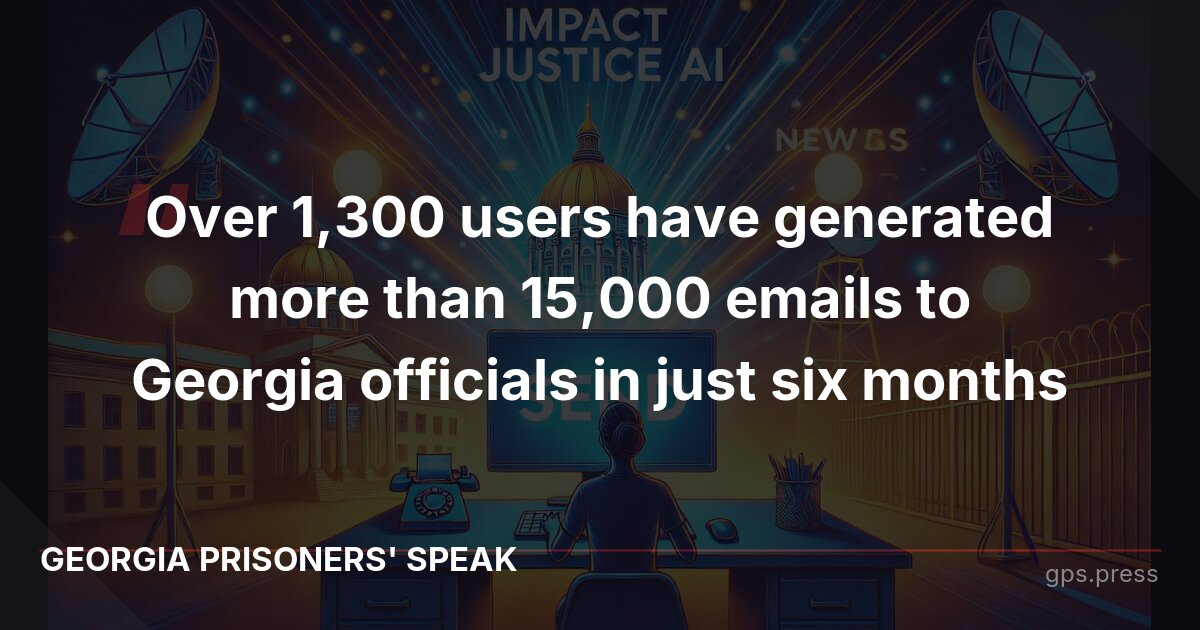
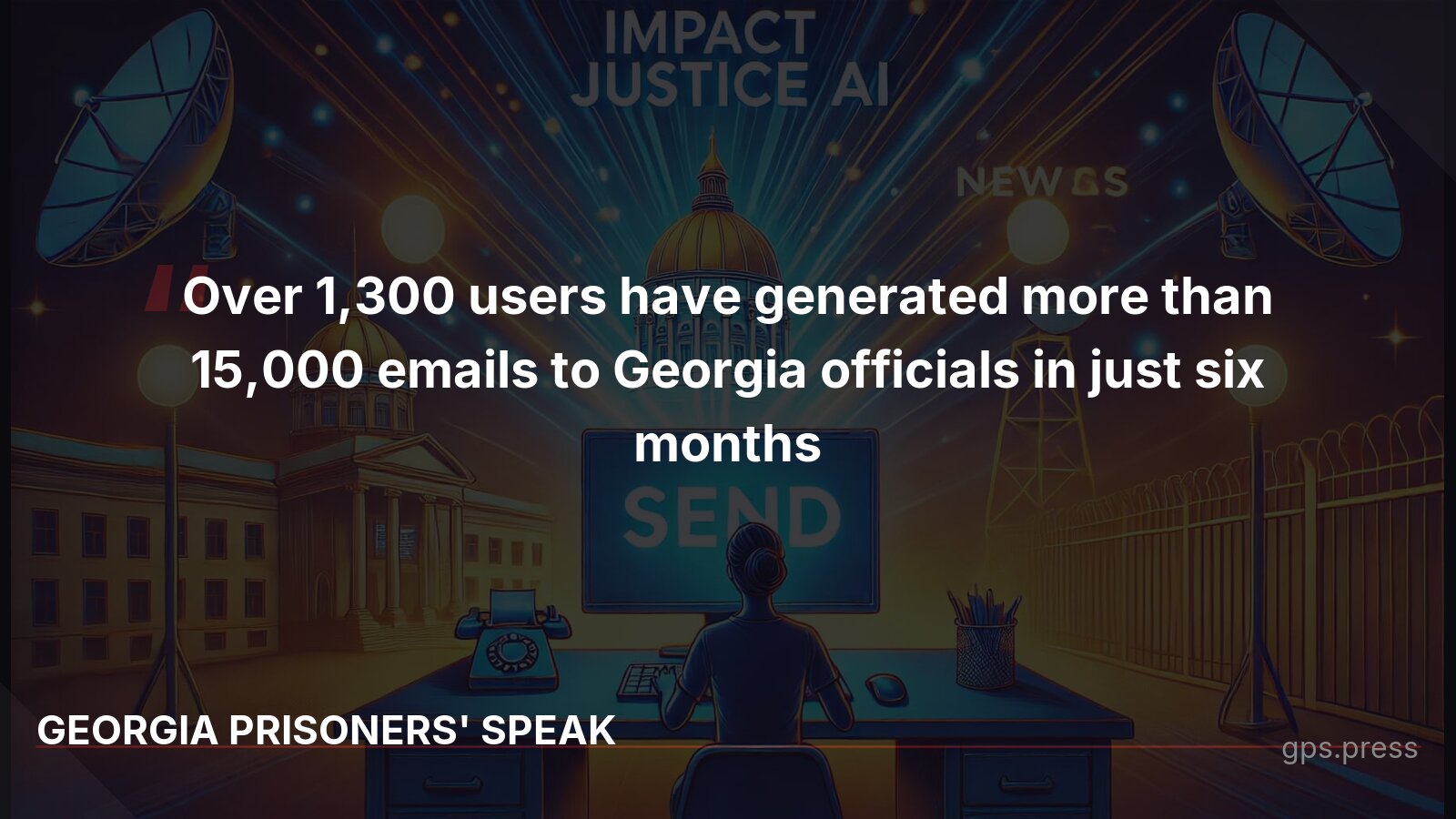
In just six months, over 1,300 users have generated more than 15,000 emails using the system. That’s more than 15,000 real messages hitting inboxes across the state, changing minds and pushing officials to act.
How It Works (Step-by-Step)
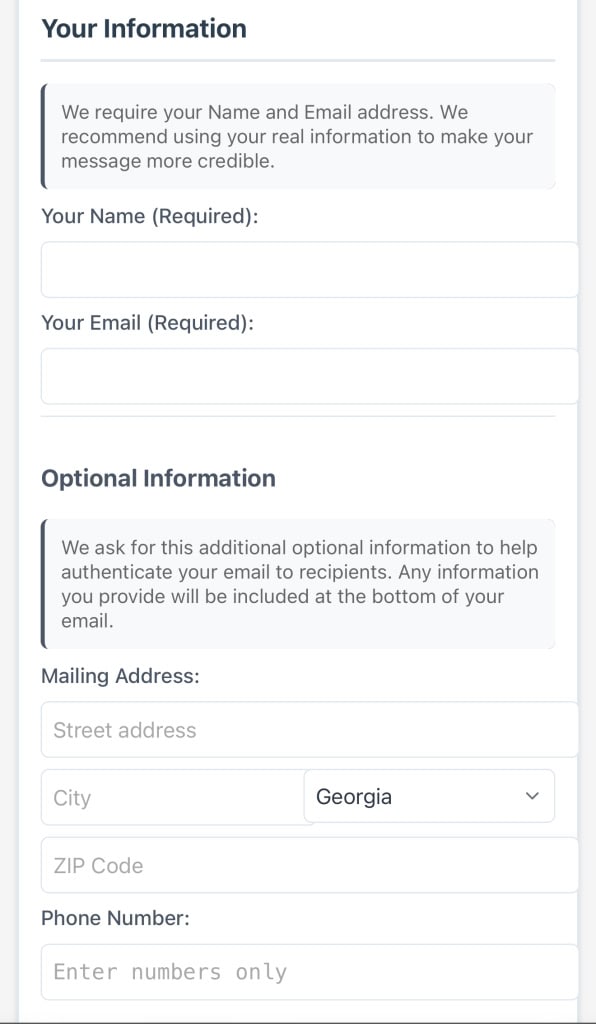
1. Speak for Someone You Love
You begin by entering basic details: your name, email address, and optionally a mailing address. These help establish credibility and ensure your message gets delivered.
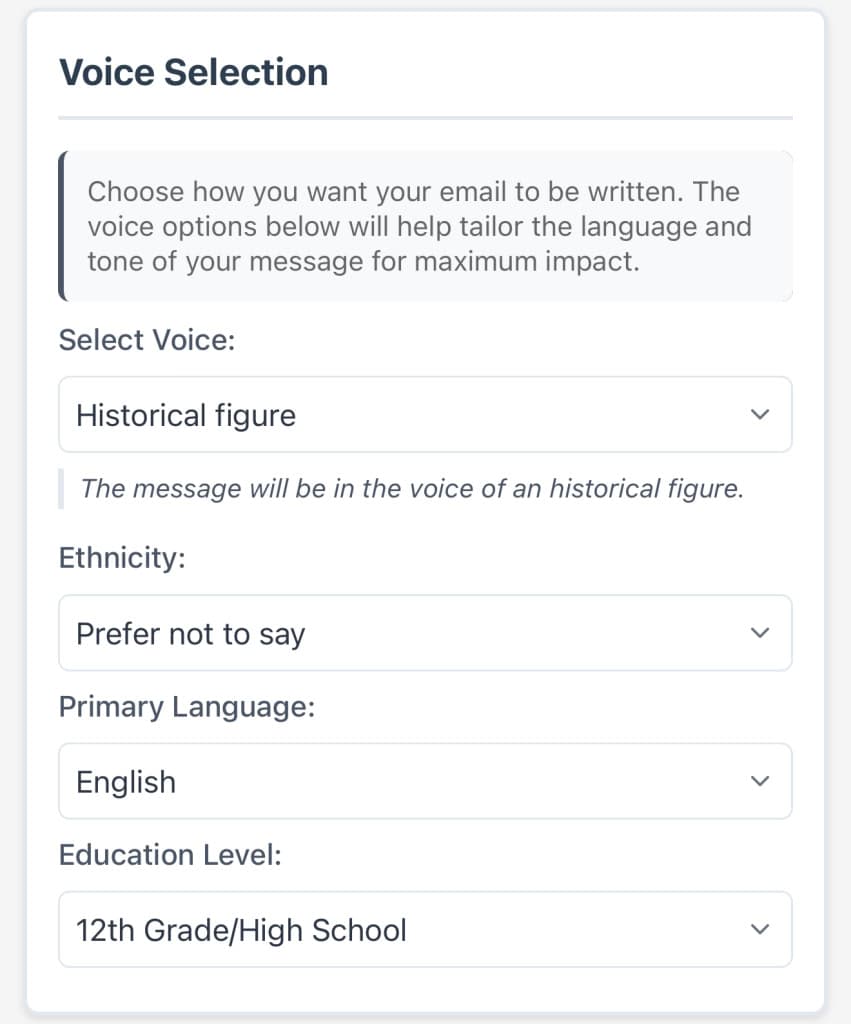
2. Pick a Voice
You choose how the email should sound: like a pastor, a teacher, a grieving parent, a civil rights leader, or a concerned voter. This allows your message to speak with authenticity and power.
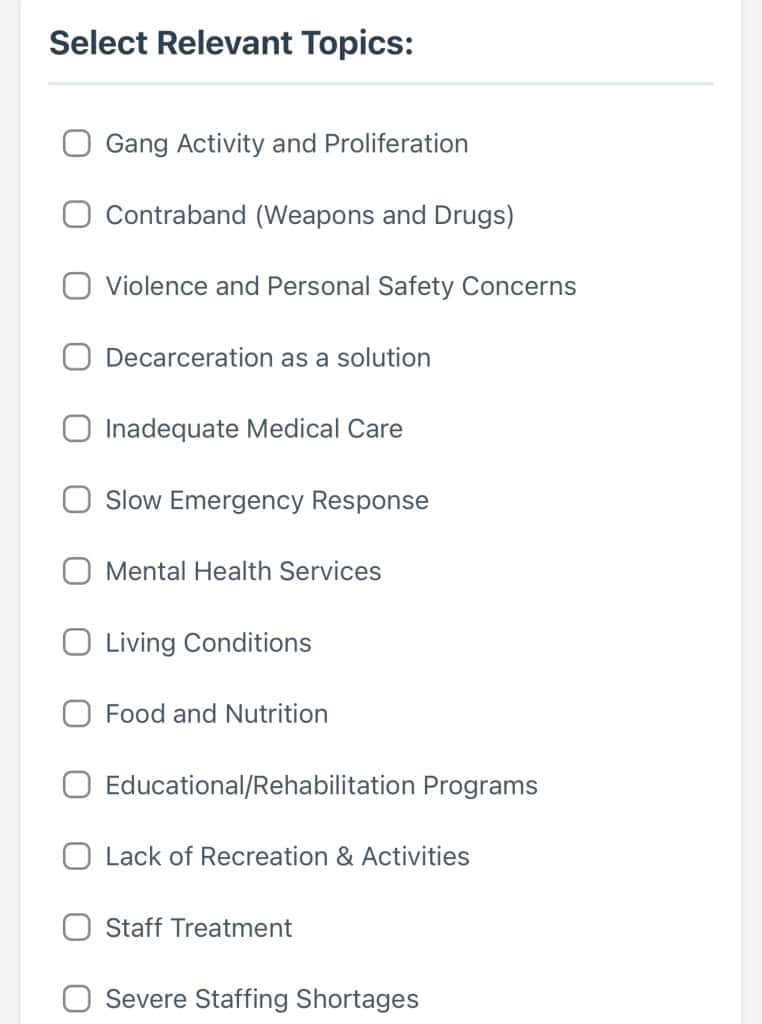
3. Choose a Cause
You can select from predefined issues—medical neglect, parole delays, gang violence, inhumane food, and more.
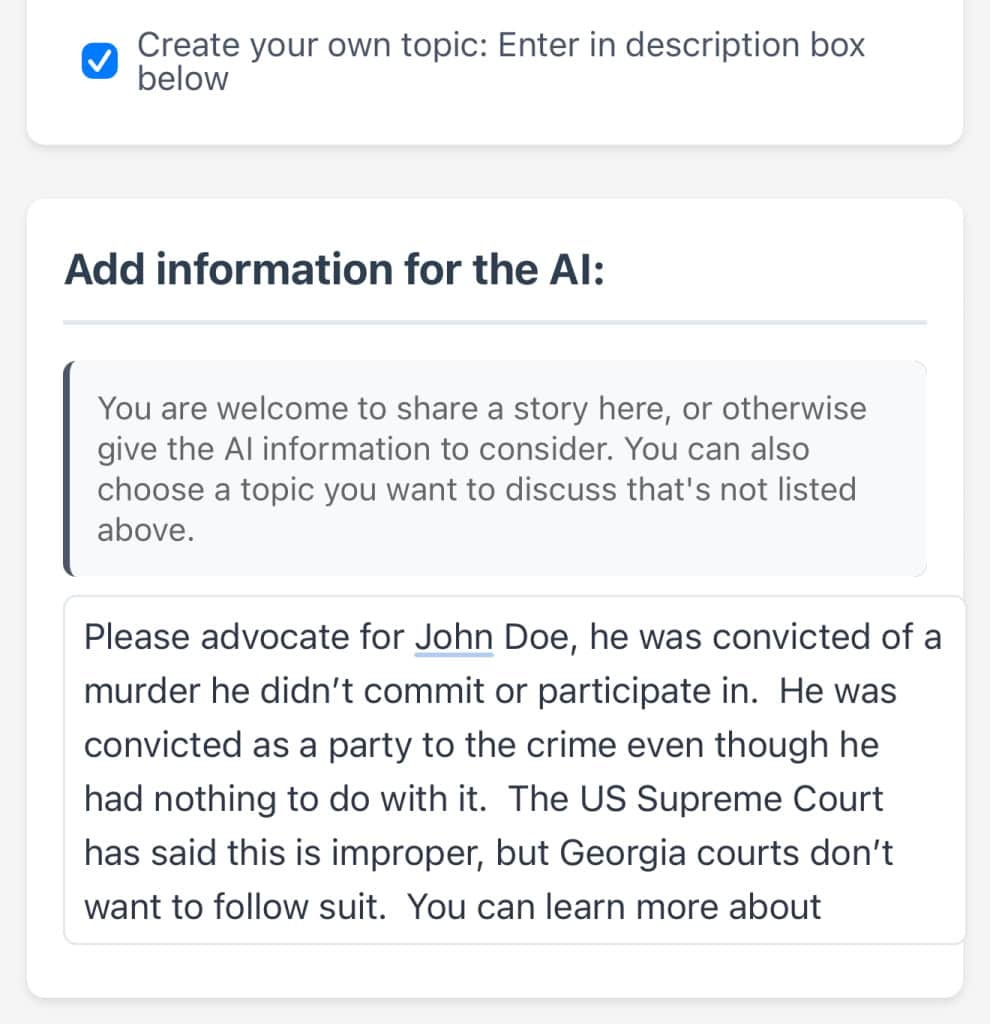
4. Add Your Personal Story
You can include a specific example or situation—a loved one’s name, a recent injustice, a condition at a specific prison.
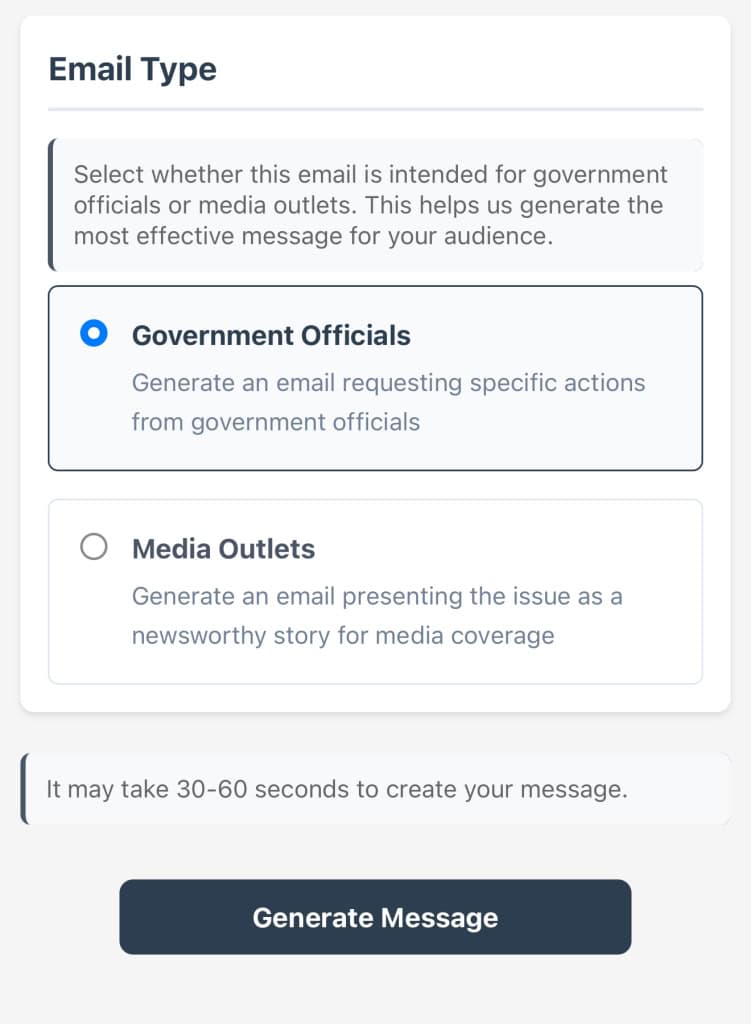
5. Generate a message
Choose the type of recipient you want to tailor this message to (government officials or media outlets) and Impact Justice AI instantly creates a polished, powerful message tailored to your cause. You can even edit before sending it.
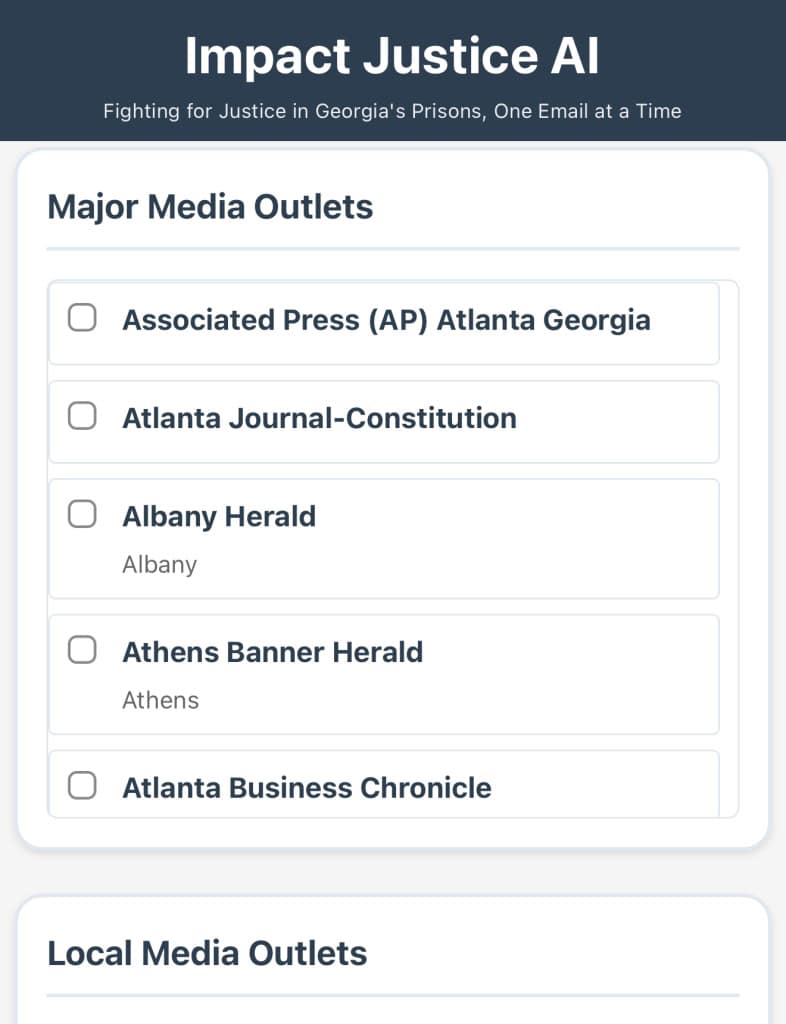
6. Select Recipients and send
Choose who should receive your email: legislators, the Parole Board, media outlets, or all of the above. You get a copy of the email and a full list of who received it.
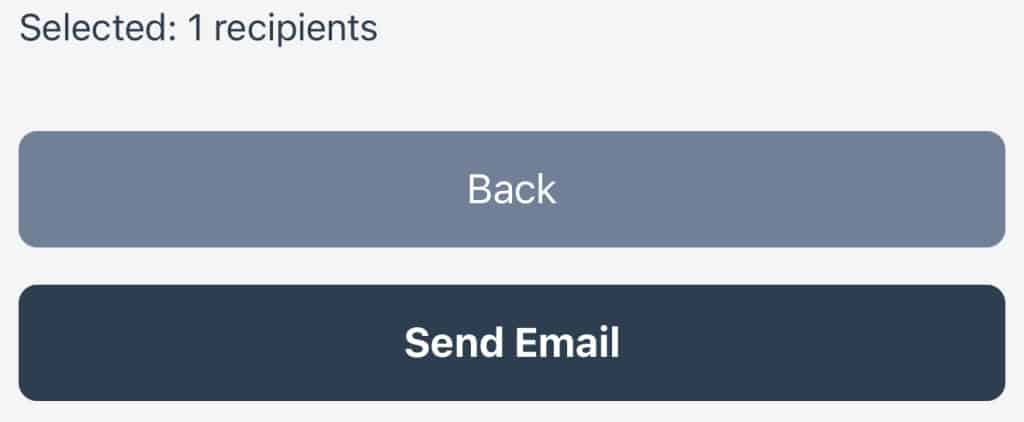
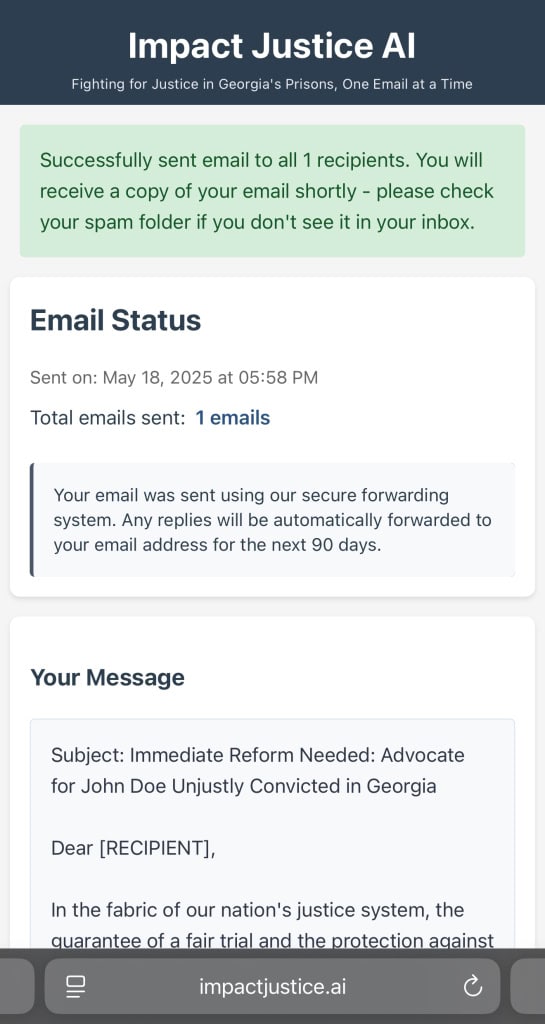
That’s it. You’re done. It takes just a couple minutes to send professional emails to anyone. After clicking Send Email, you’ll be shown the status screen and you’ll receive a confirmation email with a copy of your letter and a list of everyone you sent it to (along with their email addresses).
The Hidden Power: Custom Topics
What many users don’t realize is that Impact Justice AI also allows you to create your own topic—and this is where its power goes next level.
You can:
- Advocate for a specific person by name
- Paste a URL (like a news article or Facebook post) and ask the AI to research and respond
- Combine custom topics with existing ones to target multiple issues in a single email
This means you’re not just clicking boxes—you’re building a campaign tailored to your exact concerns. If you want to write a letter about your brother’s wrongful conviction, your son’s mistreatment in segregation, or a viral video exposing prison abuse—you can.
No other platform gives you that level of voice, flexibility, and reach in a single tool.
Does It Actually Work?
Yes.
Over 15,000 emails have been delivered to:
- Georgia legislators
- The Governor’s office
- Members of the State Board of Pardons and Paroles
- Journalists and media outlets
Some users have received replies from lawmakers. Others have seen their stories picked up by journalists. And many say it gives them something they haven’t felt in a long time: agency.
In March 2025, GPS reported on the early success of the platform: 5,587 letters were printed and hand-delivered to the Georgia Capitol in a single day 1. Some legislators received envelopes with hundreds of letters from constituents demanding parole reform, mental health care, and safer prison conditions.
That’s the power of coordinated digital advocacy.
Privacy and Transparency
Impact Justice AI values your privacy. You receive a full copy of your email along with the names and email addresses of all recipients. For your protection, your messages are sent through a “hide my email” service and replies are automatically forwarded to your real email. Your information is never sold or given to anyone. You maintain control, always.
Who Is It For?
- Parents trying to advocate for their son stuck in solitary confinement
- Formerly incarcerated people trying to speak up for those still inside
- Church leaders speaking truth to power
- Teachers, nurses, voters, and everyday Georgians who care about justice
If you’ve ever felt helpless when reading about the prison crisis—this is your way to take action.
Getting Started
Visit ImpactJustice.AI and follow the steps. In less than 5 minutes, your words can be delivered to people who need to hear them.
You don’t have to know the law. You don’t have to be a professional writer. You just have to care—and let the system help you speak up.
Final Word
Injustice thrives in silence. Impact Justice AI makes sure that silence is broken. It puts the power to speak—and to push for change—back into the hands of the people.
If you’ve got something to say, this is your moment. Let Georgia hear you.

- https://gps.press/thank-you-for-using-impact-justice-ai-together-were-making-a-difference/[↩]
Thousands of Georgia families are trapped in a system that ignores their voices while their loved ones suffer daily abuse and neglect. This tool delivered 15,000+ messages to officials in six months. Share this story so others can finally be heard.
To Whom It May Concern,
I am writing to formally express my deep and urgent concern regarding the treatment and well-being of my son, Issac Naji, who has been held in solitary confinement since November 5, 2025. As his mother, I am extremely distressed by the prolonged nature of his isolation and the complete lack of access he has had to basic human needs, medical care, and family communication during this time.
Since November 5, 2025, my son has reportedly been confined to solitary housing without access to a telephone, without the ability to receive or send letters from family, and without meaningful contact with the outside world. In addition, I have been informed that he has been denied access to his prescribed mental health medication, regular meals, clean clothing, showers, and other essential necessities required for basic hygiene and health. These conditions raise serious concerns not only about his physical safety, but also about his psychological and emotional well-being.
I am particularly alarmed about the impact this prolonged isolation may be having on my son’s mental health. Numerous medical professionals and correctional oversight organizations have documented the severe psychological harm caused by extended solitary confinement, especially when combined with deprivation of social contact and medical treatment. Isolation for weeks or months at a time can result in anxiety, depression, paranoia, emotional instability, and, in some cases, irreversible mental health deterioration. Denial of prescribed mental health medication further compounds these risks and may place my son in immediate danger.
Issac is a human being, and regardless of his current status within the correctional system, he retains the right to humane treatment, access to medical and mental health care, and the ability to maintain contact with his family. Family communication is not a privilege it is a critical protective factor for incarcerated individuals and a key component of rehabilitation, emotional stability, and personal accountability. Preventing all contact with family for an extended period of time is not only deeply harmful but also inconsistent with widely accepted correctional standards and ethical practices.
As a mother, the uncertainty surrounding my son’s condition has caused me extreme emotional distress. I have been unable to confirm his physical safety, mental state, or overall welfare. I do not know whether he is eating properly, receiving medical care, or even being allowed to bathe or change his clothing. The absence of communication leaves families like mine feeling powerless and fearful, unable to advocate effectively or ensure that our loved ones are being treated with dignity and care.
I respectfully request immediate clarification regarding the circumstances surrounding my son’s placement in solitary confinement, including the reason for its initiation, the duration, and whether his status is being regularly reviewed in accordance with Georgia Department of Corrections policies. I also request confirmation that he is receiving all medically necessary care, including uninterrupted access to prescribed mental health medications, adequate nutrition, hygiene, and clean clothing.
Furthermore, I urgently request that my son be allowed reasonable access to communication with his family through telephone calls and mail. Maintaining contact with loved ones is essential for his emotional stability and mental health, and it would provide his family with reassurance that he is alive, safe, and being treated humanely. If there are specific restrictions in place, I ask that they be clearly explained in writing, along with the steps required to restore communication privileges.
I also ask that his current conditions of confinement be reviewed with careful consideration for his mental health needs. If solitary confinement is deemed absolutely necessary, I urge the Department to ensure that it is used for the shortest duration possible and accompanied by regular mental health evaluations, meaningful human interaction, and access to basic services. Prolonged isolation without oversight or care places individuals at serious risk and undermines the goals of safety, rehabilitation, and humane correctional management.
My intention in writing this letter is not to place blame, but to advocate for the safety, dignity, and constitutional rights of my son. I believe strongly that correctional systems function best when transparency, accountability, and compassion guide their practices. Families should not be left in the dark when their loved ones are subjected to conditions that may threaten their health or lives.
I respectfully request a prompt written response addressing the concerns raised in this letter. Please include information regarding my son’s current status, access to medical and mental health care, communication privileges, and any steps being taken to review or modify his housing assignment. Time is of the essence, as each day spent under these conditions may further compromise his well-being.
Thank you for your attention to this serious matter. I trust that the Georgia Department of Corrections will act swiftly and responsibly to ensure that my son is treated humanely and in accordance with established standards of care. I am hopeful that through your intervention, meaningful steps will be taken to protect his mental health, restore family contact, and uphold the values of justice and human dignity.
Sincerely,
Sarah Naji
Mother of Issac Naji