This explainer is based on GDC Mission vs. Reality: The Rehabilitation That Doesn’t Exist. All statistics and findings are drawn directly from this source.
News Lead
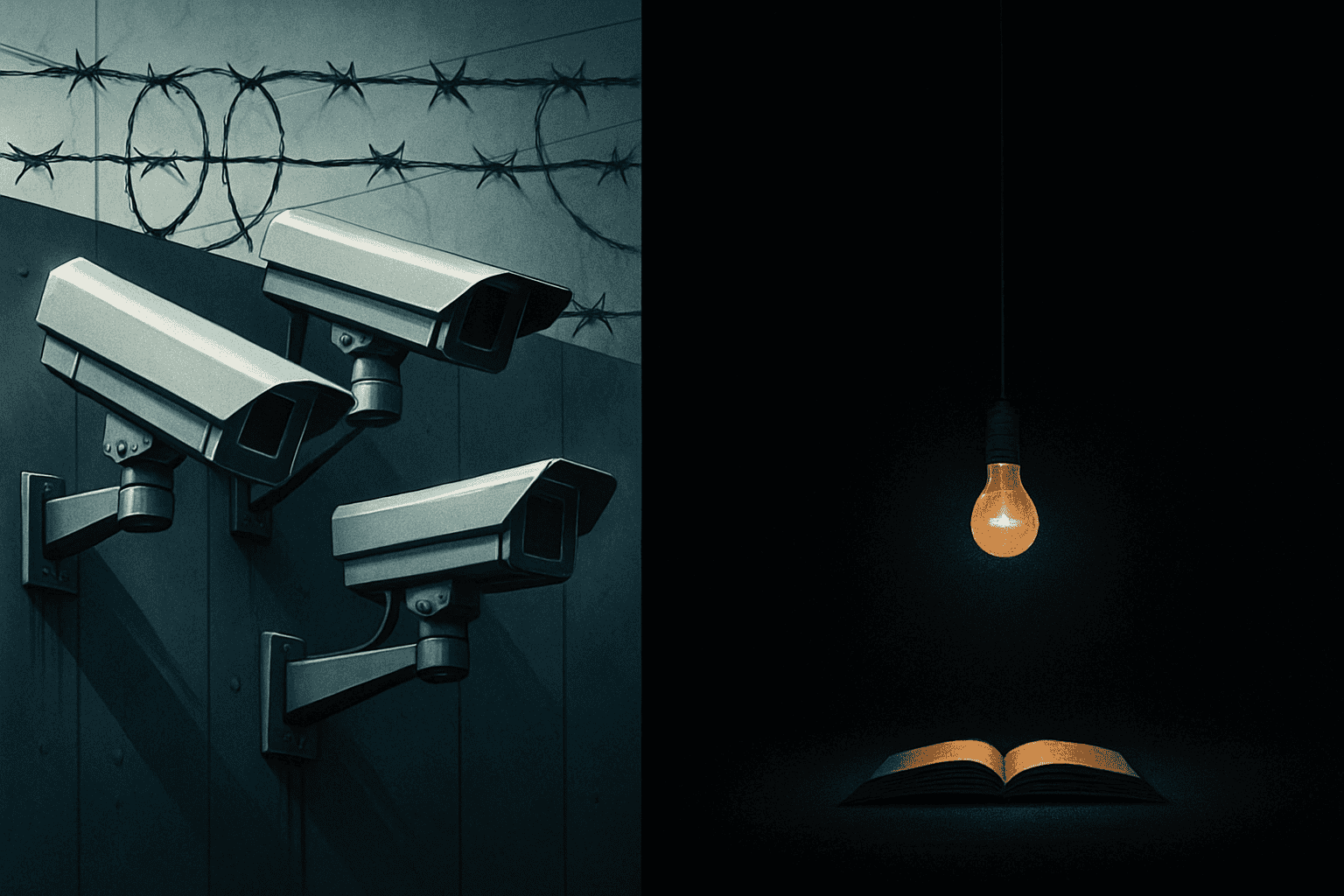
Georgia invests roughly $2.6 million in rehabilitation and education programming for the approximately 50,000 people in its prisons — while spending over $120 million on surveillance and technology in the same period. That amounts to $52 per incarcerated person per year on rehabilitation, or $0.11 per day — less than the cost of a single ramen packet in the prison commissary.
The findings, drawn from the Governor’s Budget Report, Department of Justice investigation records, Bureau of Justice Statistics data, and peer-reviewed research, paint a picture of a $1.8 billion corrections system that has effectively abandoned its own stated mission. The Georgia Department of Corrections promises on its homepage to provide “opportunities for offender rehabilitation.” In practice, the state directs funds toward surveillance at a ratio of 46:1 over rehabilitation, ranks dead last among Southern states in per-person prison education spending at $39 per year, and operates facilities where the U.S. Department of Justice found reasonable cause of Eighth Amendment violations.
Meanwhile, approximately 12,000 people leave Georgia’s prisons each year — 33 per day — and walk out with a $25 prepaid Visa card, the clothes on their back, and no housing referral, job placement, or transitional support. Research shows educational programs reduce recidivism by 43%, and Georgia’s own data shows vocational program completers recidivate at 13.64% versus 26% for the general population. But with a statewide vocational education budget of $172,000 — $3.44 per person — and only 2,344 reentry center beds for 50,000 people, the programs that work remain out of reach for the vast majority.
Key Takeaway: Georgia spends $52 per incarcerated person per year on rehabilitation — 46 times less than it spends on surveillance — while ranking last among Southern states in prison education funding.
Quotable Statistics
The Funding Disparity
– 46:1 — The ratio of Georgia’s surveillance spending to rehabilitation spending over two budget years ($120+ million vs. ~$2.6 million)
– $52 — Annual per-person rehabilitation spending in Georgia prisons ($2.6 million ÷ 50,000 people)
– $0.11/day — What that breaks down to daily, less than the cost of 45 ramen packets at $0.90 each from commissary
– 0.11% — Education spending as a share of the $1.8 billion corrections budget
– $34,000 — Annual cost to incarcerate one person in Georgia; only $52 of that goes to rehabilitation
Dead Last Among Southern States
– Georgia: $39/year per incarcerated person for education (~$2 million for 51,000 people)
– Alabama: $742/year — 19 times more, even under federal oversight for unconstitutional conditions
– Florida: $1,028/year — 26 times more, with a 21% recidivism rate
– Texas: $508–585/year — achieving a 15% recidivism rate through the Windham School District
– Mississippi: 80% enrolled in programming — the nation’s poorest state outperforms Georgia
– South Carolina: 17.1% recidivism — the lowest in the nation, issuing 8,294 credentials annually
Violence and Staffing
– 142 people killed in Georgia prisons from 2018–2023 (DOJ confirmed)
– 100+ people killed in 2024 alone (Atlanta Journal-Constitution count; GDC’s own count was 66)
– 2,985 vacant corrections officer positions out of 5,991 budgeted — nearly 50% vacancy
– 27,425 weapons recovered from prisons (November 2021–August 2023)
– 1,400+ reported violence incidents from January 2022 to April 2023
The People Coming Home
– ~12,000 people released from Georgia prisons each year (33 per day)
– 95% of all state prisoners will eventually be released (BJS)
– $25 — the value of the prepaid Visa card people receive upon release
– 25–27% — Georgia’s official 3-year reconviction rate; estimated actual return-to-incarceration rate is ~50%
Programs Work — When They Exist
– 43% — reduction in recidivism for people who participate in educational programs (RAND Corporation)
– 13.64% — recidivism rate for Georgia’s own vocational program completers vs. 26% general population
– Under 4% — recidivism rate for Bard Prison Initiative participants
– $4–5 — return on every $1 invested in prison education (RAND Corporation)
– $172,000 — Georgia’s entire statewide vocational education budget (FY2025), or $3.44 per person
– 2,344 reentry center beds for 50,000 people = 4.7% capacity
Key Takeaway: Every key metric — funding, staffing, violence, recidivism, and program access — tells the same story: Georgia’s prison system has abandoned rehabilitation while spending nearly $2 billion annually on containment.
Context and Background
What reporters need to know:
The DOJ Investigation: In October 2024, the U.S. Department of Justice found reasonable cause that Georgia violates the Eighth Amendment’s prohibition on cruel and unusual punishment. The DOJ issued 82 remedial measures — but only 3 of those 82 address programming (#63 substance abuse, #64a graduated housing with programs, #64e programs for community return). There are no mandates for education, vocational training, cognitive-behavioral therapy, GED, or college programs.
The Staffing Crisis Drives Everything: With 2,985 of 5,991 corrections officer positions vacant, the staffing crisis is both a safety failure and a programming failure. The DOJ found that “prisons do not have enough staff to prevent or even respond to the most blatant gang activities, let alone provide programs.” At one close-security prison, a single officer was responsible for nearly 400 beds.
The Neuroscience Problem: Peer-reviewed research demonstrates that the chronic violence and threat exposure in Georgia’s prisons biologically prevents the learning that rehabilitation requires. A Rikers Island study (N=197) found cognitive control declined significantly over just 4 months of incarceration (Cohen’s d=0.41, p<0.001). Yale research shows prefrontal cortex dendrites begin to change after only one week of stress. People cannot learn when their brains are in survival mode.
The Financial Aid Ban: Georgia’s ban on financial aid for incarcerated students is not a law — it is a 1995 administrative regulation enacted during Governor Zell Miller’s administration. Federal Pell Grants were restored for incarcerated students on July 1, 2023, and programs are expanding in 44 states. Georgia moved in the opposite direction: Georgia State University shut down its prison education program in March 2024, which served 60 students at a cost of $180,000 annually.
The Education Spending Gap: Georgia allocates $325 million for the DREAMS Scholarship and $1 billion annually for the HOPE Scholarship — both unavailable to incarcerated students. The state spends $16,526 per K-12 pupil and $2,788 per technical college student through TCSG. For incarcerated people, the figure is approximately $40 per person. That is a 69:1 ratio compared to technical college students.
Lockdowns Eliminate Programming: Facilities spend an estimated 60 days per year on lockdown, during which all programming stops. Washington State Prison has been locked down continuously since January 11 riots. Evening programming was eliminated after COVID in 2020 and has never been restored — six years later.
The “45,000 Certificates” Claim: GDC Commissioner Oliver has claimed the department issued 45,000 certificates in FY2024. This figure bundles micro-credentials (CPR, food handler, “Business Etiquette”) with real vocational certifications, inflating the appearance of program success. The Atlanta Journal-Constitution found GDC officials “repeatedly presented false or misleading information to federal investigators, state lawmakers and a federal judge.”
The Legislature’s Response: A Senate Study Committee voted on December 13, 2024 to maintain the status quo — rejecting proposals for an oversight body, de-escalation training, and reintegration programming.
Proof It Works When Tried: Walker State Prison, with adequate staffing and programming, recorded zero homicides — serving as GDC’s own proof-of-concept that the mission is achievable when resources are allocated.
Key Takeaway: The failure to rehabilitate is not a resource limitation — Georgia approved the largest corrections funding increase in state history ($634 million) in 2025 — it is a policy choice to invest in surveillance and containment over human development.
Story Angles
Angle 1: “Dead Last” — Georgia’s Prison Education Spending Compared to Every Southern Neighbor
Georgia spends $39 per incarcerated person per year on education. Alabama, currently under federal oversight for unconstitutional prison conditions, spends 19 times more. Mississippi, the nation’s poorest state, enrolls 80% of its incarcerated population in programming. Texas spends $508–585 per person and achieves a 15% recidivism rate. South Carolina has the lowest recidivism in the nation at 17.1%. This story would examine why Georgia — with a nearly $2 billion corrections budget and the largest funding increase in state history — ranks behind every peer state on rehabilitation investment, and what the consequences are for the 12,000 people released each year and the communities that receive them.
Angle 2: The $180,000 Program That Georgia Killed — While Spending $120 Million on Cameras
In March 2024, Georgia State University shut down its prison education program, which served 60 students at a cost of $180,000 per year. In the same budget period, the state allocated over $120 million for surveillance technology including thermal cameras, body cameras, cell phone blocking systems, and digital forensics. Federal Pell Grants were restored for incarcerated students on July 1, 2023, and 44 states are expanding college-in-prison programs. Georgia is contracting. The financial aid ban keeping incarcerated students from HOPE and DREAMS scholarships isn’t even a law — it’s a 1995 administrative regulation. This story explores how a single policy relic and misaligned spending priorities are costing Georgia billions in long-term recidivism costs.
Angle 3: The Neuroscience of a Broken System — Why Georgia’s Prisons Make Rehabilitation Biologically Impossible
With 100+ homicides in 2024, 27,425 weapons recovered over 21 months, and 45.1% of reported violence incidents resulting in serious injury, Georgia’s prisons are environments of sustained trauma. Peer-reviewed neuroscience research shows that chronic threat exposure shuts down the prefrontal cortex, shrinks the hippocampus, and makes learning “virtually impossible.” A Rikers Island study found cognitive control declined significantly over just four months. Georgia then releases 33 people per day from these conditions with a $25 Visa card and no support. This story connects the violence crisis to the rehabilitation failure through the science of what sustained danger does to the human brain — and asks whether a system that damages people’s capacity to change can be called anything other than punishment.
Read the Source Document
Read the full analysis: GDC Mission vs. Reality: The Rehabilitation That Doesn’t Exist (PDF)
For additional data and primary sources, visit the GPS Research Library.
Other Versions
This briefing is part of a multi-audience release. Other versions of this analysis are available:
- Public Version — A plain-language summary for community members, families, and the general public
- Legislator Version — A policy brief with fiscal analysis and actionable recommendations for Georgia lawmakers
- Advocate Version — A detailed resource for attorneys, organizers, and advocacy organizations working on prison reform
Sources & References
- GBPI Budget Overviews. Georgia Budget and Policy Institute (2025-01-01) Official Report
- Governor’s Budget Report AFY2026/FY2027. Office of the Governor of Georgia (2025-01-01) Official Report
- GPS Analysis of Georgia Parole System (2025) — Georgia Prisoners’ Speak. Georgia Prisoners’ Speak (2025-01-01) GPS Original
- 2024 Senate Study Committee Report. Georgia Senate (2024-12-13) Official Report
- DOJ Findings Report (September 2024). U.S. Department of Justice (2024-10-01) Official Report
- AJC Investigations. Atlanta Journal-Constitution (2024-01-01) Journalism
- BJS Prisoners in 2023. Bureau of Justice Statistics (2024-01-01) Official Report
- Rikers Study (PMC5961486). PubMed Central (2018-01-01) Academic
- Montgomery v. Louisiana 577 U.S. 190. U.S. Supreme Court (2016-01-01) Legal Document
- PMC4561403. PubMed Central (2015-01-01) Academic
- PMC4120991. PubMed Central (2014-01-01) Academic
- RAND Corporation (2013). RAND Corporation (2013-01-01) Academic
- Miller v. Alabama 567 U.S. 460. U.S. Supreme Court (2012-01-01) Legal Document
- Graham v. Florida 560 U.S. 48. U.S. Supreme Court (2010-01-01) Legal Document
- Yale (Arnsten 2009) — Arnsten, Amy F.T.. Yale University (2009-01-01) Academic
- NEJM (Binswanger 2007) — Binswanger, Ingrid A.. New England Journal of Medicine (2007-01-01) Academic
- Holt v. Sarver 300 F. Supp. 825. U.S. District Court for the Eastern District of Arkansas (1970-01-01) Legal Document
- Education Commission of the States. Education Commission of the States Official Report
- GDC Official Website. Georgia Department of Corrections Official Report
- GPS Research Library. Georgia Prisoners’ Speak GPS Original
- Vera Institute. Vera Institute of Justice Official Report
Source Document
You just read about people suffering in state custody. The least you can do is make sure other people read it too. Share this story.