Author: HELPUS
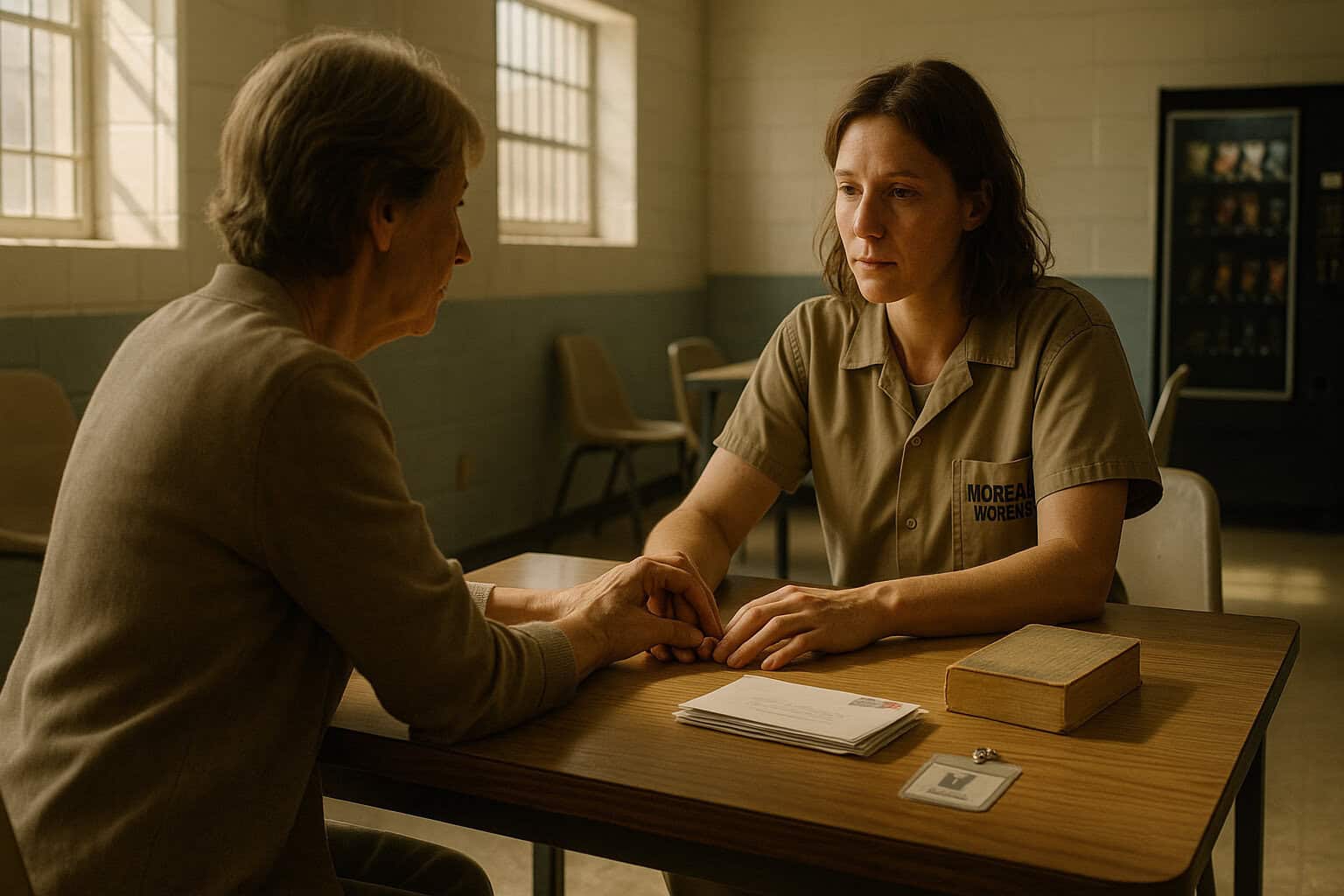
My daughter has been at McRae Women’s Facility for two years. She is a nonviolent offender. Her tentative parole date is 2031.
I’ll say that part again, because it’s the thing I can’t get past. Two years in. Nonviolent. And the date they gave her is 2031. To me, that’s wrong. That’s cruel punishment.
I’m not a lawyer. I don’t hold any title. I’m a mother. And I’m telling this story because I want the parole board and anyone else in a position to make a difference to show some compassion — and to give second chances. I want people to understand what is happening to these women, and what their families are carrying on the outside.
My daughter doesn’t just talk about herself when we get the chance to talk. She talks about the women around her, especially the other nonviolent offenders. She tries to advocate for all of them. They come to her about their cases, about their kids, about their mental state. She tells me some of them are ready to give up. That it feels like nobody even cares.
That’s a heavy thing for her to hold, on top of her own situation. And she holds it anyway.
Here is what she tells me about inside. There are no programs — not for lack of wanting. She tells me she wants to do more than just sit around. She’s sure there are programs on the outside, things people could attend to rehabilitate themselves, to actually work on coming out different. But there’s nothing for her there, she says, because of the lack of staff.
The counselors who used to be there — they quit. My daughter tells me it’s because they couldn’t help the way they wanted to help. So when a woman is in crisis inside that place, who steps in? She says nobody. She says they only have each other to rely on.
There are days she can’t get up out of the bed, because that’s all there is to do. There’s nowhere to go and nothing waiting once she’s up. She tells me the staff worry about inspections and not much else. And then she asks me a question I can’t answer: is it their fault the state is housing more inmates than they can handle?
She is frustrated. She is mentally going through it. That’s how she puts it to me, and I can hear it in her voice.
She has also told me how certain staff treat the women. When she tries to explain it, she compares it to the Stanford experiment. I asked her what she means by that. She talks about the mental abuse of authority — how they use that authority to control them, how they treat them like they are nobody.
She told me about a woman who asked to go to the library and was told by staff that they didn’t know she could read. A grown woman. Asking to borrow a book. That’s humiliation, plain and simple.
I want to be clear: these are things my daughter has told me. I’m not a witness to them. I’m passing them on because somebody should be looking into them, and because families like mine need to be heard.
We visit when we can. We talk on the phone. We write letters.
Or we try to. For months now, the mail hasn’t been getting through. Staff shortages, they say. Months of letters that she may never have read. Months of words I wrote to my child, sitting somewhere instead of in her hands. It makes me mad. She doesn’t deserve that. She is my baby. And even though she has made mistakes, her charges don’t define her.
That’s the heart of all of this, for me. Her charges don’t define her.
People who meet my daughter inside, or who read a charge sheet and think they know who she is — that is not who she is. She is kind. She loves to help people. She is selfless, and I’m not exaggerating because I’m her mother. That’s how she has been since she was little. As a child, whatever she had, she wanted other children to have it too. I always admired that in her. As she got older, she opened up her home to friends who had nowhere to go.
That’s the same person sitting inside that facility right now. She shares with the other women there who don’t have what she has. Same girl. Same heart.
She tells me she wants to advocate for the women she’s met. She says it has given her purpose. Sometimes I think places like this put a fight in people. She wants to build a foundation for women — to help them with their cases and with the other concerns they have, the ones who don’t have family on the outside to help them. And she always tells me: when she gets to come home, she will become their family.
That’s what she wants her life to look like on the other side. Not just to be free. To be useful. To be there for women who have nobody, the way she wishes somebody had been there for her.
And still, she is just waiting. Waiting on a parole date that seems like it’s never coming, because of how long it takes parole to look at them — to send home who they can send home, with the system as overcrowded as it is. Nobody has explained to me where her case actually stands. No timeline. Just a PED for 2031.
How do I hold onto hope with a date like that sitting in front of me?
I hold onto it because she’s my child, and because a nonviolent charge should not mean a decade of waiting for a chance to prove she’s changed. I hold onto it because of who she is, not because of what she did.
I’m not asking anyone to disregard public safety. I’m not asking for something I wouldn’t ask for on behalf of anyone else’s family.
I’m asking for what I’ve said from the start. Compassion. Second chances. A real look at the women who are ready, who have served time, who have changed, who have families waiting on them. Not just to sit there while their lives and their children’s lives pass them by.
If there’s one thing I want people to take from this, it’s this. Nobody is exempt from this. Everybody makes mistakes. It could be one of them one day, and they would want that same compassion shown to them. If you are in a position to make a difference in someone’s life, and to give a chance — do it. Because you never know when you’ll need a chance.
She is not just a number. She is not forgotten. She is not without a voice.
Free her future. Bring our women home.
The Architecture Is the Evidence
Across the 32 state prisons whose original design figures we hold, Georgia built for 15,737. They hold 33,805 — 215% of design capacity.
Dorms tripled. Cells double- and triple-bunked. Medical, kitchens, libraries — unchanged. Every facility, every design figure, every source.
See the receipts →You Have Options
Free tools to take action — the law is on your side.
Demand records from the prison system. Reach the officials who set policy. File a grievance or a complaint the right way. And for families who’ve lost someone in custody, get the records that tell the truth. Plain-language, step-by-step, and free.
Explore the GPS Toolkits →