AUTRY STATE PRISON
Facility Information
- Original Design Capacity
- 500
- Bed Capacity
- 1,698 beds
- Current Population
- 443
- Active Lifers
- 44 (9.9% of population) · Oct 2026 GDC report
- Life Without Parole
- 3 (0.7%)
- Address
- 3178 Mount Zion Church Rd, Pelham, GA 31779
- Phone
- (229) 294-2940
- Fax
- (229) 294-6559
- Mailing Address
- P.O. Box 648, Pelham, GA 31779
- County
- Mitchell County
- Opened
- 1994
- Operator
- GDC (Georgia Dept. of Corrections)
Security Classification
Last updated: September 23, 2026
19 of the 448 people held here are classified Close security (4.2%), as of September 23, 2026.
| Security level | People | Share |
|---|---|---|
| Close | 19 | 4.2% |
| Medium | 378 | 84.4% |
| Minimum | 51 | 11.4% |
| Total | 448 |
Earlier count (undated table, produced October 22, 2025): 9 of 466 Close (1.9%).
Source: Georgia Department of Corrections records produced to GPS under the Open Records Act (R031471-090226, R024615-101925). A person's security level is GDC's classification of that person, which can differ from the prison's own designation.
Follow Autry State Prison
Leadership & Accountability (as of 2026 records)
Officials currently holding positional authority at this facility, with deaths attributed to GPS-tracked records during their leadership tenure. Inclusion reflects role-based accountability, not legal findings of personal culpability. Death counts shown as facility / career.
| Role | Name | Since | Deaths this facility / career |
|---|---|---|---|
| Warden (facility lead) | Graham, Michael | 2025-07-16 | 5 / 37 |
| Deputy Warden of Administration (facility deputy) | Copeland, Tanja | 2024-06-16 | 7 / 7 |
| Deputy Warden of Security (facility deputy) | Banks, Mary L | 2024-01-01 | 6 / 6 |
| Deputy Warden of Security (facility deputy) | Stephen, Nakia | 2026-07-16 | — / — |
| Deputy Warden of Care and Treatment (facility deputy) | Osborne, Sharon | 2026-07-16 | — / — |
About
Last updated October 25, 2026.(DS)
Autry State Prison: A Half-Empty Prison, a Full Mortality Record, and the Gap Between the Inspection Sheet and the Water
Autry State Prison — Jimmy Autry SP — is a medium-security men's prison in Pelham, in Mitchell County, opened in 1994. GPS's standing record describes a plant built with a large number of double-bunked cell units plus dormitory-style housing and segregation/isolation cells, historically housing many close-custody and sex-offender populations, with limited vocational industries including footwear manufacturing alongside basic education, counseling, and religious programs. Its original design capacity was 500; its current rated capacity is 1,698. Its current population, per GPS's facility records, is 443 — roughly 26 percent of rated capacity. Michael Graham has served as warden since July 2025.
That combination — a facility operating far below its rated bed count while carrying a mortality record, a documented water-contamination closure, and a decade of liability settlements — is the analytical spine of this page. The threads below run from the physical plant and the water system, through the deaths GPS has recorded, to the kitchen inspection scores that GPS's own reporting argues capture very little.
The Water System and the 2023 Closure
The most consequential infrastructure event in Autry's recent history concerns its water. GPS reporting describes accounts that Legionella bacteria were detected in the facility's water system, that an incarcerated person tested positive for Legionnaires' disease in 2021, and that the facility was closed in June 2023 for infrastructure repairs, with plumbing and HVAC upgrades among the work described. GPS's reporting on the episode — including a Spanish-language account that cites WALB-TV's October 2022 coverage of positive Legionella tests at the prison — describes a facility shut down for more than a year.
That account sits inside a larger pattern GPS treats as systemic. GPS has documented that most GDC facilities are 30 to 40-plus years old, with deferred maintenance producing systemwide infrastructure failures — inoperative surveillance and fire-alarm systems, mold and water failures, broken kitchen sanitization equipment, and pest infestations. The October 2024 DOJ findings, the 2024 Guidehouse assessment, and Commissioner Oliver's public "end of life" statements are all cited by GPS as corroborating that pattern. GPS treats infrastructure collapse as a force multiplier for the violence, classification, and mortality crises it has documented at the facility level. Autry's Legionella closure is one of the clearest single-facility illustrations of that thesis in GPS's record.
Twenty-Two Deaths Since 2020
GPS's mortality registry records 22 deaths at Autry State Prison since January 1, 2020 — a floor, not a ceiling, since GDC reports deaths roughly two months late. Eleven are coded Natural/Medical, eight Unknown/Pending, two Other, and one Suicide. The named dead:
- Darren Nicholas Wehrle died February 13, 2020, at Autry State Prison; GPS's registry lists the cause as Natural/Medical. He was 32.
- Dennis Lee Hammons died February 20, 2020, at Autry State Prison; Natural/Medical. He was 62.
- Willie J. Bell died April 22, 2020, at Autry State Prison; Natural/Medical. He was 68.
- James Mitchell Blankenship died April 30, 2020, at Autry State Prison; Natural/Medical. He was 67.
- Thomas Edward White died May 9, 2020, at Autry State Prison; Natural/Medical. He was 75.
- Richard Office died May 22, 2020, at Autry State Prison; Natural/Medical. He was 80.
- Mark Ramos died October 8, 2020, at Autry State Prison; Natural/Medical. He was 59.
- Cordell James Shipman died November 24, 2020, at Autry State Prison; Natural/Medical. He was 22.
- Carlie Edward Burch Jr. died January 13, 2021, at Autry State Prison; GPS's registry lists the cause as Unknown/Pending. He was 65.
- David Curtis Shores died May 3, 2021, at Autry State Prison; Other. He was 53.
- Glamorous Lane died June 27, 2021, at Autry State Prison; Other. He was 60.
- William H. Oglesby died September 11, 2021, at Autry State Prison; Suicide. He was 61.
- Henry Sheffield Jr. died December 10, 2021, at Autry State Prison; Natural/Medical. He was 51.
- Stanley Eric Hamilton died October 30, 2022, at Autry State Prison; Natural/Medical. He was 51.
- Clarence Steven Wallace died January 9, 2023, at Autry State Prison; Natural/Medical. He was 67.
- Alerick Campbell died December 22, 2024, at Autry State Prison; GPS's registry lists the cause as Unknown/Pending. He was 56.
- Harvey Jack Woodard died May 8, 2025, at Autry State Prison; Unknown/Pending. He was 69.
- James Melvin Tudor died August 23, 2025, at Autry State Prison; Unknown/Pending. He was 86.
- Alton Anson Kelly died August 23, 2025, at Autry State Prison; Unknown/Pending. He was 61.
- Richard Merritt died October 20, 2025, at Autry State Prison; Unknown/Pending. He was 75.
- Chaudhry Abudl Rashid died November 11, 2025, at Autry State Prison; Unknown/Pending. He was 74.
- Richard Cleveland Castleberry died April 23, 2026, at Autry State Prison; Unknown/Pending. He was 72.
The age distribution is itself a finding: the median age at death in this record is in the sixties, with several men in their seventies and eighties — consistent with a facility carrying an aging population and the medical burden that comes with it. The eight Unknown/Pending entries mean GPS does not yet know those causes and does not guess them.
For scale, GPS has independently tracked 1,918 deaths in GDC custody system-wide since 2020.
Settlements, Liability, and What the Ledger Shows
Georgia's own risk-management ledger records five liability payouts tied to Autry State Prison, each documented in the GA DOAS Risk Management settlement ledger obtained through open records. The largest is $70,000 to Susan Brown, tied to an incident in 2020. Nicole P. Ellis received $35,000 for a 2018 incident; Christopher L. Jones received $7,500, also for a 2018 incident. Two smaller payouts date to 2016: $500 to Patricia Ann Kierce and $350 to Damon Young, identified in the ledger as GDC 1030956.
The pattern here is not the size of any single payout but the persistence of the ledger across a decade — a facility generating state liability in 2016, 2018, and 2020, in amounts ranging from a few hundred dollars to five figures. GPS treats the settlement ledger as one of the few places where the state's own accounting acknowledges harm inside a facility, since the ledger records the payment without recording the conduct behind it.
Kitchen Scores and the Sanitation Gap
The Georgia Department of Public Health has inspected Autry's food service seven times in GPS's records, all conducted by inspector Micah Donaldson. The scores: 100 (Grade A) on December 12, 2024; 98 (Grade A) on July 9, 2025, with one violation cited for sewage and waste water properly disposed; 90 (Grade A) on March 20, 2026, with two violations cited for proper hot holding temperatures and physical facilities installed, maintained, and clean; and 100 (Grade A) on April 13, 2026, an initial inspection.
Those scores should not be read as a clean bill of health, and GPS's own reporting is explicit about why. GPS has documented a systemic pattern of food-service sanitation failure across GDC kitchens that DPH scores systematically fail to capture: tray-sanitizing dishwashers broken for sustained periods, sustained roach and rodent infestation in kitchen and serving areas, and meals served on visibly contaminated trays. The pattern is hidden from DPH scores because inspections are scheduled walkthroughs that do not assess equipment under load, and because GPS has documented professional overlap between inspectors and facility staff in small-county settings. High DPH scores at GDC facilities coexist with sustained witness reports of equipment failure and food contamination — the contradiction at the center of GPS's investigation "Dunked, Stacked, and Served."
The economics underneath that contradiction are documented too. GPS reports that GDC spends approximately $1.69 per person per day on food (2024) and has proposed $1.60 per day in FY27 — under 60 cents per meal — against the FDA Thrifty Food Plan estimate of roughly $10 per day for an adult man's nutritionally adequate diet, while the state spends approximately 14 times more on medical care for incarcerated people ($432 million) than on their food. The Marshall Project independently reported on May 16, 2026, on rats in kitchens, insects in food, moldy trays, and visible malnutrition across Georgia facilities.
Contraband, Staff Arrests, and the Visitor Pipeline
GDC's own published contraband reports record incidents at Autry across more than a decade — one in 2011, three in 2012, six each in 2013 and 2014, two in 2015, five in 2016, three in 2017, four in 2018, six in 2019, a spike to 13 in 2020, and five in 2021. GDC publishes arrests as reported, not convictions, and no dispositions.
What the staff-role breakdown shows is worth stating plainly: of the staff-class actors GDC printed in its own reports, seven were listed as "Officer," two as "Food Service Supervisor," and one each as "Correctional Officer," "Nurse," and "Food Service Employee." Visitors appear as actors in nearly every year of the series. The contraband record at Autry is not simply an inmate story — it is a record in which the state's own employees and the facility's visitors are recurring entries.
A 2014 Killing Ordered From Inside
The AJC reported that in 2014 an Autry State Prison inmate ordered a hit on a woman, who was shot eight times while holding her infant son, resulting in the death of the 9-month-old baby. The case is a reminder that the facility's perimeter has never been a reliable boundary — a theme GPS has documented systemwide in its reporting on contraband cell phones, where it found that homicides quadrupled across Georgia facilities after a $50 million phone-blocking deployment, with violence erupting within weeks at every facility where GPS confirmed activation dates.
Leadership and the Record Going Forward
Michael Graham has led Autry as warden since July 2025. The deputy ranks include Mary L. Banks and Nakia Stephen as Deputy Wardens of Security, Tanja Copeland as Deputy Warden of Administration, and Sharon Osborne as Deputy Warden of Care and Treatment.
The through-line across this page is a facility that is, by the state's own bed count, less than a third full — and yet carries 22 recorded deaths since 2020, a year-long closure for a waterborne pathogen, five liability settlements, and kitchen scores that GPS's reporting says measure the inspection rather than the meal. The gap between the official sheet and the lived record is the story.
Sources
This analysis draws on Georgia Department of Public Health food-safety inspection reports for Autry State Prison; the Georgia Department of Administrative Services (GA DOAS) Risk Management settlement ledger obtained through open records; GDC's own published contraband reports; GPS's mortality registry and facility records; GPS's investigative reporting on infrastructure collapse, food-service sanitation, and the Legionella contamination and closure at Autry, including a Spanish-language account citing WALB-TV's October 2022 coverage; reporting by the Atlanta Journal-Constitution and The Marshall Project; and the October 2024 DOJ findings letter and 2024 Guidehouse assessment as characterized in GPS's systemic findings.
Mortality Statistics
22 deaths documented at this facility from 2020 to present.
Deaths by Year
- 2026: 1
- 2025: 5
- 2024: 1
- 2023: 1
- 2022: 1
- 2021: 5
- 2020: 8
County Public Health Department
Food service and sanitation at AUTRY STATE PRISON fall under the jurisdiction of the Mitchell County Environmental Health Department. Incarcerated people cannot choose where they eat — public health inspectors carry an elevated responsibility to hold this kitchen to the same standards applied to any restaurant.
Contact
- Title
- EH Specialist
- Name
- Jeffrey Avery
- Address
-
88 West Oakland Avenue
Camilla, GA 31730 - Phone
- (229) 355-3081
- Jeffrey.Avery@dph.ga.gov
- Website
- Visit department website →
Why this matters
GPS has documented black mold on chow-hall ceilings, cold and contaminated trays, spoiled milk, and pest contamination at Georgia prisons. The Department of Justice's 2024 report confirmed deaths from dehydration and untreated diabetes tied to food and water deprivation. Advance-notice inspections let facilities stage temporary fixes that disappear once inspectors leave.
Unannounced inspections by the county health department are one of the few outside checks on kitchen conditions behind the fence.
How you can help
Write to the county inspector and request an unannounced inspection of the kitchen and food service operation at this facility. A short, respectful letter citing Georgia food-safety regulations is more powerful than you think — inspectors respond to public concern.
Sample Letter
This is the letter Georgia Prisoners' Speak mailed to all county environmental health inspectors responsible for GDC facilities. Feel free to adapt it.
October 26, 2026
RE: Request for Unannounced Public Health Inspection of Food Service Operations at AUTRY STATE PRISON
Dear Jeffrey Avery,
I am writing to respectfully request that your office conduct a thorough, unannounced inspection of food service and sanitation practices at AUTRY STATE PRISON, located in Mitchell County.
Documented concerns
Georgia Prisoners' Speak, a 501(c)(3) nonprofit investigative newsroom, has published extensive investigative reporting on food safety and nutrition failures across Georgia's prison system, including:
- Dangerous sanitation conditions — black mold on chow hall ceilings and air vents, contaminated food trays, and spoiled milk served to inmates.
- Severe nutritional deficiency — roughly 60 cents per meal; inmates receive only 40% of required protein and less than one serving of vegetables per day.
- Preventable deaths — the U.S. Department of Justice's 2024 report confirmed deaths from dehydration, renal failure, and untreated diabetes following food and water deprivation.
- Staged compliance — advance-notice inspections allow facilities to stage temporary improvements, then revert once inspectors leave.
Firsthand testimony
In Surviving on Scraps: Ten Years of Prison Food in Georgia, a person who has spent more than ten years in GDC custody describes no functional dishwashing sanitation, chronic mold on food trays, and roaches found on the undersides of trays at intake facilities. Full account: gps.press/surviving-on-scraps-ten-years-of-prison-food-in-georgia.
Specific requests
- Conduct an unannounced inspection of the kitchen and food service operations at this facility, with particular attention to dishwashing equipment, tray sanitation procedures, and food storage conditions.
- Evaluate compliance with applicable Georgia food safety regulations, including O.C.G.A. § 26-2-370 and the Georgia Food Service Rules and Regulations (Chapter 511-6-1).
- Verify permit status and confirm whether the facility is subject to the same inspection schedule as other institutional food service establishments in the county.
- Make inspection results available to the public, as permitted under Georgia's Open Records Act (O.C.G.A. § 50-18-70).
Incarcerated individuals cannot advocate for their own health and safety in the way a restaurant patron can — they cannot choose to eat elsewhere. This places an elevated responsibility on public health officials to ensure these facilities meet the same sanitation standards applied to any food service establishment.
Thank you for your attention to this important public health matter.
Sincerely,
[Your name]
Food Safety Inspections
Georgia Department of Public Health
What the score doesn't measure. DPH grades kitchen compliance on inspection day — food storage, temperatures, pest control. It does not grade whether today's trays are clean. GPS reporting has found broken dishwashers at most Georgia state prisons we've documented; trays go out wet, stacked, and visibly moldy — including at facilities with recent scores near 100.
Who inspects. Most Georgia state prisons sit in rural counties — often with fewer than 20,000 people, several with fewer than 10,000. The environmental health inspector lives in that community and often knows the kitchen staff personally. Rural inspection regimes don't have the structural independence you'd expect in a city-sized health department. Read the scores accordingly.
Read the investigation: “Dunked, Stacked and Served: Why Georgia Prison Trays Are Making People Sick”
Recent inspections
| Date | Score | Purpose | |
|---|---|---|---|
| Apr 13, 2026 | 100 | Initial |
April 13, 2026 — Score 100
Initial · Inspector: Micah Donaldson
No violations recorded for this inspection.
Timeline (8)
Source Articles (10)
Associated Facilities
The following facilities are located on these grounds:
- BAINBRIDGE PROBATION SUBSTANCE ABUSE TREATMENT CENTER (RSAT Center)
Former leadership
Officials who previously held leadership roles at this facility.
| Role | Name | Tenure | Deaths this facility / career |
|---|---|---|---|
| Warden (facility lead) | Carter, Curtis | 2024-02-01 → 2025-07-15 | 2 / 17 |
| Warden 1 (facility lead) | Myers, Darrin M | 2023-11-22 → 2023-11-22 | — / — |
| DEPUTY WARDEN (facility deputy) | Spann, James Clarence | 2020-01-01 → 2020-12-31 | 8 / 43 |
| Deputy Warden (facility deputy) | Osborn, Sharon B | 2023-11-22 → 2026-08-27 | — / — |
| Deputy Warden (facility deputy) | Burke, Clifford | 2023-11-22 → 2023-11-22 | — / — |
| Deputy Warden (facility deputy) | Miles, Jimmy LEE | 2023-11-22 → 2023-11-22 | — / — |
Location
Aerial View
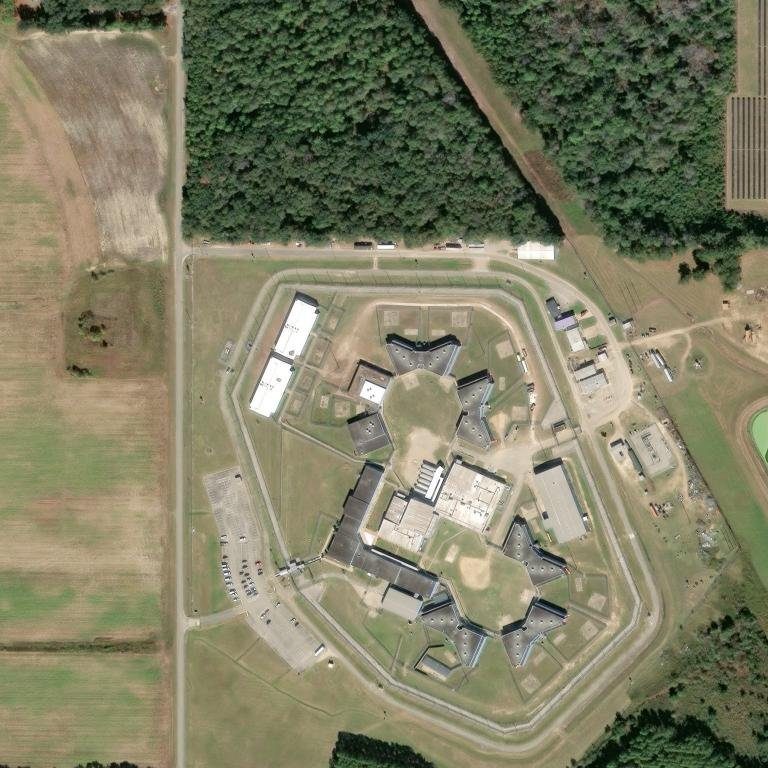
Satellite image: Esri World Imagery. Architecture documents what the building was designed to hold. See the system-wide receipts at gps.press/warehouse.
Then and now

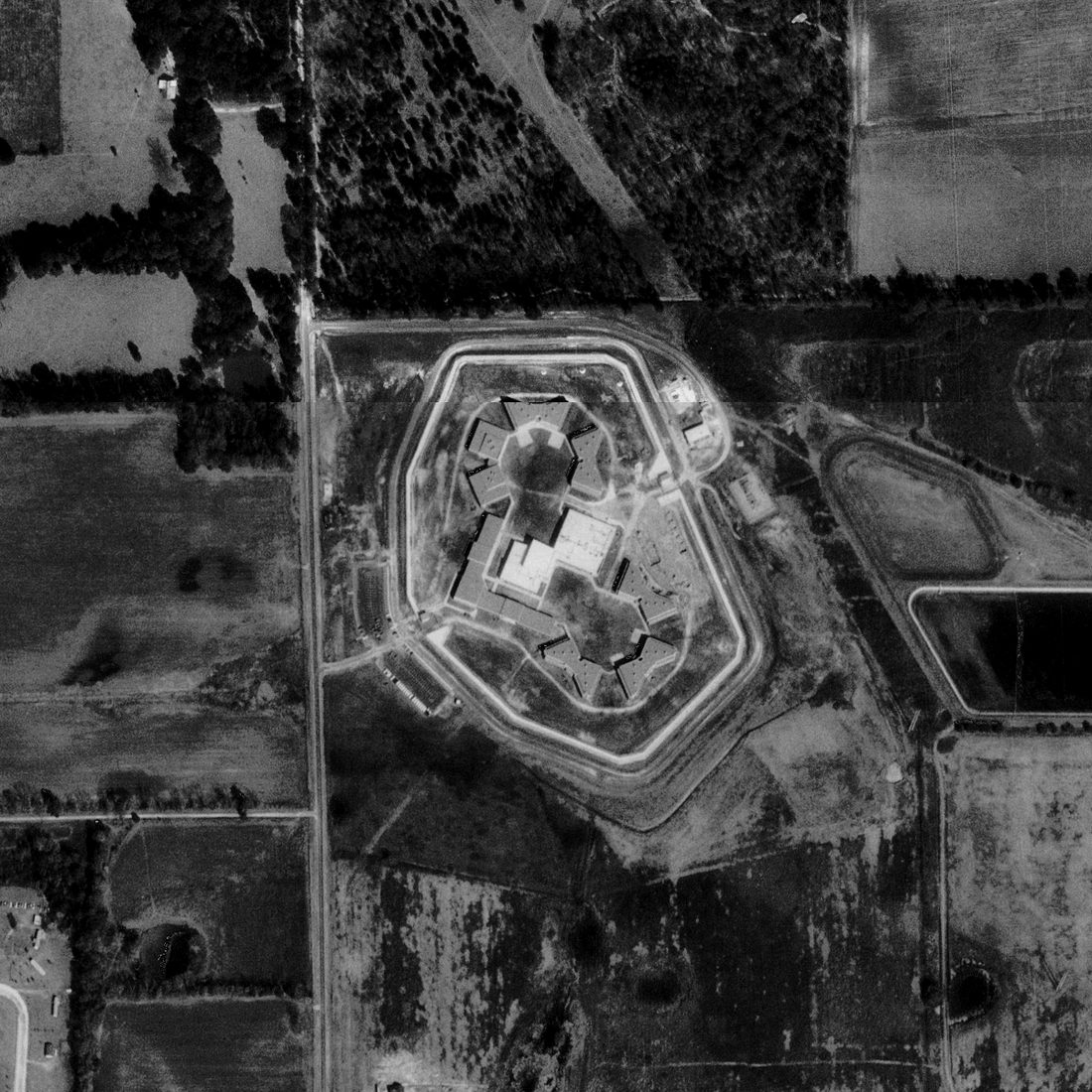
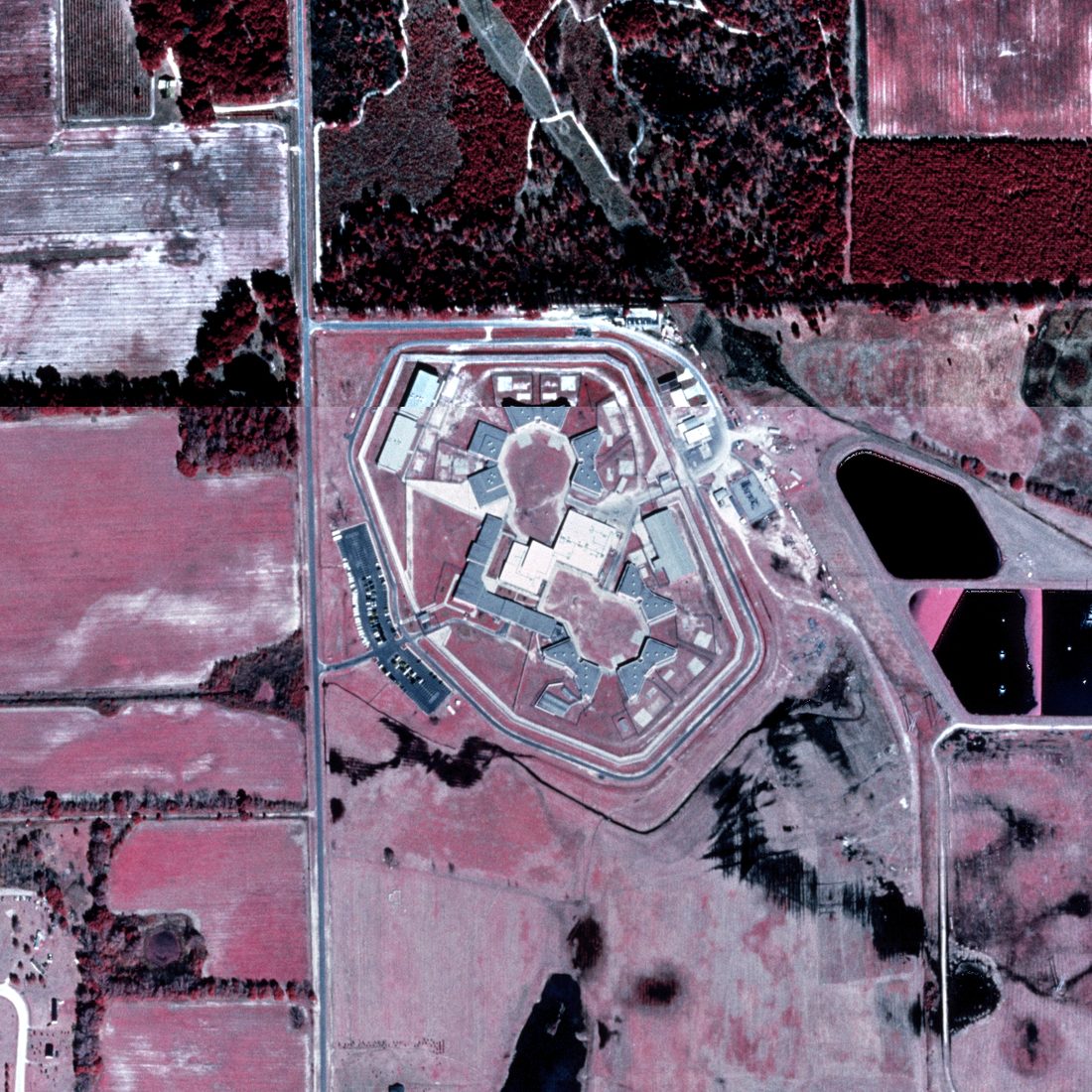
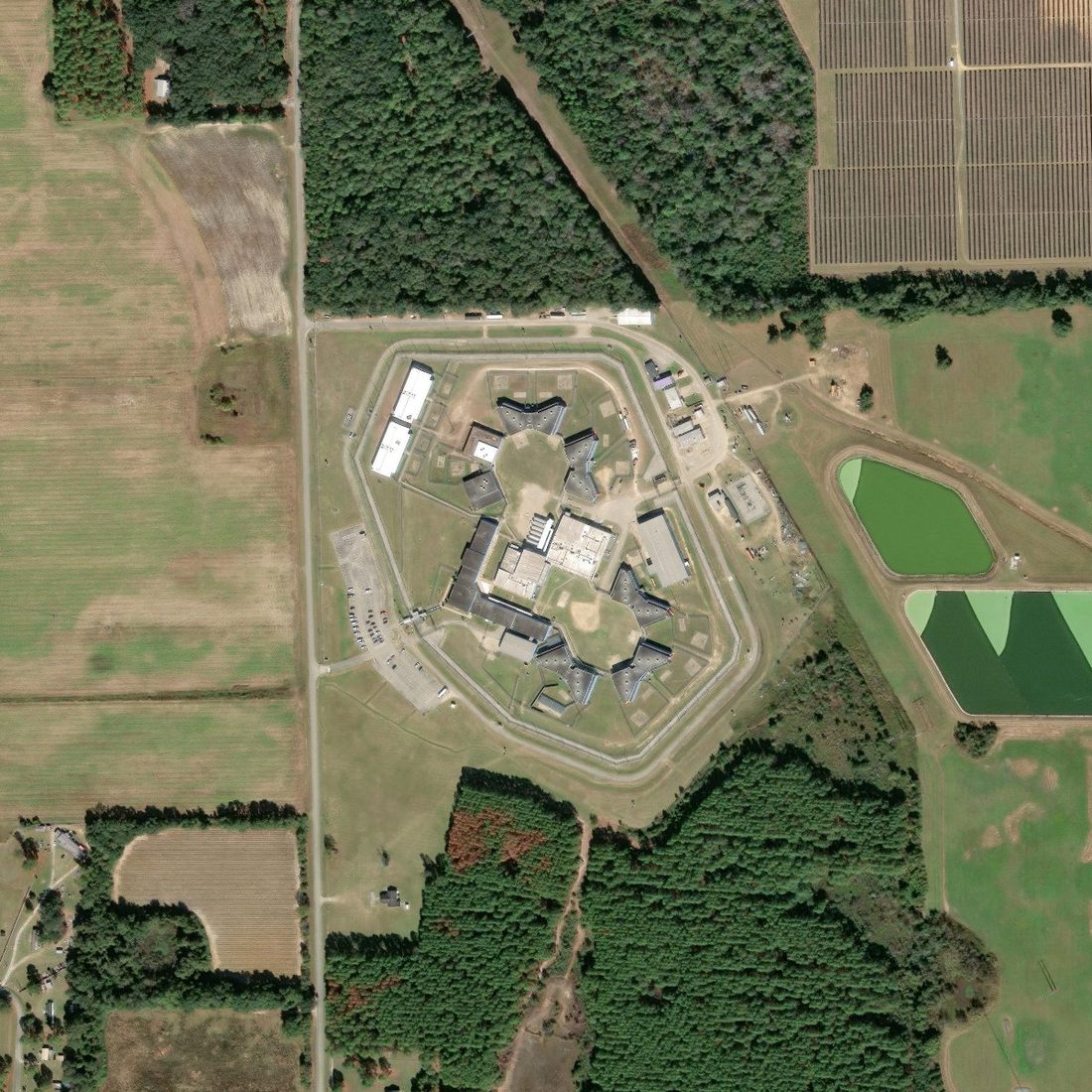
Each photo shows the same 1.2 km square, north up, so buildings line up from one year to the next. The older photos are U.S. Geological Survey aerial photographs. The photos from 1988 and earlier were taken on film and lined up with the later ones by their roads, so their positions are approximate. The early-1980s photos were taken from very high up and are less sharp. Select a photo to see it full size.