SMITH STATE PRISON
Facility Information
- Original Design Capacity
- 500 (at 215% capacity)
- Bed Capacity
- 1,526 beds
- Current Population
- 1,073
- Active Lifers
- 288 (26.8% of population) · Oct 2026 GDC report
- Life Without Parole
- 195 (18.2%)
What the courts held in Brown v. Plata, and how Georgia compares →
- Address
- 9676 Hwy 301 North, Glennville, GA 30427
- Phone
- (912) 654-5000
- Fax
- (912) 654-5305
- Mailing Address
- P.O. Box 726, Glennville, GA 30427
- County
- Tattnall County
- Opened
- 1993
- Operator
- GDC (Georgia Dept. of Corrections)
Security Classification
Last updated: October 2, 2026
945 of the 1,066 people held here are classified Close security (88.6%), as of September 23, 2026.
| Security level | People | Share |
|---|---|---|
| Close | 945 | 88.6% |
| Medium | 114 | 10.7% |
| Minimum | 6 | 0.6% |
| High | 1 | 0.1% |
| Total | 1,066 |
Earlier count (undated table, produced October 22, 2025): 1,002 of 1,125 Close (89.1%).
Restrictive housing beds
| Program | Beds | Occupied |
|---|---|---|
| Tier II | 111 | 89 |
| STEP | 20 | 14 |
Source: Georgia Department of Corrections records produced to GPS under the Open Records Act (R031471-090226, R024615-101925, R031710-091426). A person's security level is GDC's classification of that person, which can differ from the prison's own designation.
Follow Smith State Prison
Leadership & Accountability (as of 2026 records)
Officials currently holding positional authority at this facility, with deaths attributed to GPS-tracked records during their leadership tenure. Inclusion reflects role-based accountability, not legal findings of personal culpability. Death counts shown as facility / career.
| Role | Name | Since | Deaths this facility / career |
|---|---|---|---|
| Warden (facility lead) | Mims, Charles Michael | 2025-07-16 | 4 / 46 |
| Deputy Warden of Care and Treatment (facility deputy) | Warren, Willesha | 2022-01-01 | 23 / 23 |
| Deputy Warden of Security (facility deputy) | Carver, Keenan | 2024-01-01 | 7 / 7 |
| Deputy Warden of Administration (facility deputy) | Kennedy, Ashley L | 2024-01-01 | 7 / 7 |
| Deputy Warden of Security (facility deputy) | Edwards, Brianna | 2026-07-01 | — / — |
About
Last updated October 18, 2026.(DS)
Smith State Prison: A Close-Security Facility Where the Contraband Economy Set the Terms
Smith State Prison opened in Glennville, in Tattnall County, in 1993, and GPS's standing record describes it as a close-security prison for men built for some of Georgia's highest-custody prisoners — a combination of cellblocks and dormitories with extensive segregation and special-management housing, plus a residential substance-abuse and transitional program run through a nearby center. Its original design capacity was 500; it is now rated for 1,526 and, per GPS's facility records, holds roughly 1,073 people, about 70 percent of rated capacity. What follows is not a story about a building. It is a story about what happens when a prison's contraband economy becomes more reliable than its security perimeter, and when the people responsible for that perimeter are, by the state's own numbers, mostly absent.
The analytical threads below run together: a homicide rate that GPS's mortality registry puts at 18 of 38 recorded deaths since January 2020; a staffing collapse that the Atlanta Journal-Constitution documented at two-thirds of officer posts unfilled; a contraband pipeline that a GDC criminal investigator testified put a gun inside the facility for a year before it was used; and a corruption case that reached the warden's office and, in May 2026, a Tattnall County grand jury.
Eighteen Homicides in a Registry of Thirty-Eight Deaths
GPS's mortality registry records 38 deaths at Smith State Prison since January 1, 2020 — a floor, not a ceiling, because GDC reports deaths roughly two months late. Of those, 18 are coded as homicides, eight as suicides, five as unknown or pending, three as natural or medical, two as overdose, and two as medical neglect. The full list is maintained at GPS's facility death page.
The most recent names in that registry carry the pattern forward. Dreeonnie Lee Hart died May 14, 2026, at Smith State Prison at age 25; GPS's registry lists the cause as unknown/pending. Dwayne Eric Albritton died March 12, 2026, at age 65, with the cause listed as medical neglect. Nicholas Shafer died February 8, 2026, at age 24; the registry lists homicide. John Jacobs died October 25, 2025, at 77, of natural/medical causes. Calvin Bernard Craft died December 14, 2024, at 34, and Orlando Jordan died September 13, 2024, at 36 — both with causes listed as unknown/pending. Richard Jermine Williams died September 7, 2024, at 43, of an overdose. Jaydrekus Cartez Hart died June 16, 2024, at 34; the registry lists suicide. Gineli Antoine Gray died February 9, 2024, at 31, cause unknown/pending, and Donquerius Lamonte Mahone died February 4, 2024, at 37, a homicide.
The 2023 cluster is the densest. James Adams died November 8, 2023, at 72, a homicide. Lawrence Leon Woods died October 18, 2023, at 34, with the cause listed as medical neglect. Walter Russell Wright died September 26, 2023, at 64, of natural/medical causes. Quenton George Mayo died August 14, 2023, at 30, a homicide; Justin Tyler Smith died July 28, 2023, at 37, a homicide; Austin Jacob Witte died July 17, 2023, at 33, a suicide. Shaquan Jahrel Boykins died May 11, 2023, at 31, a homicide; Calvin Darrell Denson died April 26, 2023, at 31, a homicide; Anthony Joseph Zino died April 5, 2023, at 71, a homicide; Boris Ignacio Mejia died March 18, 2023, at 29, a suicide; and Randy Wynn died March 1, 2023, at 54, a homicide. In the fall of 2022, Juan Miguel Orduna died October 25 at 39 (suicide), Nathan Michael Mahan died October 23 at 37 (homicide), Manuel Villagomez died September 16 at 24 (suicide), and Jerome Tisdol died May 28 at 67 with a cause listed as unknown/pending.
The Atlanta Journal-Constitution's death-by-death reporting supplies circumstances the registry does not. It reported that Zino's body was badly decomposed and that he had likely been dead for days before being discovered — a detail the paper framed as a failure to monitor. It reported that Justin Tyler Smith died of an epidural hematoma after being punched and fell, striking his head. It reported that Denson's death, a stab wound to the chest, followed a fight involving seven inmates, and that Mayo died of stab wounds to the neck in an incident involving four prisoners. And it reported that Desmond Hill, who died April 9, 2021, at 35, had called his mother the day before to say his cellmate had threatened to kill him.
The Gun in the Kitchen: June 16, 2024
The event that made Smith State Prison a statewide story happened at 4:30 a.m. on June 16, 2024. The Atlanta Journal-Constitution reported that Jaydrekus Hart, an incarcerated man, shot and killed 24-year-old Aureon Shavea Grace, an Aramark food-service employee, in the prison kitchen, then shot himself; he was pronounced dead at a local hospital. GPS's registry records Hart's death that day as a suicide. The shooting put every GDC facility on lockdown and canceled visitations; roads into the prison were closed and officers in tactical gear were stationed at the entrance, the AJC reported.
The question of how the gun got inside produced two competing accounts, and the gap between them is the analytical center of the case. Georgia Public Broadcasting reported that investigators alleged someone used a drone to smuggle the firearm. But at a Tattnall County Superior Court hearing, GDC Criminal Investigation Division Special Agent Justin Fountain testified that the gun had been inside Smith State Prison for a year before the killing — that a package containing tobacco, clothing, and suspected drugs was thrown over the fence between June 30 and July 10, 2023, and that a woman known to CID for about two years facilitated the gun with at least three others. Fountain testified that the coordinating inmate, who is serving life, sent photographs of the gun on a contraband phone as early as January 1, 2024, and that the weapon was moved to the kitchen by a second inmate before the coordinator and that inmate went to segregation on contraband charges and entrusted Hart and another man with keeping it moving. Most consequentially, Fountain testified that GDC, CID, and police knew about the gun's existence on June 13, 2024 — three days before the shooting.
Grace's mother, Deshonda Hagins, filed a wrongful-death suit against the Georgia Department of Corrections in Fulton County State Court demanding a jury trial. The AJC reported the complaint alleges that warnings about the gun came from inmates and were provided directly to multiple GDC officials, including during official investigations, and that no lockdown, extensive search, or protective measures were taken afterward. Her attorney, Brent Savage, stated there were no guards in the area when Grace was killed. Hagins also alleges that Hart was not authorized to be in the kitchen, was favored by GDC staff, and was permitted to violate rules with impunity. GDC accused Grace of helping Hart get the gun inside; her family denies it, asserting the gun was present before she started work there in January 2024. Hagins learned of her daughter's death, the AJC reported, from inmates posting on contraband phones.
A Warden's Office Inside the Contraband Economy
The contraband pipeline at Smith State Prison was not only an inmate enterprise. The AJC reported that then-Warden Brian Adams was arrested and fired for his part in a sprawling scheme known as the Saint Laurent Squad, charged with violating Georgia's RICO Act, bribery, making false statements, and violating his oath as a public officer. The Georgia Virtue reported that a Tattnall County grand jury returned a True Bill of Indictment against Adams on May 12, 2026, on six felony counts — Violation of RICO, Making False Statements, Tampering with Evidence (two counts), and Violation of Oath by a Public Officer (two counts) — presented by the Georgia Attorney General's Office before a special call-back grand jury after 39 months. The Georgia Bureau of Investigation had arrested Adams earlier, and he bonded out of the Tattnall County Jail on February 9, 2023.
The civil litigation describes the alleged mechanics. A suit filed in Tattnall County State Court seeks damages from Adams and former Corrections Officer Ireon Moore, alleging they allowed contraband including cell phones, narcotics, and weapons and facilitated a criminal conspiracy to kill a non-complicit correctional officer; it alleges Moore was paid to participate, with financial arrangements carried out through text message, and that Adams should have noticed cell phones, narcotics, weapons, designer brand clothing, jewelry, and tobacco inside the prison. The Georgia Virtue reported that agents alleged Adams provided false statements in an April 13, 2022 interview when he said he had not been solicited or bribed by a GDC inmate in the past ten years, and that he participated in a RICO organization and accepted currency bribes through a pattern of racketeering associated with the enterprise run by inmate Nathan Weekes. The Georgia Court of Appeals declined to hear an appeal from Adams and Moore, citing lack of jurisdiction over an incorrect appellate procedure after a new direct-appeal statute took effect.
Weekes is the through-line. The AJC reported that Weekes allegedly led a large contraband scheme from behind bars, ordered a hit on a correctional officer, and is tied to the mistaken-identity killing of 88-year-old Bobby Kicklighter — shot to death in his bed in Glennville in 2021, in a house next door to the officer's — as well as two other murders outside the prison. The Georgia Virtue reported that Adams remained as warden even after GDC learned of at least two murders alleged to have been orchestrated from behind Smith's walls, some eighteen months before his termination. A wrongful-death suit filed by Kicklighter's family alleges Adams and Moore facilitated a criminal enterprise that led to his murder in a botched murder-for-hire scheme.
The AJC's broader accounting places Smith's case in a systemwide frame: more than 425 GDC employees arrested for on-the-job crimes since 2018, many escaping prison time; and a GDC that does not research the credit or financial histories of applicants, unlike the federal system, contributing to the hiring of financially vulnerable employees susceptible to corruption. GPS's own analysis of GDC contraband reports ranks Smith State Prison sixth among facilities for incidents naming staff-class people — 20 staff-class individuals across 105 incidents — behind Dooly, Calhoun, Wilcox, Valdosta, and Telfair. GDC's published contraband reports for Smith record a 2024 incident in which the Glennville Police Department arrested two people after a vehicle drop-off near the facility, with three bags, 13 taped packages, and business cards recovered.
Two-Thirds Vacant: Staffing Collapse as the Operating Condition
In January 2025 the Atlanta Journal-Constitution reported a number that reframes everything above: at Smith State Prison, two-thirds of correctional officer positions were unfilled, leaving 53 officers at a facility designed for 160. The paper had reported a month earlier that 70 percent or more of correctional officer jobs were vacant at eight state prisons as of August 2023, and that Smith was among the most understaffed, violent, and dysfunctional facilities in the system.
Former officer Andrew Phillips described the consequence to The Marshall Project. Phillips was the sole officer assigned to an area housing 600 men, with no functioning fire extinguishers, when inmates set mattresses on fire; he worked 11 consecutive days, had feces and urine thrown at him, and was called to escort a stabbing victim to the hospital. The Marshall Project reported that understaffing and conditions at Smith were so severe that Phillips and colleagues had no energy to care for inmates, and that the environment was described as "too brutal, too disgusting." Phillips resigned, was convinced to stay in a different position for a few months, and left permanently in February 2023.
Tyler Ryals, a former GDC officer, wrote on Facebook on October 11, 2026, that Correctional Officer Robert Clark was escorting inmates at Smith State Prison alone — at a facility he described as "purported to be 'Close Security'" — when he was stabbed, with no officer nearby to help. Ryals wrote that another inmate stepped in and was stabbed in the process. The AJC reported that Clark, 42, was killed after being assaulted with a homemade weapon, and that his death certificate recorded multiple stab wounds; GPS's registry and the paper place his death on October 1, 2023. Ryals wrote that Smith was allowed to continue "operating" with a fraction of the staff required to secure it, and that a few months later a civilian kitchen worker was shot dead inside the same prison. He put the number of in-custody deaths since 2020 at more than 1,880; GPS's own canonical count of deaths in GDC custody system-wide since 2020 is 1,918.
The staffing picture is not static in the state's telling. The AJC reported that correctional officer starting salaries rose from $31,040 to $44,044 between January 2019 and early 2024, and that turnover fell from 47.8 percent in FY22 to 35.7 percent in FY24. GPS's systemic reporting treats the vacancy crisis as the integrated structural finding behind the violence: officer vacancies across Georgia's prisons have run between 49.3 and 60 percent systemwide for multiple years against a national standard of no more than 10 percent, and the October 2024 Department of Justice findings letter concluded that "the leadership of the Georgia Department of Corrections has lost control of its facilities," faulting GDC for placing "too much blame on gangs and insufficient emphasis on understaffing."
Gangs, Lockdowns, and the April 2026 Disturbance
On April 1, 2026, an altercation at Smith State Prison sent two inmates to local hospitals by airlift; officials believed it was gang-related, WTOC reported, and the disturbance was contained to one dorm. GDC placed all of its facilities on lockdown "out of an abundance of caution" until further notice. GPS records show a concentration of assault-by-inmate signals at this facility in 2026, including a critical-severity cluster in June, and recurring reports of gang discussion of coordinated retaliation against staff.
The gang context is not incidental to Smith's design. GPS's systemic reporting notes that roughly 31 percent of the system's incarcerated population are validated members of 315 different security threat groups — more than double the national average — and that DOJ and the 2024 Guidehouse assessment independently concluded gangs effectively run multiple facilities, controlling access to phones, showers, food, and bed assignments. The AJC documented the reach of that control from Smith specifically: Ricardo Silva, a gang member, was sentenced to 35 years for running a meth trafficking operation that coordinated deliveries from a source in Mexico even while segregated 23 hours a day; agents seized more than 100 pounds of liquid and crystal meth. In a separate case the paper reported that an inmate admitted stealing $11 million from an investment account using a cellphone smuggled into prison, reportedly paying up to $10,000 for the device.
GPS has received accounts of a staff member beaten and stabbed by multiple incarcerated people at Smith State Prison in 2026, and of a CERT team member attacked in the same period. GPS records also show family-safety-concern signals at this facility across four months of the past year, several at critical severity, and three external complaints filed to oversight bodies in October 2026.
The Kitchen Behind the Score: Food Safety and the Limits of Inspection
The Georgia Department of Public Health has inspected Smith State Prison's food service five times since mid-2023, and the scores trace a facility that never quite fails and never quite passes clean. On August 12, 2026, the facility scored 83, Grade B, with four violations including proper cold holding temperatures and contamination prevention during food preparation, storage, and display. On February 16, 2026, it scored 72, Grade C, with nine violations including cold holding, food labeling, and thermometers. Earlier scores were 85 (Grade B) on June 27, 2025; 82 (Grade B) on January 19, 2024; and 84 (Grade B) on June 29, 2023.
GPS's systemic reporting argues that these scores systematically understate the problem. GPS has documented a pattern across GDC kitchens in which tray-sanitizing dishwashers sit broken for sustained periods, roach and rodent infestations persist in kitchen and serving areas, and meals are served on visibly contaminated trays — a pattern GPS attributes in part to scheduled walkthrough inspections that do not assess equipment under load. The Marshall Project independently reported in May 2026 on rats in kitchens, insects in food, moldy trays, and visible malnutrition across Georgia facilities. GPS's reporting further notes that GDC spends approximately $1.69 per person per day on food in 2024 and has proposed $1.60 per day in FY27 — under 60 cents per meal — against an FDA Thrifty Food Plan estimate of roughly $10 per day for an adult man's nutritionally adequate diet.
What the Record Shows, and What It Does Not
The settlements Georgia has paid out in Smith State Prison cases sketch a long arc: $75,000 to Ricardo Tavera Jaramillo (2014 incident), $15,000 to Rufus Newberry (2018), $1,450,000 to Christopher Heath (2020, linked to a documented death record), $3,472 to Micki Antonio Brown (2022), and $450,000 to Julia Roberts (2023), all per the Georgia Department of DOAS Risk Management settlement ledger obtained through open records.
The facility's current leadership, per GPS's personnel records, is Warden Charles Michael Mims, in post since July 2025, with Deputy Wardens of Security Keenan Carver and Brianna Edwards, Deputy Warden of Care and Treatment Willesha Warren, and Deputy Warden of Administration Ashley L Kennedy. Brian Adams is a former warden, arrested and replaced in February 2023; the AJC reported that Jacob Beasley has been warden since that month.
Two things should be said plainly about the limits of this record. First, GPS's registry counts are floors: GDC reports deaths roughly two months late, so the 38 deaths recorded here since 2020 understate what has actually happened. Second, the causes listed as unknown or pending are exactly that — GPS does not know them and does not guess. What the record does establish is a facility where a gun stayed inside for a year while the state's own investigators knew of it for three days, where a warden was indicted on RICO charges arising from the contraband trade, where two-thirds of officer posts sat empty, and where 18 people have been killed since 2020.
Sources
This analysis draws on reporting by the Atlanta Journal-Constitution, Georgia Public Broadcasting, WTOC, The Marshall Project, The Georgia Virtue, and In These Times; on Georgia Department of Public Health food-safety inspection records; on the Georgia DOAS Risk Management settlement ledger obtained through open records; on court filings in Tattnall and Fulton County State Courts and on Tattnall County grand jury proceedings; on GDC's own published contraband reports; on testimony by GDC Criminal Investigation Division Special Agent Justin Fountain in Tattnall County Superior Court; on a public Facebook post by former GDC officer Tyler Ryals; on first-person narratives published in Georgia Prisoners' Speak's Tell My Story series; and on GPS's mortality registry, personnel records, contraband database, and systemic findings.
Mortality Statistics
40 deaths documented at this facility from 2020 to present.
Deaths by Year
- 2026: 5
- 2025: 1
- 2024: 6
- 2023: 11
- 2022: 5
- 2021: 7
- 2020: 5
County Public Health Department
Food service and sanitation at SMITH STATE PRISON fall under the jurisdiction of the Tattnall County Environmental Health Department. Incarcerated people cannot choose where they eat — public health inspectors carry an elevated responsibility to hold this kitchen to the same standards applied to any restaurant.
Contact
- Title
- EH Specialist
- Name
- Lance Dasher
- Address
-
P.O. Box 353
Glennville, GA 30427 - Phone
- (855) 473-4374
- Lance.Dasher@dph.ga.gov
- Website
- Visit department website →
Why this matters
GPS has documented black mold on chow-hall ceilings, cold and contaminated trays, spoiled milk, and pest contamination at Georgia prisons. The Department of Justice's 2024 report confirmed deaths from dehydration and untreated diabetes tied to food and water deprivation. Advance-notice inspections let facilities stage temporary fixes that disappear once inspectors leave.
Unannounced inspections by the county health department are one of the few outside checks on kitchen conditions behind the fence.
How you can help
Write to the county inspector and request an unannounced inspection of the kitchen and food service operation at this facility. A short, respectful letter citing Georgia food-safety regulations is more powerful than you think — inspectors respond to public concern.
Sample Letter
This is the letter Georgia Prisoners' Speak mailed to all county environmental health inspectors responsible for GDC facilities. Feel free to adapt it.
October 24, 2026
RE: Request for Unannounced Public Health Inspection of Food Service Operations at SMITH STATE PRISON
Dear Lance Dasher,
I am writing to respectfully request that your office conduct a thorough, unannounced inspection of food service and sanitation practices at SMITH STATE PRISON, located in Tattnall County.
Documented concerns
Georgia Prisoners' Speak, a 501(c)(3) nonprofit investigative newsroom, has published extensive investigative reporting on food safety and nutrition failures across Georgia's prison system, including:
- Dangerous sanitation conditions — black mold on chow hall ceilings and air vents, contaminated food trays, and spoiled milk served to inmates.
- Severe nutritional deficiency — roughly 60 cents per meal; inmates receive only 40% of required protein and less than one serving of vegetables per day.
- Preventable deaths — the U.S. Department of Justice's 2024 report confirmed deaths from dehydration, renal failure, and untreated diabetes following food and water deprivation.
- Staged compliance — advance-notice inspections allow facilities to stage temporary improvements, then revert once inspectors leave.
Firsthand testimony
In Surviving on Scraps: Ten Years of Prison Food in Georgia, a person who has spent more than ten years in GDC custody describes no functional dishwashing sanitation, chronic mold on food trays, and roaches found on the undersides of trays at intake facilities. Full account: gps.press/surviving-on-scraps-ten-years-of-prison-food-in-georgia.
Specific requests
- Conduct an unannounced inspection of the kitchen and food service operations at this facility, with particular attention to dishwashing equipment, tray sanitation procedures, and food storage conditions.
- Evaluate compliance with applicable Georgia food safety regulations, including O.C.G.A. § 26-2-370 and the Georgia Food Service Rules and Regulations (Chapter 511-6-1).
- Verify permit status and confirm whether the facility is subject to the same inspection schedule as other institutional food service establishments in the county.
- Make inspection results available to the public, as permitted under Georgia's Open Records Act (O.C.G.A. § 50-18-70).
Incarcerated individuals cannot advocate for their own health and safety in the way a restaurant patron can — they cannot choose to eat elsewhere. This places an elevated responsibility on public health officials to ensure these facilities meet the same sanitation standards applied to any food service establishment.
Thank you for your attention to this important public health matter.
Sincerely,
[Your name]
Food Safety Inspections
Georgia Department of Public Health
What the score doesn't measure. DPH grades kitchen compliance on inspection day — food storage, temperatures, pest control. It does not grade whether today's trays are clean. GPS reporting has found broken dishwashers at most Georgia state prisons we've documented; trays go out wet, stacked, and visibly moldy — including at facilities with recent scores near 100.
Who inspects. Most Georgia state prisons sit in rural counties — often with fewer than 20,000 people, several with fewer than 10,000. The environmental health inspector lives in that community and often knows the kitchen staff personally. Rural inspection regimes don't have the structural independence you'd expect in a city-sized health department. Read the scores accordingly.
Read the investigation: “Dunked, Stacked and Served: Why Georgia Prison Trays Are Making People Sick”
Recent inspections
| Date | Score | Purpose | |
|---|---|---|---|
| Aug 12, 2026 | 83 | Routine | |
| Feb 16, 2026 | 72 | Routine | |
| Jun 27, 2025 | 85 | Routine | |
| Jan 19, 2024 | 82 | Routine | |
| Jun 29, 2023 | 84 | Routine |
August 12, 2026 — Score 83
Routine · Inspector: Lance Dasher
| Code | Violation | Pts | Inspector notes |
|---|---|---|---|
| 1A |
proper cold holding temperatures 511-6-1.04(6)(f) - time/temperature control for safety; cold holding (p) Corrected | 9 | Observed milk in carton at 44 F, unit has been serviced and is cooling down. Milk out of the cooler has to be maintained at 41 F for service, need a insulated storage unit. |
| 12A |
contamination prevented during food preparation, storage, display 511-6-1.04(4)(z) - miscellaneous sources of contamination (c) Corrected Repeat | 3 | Observed water bottle, carton milk, container of food stored in ice maker. Remove and clean. Observed trays of chicken stored on top of each other without a liner. Separate. |
| 15C |
nonfood-contact surfaces clean 511-6-1.05(7)(d) - nonfood-contact surfaces (c) | 1 | Observed food debris on clean dish storage racks, clean. |
| 18 |
insects, rodents, and animals not present 511-6-1.07(5)(k) - controlling pests (pf, c) | 3 | Observed roaches at dishwashing area. |
February 16, 2026 — Score 72
Routine · Inspector: Lance Dasher
| Code | Violation | Pts | Inspector notes |
|---|---|---|---|
| 1A |
proper cold holding temperatures 511-6-1.04(6)(f) - time/temperature control for safety; cold holding (p) | 9 | Observed milk temperature at 44 F-45 F in dairy cooler, move contents out of unit until fixed |
| 10D |
food properly labeled; original container 511-6-1.04(7)(d) - other forms of information (c) | 3 | Observed trays of food in storage, cooked vegetables, no date and food labeling. Discard. |
| 11D |
thermometers provided and accurate 511-6-1.05(2)(x) - tmd, located in refrigerators/ hot holding (pf, c) Repeat | 3 | Observed walk in units missing thermometers and some units with thermometers installed at fan units. Move towards entrance of coolers. |
| 12A |
contamination prevented during food preparation, storage, display 511-6-1.04(4)(z) - miscellaneous sources of contamination (c) | 3 | Observed a jug of water stored in ice maker, remove and clean. |
| 14C |
single-use/single-service articles: properly stored, used 511-6-1.05(6)(r) - single-service/single-use articles, use limitations (c) | 1 | Observed single service cups being used to dispense food products at secondary dry storage. Use scoops with handles. |
| 16B |
plumbing installed; proper backflow devices 511-6-1.06(2)(r) - system maintained in good repair (p, c) | 2 | Observed foot valves not working on hand wash sink, and sink is not secured. Observed hose bibb/spigot at four compartment sink broken, will not shut off. Observed in dishwasher room spray nozzle/faucet is broken and will not shut off. Observed floor drains that are clogged with trash. |
| 17C |
physical facilities installed, maintained, and clean 511-6-1.07(5)(a),(b) - good repair, physical facilities maintained; cleaning, frequency & restrictions, cleaned often enough to keep them clean (c) Repeat | 1 | Observed wall damage in bakery room, clean and paint, observed mildew in dishwasher room, floor, wall, and ceiling. Observed floor in back dry storage in small room with food debris behind shelving. Observed ceiling damage in cage room, water damage. Observed floor by cook station pitting, small holes in flooring. Observed roll up door needing a new gasket. |
| 17D |
adequate ventilation and lighting; designated areas used 511-6-1.07(2)(i) - light bulbs, protective shielding (c) | 1 | Observed cage covers/light shields missing in walk in cooler units. |
| 18 |
insects, rodents, and animals not present 511-6-1.07(5)(k) - controlling pests (pf, c) Repeat | 3 | Observed roach activity at bakery room, and at tray making station. |
June 27, 2025 — Score 85
Routine · Inspector: Lance Dasher
| Code | Violation | Pts | Inspector notes |
|---|---|---|---|
| 2A |
food stored covered 511-6-1.04(4)(c)1(iv) - packaged & unpackaged food, food stored covered(c) Corrected | 4 | Observed open of RTE deli meat uncovered in walk in cooler. Discarded. |
| 11D |
thermometers provided and accurate 511-6-1.05(2)(x) - tmd, located in refrigerators/ hot holding (pf, c) | 3 | Observed walk in cooler(s) with thermometers missing, move thermometers that are present towards door of units. |
| 15A |
food and nonfood-contact surfaces cleanable, properly designed, constructed, and used 511-6-1.05(1)(a) - materials, general requirements (p, c) | 1 | Observed raw wood from under shelving at four compartment sink station, remove. |
| 16B |
plumbing installed; proper backflow devices 511-6-1.06(2)(r) - system maintained in good repair (p, c) | 2 | Observed faucet heads missing in serve line, reinstall. Install pluming under sinks that are missing in tray wash room and prep room. |
| 17C |
physical facilities installed, maintained, and clean 511-6-1.07(5)(a),(b) - good repair, physical facilities maintained; cleaning, frequency & restrictions, cleaned often enough to keep them clean (c) | 1 | Observed walk in freezer floors that need cleaning, debris/trash. Observed inside warehouse roll up door is damaged and needs replacing, large gap at bottom. The storage area has issues with gaps at the floor/way juncture, allowing mice and roaches entry. Seal. |
| 18 |
insects, rodents, and animals not present 511-6-1.07(5)(k) - controlling pests (pf, c) Repeat | 3 | Observed flies, roaches, and rodent droppings at areas in facility, manager has been shown hot spots. Increase vector control. |
January 19, 2024 — Score 82
Routine · Inspector: Lance Dasher
| Code | Violation | Pts | Inspector notes |
|---|---|---|---|
| 2B |
proper eating, tasting, drinking, or tobacco use 511-6-1.03(5)(k)1&2 - eating, drinking, or using tobacco (c) Corrected | 4 | Observed drinks in kitchen not in a designated area away from prep and storage, in bakery, prep area, and serve line. |
| 2B |
food-contact surfaces: cleaned & sanitized 511-6-1.05(6)(n) - manual and mechanical warewashing equipment, chemical sanitization-temperature, ph, concentration, hardness (p,pf) Corrected | 4 | Observed sanitizer level in sink not detectable, water dropped and refilled. |
| 15A |
food and nonfood-contact surfaces cleanable, properly designed, constructed, and used 511-6-1.05(6)(a) - good repair & proper adjustment (c) Repeat | 1 | Observed tilt skillet with wood used to provide support, remove (repeat). Observed latch to dairy cooler door broken, repair. |
| 16B |
plumbing installed; proper backflow devices 511-6-1.06(2)(r) - system maintained in good repair (p, c) Repeat | 2 | Observed faucet leaks at 4 compartment sink, prep sinks, tray machine room rinse station, utility room faucet. |
| 17C |
physical facilities installed, maintained, and clean 511-6-1.07(5)(a),(b) - good repair, physical facilities maintained; cleaning, frequency & restrictions, cleaned often enough to keep them clean (c) Repeat | 1 | Observed ceiling damage in areas of kitchen, pack out room, washing area, side door entrance. Bakery room has wall damage due to metal pans. |
| 18 |
insects, rodents, and animals not present 511-6-1.07(5)(k) - controlling pests (pf, c) | 3 | Observed rodent activity in side warehouse and at caged equipment/spices. Roach activity in tray machine room and serving line by side entrance. |
June 29, 2023 — Score 84
Routine · Inspector: Lance Dasher
| Code | Violation | Pts | Inspector notes |
|---|---|---|---|
| 2D |
adequate handwashing facilities supplied & accessible 511-6-1.06(2)(o) - using a handwashing sink- operation & maintenance (pf) | 4 | Observed hand wash station with no faucet head, and no soap. |
| 12A |
contamination prevented during food preparation, storage, display 511-6-1.04(4)(z) - miscellaneous sources of contamination (c) Corrected | 3 | Observed plastic food trays and jug of water in bottom of ice maker, removed, clean unit. |
| 15A |
food and nonfood-contact surfaces cleanable, properly designed, constructed, and used 511-6-1.05(6)(a) - good repair & proper adjustment (c) Repeat | 1 | Observed steam and condensation buildup in tray washing room. Areas under machine and shelving has black mildew on surfaces. Observed pieces of wood used to level tilting skillets, remove and use metal or plastic to elevate. |
| 16B |
plumbing installed; proper backflow devices 511-6-1.06(2)(r) - system maintained in good repair (p, c) | 2 | Observed sinks at dishwashing area with leaks on faucets and drain pipes. Floor drain was clogged, but was cleared. Observed sinks that could not shut off water flow in tray serving areas. |
| 17C |
physical facilities installed, maintained, and clean 511-6-1.07(5)(a),(b) - good repair, physical facilities maintained; cleaning, frequency & restrictions, cleaned often enough to keep them clean (c) Repeat | 1 | Observed rollup door damaged at small warehouse, spice storage room needs ventilation and continue painting. Ceiling damage observed in pack out room, serve line, and dishwashing area. |
| 18 |
insects, rodents, and animals not present 511-6-1.07(5)(k) - controlling pests (pf, c) | 3 | Observed flies in kitchen, need to keep exterior hallway for garbage disposal closed as much as possible, plastic curtain not be used properly (tied back). Rodent activity is at a better level. |
Recent reports (63)
Source-attributed observations and allegations from news coverage and reports submitted to GPS. Each entry credits its source.
- ALLEGATION According to The Georgia Virtue Published: Jun 22, 2026Adams and Moore facilitated a criminal enterprise within the prison that led to Kicklighter's murder.
"The lawsuit, filed by the family of Bobby C. Kicklighter, alleges that Adams and Moore facilitated a criminal enterprise operating from within the prison, which led to Kicklighter's murder in a botched murder-for-hire scheme in 2021."
Read source → - ALLEGATION According to The Georgia Virtue Published: Jun 22, 2026Adams and Moore facilitated a criminal enterprise within the prison that led to Kicklighter's murder.
"The lawsuit, filed by the family of Bobby C. Kicklighter, alleges that Adams and Moore facilitated a criminal enterprise operating from within the prison, which led to Kicklighter's murder in a botched murder-for-hire scheme in 2021."
Read source → - ALLEGATION According to WTOC Published: May 1, 2025A former employee sexually assaulted a corrections employee.
"A former employee of Smith State Prison in Georgia has been charged with sexual assault involving a corrections employee."
Read source → - ALLEGATION According to The Georgia Virtue Published: May 13, 2026Adams allegedly participated in a RICO organization (Yves Saint Laurent Squad) and accepted currency bribes through a pattern of racketeering associated with the enterprise run by inmate Nathan Weekes.
"They also contended that Adams participated in a RICO organization, being Yves Saint Laurent Squad run by then-Smith State Prison inmate Nathan Weekes, and he committed the offenses of Bribery and False Statements and Writings in furtherance of the RICO organization. Adams, they said, was bribed when he accepted currency through a pattern of racketeering associated with the RICO enterprise."
Read source → - ALLEGATION According to The Georgia Virtue Published: May 13, 2026Agents alleged that Adams provided false statements in an April 13, 2022 interview when he stated he had not been solicited or bribed by a GDC inmate in the past 10 years.
"Agents alleged that Adams provided false statements in an April 13, 2022 interview when he stated he has not been solicited or bribed by a Georgia Department of Corrections inmate in the past 10 years."
Read source →
Timeline (138)
Source Articles (40)
Former leadership
Officials who previously held leadership roles at this facility.
| Role | Name | Tenure | Deaths this facility / career |
|---|---|---|---|
| Warden (facility lead) | Adams, Brian Dennis | 2019-10-01 → 2023-02-08 | 17 / 17 |
| WARDEN 3 (facility lead) | Beasley, Jacob | 2023-11-22 → 2024-12-31 | 6 / 46 |
| CORRECTIONAL SUPERINTENDENT (facility lead) | Todd, Curtis J | 2025-01-01 → 2025-01-31 | — / 1 |
| Warden (facility lead) | Mims, Charles | 2026-07-05 → present | — / — |
| DEPUTY WARDEN (facility deputy) | McFarlane, Andrew M | 2019-01-01 → 2022-12-31 | 17 / 53 |
| Deputy Warden of Security (facility deputy) | Henderson, Marcus | 2019-01-01 → 2023-01-01 | 17 / 17 |
| DEPUTY WARDEN (facility deputy) | Foulks, Rodney | 2023-11-22 → 2025-12-31 | 7 / 7 |
| DEPUTY WARDEN (facility deputy) | COX, Eric | 2021-01-01 → 2021-12-31 | 7 / 51 |
| DEPUTY WARDEN (facility deputy) | Epperson, Alicia | 2022-01-01 → 2022-12-31 | 5 / 5 |
| DEPUTY WARDEN (facility deputy) | Brown, Vashti J | 2019-01-01 → 2020-12-31 | 5 / 12 |
| DEPUTY WARDEN (facility deputy) | Smith, Tarmarshe A | 2016-01-01 → 2017-12-31 | — / 36 |
| Clinical Chaplain (specialty lead) | Hill, Bernard | 2023-11-22 → 2026-08-27 | — / — |
Location
Aerial View
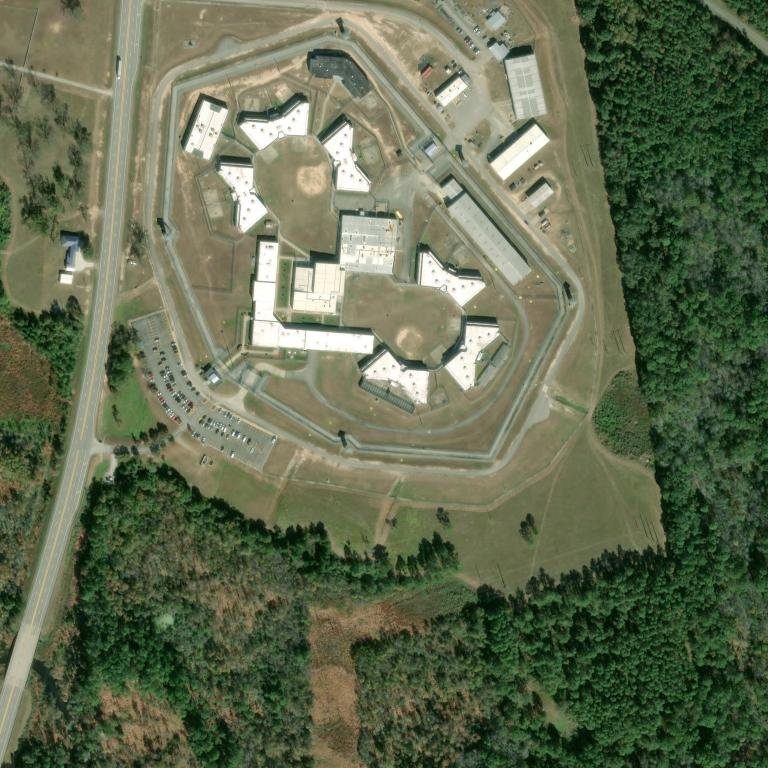
Satellite image: Esri World Imagery. Architecture documents what the building was designed to hold. See the system-wide receipts at gps.press/warehouse.
Then and now
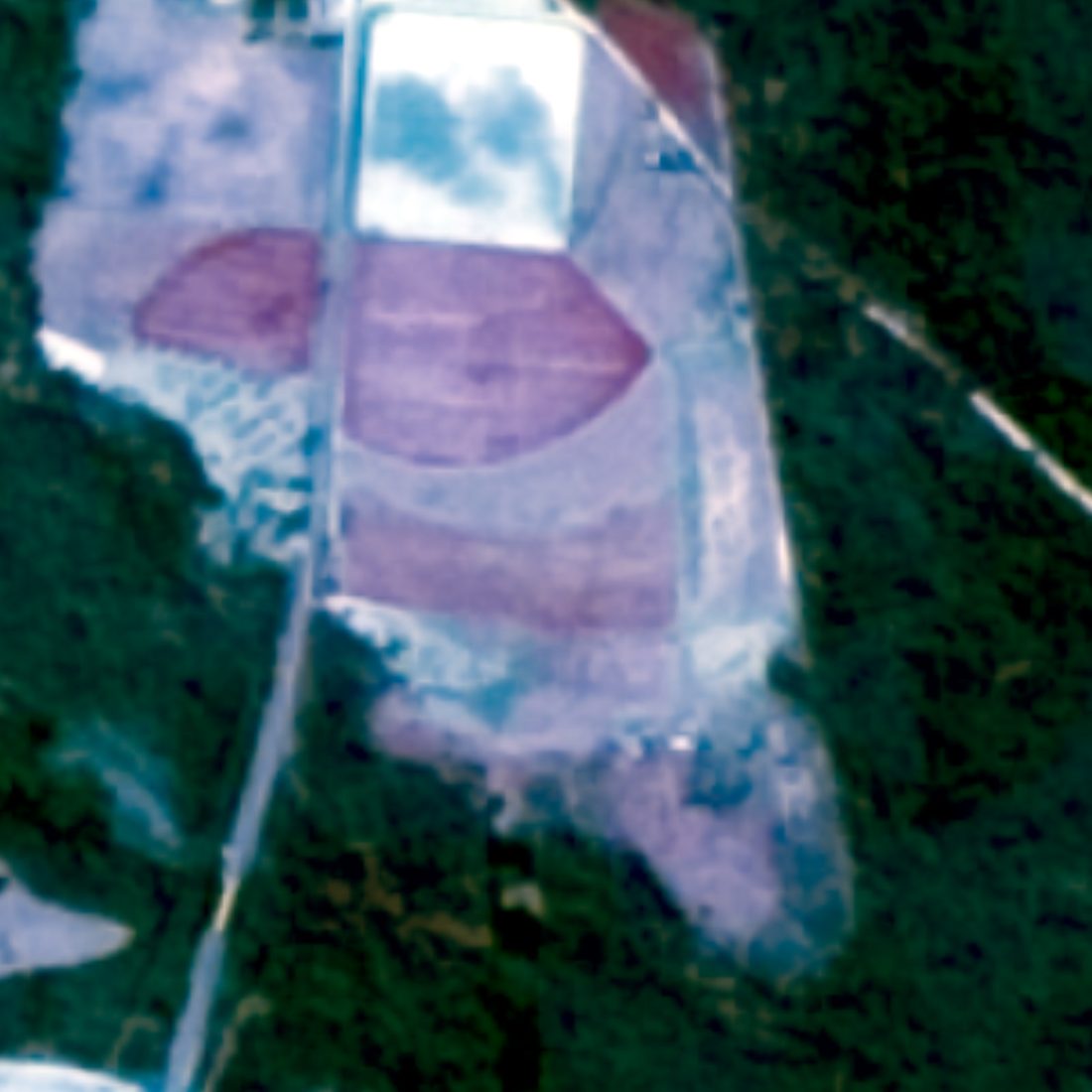
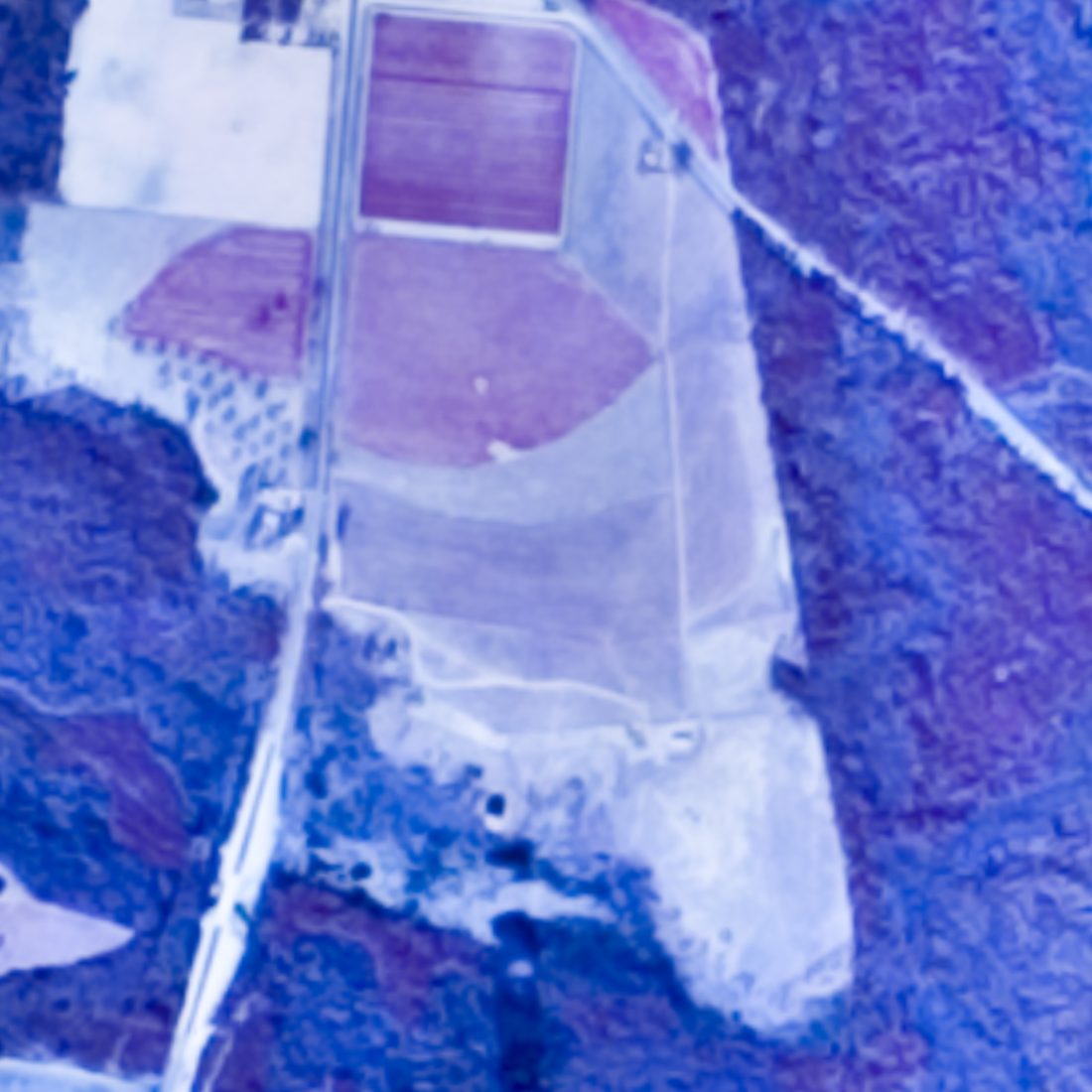
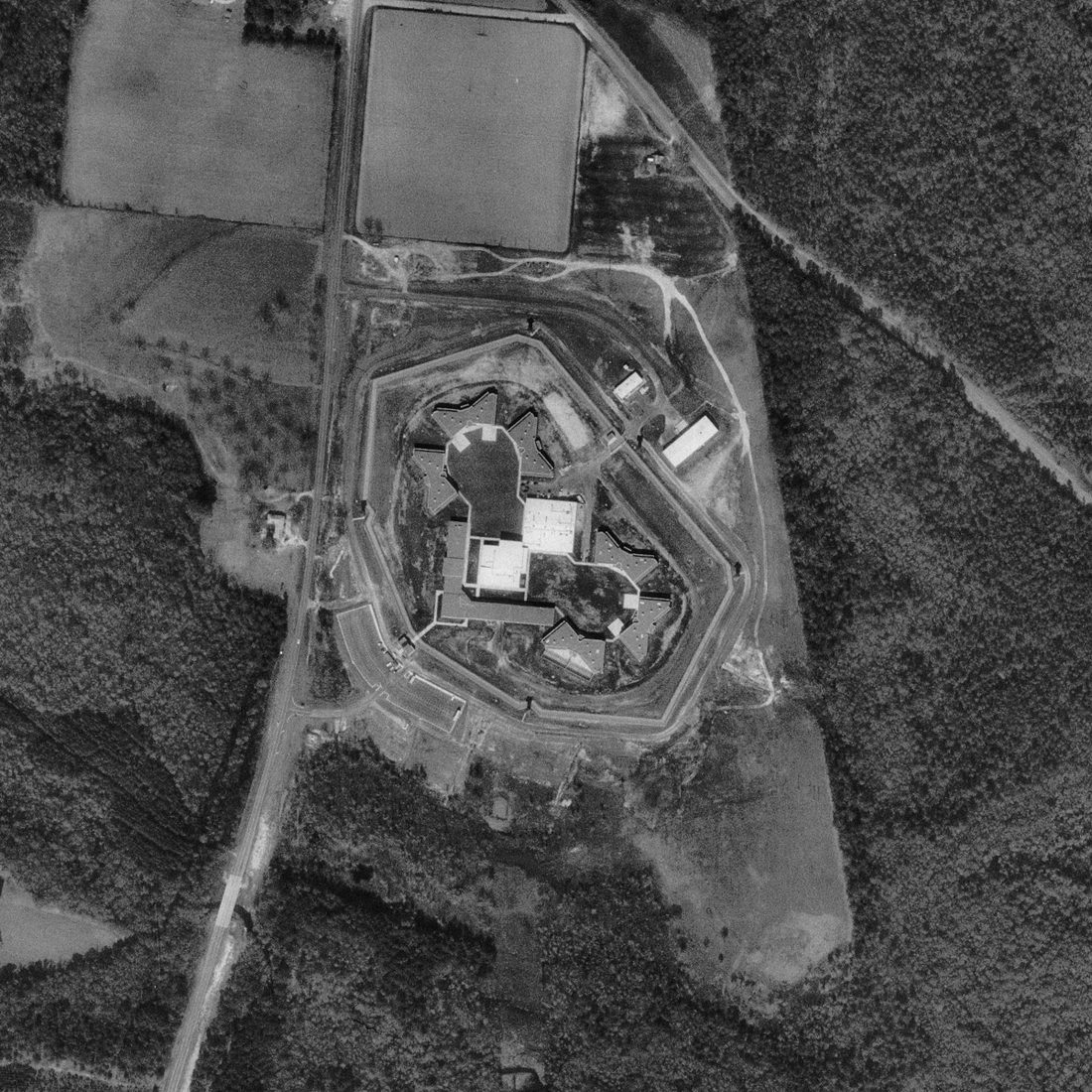
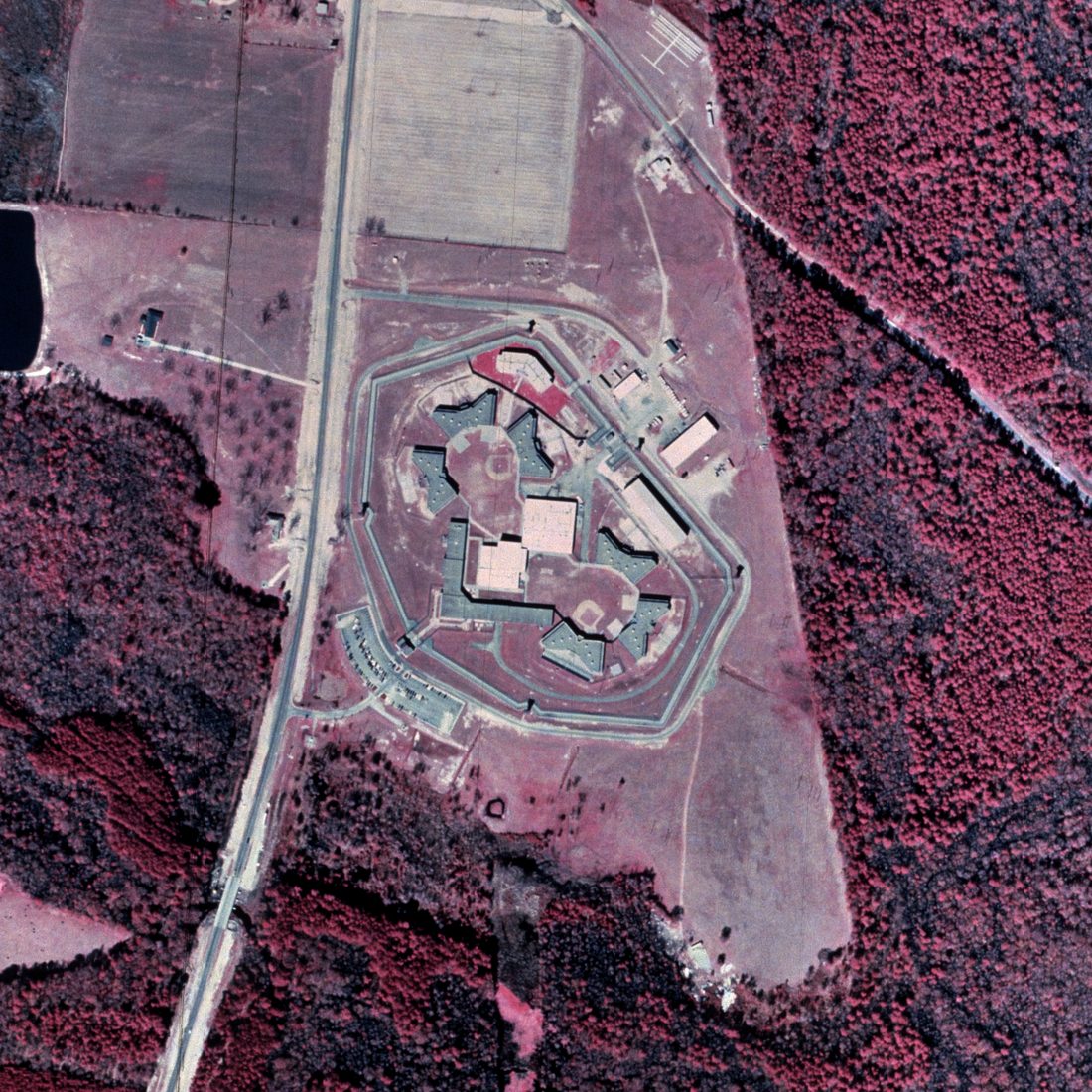
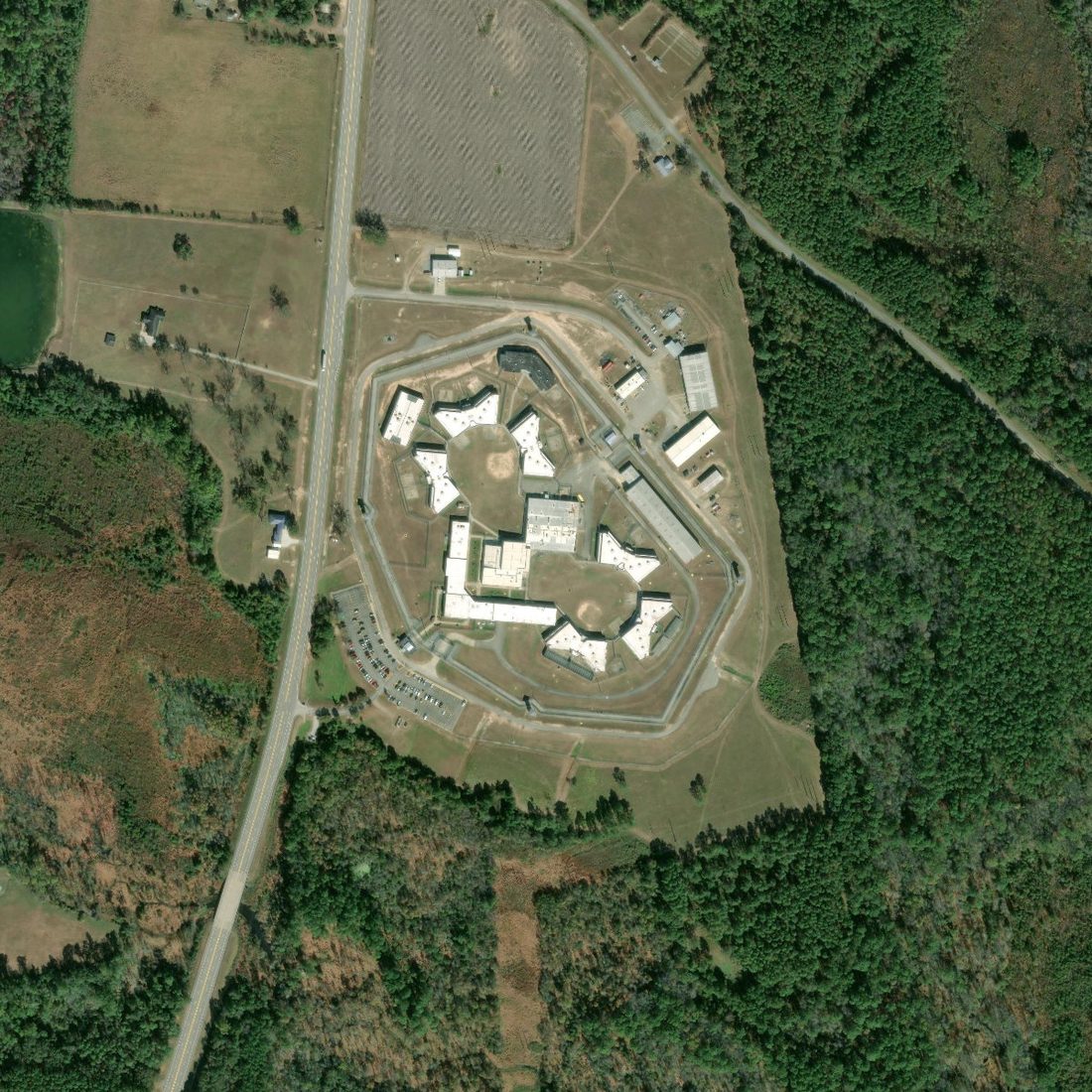
Each photo shows the same 1.2 km square, north up, so buildings line up from one year to the next. The older photos are U.S. Geological Survey aerial photographs. The photos from 1988 and earlier were taken on film and lined up with the later ones by their roads, so their positions are approximate. The early-1980s photos were taken from very high up and are less sharp. Select a photo to see it full size.