AUGUSTA STATE MEDICAL PRISON
Facility Information
- Original Design Capacity
- 535 (at 215% capacity)
- Bed Capacity
- 1,326 beds
- Current Population
- 1,149
- Active Lifers
- 336 (29.2% of population) · Oct 2026 GDC report
- Life Without Parole
- 154 (13.4%)
What the courts held in Brown v. Plata, and how Georgia compares →
- Address
- 3001 Gordon Hwy, Grovetown, GA 30813
- Phone
- (706) 855-4700
- Fax
- (706) 869-7933
- County
- Richmond County
- Opened
- 1983
- Operator
- GDC (Georgia Dept. of Corrections)
Security Classification
Last updated: September 23, 2026
562 of the 1,119 people held here are classified Close security (50.2%), as of September 23, 2026.
| Security level | People | Share |
|---|---|---|
| Close | 562 | 50.2% |
| Medium | 509 | 45.5% |
| Minimum | 48 | 4.3% |
| Total | 1,119 |
Earlier count (undated table, produced October 22, 2025): 531 of 1,176 Close (45.2%).
Source: Georgia Department of Corrections records produced to GPS under the Open Records Act (R031471-090226, R024615-101925). A person's security level is GDC's classification of that person, which can differ from the prison's own designation.
Follow Augusta State Medical Prison
Leadership & Accountability (as of 2026 records)
Officials currently holding positional authority at this facility, with deaths attributed to GPS-tracked records during their leadership tenure. Inclusion reflects role-based accountability, not legal findings of personal culpability. Death counts shown as facility / career.
| Role | Name | Since | Deaths this facility / career |
|---|---|---|---|
| WARDEN 3 (facility lead) | Jones, Deshawn B | 2024-06-16 | 109 / 134 |
| Deputy Warden of Security (facility deputy) | Paschal, Michael Frank | 2021-01-01 | 299 / 299 |
| Deputy Warden of Security (facility deputy) | Harmon, Orbey | 2022-01-01 | 242 / 242 |
| Deputy Warden of Security (facility deputy) | Harris, Latasha M | 2025-01-01 | 49 / 49 |
| Deputy Warden of Administration (facility deputy) | Carter, Samantha Denise | 2026-01-16 | 34 / 34 |
About
Last updated October 11, 2026.(DS)
Augusta State Medical Prison: Death, Disability, and the Limits of Care at Georgia's Medical Hub
Augusta State Medical Prison (ASMP) in Grovetown is the facility Georgia sends its sickest prisoners to. Built in 1982 and opened in 1983, it is the state's flagship close-security medical facility, providing level-V specialty medical and mental-health care for seriously ill and high-acuity incarcerated people from across the system. It combines general housing units with an on-site hospital that includes acute-care, long-term-care, crisis, and pre-/post-operative beds. It primarily houses men but can receive women for medical treatment. Its original design capacity was 535; its current rated capacity is 1,326, and GPS's facility record shows 1,149 people held there — 86.7 percent of rated capacity. Warden Deshawn B. Jones has led the facility since June 2024, with Deputy Wardens of Security Michael Frank Paschal, Orbey Harmon, and Latasha M. Harris, and Deputy Warden of Administration Samantha Denise Carter.
The analytical problem ASMP presents is not that it is a bad prison by the standards of the Georgia Department of Corrections. It is that the facility the system designates as its answer to medical need is also one of the deadliest places in the system, and that the people most dependent on its staff — men who cannot eat, turn, or manage a catheter without help — are the ones whose accounts of abuse and neglect recur most insistently in GPS's records. This page works through four threads: the mortality record, the documented abuse of disabled men in the medical wing, the litigation and settlement history, and the structural conditions — staffing, heat, sanitation, and lockdown — that GPS's intelligence system records at scale.
The Mortality Record: 392 Deaths Since 2020
GPS has recorded 392 deaths at Augusta State Medical Prison since January 1, 2020. That figure is a floor, not a ceiling: GDC reports deaths roughly two months late, and GPS's registry is built from what the Department has released. Of those 392, GPS's cause coding records 293 as Natural/Medical, 62 as Unknown/Pending, 17 as Suicide, 11 as Homicide, 9 as Accident, and 1 as Other. The full list is published at gps.press/georgia-prison-deaths/facility/augusta-state-medical-prison.
The most recent entries in that registry give the shape of the facility's mortality in 2026. Donnie Gene Poland died September 15, 2026, at Augusta State Medical Prison; GPS's registry lists the cause as Natural/Medical. Demilo Ponchorello Johnson died September 10, 2026, Natural/Medical. Donald Hugh Young died August 5, 2026, with the cause listed as Unknown/Pending. Phillip Curtis Walker, 62, died July 16, 2026, Unknown/Pending. Kolby Young was 24 when he died July 13, 2026, at Augusta State Medical Prison, with the cause listed as Unknown/Pending. Edouard Kamdem, 77, died July 12, 2026, Unknown/Pending. Joseph Daniel Bristol, 73, died July 11, 2026, Unknown/Pending. David James Vineyard, 58, died July 3, 2026, Unknown/Pending. Jerry Watson, 75, died July 2, 2026, Unknown/Pending. Wanique Marsay Odwin, 44, died June 29, 2026; the registry lists the cause as Homicide. David Meeks, 62, died June 20, 2026, Unknown/Pending. James Dean Wilkinson, 69, died May 28, 2026, Unknown/Pending. Jacobi Alandis Chomicki, 23, died May 22, 2026, Homicide. Frederick Raskin, 84, died May 12, 2026, Unknown/Pending. Henry Ross, 56, died May 11, 2026, Natural/Medical. Manuel Gomez died May 9, 2026, Unknown/Pending. Robert Bruce Green, 69, died May 5, 2026, Natural/Medical. Lemarcus Antonio Dunson, 50, died April 27, 2026, Natural/Medical. Walter Caldwell, 49, died April 25, 2026, at Augusta State Medical Prison, Natural/Medical. Jackie Mccoy Blackmon, 72, died April 25, 2026, at Augusta State Medical Prison, Natural/Medical. Edward Eugene Barber, 72, died April 22, 2026, Natural/Medical. Tristan Mclennon Trimm, 42, died April 9, 2026, Unknown/Pending. Ervin Cross, 46, died March 24, 2026, Natural/Medical. Lenward Brown, 73, died March 20, 2026, Natural/Medical. Wilburn W Dobbs, 76, died March 6, 2026, Unknown/Pending.
The Unknown/Pending share is itself a finding. Sixty-two deaths — nearly one in six — carry no cause in GPS's registry, a category that reflects the lag and incompleteness of what GDC releases rather than an absence of causes.
The Medical Wing: Abuse of Men Who Cannot Care for Themselves
The most specific and most recent documented allegations at ASMP concern the treatment of men in the medical wing who are entirely dependent on staff for daily living. On February 14, 2026, around dinnertime, Certified Nursing Assistant Janette Shields allegedly struck inmate Bruce Smith with an open hand in the prison's medical wing. Smith is disabled and requires assistance with daily living tasks and medical care; the news article reporting the incident gave his weight as 111 pounds, while GDC records show 103. Shields, 67, of Augusta, was arrested on February 24, 2026, and charged with simple battery and exploitation of an elderly or disabled person, according to GPS's own reporting on the arrest. She was booked into the Charles B. Webster Detention Center and later released on bond. GPS's coverage of the arrest carries a not-yet-checked fact-check tag; the underlying charge is a matter of public record.
The next day, February 15, 2026, a CNA identified as Williams allegedly cursed at quadriplegic inmate Anthony Shedd, refused to empty his catheter bag, refused to help him eat, and locked the door of his room. Shedd is a quadriplegic patient housed at ASMP. The source article characterizes the two incidents on consecutive days as establishing a pattern of staff misconduct — a characterization that belongs to that outlet, not to GPS.
What followed is documented in the same reporting. The ASMP warden allegedly made threats of retaliation against Shedd for reporting CNA Williams, communicated via a phone call to Cindy Robertson, a contact person associated with Shedd's case, approximately February 20–21, 2026. GPS staff separately assessed an allegation of denial of basic medical care involving catheter management at ASMP, and GPS staff characterize a reported refusal to assist an incarcerated person with eating as denial of basic medical care. GPS staff also assessed that an incarcerated person's ability to use electronic messaging indicated intact cognitive function despite a physical condition — an assessment that bears on how the facility evaluated the same man's capacity.
Shedd's institutional record is unusually well documented. He was housed at ASMP, at 3001 Gordon Hwy, Grovetown, GA 30813, as of November 19, 2024, and again as of October 8, 2024. He was incarcerated at ASMP as of February 15, 2026, and GDC's live database lookup as of April 17, 2026 still showed him as "active" at ASMP. His GDC ID is 0000567033; his booking number is 567033-20170817. His medical records in the case file span pages 1501 through 1552 and 1601 through 1652, fifty pages each.
The clinical documentation around his care is governed by forms that have not been revised in years. The Infirmary/OPHU Nurse Round Progress Note form used at ASMP carries form number I006.1 and was last revised May 24, 2022, with Karina Purcell listed as Form Owner. A separate Infirmary/OPHU progress note form carries number I009.0 with a last revision date of January 25, 2021. Those forms specify the thresholds at which nursing staff must contact a health care provider: systolic blood pressure ≥180 or ≤90, or diastolic ≥110 or ≤60; pulse ≥110 or ≤60; respirations persistently ≤10 or ≥20; temperature >101°F; oxygen saturation <90%. The thresholds exist on paper. Whether they were acted on is the question the record does not answer.
Settlements, Suits, and the Cost of Care
Georgia's own risk-management ledger records what the state has paid out over incidents at ASMP. The largest is the Thomas Henry Giles settlement: $3,000,000, tied to an incident in 2020 and linked to a documented death record. Giles, 31, died on October 28, 2020, from inhalation of products of combustion after being left in his smoke-filled cell for hours; the Atlanta Journal-Constitution reported that officers evacuated nearby inmates while Giles remained in the cell, and the GBI ruled the death a homicide by smoke inhalation. The state agreed to pay his family $5 million to settle a lawsuit over his death, per the AJC's reporting; the DOAS Risk Management settlement ledger records a $3,000,000 liability payout tied to the facility.
Other payouts in the ledger include $517,000 to Terry Anthony (incident 2021), $300,000 to George Washington Hardy (incident 2015, also linked to a documented death record), $100,000 to Adrian Jenkins (2017), $17,500 to Eugene Griggs (2017), $10,000 to Montra Moss (2017), $9,500 to Tangela Williams (2017), and $2,726 to Justina Collins-Powell (2022). The spread — from a few thousand dollars to seven figures — reflects the range of harms the state has settled without admission.
ASMP has also generated First Amendment litigation. Ralph Harrison Benning, an inmate at ASMP, filed a 2018 lawsuit challenging GDC restrictions and censorship on inmate emails, including a limit of 12 email contacts tied to the in-person visitation log. In 2024, the 11th Circuit Court of Appeals ruled in Benning's favor, concluding GDC could not limit his email contacts to 12 individuals listed on his in-person visitation log who had been cleared by a background check. In November 2024, Benning filed a motion claiming GDC was "willfully and intentionally" refusing to comply with the appellate court order and that he "continues to be subject to email-contact restriction." On February 11, 2026, Judge Self held a 35-minute hearing in Macon, summoned GDC Commissioner Tyrone Oliver to the witness stand, and scolded the department for failing to follow court orders on inmate email access. The AJC reported that Judge Self found it "shocking" and "unbelievable" that GDC ignored an order from the 11th Circuit, suggesting the department acts as if it is "above the law." Early in 2026, following Judge Self's order calling for an explanation of non-compliance, GDC sent a directive to all prison wardens and superintendents to no longer enforce the portion of the policy limiting email contacts.
Homicides in a Facility Built for the Sick
Eleven deaths at ASMP since 2020 are coded as homicides in GPS's registry. The documented cases run back years. Eddie Gosier, 39, died May 2, 2020, by ligature strangulation, hours after inmate Daniel Luke Ferguson was moved into his cell by guards; Ferguson had a prior history of strangling an inmate at Hays State Prison. Thomas Henry Giles died October 28, 2020, in the smoke-inhalation case described above. Terry Lee Bennett II, 43, died January 10, 2021, from blunt impact to the head. Ali Lamont Tanner, 45, died July 2, 2021, from a stab wound to the neck. William Taylor Bodge, 61, died February 5, 2022, from delayed complications of blunt force injuries to the head suffered weeks earlier, with the incident date listed as January 20, 2022. Raphael Zachery Milligan, 41, died July 21, 2022, from blunt force injuries and strangulation; another prisoner was charged with his murder. Amos Bennett Huff Jr., 60, died March 30, 2023, by strangulation; his 26-year-old cellmate was charged with Huff's murder. Randall Joey Futch, 61, died June 8, 2023, from delayed complications of blunt force head trauma. Thomas Preston Johnson, 56, died April 12, 2024; incident report data shows a homicide. Rodarick Lee Hayes, 29, died May 25, 2024, from sharp force injury of the torso; two prisoners and a correctional officer were charged with murder, and the officer is accused of aiding in the attack. The DOJ investigation of Georgia prisons found that Hayes had been attacked on multiple occasions before his death. Lamar Wesson Phillips, 39, died June 8, 2024; incident report data shows a murder involving an inmate-to-inmate assault.
The 2026 homicides in GPS's registry are Jerry Wayne Merritt, 59, who died January 20, 2026; Jacobi Alandis Chomicki, 23, who died May 22, 2026; and Wanique Marsay Odwin, 44, who died June 29, 2026. Chomicki's death was reported publicly: he died May 22 at ASMP, his cause of death undetermined, and his body turned over to the Richmond County Coroner's Office for transport to the GBI crime lab. GDC's Office of Professional Standards was investigating the death as standard procedure. GPS's own reporting describes Merritt as having been stabbed and killed at ASMP over a commissary debt.
The AJC's homicide-tracking coverage also documented Jimmy Lucero, who was placed in solitary confinement at ASMP without receiving required medical checks and fell into a catatonic state and starved.
Heat, Pests, Lockdowns, and the Conditions Beneath the Care
GPS's intelligence system records a cluster of conditions complaints at ASMP over the past twelve months that sit underneath the clinical picture. GPS records show 19 publishable signal types at this facility in that window, including 17 sources reporting alleged assault by another incarcerated person across seven months, 13 sources reporting deaths in custody, eight reporting alleged medical neglect, seven reporting alleged staff misconduct by unnamed staff, five reporting staffing shortages, four reporting inadequate climate conditions, four reporting unattended mental-health crises concentrated in July 2026, four reporting alleged PREA violations, three reporting alleged excessive force, three reporting overcrowding, and three reporting alleged sanitation failures.
On climate specifically, GPS has received recurring reports that temperatures in some housing units at ASMP approach 100 degrees, that incarcerated people are sometimes partially clothed to avoid overheating, and that officers experience heat-related fatigue. On sanitation, GPS has received reports of severe pest problems in housing units, including large roaches, and of special-diet sandwiches containing perishable meats prepared in advance and left at room temperature until distribution. On lockdowns, GPS has received reports of extended lockdowns lasting weeks, with limited meals delivered to cells, no outdoor time, and no access to air conditioning. On staffing, GPS has received reports of officers required to work 12-hour shifts or longer, sometimes 24-hour shifts without relief, with leadership not intervening.
These are aggregate patterns drawn from multiple sources, not single incidents, and they align with what GPS has documented systemwide. Officer vacancies in Georgia's prisons have run between 49.3% and 60% systemwide for multiple years, against a national standard of no more than 10%. The October 2024 DOJ findings letter concluded that "the leadership of the Georgia Department of Corrections has lost control of its facilities" and faulted GDC for placing "too much blame on gangs and insufficient emphasis on understaffing." GPS treats staffing collapse and gang assumption of facility control as the integrated structural finding that explains the per-facility violence, classification, mortality, and infrastructure-failure narratives.
The DPH food-safety record at ASMP, by contrast, is nearly spotless: routine inspections on February 26, 2026 scored 91 and 98; August 15, 2025 scored 99 and 90; April 11, 2025 scored 100 and 91; December 2024 scored 97 and 95; June 2024 scored 100 and 96; December 2023 scored 100. GPS has documented a systemic pattern of food-service sanitation failure across GDC kitchens that DPH inspection scores systematically fail to capture — broken tray-sanitizing dishwashers, sustained roach and rodent infestation, meals served on visibly contaminated trays — and has noted that the pattern is hidden from DPH scores because inspections are scheduled walkthroughs that do not assess equipment under load. High DPH scores at GDC facilities coexist with sustained witness reports of equipment failure and food contamination.
A Facility's Own Record of What It Offers
ASMP's public record of programming is thin relative to its size and its stated medical mission. The one program with documented reach is Pups in the Pen, through which incarcerated men at ASMP foster and train rescue dogs; over a little more than two years, the initiative has helped place more than 120 dogs in homes. One dog, Hope, was discovered near a trash can, emaciated and barely alive; a veterinarian recommended euthanasia, and she was instead sent to Pups in the Pen and has since been adopted into a permanent home.
Against that, GPS has received recurring reports from family members that education access at ASMP is effectively unavailable, with staff citing facility policy as the justification, and that tablet devices issued to incarcerated people serve primarily as a distraction rather than a meaningful rehabilitative or educational tool. Those are family accounts, not verified findings, but they are consistent enough across sources to register as a pattern.
What the Record Shows
Augusta State Medical Prison is where Georgia's system sends people it cannot otherwise care for, and the record GPS holds describes a facility that struggles to provide that care. The mortality count — 392 deaths since 2020, with 62 of undetermined cause — is the broadest measure. Beneath it sit the specific cases: men strangled by cellmates with known histories of strangulation, a man left in a smoke-filled cell while officers evacuated others, a quadriplegic man whose catheter bag allegedly went unemptied and whose report of a CNA's conduct allegedly drew a retaliation threat from the warden, a 103-pound disabled man allegedly struck by a nursing assistant on Valentine's Day. The settlements — $3 million, $517,000, $300,000 — are the state's own ledger of what those failures have cost. And the aggregate signals GPS records over the past year — assault, medical neglect, staffing shortage, inadequate climate, unattended mental-health crisis, PREA allegations, grievance obstruction — describe the conditions in which those individual cases occur.
Sources
This analysis draws on GPS's mortality registry and facility records; Georgia Department of Public Health food-safety inspection reports; the Georgia DOAS Risk Management settlement ledger obtained through open records; federal court filings in Benning v. Oliver and the 11th Circuit's 2024 ruling; the U.S. Department of Justice's October 2024 findings letter on Georgia prisons; reporting by the Atlanta Journal-Constitution, including its homicide-tracking coverage of individual deaths at ASMP; GPS's own investigative reporting on the arrest of a nursing assistant at ASMP and on the death of Jerry Merritt; GDC personnel and facility records; and inmate, family, and staff accounts collected by GPS staff.
Special Designations
- Medical Hub
- Mental Health Services
Mortality Statistics
406 deaths documented at this facility from 2020 to present.
Deaths by Year
- 2026: 47
- 2025: 45
- 2024: 65
- 2023: 63
- 2022: 65
- 2021: 57
- 2020: 62
County Public Health Department
Food service and sanitation at AUGUSTA STATE MEDICAL PRISON fall under the jurisdiction of the Richmond County Environmental Health Department. Incarcerated people cannot choose where they eat — public health inspectors carry an elevated responsibility to hold this kitchen to the same standards applied to any restaurant.
Contact
- Title
- EH Specialist
- Name
- Derek Buzhardt
- Address
-
1916 North Leg Road, Bldg K
Augusta, GA 30909 - Phone
- (706) 667-4234
- Derek.Buzhardt@dph.ga.gov
- Website
- Visit department website →
Why this matters
GPS has documented black mold on chow-hall ceilings, cold and contaminated trays, spoiled milk, and pest contamination at Georgia prisons. The Department of Justice's 2024 report confirmed deaths from dehydration and untreated diabetes tied to food and water deprivation. Advance-notice inspections let facilities stage temporary fixes that disappear once inspectors leave.
Unannounced inspections by the county health department are one of the few outside checks on kitchen conditions behind the fence.
How you can help
Write to the county inspector and request an unannounced inspection of the kitchen and food service operation at this facility. A short, respectful letter citing Georgia food-safety regulations is more powerful than you think — inspectors respond to public concern.
Sample Letter
This is the letter Georgia Prisoners' Speak mailed to all county environmental health inspectors responsible for GDC facilities. Feel free to adapt it.
October 15, 2026
RE: Request for Unannounced Public Health Inspection of Food Service Operations at AUGUSTA STATE MEDICAL PRISON
Dear Derek Buzhardt,
I am writing to respectfully request that your office conduct a thorough, unannounced inspection of food service and sanitation practices at AUGUSTA STATE MEDICAL PRISON, located in Richmond County.
Documented concerns
Georgia Prisoners' Speak, a 501(c)(3) nonprofit investigative newsroom, has published extensive investigative reporting on food safety and nutrition failures across Georgia's prison system, including:
- Dangerous sanitation conditions — black mold on chow hall ceilings and air vents, contaminated food trays, and spoiled milk served to inmates.
- Severe nutritional deficiency — roughly 60 cents per meal; inmates receive only 40% of required protein and less than one serving of vegetables per day.
- Preventable deaths — the U.S. Department of Justice's 2024 report confirmed deaths from dehydration, renal failure, and untreated diabetes following food and water deprivation.
- Staged compliance — advance-notice inspections allow facilities to stage temporary improvements, then revert once inspectors leave.
Firsthand testimony
In Surviving on Scraps: Ten Years of Prison Food in Georgia, a person who has spent more than ten years in GDC custody describes no functional dishwashing sanitation, chronic mold on food trays, and roaches found on the undersides of trays at intake facilities. Full account: gps.press/surviving-on-scraps-ten-years-of-prison-food-in-georgia.
Specific requests
- Conduct an unannounced inspection of the kitchen and food service operations at this facility, with particular attention to dishwashing equipment, tray sanitation procedures, and food storage conditions.
- Evaluate compliance with applicable Georgia food safety regulations, including O.C.G.A. § 26-2-370 and the Georgia Food Service Rules and Regulations (Chapter 511-6-1).
- Verify permit status and confirm whether the facility is subject to the same inspection schedule as other institutional food service establishments in the county.
- Make inspection results available to the public, as permitted under Georgia's Open Records Act (O.C.G.A. § 50-18-70).
Incarcerated individuals cannot advocate for their own health and safety in the way a restaurant patron can — they cannot choose to eat elsewhere. This places an elevated responsibility on public health officials to ensure these facilities meet the same sanitation standards applied to any food service establishment.
Thank you for your attention to this important public health matter.
Sincerely,
[Your name]
Food Safety Inspections
Georgia Department of Public Health
What the score doesn't measure. DPH grades kitchen compliance on inspection day — food storage, temperatures, pest control. It does not grade whether today's trays are clean. GPS reporting has found broken dishwashers at most Georgia state prisons we've documented; trays go out wet, stacked, and visibly moldy — including at facilities with recent scores near 100.
Who inspects. Most Georgia state prisons sit in rural counties — often with fewer than 20,000 people, several with fewer than 10,000. The environmental health inspector lives in that community and often knows the kitchen staff personally. Rural inspection regimes don't have the structural independence you'd expect in a city-sized health department. Read the scores accordingly.
Read the investigation: “Dunked, Stacked and Served: Why Georgia Prison Trays Are Making People Sick”
Recent inspections
| Date | Score | Purpose | |
|---|---|---|---|
| Feb 26, 2026 | 98 | Routine | |
| Aug 15, 2025 | 90 | Routine | |
| Apr 11, 2025 | 91 | Routine | |
| Dec 4, 2024 | 97 | Routine | |
| Jun 25, 2024 | 96 | Routine | |
| Dec 19, 2023 | 100 | Routine |
February 26, 2026 — Score 98
Routine · Inspector: DEREK BUZHARDT
| Code | Violation | Pts | Inspector notes |
|---|---|---|---|
| 17C |
physical facilities installed, maintained, and clean 511-6-1.07(5)(a),(b) - good repair, physical facilities maintained; cleaning, frequency & restrictions, cleaned often enough to keep them clean (c) Repeat | 1 | Observed ice build up around doors of walk in freezers. C/A - replace worn door seal. |
August 15, 2025 — Score 90
Routine · Inspector: DEREK BUZHARDT
| Code | Violation | Pts | Inspector notes |
|---|---|---|---|
| 1A |
proper cold holding temperatures 511-6-1.04(6)(f) - time/temperature control for safety; cold holding (p) Corrected | 9 | Observed milk in milk cooler at 48 degrees F in milk walk in cooler. C/A - move milk to a working cooler. COS - manager moved milk to produce cooler. |
| 17C |
physical facilities installed, maintained, and clean 511-6-1.07(5)(a),(b) - good repair, physical facilities maintained; cleaning, frequency & restrictions, cleaned often enough to keep them clean (c) | 1 | Observed light not working in exterior walk in freezer. C/A - repair light in walk in freezer. |
| 17C |
physical facilities installed, maintained, and clean 511-6-1.07(5)(a),(b) - good repair, physical facilities maintained; cleaning, frequency & restrictions, cleaned often enough to keep them clean (c) | 1 | Observed ice building up in all walk in freezers. C/A - service units to help with ice build up. COS - manager had ice scrapped out of freezers. |
| 17C |
physical facilities installed, maintained, and clean 511-6-1.07(5)(a),(b) - good repair, physical facilities maintained; cleaning, frequency & restrictions, cleaned often enough to keep them clean (c) | 1 | Observed seal missing around door of walk in cooler. C/A - repair seal on cooler door. |
April 11, 2025 — Score 91
Routine · Inspector: DEREK BUZHARDT
| Code | Violation | Pts | Inspector notes |
|---|---|---|---|
| 1A |
food separated and protected 511-6-1.04(4)(c)1(i)(ii)(iii)(v)(vi)(vii)(viii) - packaged & unpackaged food separation, packaging, and segregation (p, c) | 9 | Observed raw eggs stacked above orange drink mix in exterior walk in cooler. |
December 4, 2024 — Score 97
Routine · Inspector: DEREK BUZHARDT
| Code | Violation | Pts | Inspector notes |
|---|---|---|---|
| 15A |
food and nonfood-contact surfaces cleanable, properly designed, constructed, and used 511-6-1.05(2)(a) - equipment and utensils, constructed of durable materials (c) Repeat | 1 | Observed ice accumulation (heavy) on floor of walk in freezer (outside). C/A: Repair freezer. |
| 17C |
physical facilities installed, maintained, and clean 511-6-1.07(5)(a),(b) - good repair, physical facilities maintained; cleaning, frequency & restrictions, cleaned often enough to keep them clean (c) Corrected | 1 | Oberved hamburger patties left on ground outside of walk-in-freezer (outside) after cleaning. C/A - dispose of all food debris after cleaning and do not leave food debris out on ground. COS - manager had workinginmated clean up mess. |
June 25, 2024 — Score 96
Routine · Inspector: Jasmine Anderson
| Code | Violation | Pts | Inspector notes |
|---|---|---|---|
| 12A |
contamination prevented during food preparation, storage, display 511-6-1.04(4)(q) - food storage (c) Corrected | 3 | Observed meat on floor in outside walk in freezer. Observed watermelons on floor in outside walk in cooler.COS Employees actively moving food off floor. |
| 12C |
wiping cloths: properly used and stored 511-6-1.04(4)(m) - wiping cloths, use limitation (c) | 3 | Observed wiping cloth not stored in sanitizer solution. c/a: Keep wet wiping cloths stored in sanitizer at the appropriate concentration. |
| 15A |
food and nonfood-contact surfaces cleanable, properly designed, constructed, and used 511-6-1.05(2)(a) - equipment and utensils, constructed of durable materials (c) | 1 | Observed ice accumulation (heavy) on floor of walk in freezer (outside). C/A: Repair freezer. |
December 19, 2023 — Score 100
Routine · Inspector: Jasmine Anderson
No violations recorded for this inspection.
Recent reports (19)
Source-attributed observations and allegations from news coverage and reports submitted to GPS. Each entry credits its source.
- ALLEGATION According to Atlanta Journal-Constitution Published: Jan 21, 2025Guards moved a prisoner with a violent history of strangulation into Eddie Gosier's cell, leading to Gosier's murder hours later.
"He died just hours after an inmate with a particularly violent history was moved by guards into Gosier's cell."
Read source → - ALLEGATION According to Atlanta Journal-Constitution Published: Jan 21, 2025Thomas Henry Giles was left in his smoke-filled cell for hours, resulting in his death.
"He was left in his smoke-filled cell for hours."
Read source → - ALLEGATION According to Atlanta Journal-Constitution Published: Jan 21, 2025A correctional officer is accused of aiding in the attack that led to the stabbing death of Rodarick Lee Hayes.
"Two prisoners and a correctional officer have been charged with murder in his stabbing death. Hayes and the other prisoners were allegedly attacking another prisoner, who stabbed Hayes. The officer is accused of aiding in the attack, according to court records."
Read source → - ALLEGATION According to Atlanta Journal-Constitution Published: Jan 21, 2025The DOJ investigation found that Rodarick Lee Hayes had been attacked on multiple occasions before his death, suggesting a failure to protect him.
"The Department of Justice investigation of Georgia prisons found that the victim had been attacked on multiple occasions before his death."
Read source → - ALLEGATION According to Atlanta Journal-Constitution Published: Jan 21, 2025Thomas Henry Giles was left for hours in his smoke-filled cell while officers evacuated nearby inmates, resulting in his death from smoke inhalation, ruled a homicide by the GBI.
"Thomas Henry Giles was left for hours in his smoke-filled prison cell at Augusta State Medical Prison in October 2020, though officers moved inmates of nearby cells. He died of smoke inhalation, and the GBI medical examiner ruled his death a homicide."
Read source →
Timeline (56)
Source Articles (20)
Former leadership
Officials who previously held leadership roles at this facility.
| Role | Name | Tenure | Deaths this facility / career |
|---|---|---|---|
| Warden (facility lead) | Philbin, Edward L | 2017-12-01 → 2022-11-30 | 179 / 179 |
| Interim Warden (facility lead) | Walker, Victor L | 2023-07-01 → 2024-06-15 | 69 / 69 |
| Warden 3 (facility lead) | Perry, James Kevin | 2023-05-16 → 2026-08-27 | 5 / 5 |
| DEPUTY WARDEN (facility deputy) | Colon, Barbra | 2022-01-01 → 2025-12-31 | 238 / 238 |
| Deputy Warden of Administration (facility deputy) | Holloway, Remona Annette | 2024-10-01 → 2026-01-15 | 63 / 70 |
| Deputy Warden (facility deputy) | Harden, Vera ANN | 2023-11-22 → 2023-11-22 | 1 / 1 |
| Chaplain (specialty lead) | Moore, Horace | 2023-11-22 → 2026-08-27 | — / — |
| Chaplain (specialty lead) | Lewis, Willis | 2023-11-22 → 2026-08-27 | — / — |
Location
Aerial View
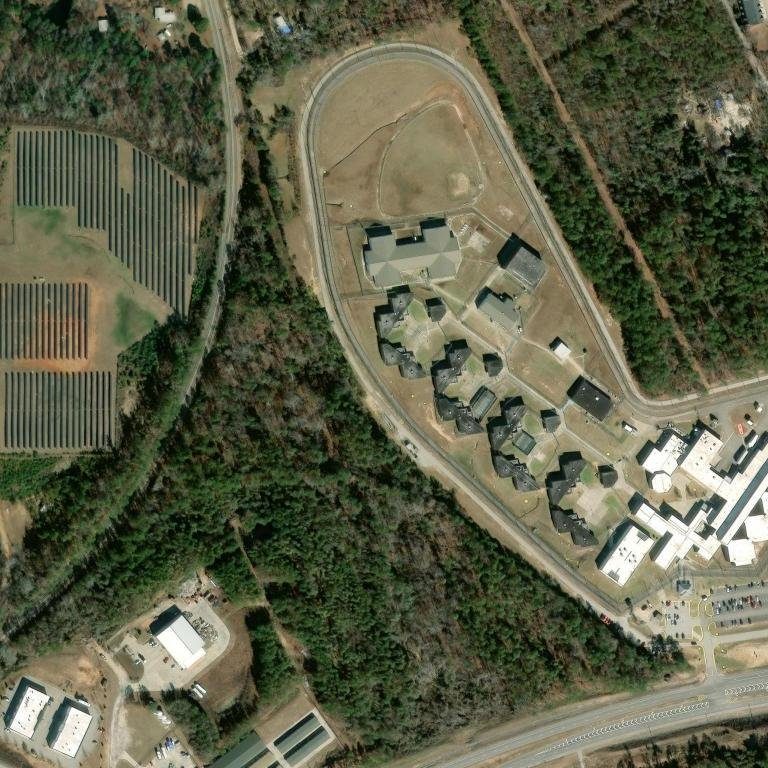
Architecture documents what the building was designed to hold. See the system-wide receipts at gps.press/warehouse.