COASTAL STATE PRISON
Facility Information
- Original Design Capacity
- 420 (at 394% capacity)
- Bed Capacity
- 1,836 beds
- Current Population
- 1,654
- Active Lifers
- 133 (8.0% of population) · Oct 2026 GDC report
- Life Without Parole
- 4 (0.2%)
What the courts held in Brown v. Plata, and how Georgia compares →
- Address
- 200 Gulfstream Road, Port Wentworth, GA 31408
- Phone
- (912) 965-6303
- Fax
- (912) 966-6799
- Mailing Address
- P.O. Box 7150, Port Wentworth, GA 31408
- County
- Chatham County
- Opened
- 1981
- Operator
- GDC (Georgia Dept. of Corrections)
Security Classification
Last updated: September 23, 2026
172 of the 1,747 people held here are classified Close security (9.8%), as of September 23, 2026.
| Security level | People | Share |
|---|---|---|
| Close | 172 | 9.8% |
| Medium | 1,317 | 75.4% |
| Minimum | 138 | 7.9% |
| High | 18 | 1.0% |
| Standard | 90 | 5.2% |
| Warrant | 1 | 0.1% |
| Not recorded | 11 | 0.6% |
| Total | 1,747 |
Earlier count (undated table, produced October 22, 2025): 180 of 1,627 Close (11.1%).
Source: Georgia Department of Corrections records produced to GPS under the Open Records Act (R031471-090226, R024615-101925). A person's security level is GDC's classification of that person, which can differ from the prison's own designation.
Following Coastal State Prison?
Leadership & Accountability (as of 2026 records)
Officials currently holding positional authority at this facility, with deaths attributed to GPS-tracked records during their leadership tenure. Inclusion reflects role-based accountability, not legal findings of personal culpability. Death counts shown as facility / career.
| Role | Name | Since | Deaths this facility / career |
|---|---|---|---|
| Warden (facility lead) | Stokes, David | 2026-06-01 | 5 / 18 |
| Deputy Warden of Care and Treatment (facility deputy) | Kaigler, Briana | 2022-01-01 | 99 / 99 |
| Deputy Warden of Security (facility deputy) | Finch, Karen Ruth | 2024-08-01 | 54 / 63 |
| Deputy Warden of Administration (facility deputy) | Williams, Colette | 2026-07-16 | — / — |
About
Last updated October 4, 2026.(DS)
Coastal State Prison: A Medium-Security Facility Under Sustained Pressure
Coastal State Prison sits on the edge of Port Wentworth in Chatham County, a short drive from Savannah. It opened in 1981, was renovated in 1999, and was built to hold 420 men. Today its rated capacity is 1,836, and GPS's facility record puts the current population at 1,633 — roughly 89 percent of rated capacity, but nearly four times the number the plant was designed for. The prison holds 12 housing units: six cellblocks mixing two-man and four-man cells, four open-bay dormitories, one unit reserved for Faith & Character and incentive-program participants, a 74-bed segregation unit, and a small infirmary. It also runs an abbreviated diagnostic intake unit and maintains a tactical squad, which makes it a hub for both housing and system-wide security operations. David Stokes took over as warden on June 1, 2026, following his reassignment from Central State Prison; Deputy Wardens Briana Kaigler and Karen Ruth Finch round out the leadership.
What follows is an account of what public records, court filings, state inspection reports, and GPS's own tracking show about conditions inside that plant — a facility where the documented death toll since 2020, the condition of the kitchen, the state of the housing units, and the accounts of the people held there converge on a single theme.
A Death Toll That Has Not Slowed
GPS's mortality registry records 135 deaths at Coastal State Prison since January 1, 2020 — a floor, not a ceiling, since GDC reports deaths roughly two months late. The yearly distribution shows no downward trend: 17 deaths in 2020, 19 in 2021, 15 in each of 2022 and 2023, then 24 in 2024 and 26 in 2025. Through 2026 the registry already carries 19 more.
The registry's cause coding is itself a finding. Of the 135 deaths, 92 are classified Unknown/Pending — GPS does not yet know the cause. Thirty-five are coded Natural/Medical, five Homicide, and three Other. The most recent entries include Sheldon Leroy Burns, who died August 30, 2026, with the cause listed as Natural/Medical; Phillip Alexander George, 66, who died July 16, 2026; Corey Marcel Mitchell, 50, who died July 15, 2026; Bobby Clinton Biggs, 77, who died June 25, 2026; Ronald Tyrone Waller, 57, who died June 10, 2026; Rene Alvarado Salazar, 38, who died April 19, 2026; Mark Jr Young, 75, who died April 17, 2026; Terry Kendall, 67, who died February 27, 2026, at Coastal State Prison, with the registry listing the cause as Unknown/Pending; Stanley Brown, 61, who died February 27, 2026, at Coastal State Prison, with the registry listing the cause as Unknown/Pending; Anteveis Brown, 49, who died February 26, 2026, at Coastal State Prison, with the registry listing the cause as Homicide; Aiden Snapp, 21, who died February 26, 2026, at Coastal State Prison, with the registry listing the cause as Homicide; Richard Parks, 62, who died February 21, 2026; Malik Ortiz, 29, who died February 12, 2026; Dejarvis Walker, 25, who died February 9, 2026; Michael Garcia, 45, who died February 1, 2026; Thomas Lee Garrison, 78, who died January 26, 2026; Deandre Martez Walker, 37, who died January 22, 2026; Jabe Clark, 32, who died January 17, 2026; Kevin Lloyd Strickland, 52, who died January 13, 2026; James Dion Gilmore, 46, who died December 26, 2025; Thomas Jacob Johnson, 57, who died December 23, 2025; Jeffrey Brandon Deaton, who died December 20, 2025; Nelson Nmn Williams, 54, who died December 4, 2025; James Joseph Reinke, 66, who died November 29, 2025; and Thomas Floyd East, 71, who died November 18, 2025. For every one of those listed as Unknown/Pending, GPS does not yet know the cause and does not guess one. The full registry for the facility is published at gps.press/georgia-prison-deaths/facility/coastal-state-prison/.
The deaths that drew news coverage tell a narrower story. WTOC reported that a Coastal State Prison inmate died on a Sunday in mid-February 2026, with GDC confirming the death and releasing no further details. Ten days later the same outlet confirmed a second death within one week. By early March, two inmates had died on the same day at the facility, again with no circumstances or identities released. GPS's registry places Aiden Snapp, 21, and Anteveis Brown, 49, as homicides on February 26, 2026 — the same date as the "second death in one week" report.
Earlier deaths produced litigation. The Atlanta Journal-Constitution reported that Raymond Littles, 49, died April 16, 2024, in an incident classified as a homicide, with another prisoner disciplined; no death certificate was available at the time. Ryan Chase Archer, 25, died December 13, 2023, from a stab wound to the chest after a fight with other prisoners — he had been due for release in 2024. Salomon Andres Ramirez, 43, died October 20, 2023, in what GDC classified as an apparent homicide, cause of death unstated. Rufus Ramon Lee, 27, died December 14, 2021, from a stab wound to the chest; an incident report shows four other prisoners involved, and four inmates were indicted. Kion E. Parks, 31, died September 14, 2021, from stab wounds; an incident report shows five other prisoners involved.
Lawsuits, Settlements, and the Question of the Locks
Two lawsuits filed in January 2025 and covered by the Atlanta Journal-Constitution describe the mechanics of how men died at Coastal. A lawsuit alleges five inmates stabbed Kion E. Parks to death at the facility on September 14, 2021. A separate lawsuit filed by Rufus Ramon Lee's mother alleges that a broken cell lock allowed assailants from other cells and dorms to reach and kill her son. Both are allegations pleaded in civil complaints, not adjudicated findings.
The state's own settlement ledger, obtained through open records from the Georgia Department of DOAS Risk Management, records payouts tied to the facility across more than a decade. The largest is $600,000 in the 2022 death of Dennis Carpenter, linked to a documented death record. Others include $200,000 in the 2019 death of Joel Greene, $115,000 in the 2011 death of Milton Ross, $50,000 in the 2016 death of Cager Maleeah, and $8,000 in a 2023 matter involving Ronald Ray Agan. These are liability payments the state made, not admissions of fault — but they establish that the state has repeatedly paid out over what happened inside this prison.
The broken-lock allegation lands against a documented systemwide pattern. GPS has reported that most GDC facilities are 30 to 40 or more years old, with deferred maintenance producing infrastructure failures across the system: broken cell-door locks, inoperative surveillance and fire-alarm systems, mold and water failures, broken kitchen sanitization equipment, and pest infestations. The 2012 Hays audit found roughly 42 percent of cell-door locks non-functional, and the 2024 Guidehouse assessment confirmed the pattern. The October 2024 DOJ findings, the Guidehouse assessment, and Commissioner Tyrone Oliver's own public statements about facilities reaching "end of life" all corroborate it. GPS treats infrastructure collapse as a force multiplier for the violence, classification, and mortality crises documented at the facility level.
The Kitchen: A Grade C and What Inspectors Found
On April 23, 2026, the Georgia Department of Public Health inspected the Coastal State Prison kitchen and issued a score of 70 — a Grade C. Eleven violations were cited, including the person in charge failing to demonstrate knowledge and perform duties, food not stored covered, and food-contact surfaces not cleaned and sanitized. The Georgia Virtue reported the inspection in detail: inspectors found fish at 122°F and chicken at 98°F sitting on the counter, both below the required 135°F hot-holding temperature. They found mildew-like buildup inside the ice machine and no sanitizer in the three-compartment sink while inmates were actively washing dishes — a repeat violation. They observed mold-like growth on ceiling tiles throughout the entire kitchen, along with peeling and missing ceiling tiles, also a repeat violation. They observed live flies and roaches in the kitchen and a dead mouse floating in backed-up mop water in the mess hall dishpit — another repeat violation. Inspectors also documented exit doors with large gaps underneath and damage allowing entry of insects and rodents, and multiple plumbing failures: a leaking pipe, a sink where hot water could not be turned on or off, a loose spigot, and a backed-up mop sink. The facility was given until May 3 to correct the issues.
The trajectory matters as much as the score. WTOC reported that Coastal has been on a steady decline since at least February 2025 — an 87 in February 2025, an 80 in October 2025, and then the 70 in April 2026. DPH's own records bear this out: 84 in October 2023, 87 in February 2025, 80 in October 2025, 70 in April 2026. The most recent inspection, on July 27, 2026, scored 98 — a Grade A with a single violation for warewashing facilities and test strips.
That rebound is exactly the pattern GPS has documented across GDC kitchens, and it should not be read as proof that conditions improved. GPS has documented a systemic pattern of food-service sanitation failure that DPH scores systematically fail to capture: tray-sanitizing dishwashers broken for sustained periods, sustained roach and rodent infestation in kitchen and serving areas, and meals served on visibly contaminated trays. The pattern is hidden from DPH scores because inspections are scheduled walkthroughs that do not assess equipment under load, and because GPS has documented professional overlap between inspectors and facility staff in small-county settings. High DPH scores at GDC facilities coexist with sustained witness reports of equipment failure and food contamination; the contradiction is the analytical center of GPS's investigation "Dunked, Stacked, and Served." A Coastal State Prison resident's account corroborates the contaminated-tray pattern, as does The Marshall Project's May 16, 2026 investigation of Georgia prison food by Beth Schwartzapfel, "Rats, Insects and Mold," which independently reported rats in kitchens, insects in food, moldy trays, and visible malnutrition across Georgia facilities.
The economics behind the kitchen are documented. GDC spends approximately $1.69 per person per day on food as of 2024 and has proposed $1.60 per day in FY27 — under 60 cents per meal — against the FDA Thrifty Food Plan estimate of roughly $10 per day for an adult man's nutritionally adequate diet. The state spends approximately 14 times more on medical care for incarcerated people, $432 million, than on their food.
Staffing, Lockdowns, and the DOJ Findings
The October 2024 DOJ findings letter concluded that "the leadership of the Georgia Department of Corrections has lost control of its facilities" and faulted GDC for placing "too much blame on gangs and insufficient emphasis on understaffing." Officer vacancies across Georgia's prisons have run between 49.3 and 60 percent systemwide for multiple years against a national standard of no more than 10 percent; at Valdosta State Prison the rate reached 80 percent by April 2024. Georgia ranks last of 50 states for correctional-officer pay, the hiring pipeline cannot close the gap, and 82.7 percent of new hires leave in their first year. DOJ and the Guidehouse 2024 assessment independently concluded that gangs effectively run multiple facilities, controlling access to phones, showers, food, and bed assignments.
WTOC's February 2026 reporting brought those systemwide findings down to Coastal. The station reported that lockdowns at the facility prevent inmates from attending classes and programs needed to earn Performance Incentive Credits for early parole eligibility. It reported that inmates were subjected to lockdowns lasting seven to ten days without shower access, and that the DOJ report criticized Georgia prisons including Coastal State for overusing lockdowns and isolation, particularly on victims of sexual abuse. It reported that GDC records show no correctional officers were disciplined for violence against inmates over a six-month period in 2025, despite employees saying such violence is common. It reported allegations that staff withhold food from inmates as punishment — including not waking sleeping inmates for meal calls and then denying them food — and allegations that some correctional officers brutally beat inmates regularly, with one employee describing hearing screams during their walk to work. Workers described crumbling infrastructure and unsanitary conditions: black mold throughout housing units, rat and mice infestations, and frequent air conditioning and heating failures. WTOC separately obtained maintenance records from Coastal covering May to November 2025 showing over $5,000 spent on pest control; the Department of Corrections said it had no records related to mold remediation.
The same outlet reported that a federal judge in Georgia's Middle District scolded Commissioner Tyrone Oliver for "failure to comply with court orders" and asked whether GDC "deems itself above the law." A 2024 U.S. Department of Justice investigation found Georgia prisons, including Coastal State, failing to protect inmates from violence, neglect, and unconstitutional conditions, concluding that GDC violates the Eighth Amendment. GPS has separately documented that sexual violence in GDC facilities is systemic — DOJ concluded in October 2024 that sexual assault is "rampant" and that GDC does not reasonably protect incarcerated people, including LGBTI individuals, from sexual harm; of 456 sexual-abuse allegations recorded in 2022, only 35 were substantiated.
GPS records show that over the past twelve months, staffing-shortage reports at this facility have been logged across multiple sources at critical and high severity, alongside repeated family-safety concerns, allegations of staff misconduct, and assault allegations. GPS has received recurring accounts of use-of-force incidents and of an in-custody death at Coastal. These are receipt acknowledgments, not verified findings.
Heat, Housing, and Medical Care
Family accounts collected by GPS describe a facility where the air conditioning has been inoperable for months, where fans are used as a substitute, and where some incarcerated people suffer heat exhaustion and breathing difficulty as a result. GPS records show inadequate-climate signals at this facility across multiple sources at high severity over the past year. Multiple family members report that medical help is slow to respond, with waits of 35 to 50 minutes, and that medical staff are unavailable on weekends. GPS has received recurring accounts of medical neglect at Coastal — including abrupt discontinuation of prescribed medications, a chronic condition that staff allegedly told an incarcerated person he no longer had, and blood sugar levels left unmonitored. GPS has additionally received accounts of hormone therapy disruption at this facility, including missed estradiol injections and a taper off treatment.
A separate thread concerns disability accommodation. GPS has received accounts of a wheelchair-dependent incarcerated person housed in an upstairs segregation cell at Coastal, with other incarcerated people reportedly carrying the man and his chair up the stairs while a corrections officer watched. GPS has not corroborated the account; the subject's identity, the officer's identity, and the basis for the segregation placement were not provided. GPS records show due-process-violation signals at this facility across multiple sources over the past year.
The physical plant matters here. The facility's 74-bed segregation unit and its four open-bay dormitories are the two housing types most often implicated in accounts GPS receives. GPS's internal analysis has identified a pattern at Coastal in which dormitories were secured with bolt, clamp, and padlock hardware, consistent with a restraint pattern documented in separate GPS case files. Multiple family members report that dorms at the facility are padlocked and that padlocked housing units hold incarcerated people of different security levels, including non-violent individuals — a classification-drift concern that GPS has documented systemwide.
A Facility in the System's Crosshairs
Coastal is not an isolated case, and the systemwide context is what makes its numbers legible. GPS has independently tracked 1,896 deaths in GDC custody since 2020. The DOJ investigation found Georgia's in-prison homicide rate nearly eight times the national average, with 333 total deaths in GDC custody in 2024 — the deadliest year in state history. Approximately 31 percent of the system's roughly 49,000 incarcerated population are validated members of 315 different security threat groups, more than double the national average.
The gang violence that has driven those numbers has erupted elsewhere in the system, not at Coastal. On January 11, 2026, four people died in a gang-related disturbance at Washington State Prison — Teddy Dewayne Jackson, 27; Ahmod Dewayne Hatcher, 23; and Jimmy Lee Trammell, 42, who was days from release, all killed at the scene, and Silas Rodrigioeuz Westbrook, 42, who was injured that day and died January 17 after his release from the hospital. Dajhmere Ladaveon Hall, 30, had been found dead at Washington two days before the riot. Washington State Prison was placed on continuous lockdown after the brawl and never reopened. Roughly three months later, twelve inmates were charged with felony murder, aggravated assault, and gang participation in connection with the disturbance. Three days after the riot, Washington State Prison officer Adriana Carnelio, 27, was arrested by the GBI and the Ocmulgee Drug Task Force on cocaine and methamphetamine possession with intent to distribute and firearms charges, with a co-defendant identified as Q. Peacock. Those events belong to Washington State Prison, not to Coastal — but they are the system that Coastal belongs to, and the staffing and gang-control failures DOJ documented are the same ones operating in Chatham County.
At Coastal, the record since 2020 is one of sustained mortality, a kitchen that failed inspection badly in April 2026 and passed narrowly in July, litigation over a broken cell lock, and a stream of accounts from families and incarcerated people describing heat, hunger, untreated illness, and violence. The state has paid out more than $970,000 in liability settlements tied to this facility across five documented cases. The warden who inherited that record, David Stokes, took the post on June 1, 2026.
Sources
This analysis draws on Georgia Department of Public Health food-safety inspection records for Coastal State Prison; the Georgia Department of Administrative Services Risk Management settlement ledger obtained through open records; civil complaints filed in the deaths of Kion E. Parks and Rufus Ramon Lee as reported by the Atlanta Journal-Constitution; reporting by WTOC, The Georgia Virtue, WALB, and The Marshall Project; the October 2024 U.S. Department of Justice findings letter on Georgia prisons; the 2024 Guidehouse GDC assessment; and GPS's own mortality registry, systemic findings, and intelligence records, including accounts collected from incarcerated people and their families.
Mortality Statistics
141 deaths documented at this facility from 2020 to present.
Deaths by Year
- 2026: 24
- 2025: 27
- 2024: 24
- 2023: 15
- 2022: 15
- 2021: 19
- 2020: 17
County Public Health Department
Food service and sanitation at COASTAL STATE PRISON fall under the jurisdiction of the Chatham County Environmental Health Department. Incarcerated people cannot choose where they eat — public health inspectors carry an elevated responsibility to hold this kitchen to the same standards applied to any restaurant.
Contact
- Title
- Environmental Health Director
- Address
-
P.O. Box 14257
Savannah, GA 31406 - Phone
- (912) 356-2160
- chatham.eh@dph.ga.gov
- Website
- Visit department website →
Why this matters
GPS has documented black mold on chow-hall ceilings, cold and contaminated trays, spoiled milk, and pest contamination at Georgia prisons. The Department of Justice's 2024 report confirmed deaths from dehydration and untreated diabetes tied to food and water deprivation. Advance-notice inspections let facilities stage temporary fixes that disappear once inspectors leave.
Unannounced inspections by the county health department are one of the few outside checks on kitchen conditions behind the fence.
How you can help
Write to the county inspector and request an unannounced inspection of the kitchen and food service operation at this facility. A short, respectful letter citing Georgia food-safety regulations is more powerful than you think — inspectors respond to public concern.
Sample Letter
This is the letter Georgia Prisoners' Speak mailed to all county environmental health inspectors responsible for GDC facilities. Feel free to adapt it.
October 9, 2026
RE: Request for Unannounced Public Health Inspection of Food Service Operations at COASTAL STATE PRISON
Dear County Environmental Health Director,
I am writing to respectfully request that your office conduct a thorough, unannounced inspection of food service and sanitation practices at COASTAL STATE PRISON, located in Chatham County.
Documented concerns
Georgia Prisoners' Speak, a 501(c)(3) nonprofit investigative newsroom, has published extensive investigative reporting on food safety and nutrition failures across Georgia's prison system, including:
- Dangerous sanitation conditions — black mold on chow hall ceilings and air vents, contaminated food trays, and spoiled milk served to inmates.
- Severe nutritional deficiency — roughly 60 cents per meal; inmates receive only 40% of required protein and less than one serving of vegetables per day.
- Preventable deaths — the U.S. Department of Justice's 2024 report confirmed deaths from dehydration, renal failure, and untreated diabetes following food and water deprivation.
- Staged compliance — advance-notice inspections allow facilities to stage temporary improvements, then revert once inspectors leave.
Firsthand testimony
In Surviving on Scraps: Ten Years of Prison Food in Georgia, a person who has spent more than ten years in GDC custody describes no functional dishwashing sanitation, chronic mold on food trays, and roaches found on the undersides of trays at intake facilities. Full account: gps.press/surviving-on-scraps-ten-years-of-prison-food-in-georgia.
Specific requests
- Conduct an unannounced inspection of the kitchen and food service operations at this facility, with particular attention to dishwashing equipment, tray sanitation procedures, and food storage conditions.
- Evaluate compliance with applicable Georgia food safety regulations, including O.C.G.A. § 26-2-370 and the Georgia Food Service Rules and Regulations (Chapter 511-6-1).
- Verify permit status and confirm whether the facility is subject to the same inspection schedule as other institutional food service establishments in the county.
- Make inspection results available to the public, as permitted under Georgia's Open Records Act (O.C.G.A. § 50-18-70).
Incarcerated individuals cannot advocate for their own health and safety in the way a restaurant patron can — they cannot choose to eat elsewhere. This places an elevated responsibility on public health officials to ensure these facilities meet the same sanitation standards applied to any food service establishment.
Thank you for your attention to this important public health matter.
Sincerely,
[Your name]
Food Safety Inspections
Georgia Department of Public Health
What the score doesn't measure. DPH grades kitchen compliance on inspection day — food storage, temperatures, pest control. It does not grade whether today's trays are clean. GPS reporting has found broken dishwashers at most Georgia state prisons we've documented; trays go out wet, stacked, and visibly moldy — including at facilities with recent scores near 100.
Who inspects. Most Georgia state prisons sit in rural counties — often with fewer than 20,000 people, several with fewer than 10,000. The environmental health inspector lives in that community and often knows the kitchen staff personally. Rural inspection regimes don't have the structural independence you'd expect in a city-sized health department. Read the scores accordingly.
Read the investigation: “Dunked, Stacked and Served: Why Georgia Prison Trays Are Making People Sick”
Recent inspections
| Date | Score | Purpose | |
|---|---|---|---|
| Jul 27, 2026 | 98 | Routine | |
| Apr 23, 2026 | 70 | Routine | |
| Oct 16, 2025 | 80 | Routine | |
| Feb 27, 2025 | 87 | Routine | |
| Oct 25, 2023 | 84 | Routine |
July 27, 2026 — Score 98
Routine · Inspector: Caisha Knight
| Code | Violation | Pts | Inspector notes |
|---|---|---|---|
| 15B |
warewashing facilities: installed, maintained, used; test strips 511-6-1.05(3)(h),(i),(j) - temperature measuring device, manual warewashing; sanitizing solutions, testing device (pf) Repeat | 1 | Observed that facility did not have chemical test kit when using chemical sanitizer (quat) at three-compartment sink. Observed that facility did not have high heat testing method available for high heat dishwasher in main kitchen.RCA: Facility shall obtain test strips for quaternary ammonium chemical sanitizer testing and non-reversible method of testing high heat sanitization. |
April 23, 2026 — Score 70
Routine · Inspector: Caisha Knight
| Code | Violation | Pts | Inspector notes |
|---|---|---|---|
| 2A |
pic present, demonstrates knowledge, performs duties 511-6-1.03(2)(a)-(n)(p),(q) - responsibility of pic (pf) | 4 | Observed that the person in charge failed in the responsibilities of ensuring that safe food handling practices were in use as evidenced by hot holding temperatures, food protected from outside contamination and sanitized food contact surfaces.RCA: PIC and ServSafe manager is responsible to ensure that food safety practices and are being followed. |
| 2A |
food stored covered 511-6-1.04(4)(c)1(iv) - packaged & unpackaged food, food stored covered(c) | 4 | Observed bags of spices left open. Observed margarine in walk-in cooler not wrapped. Observed loose bread in kitchen not tightly wrapped to prevent contamination.RCA: Food packages shall be in good condition and protect the integrity of the contents so that the food is not exposed to adulteration or potential contaminants. |
| 2B |
food-contact surfaces: cleaned & sanitized 511-6-1.05(7)(b) - food contact surfaces and utensils - cleaning frequency (p, c) Repeat | 4 | Observed buildup of mildew-like substance in the interior of ice machine. No sanitizer in 3-compartment sink being used as inmates are actively washing dishes.RCA: PIC shall burn ice, wash inside machine and sanitize before refilling ice. Told PIC to get bleach or QAC as a sanitize in order properly sanitize the dishes. |
| 1B |
proper hot holding temperatures 511-6-1.04(6)(f) - time/temperature control for safety; hot holding (p) | 9 | Observed fish (122F) and chicken(98F)to be sitting on counter and it was below 135F.RCA: Told PIC that call hot holding items must be 135F or above while hot holding as well as sitting inside warmer instead of sitting on the counter. |
| 15A |
food and nonfood-contact surfaces cleanable, properly designed, constructed, and used 511-6-1.05(6)(a) - good repair & proper adjustment (c) | 1 | Observed damaged wall in walk-in cooler. Observed gaskets/seals on cold holding unit in poor repair with mildew visible.RCA: Equipment shall be maintained in a state of repair |
| 15B |
warewashing facilities: installed, maintained, used; test strips 511-6-1.05(6)(p) - warewashing equipment, determining chemical sanitizer concentration (pf) Repeat | 1 | Observed that facility did not have chemical test kit when using chemical sanitizer (quat) at three-compartment sink. Observed that facility did not have high heat testing method available for high heat dishwasher in main kitchen.RCA: Facility shall obtain test strips for quaternary ammonium chemical sanitizer testing and non-reversible method of testing high heat sanitization. |
| 15C |
nonfood-contact surfaces clean 511-6-1.05(7)(a)2,3 - equipment, food/nonfood-contact surfaces, and utensils, food-contact surfaces of cooking equipment & nonfood-contact surfaces free of accumulations (c) Repeat | 1 | Observed food debris on racks where trays were stored. Observed build up on gaskets of walk-in coolers. Mildew on gaskets and walk-in cooler racks.RCA: Nonfood-contact surfaces of equipment shall be cleaned at a frequency necessary to preclude accumulation of soil residues. |
| 16B |
plumbing installed; proper backflow devices 511-6-1.06(2)(r) - system maintained in good repair (p, c) Repeat | 2 | Observed a 3 compartment-sink with a leaking pipe. Observed a 2-compartment sink in which the hot water was unable to turn on or off. Observed a handwashing sink in mess hall with a loose spigot. Observed a back-up mop sink in the mess hall dishpit.RCA: A plumbing system shall be repaired according to law; and maintained in good repair. |
| 17C |
physical facilities installed, maintained, and clean 511-6-1.07(5)(a),(b) - good repair, physical facilities maintained; cleaning, frequency & restrictions, cleaned often enough to keep them clean (c) Repeat | 1 | Observed mold-like growth on ceiling tiles in entire kitchen area. Observed peeling ceiling tiles in dish area. Observed rust and corrosion on ceiling tiles sporadically in entire kitchen area. Missing ceiling tiles/ hole in ceiling in mess hall area.RCA: All physical facilities shall be maintained in good repair. The physical facilities shall be cleaned as often as necessary to keep them clean and by methods that prevent contamination of food products. |
| 18 |
insects, rodents, and animals not present 511-6-1.07(5)(k) - controlling pests (pf, c) Repeat | 3 | Observed live flies and roaches in kitchen. Observed dead mouse floating in backed-up mop water in mess hall dishpit.RCA: Facility shall increase treatment schedules from licensed pest control operators. |
| 18 |
insects, rodents, and animals not present 511-6-1.07(2)(m) - outer openings protected (c) | 3 | Observed exit door with a large gap under. Observed other exit door damaged with gaps visible.RCA: Outer openings of a food service establishment shall be protected against the entry of insects and rodents by: Solid, self-closing, tight-fitting doors. |
October 16, 2025 — Score 80
Routine · Inspector: Andrea Carrasco
| Code | Violation | Pts | Inspector notes |
|---|---|---|---|
| 1C |
food in good condition, safe, and unadulterated 511-6-1.04(1) - safe, unadulterated and honestly presented (p) Corrected | 9 | Observed 3 boxes of whole cucumbers from September that were molded and actively spoiling and dripping onto lower stored boxes of food.COS CA: PIC had boxes of cucumbers discarded. |
| 2B |
food-contact surfaces: cleaned & sanitized 511-6-1.05(7)(a)1 - equipment, food-contact surfaces,& utensils (pf) | 4 | Observed buildup of mildew-like substance in the interior of ice machine.RCA: PIC shall burn ice, wash inside machine and sanitize before refilling ice. |
| 15B |
warewashing facilities: installed, maintained, used; test strips 511-6-1.05(3)(h),(i),(j) - temperature measuring device, manual warewashing; sanitizing solutions, testing device (pf) | 1 | Observed that facility did not have chemical test kit when using chemical sanitizer (quat) at three-compartment sink.RCA: Facility shall obtain test strips for quaternary ammonium chemical sanitizer testing. |
| 15C |
nonfood-contact surfaces clean 511-6-1.05(7)(d) - nonfood-contact surfaces (c) | 1 | Observed food debris on racks where trays were stored. Observed build up on gaskets of walk-in coolers.RCA: Nonfood-contact surfaces of equipment shall be cleaned at a frequency necessary to preclude accumulation of soil residues. |
| 16B |
plumbing installed; proper backflow devices 511-6-1.06(2)(r) - system maintained in good repair (p, c) | 2 | Observed a handwashing sink with a leaking pipe. Observed a 3 compartment-sink with a leaking pipe. Observed a 2-compartment sink in which the hot water was unable to turn off. Observed a handwashing sink in bakery area with loose spigot.RCA: A plumbing system shall be repaired according to law; and maintained in good repair. |
| 17C |
physical facilities installed, maintained, and clean 511-6-1.07(5)(a),(b) - good repair, physical facilities maintained; cleaning, frequency & restrictions, cleaned often enough to keep them clean (c) | 1 | Observed mold-like growth on ceiling tiles in entire kitchen area. Observed peeling ceiling tiles in dish area. Observed rust and corrosion on ceiling tiles sporadically in entire kitchen area.RCA: All physical facilities shall be maintained in good repair. The physical facilities shall be cleaned as often as necessary to keep them clean and by methods that prevent contamination of food products. |
| 18 |
insects, rodents, and animals not present 511-6-1.07(5)(k) - controlling pests (pf, c) | 3 | Observed live flies and roaches in kitchen.RCA: Facility shall increase treatment schedules from licensed pest control operators. |
February 27, 2025 — Score 87
Routine · Inspector: Andrea Carrasco
| Code | Violation | Pts | Inspector notes |
|---|---|---|---|
| 1C |
proper cooling time and temperature 511-6-1.04(6)(d) - cooling (p) Corrected | 9 | Observed spaghetti that had been prepared 2/25 that had an internal temperature of 44F. PIC stated that spaghetti had been kept in walk-in cooler since preparation date.COS CA: PIC discarded spaghetti. Cooked Time/Temperature Control for Safety Food (list food item here) not cooled from 135F to 41F within 6 hours. |
| 12A |
contamination prevented during food preparation, storage, display 511-6-1.04(4)(q) - food storage (c) | 3 | Observed prepared food on floor, observed bag of flour on floor.COS CA: PIC moved food off of floor. food shall be protected from contamination by storing the food In a clean, dry location; Where it is not exposed to splash, dust, or other contamination; and At least 6 inches (15 cm) above the floor. |
| 17D |
adequate ventilation and lighting; designated areas used 511-6-1.07(3)(f) - lighting intensity, adequate in food prep, storage & service areas (c) | 1 | Observed burnt out lights under hoods and within walk-in cooler.RCA: The light intensity shall be at least 10 foot candles (108 lux) at a distance of 30 inches (75 cm) above the floor, in walk-in refrigeration units and dry food storage areas and in other areas and rooms during periods of cleaning; At least 50 foot candles (540 lux) at a surface where a food service employee is working with food or working with utensils or equipment such as knives, slicers, grinders, or saws where employee safety is a factor. |
October 25, 2023 — Score 84
Routine · Inspector: Darby Clark
| Code | Violation | Pts | Inspector notes |
|---|---|---|---|
| 2D |
adequate handwashing facilities supplied & accessible 511-6-1.07(3)(b) - hand drying provision (pf) Corrected | 4 | Observed hand sink in the bakery room to not have paper towels.COS/CA: PIC placed paper towels at hand sink. Hand Drying Provision. Each handwashing sink or group of adjacent handwashing sinks shall be provided with: Individual, disposable towels. |
| 2D |
adequate handwashing facilities supplied & accessible 511-6-1.06(2)(o) - using a handwashing sink- operation & maintenance (pf) | 4 | Observed hand sink in the meat room and the bakery room to be used as a dump sink.RCA: A handwashing facility may not be used for purposes other than handwashing. |
| 1C |
food in good condition, safe, and unadulterated 511-6-1.04(3)(e) - package integrity (pf) | 9 | Observed multiple boxes containing apple juice and fruit in the walk in to have mold growing on the outside of the box.RCA: Food packages shall be in good condition and protect the integrity of the contents so that the food is not exposed to adulteration or potential contaminants. |
| 11C |
approved thawing methods used 511-6-1.04(6)(c) - thawing (c) Corrected | 3 | Observed chicken being dethawed in standing water.COS/CA: PIC turned on the water to continue dethawing the chicken. Time/temperature control for safety food shall be thawed: Completely submerged under running water: At a water temperature of 70°F (21°C) or below. |
Recent reports (26)
Source-attributed observations and allegations from news coverage and reports submitted to GPS. Each entry credits its source.
- ALLEGATION According to News.google.com Recorded by GPS: May 14, 2026Workers and inmates allege a human rights crisis is occurring at Coastal State Prison.
"Workers and inmates report human rights crisis at Coastal State Prison"
Read source → - ALLEGATION According to News.google.com Recorded by GPS: May 13, 2026Five inmates were indicted for committing a violent assault at Coastal State Prison.
"5 inmates indicted for violent assault at Coastal State Prison"
Read source → - ALLEGATION According to News.google.com Recorded by GPS: May 13, 2026A Coastal State Prison employee allegedly traded with inmates without the consent of the warden or superintendent.
"Coastal State Prison employee arrested, charged with trading with inmates without consent of warden or superintendent"
Read source → - ALLEGATION According to Atlanta Journal-Constitution Published: Jan 21, 2025A lawsuit alleges five inmates stabbed Kion E. Parks to death at Coastal State Prison.
"a lawsuit alleges five inmates stabbed Parks to death."
Read source → - ALLEGATION According to Atlanta Journal-Constitution Published: Jan 21, 2025A lawsuit by Rufus Ramon Lee's mother alleges that the lock on his cell didn't work, allowing assailants from other cells and dorms to reach and kill him.
"A lawsuit by Lee's mother alleges that the lock on his cell didn't work, allowing assailants from other cells and dorms to reach him."
Read source →
Timeline (51)
Source Articles (18)
Former leadership
Officials who previously held leadership roles at this facility.
| Role | Name | Tenure | Deaths this facility / career |
|---|---|---|---|
| WARDEN 2 (facility lead) | Glenn, Phillip | 2014-01-01 → 2025-12-31 | 94 / 94 |
| Warden (facility lead) | Pineiro, Aaron Thomas | 2022-01-01 → 2024-06-15 | 40 / 85 |
| Deputy Warden (facility deputy) | Johnson-Williams, Colette C | 2023-11-22 → 2026-08-27 | — / — |
| Chaplain (specialty lead) | Tompkins, Donald A | 2026-08-27 → 2026-08-27 | — / — |
| Clinical Chaplain (specialty lead) | Valcourt, Theodore P | 2023-11-22 → 2026-08-27 | — / — |
Location
Aerial View
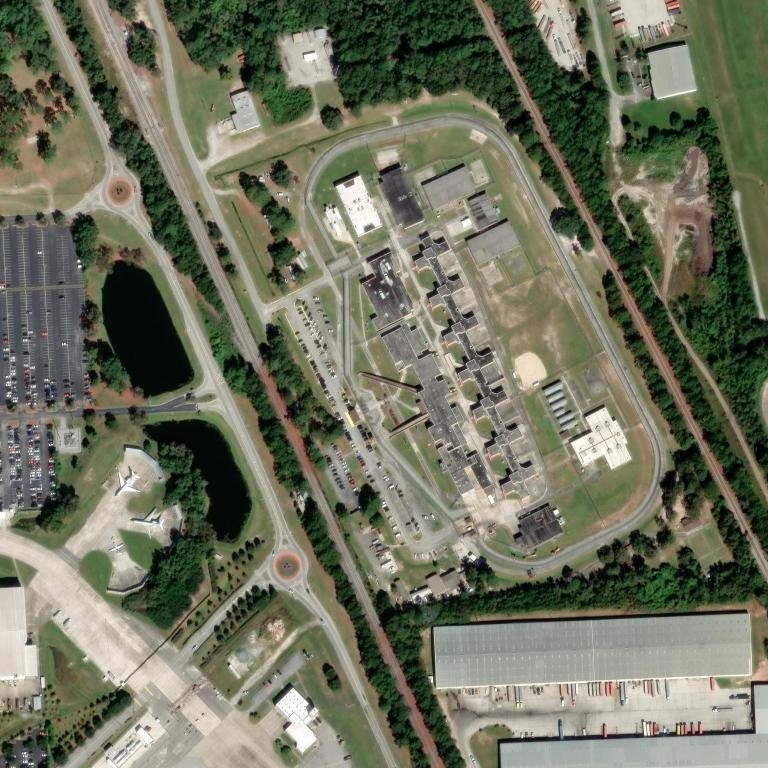
Architecture documents what the building was designed to hold. See the system-wide receipts at gps.press/warehouse.