PULASKI STATE PRISON
Facility Information
- Original Design Capacity
- 500 (at 237% capacity)
- Bed Capacity
- 1,223 beds
- Current Population
- 1,186
- Active Lifers
- 265 (22.3% of population) · Oct 2026 GDC report
- Life Without Parole
- 50 (4.2%)
What the courts held in Brown v. Plata, and how Georgia compares →
- Address
- 373 Upper River Road, Hawkinsville, GA 31036
- Phone
- (478) 783-6000
- Fax
- (478) 783-6008
- Mailing Address
- P.O. Box 839, Hawkinsville, GA 31036
- County
- Pulaski County
- Opened
- 1994
- Operator
- GDC (Georgia Dept. of Corrections)
Security Classification
Last updated: September 23, 2026
104 of the 1,180 people held here are classified Close security (8.8%), as of September 23, 2026.
| Security level | People | Share |
|---|---|---|
| Close | 104 | 8.8% |
| Medium | 807 | 68.4% |
| Minimum | 269 | 22.8% |
| Total | 1,180 |
Earlier count (undated table, produced October 22, 2025): 85 of 1,177 Close (7.2%).
Source: Georgia Department of Corrections records produced to GPS under the Open Records Act (R031471-090226, R024615-101925). A person's security level is GDC's classification of that person, which can differ from the prison's own designation.
Follow Pulaski State Prison
Leadership & Accountability (as of 2026 records)
Officials currently holding positional authority at this facility, with deaths attributed to GPS-tracked records during their leadership tenure. Inclusion reflects role-based accountability, not legal findings of personal culpability. Death counts shown as facility / career.
| Role | Name | Since | Deaths this facility / career |
|---|---|---|---|
| Warden (facility lead) | Jackson, Wendy A | 2025-04-16 | 8 / 8 |
| Deputy Warden of Care and Treatment (facility deputy) | Mahogany, Kasann | 2019-01-01 | 25 / 25 |
| Deputy Warden of Security (facility deputy) | Showers, Andrea | 2023-01-01 | 16 / 16 |
| Deputy Warden of Administration (facility deputy) | Hermann, Shelley Elizabeth | 2025-04-16 | 9 / 9 |
About
Last updated October 11, 2026.(DS)
Pulaski State Prison: Lethal Medical Neglect, a Failing Kitchen, and a Warden Under Family Scrutiny
Pulaski State Prison in Hawkinsville opened in 1994 as a medium-security women's facility and today holds roughly 1,186 women against a rated capacity of 1,223 — about 97 percent full, and more than double the 500 people the compound was originally designed to hold. The physical plant is a set of double-bunked dormitory buildings plus segregation units used for disciplinary and protective custody. It offers GED classes, basic education, and limited vocational and treatment programs. Against that ordinary institutional backdrop, the public record is anything but ordinary: a contract physician whose tenure is tied to at least 22 deaths, a $925,000 state liability payout, a deputy warden arrested for sexual contact with a prisoner, a kitchen that has swung between A and F grades within a single year, and a death registry that GPS has logged at 30 people since January 2020.
A Doctor, a Body Count, and a State That Kept Paying
The most consequential thread in Pulaski's public record is medical care. GPS's published investigation found that 22 women died under a doctor at Pulaski State Prison, and that the same physician had a history of malpractice deaths in New York before Georgia hired him. According to GPS's reporting, the state hired him despite knowing about that record, praised him for cutting costs by denying women medical care, and gave him a raise even as the denials resulted in deaths. Those are GPS's own findings, and they carry the weight — and the limits — of an investigation built substantially on family and internal accounts.
The settlement ledger corroborates the pattern from a different direction. Georgia's Department of Administrative Services risk-management records, obtained through open records, show a $925,000 liability payout tied to Pulaski in connection with Bonnie Rocheleau, whose incident date is recorded as March 19, 2015. The Atlanta Journal-Constitution reported in January 2025 that Rocheleau failed to get adequate care at Pulaski when she developed pneumonia, leading to her death. The same AJC reporting described Mollianne Fischer, who failed to receive adequate medical care at the facility and was left in a vegetative state. Four other Pulaski settlements appear in the same state ledger: $300,000 tied to Kimery Finger (2015), $85,000 tied to Makayah Howard (2024), $30,000 tied to Kari A. Quinn (2013), and $15,900 tied to Dante Coleman (2018).
The pattern is not confined to one physician's tenure. GPS's intelligence system records multiple reports of alleged medical neglect at Pulaski over the past twelve months, including signals rated at critical severity — a category of report that has continued to accumulate even as the facility's leadership has changed.
Thirty Deaths Since 2020, and a Registry That Keeps Growing
GPS's mortality registry records 30 deaths at Pulaski State Prison since January 1, 2020 — a figure that is a floor, not a ceiling, because GDC reports deaths roughly two months late. The causes break down as 11 natural or medical, 14 unknown or pending, three suicides, and two classified as other. The full list is maintained at gps.press/georgia-prison-deaths/facility/pulaski-state-prison/.
The most recent entries are also the ones that drew public attention. Kristi Ray Perkins died July 12, 2026, at Pulaski State Prison; the registry lists the cause as Natural/Medical, and she was 59. Monika Yvette Bradley died July 5, 2026, at Pulaski State Prison, cause Unknown/Pending, age 43. Tulia Eustache died June 3, 2026, cause Unknown/Pending, age 66. Karen Michelle Lindsey died May 24, 2026, cause Unknown/Pending, age 59. Denecia Nichelle Randall died March 30, 2026, at age 28; the registry lists the cause as Suicide. Ronika Lashawn Carswell died December 12, 2025, Natural/Medical, age 50. Candace Lajon Morgan died June 11, 2025, Natural/Medical, age 41. Esmeralda Carillo Hernandez died May 22, 2025, Natural/Medical, age 50. Stephanie Sabrina Gary died March 5, 2025, Natural/Medical, age 55. Lesley Bell Owens died July 23, 2024, Unknown/Pending, age 49. Tracy Michelle Graves died May 16, 2024, Unknown/Pending, age 45. Ramada Lesha Butts died April 16, 2024, Unknown/Pending, age 52.
Further back: Sheila Britton died September 22, 2023, Natural/Medical, age 60. Cynthia Mccain died September 3, 2023, Unknown/Pending, age 65. Pharina S. Peterson died May 1, 2023, Natural/Medical, age 75. Sandra Sipsy died January 24, 2023, Natural/Medical, age 54. Christina Marie Buttery died December 21, 2022, Unknown/Pending, age 34. Monica Mae Cutts died August 15, 2022, Suicide, age 29. Tammy Lowann Baker died May 26, 2022, Natural/Medical, age 54. Sharon Ann Fuquea died April 16, 2022, Unknown/Pending, age 56. Margaret Ann Palmer died January 21, 2022, Unknown/Pending, age 55. Tanya Marie Abbs died November 28, 2021, Unknown/Pending, age 36. Sandtoro Pearson died October 1, 2021, Natural/Medical, age 44. Kathleen Conger Murphy died September 28, 2021, Natural/Medical, age 71. Melissa Christine Thacker died July 25, 2021, Suicide, age 27.
For context on scale: GPS has independently tracked 1,913 deaths in GDC custody system-wide since 2020.
Two of the deaths in the registry carry a documented investigative trail. GDC's Office of Professional Standards investigated the deaths of both Perkins and Bradley as standard procedure, and the Georgia Bureau of Investigation was separately tasked with determining their causes of death. In the case of Perkins, officials reported no signs of an altercation or foul play. Bradley's cause is recorded as undetermined. GDC also stated that a July 9 mechanical failure in the facility's air conditioning — resolved the same day — showed no indication of connection to the deaths.
A Deputy Warden, a Prisoner, and a Bond Hearing in Pulaski County
In May 2024, the AJC reported that Deputy Warden Alonzo L. McMillian was arrested at the Hawkinsville prison and booked into the Pulaski County jail on May 2, then released the next day on $10,000 bond. Arrest warrants stated that McMillian had a "sexual relationship" with a prisoner and engaged in improper sexual contact with her on February 24 and 25. GDC spokesperson Joan Heath confirmed that both McMillian and a second man, Clark, were terminated on May 2 following their arrests on charges of sexual contact with prisoners. The AJC's coverage framed the alleged misconduct of two prison supervisors as a possible signal of a larger systemic problem within GDC — reporting that ran as the prison system faced a U.S. Department of Justice civil rights investigation.
That framing is consistent with GPS's systemic finding on sexual violence in Georgia prisons. The October 2024 DOJ findings letter concluded that sexual assault is "rampant" and that GDC does not reasonably protect incarcerated people, including LGBTI individuals, from sexual harm. Of 456 sexual-abuse allegations recorded in 2022, only 35 were substantiated — 7.7 percent. GDC's own consultants, PREA Auditors of America, reviewed 388 PREA investigation files in May 2022 and found that not one met the law's standards. Georgia has never submitted a PREA certification of full compliance to the U.S. Department of Justice in the law's two-decade history. GPS's systemic finding specifically identifies DOJ-documented at-knifepoint sexual assaults at Pulaski State Prison among the documented clusters.
A Kitchen That Scored 63, Then 96, Then 67
The Georgia Department of Public Health's food-service inspection record for Pulaski reads as a facility in recurring crisis punctuated by rapid corrections. On July 14, 2026, the facility scored 63 — a Grade F — on a routine inspection with 10 violations cited, including the absence of a certified food protection manager, inadequate handwashing facilities, and improper disposition of returned or unsafe food. Nine days later, on July 23, a followup inspection scored 96, Grade A, with two violations.
The same swing appears earlier in the year. A January 29, 2026 routine inspection scored 67, Grade F, with eight violations including hands not clean and properly washed and inadequate handwashing facilities. A February 6 followup scored 96, Grade A.
The pattern reaches back further. A September 30, 2025 followup scored 78, Grade C, with six violations including inadequate handwashing facilities, improper hot holding temperatures, and plumbing and backflow problems. An August 7, 2025 routine inspection scored 73, Grade C. A February 11, 2025 routine scored 83, Grade B. An October 8, 2024 routine scored 90, Grade A, with three violations including sewage and waste water disposal and the presence of insects or rodents. A June 6, 2024 routine scored 82, Grade B, with seven violations. A January 18, 2024 routine scored 91, Grade A. A June 27, 2023 routine scored 92, Grade A.
Those scores sit inside a documented statewide problem. GPS has documented a systemic pattern of food-service sanitation failure across GDC kitchens that DPH inspection scores systematically fail to capture: tray-sanitizing dishwashers broken for sustained periods, sustained roach and rodent infestation in kitchen and serving areas, and meals served on visibly contaminated trays. The pattern is hidden from DPH scores, in GPS's analysis, because inspections are scheduled walkthroughs that do not assess equipment under load. GDC spends approximately $1.69 per person per day on food (2024) and has proposed $1.60 per day in FY27 — under 60 cents per meal — against the FDA Thrifty Food Plan estimate of roughly $10 per day for an adult's nutritionally adequate diet. The Marshall Project independently reported on rats in kitchens, insects in food, and moldy trays across Georgia facilities in May 2026, quoting GPS connecting chronic underfeeding to the violence pattern DOJ documented in October 2024.
Violence, Lockdowns, and a Grievance Process Families Describe as Broken
The AJC reported that on July 15, 2023, incarcerated people at Pulaski destroyed building property; 11 were directly involved using weapons including broomsticks, a crowbar, metal spray, shanks, and locks, and chemical spray was used as nine security staff responded. In a separate January 2025 account, the AJC reported that officers and staff at Pulaski did not notice a problem until someone from outside called to report a stabbing — the injured prisoner reported being assaulted hours earlier by 10 people who stomped, hit, and kicked her.
GPS's own reporting has described accounts of a facility where supervision is thin enough that incarcerated women call their families to get help because officers do not respond to emergencies. That account is drawn from a first-person piece published through GPS's Tell My Story project, and it has not yet completed GPS's fact-checking process; it should be read as one person's account rather than a corroborated finding. A separate GPS-authored piece, also not yet fact-checked, describes a facility in crisis receiving an untested warden.
Wendy A. Jackson has served as Warden since April 16, 2025. Her deputies are Shelley Elizabeth Hermann (Administration, since April 2025), Kasann Mahogany (Care and Treatment, since 2019), and Andrea Showers (Security, since 2023). GPS's reporting has described accounts of retaliation, intimidation, extended lockdowns, and a non-functional grievance process under the new warden, and families of incarcerated women have raised concerns about the leadership change. GPS records show multiple reports of family fear for the safety of incarcerated people at Pulaski over the past year, including signals rated at critical severity, along with reports of media-outreach attempts by people inside the facility.
Multiple witnesses have described lockdown conditions at Pulaski in which incarcerated people went without water access in their cells for multiple days, without showers for extended periods, without clean clothing for nearly two weeks, and with sharply limited phone access. GPS has received accounts of personal property confiscated during lockdowns, including locks, which families believe left purchased property vulnerable to theft. GPS has also received accounts of staff retaliation against incarcerated people for outside contact, and of an assault at the facility in 2024 followed by a denied safe-housing request. These are accounts GPS has received; they have not been independently corroborated.
Infrastructure, Staffing, and the Structural Backdrop
Pulaski's individual failures sit inside a systemwide condition GPS treats as a force multiplier. Most GDC facilities are 30 to 40-plus years old, with documented patterns of deferred maintenance that have produced broken cell-door locks, inoperative surveillance and fire-alarm systems, mold and water failures, broken kitchen sanitization equipment, and pest infestations. The DOJ's October 2024 findings, the Guidehouse 2024 assessment, and Commissioner Oliver's public "end of life" statements all corroborate that pattern.
Officer vacancies in Georgia's prisons have run between 49.3 percent and 60 percent systemwide for multiple years, against a national standard of no more than 10 percent. The October 2024 DOJ findings letter concluded that "the leadership of the Georgia Department of Corrections has lost control of its facilities" and faulted GDC for placing "too much blame on gangs and insufficient emphasis on understaffing." Approximately 31 percent of the system's roughly 49,000 incarcerated population are validated members of 315 different security threat groups — more than double the national average. DOJ and the Guidehouse assessment independently concluded that gangs effectively run multiple facilities, controlling access to phones, showers, food, and bed assignments. Tyler Ryals, a former GDC sergeant forced out in 2024 after whistleblowing, told GPS he had personally been the only security person on the entire Telfair compound of roughly 1,250 maximum-security inmates.
At Pulaski specifically, GPS staff have observed patterns of gang violence and extortion, and GPS's reporting has described gang members using violence to extort incarcerated people and their families — including an account involving Pamela Dixon, whose daughter was subjected to gang extortion at the facility. An incarcerated woman has reported that Pulaski housed three people per cell and 120 women in a dorm built for far smaller capacity, and that she was assigned a top bunk despite a serious medical condition.
Sources
This analysis draws on Georgia Department of Public Health food-service inspection records; the Georgia Department of Administrative Services risk-management settlement ledger obtained through open records; GDC statements and Office of Professional Standards notifications; reporting by the Atlanta Journal-Constitution and The Marshall Project; GPS's own published investigations and Tell My Story first-person accounts; GPS's mortality registry and intelligence records; and the October 2024 U.S. Department of Justice findings letter and the 2024 Guidehouse assessment. Some GPS-authored accounts cited here have not completed GPS's internal fact-checking process and are identified as such in the text.
Mortality Statistics
33 deaths documented at this facility from 2020 to present.
Deaths by Year
- 2026: 8
- 2025: 4
- 2024: 3
- 2023: 4
- 2022: 5
- 2021: 5
- 2020: 4
County Public Health Department
Food service and sanitation at PULASKI STATE PRISON fall under the jurisdiction of the Pulaski County Environmental Health Department. Incarcerated people cannot choose where they eat — public health inspectors carry an elevated responsibility to hold this kitchen to the same standards applied to any restaurant.
Contact
- Title
- EH Specialist
- Name
- Ethan Norfleet
- Address
-
81 N. Lumpkin Street
Hawkinsville, GA 31036 - Phone
- (478) 783-1361
- Ethan.Norfleet@dph.ga.gov
- Website
- Visit department website →
Why this matters
GPS has documented black mold on chow-hall ceilings, cold and contaminated trays, spoiled milk, and pest contamination at Georgia prisons. The Department of Justice's 2024 report confirmed deaths from dehydration and untreated diabetes tied to food and water deprivation. Advance-notice inspections let facilities stage temporary fixes that disappear once inspectors leave.
Unannounced inspections by the county health department are one of the few outside checks on kitchen conditions behind the fence.
How you can help
Write to the county inspector and request an unannounced inspection of the kitchen and food service operation at this facility. A short, respectful letter citing Georgia food-safety regulations is more powerful than you think — inspectors respond to public concern.
Sample Letter
This is the letter Georgia Prisoners' Speak mailed to all county environmental health inspectors responsible for GDC facilities. Feel free to adapt it.
October 15, 2026
RE: Request for Unannounced Public Health Inspection of Food Service Operations at PULASKI STATE PRISON
Dear Ethan Norfleet,
I am writing to respectfully request that your office conduct a thorough, unannounced inspection of food service and sanitation practices at PULASKI STATE PRISON, located in Pulaski County.
Documented concerns
Georgia Prisoners' Speak, a 501(c)(3) nonprofit investigative newsroom, has published extensive investigative reporting on food safety and nutrition failures across Georgia's prison system, including:
- Dangerous sanitation conditions — black mold on chow hall ceilings and air vents, contaminated food trays, and spoiled milk served to inmates.
- Severe nutritional deficiency — roughly 60 cents per meal; inmates receive only 40% of required protein and less than one serving of vegetables per day.
- Preventable deaths — the U.S. Department of Justice's 2024 report confirmed deaths from dehydration, renal failure, and untreated diabetes following food and water deprivation.
- Staged compliance — advance-notice inspections allow facilities to stage temporary improvements, then revert once inspectors leave.
Firsthand testimony
In Surviving on Scraps: Ten Years of Prison Food in Georgia, a person who has spent more than ten years in GDC custody describes no functional dishwashing sanitation, chronic mold on food trays, and roaches found on the undersides of trays at intake facilities. Full account: gps.press/surviving-on-scraps-ten-years-of-prison-food-in-georgia.
Specific requests
- Conduct an unannounced inspection of the kitchen and food service operations at this facility, with particular attention to dishwashing equipment, tray sanitation procedures, and food storage conditions.
- Evaluate compliance with applicable Georgia food safety regulations, including O.C.G.A. § 26-2-370 and the Georgia Food Service Rules and Regulations (Chapter 511-6-1).
- Verify permit status and confirm whether the facility is subject to the same inspection schedule as other institutional food service establishments in the county.
- Make inspection results available to the public, as permitted under Georgia's Open Records Act (O.C.G.A. § 50-18-70).
Incarcerated individuals cannot advocate for their own health and safety in the way a restaurant patron can — they cannot choose to eat elsewhere. This places an elevated responsibility on public health officials to ensure these facilities meet the same sanitation standards applied to any food service establishment.
Thank you for your attention to this important public health matter.
Sincerely,
[Your name]
Food Safety Inspections
Georgia Department of Public Health
What the score doesn't measure. DPH grades kitchen compliance on inspection day — food storage, temperatures, pest control. It does not grade whether today's trays are clean. GPS reporting has found broken dishwashers at most Georgia state prisons we've documented; trays go out wet, stacked, and visibly moldy — including at facilities with recent scores near 100.
Who inspects. Most Georgia state prisons sit in rural counties — often with fewer than 20,000 people, several with fewer than 10,000. The environmental health inspector lives in that community and often knows the kitchen staff personally. Rural inspection regimes don't have the structural independence you'd expect in a city-sized health department. Read the scores accordingly.
Read the investigation: “Dunked, Stacked and Served: Why Georgia Prison Trays Are Making People Sick”
Recent inspections
| Date | Score | Purpose | |
|---|---|---|---|
| Jul 23, 2026 | 96 | Followup | |
| Jul 14, 2026 | 63 | Routine | |
| Feb 6, 2026 | 96 | Followup | |
| Jan 29, 2026 | 67 | Routine | |
| Sep 30, 2025 | 78 | Followup | |
| Aug 7, 2025 | 73 | Routine | |
| Feb 11, 2025 | 83 | Routine | |
| Oct 8, 2024 | 90 | Routine | |
| Jun 6, 2024 | 82 | Routine | |
| Jan 18, 2024 | 91 | Routine | |
| Jun 27, 2023 | 92 | Routine |
July 23, 2026 — Score 96
Followup · Inspector: Ethan Norfleet
| Code | Violation | Pts | Inspector notes |
|---|---|---|---|
| 16C |
sewage and waste water properly disposed 511-6-1.06(4)(d),(e) - grease trap; conveying sewage (c, p) | 2 | Sewage backing up in the grates on the loading docks and not conveying to the proper point of disposal. CA: Sewage shall be conveyed to the point of disposal through an approved sanitary sewage system or other system, including use of sewage transport vehicles, waste retention tanks, pumps, pipes, hoses, and connections that are constructed, maintained, and operated according to law. Drains need to be covered to keep unwanted solids from clogging them. Correct within 1 week. |
| 17B |
garbage/refuse properly disposed; facilities maintained 511-6-1.06(5)(m) - outside storage, prohibitions (c) Repeat | 1 | Outside trash is still being stored outside in trailers that leave the trash exposed to elements and pests. Food residue from busted bags on the ground outside of the trailer. CA: Except as specified in paragraph 2. of this subsection, refuse receptacles not meeting the requirements specified under subsection (5)(d)1. of this Rule such as receptacles that are not rodent-resistant, unprotected plastic bags and paper bags, or baled units that contain materials with food residue may not be stored outside. 2. Cardboard or other packaging material that does not contain food residues and that is awaiting regularly scheduled delivery to a recycling or disposal site may be stored outside without being in a covered receptacle if it is stored so that it does not create a rodent harborage problem. A method needs to be developed so that trash is not exposed to the elements while minimizing the security risk of escapees. Pre-checks on lidded trash cans before removal would be the best option at this point. Correct immediately. |
July 14, 2026 — Score 63
Routine · Inspector: Ethan Norfleet
| Code | Violation | Pts | Inspector notes |
|---|---|---|---|
| 2B |
certified food protection manager 511-6-1.03(3)(c) - certification documentation (pf) | 4 | Observed no CFSM certification documentation available on site during the time of inspection. Staff confirmed that it had been renewed but the Person In Charge (PIC) was unable to produce even a digital copy of the documentation. CA: 1.The original CFSM certificate shall be posted in public view in each food service establishment. An additional copy shall be retained on file at the food service establishment at all times and shall be made available for inspection by the Health Authority. 2. A CFSM certificate which has expired, been revoked or suspended shall not be posted in the food service establishment. 3. All licenses, certificates, diplomas, or other similar credentials issued or granted to an owner or operator who has successfully completed an approved or accredited food safety certification course and exam shall expire on the expiration date determined by the credentialing organization. Within ninety days of the expiration of the CFSM certificate, the CFSM shall enroll in an approved food safety training course, pass an approved exam, and obtain a new certificate. 4. The certification is not transferable between persons. Obtain hard copy and post in public view the documentation showing current CFSM status. Complete within 1 week. |
| 2D |
adequate handwashing facilities supplied & accessible 511-6-1.07(3)(b) - hand drying provision (pf) Corrected | 4 | Observed handwash sink in the restroom for the kitchen without any hand drying provisions provided and stocked. CA: Each handwashing sink or group of adjacent handwashing sinks shall be provided with: 1. Individual, disposable towels;Pf 2. A continuous towel system that supplies the user with a clean towel;Pf 3. A heated-air hand drying device;Pf or 4. A hand drying device that employs an air-knife system that delivers high velocity, pressurized air at ambient temperatures. COS: Paper towels restocked in the bathroom for the kitchen. |
| 1B |
proper disposition of returned, previously served, reconditioned, and unsafe food 511-6-1.04(8)(a) - discarding or reconditioning unsafe, adulterated food, or contaminated food(p) Corrected | 9 | Observed mold growing in multiple boxes of squash in one of the facilities walk-in coolers. CA: 1.A food that is unsafe, adulterated, or not honestly presented shall be discarded or reconditioned according to an approved procedure.P 2. Food that is not from an approved source shall be discarded.P 3. Ready-to-eat food that may have been contaminated by an employee who has been restricted or excluded shall be discarded.P 4. Food that is contaminated by food employees, consumers, or other persons through contact with their hands, bodily discharges, such as nasal or oral discharges, or other means shall be discarded. COS: Any boxes containing molded squash were voluntarily discarded. |
| 2A |
food stored covered 511-6-1.04(4)(c)1(iv) - packaged & unpackaged food, food stored covered(c) Corrected | 4 | Multiple food items throughout the kitchen were being stored uncovered and not in the process of cooling. CA: Except as specified under paragraph 2. of this subsection and when cooling as specified in DPH Rule 511-6-1-.04(6)(e)2.(ii), food shall be stored in packages, covered containers, or wrappings, except for loosely covered or uncovered containers in which food is being cooled if protected from overhead contamination. COS: Food that was uncovered was covered with lids. |
| 1A |
proper cold holding temperatures 511-6-1.04(6)(f) - time/temperature control for safety; cold holding (p) Corrected | 9 | Observed shredded cabbage out a rack with the other hot holding items sitting at a temperature of 79 degrees Fahrenheit. CA: Time/temperature control for safety food (TCS) that is being cold held must be maintained at a temperature of 41 degrees Fahrenheit or below to maintain safety. COS: Cabbage had not been out for more than four hours, given the option to discard or cool down the cabbage, decision to discard the food was elected. |
| 1B |
proper hot holding temperatures 511-6-1.04(6)(f) - time/temperature control for safety; hot holding (p) Corrected | 9 | Observed chili and refried beans on rack being hot held at 109 and 116 degrees Fahrenheit respectively. CA: TCS food being hot held shall be maintained at a temperature of 135 degrees Fahrenheit or above for safety. COS: Items placed back in the oven to reheat to proper temperature. |
| 16B |
plumbing installed; proper backflow devices 511-6-1.06(2)(r) - system maintained in good repair (p, c) Repeat | 2 | Observed a leak under the 2-compartment sink nearest the walk-in cooler for the flour. CA: Plumbing shall be maintained in good repair against leaks. Correct within 2 weeks. |
| 16C |
sewage and waste water properly disposed 511-6-1.06(4)(d),(e) - grease trap; conveying sewage (c, p) | 2 | Sewage backing up in the grates under the boilers, steamers and grill area. Also backing up near the small dining area ice machine. CA: Sewage shall be conveyed to the point of disposal through an approved sanitary sewage system or other system, including use of sewage transport vehicles, waste retention tanks, pumps, pipes, hoses, and connections that are constructed, maintained, and operated according to law. Correct within 1 week, mark off area with sewage on the floor to prevent foot traffic from tracking the water and contaminants elsewhere in the facility. |
| 17B |
garbage/refuse properly disposed; facilities maintained 511-6-1.06(5)(m) - outside storage, prohibitions (c) | 1 | Outside trash being stored on trailers leaving bags of food filled trash exposed to the outside elements and pests. CA: Except as specified in paragraph 2. of this subsection, refuse receptacles not meeting the requirements specified under subsection (5)(d)1. of this Rule such as receptacles that are not rodent-resistant, unprotected plastic bags and paper bags, or baled units that contain materials with food residue may not be stored outside. Trash cans with lids may be used to store trash on the trailers instead, correct within 2 weeks. |
| 18 |
insects, rodents, and animals not present 511-6-1.07(5)(k) - controlling pests (pf, c) | 3 | Observed many flies in the front food service line swarming around the food. CA: The presence of insects, rodents, and other pests shall be controlled to minimize their presence on the premises by: 1. Routinely inspecting incoming shipments of food and supplies; 2. Routinely inspecting the premises for evidence of pests; 3. Using methods, if pests are found, such as trapping devices or other means of pest control as specified under subsections (6)(e), (6)(m), and (6)(n) of this Rule; Pf and 4. Eliminating harborage conditions. Correct within 1 week. |
February 6, 2026 — Score 96
Followup · Inspector: Ethan Norfleet
| Code | Violation | Pts | Inspector notes |
|---|---|---|---|
| 16B |
plumbing installed; proper backflow devices 511-6-1.06(2)(r) - system maintained in good repair (p, c) Repeat | 2 | All major leaks have been repaired but a small leak under the 3 compartment sink was observed from one of the compartments. CA:Plumbing shall be maintained in good repair against leaks. Correct within 72 hours. |
| 17C | physical facilities installed, maintained, and clean | 1 | Hole in the small dining room ceiling. Any broken or missing ceiling tiles shall be replaced. Correct within 1 week. |
January 29, 2026 — Score 67
Routine · Inspector: Ethan Norfleet
| Code | Violation | Pts | Inspector notes |
|---|---|---|---|
| 2A |
pic present, demonstrates knowledge, performs duties 511-6-1.03(2)(a)-(n)(p),(q) - responsibility of pic (pf) | 4 | After observation of the operations and conversation with the Person in Charge (PIC), it does not appear that there is active managerial control over the kitchen. Steam wells on the lines unmonitored during lunch service to even determine if they are turned on and functioning to maintain hot holding temperatures and no steps being taken to correct issue when brought up until finally instructed to do so. Handwashing sink is non functional at beginning of inspection, no knowledge of it being broken known despite it being the only handwashing sink in the facility. No alternative handwashing was suggested until told there must be one. CA: There must be a person in charge on the premises of the food service establishment at all times. The person in charge shall ensure compliance with all of the duties listed on pages 37-39 of the Food Manual, the ones in particular to focus on here would be Employee Hand Washing and Proper Cooking Techniques. There needs to be a set chain of command with at least one supervisor over each line in the kitchen ensuring compliance with the rules and then one supervisor monitoring preparation work and handwashing while the other two are supervising the lines. PIC should be able to make corrective actions before being instructed on what corrective actions need to be made. This is a serious foundation level priority. |
| 1B |
hands clean and properly washed 511-6-1.03(5)(c) - when to wash (p) Corrected | 9 | Observed multiple employees of the kitchen switching back and forth from various tasks (using the bathroom, mopping, preparing food on the line) without taking time to wash their hands. Hand sink non functional with no sink designated to act as replacement hand sink at beginning of inspection. CA: Food employees shall clean their hands and exposed portions of their arms immediately before engaging in food preparation including working with exposed food, clean equipment and utensils, and unwrapped single-service and single-use articles and during food preparation, as often as necessary to remove soil and contamination and to prevent cross contamination when changing tasks. COS: Employees made to cease changing tasks and wash hands. |
| 2D |
adequate handwashing facilities supplied & accessible 511-6-1.06(2)(o) - using a handwashing sink- operation & maintenance (pf) Corrected | 4 | Hand sink plumbing was ripped from the wall outlet and the pipe coming from the wall was smashed in deliberately with a foot or blunt object. CA: A hand sink shall be maintained so that it is accessible to employee use at all times. COS: One of the sinks on the line used for just water to fill steam wells was converted to a temporary hand wash station till the actual hand wash sink is fixed. Recommended adding a secondary temporary hand wash station utilizing a cooler of 85 degree water with a spigot that can be opened without need to hold onto it and a catch bucket. |
| 1A |
proper cold holding temperatures 511-6-1.04(6)(f) - time/temperature control for safety; cold holding (p) Corrected | 9 | Observed cheese sitting out at room temperature in the office of the kitchen. Observed milk and bologna in the walk-in cooler out at 42 degrees Fahrenheit. CA: Time/temperature control for safety food that is being cold held must be maintained at 41F or below. COS: Each food item was questioned for how long it had been out of temperature control, items like the milk, and bologna were moved to the an alternate working cooler to cool back to proper temperature. The cheese was voluntarily discarded. No food shall be placed back into the broken cooler until it is fixed and verified to be working by the Health Department. |
| 1B |
proper hot holding temperatures 511-6-1.04(6)(f) - time/temperature control for safety; hot holding (p) Corrected Repeat | 9 | Observed the meat for the nachos and the sauce for the line both out of temperature control. They read at 65 degrees Fahrenheit and 123 degrees Fahrenheit respectively. CA: Time/Temperature control for safety food shall be maintained at 135 degrees Fahrenheit or above for safety. COS: Meat for the nachos was discarded and changed for a fresh pan and the sauce was sent back to oven to be reheated. |
| 16B |
plumbing installed; proper backflow devices 511-6-1.06(2)(r) - system maintained in good repair (p, c) Repeat | 2 | Water observed streaming from the fire sprinkler system near the dish washing area into a catch pan. Water leaking from the hand sink where it is disconnected and ripped from the wall. Bubbling on the ceiling in line with the sprinkler indicates larger issue potentially. CA: Plumbing shall be maintained in good repair against damage and leaks. Correct within 72 hours. |
| 16C |
sewage and waste water properly disposed 511-6-1.06(4)(d),(e) - grease trap; conveying sewage (c, p) Repeat | 2 | Sewage still backing up into the middle of the kitchen, situation is improved but is still coming up on the middle drain between the cooking equipment and in the dishwashing area. CA: Sewage shall be conveyed to the point of disposal through an approved sanitary sewage system or other system, including use of sewage transport vehicles, waste retention tanks, pumps, pipes, hoses, and connections that are constructed, maintained, and operated according to law. Sewage conveyance issue is currently being fixed and has made substantial progress since last inspection. Interior sewer drains under the grates need covers as well to prevent trash from going through system. Needs to be fixed asap. |
| 17B |
garbage/refuse properly disposed; facilities maintained 511-6-1.06(5)(m) - outside storage, prohibitions (c) Repeat | 1 | Outside trash being stored on trailers leaving bags of food filled trash exposed to the outside elements and pests. CA: Except as specified in paragraph 2. of this subsection, refuse receptacles not meeting the requirements specified under subsection (5)(d)1. of this Rule such as receptacles that are not rodent-resistant, unprotected plastic bags and paper bags, or baled units that contain materials with food residue may not be stored outside. Trash cans with lids may be used to store trash on the trailers instead, correct within 2 weeks. |
September 30, 2025 — Score 78
Followup · Inspector: Ethan Norfleet
| Code | Violation | Pts | Inspector notes |
|---|---|---|---|
| 2D |
adequate handwashing facilities supplied & accessible 511-6-1.07(3)(b) - hand drying provision (pf) | 4 | Observed no paper towels or at the hand wash sink at the time of inspection. Hand sinks shall be properly stocked to encourage healthy handwashing habits. |
| 1B |
proper hot holding temperatures 511-6-1.04(6)(f) - time/temperature control for safety; hot holding (p) Corrected | 9 | Sloppy Joe mix, rice and mixed greens all recorded out of temperature on several places on the two prep lines. Pans were doubled stacked so the top pans were not in temperature control. CA:Time/temperature for safety food must be maintained at 135F or above for safety. COS: Greens were voluntarily tossed, rice and sloppy joe mix were reheated in the oven before going back to the line. |
| 16B |
plumbing installed; proper backflow devices 511-6-1.06(2)(r) - system maintained in good repair (p, c) Repeat | 2 | Leaks coming from back walls and floors around the facility, mainly in the walk in coolers on the left side of kitchen. Plumbing shall be maintained in good repair against leaks. Fix immediately. |
| 16C |
sewage and waste water properly disposed 511-6-1.06(4)(d),(e) - grease trap; conveying sewage (c, p) Repeat | 2 | Sewage still backing up into the middle of the kitchen, situation is improved but is still coming up on the middle drain between the cooking equipment and in the dishwashing area. CA:Sewage shall be conveyed to the point of disposal through an approved sanitary sewage system or other system, including use of sewage transport vehicles, waste retention tanks, pumps, pipes, hoses, and connections that are constructed, maintained, and operated according to law. Sewage conveyance issue is currently being fixed and has made substaintial progress since last inspection. Interior sewer drains under the grates need covers as well to prevent trash from going through system. Needs to be fixed asap. |
| 17B | garbage/refuse properly disposed; facilities maintained Repeat | 1 | Outside trash being stored on trailers leaving bags of food filled trash exposed to the outside elements and pests. CA:Receptacles and waste handling units for refuse, recyclables, and returnables used with materials containing food residue and used outside the food service establishment shall be designed and constructed to have tight-fitting lids, doors, or covers. 2. Receptacles and waste handling units for refuse and recyclables such as an on-site compactor shall be installed so that accumulation of debris and insect and rodent attraction and harborage are minimized and effective cleaning is facilitated around and, if the unit is not installed flush with the base pad, under the unit.Recommend that if the trash is to be kept on the outside trailers that it be kept in closed cans on the trailer to reduce flies. Cans should be emptied more frequently to reduce amount of buildup. |
| 18 |
insects, rodents, and animals not present 511-6-1.07(5)(k) - controlling pests (pf, c) Repeat | 3 | Heavy presence of flies in the kitchen area and behind it. Fly screens are not working properly and blowing air hard enough to prevent flies. CA: Fly traps are hung up and help some but are not a longer term solution to correct this issue. Fly curtains must be replaced and the exterior doors need to remain closed at all times if possible. |
August 7, 2025 — Score 73
Routine · Inspector: Ethan Norfleet
| Code | Violation | Pts | Inspector notes |
|---|---|---|---|
| 1B |
hands clean and properly washed 511-6-1.03(5)(c) - when to wash (p) Corrected | 9 | Observed multiple employees of the kitchen switching back and forth from various tasks (washing dishes, mopping, making food for the next day) without taking time to wash their hands. CA:Food employees shall clean their hands and exposed portions of their arms immediately before engaging in food preparation including working with exposed food, clean equipment and utensils, and unwrapped single-service and single-use articles and: During food preparation, as often as recessary to remove soil and contamination and to prevent cross contamination when changing tasks. COS: Employees made to cease changing tasks and wash hands. |
| 1A |
proper cold holding temperatures 511-6-1.04(6)(f) - time/temperature control for safety; cold holding (p) Corrected Repeat | 9 | Observed various food items (milk, bologna sandwiches, pinto beans) out of temperature control at 45 degrees Fahrenheit. CA: Time/temperature control for safety food that is being cold held must be maintained at 41F or below. COS: Each food item was questioned for how long it had been out of temperature control, items like the milk, cheese, and bologna sandwiches were moved to the freezer to cool back to proper temperature. Items like the pinto benas were voluntarily discarded. |
| 16B |
plumbing installed; proper backflow devices 511-6-1.06(2)(r) - system maintained in good repair (p, c) Repeat | 2 | Leaks noticed coming from the bottom of the handwash sink out of the wall it is attached too. CA: System shall be maintained in good repair against leaks. |
| 16C | sewage and waste water properly disposed Repeat | 2 | Sewage situation has improved but there is still sewage backing up in the drains in front of the boiling machines to the far right. CA:Sewage shall be conveyed to the point of disposal through an approved sanitary sewage system or other system, including use of sewage transport vehicles, waste retention tanks, pumps, pipes, hoses, and connections that are constructed, maintained, and operated according to law. Sewage conveyance issue is currently being fixed and has made substaintial progress since last inspection. Interior sewer drains under the grates need covers as well to prevent trash from going through system. Needs to be fixed asap. |
| 17B |
garbage/refuse properly disposed; facilities maintained 511-6-1.06(5)(f) - outside receptacles, design & construction (c) | 1 | Outside trash being stored on trailers leaving bags of food filled trash exposed to the outside elements and pests. CA:Receptacles and waste handling units for refuse, recyclables, and returnables used with materials containing food residue and used outside the food service establishment shall be designed and constructed to have tight-fitting lids, doors, or covers. 2. Receptacles and waste handling units for refuse and recyclables such as an on-site compactor shall be installed so that accumulation of debris and insect and rodent attraction and harborage are minimized and effective cleaning is facilitated around and, if the unit is not installed flush with the base pad, under the unit. |
| 18 |
insects, rodents, and animals not present 511-6-1.07(5)(k) - controlling pests (pf, c) | 3 | Heavy presence of flies in the kitchen area and behind it. Fly screens are not working properly and blowing air hard enough to prevent flies. CA: Fly traps hung during inspection and made significant impact along with shutting the back door. Pest control called and if they plan to keep the back door open in the future a mesh screen curtain should be installed. |
February 11, 2025 — Score 83
Routine · Inspector: Ethan Norfleet
| Code | Violation | Pts | Inspector notes |
|---|---|---|---|
| 2B |
food-contact surfaces: cleaned & sanitized 511-6-1.05(7)(b) - food contact surfaces and utensils - cleaning frequency (p, c) | 4 | Observed mold-like substances on trays in the dish washing area. According to PIC on duty the trays had been sitting there since last inspection when they swapped to dispoasable trays but due to shortage in the last few days they have had to return to regular trays. CA: Food service equipment and utensils shall be at anytime that contamination has occured during operation. When trays are to be stored and not used for extended periods they should be washed, rinsed, sanitized and then wrapped to prevent contamination. Trays were taken to be throughly washed rinsed, sanitized and then soaked in a bleach solution. Correct within 72 hours. |
| 1A |
proper cold holding temperatures 511-6-1.04(6)(f) - time/temperature control for safety; cold holding (p) Corrected | 9 | Observed various food items (hotdogs, bologna, milk, and egg whites) out of proper cold hold temperature. CA: Time/temperature control for safety food that is being cold held must be maintained at 41F or below. COS: Each food item was questioned for how long it had been out of temperature control, items like the milk, cheese, and egg whites were moved to the freezer to cool back to proper temperature. Items like the hotdogs, and bologna were voluntarily discarded. |
| 16B |
plumbing installed; proper backflow devices 511-6-1.06(2)(j) - backflow prevention device when required (p) | 2 | No backflow prevention observed on the ice machines, one ice machine was dripping straight onto the floor with no gap and the other had a drip pipe laying directly on the floor where back siphonage could occur. CA: Install a proper air gap backflow preventor to prevent back siphonage of sewage water into the ice machines. |
| 16C |
sewage and waste water properly disposed 511-6-1.06(4)(d),(e) - grease trap; conveying sewage (c, p) Repeat | 2 | Sewage backing up onto the floor of the kitchen in a couple of areas (around ice machine and three compartment sink). CA: Sewage shall be conveyed to the point of disposal through an approved sanitary sewage system or other system, including use of sewage transport vehicles, waste retention tanks, pumps, pipes, hoses, and connections that are constructed, maintained, and operated according to law. Sewage conveyance issue is currently being fixed and has made substaintial progress since last inspection. Interior sewer drains under the grates need covers as well to prevent trash from going through system. |
| 17C |
physical facilities installed, maintained, and clean 511-6-1.07(5)(a),(b) - good repair, physical facilities maintained; cleaning, frequency & restrictions, cleaned often enough to keep them clean (c) | 1 | Accumulation of mold like substances on walls, floors and ceilings of different areas of the kitchen. Main areas affected are the dish machine area and the area by the three compartment sick, however area around the main kitchen have drooping ceilings suggesting excessive moisture exposure. CA: Walls, floors, and ceilings shall be cleaned at a frequency to reduce and prevent accumulations. Correct within 72 hours. |
| 17D |
adequate ventilation and lighting; designated areas used 511-6-1.05(3)(d) - ventilation hood system, adequacy, adequate to prevent grease & condensation build-up (c) | 1 | Ventilation hood system over the top of cooking equipment is not functional and has not been since December according to the PIC. No ventilation is provided in the dishwashing area with the mechanical dishwashers. Ventilation needs to be provided in area with high heat or excessive steam and moisture and any broken ventilation hoods should be fixed ASAP. PIC has already put in request for a maintenance company to fix it. |
October 8, 2024 — Score 90
Routine · Inspector: Ethan Norfleet
| Code | Violation | Pts | Inspector notes |
|---|---|---|---|
| 2D |
adequate handwashing facilities supplied & accessible 511-6-1.07(3)(a) - handwashing cleanser, availability (pf) Corrected | 4 | Observed no paper towels or handsoap at the hand wash sink at the time of inspection. Hand sinks shall be properly stocked to encourage healthy handwashing habits. COS: Restocked sink. |
| 16C |
sewage and waste water properly disposed 511-6-1.06(4)(d),(e) - grease trap; conveying sewage (c, p) | 2 | Sewage not properly disposing and backing up onto the main floor of the kitchen. Area blocked off and water usage minimized during usage. All disposable utensils and cutlery, washing when not cooking to minimize the area impacted. CA: Plumbing is coming out as well as city services, will attempt to correct within 72 hours but will continue these emergency operation procedures till issue resolved. |
| 18 |
insects, rodents, and animals not present 511-6-1.07(5)(k) - controlling pests (pf, c) Repeat | 3 | Observed an extreme number of flies in the kitchen on pretty much every surface. Back door being left open during dock cleaning and no fly traps were up. CA: Fly traps hung during inspection and made significant impact along with shutting the back door. Pest control called and if they plan to keep the back door open in the future a mesh screen curtain should be installed. |
June 6, 2024 — Score 82
Routine · Inspector: Ethan Norfleet
| Code | Violation | Pts | Inspector notes |
|---|---|---|---|
| 2D |
adequate handwashing facilities supplied & accessible 511-6-1.07(3)(a) - handwashing cleanser, availability (pf) Corrected | 4 | Observed no paper towels or handsoap at hand wash sink at time of inspection at the handwash sink in the middle of the kitchen. Sink is the main handwash station in the kitchen. Handwash stations must be properly stocked to encourage good handwashing behaviors. COS: Employee restocked sink with soap and paper towels. |
| 2A |
food stored covered 511-6-1.04(4)(c)1(iv) - packaged & unpackaged food, food stored covered(c) Corrected | 4 | Multiple bags of sugar observed loosely rolled shut or wide open. Bags must have a clip or seal or be stored within a container with a lid. COS: Bags stored correctly by employee. |
| 12A |
contamination prevented during food preparation, storage, display 511-6-1.04(4)(q) - food storage (c) | 3 | Observed box of bananas stored on the floor open in the dry storage area of the kitchen. Food shall be stored a minimum of 6 inches off of the floor. COS: Employee properly stored box. |
| 14A |
in-use utensils: properly stored 511-6-1.04(4)(k) - in-use utensils, between-use storage (c) Corrected | 1 | Observed cup used for scooping sugar stored completely submerged in the sugar itself. Scoops must have a handle and cannot be cups where you must grab the surface that is going into the product. Handles for the scoop shall be stored above the product. |
| 15B |
warewashing facilities: installed, maintained, used; test strips 511-6-1.05(3)(h),(i),(j) - temperature measuring device, manual warewashing; sanitizing solutions, testing device (pf) | 1 | No test strips at time of inspection to determine the concentration of the sanitizer solution in the 3 comp sink. Must have some way of determining concentration. |
| 16B |
plumbing installed; proper backflow devices 511-6-1.06(2)(r) - system maintained in good repair (p, c) | 2 | Water from handsink in middle of kitchen observed running out of the wall behind it. Plumbing shall be maintained in good repair against leaks. CA: Fix immediately. |
| 18 |
insects, rodents, and animals not present 511-6-1.07(5)(k) - controlling pests (pf, c) | 3 | Observed multiple flies around facility, pests shall be controlled to minimize their presence in the facility. Recommend fly traps in areas away from food and regular cleaning of the traps. |
January 18, 2024 — Score 91
Routine · Inspector: Ethan Norfleet
| Code | Violation | Pts | Inspector notes |
|---|---|---|---|
| 1B |
proper hot holding temperatures 511-6-1.04(6)(f) - time/temperature control for safety; hot holding (p) Corrected | 9 | Teriyaki Chicken waiting to be sent out on cart reading at 80 degrees F. TCS food that is being hot held, must be maintained at a temperature of 135 degrees F or above. COS Food items were not out sitting out of temp for more than 30 minutes, food items were reheated to 165 degrees prior to serving. |
June 27, 2023 — Score 92
Routine · Inspector: Jaime Williams
| Code | Violation | Pts | Inspector notes |
|---|---|---|---|
| 12A |
contamination prevented during food preparation, storage, display 511-6-1.04(4)(q) - food storage (c) | 3 | Obseved water defrosting from fridge unit and dropping onto food and milk below it. Food shall be stored in a manner to prevent contamination during storage. CA: Put something to catch under or fix drip. |
| 16B |
plumbing installed; proper backflow devices 511-6-1.06(2)(r) - system maintained in good repair (p, c) Repeat | 2 | Plumbing issues throughout kitchen, some handsinks out, and wastewater backing up into kitchen area. Plumbing and leak flow preventors shall be properly installed and kept in good repart to prevent wastewater backup and keep facilities functional. |
| 17C |
physical facilities installed, maintained, and clean 511-6-1.07(5)(a),(b) - good repair, physical facilities maintained; cleaning, frequency & restrictions, cleaned often enough to keep them clean (c) Repeat | 1 | Mold accumulation and food residyue on floors throughout facilitym hot hold line and dishroom floor specifically. Physical faciltities such as walls, floors, and ceilings shall be kept clean and in good repair. |
Recent reports (8)
Source-attributed observations and allegations from news coverage and reports submitted to GPS. Each entry credits its source.
- ALLEGATION According to Atlanta Journal-Constitution Published: Jan 21, 2025Mollianne Fischer failed to receive adequate medical care at Pulaski State Prison, resulting in her being left in a vegetative state.
"Mollianne Fischer was left in a vegetative state in May 2014 after she failed to receive adequate medical care at Pulaski State Prison."
Read source → - ALLEGATION According to Atlanta Journal-Constitution Published: Jan 21, 2025Bonnie Rocheleau failed to get adequate care at Pulaski State Prison when she developed pneumonia, leading to her death.
"Bonnie Rocheleau, who had long suffered from COPD, failed to get adequate care at Pulaski State Prison when she developed pneumonia, leading to her death in March 2015."
Read source → - ALLEGATION According to Atlanta Journal-Constitution Published: May 13, 2024McMillian is accused of having a sexual relationship with a prisoner and engaging in improper sexual contact with her on Feb. 24 and 25.
"The warrants in McMillian's case state that the deputy warden had a 'sexual relationship' with a prisoner and specifically engaged in improper sexual contact with her on Feb. 24 and 25."
Read source → - ALLEGATION According to Atlanta Journal-Constitution Published: May 13, 2024The alleged sexual misconduct of two prison supervisors could signal a larger systemic problem within the GDC.
"Michele Deitch, an attorney and a distinguished senior lecturer at the University of Texas at Austin's LBJ School of Public Affairs who directs the school's Prison and Jail Innovation Lab, said the alleged sexual misconduct of two prison supervisors could signal a larger problem within the GDC."
Read source → - ALLEGATION According to Atlanta Journal-Constitution Published: Jan 21, 2025Officers and staff failed to notice a prisoner being stabbed until an outside caller reported it, and the prisoner reported being assaulted hours earlier by 10 people.
"Officers and staff at Pulaski State Prison, one of the state's four facilities for women, didn't notice a problem until someone from the outside called to say a prisoner was being stabbed. The prisoner was then discovered slumped over a toilet wearing a medical gown and no underwear and bleeding profusely. According to the DOJ, the woman said she had been assaulted hours before by 10 people who stomped, hit and kicked her."
Read source →
Timeline (33)
Source Articles (14)
Associated Facilities
The following facilities are located on these grounds:
- BLECKLEY PROBATION SUBSTANCE ABUSE TREATMENT CENTER (RSAT Center)
Former leadership
Officials who previously held leadership roles at this facility.
| Role | Name | Tenure | Deaths this facility / career |
|---|---|---|---|
| WARDEN 1 (facility lead) | McMillan, Meosha S | 2020-01-01 → 2022-12-31 | 14 / 18 |
| Warden (facility lead) | Flowers, Karen Douglas | 2023-09-01 → 2025-04-15 | 6 / 9 |
| CORRECTIONAL SUPERINTENDENT (facility lead) | Turnage, Gloria ANN | 2022-01-01 → 2022-12-31 | 5 / 5 |
| Correctional Superintendent (facility lead) | Turnage, Glory ANN | 2026-08-27 → 2026-08-27 | — / — |
| Deputy Warden (facility deputy) | McMillian, Alonzo | 2023-11-22 → 2023-11-22 | — / — |
| Clinical Chaplain (specialty lead) | Lucas, Gary | 2023-11-22 → 2026-08-27 | — / — |
Location
Aerial View
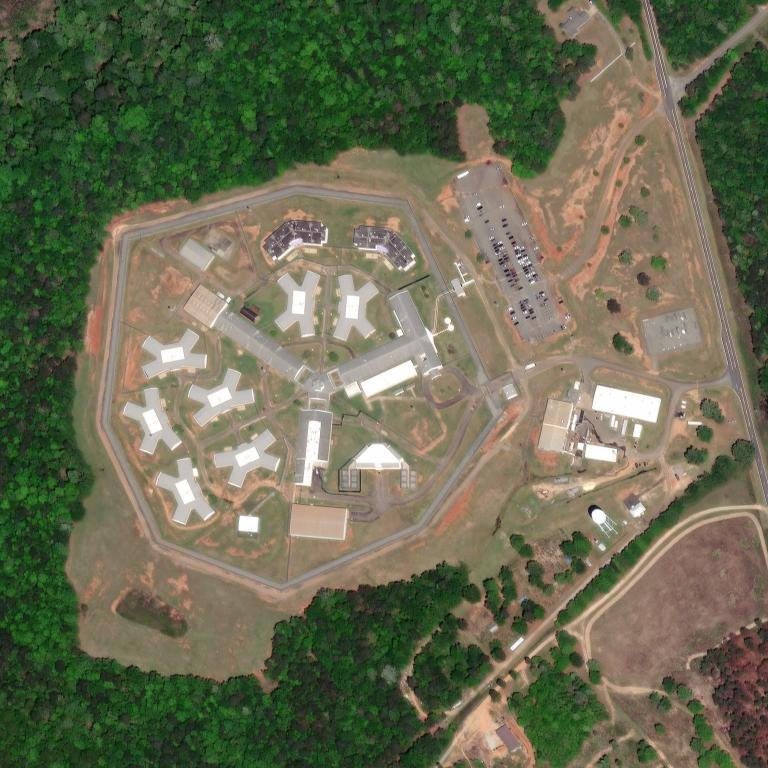
Architecture documents what the building was designed to hold. See the system-wide receipts at gps.press/warehouse.