
Estimated reading time: 6 minutes
A Humanitarian Crisis Demands a Legislative Solution
Since 2020, more than 1,724 people have died in Georgia Department of Corrections custody. That is nearly one death every single day. Georgia’s prisons have a death rate of 628 per 100,000 — and a homicide rate 32 times higher than the state average. These are not statistics. They are people — fathers, mothers, sons, and daughters — dying inside facilities the state is responsible for operating.
Georgia spends over $33,000 per year to incarcerate each of its roughly 50,000 prisoners — far more for the elderly and medically vulnerable. Yet research consistently shows that incarceration beyond 8–15 years produces no additional public safety benefit. People age out of crime. We are warehousing the elderly at taxpayer expense while they die in state custody.
Meanwhile, Georgia’s Parole Board grants release to barely 1 in 4 eligible applicants. Thousands who have served 15, 20, 30 years — who have completed every program and aged out of the behavior that brought them there — remain locked in cells with no explanation and no hope. The parole system is not broken by accident. It is broken by design. And one legislative change can fix it.
The Problem: Total Discretion, Zero Accountability
Georgia’s parole system is built on total discretion. Right now, incarcerated people have the right to be considered for parole, but no right to be released — even if they meet every requirement, complete every program, and follow every rule. That’s why courts almost never intervene when the Georgia Parole Board acts arbitrarily or denies someone without reason.
But it doesn’t have to be that way.
Across the country, states have created what courts call a “liberty interest” in parole — a legal expectation of release when objective criteria are met. Creating this liberty interest is the single most important reform Georgia could make, because it transforms parole from a privilege into a fair, enforceable process.
Here’s what that means and how it works.
1. The Legal Foundation: When Parole Becomes a Protected Right
The U.S. Supreme Court has consistently held:
- There is no automatic federal right to parole,
BUT
- A state can create a right — a liberty interest — by using mandatory language in its statutes.
When a statute says the Board “shall release” someone who meets certain criteria unless a specific exception applies, the law creates:
- A legitimate expectation of release
- Due-process protections
- Judicial review of whether the Board followed the law
This doesn’t tie the Board’s hands on safety decisions — it simply requires fairness, transparency, and real reasons.
2. What Due Process Requires (and Doesn’t Require)
When a liberty interest exists, due process requires:
- Timely review
- Notice of the hearing
- A chance to submit evidence or speak
- Written reasons for denial
- A real standard the Board must follow
It does not require:
- Trials
- Attorneys
- Adversarial hearings
- Judges second-guessing the Board’s judgment
It only requires that the Board follow the rules and give meaningful explanations.
3. Why Georgia Has No Liberty Interest Today
Georgia law gives the Board nearly unlimited discretion. Even if every guideline favors release, the Board can deny parole silently, without explanation, and without meaningful review.
Because of this:
- People cannot challenge unfair denials
- Programming incentives collapse
- Good behavior goes unrewarded
- Families suffer through endless uncertainty
- Prisons stay overcrowded and violent
A functioning parole system cannot operate where hope is impossible and accountability is nonexistent.
4. How Georgia Can Create a Liberty Interest With One Simple Change
Georgia can create a liberty interest by adding one sentence to the parole statute using mandatory language:
Model Language
“The Board shall grant parole when objective release criteria are met, unless the Board makes a specific written finding, supported by the record, that an enumerated public-safety exception applies.”
That one “shall” — combined with written reasons — is what creates the liberty interest.
Required Components:
- Mandatory release when criteria are met
- Limited, defined exceptions
- Written reasons
- Judicial review of whether the Board followed the process
This model is already working in multiple states.
5. Why This Would Transform Georgia’s System
Creating a liberty interest would:
Restore Hope
People who do the work, finish programs, and stay discipline-free would know they are working toward something real.
Reduce Violence
With meaningful incentives, conduct improves and dorms stabilize. Every study confirms this.
Reduce Overcrowding
Georgia’s prisons are bursting because parole has slowed to a crawl. A liberty-interest framework would stabilize releases in a predictable, safe way.
Protect Families
Families deserve honesty. Written reasons prevent silent, unexplained denials.
Bring Accountability
Judicial review ensures the Board follows the law — not politics.
6. A Ready-to-Use Bill Concept: “Presumptive Parole & Due Process Act”
Here is the full drop-in policy concept:
The Board shall grant parole upon a finding that the individual meets the objective release criteria established by rule, unless the Board makes a specific written finding, supported by the record, that one or more enumerated public-safety exceptions apply.
The Board shall provide:
(1) timely notice of review;
(2) an opportunity to be heard and submit materials;
(3) written reasons for any denial or deferral; and
(4) a reconsideration schedule not to exceed 12 months.
Board decisions shall be subject to judicial review limited to whether the required procedures were followed and the reasons stated are consistent with statute.
This keeps the Board’s authority but ends the secrecy.
7. Why Georgia Should Adopt This Now
Georgia’s parole crisis — unprecedented delays, 7–10 year setbacks, and a review system that can deny someone without saying a word — is unsustainable.
The numbers speak for themselves: 1,724+ deaths since 2020. A death rate of 628 per 100,000. A homicide rate 32 times the state average. Over $1.6 billion per year spent incarcerating people, many of whom pose no public safety risk. A parole board that releases barely 1 in 4 eligible applicants — with no requirement to explain why.
A liberty-interest statute:
- Reduces prison violence
- Reduces prison costs
- Aligns with national best practices
- Protects due process rights
- Increases transparency
- Rebuilds trust between the state, families, and incarcerated people
It is the most impactful reform available in a single line of legislation.
Establish a liberty interest in parole. The research supports it. The budget demands it. 1,700 deaths require it.
Read More from Georgia Prisoners Speak
To better understand how Georgia’s parole crisis fits into the broader failures of the state’s prison system, explore these related investigations and reform proposals:
A comprehensive roadmap to build a fair, transparent, and effective parole process in Georgia.
How Georgia’s justice system funnels people into incarceration instead of providing support and second chances.
An in-depth investigation into how deaths inside Georgia prisons are ignored, minimized, or covered up.
A breakdown of why the grievance system fails and why documenting issues is still critical.
Direct, actionable proposals to reduce violence and improve conditions today.
A guide for families navigating one of the most painful and confusing experiences imaginable.
A look at how misclassification and understaffing lead directly to violence and death.
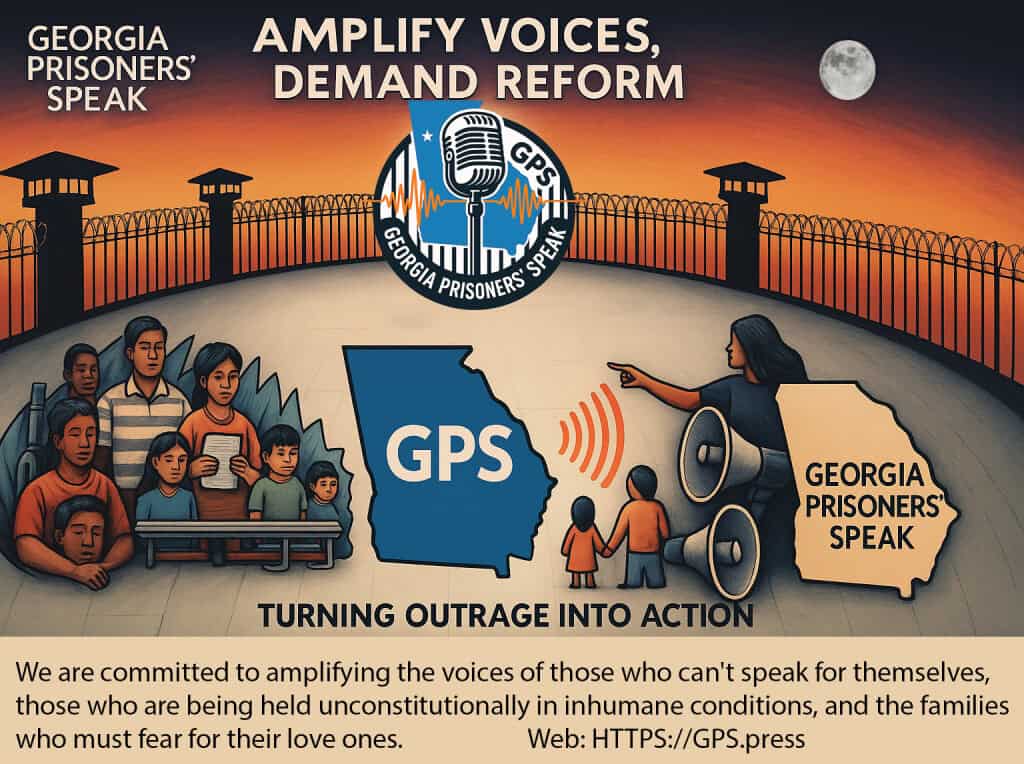
1,724 people have died in Georgia's prisons since 2020 while the Parole Board silently denies release to people who've served decades. Every day you don't share this investigation is another day legislators can ignore a crisis they have the power to fix with one sentence of law.
I agree, my brother was just denied parole after 8 years for a non violent crime
The family is devastated and are looking for answers.
There was no parole hearing, he didn’t get interviewed and has great behavior, has done the classes.