Georgia Parole Board Rejects Constitution

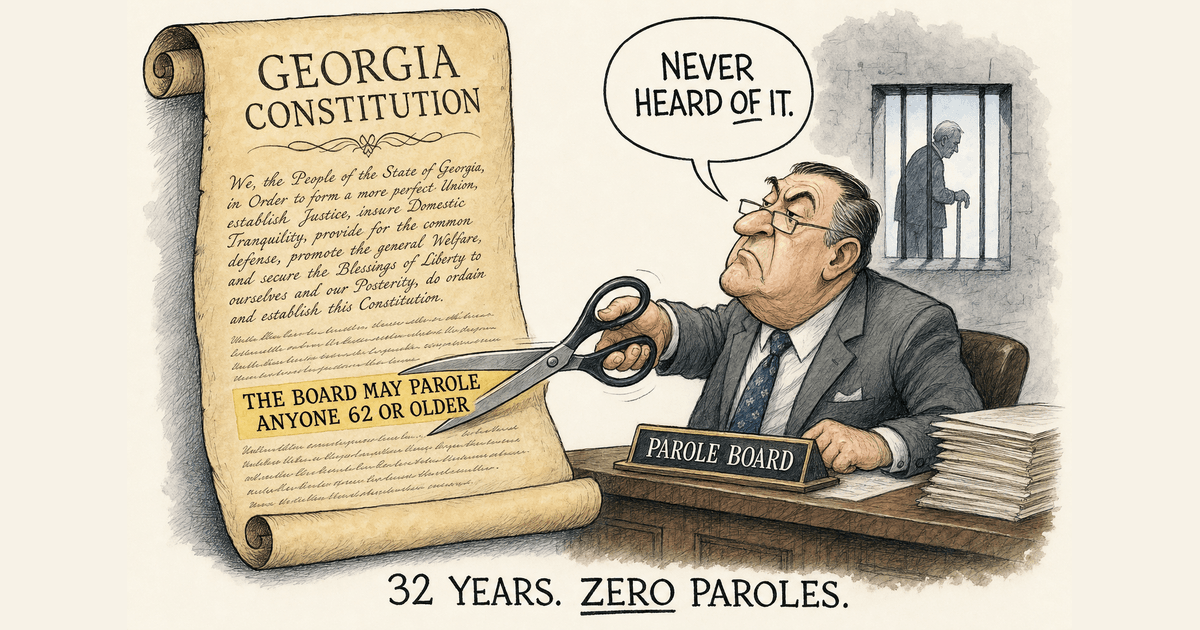
Editorial cartoon: a parole board official with scissors prepares to cut the line "The Board may parole anyone 62 or older" out of a scroll labeled Georgia Constitution, saying "Never heard of it," while an elderly prisoner stands at a barred window. Caption: 32 years. Zero paroles.

In 1994, 81% of Georgia voters gave the parole board constitutional authority to parole anyone 62 or older — an exception written into the same amendment that created life without parole. Thirty-two years later, the Board has no rule, no process, and no record of ever using it once.

Candidate Profile: Damita Bishop — District 61

Damita Bishop, co-founder of prison reform nonprofit FAIR and author of the Georgia Second Chance and Smart Justice Reform Act, has qualified as a Republican candidate for House District 61. GPS profiles her criminal justice reform platform and its alignment with both the End the Warehouse and Vision 2027 campaigns.

Blackstone Is Dead: Georgia Abandoned American Justice

Crumbling marble courthouse pillar inscribed with JUSTICE, with broken golden scales of justice lying at its base and prison bars in the background, bathed in warm light

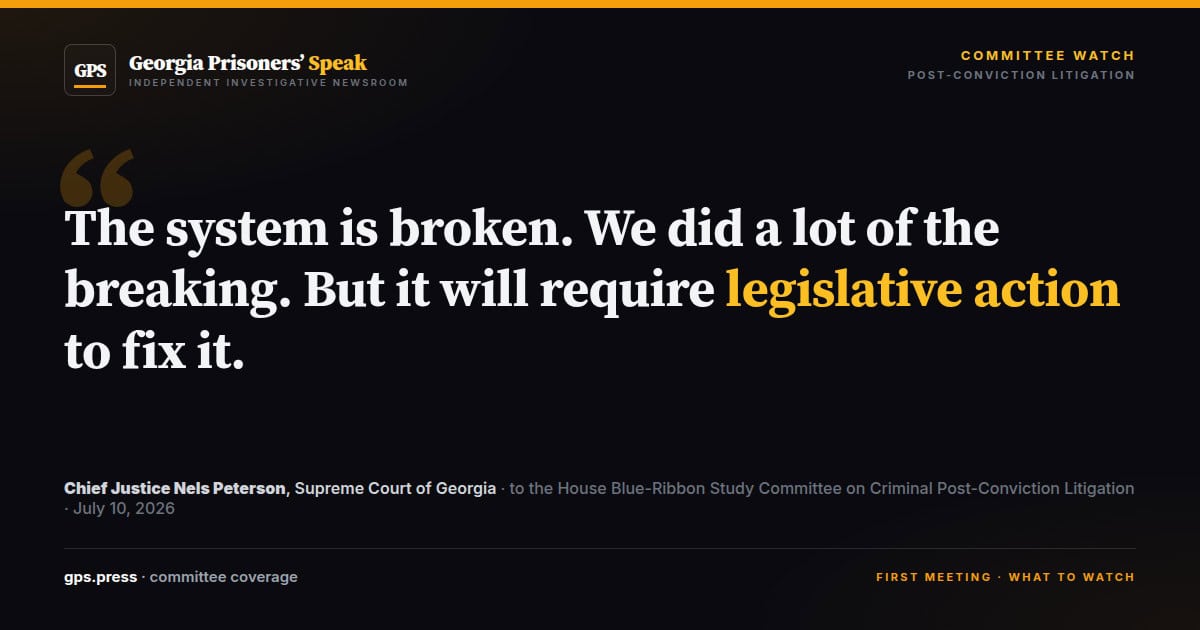
Georgia’s Chief Justice admits the post-conviction system is “broken.” But the IAC trap is just one lock on the door. Combined with the unconstitutional 4-year habeas deadline, no right to counsel, and restricted legal access, Georgia has built a machine that keeps thousands — including an estimated 2,600 to 5,275 innocent people — locked inside its deadliest prisons.

The Illusion of Parole

The Illusion of Parole

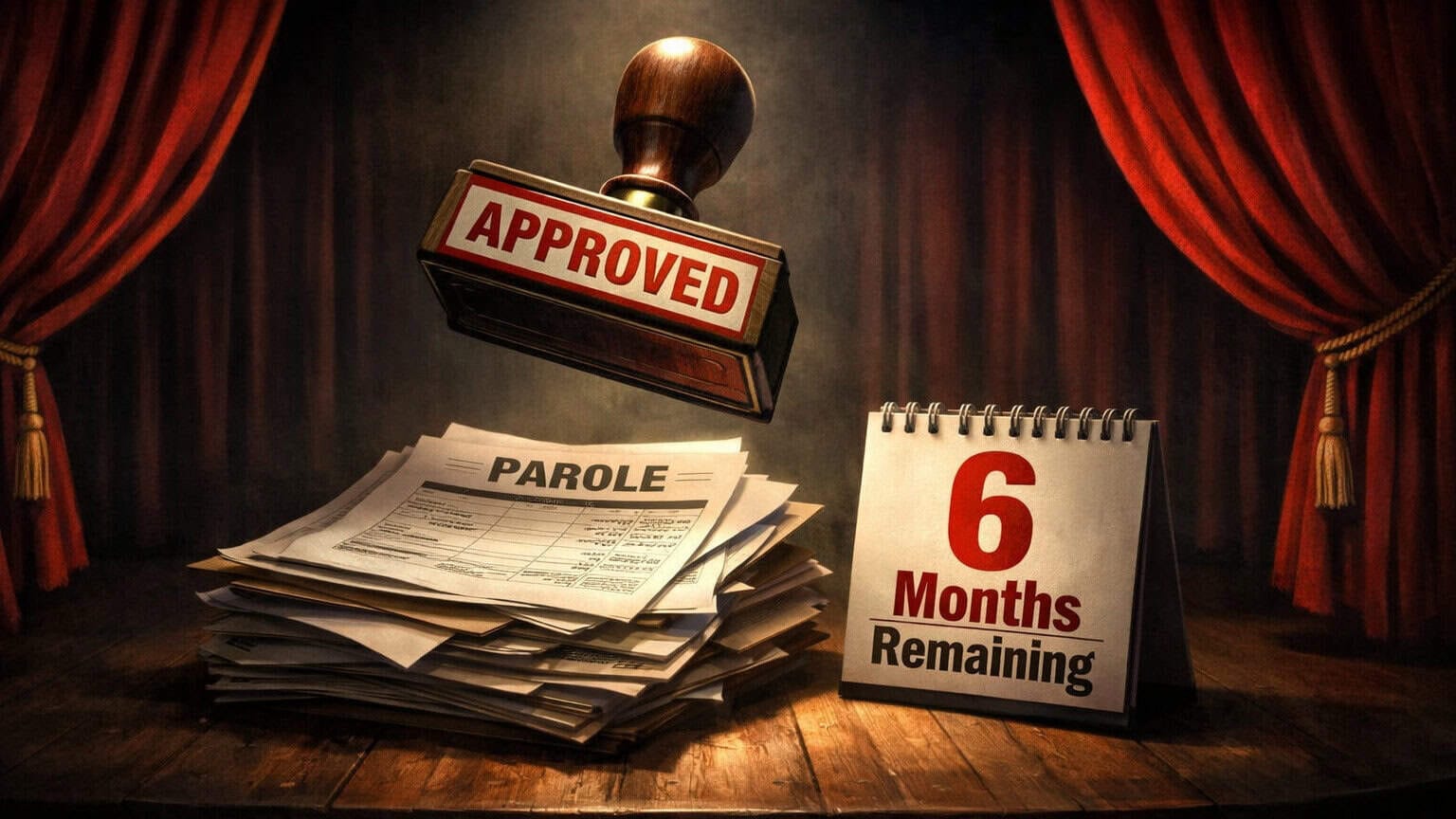
Analysis of 257,000 GDC records shows that 37% of Georgia parolees were released within 12 months of their max-out date. Lifers now serve 31 years before release—up from 12.5 years in 1992. The system preserves the appearance of clemency while systematically denying meaningful early release.

Parole Packet Builder: Free Tool for Georgia Families

Parole Packet Builder by GPS

The Parole Packet Builder is a free tool helping Georgia families create professional parole support packets. With a 28% approval rate, complete documentation and strong support letters can make the difference between release and denial.

Georgia’s Shadow Sentencing System

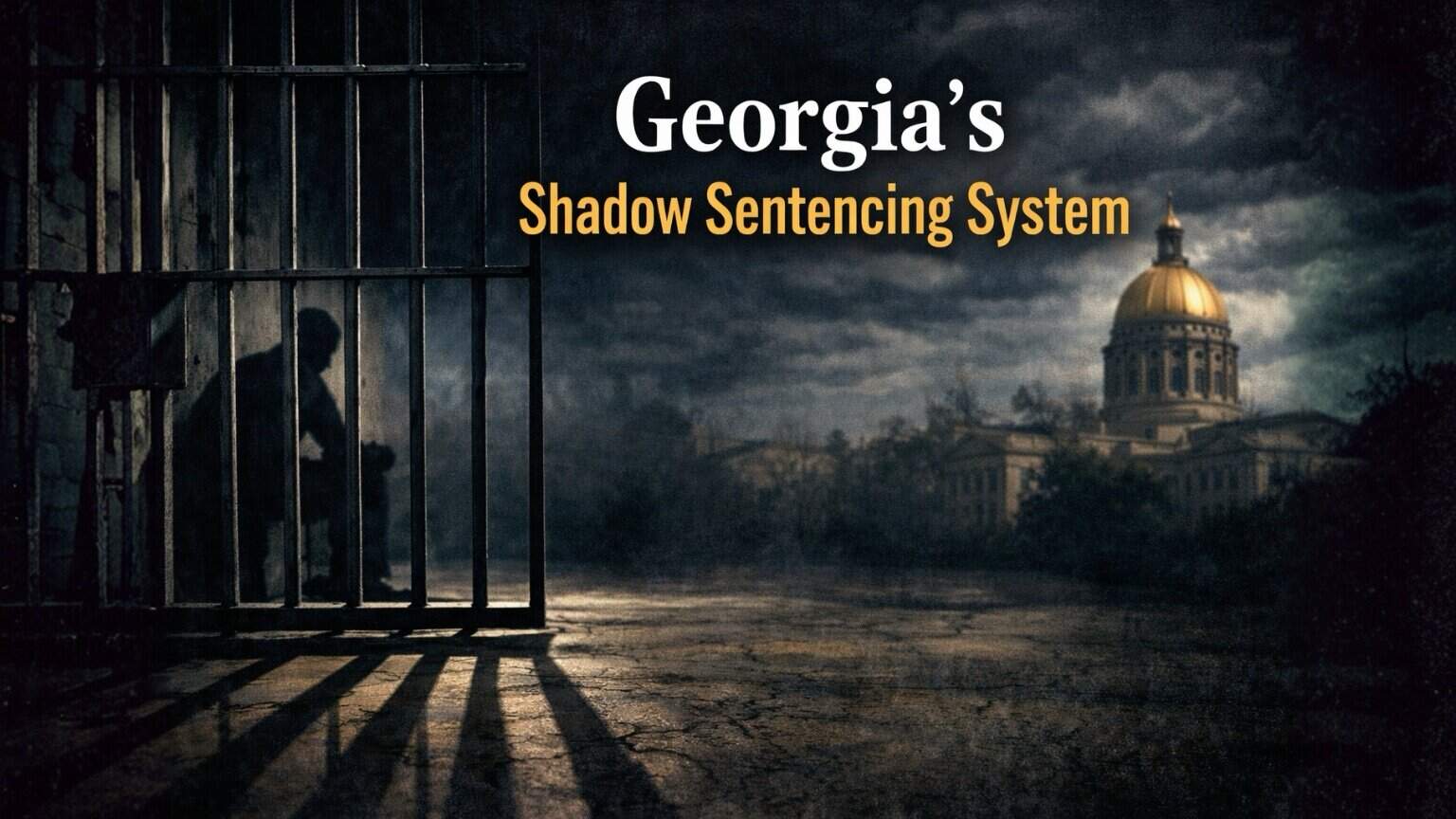
GDC’s own data shows Georgia prisoners now serve 27% longer than a decade ago—not because of new laws, but because the Parole Board quietly curtailed releases. At $86.61 per day, this shadow sentencing system costs taxpayers over $1 billion annually.