This explainer is based on GDC Mission vs. Reality: The Rehabilitation That Doesn’t Exist. All statistics and findings are drawn directly from this source.
TL;DR
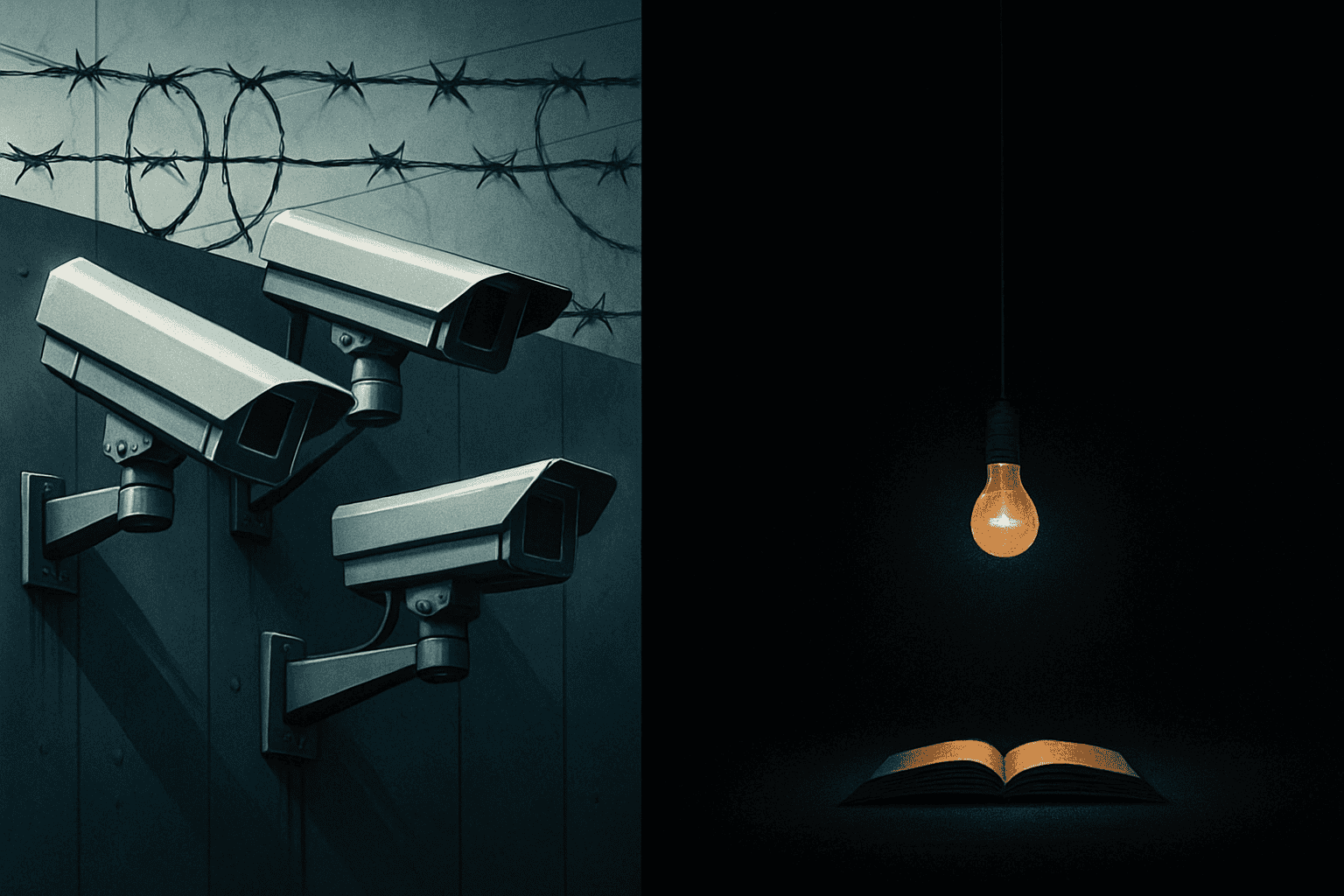
Georgia says its prisons help people change. The numbers tell a different story. The state spends $1.8 billion a year on prisons. Only $52 per person goes to rehab programs. That’s less than the cost of 45 ramen packs from the prison store. Meanwhile, Georgia spends 46 times more on cameras and tech than on helping people learn and grow. About 12,000 people leave Georgia prisons each year. Most get a $25 gift card and a bus ticket — nothing else.
Why This Matters
If your loved one is in a Georgia prison, this is what it means for them:
- There are almost no real programs. Your family member may want to change. But classes, job training, and drug treatment barely exist. The state spends $3.44 per person on job training for the whole year.
- The prisons are not safe. Half of all guard jobs are empty. Over 100 people were killed in Georgia prisons in 2024 alone. The U.S. Department of Justice says these prisons break the law.
- When they come home, they get almost nothing. People walk out with a $25 prepaid card, some clothes, and a bus ticket. No help finding a home. No help finding a job. No support at all.
- This hurts your whole family. Without real help inside, people are more likely to end up back in prison. That means more years apart. More pain. More cost to you.
This is not bad luck. This is a choice Georgia made with your tax dollars.
Key Takeaway: Georgia chooses to watch people instead of help them — and families pay the price.
The Money: $1.8 Billion and Almost None of It Goes to Rehab
Georgia spent $1,913,888,054 on prisons in 2025. That’s almost $2 billion.
Here’s where the money goes:
- Health care: $417–432 million (about 24% of the budget)
- Cameras, tech, and watching people: Over $150 million. This includes $84.7 million for cameras and walls. It includes $35 million to block cell phones. It includes $7.2 million for body cameras and tasers.
- Rehab, school, and programs: About $2.6 million total over two years
That means Georgia spends 46 times more on watching people than on helping them.
Break it down per person. Georgia holds about 50,000 people in prison. Each person gets about $52 a year for rehab. That’s 11 cents a day. A single ramen pack at the prison store costs $0.90. The yearly rehab budget per person can’t even buy 45 ramen packs.
At the same time, it costs $34,000 a year to lock up one person. Almost all of that goes to walls, guards, and control — not to change.
Key Takeaway: Georgia spends $34,000 a year to lock someone up — but only $52 to help them.
The Violence: Prisons Aren’t Even Safe
Georgia’s mission says it runs “secure” prisons. The facts say otherwise.
The U.S. Department of Justice looked into Georgia’s prisons. In October 2024, the DOJ said Georgia breaks the law against cruel punishment.
Here’s what they found:
- 142 people were killed in Georgia prisons from 2018 to 2023
- In 2024 alone, GDC counted 66 killings. The Atlanta newspaper found over 100.
- Over 1,400 violent events happened in just 15 months (January 2022 to April 2023)
- 19.7% of those events involved a weapon
- 45.1% caused serious injury
- 27,425 weapons were found in prisons in less than two years
Why is it so bad? Because half of all guard jobs are empty. Out of 5,991 guard positions, 2,985 are vacant. At one high-security prison, one guard watched nearly 400 beds. Gangs fill the gap. They control housing areas. They decide where people sleep. They force families to pay money.
Key Takeaway: Half of all guard jobs are empty, and over 100 people were killed in Georgia prisons in 2024.
Why People Can’t Learn in These Conditions
Even if programs existed, the brain can’t learn when it’s in danger.
Science shows this clearly. When a person faces constant threats, the brain goes into survival mode. The part of the brain used for thinking and learning shuts down. The part that senses danger takes over.
- A Yale study found that even mild stress causes “rapid and dramatic loss” of thinking skills
- Chronic stress starts changing the brain in just one week
- A study at Rikers Island jail tested 197 people. After just 4 months, their ability to think clearly dropped in a big way. Their ability to control feelings also dropped.
One person inside described it this way: “I’ve had to sleep with a knife in my hand. I have to use the bathroom with a weapon because I saw someone get murdered on the toilet.”
You cannot ask people to study for a GED while they fear for their lives. The brain simply won’t allow it.
Key Takeaway: Science proves the brain cannot learn under constant threat — and Georgia’s prisons are war zones.
What Programs Exist — and What Doesn’t
GDC claims it gave out 45,000 certificates in 2024. That sounds good. But look closer.
Those “certificates” include things like CPR cards, food handler badges, and “Business Etiquette” classes. They’re bundled in with real job training to make the number look big.
Here’s what the real picture looks like:
- Reentry centers have 2,344 beds for 50,000 people. That’s only 4.7% of people.
- The job training budget is $172,000 for the whole state. That’s $3.44 per person.
- 50–66% of people in prison have drug or alcohol problems. But treatment spots are “severely limited.”
- 40% don’t have a high school diploma.
- Prisons are locked down about 60 days a year. During lockdowns, all programs stop.
- Evening classes were cut during COVID in 2020. They never came back. It’s been 6 years.
The DOJ said programs had been “slashed rather than expanded.” They said taking part was “effectively impossible.”
People who do finish job training programs come back to prison at a rate of only 13.64% — compared to 26% for everyone else. The programs work. They just barely exist.
Key Takeaway: Job training cuts repeat offenses in half — but Georgia barely funds it.
Georgia Ranks Dead Last Among Southern States
Georgia spends less on prison schooling than every Southern state. By a lot.
Here’s what each state spends per person per year on education in prison:
- Florida: $1,028 (26 times more than Georgia)
- Alabama: $742 (19 times more — even under federal watch)
- Texas: $508–585 (and has 15% repeat offense rate)
- North Carolina: $463
- Mississippi: Over $379 (the poorest state in America, and still outspends Georgia)
- South Carolina: Has the lowest repeat offense rate in the country at 17.1%
- Georgia: $39
Georgia has about 51,000 people in prison. It spends about $2 million total on prison schooling. Florida has 88,500 people and spends $91 million.
Meanwhile, Georgia spends $1 billion a year on the HOPE scholarship for free citizens. It just signed $325 million for the new DREAMS scholarship. People in prison are banned from both — not by law, but by a rule from 1995.
Key Takeaway: Even Alabama and Mississippi — under tighter budgets — spend far more on prison education than Georgia.
Education Works — Georgia Just Won’t Pay for It
The proof is clear. Education in prison saves lives and money.
- The RAND research group found people who take classes in prison are 43% less likely to come back
- Every $1 spent on prison education saves $4–5 in future prison costs
- Job training programs show a 205% return on the money spent
- The Bard college program in New York has a repeat offense rate of under 4%
- College programs create $16,908 in value per student
If Georgia could cut its repeat offense rate by just 10 points, that would mean:
- About 1,200 fewer crimes each year
- About 1,200 fewer victims
- About $40 million saved in prison costs
The federal government brought back Pell Grants for people in prison on July 1, 2023. Programs are growing in 44 states. But Georgia went the other way. It shut down Georgia State University’s prison program in March 2024. That program cost just $180,000 a year and served 60 students.
Georgia’s ban on aid for students in prison is not even a law. It’s a rule made in 1995. A governor could change it tomorrow.
Key Takeaway: Education cuts repeat offenses by 43% and saves $4–5 for every $1 spent — but Georgia is closing programs, not opening them.
Coming Home With Nothing
About 12,000 people leave Georgia prisons every year. That’s 33 people every single day. At least 95% of all people in state prison will come home at some point.
Here’s what they get when they walk out:
- A $25 prepaid Visa card
- The clothes on their back
- A bus ticket if no one picks them up
- No help finding housing
- No help finding a job
- No phone, no ID, no support
Medical research shows that the risk of dying is very high in the first two weeks after release.
One person who got out after 17 years said: “I went in at 19 and came out at 36. My twenties and thirties, gone. The world moved on without me.”
Georgia’s official rate of people going back to prison is 25–27% within three years. But that number only counts new convictions. It leaves out arrests, and it only looks at three years. Federal data for 30 states (including Georgia) shows:
- 68% are arrested again within 3 years
- 79% within 6 years
- 83% within 9 years
The real rate of return to prison is likely about 50% — double what Georgia reports.
Key Takeaway: 33 people leave Georgia prisons every day with a $25 card and no support — and about half will end up back inside.
Voices from Inside
People in Georgia prisons describe what this looks like in real life.
Wynter: “I finished my entire case plan within two years. I’ve worked many jobs. I graduated two different programs. Nothing helps to reduce my time. I’ve become a better person, but no one in the GDC cares.”
KingdomMan32: “I’ve been down 17 years now. Seventeen years of living in what I can only describe as a war zone. No yard call. No groups or classes. Nothing to help ease your mind.”
Bandit: “I have been threatened, had weapons pulled on me, been fed rancid and moldy food, had roaches and rats everywhere… We live in conditions that would be illegal for animals at a shelter.”
NeverGiveUp: “I’m 69 years old. I pee through a tube because of prostate cancer. I am a man who has no purpose to his existence on this earth. Let me go or just execute me.”
Mikemike: “I’m a lifer so they don’t like to give us education. They’ll put short timers ahead of us on the list. They don’t try to rehabilitate you. It seems easier to control a dumb person.”
These are real people. They have families who love them. They want to learn and grow. Georgia won’t let them.
Nobody Is Holding Georgia Accountable on Rehab
The DOJ required Georgia to fix 82 problems. But only 3 out of 82 deal with programs.
None of the 82 fixes require:
– Education
– Job training
– GED programs
– College classes
– Thinking and behavior classes
That means Georgia can follow every DOJ rule and still provide zero real rehab.
In December 2024, a state Senate study group looked at the prison crisis. They voted for no changes. They shot down:
– An oversight body to watch GDC
– Training to calm conflicts
– Programs to help people rejoin society
The Atlanta newspaper found that GDC leaders “repeatedly gave false or misleading information” to federal investigators, state lawmakers, and a federal judge. The GDC commissioner called news reports “propaganda.”
But there is proof the system can work. Walker State Prison has enough staff and programs. It has zero killings. GDC’s own prison proves that when you invest in people, lives are saved.
Key Takeaway: Georgia can follow every DOJ rule and still provide zero real rehabilitation — because the rules don’t require it.
What Needs to Change
The facts in this report are not opinions. They come from the DOJ, federal data, state budget records, and published research.
Here is what the evidence demands:
- Fund real programs. Move the spending ratio from 46:1 (watching vs. helping) to something that matches what works.
- End the financial aid ban. It’s a 1995 rule, not a law. A governor can change it today. Let people in prison use Pell Grants, HOPE, and DREAMS like every other Georgian.
- Reopen and expand college programs. Don’t shut them down like Georgia State’s program. Open more.
- Fill guard jobs. You can’t run programs — or keep people safe — with half the staff missing.
- Track and report honest numbers. Report arrests, not just convictions. Track more than 3 years. Show how many people can actually get into programs.
- Create real reentry support. A $25 card is not a plan. People need housing, jobs, and help on day one.
Every day Georgia waits, 33 more people walk out the door with nothing. Every year, about 1,200 more people become victims of crimes that could have been stopped — if Georgia had invested in people instead of cameras.
Key Takeaway: Georgia could prevent about 1,200 crimes a year and save $40 million — just by investing in programs that already prove they work.
Glossary
- GDC: Georgia Department of Corrections — the state agency that runs Georgia’s prisons
- DOJ: U.S. Department of Justice — the federal agency that looked into Georgia’s prisons and found they break the law
- Eighth Amendment: Part of the U.S. Constitution that bans cruel and unusual punishment
- Recidivism (re-SID-ih-vizm): When someone goes back to crime or prison after being released
- Reconviction: Being found guilty of a new crime after release — this is the narrow measure Georgia uses
- Rearrest: Being arrested again after release — a broader and more honest measure
- Pell Grant: Federal money to help low-income students pay for school — restored for people in prison in July 2023
- HOPE Scholarship: Georgia’s merit-based college money funded by the lottery — people in prison have been banned since 1995
- DREAMS Scholarship: New $325 million scholarship signed by Governor Kemp — people in prison can’t use it
- RSAT: Residential Substance Abuse Treatment — a 9-month drug and alcohol program in prison
- GED: A test that gives you a high school diploma if you didn’t finish high school
- RAND Corporation: A well-known research group that studies what works in prisons and schools
- Reentry center: A place meant to help people get ready to leave prison — Georgia has only 2,344 beds for 50,000 people
- Lockdown: When a prison stops all movement and programs, usually for safety reasons — happens about 60 days a year in Georgia
- Vacancy rate: The share of jobs that are empty and unfilled
- GBPI: Georgia Budget and Policy Institute — a group that studies how the state spends money
- BJS: Bureau of Justice Statistics — the federal office that tracks prison data across the country
- Case plan: A list of programs and goals a person in prison is supposed to complete
Read the Source Document
Read the full GPS analysis: “GDC Mission vs. Reality: The Rehabilitation That Doesn’t Exist” (PDF)
Other Versions of This Report
We created versions of this report for different readers:
- For Lawmakers — Policy brief with budget details and action items
- For Journalists — Media-ready summary with key data points
- For Advocates — Deep dive with legal and research backing
Sources & References
- GBPI Budget Overviews. Georgia Budget and Policy Institute (2025-01-01) Official Report
- Governor’s Budget Report AFY2026/FY2027. Office of the Governor of Georgia (2025-01-01) Official Report
- GPS Analysis of Georgia Parole System (2025) — Georgia Prisoners’ Speak. Georgia Prisoners’ Speak (2025-01-01) GPS Original
- 2024 Senate Study Committee Report. Georgia Senate (2024-12-13) Official Report
- DOJ Findings Report (September 2024). U.S. Department of Justice (2024-10-01) Official Report
- AJC Investigations. Atlanta Journal-Constitution (2024-01-01) Journalism
- BJS Prisoners in 2023. Bureau of Justice Statistics (2024-01-01) Official Report
- Rikers Study (PMC5961486). PubMed Central (2018-01-01) Academic
- Montgomery v. Louisiana 577 U.S. 190. U.S. Supreme Court (2016-01-01) Legal Document
- PMC4561403. PubMed Central (2015-01-01) Academic
- PMC4120991. PubMed Central (2014-01-01) Academic
- RAND Corporation (2013). RAND Corporation (2013-01-01) Academic
- Miller v. Alabama 567 U.S. 460. U.S. Supreme Court (2012-01-01) Legal Document
- Graham v. Florida 560 U.S. 48. U.S. Supreme Court (2010-01-01) Legal Document
- Yale (Arnsten 2009) — Arnsten, Amy F.T.. Yale University (2009-01-01) Academic
- NEJM (Binswanger 2007) — Binswanger, Ingrid A.. New England Journal of Medicine (2007-01-01) Academic
- Holt v. Sarver 300 F. Supp. 825. U.S. District Court for the Eastern District of Arkansas (1970-01-01) Legal Document
- Education Commission of the States. Education Commission of the States Official Report
- GDC Official Website. Georgia Department of Corrections Official Report
- GPS Research Library. Georgia Prisoners’ Speak GPS Original
- Vera Institute. Vera Institute of Justice Official Report
Source Document
You just read about people suffering in state custody. The least you can do is make sure other people read it too. Share this story.