What the Videos Don’t Show

A mother at a family dinner table watches something on her phone, her face stricken, while her son and husband look on; the phone screen is turned away

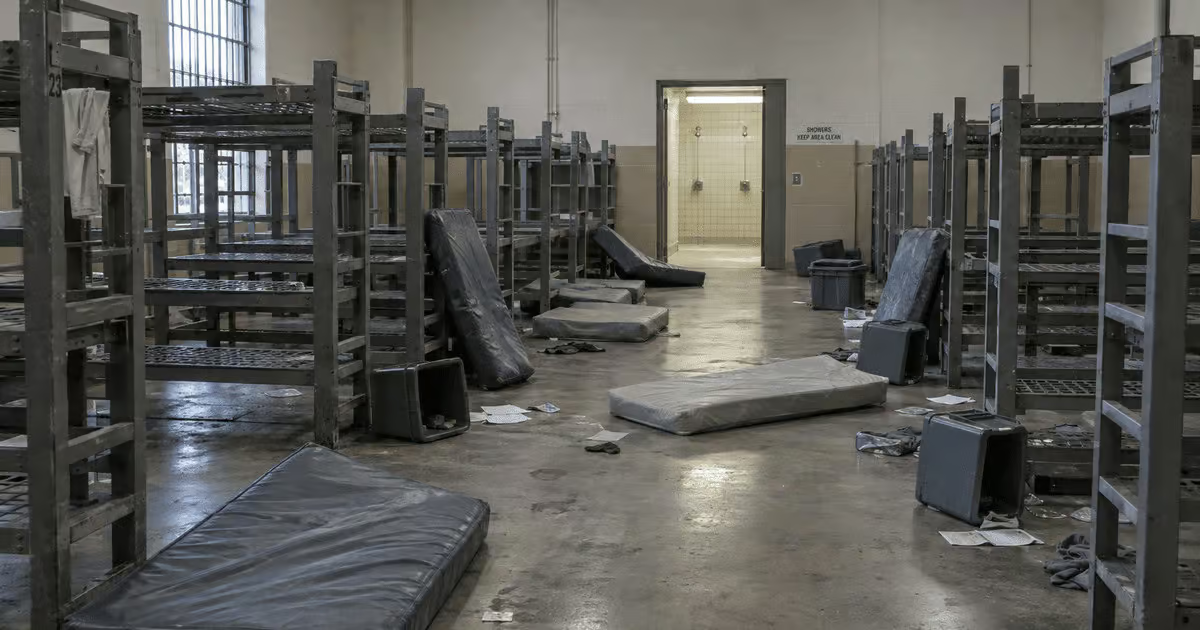
The prison videos on your feed aren’t proof that the men in them can’t be reached. Federal investigators read the same clips as proof of what a housing unit becomes when the state leaves it: half the posts empty, gangs deciding who sleeps where, drugs over a fence nobody watches. And the public already believes prisons don’t fix anyone.

What’s Really Behind Georgia’s Prison Crisis?

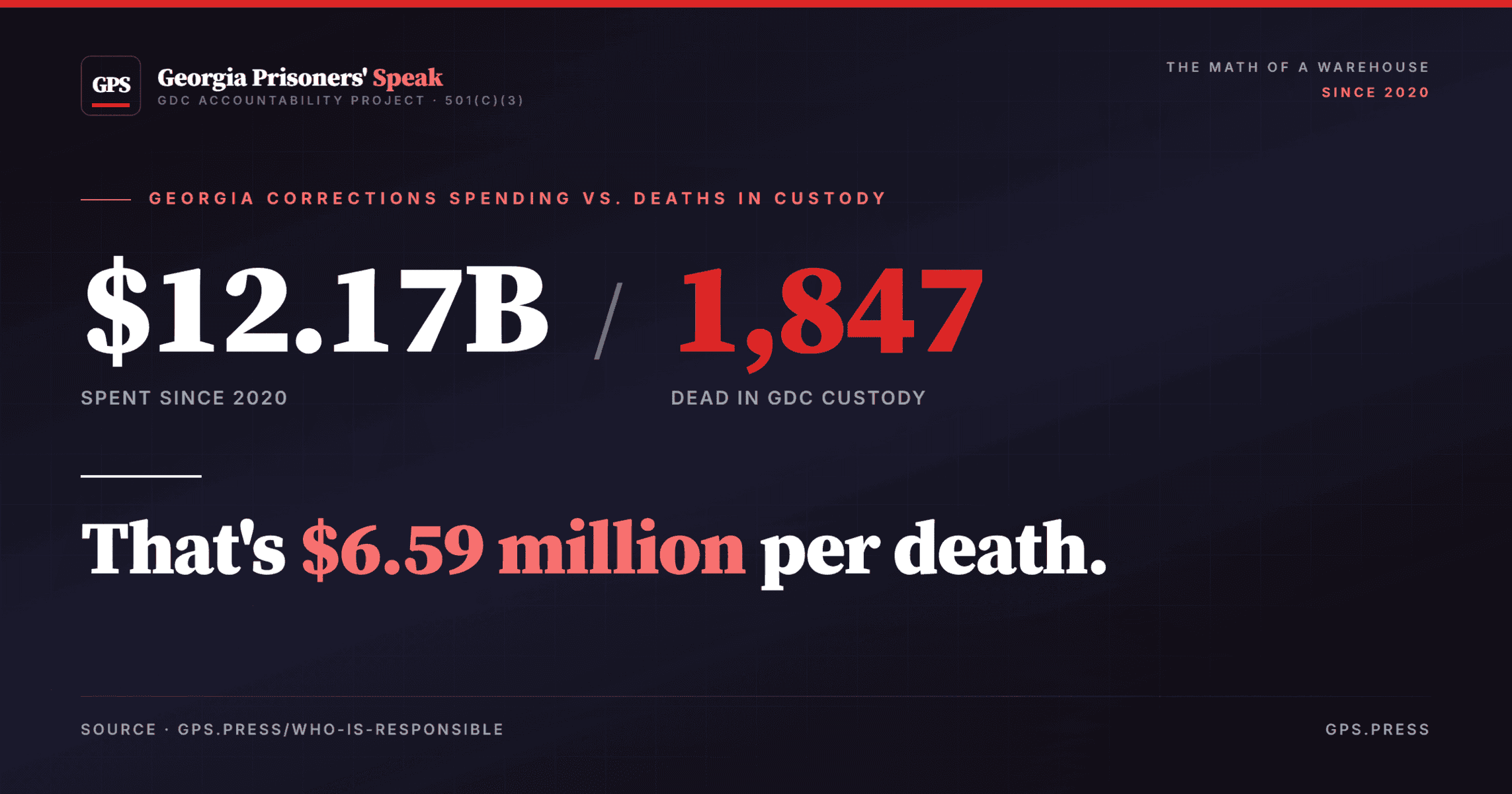
Georgia poured $2.4 billion in new money into its prisons since 2021 — on top of $12.2 billion spent since 2020 — and bought the deadliest years in the system’s history. Follow the money to see who really built the crisis, and why firing one commissioner fixes nothing.

The Abuse Provision: Georgia’s Forgotten Prison Clause

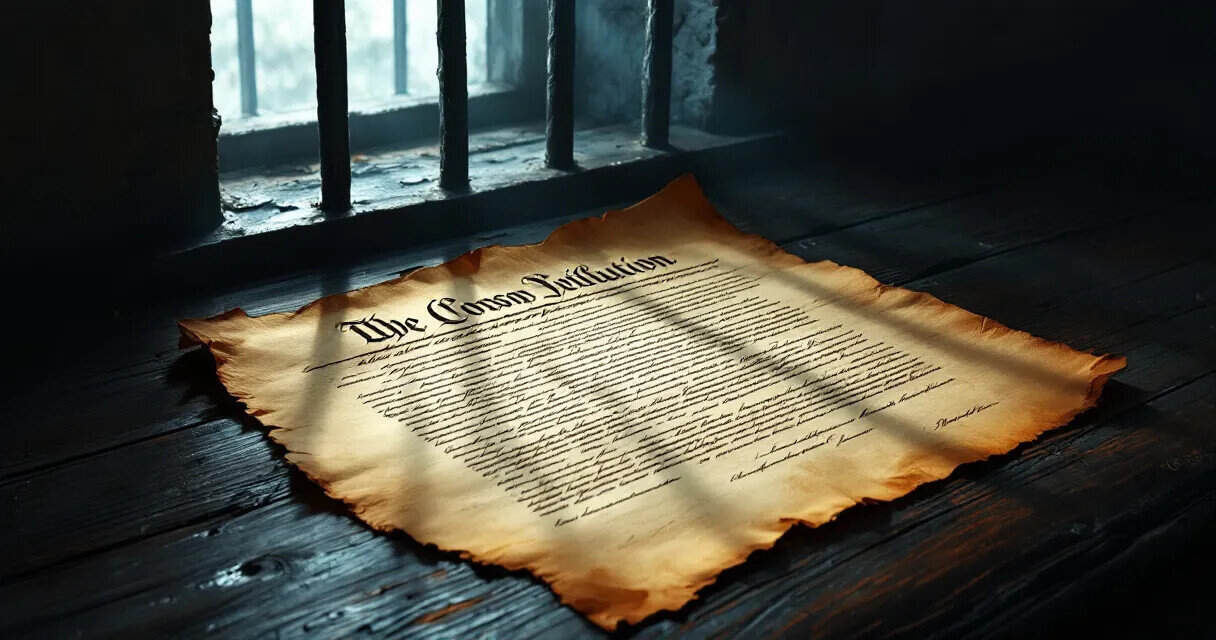
Georgia’s constitution contains a clause no other state has: a ban on abusing any person “in being arrested, while under arrest, or in prison.” Written by Reconstruction delegates in 1868, cited only ten times since, it may be the most powerful untested legal tool against the prison crisis.

The Georgia Prison Commander Who Warned the State

Tyler Ryals rose to emergency-response commander across three Georgia prisons, then warned leadership in a sworn statement that conditions were unconstitutional. Twelve days later the state marked him “resigned.” Two months after that, the DOJ agreed with him.

Reopen the Doors — Normalization

Every harm this series documented flows from one choice: Georgia warehouses people instead of preparing them to return. There is a proven alternative — normalization — that is humane, far cheaper, and may be legally required. The finale of End the Warehouse, and the blueprint out.

The Last Thread

Georgia treats family contact — the strongest predictor of going straight — as a privilege to ration and revoke: phone lists capped at twenty, visitation lists changeable only in May and November. An investigation into the connection the state severs by design, and the cheap fix it refuses.

Social Death

Georgia stripped its prisons of work, hope, and a future — and some people answer that emptiness not with drugs or the gang, but by going silent and disappearing while still alive. An investigation into the despair the state manufactures by policy, refuses to treat, and declines to count.

$150 Million to Watch Them Die: Georgia’s OWL Surveillance Goes Live

On or about June 1, Georgia switches on OWL — the first centralized real-time prison-surveillance hub in American corrections. GPS asks the question the state won’t answer: how does watching reduce a single stabbing, overdose, or suicide, when $150 million bought the eye and $805,000 was left for the classrooms?