CENTRAL STATE PRISON
Facility Information
- Original Design Capacity
- 288 (at 399% capacity)
- Bed Capacity
- 1,153 beds
- Current Population
- 1,149
- Active Lifers
- 175 (15.2% of population) · Oct 2026 GDC report
- Life Without Parole
- 2 (0.2%)
What the courts held in Brown v. Plata, and how Georgia compares →
- Address
- 4600 Fulton Mill Road, Macon, GA 31208
- Phone
- (478) 471-2908
- Fax
- (478) 471-2095
- County
- Bibb County
- Opened
- 1978
- Operator
- GDC (Georgia Dept. of Corrections)
Security Classification
Last updated: September 23, 2026
64 of the 1,136 people held here are classified Close security (5.6%), as of September 23, 2026.
| Security level | People | Share |
|---|---|---|
| Close | 64 | 5.6% |
| Medium | 1,029 | 90.6% |
| Minimum | 43 | 3.8% |
| Total | 1,136 |
Earlier count (undated table, produced October 22, 2025): 33 of 1,152 Close (2.9%).
Source: Georgia Department of Corrections records produced to GPS under the Open Records Act (R031471-090226, R024615-101925). A person's security level is GDC's classification of that person, which can differ from the prison's own designation.
Follow Central State Prison
Leadership & Accountability (as of 2026 records)
Officials currently holding positional authority at this facility, with deaths attributed to GPS-tracked records during their leadership tenure. Inclusion reflects role-based accountability, not legal findings of personal culpability. Death counts shown as facility / career.
| Role | Name | Since | Deaths this facility / career |
|---|---|---|---|
| Warden (facility lead) | Brown, Sonja D | 2026-06-01 | 5 / 5 |
| Deputy Warden of Security (facility deputy) | Turner, Dennis J | 2024-01-01 | 22 / 24 |
| Deputy Warden of Care and Treatment (facility deputy) | McKenzie, Lachaka Nicole | 2025-05-01 | 11 / 43 |
| Deputy Warden of Security (facility deputy) | Blackshear, Janice Denise | 2025-05-16 | 11 / 11 |
| Deputy Warden of Administration (facility deputy) | McMilan, Kendarlin | 2026-07-16 | 2 / 2 |
About
Last updated October 18, 2026.(DS)
Central State Prison: A Medium-Security Hub Under Pressure
Central State Prison sits on the grounds of the historic Central State Hospital complex in Macon, a medium-security facility for adult male felons that opened in 1978 and has historically been one of the larger medium-security hubs in middle Georgia. Its housing consists of cellblocks and dormitories configured for general population and segregation, along with a small infirmary; the prison provides work details, basic education, and limited treatment and religious programs. GPS's current records put the facility's rated capacity at 1,153 against a population of 1,149 — 99.7 percent of capacity — a figure that sits oddly beside the 288 people the plant was originally designed to hold.
What follows traces four threads that run through the public record at Central State: a mortality registry that includes five homicides since 2020 and a cluster of stabbings in the last weeks of 2023; a series of staff criminal charges, including a felony sexual-contact case filed in October 2026; a disciplinary and contraband picture that witnesses describe as irregular; and a set of state liability payouts that run from $250 to $100,000.
The Death Record: 39 Deaths Since 2020, Five Ruled Homicide
GPS has recorded 39 deaths at Central State Prison since January 1, 2020. The registry's cause coding is dominated by deaths GPS has not yet been able to classify — 19 are listed as Unknown/Pending — with six natural/medical, five homicides, four suicides, three "other," and two overdoses. The full list is maintained at GPS's facility death registry.
The most recent entries are close together. Steve Allen Burk, 38, died July 20, 2026, with the registry listing the cause as homicide. Demetris Raynard Keller, 38, died July 17, 2026, cause Unknown/Pending. Mickey Barrett, 64, died July 11, 2026, of natural/medical causes. Raemonte Gentale Harris, 39, died July 3, 2026, cause Unknown/Pending. Richard Palmer, 57, died June 2, 2026, cause Unknown/Pending. Michael Lane Brooks, 77, died April 19, 2026, cause Unknown/Pending. Miguel Angel Duran, 44, died March 1, 2026; the registry lists suicide.
Earlier entries follow the same pattern of unresolved coding. Ronald Goss, 60, died October 23, 2025, cause Unknown/Pending. Joseph Hamm, 36, died October 8, 2025, of an overdose. James Theodore Miller, 64, died September 22, 2025, cause Unknown/Pending. Ricky D Ring, 56, died July 16, 2025, cause Unknown/Pending. Travis Jamal Gaither, 41, died April 21, 2025, at Central State Prison, with the registry listing the cause as Unknown/Pending. Ricky Eugene Rogers, 68, died April 21, 2025, at Central State Prison, with the registry listing the cause as an overdose. Lamancha Ware, 48, died March 2, 2025, cause Unknown/Pending. Matthew Maddox died January 28, 2025, cause Unknown/Pending. Brandon Jamal Pool, 38, died December 29, 2024, cause Unknown/Pending. Leon Culver Kelly, 47, died December 9, 2024, with the registry listing homicide. Anthony Le Ray Baugher, 68, died October 26, 2024, cause Unknown/Pending. Thomas Dewayne Kiker, 49, died June 22, 2024, cause Unknown/Pending. Jeremiah Eugene Taylor, 41, died April 21, 2024, cause Unknown/Pending. Deanthony Terrell Fleming, 37, died February 14, 2024, and Adel Eackles, 64, died February 10, 2024, both with causes Unknown/Pending. Joseph W Akins, 66, died December 25, 2023, cause Unknown/Pending.
The three earliest homicides in the named set are the December 2023 stabbing deaths and Joshua Carl Lester. Marquis Lamar Johnson, 26, died December 18, 2023, with the registry listing homicide; Hollis Alan Bryant, 28, died December 17, 2023, also listed as homicide. Joshua Carl Lester, 34, died July 28, 2021, of a stab wound to the chest, as the Atlanta Journal-Constitution reported.
December 2023: Two Stabbings in Two Days
The AJC's homicide-tracking coverage documented the December 2023 deaths in detail. Marquis L. Johnson was stabbed in the prison barbershop on December 8, 2023, hospitalized, and died on December 18, 2023, after returning to the prison and going into cardiac arrest secondary to the stabbing. Hollis Alan Bryant, 28, died on December 17, 2023, from sharp force trauma to the left femoral artery; three other prisoners were criminally charged in connection with his death, according to the DOJ report as described by the AJC.
Georgia Public Broadcasting reported that in the last weeks of December 2023, two incarcerated men were stabbed to death at Central State Prison, bringing total prison deaths in the prior month to six. GPB also reported, citing Department of Corrections data, that 2023 was the most violent year for Georgia prisons since before the COVID-19 pandemic.
Staff Misconduct: A Felony Charge and a Pattern of Arrests
On October 15, 2026, Zacarra Esquire Oliver was arrested and booked into the Bibb County jail, charged with sexual contact with a person in custody by a law enforcement employee or agent (O.C.G.A. 16-6-5.1(b)(3), a felony) and with trading with inmates without the warden's consent (O.C.G.A. 42-5-16), according to the Bibb County Sheriff's Office inmate search. GDC's August 2026 staff roster lists a Zacarra Oliver as an Accounting Technician 3 at Central State Prison. She has been charged, not convicted. 13WMAZ reported that the accounting technician is accused in arrest warrants of having sexual intercourse with a Central State Prison inmate and illegally giving him food.
The charges are not isolated. 13WMAZ reported that a guard at Central State Prison faced charges after falsely imprisoning four Department of Family and Children Services employees over child support payments in December 2025. The same outlet reported that three former prison guards were accused of beating an inmate and trying to cover it up in March 2025. In June 2025, three inmates at Central State Prison were charged with stabbing another inmate, per GDC-sourced reporting.
GPS's systemic finding on sexual violence in GDC facilities provides the frame: the October 2024 DOJ findings letter concluded that sexual assault is "rampant" and that GDC does not reasonably protect incarcerated people from sexual harm; of 456 sexual-abuse allegations recorded in 2022, only 35 were substantiated. Georgia has never submitted a PREA certification of full compliance to the U.S. Department of Justice.
Contraband, Disciplinary Irregularity, and the Drone Overflight
GDC's own contraband reports record 20 incidents at Central State Prison, including an August 23, 2025 episode in which security staff observed a drone flying over the facility; the Bibb County Sheriff's Office located a vehicle nearby and arrested two occupants with charges pending. A separate August 2025 entry in GDC's published reports describes a package recovered near Washington State Prison containing 958 grams of tobacco, six cell phones, charging equipment, hacksaw blades, and a gold pocketknife — an incident at a different facility, included here only to show the scale of what GDC's contraband bulletins describe.
GPS's intelligence records show recurring reports of disciplinary-process irregularities at Central State — falsified write-ups, denied witnesses and video at hearings, and grievances that went unanswered. GPS has received accounts of staff-on-inmate use of force at Central State Prison, and multiple sources describe officers beating incarcerated people who were handcuffed or immobile. These are accounts GPS has received, not findings.
Liability Payouts and the Wider System
Georgia's DOAS Risk Management settlement ledger records state liability payouts tied to Central State Prison stretching back a decade: $22,000 in the Joshua David Turk matter (2022 incident), $3,000 in the Daniel Ford matter (2021), $2,000 in the Marvin Bonilla-Bonilla matter (2020), $100,000 in the Christopher Stewart matter (2019), $70,000 in the Calvin McClain matter (2018), $250 in the Robbin Bayse matter (2018), and $22,000 in the Steven L. Avery matter (2014).
Those payouts sit inside a system GPS has documented as structurally strained. Officer vacancies in Georgia's prisons have run between 49.3% and 60% systemwide for multiple years against a national standard of no more than 10%; the October 2024 DOJ findings letter concluded that "the leadership of the Georgia Department of Corrections has lost control of its facilities." GPS records show staffing-shortage reports at Central State in the spring of 2026, alongside medical-neglect allegations concentrated in May 2026. GPS has independently tracked 1,918 deaths in GDC custody since 2020.
A Facebook comment by William Davis on September 4, 2026 described conditions in the dorms: "You should see the bed space at central state in the dorms, at Macon GA, 3 bed high ,only 2 feet apart, in a dorm with 86 inmate's." That is his account, not a GPS finding.
Leadership and Accountability
Sonja D. Brown has served as warden since June 1, 2026. The deputy ranks include Lachaka Nicole McKenzie as Deputy Warden of Care and Treatment (since May 2025), Dennis J. Turner and Janice Denise Blackshear as Deputy Wardens of Security (since January 2024 and May 2025 respectively), and Kendarlin McMilan as Deputy Warden of Administration (since July 2026).
Sources
This analysis draws on Georgia Department of Public Health food-safety inspection records; the Bibb County Sheriff's Office inmate search; the Georgia Department of Administrative Services Risk Management settlement ledger obtained through open records; GDC's published contraband reports; reporting by the Atlanta Journal-Constitution, Georgia Public Broadcasting, and 13WMAZ; the October 2024 DOJ findings letter as described in GPS's systemic documentation; GPS's mortality registry and intelligence records; and a publicly posted Facebook comment.
Mortality Statistics
43 deaths documented at this facility from 2020 to present.
Deaths by Year
- 2026: 11
- 2025: 8
- 2024: 7
- 2023: 7
- 2022: 2
- 2021: 6
- 2020: 2
County Public Health Department
Food service and sanitation at CENTRAL STATE PRISON fall under the jurisdiction of the Bibb County Environmental Health Department. Incarcerated people cannot choose where they eat — public health inspectors carry an elevated responsibility to hold this kitchen to the same standards applied to any restaurant.
Contact
- Title
- Environmental Health Director
- Address
-
1600 Forsyth Street
Macon, GA 31210 - Phone
- (478) 749-0106
- bibb.eh@dph.ga.gov
- Website
- Visit department website →
Why this matters
GPS has documented black mold on chow-hall ceilings, cold and contaminated trays, spoiled milk, and pest contamination at Georgia prisons. The Department of Justice's 2024 report confirmed deaths from dehydration and untreated diabetes tied to food and water deprivation. Advance-notice inspections let facilities stage temporary fixes that disappear once inspectors leave.
Unannounced inspections by the county health department are one of the few outside checks on kitchen conditions behind the fence.
How you can help
Write to the county inspector and request an unannounced inspection of the kitchen and food service operation at this facility. A short, respectful letter citing Georgia food-safety regulations is more powerful than you think — inspectors respond to public concern.
Sample Letter
This is the letter Georgia Prisoners' Speak mailed to all county environmental health inspectors responsible for GDC facilities. Feel free to adapt it.
October 24, 2026
RE: Request for Unannounced Public Health Inspection of Food Service Operations at CENTRAL STATE PRISON
Dear County Environmental Health Director,
I am writing to respectfully request that your office conduct a thorough, unannounced inspection of food service and sanitation practices at CENTRAL STATE PRISON, located in Bibb County.
Documented concerns
Georgia Prisoners' Speak, a 501(c)(3) nonprofit investigative newsroom, has published extensive investigative reporting on food safety and nutrition failures across Georgia's prison system, including:
- Dangerous sanitation conditions — black mold on chow hall ceilings and air vents, contaminated food trays, and spoiled milk served to inmates.
- Severe nutritional deficiency — roughly 60 cents per meal; inmates receive only 40% of required protein and less than one serving of vegetables per day.
- Preventable deaths — the U.S. Department of Justice's 2024 report confirmed deaths from dehydration, renal failure, and untreated diabetes following food and water deprivation.
- Staged compliance — advance-notice inspections allow facilities to stage temporary improvements, then revert once inspectors leave.
Firsthand testimony
In Surviving on Scraps: Ten Years of Prison Food in Georgia, a person who has spent more than ten years in GDC custody describes no functional dishwashing sanitation, chronic mold on food trays, and roaches found on the undersides of trays at intake facilities. Full account: gps.press/surviving-on-scraps-ten-years-of-prison-food-in-georgia.
Specific requests
- Conduct an unannounced inspection of the kitchen and food service operations at this facility, with particular attention to dishwashing equipment, tray sanitation procedures, and food storage conditions.
- Evaluate compliance with applicable Georgia food safety regulations, including O.C.G.A. § 26-2-370 and the Georgia Food Service Rules and Regulations (Chapter 511-6-1).
- Verify permit status and confirm whether the facility is subject to the same inspection schedule as other institutional food service establishments in the county.
- Make inspection results available to the public, as permitted under Georgia's Open Records Act (O.C.G.A. § 50-18-70).
Incarcerated individuals cannot advocate for their own health and safety in the way a restaurant patron can — they cannot choose to eat elsewhere. This places an elevated responsibility on public health officials to ensure these facilities meet the same sanitation standards applied to any food service establishment.
Thank you for your attention to this important public health matter.
Sincerely,
[Your name]
Food Safety Inspections
Georgia Department of Public Health
What the score doesn't measure. DPH grades kitchen compliance on inspection day — food storage, temperatures, pest control. It does not grade whether today's trays are clean. GPS reporting has found broken dishwashers at most Georgia state prisons we've documented; trays go out wet, stacked, and visibly moldy — including at facilities with recent scores near 100.
Who inspects. Most Georgia state prisons sit in rural counties — often with fewer than 20,000 people, several with fewer than 10,000. The environmental health inspector lives in that community and often knows the kitchen staff personally. Rural inspection regimes don't have the structural independence you'd expect in a city-sized health department. Read the scores accordingly.
Read the investigation: “Dunked, Stacked and Served: Why Georgia Prison Trays Are Making People Sick”
Recent inspections
| Date | Score | Purpose | |
|---|---|---|---|
| Jul 21, 2026 | 100 | Routine | |
| Nov 7, 2025 | 100 | Routine | |
| Jun 4, 2025 | 100 | Routine | |
| Dec 27, 2024 | 100 | Routine | |
| Jan 5, 2024 | 100 | Routine | |
| Jul 6, 2023 | 100 | Routine |
July 21, 2026 — Score 100
Routine · Inspector: Shondreka Webster-Reese
No violations recorded for this inspection.
November 7, 2025 — Score 100
Routine · Inspector: Jeremy Wimes
No violations recorded for this inspection.
June 4, 2025 — Score 100
Routine · Inspector: Jeremy Wimes
No violations recorded for this inspection.
December 27, 2024 — Score 100
Routine · Inspector: Jeremy Wimes
No violations recorded for this inspection.
January 5, 2024 — Score 100
Routine · Inspector: Jeremy Wimes
No violations recorded for this inspection.
July 6, 2023 — Score 100
Routine · Inspector: Jeremy Wimes
No violations recorded for this inspection.
Recent reports (15)
Source-attributed observations and allegations from news coverage and reports submitted to GPS. Each entry credits its source.
- ALLEGATION According to Bibb County Sheriff's Office inmate search Recorded by GPS: Oct 22, 2026An Only Souffrance was arrested and booked into the Bibb County jail on October 22, 2026, charged with aggravated battery (O.C.G.A. 16-5-24), false statements or writings in matters of government (O.C.G.A. 16-10-20) and violation of oath by a public officer (O.C.G.A. 16-10-1), according to the Bibb County Sheriff's Office. GDC's August 2026 staff roster lists an Only Souffrance as a correctional officer at Central State Prison. He has been charged, not convicted.
"FALSE STATEMENTS OR WRITINGS; CONCEAL FACTS OR FRAUDULENT DOCUMENTS IN MATTERS OF GOVERNMENT 16-10-20 | AGGRAVATED BATTERY 16-5-24 | VIOLATION OF OATH BY PUBLIC OFFICER 16-10-1"
Read source → - ALLEGATION According to 13WMAZ Recorded by GPS: Oct 17, 2026A GDC accounting technician is accused in arrest warrants of having sexual intercourse with a Central State Prison inmate and illegally giving him food.
"Warrants: Prison-system accounting tech had sex with Central State Prison inmate, illegally gave him food"
Read source → - ALLEGATION According to Bibb County Sheriff's Office inmate search Recorded by GPS: Oct 15, 2026A Zacarra Oliver was arrested and booked into the Bibb County jail on October 15, 2026, charged with sexual contact with a person in custody by a law enforcement employee or agent (O.C.G.A. 16-6-5.1(b)(3), a felony) and with trading with inmates without the warden's consent (O.C.G.A. 42-5-16), according to the Bibb County Sheriff's Office. GDC's August 2026 staff roster lists a Zacarra Oliver as an Accounting Technician 3 at Central State Prison. She has been charged, not convicted.
"SEXUAL ASSAULT BY LAW ENFORCEMENT AGENCY EMPLOYEE OR AGENT WHO ENGAGES IN SEXUAL CONTACT WITH INDIVIDUAL IN CUSTODY OF LAW ENFORCEMENT - FELONY 16-6-5.1(b)(3) | TRADING WITH INMATES WITHOUT CONSENT OF WARDEN OR SUPERINTENDENT 42-5-16"
Read source → - ALLEGATION According to Atlanta Journal-Constitution Published: Jan 21, 2025The DOJ report states that Hollis Alan Bryant was stabbed to death and three other prisoners were criminally charged.
"The DOJ report says he was stabbed to death and that three other prisoners were criminally charged."
Read source → - ALLEGATION According to Atlanta Journal-Constitution Published: Jan 21, 2025The DOJ report states that Marquis L. Johnson was stabbed in the prison barbershop on December 8 and later died after cardiac arrest secondary to the stabbing.
"The DOJ report of a murder on this date said the victim was stabbed in the prison barbershop on Dec. 8 and hospitalized. When he returned to the prison, he died after going into cardiac arrest secondary to the stabbing."
Read source →
Timeline (33)
Source Articles (5)
Former leadership
Officials who previously held leadership roles at this facility.
| Role | Name | Tenure | Deaths this facility / career |
|---|---|---|---|
| WARDEN 1 (facility lead) | Stokes, David | 2024-12-16 → 2025-12-31 | 11 / 18 |
| Warden (facility lead) | Jester, Teketa | 2023-07-01 → 2024-12-15 | 10 / 44 |
| Warden (facility lead) | Sampson, Gregory L | 2021-11-01 → 2023-06-30 | 6 / 51 |
| DEPUTY WARDEN (facility deputy) | Graham, Michael | 2022-01-01 → 2025-07-15 | 20 / 37 |
| DEPUTY WARDEN (facility deputy) | Mims, Charles Michael | 2021-01-01 → 2021-12-31 | 6 / 46 |
| Deputy Warden (facility deputy) | McMillan, Kendarlin C | 2023-11-22 → 2026-08-27 | — / — |
| Deputy Warden (facility deputy) | Chambers, Pashion | 2023-11-22 → 2023-11-22 | — / 12 |
| Chaplain (specialty lead) | Ingram, Robbin S | 2023-11-22 → 2026-08-27 | — / — |
| Chief Counselor (specialty lead) | Thomas, Micheal | 2013-01-01 → 2013-12-31 | — / 12 |
Location
Aerial View
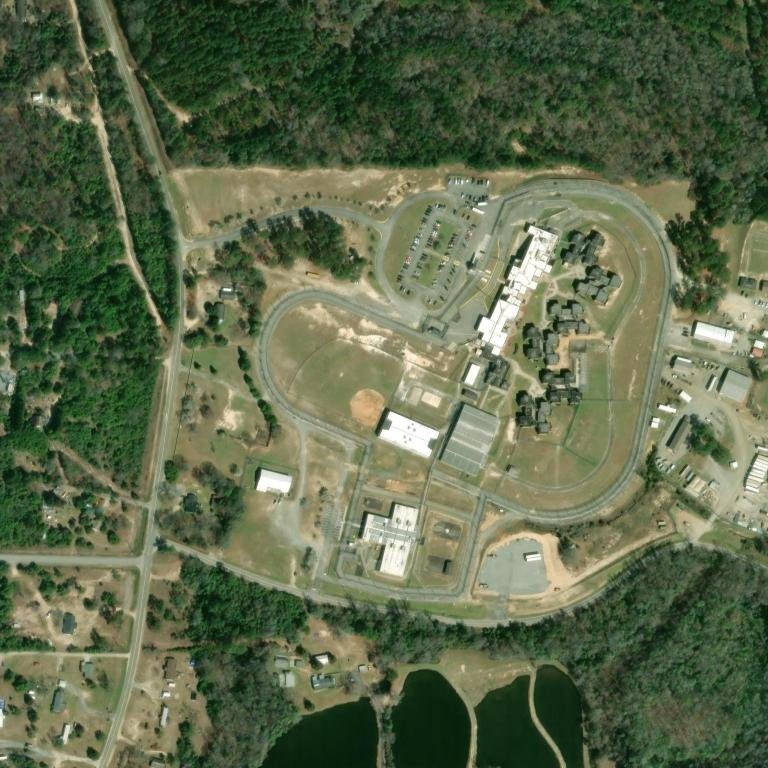
Satellite image: Esri World Imagery. Architecture documents what the building was designed to hold. See the system-wide receipts at gps.press/warehouse.
Then and now
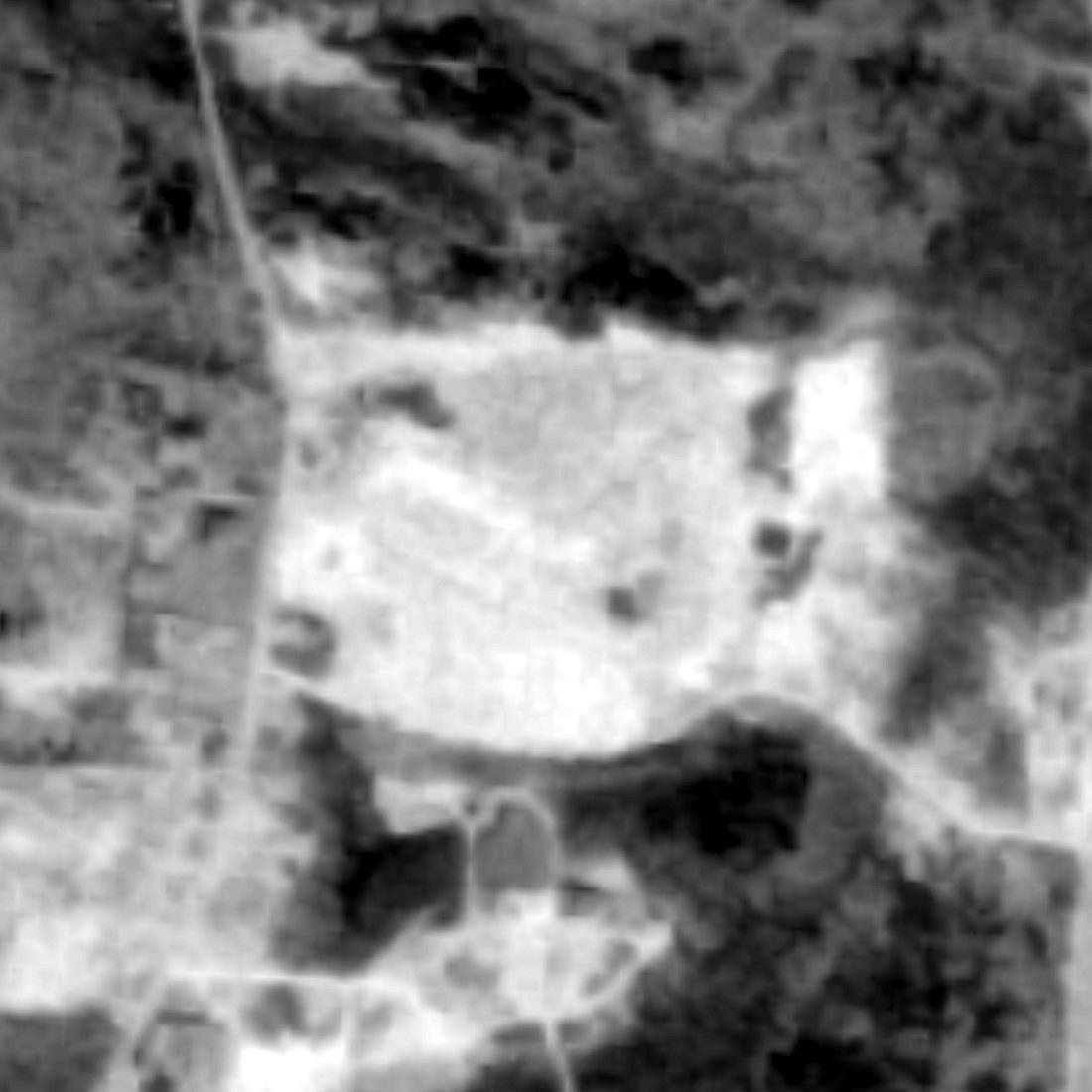
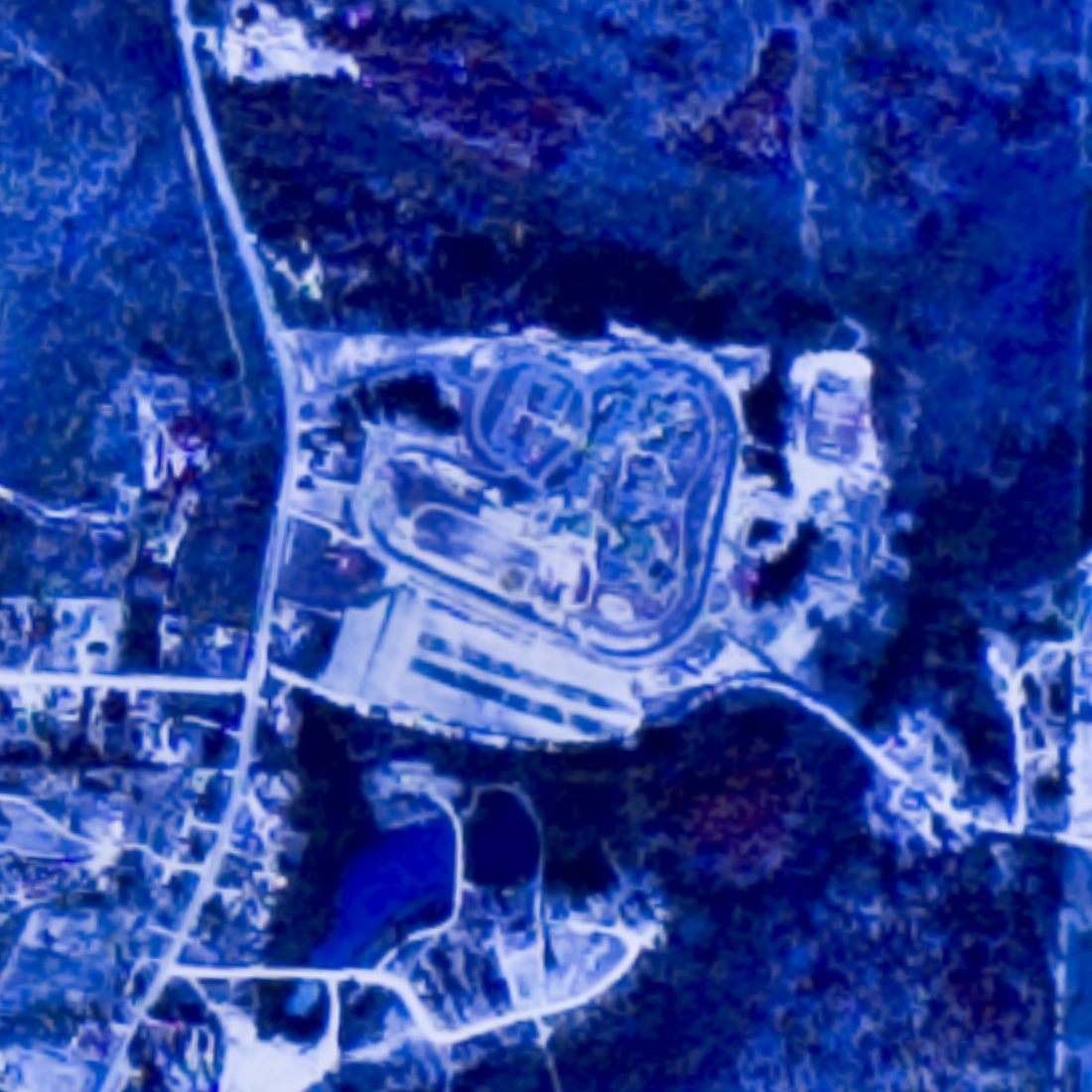
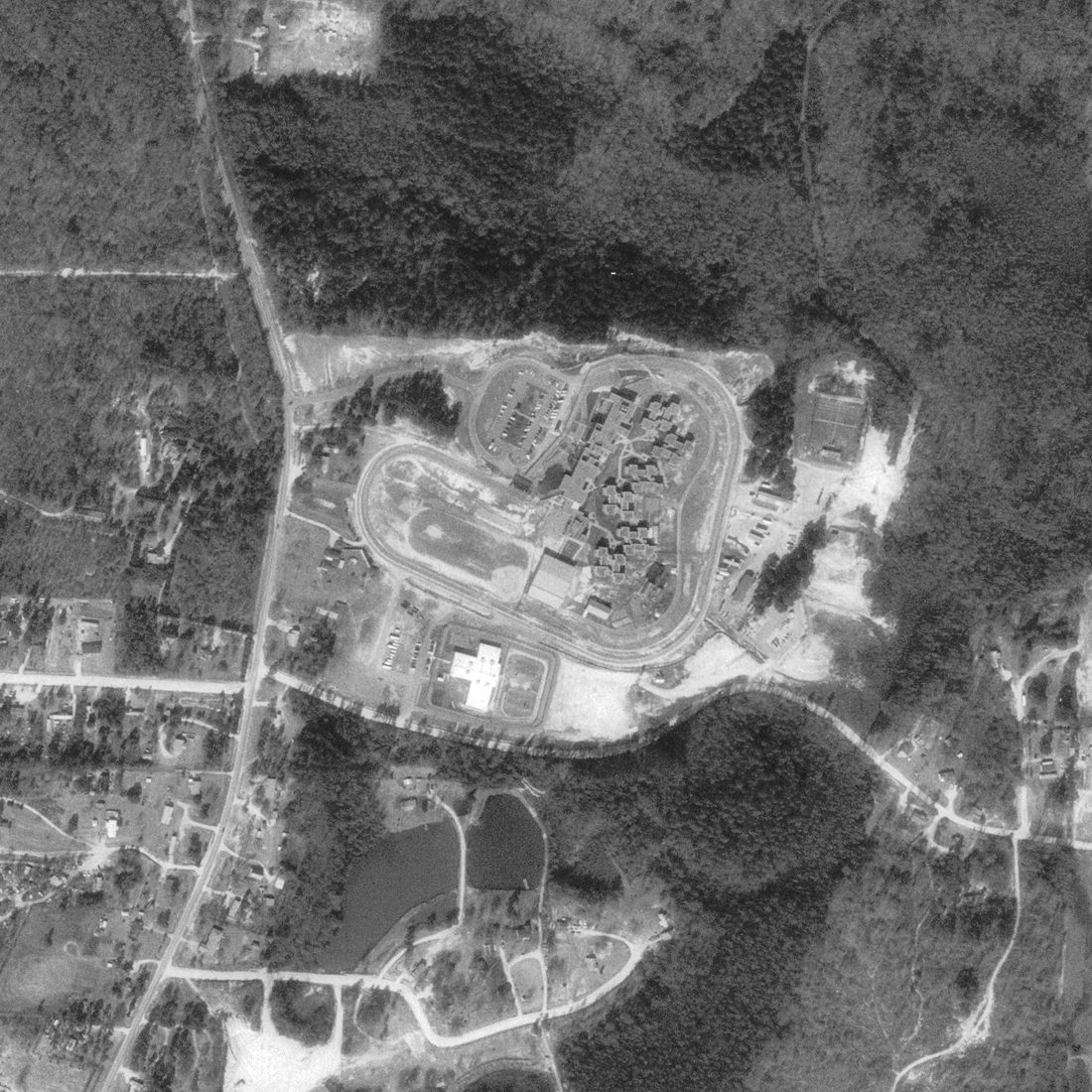
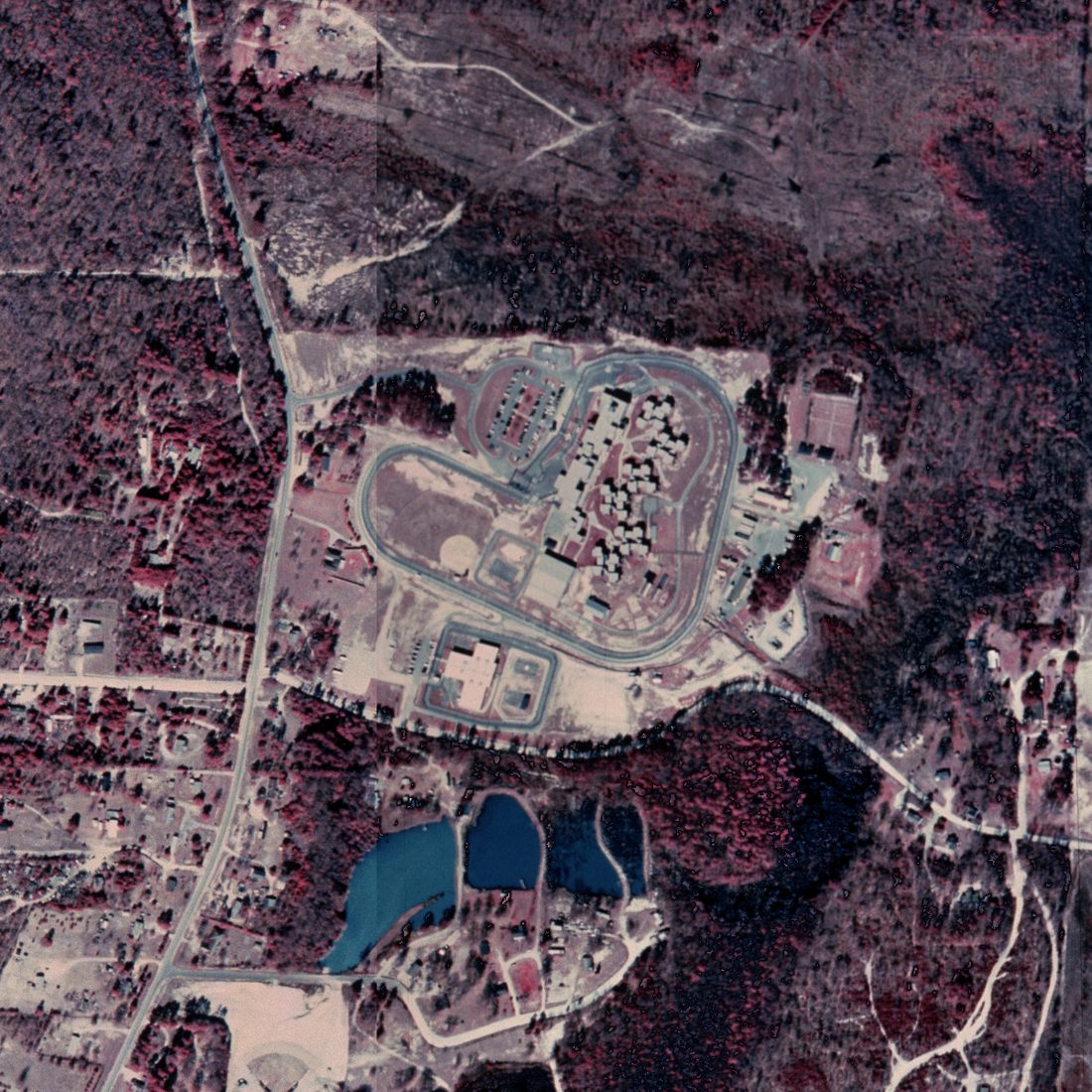
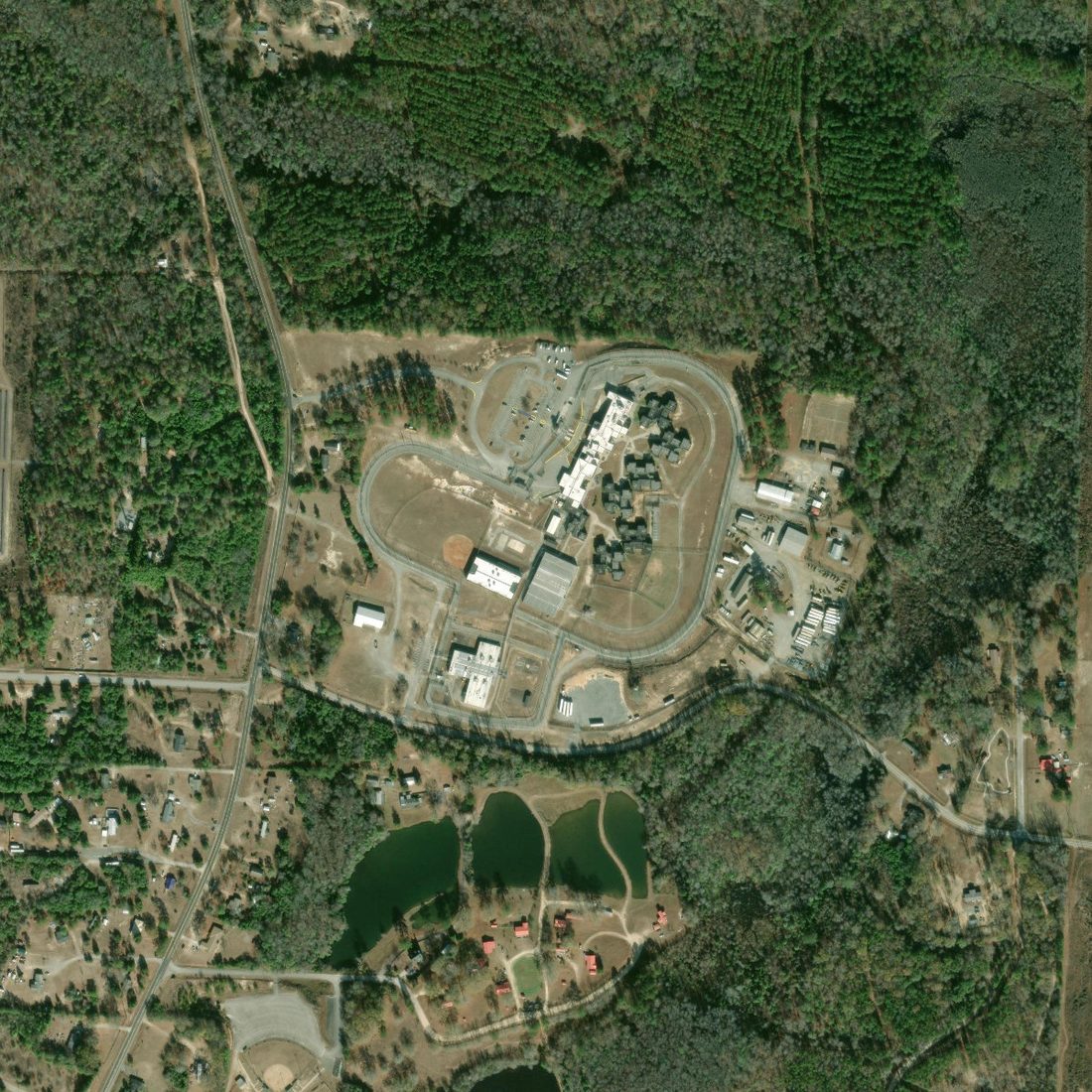
Each photo shows the same 1.2 km square, north up, so buildings line up from one year to the next. The older photos are U.S. Geological Survey aerial photographs. The photos from 1988 and earlier were taken on film and lined up with the later ones by their roads, so their positions are approximate. The early-1980s photos were taken from very high up and are less sharp. Select a photo to see it full size.